
Politics
3rd week of hearings begin in former Istanbul mayor’s corruption case

Ekrem Imamoğlu, former mayor of Istanbul for the main opposition Republican People’s Party (CHP), and dozens of other defendants were on trial on Monday in Istanbul, in the eighth hearing in a case over allegations of corruption at the municipality. The third week of the hearings kicked off with statements of Ali Sukas, head of a municipal subsidiary, who was arrested along with Imamoğlu in March 2025. Resul Emrah Şahan and Mehmet Murat Çalık, former mayors of Istanbul’s Şişli and Beylikdüzü districts, respectively, are expected to present their defense in the hearings later this week.
The trial is being held in a massive courtroom-prison complex where Imamoğlu and others are also in custody. A total of 407 defendants, including 107 who are held in pre-trial custody, are on trial. The hearings will continue well into the night, a judicial practice for trials with a high number of defendants.
The first hearing of the trial was held amid turmoil as Imamoğlu attempted to disrupt the proceedings and wanted to testify first, although the defendants will be heard by the order defined by the court. Imamoğlu argued with the judges, leading to the court members to adjourn the hearing briefly. Imamoğlu and his party claim the charges against the defendants are politically motivated.
At Monday’s hearing, Sukas, who served as director of Ağaç A.Ş., a municipal subsidiary for sapling production and urban landscaping, denied corruption allegations and claimed witnesses testifying against him was part of a defamation campaign. A co-defendant in the case has claimed that the municipal subsidiary owed him cash for the work he has done through a contract but was forced to pay Sukas separately to collect his debt. Another defendant has claimed that Sukas asked him to lease him a bus to be used for election campaign tour of Sukas’ wife who was a candidate in recent elections for CHP, in exchange of collecting the cash Ağaç A.Ş. owed to him.
Dubbed “corruption of the century” by some Turkish media outlets, Imamoğlu and his associates at the Istanbul Metropolitan Municipality (IBB) are accused of involvement in 143 acts of bribery and corruption. Their actions cost the public TL 161 billion ($3.65 billion), according to the prosecutors.
The businessman-turned-mayor faces prison terms up to 2,352 years for multiple instances of corruption that mainly revolve around bribery accusations from businesspeople in exchange for operating, construction permits and accusations of widespread rigging in lucrative tenders of the municipality.
The trial is expected to take about two months before the court reaches a verdict or decides to postpone it to another date.
In their indictment of 3,806 pages, prosecutors named Imamoğlu as the leader of a criminal ring thriving on corruption. The court will question the mayor, the municipal bureaucrats and people doing business with the municipality on accusations of taking luxury residences as bribes and stacks of cash stored in a currency exchange office, which were reportedly illicit gains of the “Imamoğlu gang” and alleged secret transfer of bribe money from lucrative excavation businesses to abroad.
Along with corruption accusations, Imamoğlu faces charges of illegally obtaining personal data, money laundering and deliberate pollution of the environment, related to other crimes he is accused of, such as the alleged sale of personal information of Istanbul’s residents through a municipality app.
The indictment says Imamoğlu’s criminal organization was similar to the Gülenist Terror Group (FETÖ), which is notorious for its infiltration into public institutions. Prosecutors say a network similar to FETÖ’s cells was established by Imamoğlu and others at the Istanbul municipality and district municipalities (also run by the CHP) of Türkiye’s most populated city. The suspects used counterintelligence tactics to avoid detection, the prosecutors say.
The mayor both sought personal enrichment and bought his way toward the full control of the CHP, the indictment says. Imamoğlu was picked as a future presidential candidate of the CHP after his arrest. Prior to an intraparty election in the CHP in 2023, Imamoğlu was caught red-handed as he lobbied for the ouster of the party’s chair, Kemal Kılıçdaroğlu. He is named in another trial on alleged vote-buying in the intraparty election, where he and others are accused of offering cash to delegates in exchange for votes for the Kılıçdaroğlu rival Özgür Özel. The “personal enrichment” cited by prosecutors includes three villas in Istanbul’s upscale Emirgan neighborhood worth TL 1.5 billion, which were not included in the declaration of assets by mayoral candidates at the elections. The indictment also includes witness statements on a private jet, which made multiple flights abroad to carry cash accumulated by Imamoğlu’s criminal ring to London. The flights between 2022 and 2025 were arranged by Murat Gülibrahimoğlu, a fugitive defendant in the case.
The indictment reveals that Taç Döviz, a firm named in a separate money laundering investigation, acted as a “custodian” for the criminal proceeds of the ring led by Imamoğlu.
Although the mayor is facing a slew of legal cases, Monday’s trial is by far the biggest. In a separate case, Imamoğlu is facing an even more significant legal obstacle: a lawsuit challenging the validity of his university degree, a constitutional requirement for presidential candidates.
Imamoğlu maintained his innocence in remarks made to public before the trial began, though he did not offer an elaborate defense, apparently saving it for the trial. His party also claims that the trial is politically motivated, pointing to the arrests of other CHP mayors before and after Imamoğlu’s arrest. In all cases, mayors were arrested on charges of corruption and some cases were directly linked to Imamoğlu himself. The main opposition staged rallies every evening in a different city after Imamoğlu’s arrest, to protest it and other cases.
Some suspects who collaborated with authorities as part of a plea deal claimed Imamoğlu sought to fund his campaign for the presidency through bribes.
Ertan Yıldız, the former head of Istanbul Metropolitan Municipality’s department overseeing the subsidiaries, was among those collaborating with authorities. Speaking to the Yeni Şafak newspaper in an interview earlier this month, Yıldız detailed the “system” of corruption. “Imamoğlu always wanted to be president. It is not an evil goal but it matters how you try to achieve it. If Imamoğlu did not get himself into (this corruption), he would be a strong presidential contender. He did not have to do this, he did not have to be greedy,” he said.
Yıldız said Imamoğlu and his associates earned “resources” through lucrative tenders, especially on road maintenance and excavation. He said Gülibrahimoğlu was behind the usage of the vast Cebeci mining field for dumping construction leftovers. “This place was supposed to be run by a municipal subsidiary but was leased to another company and was unregulated. They launched tenders but the dumping was uncontrolled. They had a partnership of corruption, between Gülibrahimoğlu, Fatih Keleş and Ibrahim Bülbüllü,” he said, referring to other municipal figures.
“Overall, they had a lucrative system bringing in $150 million to 200 million yearly. They used to earn cash from minor tenders in the past but over time, they reaped more elsewhere,” he said, pointing out to reconstruction or construction permits at scenic Bosporus route of Istanbul. “They took bribes of $1 million for permits. All were delivered in bags,” he said.
He said Gülibrahimoğlu earned $10 million-20 million from the Cebeci mining field and when he objected to his schemes to funnel cash to his company, he complained. “But Imamoğlu supported him,” he claimed.
Digging deeper into an alleged criminal network run by Imamoğlu and expanding another investigation linked to a businessperson whom the district municipalities had awarded lucrative contracts, investigators launched further operations, rounding up municipal bureaucrats and other mayors throughout 2025.
The views and opinions expressed in this article are solely those of the author. They do not necessarily reflect the editorial stance, values or position of Daily Sabah. The newspaper provides space for diverse perspectives as part of its commitment to open and informed public discussion.

Antalya, at the heart of the Turkish Riviera, was rocked by corruption scandals last year. After the city’s mayor, Muhittin Böcek, and the Manavgat district’s mayor, Niyazi Nefi Kara, were arrested on charges of bribery, newly surfaced allegations against Kara, who is a member of the main opposition Republican People’s Party (CHP), like Böcek, reveal a cash-for-candidacy scheme in Türkiye’s oldest party.
A report published by the Sabah newspaper on Monday says Kara sought to collect 20 million euros ($23.13 million) to be funnelled to the party’s headquarters, in order to secure a nomination for the mayoral seat of Antalya Metropolitan Municipality.
Justice Minister Akın Gürlek, who was targeted in a defamation campaign by CHP, has recently told journalists that the opposition party sought to distract the public from allegations that Böcek also handed over 20 million euros to the CHP headquarters ahead of the 2024 local elections to secure his candidacy.
An investigation into alleged wrongdoings of Kara by the chief prosecutor’s office in Manavgat exposed how the mayor utilized municipal resources for his own political ambitions.
Testimonies in the case show that Kara aimed to run for the mayoral seat of Antalya in the next elections and discussed the matter with Osman Zafer Keçer, head of the Manavgat municipality’s department issuing construction and zoning permits. He allegedly told Keçer that he needed 20 million euros in cash to get approval from the CHP headquarters for candidacy in the next elections and “to boost his standing” within the party. After the discussions, the Manavgat municipality set up “an operational team” according to the Sabah report, focusing on major projects that required permits from the municipality. Two municipal bureaucrats leaked the details of pending projects to Kara’s nephew Hüseyin Cem Gül, his aides Bulem Şahbaz and Sıla Ceyhan Berkaya. Together with a “middleman,” bureaucrats contacted the project owners and asked for bribes under the name of “candidacy fund” for Kara. Companies that failed to pay had their project permits suspended indefinitely.
Keçer’s testimony in the case revealed that the Manavgat municipality was turned into an “electoral office” for Kara, the report says.
On March 18, Gürlek, a former prosecutor handling the corruption cases of CHP mayors, told journalists Böcek visited Manisa, a CHP-run municipality in western Türkiye and reportedly had a cash transaction with CHP officials at a gas station there, in order to secure his candidacy for next elections.
Testimonies in Böcek’s case corroborate Gürlek’s statements. Furkan Solak, a friend of Böcek’s son Gökhan, told investigators that the mayor’s son admitted that his father paid something “between TL 50 and 100 million” for securing his candidacy. “I met him sometime toward the end of 2023. He was angry and unhappy. When I asked him what happened, he told me that they donated the party TL 50 million for candidacy but party’s chair Özgür Özel still did not announce his father’s candidacy, though he announced the other candidates. Ali Yılmaz, another witness, gave a similar statement. “But Gökhan did not tell me how they collected that amount,” he said.
Serkan Çavdar, another witness, said Gökhan Böcek told him that they sent “millions of dollars” to CHP for his father’s candidacy and collected it from (rigged) tenders and businesspeople. Tuncay Sarıhan, a suspect in the case, told investigators last year that Gökhan Böcek covered the expenses of the party’s headquarters in Ankara from his own pocket.
The views and opinions expressed in this article are solely those of the author. They do not necessarily reflect the editorial stance, values or position of Daily Sabah. The newspaper provides space for diverse perspectives as part of its commitment to open and informed public discussion.
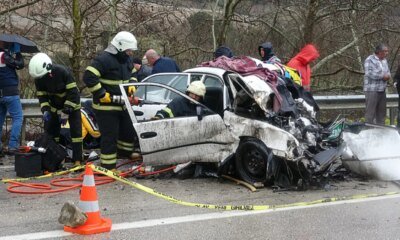
Former Culture and Tourism Minister Atilla Koç and his daughter, former minister of Family and Social Services Zehra Zümrüt Selçuk, were among eight people injured in a pileup in the central province of Eskişehir late Sunday.
The father and the daughter were transferred to a hospital in Ankara, while the others were taken to nearby hospitals after the accident in a rural part of Eskişehir’s Sivrihisar district. None of the injured were in critical condition.
Justice Minister Akın Gürlek said in a statement that an investigation was launched into the incident while offering get-well-soon wishes to former ministers and the other victims.
Atilla Koç, 80, a two-term lawmaker for the ruling Justice and Development Party (AK Party), served as minister of Culture and Tourism between 2005 and 2007. His daughter Zehra Zümrüt Selçuk served as minister of Family, Labor and Social Services between 2018 and 2021, before the ministry’s name was changed. Selçuk currently serves as director general of the Statistical, Economic and Social Research and Training Centre for Islamic Countries (SESRIC), a subsidiary of the Organization of Islamic Cooperation (OIC).
The views and opinions expressed in this article are solely those of the author. They do not necessarily reflect the editorial stance, values or position of Daily Sabah. The newspaper provides space for diverse perspectives as part of its commitment to open and informed public discussion.
As top officials of the Gulf countries came together to assess the impact of the U.S.-Israel-Iran war, Foreign Minister Hakan Fidan joined them last week. The top diplomat of Iran’s neighbor and NATO ally of the United States reminded how Türkiye’s stand was clear on the unfolding conflict.
“We see the confidence in Türkiye is rising (after the war began). We never adopted an ambivalent stance on the matter. Everyone is aware that we told each side what mistakes they made. We strongly and clearly voice our opinion about how it was wrong what was done to Iran and as well as to the Gulf countries,” he told journalists on Saturday.
Fidan also said that the Gulf countries said during a meeting in Saudi Arabia’s capital Riyadh that they may have to take action if the current situation persists, stressing the increased risk level. The minister embarked on a regional tour encompassing Saudi Arabia, Qatar, and the United Arab Emirates (UAE) earlier this week.
He said Gulf countries estimate that the war will continue for another two or three weeks, emphasizing the importance of the U.S. in this matter. He added that the Gulf countries said they had declared from the outset that they would not allow their airspace or the bases on their territory to be used against Iran and that they would not be part of this war. He added that these countries also said Iran has deliberately carried out attacks not only on military bases but also on civilian infrastructure and economic targets.
“Israel will try to influence the U.S. and will seek to prevent a cease-fire or the achievement of peace in the near term. There has been a growing assessment that the U.S. and Israel’s initial positions are drifting apart. This, in turn, could lead to a longer war,” he told reporters in the Turkish capital of Ankara. Fidan said that negotiations while the war is ongoing do not appear very likely. He added, however, that one possibility to consider is that, following a short-term cease-fire, “the parties could begin negotiations during that period while also keeping open the option of resuming the war if the talks fail.
“Israel may adopt a policy of prolonging the war as much as possible in order to inflict greater damage on Iran.”
Noting that Tel Aviv initiated the war, Fidan said the issue is not the absence of plans to end the war, but rather Israel’s lack of willingness to pursue peace.
Changes in the Gulf
After the war, many changes may happen in Gulf countries, said Fidan, adding that the countries may begin seeking new options in the field of defense.
“After the war ends, Gulf countries may clearly set out their expectations of Iran, and if certain conditions are met, the focus could shift to economic cooperation. Iran, too, may come forward with certain demands regarding U.S. bases in the Gulf,” he said.
Stressing that they do not in any way want the situation to “turn into a prolonged war that would draw in the entire region,” Fidan said Ankara will continue to make use of all diplomatic channels, “particularly regional initiatives such as the meeting held in Riyadh yesterday, in order to bring the war to an end as soon as possible.”
‘Common ground’
Regarding the meeting in Riyadh on March 19, under Saudi Arabia’s hosting, Fidan said the Gulf countries organized this meeting with a single agenda item.
“The meeting was held to gather the regional countries’ assessments regarding the attacks carried out by Iran against these countries. All regional countries directly or indirectly affected by the war were around the table. It was intended as an effort to seek common ground.”
Fidan said that everyone at the meeting underscored the urgency of the situation, adding that the meeting had a single-item agenda and that the joint statement reflected this as well.
“We are maintaining our principled stance. We oppose both Israel’s aggression and expansionism and Iran’s actions aimed at spreading the war across the region. Although the Riyadh meeting was organized solely around the Iran agenda, we emphasized Israel’s role in the emergence of this war. Moreover, we ensured that the joint statement referred to the threat posed by Israel’s expansionism in the region,” he said.
They voiced these criticisms at the highest level on every platform and took steps accordingly, Fidan said, stressing that Türkiye has been the country criticizing Israel most strongly from the very beginning.
On the issue of mediation, Fidan said: “The proposals we are putting forward from where we stand are in fact part of a search for stability, something that is in everyone’s interest.”
“But when the parties prioritize gain, victory, or domination over stability, the matter moves to a different point. In that case, talks are held merely for the sake of talking. They are conducted in order to advance the main agenda in a different way. We are receiving indications to that effect.”
Relations with EU
Highlighting President Recep Tayyip Erdoğan’s stance on relations with the EU, Fidan said that “we also expect the emergence of political will in Europe to carry out the membership process with us,” drawing attention to the fact that Türkiye’s objective has not changed.
Fidan said maintaining good relations with the EU remains very important in every respect in any case, adding that the modernization of the customs union and visa liberalization are important issues and that talks on these matters are continuing.
“We are maintaining a certain degree of stability in relations. They are not deteriorating, and they could improve further,” he added.
Noting that the EU requires Türkiye in an array of areas, including combating illegal migration and terrorism, he said: “They are also constantly knocking on our door on issues such as the evacuation of their citizens from Iran, the Middle East, and elsewhere. We are providing the necessary support in these matters as well. Our military capabilities are already clear.”
“Work by the relevant institutions is continuing on the remaining six criteria concerning visa liberalization,” he added.
Foreign Minister Hakan Fidan engaged in an intense phone diplomacy on Sunday for an end to the U.S.-Israel-Iran war. Foreign Ministry sources said he held talks with Iranian Foreign Minister Abbas Araghchi, Egyptian Foreign Minister Badr Abdelatty, EU foreign policy chief Kaja Kallas, Iraqi Foreign Minister Fuad Hussein and U.S. officials.
Fidan recently returned from a Gulf trip where he held talks with counterparts and attended a meeting in Riyadh over the Gulf countries’ response to the war, which quickly expanded into those countries.
“We see the confidence in Türkiye is rising (after the war began). We never adopted an ambivalent stance on the matter. Everyone is aware that we told each side what mistakes they made. We strongly and clearly voice our opinion about how it was wrong what was done to Iran and as well as to the Gulf countries,” he told journalists on Saturday.
Fidan also said that the Gulf countries said during a meeting in Saudi Arabia’s capital Riyadh that they may have to take action if the current situation persists, stressing the increased risk level.
The Ministry of Family and Social Services has completed 11 social risk maps that will guide it for targeted improvement.
The maps visualize geographically the social risks citizens face based on data analysis. A digital monitoring system based on the maps will be initially introduced in the cities of Gaziantep, Manisa, Niğde, Van, Sinop, Edirne, Aksaray, Adana, Izmir, Afyonkarahisar and Trabzon. The ministry plans to complete 24 more maps in the near future.
The ministry said in a statement on Sunday that the project focused on “social risk points” for each household based on thoroughly analyzed social, economic and psycho-social indicators.
In addition to identifying the current situation, these points are intended to contribute to the early detection of social risks and the strengthening of preventative services. In line with the data obtained, a new implementation process will be launched under the “Family Guide” and “Children are Safe” digital tracking systems. These are integrated support mechanisms for high-risk households, which will be activated in coordination with various ministries and public institutions.
The ministry said that the social risk maps go beyond the traditional social assistance approach, forming the foundation of a data-driven, goal-oriented and preventative model. The aim is to empower families and protect children through efforts integrated with education, health, employment and local governments. As social risk points are applied in the field, the goal is to increase the capacity for early intervention, especially for vulnerable groups, and to ensure more effective use of public resources. Following the experience gained in specific provinces, the model will be gradually expanded across the country.
The social risk map is a system in which social risks that individuals and society may encounter are analyzed based on data and visualized at a geographical level. These maps allow for the holistic monitoring of various social phenomena, such as violence against women, child abuse, and the needs of persons with disabilities.
Risk analyses are conducted at the provincial, district, neighborhood and even household levels using 648 social indicators. Thanks to the data obtained, vulnerable groups are identified at an early stage, and protective/preventative social service policies are developed.
The views and opinions expressed in this article are solely those of the author. They do not necessarily reflect the editorial stance, values or position of Daily Sabah. The newspaper provides space for diverse perspectives as part of its commitment to open and informed public discussion.
Türkiye’s intelligence chief İbrahim Kalın met with members of Hamas’ political bureau in Istanbul to discuss Israel’s continued attacks on Palestinians and violations of Gaza cease-fire, security sources said Sunday.
The talks focused on Israel’s actions in Gaza and across the region, with participants emphasizing unity against what they described as occupation and destabilization policies. Officials stressed that no “fait accompli” would be accepted.
Discussions also addressed the second phase of the Gaza cease-fire agreement reached in October last year, highlighting the need to halt attacks and ensure the delivery of humanitarian aid. Concerns were raised over Israel’s failure to meet obligations under the first phase of the deal.
At least 677 Palestinians have been killed and 1,813 injured in Israeli attacks across the Gaza Strip since the cease-fire, according to the territory’s Health Ministry.
The cease-fire halted Israel’s two-year war that has killed more than 72,000 Palestinians and injured over 171,000 since October 2023, along with widespread destruction of about 90% of civilian infrastructure.
The meeting further reviewed rising settler violence in the West Bank and increasing pressure by Israeli forces on Palestinians, exploring possible responses.
Hamas representatives thanked President Recep Tayyip Erdoğan for Türkiye’s efforts to support peace in Gaza, while sources said Ankara would continue intensifying its diplomatic efforts to achieve a lasting cease-fire.


-
 Politics17 hours ago
Confidence in Türkiye rises for fair approach to ongoing war: Minister
-
 Daily Agenda15 hours ago
Culture and tourism cooperation between Türkiye and North Macedonia is getting stronger
-

 Sports3 days ago
Hakimi rejects Morocco’s AFCON title, cites Senegal’s on-field win
-
 Daily Agenda3 days ago
A new citizen-focused security architecture is on the way
-
 Economy19 hours ago
EU-Mercosur trade accord to apply provisionally from May 1
-

 Politics19 hours ago
Türkiye maps social risks for preemptive action
-
 Daily Agenda17 hours ago
Ministry of Internal Affairs announced the traffic balance of the Eid holiday
-
 Daily Agenda3 days ago
Nevruz message from President Erdoğan: It became a symbol of new beginnings