
Politics
Türkiye warns Israel-YPG co-op may harm Damascus deal

In a previously unannounced visit, Foreign Minister Hakan Fidan, National Defense Minister Yaşar Güler and National Intelligence Organization (MIT) Director Ibrahim Kalın arrived in Damascus on Monday. They met Syrian President Ahmad al-Sharaa and other high-ranking Syrian officials.
Speaking at a joint news conference with his Syrian counterpart Asaad al-Shaibani, Hakan Fidan touched upon the issue of the integration of the U.S.-backed terrorist group YPG into the Syrian army. He said the integration should be carried out as soon as possible, saying that the delay was an obstacle to Syria’s unity. Al-Shaibani, for his part, said they were still waiting on the YPG’s answer to an earlier deal, adding: “Unfortunately, the YPG did not demonstrate any will for integration.”
Fidan noted that the YPG has been “coordinating with Israel for certain activities” and said this cooperation was the biggest obstacle in the YPG’s talks with Damascus. Israel pursued a warm approach toward the YPG, especially after the fall of the Baathist regime, while Tel Aviv also sought to expand its aggression to the new Syria.
The meetings are expected to comprehensively assess the trajectory of Türkiye-Syria relations over the past year across political, economic and security dimensions, following the first anniversary of the overthrow of the Bashar Assad regime.
Discussions of Turkish and Syrian officials also focused on the progress of the implementation of the March 10 agreement, which is closely linked to Türkiye’s national security priorities. Turkish media outlets have reported earlier that Damascus gave a deadline by the end of this year to the YPG, the Syrian wing of the PKK, to honor the deal. The agreement involves the integration of the group into the new Syrian army.
The interim Syrian government has sent a proposal to the YPG, the PKK terrorist group’s Syrian offshoot that controls the country’s northeast, according to five of the sources.
In it, Damascus expressed openness to the YPG reorganizing its roughly 50,000 members into three main divisions and smaller brigades as long as it cedes some chains of command and opens its territory to other Syrian army units, according to one Syrian, one Western and three YPG officials.
Since a major round of talks in the summer between the sides failed to produce results, frictions have mounted, including frequent skirmishes along several front lines across the north.
The YPG took control of much of northeast Syria, where most of the nation’s oil and wheat production is, in 2019. A Syrian official told Reuters last week the year-end deadline for integration is firm and only “irreversible steps” by the YPG could bring an extension.
Fidan said last Thursday that it does not want to resort to military means but warned that patience with the YPG is “running out.” YPG officials have downplayed the deadline and said they are committed to talks toward a just integration.
The U.S.-backed group has been behind a spate of attacks targeting Türkiye during Syria’s civil war. During the same war, the Turkish army launched cross-border offensives in Syria to drive out the YPG from its borders and help the Syrian opposition to liberate YPG-held towns.
The visit by the Turkish delegation is also expected to address emerging security risks in southern Syria stemming from Israel’s aggressive actions.
In the context of the shared interests of Türkiye and Syria, as well as Syria’s recent accession to the International Coalition to Defeat Daesh (ICDC), cooperation aimed at preventing the resurgence of the Daesh terrorist group, which seeks to exploit potential fragilities on the Syrian ground, will also be discussed.
In addition to security issues, which will constitute the main focus of the talks, the agenda includes a review of bilateral projects being carried out for Syria’s reconstruction and an evaluation of efforts to support the Syrian government’s capacity-building initiatives.
Deputy Foreign Minister Nuh Yılmaz, who has been appointed as Türkiye’s ambassador to Damascus, also traveled to the Syrian capital.
In the one year since the collapse of the Assad regime, Türkiye-Syria relations have gained momentum across many areas, with historic opportunities for bilateral and regional cooperation emerging, particularly in the fields of security and the economy.
While supporting efforts to heal the wounds left by the nearly 15-year Syrian conflict, Türkiye is also working to ensure that new cooperation opportunities are harnessed in a way that serves Syria’s stability and security in line with the interests of both countries.
In this context, Fidan paid his first visit to Syria following the fall of the Assad regime on Dec. 22, 2024.
In the period that followed, as a natural outcome of the positive atmosphere that has emerged in Syria’s new era, reciprocal high-level visits between Türkiye and Syria have continued.
Within this framework, meetings held in the 3+3 format between the two countries have taken on particular significance.
Accordingly, Syrian Foreign Minister Asaad Hassan al-Shaibani visited Türkiye on Jan. 15, accompanied by a high-level delegation. During the visit, Fidan, Güler and Kalın met with their Syrian counterparts.
Following that meeting, the Turkish foreign minister, national defense minister and intelligence chief paid a working visit to Syria on March 13.
Another meeting focusing on security cooperation and current developments between the two countries was held in Ankara on Oct. 12, with the participation of Fidan, Güler, Kalın and their Syrian counterparts.

The Turkish Parliament will begin its weekly session on Tuesday, following the inauguration of the new legislative year last Thursday. Parliament’s General Assembly will debate a new bill on the Turkish Red Crescent, while the Planning and Budget Committee will hear from Central Bank Governor Fatih Karahan.
The bill on the Turkish Red Crescent would make the Turkish Red Crescent, the International Federation of Red Cross and Red Crescent Societies, the International Committee of the Red Cross, and the national Red Crescent and Red Cross societies of other countries the sole authorized entities for receiving and using in-kind and cash assistance sent to Türkiye during ordinary or extraordinary circumstances. Cash compensation will also be paid to personnel of the Turkish Red Crescent who are actively serving in the field to carry out the organization’s activities during extraordinary periods and times of disasters, war and conflict. In provinces and districts where Red Crescent branches and representative offices are located, the heads of the provincial and district Red Crescent branches will also become members of the boards of trustees of the Foundations for Social Assistance and Solidarity, the state entities overseeing social aid schemes for disadvantaged individuals.
On Tuesday, Central Bank Governor Fatih Karahan will make a presentation to the Parliamentary Planning and Budget Committee. Karahan is expected to deliver a comprehensive presentation on global developments, the Turkish economy, inflation and the monetary policy framework at the meeting.
The Parliamentary Public Works, Reconstruction, Transport and Tourism Commission will also convene to discuss the bill on Foreign Digital Accommodation Platforms.
On Tuesday and Wednesday, parliamentary group meetings of the political parties represented in Parliament will be held.
Cemil Tugay, the independent mayor of Türkiye’s third-largest province, Izmir, who resigned from the opposition Republican People’s Party (CHP), will join the ruling Justice and Development Party (AK Party) this week, media outlets reported Sunday. Tugay met President Recep Tayyip Erdoğan at the Presidential Complex on Sept. 30, fueling rumors about the switch. Tugay and Erdoğan reportedly met to discuss the needs of Izmir, but media outlets said the mayor later met officials at the AK Party’s Izmir branch, leading to further speculation about the switch.
Erdoğan will officially welcome him to the party at the AK Party’s parliamentary group meeting on Oct. 7. Along with Tugay, the mayors of two district municipalities in Izmir are expected to join the AK Party, media reports said. Pro-opposition Sözcü newspaper reported that Tugay canceled all appearances after meeting with Erdoğan and has not returned calls from journalists.
If the switch takes place, it will be the first time the AK Party has taken over a municipality in Izmir, a longstanding CHP stronghold. The CHP is already in tatters after former Chair Özgür Özel founded the New Party (YP) in July, taking dozens of lawmakers from the CHP with him. The YP is now the main opposition party thanks to the sheer number of its lawmakers in Parliament, while several mayors have signaled that they would join the party soon.
The number of mayors elected under the CHP banner who have since joined the AK Party has risen to 44.
The latest switches include the mayors of the Çerkezköy, Çiğli, Elmalı, Şenkaya and Marmara districts, continuing a series of defections from the CHP since the 2024 local elections.
President Erdoğan presented party badges to the nine mayors during the party’s Expanded Provincial Chairs Meeting in Ankara last month and wished them success in their work.
The CHP won 420 municipalities across Türkiye in the 2024 elections. With 44 mayors having since resigned from the party and joined the AK Party, the figure represents roughly one in every 10 mayors elected on the CHP ticket, according to the figures.
Turkish security forces detained 52 irregular migrants in separate operations across four provinces, while four suspected migrant smugglers were arrested, authorities said Monday.
Security forces detained 10 foreign nationals in the northwestern province of Edirne after determining they had entered Türkiye through illegal routes. Another seven irregular migrants were detained in neighboring Kırklareli.
The migrants were transferred to provincial migration authorities and a repatriation center following processing.
In the western province of Izmir, gendarmerie teams stopped a minibus near the Karaburun toll booths on the Çeşme highway on Oct. 1 as part of an operation targeting migrant smuggling.
Authorities found 16 irregular migrants inside the vehicle, including one Nigerian, three Chadian, 10 Ethiopian and two Sudanese nationals.
The minibus driver, identified by the initials B.Y., was detained on suspicion of organizing the journey and was later arrested by a court. The migrants were transferred to migration authorities.
Türkiye, a key transit route for migrants seeking to reach Europe, has stepped up border controls and security operations in recent years as part of its efforts to combat irregular migration and migrant smuggling.
Separately, security forces detained 19 Afghan irregular migrants during a joint coast guard and gendarmerie operation in Demre, in the southern province of Antalya, on Oct. 2.
One suspected Turkish smuggler was detained on land, while two others allegedly linked to the operation were caught aboard a sailboat at sea. All three were later arrested and sent to prison.
Authorities seized the sailboat used in the alleged smuggling operation.
Investigators identified four additional suspects believed to have been involved in the smuggling network, and efforts to apprehend them are continuing, authorities said.
Türkiye has intensified nationwide operations in recent years amid rising regional migration pressures.
New investigations have revealed deep-seated corruption in district municipalities run by the opposition Republican People’s Party (CHP), which has seen dozens of its mayors jailed in a widespread probe into bribery and tender-rigging over the past two years.
Reports by the Sabah newspaper indicate that a deputy mayor asked a businessman to place a bribe into a vase full of flowers and deliver it to his wife in Mersin’s Mezitli district. In another case, it was discovered that some staff at Istanbul’s Ataşehir Municipality asked for high-value gift cards for shopping at luxury department stores.
In a corruption operation targeting municipalities in Mersin, the bribery network and methods allegedly used at Mezitli Municipality have been exposed. The district’s mayor, Ahmet Serkan Tuncer, was among dozens detained earlier this week in an anti-corruption operation, along with Mersin Mayor Vahap Seçer.
According to the Sabah report, Mezitli’s Deputy Mayor Atilla Küsbeci was meeting with landowners on behalf of Mayor Tuncer. During these meetings, zoning densities were increased and changes were made in favor of those who paid the requested bribes.
The money was allegedly shared among Ahmet Serkan Tuncer, Atilla Küsbeci, CHP Mersin Deputy Provincial Chair Kubilay Özsoy, Serkan Şahin and Hacı Şahin. The case file states that Kubilay Özsoy obtained TL 28 million (around $570,000) in illicit gains through these transactions, converted the bribes into gold and foreign currency and introduced them into the financial system, and purchased land in the name of his father. It also states that Ahmet Serkan Tuncer purchased a home at a residential complex with the money.
It was determined that Atilla Küsbeci and his wife, Merve Küsbeci, who works in the municipality’s zoning department, turned a blind eye to the construction of noncompliant sections at two luxury hotels in the city and failed to act on complaints concerning these violations.
The testimony of Serkan Canıtezer, a representative of Kayalife construction company, shed light on the alleged bribery method. Canıtezer said Mayor Tuncer and Deputy Mayor Atilla Küsbeci demanded a TL 5 million bribe for zoning and construction permit procedures.
“Atilla Küsbeci asked me to put it in a vase together with flowers and leave it at the zoning department where his wife, Merve Küsbeci, worked. However, I refused. I obtained the construction permit, but they demanded two separate renovation projects for the construction in order to receive the bribe. The head of the building inspection department, whom Atilla Küsbeci sent to my construction site, told me that a third renovation project would be required and said, ‘You know the reason. There is nothing I can do; the order comes from higher up,'” he testified.
“I also reported the situation to CIMER (the Presidential Communications Center, a hotline for complaints from the general public). On Aug. 19, 2026, I went to the Anti-Smuggling and Organized Crime Department of the police with TL 100,000 and had the serial numbers recorded. I then informed them that I was ready to hand over the money,” Canıtezer said.
A search of the home of Ali Özbaran, owner of Özbaran Enerji, who was detained in the operation in Mezitli on charges of “rigging a tender,” “bribery” and “qualified fraud,” uncovered 257,000 euros, $25,000, 64,000 pounds, 4 kilograms (8.82 pounds) of gold bars, 116 Republic gold coins, eight half gold coins, five quarter gold coins and 2 grams (0.07055 ounces) of gold, as well as an unlicensed handgun and tender documents.
Meanwhile, the investigation into Ataşehir Municipality by the Istanbul Anadolu Chief Public Prosecutor’s Office was expanded based on examinations of digital materials belonging to suspects arrested on April 20, 2026, statements obtained from suspects under the effective repentance provisions, testimony from witnesses questioned following complaints filed through CIMER and statements by suspects who allegedly paid bribes.
The examination found that some municipal employees had used high-value gift cards from luxury department stores and received money in foreign currencies in exchange for bribes.
The investigation also found, based on examinations of digital materials, that financial benefits were provided to company owners involved in zoning and occupancy permit procedures at Ataşehir Municipality by allegedly having them purchase purportedly “garbage containers.”
Based on the evidence obtained, simultaneous searches, seizures and detention procedures were carried out this week. A total of 13 suspects, including Ataşehir Deputy Mayor Murat Güneş, were apprehended and detained as part of the operation. Numerous digital materials were seized during searches of the suspects’ addresses.
The Chief Public Prosecutor’s Office said in a statement that investigations aimed at combating crimes against the reliability and functioning of public administration would continue meticulously and with determination.
Abdullah Öcalan, the jailed ringleader of the PKK terrorist group, may meet journalists and civil society representatives, a lawmaker who has repeatedly met him in recent months told the media over the weekend.
In statements quoted by the Turkish media on Sunday, Peoples’ Equality and Democracy Party (DEM Party) lawmaker Pervin Buldan noted that they may see “a concrete development in October” in terms of visitors for Öcalan, who is jailed in a high-security island prison in the Marmara Sea. She was responding to a question about whether Öcalan would be allowed visitors other than his next of kin, lawyers and DEM Party lawmakers, from a party closely associated with the PKK.
The move is part of the terror-free Türkiye initiative launched by government ally Nationalist Movement Party (MHP) leader Devlet Bahçeli in 2024. The initiative sought the dissolution of the PKK after decades of violence across Türkiye and has succeeded to an extent after Öcalan agreed to Bahçeli’s proposal to order the PKK to lay down its arms. The PKK announced its dissolution in 2025, and the process is currently being monitored by Turkish authorities. In return, Türkiye introduced a law in August that offers deferral of sentencing and prosecution for PKK members not involved in acts of violence.
Since Bahçeli’s historic call two years ago, Öcalan has frequently received DEM Party lawmakers who have served as messengers for him, conveying his messages to the PKK and the Turkish public. Öcalan, who was sentenced to life imprisonment after his capture in Kenya in 1999, however, still serves his prison term in strictly isolated conditions with a few fellow inmates. Recently, Bahçeli announced that a new addendum to the prison facility may be built on the island to help Öcalan fulfill his task as an intermediary. Bahçeli has also suggested a formal “coordinator role” for Öcalan. This was also mentioned by Buldan in her interview, and she said that Öcalan would be a “coordinator” both in the disarmament of the PKK and in the “political and democratic building process.”
“For this reason, it is essential that he should be provided with free working and communication conditions and allowed to receive visitors from different segments of society,” Buldan stated.
For decades, the PKK remained the main security threat to Türkiye, and its violent campaign is blamed for the deaths of thousands of people and immense economic losses, especially in southeastern Türkiye. Apart from small nationalist parties, almost all political parties openly supported the initiative, something rare in polarized Turkish politics.
Speaking at the inauguration of the new legislative year at the Turkish Parliament last Thursday, President Recep Tayyip Erdoğan hailed a law passed by Parliament on terror-free Türkiye.
“Consensus on a terror-free Türkiye has upset the country’s foes. (Terror-free Türkiye) is already having a deterrent effect on Türkiye’s foes and is empowering the country,” Erdoğan said.
The president also urged other political parties to strengthen the “homefront” amid regional tensions and reach a “grand Türkiye consensus.”
Senior Turkish political figures criticized the opposition New Party (YP) after its lawmakers walked out of Parliament as President Recep Tayyip Erdoğan prepared to address lawmakers at the opening of the new legislative year.
New Party leader Özgür Özel and lawmakers from his party left the General Assembly shortly before Erdoğan began his address Thursday, in what the party described as a protest against the president.
Nationalist Movement Party (MHP) leader Devlet Bahçeli criticized the move, saying it was politically inappropriate for the lawmakers to leave while Erdoğan was in the chamber.
“It was not politically right for New Party (YP) to leave while our president was in the hall,” Bahçeli told reporters at a reception marking the opening of the new legislative year.
Bahçeli, whose MHP is allied with Erdoğan’s ruling Justice and Development Party (AK Party), said a recently established political party should seek to bring new approaches to politics.
Parliament Speaker Numan Kurtulmuş also criticized the walkout, saying political differences and protests were legitimate parts of democratic politics but arguing that lawmakers should observe political courtesy during the annual opening ceremony.
“We would have preferred New Party lawmakers to listen to the president’s speech and not resort to such a course of action,” Kurtulmuş told reporters.
He said lawmakers had extensive opportunities to criticize the president and the executive once regular parliamentary proceedings resumed but described the opening of Parliament as an occasion for political parties to gather under the same roof despite their differences.
The walkout came during the special session opening the fifth legislative year of Parliament’s 28th term. Erdoğan delivered his annual address after Parliament Speaker Kurtulmuş opened the session.
The incident prompted criticism from senior members of the AK Party and officials in the presidential administration.
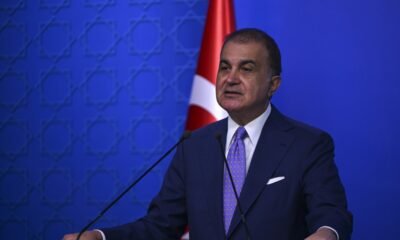
AK Party spokesperson Ömer Çelik described the decision to leave the chamber before Erdoğan’s speech as disrespectful to Parliament and the presidency.
Çelik noted the president’s address at the beginning of a legislative year was an established part of Türkiye’s parliamentary tradition and accused the YP of contradicting its calls for a stronger Parliament by leaving the chamber.
Presidential Communications Director Burhanettin Duran also criticized the walkout, saying Parliament was a forum where differing political views should be expressed and debated.
Duran described YP lawmakers’ decision to leave the chamber as “a serious act of disrespect,” saying it went beyond a political stance against the presidency and showed disregard for the national will, state traditions and parliamentary conventions.
He said the move was inappropriate for Parliament and argued that democratic politics required not only expressing one’s own views but also tolerating opposing opinions and listening to the elected president in Parliament.
“Putting political disagreements ahead of long-established state traditions and the common rules of Parliament is incompatible with democratic representation.”
AK Party Deputy Chair Hüseyin Yayman also condemned the protest, accusing YP lawmakers of using the parliamentary session for political theater. He said lawmakers had the right to criticize or oppose Erdoğan but should do so through parliamentary debate.
The dispute underscored tensions between Erdoğan’s governing alliance and the YP, which was established in July under Özel’s leadership after he and 90 other lawmakers resigned from the Republican People’s Party (CHP).
The YP has since formed a parliamentary group, with Özel serving as its chair.
Kurtulmuş, responding to questions about opposition criticism more broadly, rejected claims that opposition voices were being prevented from speaking in Parliament.
He said seven parliamentary groups would participate when regular proceedings resume, five of them representing opposition parties.
The Parliament speaker also called on opposition parties to put forward proposals in the debate over a new constitution, saying disagreements over Türkiye’s presidential system and the president’s political party affiliation could be addressed as part of that process.
Despite the walkout, other opposition politicians remained in the chamber during the opening session. Erdoğan later greeted lawmakers from several parties following his address.
Parliament is scheduled to resume its regular legislative work on Oct. 6.


-
 Economy3 days ago
Türkiye moves to finalize capital markets law changes after fund turmoil
-
 Politics3 days ago
Erdoğan calls for ‘grand consensus’ amid terror-free Türkiye success
-

 Economy1 day ago
Revolut: $115 billion fintech taking on Europe’s biggest banks
-
 Politics3 days ago
Türkiye vows continued co-op with Iraq after troop withdrawal
-
 Economy3 days ago
Teknofest Southeast combines technology, local culture in Şanlıurfa
-

 Sports3 days ago
Protesters throw tennis balls, urge Ireland to boycott Israel match
-

 Economy3 days ago
AI use doubles in Türkiye, but lack of expertise remains key barrier
-
 Politics3 days ago
Turkish officials urge end to attacks after Medina power station hit