
Politics
Erdoğan hosts Zelenskyy in Istanbul for security talks

Turkish President Recep Tayyip Erdoğan on Saturday received Ukrainian President Volodymyr Zelenskyy for security talks in Istanbul.
Zelenskyy’s visit comes a day after Erdoğan spoke with Russian President Vladimir Putin, who accused Kyiv of attempting to target the gas pipeline between Russia and Türkiye that also supplies several European countries.
“Arrived in Istanbul, where important meetings are scheduled. Substantive talks have been prepared with the President of Türkiye, Recep Tayyip Erdoğan,” said Zelenskyy on X.
“We are working to strengthen our partnership to ensure real protection of people’s lives, advance stability and guarantee security in our Europe, as well as in the Middle East,” he added.
The Turkish presidency also confirmed the visit, saying that the meeting will focus on “efforts towards a ceasefire and a lasting solution, particularly within the framework of the Istanbul process.”
An AFP correspondent saw a heavy police presence around the lavish Dolmabahçe Palace on the shores of the Bosphorus, which also hosted talks between Moscow in Kyiv in the past.
Zelenskyy will also meet Patriarch Bartholomew, the spiritual leader of most Christian Orthodox churches.
This takes place a week before Orthodox Easter, which is celebrated in both Ukraine and Russia on April 12.
Kyiv has been pushing for a truce over the Orthodox Easter holidays that would include a halt in attacks on energy infrastructure.
Russia, which is seeking a permanent settlement rather than a brief ceasefire, said it had not seen any “clearly formulated” proposals from Kyiv.
Ukraine has struck Russian energy infrastructure throughout the more than four-year war in a bid to weaken Moscow’s ability to finance its offensive.
Russian strikes on Ukrainian energy facilities have cut power and heating to millions of people since the beginning the war in 2022.

A Greek Cypriot municipal council has decided to rename a street honoring Mustafa Kemal Atatürk, founder of the Republic of Türkiye, in the historic Turkish Cypriot quarter of the coastal city of Paphos (Baf).
The Paphos municipal council approved by a majority vote a proposal to rename Kemal Atatürk Street in the Moutallos neighborhood as “Memory and Hope Street,” according to local reports.
Deputy Mayor Angelos Onisiforou also supported the change.
Moutallos was predominantly inhabited by Turkish Cypriots before 1974, and several streets in the neighborhood bear the names of Turkish and Turkish Cypriot historical figures.
The decision follows earlier efforts to change street names in the neighborhood. In May, local officials backed a proposal to rename Kemal Atatürk Street after Nikos Kapetanidis.
Kapetanidis, after whom the street was set to be named, was a journalist who published a newspaper in Trabzon and was sentenced to death by an Independence Tribunal in 1921 amid efforts to counter Pontic Greek armed groups and their supporters in the Black Sea region during the Turkish War of Independence.
DISY municipal council member Nina Gkaraklidou said at the time that the proposal had been approved, while indicating that efforts to rename other streets in the area would continue because some existing names were considered “offensive.”
The initiative previously drew criticism from Turkish Cypriot authorities.
Turkish Republic of Northern Cyprus (TRNC) Prime Minister Ünal Üstel described attempts to remove Atatürk’s name from streets as a “hostile attitude,” accusing the Greek Cypriot side of contradicting its calls for peace and goodwill.
Üstel said Turkish Cypriots had consistently respected the religious values, symbols and traditions of the Greek Cypriot community and expected the same respect in return.
The “October 6-7 incidents,” as they are commonly known, claimed 35 lives across Türkiye in 2014. As the country edges closer to the goal of the full dissolution of the terrorist group PKK, the riots incited by a PKK-linked party bring back painful memories for the families of the victims.
Yasin Börü, a teenager, became a symbol of the impact of PKK violence when he was killed by an angry mob in the southeastern province of Diyarbakır as he was going door-to-door with three friends to deliver charitable donations to families in need.
The riots, which also paved the way for the collapse of the “reconciliation process” aimed at ending PKK violence, were linked to a call by the now-defunct Peoples’ Democratic Party (HDP) for Türkiye to help members of the terrorist group YPG, the Syrian wing of the PKK. The HDP invited its supporters to take to the streets for “protests,” which quickly evolved into all-out riots in 35 provinces, particularly in the southeast, where the PKK sought to exploit disillusioned Kurdish youth for its separatist agenda.
Pro-PKK groups set up barricades and launched attacks on public buildings as well as the residences of people viewed as anti-PKK. Along with civilians, two police officers were killed in the riots, while another 761 people were injured. After the riots died down, authorities launched investigations into more than 1,600 suspects, 386 of whom were arrested.
Börü, Hasan Gökguz, Ahmet Dakak and Riyat Güneş were volunteers for a charity known for its anti-PKK stance. As they were delivering meat to families in need, they were cornered inside a building by a mob. They were severely beaten and tortured inside the building where they had taken refuge. They were then thrown out of a window, and their bodies were mutilated.
Forty-one defendants were put on trial for the killings of Börü and the others, and 18 of them were sentenced to life imprisonment.
The Mecca Alliance for Defense has agreed to activate collective deterrence measures in response to attacks targeting Saudi Arabia, as Türkiye, Pakistan and the Kingdom move to implement their joint defense commitments.
The decision came during an emergency meeting of the alliance’s Strategic Political and Defense Committee in Riyadh on Monday to address security threats facing Saudi Arabia, according to a joint statement.
The three countries condemned attempts to target the holy cities of Mecca and Medina, as well as continued attacks on Saudi cities and civilian and economic facilities.
The committee agreed to immediately begin implementing the alliance’s collective defense commitments, including measures to provide agreed military forces and capabilities for rapid deployment in Saudi Arabia.
The steps will be carried out under previously approved arrangements and the national laws of the three countries, with the aim of strengthening military readiness, integration and their collective ability to confront threats.
Türkiye and Pakistan also praised the Saudi Armed Forces for their response to recent threats and attacks, reaffirming their support for the Kingdom’s security and territorial integrity.
The three countries stressed that the security of each member is an integral part of their collective security, saying the implementation of the Mecca Agreement for Joint Defense would strengthen deterrence and demonstrate their commitment to defending one another.
The committee also appointed retired Pakistani Lt. Gen. Nauman Mahmood as the Mecca Alliance’s first secretary-general for a three-year term.
A Turkish court jailed 34 suspects on Tuesday pending trial, including Mersin Mayor Vahap Seçer and two Mersin district mayors, as part of a corruption investigation targeting municipalities in southern Türkiye, while authorities also detained 46 people in a separate municipal corruption probe in the western province of Izmir.
The Mersin Chief Public Prosecutor’s Office said 60 suspects were referred to court after being detained in an investigation targeting the Republican People’s Party (CHP)-run Mersin Metropolitan Municipality and the district municipalities of Mezitli and Yenişehir.
A court ordered the pretrial detention of Seçer, Yenişehir Mayor Abdullah Özyiğit and Mezitli Mayor Ahmet Serkan Tuncer, along with senior municipal officials and former department heads. Other suspects were released under judicial supervision.
Authorities launched simultaneous raids on Oct. 1 as part of the investigation, initially detaining 59 suspects before another was later taken into custody.
Investigators said irregularities were identified in 13 direct procurement and tender files involving the Mersin Metropolitan Municipality. Prosecutors allege that Seçer’s approval was included in documents related to the purchases of goods and services under investigation.
Separately, prosecutors said Tuncer is being investigated over allegations that he ordered armed attacks on businesses belonging to people with whom he had disputes. The investigation includes an allegation of managing an armed criminal organization.
The arrests came as authorities carried out a separate operation targeting Bayraklı Municipality and its affiliate Baybel Urban Transformation Inc. in Izmir over allegations of forming a criminal organization, bribery and bid-rigging.
Police detained 46 suspects, including former Bayraklı Mayor Serdar Sandal, after prosecutors issued detention warrants for 48 people. Municipal employees, former executives of municipal companies and business owners were among those targeted.
The Izmir Chief Public Prosecutor’s Office said the investigation was launched after evidence was obtained from Court of Accounts reports, Financial Crimes Investigation Board (MASAK) records and technical and physical surveillance.
Prosecutors allege Sandal headed a network involving municipal employees, Baybel executives and company owners that operated in a coordinated and continuous manner.
Investigators said some companies submitting bids for Baybel tenders and direct procurements were linked to each other and that some services were recorded as having been provided despite allegedly being incomplete or never carried out.
Authorities also allege that money paid to contractors was subsequently distributed among companies, with some funds transferred to accounts linked to former Baybel executives and Sandal’s son.
Financial examinations found that alleged irregularities in 2023 and 2024 caused about TL 20.1 million (about $407,000) in public losses, prosecutors said. Investigators also identified about TL 4.6 million in payments allegedly sent by company owners to Bayraklı Municipality employees as bribes.
The allegations in both investigations remain subject to judicial proceedings.
Joint operations by Istanbul police counterterrorism and intelligence departments led to the arrest of 14 suspects linked to the terrorist groups Daesh and al-Qaida, authorities announced Tuesday.
According to an official statement, police launched an investigation into several suspects on charges of financing terrorism. The suspects apprehended in operations across Istanbul are accused of having links to Daesh and al-Qaida members in “conflict zones,” referring to Syria, where remnants of the groups remain. Authorities said the suspects also praised the terrorist groups on social media and were planning attacks targeting Türkiye.
Türkiye has conducted sustained counterterrorism operations against Daesh for years, targeting the group’s members, facilitators and financial networks both domestically and across its borders. Turkish security forces regularly carry out nationwide raids to prevent attacks and dismantle the organization’s presence in the country.
After a meteoric rise in 2014 in Iraq and Syria that saw it capture vast swaths of territory, Daesh saw its self-proclaimed “caliphate” collapse under a wave of offensives. It was defeated in Iraq in 2017 and in Syria two years later, but sleeper cells of the group remained active.
In 2013, Türkiye became one of the first countries to declare Daesh a terrorist group. The country has since been attacked by the terrorist group multiple times, with more than 300 people killed and hundreds more injured in at least 10 suicide bombings, seven bomb attacks and four armed assaults.
“Even though barbarians disguised as civilized people forget it, we will never forget the children on the other side of the Euphrates,” President Recep Tayyip Erdoğan said on Tuesday. In a speech he made at the Presidential Complex after hearing a chorus performance on “Those We Forgot on the Other Side of the Euphrates,” during an event on the launch of the new academic year in Türkiye.
Erdoğan’s speech came one day before the third anniversary of the onset of Israel’s genocide targeting Palestinians in Gaza and beyond. The president has been a staunch opponent of the genocide and a critic of the West’s inaction in the face of Israel’s unbridled aggression. “We will never forget the children on the other side of the Euphrates, we will always stand with them, we will always defend their righteous cause,” he said.
The president said that he was emotional after hearing the song dedicated to the children of Gaza deprived of their right to life and education. “On this occasion, I send my message of solidarity on behalf of my country and nation to all Gazan students who were forced to bury their mothers, fathers, siblings and friends in the past three years, students whose houses, universities, schools were demolished by a Zionist network of genocide perpetrators, who, despite all this, have not made concessions on their bid to live a dignified life, to all oppressed people across the world,” Erdoğan stated.
“May Allah bless the souls of our 74,000 mothers, mostly children and women who have been victims of Israel’s state terrorism in Gaza and the occupied Palestinian territories,” he said.
Wednesday is the third anniversary of the start of a new round of the Palestine-Israel conflict after Hamas’ Operation Al-Aqsa Flood. It triggered the most violent Israeli response to the Palestinians’ fight for their rights and to retake the occupied territories. Israel’s indiscriminate attacks across the Palestinian enclave occasionally came to a halt, though casualties exceeded 70,000 in three years. A cease-fire brokered by the United States has been in place since last year but Israel repeatedly violated it, killing at least 1,400 Palestinians.
Erdoğan used his address to the United Nations General Assembly last month to press the international community for stronger action over Israel’s genocidal conduct in Gaza and renewed recognition of Palestinian statehood.


-

 Economy3 days ago
Revolut: $115 billion fintech taking on Europe’s biggest banks
-

 Economy2 days ago
Brazilian assets rally as Flavio Bolsonaro tops first-round vote
-

 Economy3 days ago
Global M&A deal rush slowed down in Q3 as borrowing costs bite
-
 Economy2 days ago
Türkiye’s Halkbank after secondary offering amid strong interest: CEO
-
 Politics2 days ago
MP hints at more access for Öcalan amid terror-free Türkiye bid
-
 Economy1 day ago
Top central bankers due in Istanbul to discuss policy challenges
-
 Economy2 days ago
Türkiye says Development Road could become $80B ‘energy corridor’
-
 Politics1 day ago
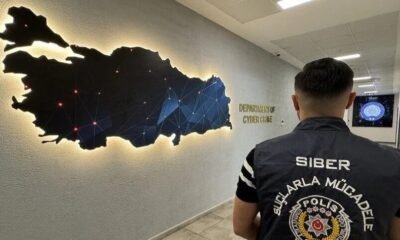
3 jailed in Türkiye over FETÖ-linked infiltration of MASAK data systems