
Politics
Turkish youth in UK face subtle, ‘everyday’ Islamophobia: Study

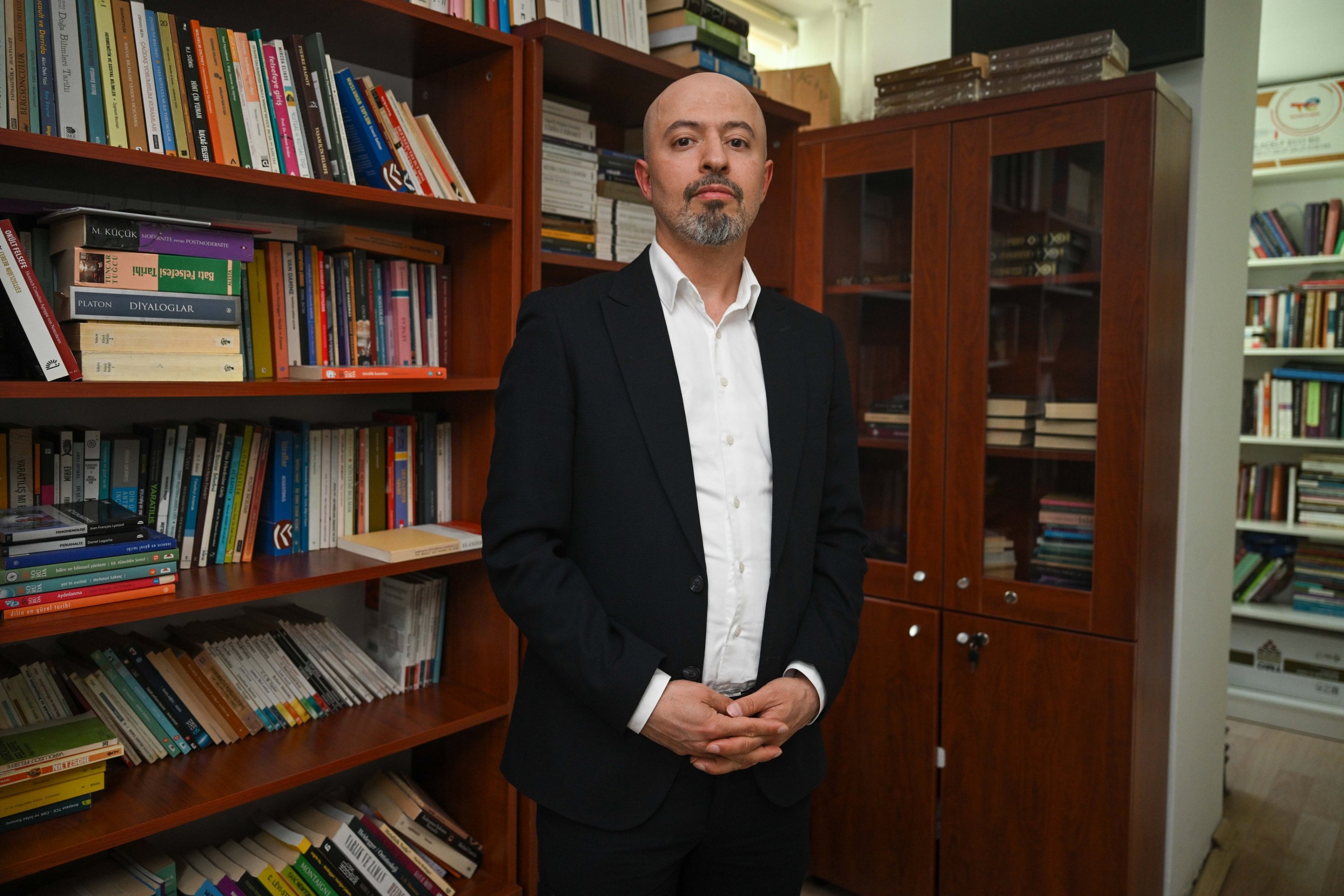
A field study focusing on Turkish youth in the United Kingdom has found that Islamophobia extends beyond overt hostility, taking root in subtle, routine interactions that are often difficult to detect but leave lasting psychological effects.
The research, conducted by Dr. Muhammed Babacan, an assistant professor in the sociology of religion, highlights how discrimination is reproduced not only through explicit acts such as hate speech or physical attacks, but also through what he describes as “everyday Islamophobia.”
Speaking about his findings, Babacan said the phenomenon operates on both “macro” and “micro” levels. At the macro level, he pointed to political discourse and media narratives in Western societies that frame Islam in negative terms, often for political or economic purposes. These narratives, he said, help normalize prejudice and shape public attitudes.
“This situation fuels the micro level,” Babacan said. “The racist mindset, influenced by this macro level, produces racism in daily life.”
According to the study, these broader discourses translate into lived experiences in schools, workplaces, public institutions and on the street. While overt incidents of discrimination remain a concern, Babacan emphasized that many participants described more subtle forms of bias that are harder to identify and prove.
The research contributes to ongoing debates about how Islamophobia should be defined, arguing that it should be understood as a form of racism. Babacan noted that racism has evolved in the modern era, shifting away from biological or genetic markers toward cultural differences.
“In the past, racism was based on physical traits,” he said. “Today, it is shaped by culture, by clothing, religious symbols, lifestyle and perceived compatibility with Western values.”
This shift, often described as “cultural racism,” has become more prominent in the decades following large-scale migration movements after World War II. Generalizations about Muslims, Babacan said, are among the clearest examples of this trend.
The study also found that the effects of Islamophobia are not evenly distributed. Certain groups face more intense forms of discrimination, particularly those whose religious identity is more visible. Babacan highlighted the concept of intersectionality, noting that conservative Muslim women often experience compounded discrimination due to both gender and religious identity.
“The combination of multiple identities increases the severity of discrimination,” he said.
Central to the study is the concept of “everyday Islamophobia,” which Babacan described as a subtle, often hidden form of bias embedded in routine interactions. Unlike overt acts of racism, these experiences are frequently ambiguous, allowing perpetrators or institutions to offer alternative explanations.
In interviews with Turkish youth, participants described situations in which they felt singled out despite a lack of clear evidence. One example involved airport security procedures, where individuals wearing headscarves reported being disproportionately searched or questioned compared to others traveling under similar conditions.
Such incidents, Babacan said, may appear isolated, but their repetition creates a strong perception of unequal treatment.
“Because these experiences are not explicit, they are difficult to prove,” he said. “But over time, they leave a psychological impact and reinforce a sense of exclusion.”
Even seemingly innocuous questions can contribute to this dynamic. Participants reported being repeatedly asked about their origins, even if they were born and raised in the United Kingdom. In some cases, these interactions escalated into overtly prejudiced remarks once their Turkish or Muslim background was revealed.
“The question ‘Where are you from?’ may seem innocent,” Babacan said. “But how and why it is asked can turn it into a form of discrimination.”
The study found that visible markers of religious identity, such as headscarves, play a significant role in shaping how individuals are perceived and treated. These symbols often influence behavior toward individuals in subtle but consistent ways.
Another key finding is how Turkish youth respond to these experiences. Unlike some other Muslim communities, the study suggests that Turks in the United Kingdom tend to adopt identity strategies that emphasize ethnicity rather than religion.
Babacan said many participants viewed Islamophobia as a stigmatized identity associated primarily with other Muslim groups. As a result, they sought to distance themselves from that perception by highlighting ethnic differences.
“Turks living in the U.K. are inclined to construct a different identity outside of this,” he said. “They position themselves separately and emphasize difference.”
This strategy often involves what Babacan described as an emphasis on “whiteness,” invisibility and distinction. By presenting themselves as less visibly Muslim or culturally distinct from other groups, some Turkish youth attempt to avoid discrimination.
The study also introduces the concept of “hypothetical whiteness,” in which individuals perceive themselves as less likely to be targeted due to their relative invisibility within the broader social landscape.
Babacan noted that this dynamic is shaped in part by the structure of minority communities in the United Kingdom. South Asians, who represent a larger and more visible Muslim population, are more frequently the focus of public and media attention related to Islamophobia.
“The fact that South Asians are often the primary target has created a space for young Turks to say, ‘We are different,’” he said.
However, this strategy does not eliminate discrimination entirely. Instead, it reflects an adaptive response to a social environment in which bias is both pervasive and often difficult to confront directly.
The study underscores the need to examine Islamophobia beyond its most visible forms, drawing attention to the everyday interactions that shape the lived experiences of minority communities.
By highlighting these subtle dynamics, Babacan said, the research aims to broaden understanding of how discrimination operates and to encourage more comprehensive approaches to addressing it.
“Islamophobia is not only about extreme cases,” he said. “It is also about the ordinary moments that accumulate over time and shape people’s sense of belonging.”
Ukrainian President Volodymyr Zelenskyy said Monday that two Russian drones struck a Turkish-owned civilian vessel carrying corn in neutral waters in the Black Sea, killing the ship’s captain.
Zelenskyy said Azerbaijani and Indian nationals were aboard the vessel at the time of the attack.
Eleven crew members were rescued, including one who was injured, while the fate of another person was initially unknown, he said in a statement on social media platform X.
The Ukrainian leader described the vessel as a Turkish-owned civilian ship carrying corn and said it was sailing in neutral waters when it was hit by two Russian drones.
Ukraine had proposed measures aimed at reducing tensions and improving security in the Black Sea, and that proposals had also been put forward by third countries, Zelenskyy said.
He accused Russia of choosing attacks rather than ensuring the safe passage of civilian vessels and called for international pressure to restore security in the Black Sea and protect global food supplies.
The incident comes amid heightened security concerns over commercial shipping in the Black Sea as the Russia-Ukraine war continues.

Türkiye extended condolences to the people of Nigeria on Monday and said that it is “deeply saddened” over a deadly military aircraft crash in its Ondo state.
“We are deeply saddened by the loss of lives resulting from the crash of a military aircraft today in Ondo state of Nigeria,” the Foreign Ministry said in a statement.
The statement also offered the nation’s condolences to those who lost their relatives in the accident and to the people of Nigeria.
A military helicopter crashed in the southwestern state of Ondo on Monday, according to Jimoh Abayomi, public relations officer for the state police.
Abayomi said an investigation into the accident had been launched and that security forces had been deployed to the crash site.
Nigerian Aviation Minister Festus Keyamo told reporters that the helicopter crashed near the Igbokoda Naval Base.
He said 25 passengers and seven crew members were on board, adding that the wreckage had been located and search and rescue operations in the area are ongoing.
Keyamo did not provide any information on casualties or injuries from the crash.
However, media reports quoted the African country’s president, Bola Tinubu, as saying that all 32 people on board lost their lives.
The crash was seen as one of the worst air disasters in recent years in Africa’s most populous country.
“The president extends his deepest condolences to the family of the 25 passengers and seven crew members involved,” Tinubu’s office said in a statement.
A video circulating on social media showed a small crowd gathered near a river while rescuers searched the area by boat.
The president said he had “directed the Nigerian Air Force to immediately commence a thorough investigation into the cause of the crash to prevent future occurrences.”
Three suspects, including a former deputy head of Türkiye’s Financial Crimes Investigation Board (MASAK), have been jailed as part of an investigation into alleged political or military espionage involving the agency’s financial intelligence systems.
Former MASAK Deputy Chair Inönü Akgün Alp and agency employees Eda Aydoğan and Güner Eke were arrested as authorities investigate alleged unauthorized access to MASAK’s Integrated Financial Intelligence System, known as EMIS.
The Istanbul Chief Public Prosecutor’s Office is investigating claims that individuals and companies linked to the Gülenist Terror Group (FETÖ) gained influence over the development and maintenance of MASAK’s critical digital infrastructure between 2012 and 2018.
According to findings cited in the investigation, Aydoğan, a former MASAK statistician, allegedly had administrator-level access to an Oracle Exadata database between 2016 and 2019 despite holding no managerial position.
The investigation also found that a security mechanism designed to alert senior officials when financial information belonging to politically exposed persons was accessed was disabled on Sept. 2, 2016.
Investigators allege that thousands of unauthorized searches involving President Recep Tayyip Erdoğan, members of his family and some Cabinet officials were subsequently conducted through EMIS between September 2016 and December 2018.
Financial investigations by police and cybercrime units also uncovered alleged links between FETÖ and subcontracted technology companies responsible for MASAK’s software infrastructure and database management.
Türkiye’s Savings Deposit Insurance Fund (TMSF) was appointed as trustee to several technology companies, whose partners included Hakan Çiçek, group’s civilian imam accused of playing a key role in the 2016 coup attempt detained at Akıncı Air Base, as well as other FETÖ operatives.
According to official reports cited in the investigation, the companies channeled TL 210 million ($4.3 million) to the group through public contracts.
Investigators also found that audit logs designed to record who accessed the systems had been disabled and identifying data deleted. The network is accused of erasing digital traces of unauthorized access involving senior government officials, including the president.
Investigators further allege that audit logs identifying users accessing the systems were disabled or deleted, making it more difficult to trace unauthorized searches.
Separately, witness testimony included in the case file alleges Aydoğan was involved in distributing questions ahead of a 2013 public personnel examination to individuals linked to FETÖ.
Türkiye will host the multinational Nusret-2026 Invitation Exercise from Oct. 6-16 in the Gulf of Izmir and off the coast of Karadeniz Ereğli, the Defense Ministry said Sunday.
The exercise will bring together Turkish forces, as well as military personnel and assets from allied and partner countries, with 20 ships, five aircraft and unmanned systems, the ministry said.
Participants will include units from the Turkish Naval Forces, Air Force and Coast Guard Command, as well as NATO’s Standing Mine Countermeasures Group 2 (SNMCMG-2), comprising assets from Germany, Greece, Italy, Spain and Türkiye.
The Black Sea Mine Countermeasures Task Group, known as MCM Black Sea, with units from Bulgaria, Romania and Türkiye, will also participate.
Explosive ordnance disposal and autonomous underwater vehicle teams from the United States, Belgium, the Netherlands, Kuwait, Romania and Oman will participate in the drills, while 32 military observers from a number of countries will attend.
According to the ministry, the exercise is aimed at improving the participating units’ capabilities in the planning, execution and assessment of mine warfare operations.
It also seeks to enhance interoperability among mine warfare units from different countries and strengthen their ability to conduct coordinated multinational operations.
Türkiye most recently conducted the Sea Wolf-I/2026 (“Denizkurdu-I/2026”) Exercise from Sept. 20-25 in the Black Sea, Aegean Sea and Eastern Mediterranean, with 100 ships, 50 aircraft and 14,000 personnel taking part.
The growing rift between the main opposition New Party (YP) and the former main opposition Republican People’s Party (CHP) manifested in Muğla, a southwestern city home to world-famous Bodrum and other top tourism destinations. A local CHP official suggested that Mayor Ahmet Aras should face disciplinary proceedings for his contacts with YP.
YP was formed in July by Özgür Özel, the former chair of CHP. Özel was removed from office by a court ruling over allegations of vote-buying during a 2023 intra-party election that brought him to power. He was replaced by his predecessor Kemal Kılıçdaroğlu. Kılıçdaroğlu’s return sparked a bitter row with supporters of Özel, who accused him of betraying the party by accepting the court’s request for his reinstatement. Özel initially appealed the verdict but decided to form the new party after receiving overwhelming support among CHP lawmakers.
Under Kılıçdaroğlu, CHP began what it called a “cleansing” process, expelling several figures accused of corruption. The new administration has been more muted about the fate of members openly supporting Özel while several mayors resigned from the party and remain independent, leaving the door open for a future switch to YP.
Aras, who was Bodrum mayor for CHP before his election as Muğla Metropolitan Municipality mayor in the 2024 elections, faces accusations of cooperating with YP while remaining in CHP. CHP’s local branch was angered when Aras temporarily handed over his duties to a YP municipal assembly member in Muğla during a recent visit to Syria. Aras also reportedly ceased contact with CHP’s Muğla branch.
Aziz Gürsoy, head of CHP’s disciplinary board in Muğla, told the Sabah newspaper that Aras has almost severed all ties with CHP.
“It is neither ethical nor legitimate for Mr. Aras to remain in the CHP under the current conditions. In fact, I believe there is bad intent here. He needs to be expelled immediately. Even during his trips abroad, he leaves the municipality (to YP). He has no communication with us. He no longer has any emotional or organic ties to the CHP,” Gürsoy stated.
Stating that they will protect the institutional structure of the CHP under all conditions and that no one is above the party, Gürsoy said: “The current picture creates serious concern among the CHP base. If this situation continues, as the president of the provincial disciplinary board, I will personally apply to headquarters for Mr. Aras’s expulsion. We will not hesitate to take any step necessary to protect the rights, rules and institutional structure of the CHP.”
According to the CHP bylaws, metropolitan mayors can only be referred to the High Disciplinary Board upon the request of the Party Assembly.
The name of Lütfü Türkkan, a lawmaker from the opposition Good Party (IP), came up in an investigation into judiciary officials accused of taking bribes. Prosecutors in Istanbul separated the case of Türkkan and referred it to Ankara on Monday for further investigation.
The Bakırköy Chief Prosecutor’s Office in Istanbul has recently ordered the arrest of eight suspects in an investigation into judges accused of taking bribes in exchange for verdicts in favor of defendants in some cases. The investigation specifically focused on a former judge working at the Court of Enforcement who was accused of receiving millions of Turkish liras in bribes.
Suspects in the case are also accused of running a criminal organization apparently thriving on bribes. Authorities are now looking into cases handled by several Istanbul courts between 2022 and 2024, on suspicion that some businesspeople, politicians and lawyers sought to influence trials and get verdicts in their favor in exchange for bribes, employing judges and court staff. In connection with the case, the Board of Judges and Prosecutors suspended five people, including judges and prosecutors.
In one instance of the suspicious cases, investigators are looking into the claim that M.Ş. and Y.A., identified only through their initials, served as mediators in a case involving lawmaker Türkkan and secured a verdict in favor of the lawmaker, reports by Turkish media outlets say.
In a social media post on Sunday, Türkkan rejected claims, though he acknowledged that a case he was party to was handled by one of the arrested judges. He said that being a party to a trial involving the suspect did not mean that he should be associated with “allegations (of bribery).” He said his lawyers were looking into the case and he never met the judge in person during the trial.


-

 Economy2 days ago
Revolut: $115 billion fintech taking on Europe’s biggest banks
-

 Economy2 days ago
Global M&A deal rush slowed down in Q3 as borrowing costs bite
-
 Economy18 hours ago
Brazilian assets rally as Flavio Bolsonaro tops first-round vote
-

 Economy23 hours ago
Türkiye’s Halkbank after secondary offering amid strong interest: CEO
-
 Politics1 day ago
MP hints at more access for Öcalan amid terror-free Türkiye bid
-
 Economy3 days ago
Egypt’s Sisi calls for peaceful solutions to Africa’s conflicts
-
 Economy2 days ago
ACE BPSC 2026 summit to be held this week in Istanbul
-
 Sports2 days ago
Marked by teen stars, marred by mishaps: 2026 Asian Games end