
Economy
US-China trade talks ‘going well’ on 2nd day: Lutnick

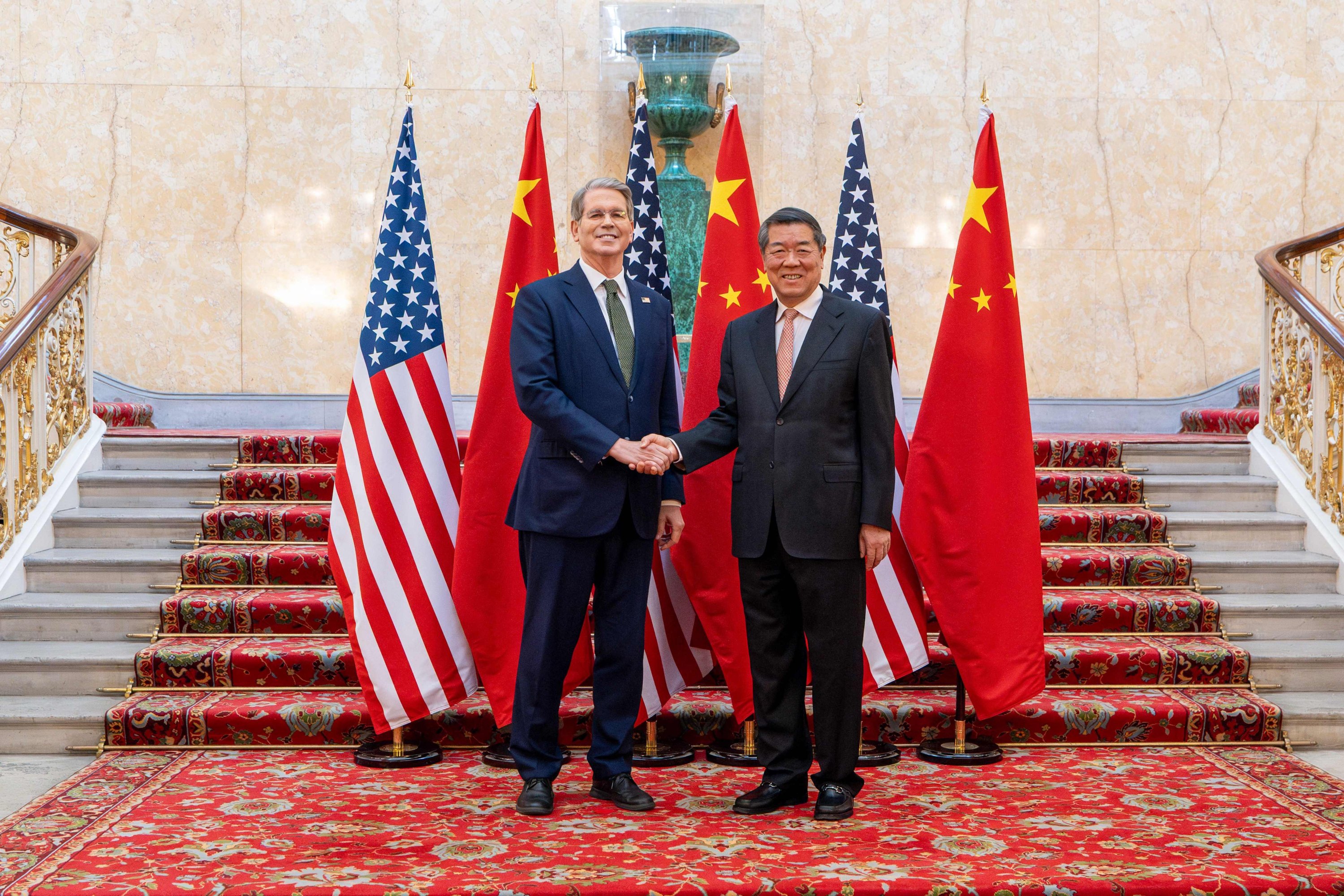
Trade talks with China were going well, U.S. Commerce Secretary Howard Lutnick said on Tuesday as the two sides met for a second day in London, seeking a breakthrough on export controls that have threatened a new rupture in fragile ties between the superpowers.
Having agreed to step back from a full-blown trade embargo at a first round of talks in Geneva in May, the two sides are now seeking agreement after they accused each other of trying to throttle supply chains with a raft of export controls.
White House economic adviser Kevin Hassett said on Monday that the U.S. could lift recently imposed export controls on goods such as semiconductors if China sped up the delivery of rare earths and magnets that are crucial to its economy.
The blow-up over rare earths, which has sparked alarm in boardrooms and factory floors around the world, came after last month’s preliminary deal in Geneva to cut tariffs, which eased investor fears that a trade war would lead to a global slowdown.
“(Talks went on) all day yesterday, and I expect them all day today,” Lutnick told reporters. “They’re going well, and we’re spending lots of time together.”
Trump’s shifting tariff policies have roiled global markets, sparked congestion and confusion in major ports, and cost companies tens of billions of dollars in lost sales and higher costs.
But markets have made up much of the losses they endured after Trump unveiled his sweeping “Liberation Day” tariffs in April, aided by the reset in Geneva between the world’s two biggest economies.
The second round of U.S.-China talks, which followed a rare phone call between Trump and Chinese President Xi Jinping last week, comes at a crucial time for both economies.
Customs data published on Monday showed that China’s exports to the U.S. plunged 34.5% in May, the sharpest drop since the outbreak of the COVID-19 pandemic.
While the impact on U.S. inflation and the jobs market has so far been muted, tariffs have hammered U.S. business and household confidence and the dollar remains under pressure.
Discussing disagreements
The two sides, led at the talks by U.S. Treasury Secretary Scott Bessent, Lutnick and U.S. Trade Representative Jamieson Greer, with the Chinese contingent helmed by Vice Premier He Lifeng, are meeting at the ornate Lancaster House in the British capital.
The talks ran for almost seven hours on Monday and resumed just before 10 a.m. GMT on Tuesday, with both sides expected to issue updates later in the day.
The inclusion of Lutnick, whose agency oversees export controls for the U.S., is one indication of how central rare earths have become. He did not attend the Geneva talks, when the countries struck a 90-day deal to roll back some of the triple-digit tariffs they had placed on each other.
China holds a near-monopoly on rare earth magnets, a crucial component in electric vehicle motors, and its decision in April to suspend exports of a wide range of critical minerals and magnets upended global supply chains.
In May, the U.S. responded by halting shipments of semiconductor design software, chemicals and aviation equipment, revoking export licences that had been previously issued.
Hassett said he expected any export controls from the U.S. to be eased and rare earths released in volume once the two sides had shaken hands in London.
But he said any easing would not include the “very, very high-end Nvidia stuff,” referring to Nvidia’s most advanced artificial intelligence chips that have been blocked from going to China over concerns about potential military applications.
“I’m talking about possible export controls on other semiconductors which are also very important to them,” he said.

Türkiye’s Parliament on Thursday passed a law governing the liquidation of certain funds caught up in last month’s turmoil, allowing interim payments of up to TL 1 million ($20,000) to investors.
It also creates a mechanism to recover losses from those behind the scandal, seize their assets and distribute the recovered money to investors.
President Recep Tayyip Erdoğan said on Wednesday that payments to investors in the funds being wound down would pick up speed once the bill takes effect.
The scandal broke over a month ago, after several investment funds said they were unable to satisfy redemption demands, prompting prosecutors to open an investigation into allegations of widespread market manipulation.
Regulators placed seven firms managing 131 funds into liquidation, affecting nearly half a million individual investors. The Justice Ministry says more than 80 people have been arrested.
The law covers funds whose liquidation the Capital Markets Board (SPK) ordered on Sept. 17 and which have not been fully liquidated when the law is published. It does not set up a general or permanent liquidation regime for other investment funds.
Earlier on Thursday, a statement following a meeting of the Fund Coordination Board, a body created to oversee the liquidation process, said 84 of the funds have been settled, with TL 49.7 billion paid out to 55,755 accounts.
Interim payments
For funds designated by the SPK, according to the law, interim payments will be based on each investor’s “net investment amount.”
Investors whose net investment amount is below TL 1 million can be paid that amount. Investors whose net investment amount is TL 1 million or more can be paid up to TL 1 million.
The interim payment cannot exceed the net investment amount calculated without indexation. In funds other than money market funds, the total value of the investor’s fund units at the end of the previous day will also act as a ceiling.
If the cash available cannot cover everyone’s calculated amounts, the SPK can set methods to make sure as many investors as possible receive payments.
The law does not mean every investor will definitely receive TL 1 million or that all losses will be covered. Payments will depend on each investor’s net investment, the fund’s resources and procedures set by the SPK.
Who is liable for losses
The law addresses how losses from assets unlawfully taken out of the funds will be recovered. Money, securities, goods, rights and receivables taken from fund assets can be treated as unlawfully removed if the transfer breached regulations.
The same applies if it appeared lawful but served no real economic purpose for the fund. This covers loans, advances, collateral, transfers, sales, repo transactions and similar deals with related parties, controlling shareholders, managers or third parties.
The portfolio management company that founded or manages the fund will be primarily liable. If the loss cannot be collected from the company in whole or in part, or it is clear it cannot be, the people and legal entities named by the SPK, as well as those found to have acted with them, can be held personally liable. Leaving a post does not remove liability for actions and decisions taken while in it.
Asset seizures
In investigations into acts linked to the funds, assets can be seized under the Criminal Procedure Code. Money and securities that can legally be returned directly to a fund can be returned to the fund or to a recovery account by order of a prosecutor, judge or court.
For assets that cannot be transferred directly, such as real estate, the Savings Deposit Insurance Fund (TMSF) can be appointed as trustee. The TMSF can sell or liquidate these assets without waiting for the outcome of the case.
Assets that a court orders confiscated, and that came from the fund or cover its losses, can be passed to the fund or its recovery account without being recorded as Treasury revenue.
Treasury and Finance Minister Mehmet Şimşek said this week that anyone who did not voluntarily return profits obtained through market-disrupting activities would face legal proceedings.
How recovered money reaches investors
The TMSF will set up a separate recovery account for each fund, held apart from its own assets and usable only for that fund’s liquidation and investor payments. The money cannot be used for other purposes, pledged as collateral, or seized, even for public debts.
After necessary costs, the remaining money goes to the liquidating institution if liquidation is still under way. If liquidation has finished, it goes to the Investor Compensation Center (YTM) to be paid to fund holders named by the SPK. The YTM will pay in proportion to unit ownership. Amounts below a minimum payment set by the SPK will be carried forward and added to later distributions until they reach the minimum.
The SPK will determine losses, responsible parties and their liability for each fund and notify the TMSF. The TMSF can then begin collection from those people’s assets under the law on collecting public receivables. Istanbul administrative courts will have jurisdiction over resulting cases.
Identifying investors
Fund holders will be identified by reconciling records with the Central Registry Agency (MKK).
Investors whose units were blocked because orders sent to the TEFAS electronic platform on or before Sept. 17 could not be carried out, because the fund defaulted or did not publish a unit price, will also be covered.
Türkiye is waiting for Qatar to send it a sale contract and a draft training program as part of its deal with Britain to procure Eurofighter Typhoon jets, the Defense Ministry said Thursday.
NATO allies Türkiye and Britain signed the deal for 20 jets last year, in a move aimed at deepening bilateral ties and bolstering Turkish air defenses. Ankara has said it was also seeking 24 more jets from Qatar and Oman.
Under the deal with Britain, Qatar and Oman can supply Türkiye with some of its own Typhoons, though that requires a separate sales contract.
At its weekly press briefing, the ministry said that talks on the procurement were continuing and that Turkish and Qatari delegations discussed technical and logistical matters in August and September. These included the scope of jets and ammunition to be procured, training for pilots and maintenance teams.
“It is expected for Qatar to prepare the draft training program and the sales contract to be sent to our country,” it said.
Britain, a leading partner in the Eurofighter program, had been Türkiye’s most vocal supporter, and the agreement followed long negotiations to overcome a German objection to the sale.
Türkiye’s interest in the Typhoons was first reported in 2022, as Ankara grew frustrated with prolonged negotiations over the acquisition of F-16 fighter jets from the U.S.
Türkiye is scheduled to receive the first of the batch of jets from the U.K. in 2030. The deal provides the option for the sale of more jets in the future.
Türkiye meanwhile signed an accord with Qatar, Pakistan and Indonesia on Wednesday to boost defense cooperation and strengthen defensive capabilities, including through joint development and production.
The ministry added that its defense budget was increased for 2027 due to ongoing domestic defense industry projects for air defenses and platforms, Türkiye’s indigenous Kaan fighter jet program, drone development and shipbuilding.
The homegrown fifth-generation warplane is sought to replace the Air Force Command’s aging F-16 fleet, which is planned to be phased out starting in the 2030s.
The premium investors demand to hold French government debt over safe-haven German Bunds widened to its highest level in 15 years on Thursday, as concerns about France’s strained public finances and ongoing street protests weighed on sentiment.
French ministers have promised a significantly expanded security operation for further planned protests on Saturday, with troops expected to be deployed alongside additional police.
France’s benchmark 10-year yield was last up 6.5 basis points at 5.06%, after earlier touching 5.1415%, its highest level since July 2002.
The spread over German Bunds expanded to 177.7 bps, its widest since November 2011 during the eurozone debt crisis, underscoring investor unease about France’s fiscal outlook.
The key question is whether the European Central Bank (ECB) would intervene if market tensions intensify, Nomura senior European economist Andrzej Szczepaniak said.
“We believe the bar for the ECB to intervene is very high,” said Szczepaniak.
“Things would have to worsen a lot from a contagion perspective before the ECB believes that the moves are sufficiently unwarranted and disorderly that they result in a hampering of the ECB’s monetary policy transmission.”
The selloff in French bonds has been driven by political uncertainty ahead of next year’s presidential election and difficulties in passing a budget.
“There exists a consensus that Europe is better equipped today to deal with crises, and that European institutions are stronger today than they were 15 years ago, which should make a European response easier to put together,” Citi economist Giada Giani said, comparing France’s position with that of eurozone peripheral economies during the early 2010s debt crisis.
“But re-emerging euroscepticism is a constraint here,” she added.
French bonds continued to weaken despite data showing an improvement in industrial sentiment in October.
ING economist Charlotte de Montpellier said the rise in business confidence was a welcome surprise given concerns about the political and economic impact of the unrest.
Bunds rise on safe-haven bids
Borrowing costs have risen this year as higher energy prices fuel expectations of tighter monetary policy, increasing pressure on highly indebted countries such as France.
Market expectations for ECB rate increases have remained broadly stable in recent weeks, pointing to about three additional rate hikes by late 2027.
Germany’s 10-year Bund yield, the eurozone benchmark, fell 7 bps to 3.34%, supported by safe-haven demand despite rising oil prices.
Brent crude futures climbed more than $2 a barrel after further Houthi attacks on Saudi Arabia, while natural gas prices rose to their highest level since December 2022.
Yield gaps over Bunds widened across the eurozone, with Belgium’s spread widening 10 bps to 110 bps, its highest since 2012, Italy’s rising 10.5 bps to 123 bps, Spain’s widening 6 bps to 70 bps and Greece’s increasing 8.5 bps to 106 bps.
Germany’s two-year yield, which is more sensitive to interest rate expectations, fell 6 bps to 3.02%.
ECB chief Christine Lagarde said late last month, when markets were pricing in almost four rate hikes by late 2027, that a moderate policy response remained appropriate.
Money markets were last pricing the ECB deposit rate at 3.15% by the end of 2027, implying two quarter-point rate increases and an 80% chance of a third.
Türkiye and Canada opened a new chapter in bilateral relations Thursday, elevating their ties to a strategic partnership aimed at expanding trade, strengthening defense cooperation and deepening energy ties, as the two NATO allies seek to capitalize on their growing economic and security potential.
President Recep Tayyip Erdoğan and Canadian Prime Minister Mark Carney announced the partnership at a joint news conference following talks in Ankara, where they agreed to pursue a free trade agreement and outlined ambitious plans to increase bilateral trade to $5 billion initially and eventually $10 billion, up from approximately $3 billion.
Speaking at the news conference, Erdoğan described the agreement as a historic step toward unlocking the full potential of relations between the two countries.
“Today, we have alleviated the long-standing Türkiye-Canada disconnect. Now, we are starting a new era between Türkiye and Canada,” Erdoğan said.
The partnership will focus on four key areas: trade and investment, defense and security, energy, and people-to-people relations. It will be supported by a three-year action plan designed to translate political commitments into concrete economic and strategic cooperation.
Carney said Canadian and Turkish negotiators would convene in Ankara next month for the first round of free trade talks, marking a significant step toward reducing barriers to bilateral commerce.
“We’ve planted the seeds of something new: a strategic partnership that will create new opportunities for our workers and businesses, and greater security and prosperity for both our peoples,” Carney said.
“With care and commitment, it will grow for generations to come,” he added.
The Canadian leader described Türkiye as an exceptional partner, emphasizing its growing diplomatic influence, military capabilities and strategic position at the crossroads of Europe, Asia and the Middle East.
Carney highlighted Türkiye’s central role in efforts to resolve some of the world’s most difficult conflicts, including those involving Palestine, Ukraine and Iran.
He also praised Türkiye’s defense capabilities, noting that the country possesses NATO’s second-largest standing military and one of the world’s most innovative defense industries.
The Canadian prime minister said Ottawa was pursuing greater collective resilience through international partnerships rather than seeking economic self-sufficiency.
Defense, energy cooperation
Defense and energy emerged as major pillars of the agreements, reflecting Türkiye’s expanding defense industry and Canada’s interest in developing new strategic partnerships.
Erdoğan expressed hope that Canada’s proposed Defense, Security and Resilience Bank initiative would provide additional support for bilateral defense industry cooperation.
Türkiye, which has developed a rapidly expanding domestic defense sector, is seeking greater international investment, technology partnerships and access to new markets.
The two countries have also taken steps to overcome previous restrictions affecting defense trade. In 2024, Canada lifted export controls on certain military technologies destined for Türkiye, including optical equipment used in Turkish-made drones.
During Thursday’s meetings, Turkish and Canadian ministers signed agreements covering energy, defense and air transport cooperation.
Carney said the countries’ energy ministers would work together on liquefied natural gas (LNG), nuclear energy and critical minerals, sectors considered increasingly important for energy security and industrial competitiveness.
Türkiye has been exploring international partnerships for its planned second and third nuclear power plants, including discussions with Canadian engineering company AtkinsRéalis, South Korea’s Korea Electric Power Corporation and China’s State Power Investment Corporation.
The expanded partnership could create additional opportunities for Canadian participation in Türkiye’s nuclear energy ambitions and critical mineral development.
Economic cooperation will also extend beyond the two countries’ borders.
Carney said Export Development Canada and Türk Eximbank would conclude an agreement aimed at helping Canadian and Turkish companies collaborate on projects in third countries.
He is also scheduled to meet leading Turkish business executives and investors in Istanbul on Friday as part of efforts to deepen commercial engagement.
Canada diversifies trade partnerships
The agreement comes as Canada accelerates efforts to diversify its international trade relationships amid mounting economic tensions with the U.S.
Carney has embarked on a broad diplomatic and commercial initiative to reduce Canada’s dependence on the U.S. market following sweeping tariffs imposed by President Donald Trump and repeated tensions over bilateral relations.
Nearly 70% of Canadian exports continue to go to the U.S., underscoring the challenge facing Ottawa as it seeks to expand alternative markets.
The Canadian government has pursued more than 20 trade agreements over the past year as part of Carney’s broader objective of doubling exports to markets outside the U.S. over the next decade.
Despite its relatively modest share of Canada’s overall international trade, Türkiye has emerged as a potentially important partner because of its manufacturing capabilities, defense industry, energy requirements and access to regional markets.
Bilateral trade has increased by nearly 50% over the past five years, although Türkiye still accounts for less than 0.3% of Canada’s merchandise trade, valued at approximately 4.34 billion Canadian dollars ($3.09 billion).
Canada primarily exports agricultural products such as lentils, along with aircraft and electronic equipment, to Türkiye. Turkish exports to Canada include medical devices, aircraft engines, vessels and jewelry.
Erdoğan said the two countries were determined to build on this momentum and substantially increase commercial exchanges.
The Turkish president also praised Carney’s approach to international affairs, describing him as a leader demonstrating common sense and political acumen amid growing global uncertainty.
Türkiye and Canada sign 3 agreements
Following one-on-one and delegation-level talks at the Presidential Complex in Ankara, Türkiye and Canada signed three agreements in the presence of Erdoğan and Carney.
A memorandum of understanding on defense sector partnerships was signed by Turkish Defense Industries Presidency (SSB) head Haluk Görgün and Canadian Foreign Minister Anita Anand.
An air transport agreement was signed by Transport and Infrastructure Minister Abdulkadir Uraloğlu and Anand.
Meanwhile, a joint declaration on energy cooperation was signed by Energy and Natural Resources Minister Alparslan Bayraktar and Canadian Energy Minister Tim Hodgson.
For Ankara, closer ties with Ottawa offer opportunities to attract investment, expand defense partnerships and secure additional cooperation in advanced technologies and energy.
For Canada, the agreement represents another step toward building a more diversified network of economic and security partners beyond its traditional reliance on the United States.
Both leaders emphasized that the new strategic partnership was intended to produce lasting economic benefits and strengthen cooperation on regional and global challenges.
Türkiye is in an “advantageous” position regarding global indebtedness, Treasury and Finance Minister Mehmet Şimşek said Thursday, noting that the country’s low total debt level enhances its resilience to economic shocks.
“The ratio of total debt to global output has exceeded 300% globally and 230% in emerging markets. Türkiye is in an advantageous position in this respect,” Şimşek told the 19th Verona Eurasian Economic Forum held in Istanbul.
“The low level of indebtedness in Türkiye enhances its resilience to economic shocks. Thanks to low indebtedness, the ability to respond to economic shocks and sustain growth is higher,” he added.
His remarks came amid growing concerns about high public debt in some countries, including France, which has recently been rocked by massive nationwide protests and riots.
Speaking at the opening of the forum, Şimşek also evaluated the importance of connectivity amid global supply shocks, also suggesting that protectionism has become the new normal for the world economy since the global financial crisis.
The 19th Verona Eurasian Economic Forum kicked off in Istanbul on Thursday, bringing together political, diplomatic, academic, and business representatives from more than 30 countries. It is organized with the support of the Independent Industrialists and Businessmen’s Association (MÜSIAD) and Ibn Haldun University.
The two-day forum, held at the Çırağan Palace under the theme “Challenges of a Changing World and a Changing Economy,” was set to focus on major shifts in the global economy and geopolitical landscape.
The minister, as part of his remarks, also reiterated that Ankara’s approach regarding regional conflicts is to advocate for peace and stability, and he also underscored the importance of trade agreements and work on enhancing relations with more partners within the framework of “rules-based trade.”
On the question of debt, Şimşek noted that Türkiye’s budget deficit-to-GDP ratio is about half of the global average for emerging markets, and the public debt-to-GDP ratio is about one-third of that average.
Moreover, he mentioned that an aging population has become a significant global problem, stressing that the decline in fertility rates and the decrease in the working-age population pose new challenges for countries. However, he pointed out that Türkiye still, according to their calculations, has an 18-20 year window of opportunity in this respect, as its working-age population growth is still positive.
He also evaluated AI preparedness, noting that Türkiye is ahead of developing countries in terms of readiness for artificial intelligence, but not at the same level as advanced economies, and acknowledged that there is more to be done in this area.
On the broader macroeconomic picture, he reaffirmed the goal of taming inflation.
“We expect our national income to reach approximately $1.8 trillion this year at current exchange rates, and about $4 trillion based on purchasing power parity,” he said.
“(Despite our advantages), of course, we have challenges too. We are implementing holistic policies to overcome high inflation,” he said.
“As President Erdoğan and his team, we are business-friendly. If you choose to conduct all or part of your business in Türkiye, we want to assist you.”
British banking giant Barclays said on Thursday it plans to cut around 5,000 jobs, or roughly 5% of its global workforce, by the end of the year in an AI efficiency drive.
The announcement came alongside an earnings update that showed Barclays’ net profit grew 13% in the third quarter, fuelled by surging income across its equities division.
Barclays said in an earnings presentation that it was implementing “organizational simplification and technology change efficiency driven by AI.”
“About 60% of the job losses relate to support functions, including fewer developers as AI makes our people more productive,” it added.
The bank’s profit after tax grew to 1.65 billion pounds ($2.2 billion) in the third quarter from 1.46 billion pounds in the July-September period a year earlier.
Barclays chief executive C. S. Venkatakrishnan noted “ongoing momentum of… operational and financial performance” and said the investment bank division “delivered strong equities performance.”
Revenue from equities jumped 47% year-over-year, while total group income for the quarter climbed three percent to 7.37 billion pounds.
Barclays’ share price was up slightly following the news updates.
The AI “announcement comes as the company failed to match expectations with its third-quarter performance – with the unveiling of a healthy share buyback failing to entirely ease investors’ disappointment,” noted AJ Bell investment director Russ Mould.
“Across the wider group, costs went up and Barclays shareholders are also having to contend with two major clouds over the business.
“The first being a widely expected increase in tax on the sector in next week’s (U.K.) budget and the other being a reported probe into possible misrepresentation of risks in its private credit portfolio.”


-
 Economy2 days ago
Canadian PM Carney due in Türkiye amid push for free trade deal
-
 Economy3 days ago
Turkish households’ confidence in lira remains resilient: S&P
-
 Politics3 days ago
Turkish, Saudi FMs discuss regional security in phone call
-

 Politics1 day ago
Türkiye’s AK Party edges closer to reform local governance
-

 Sports3 days ago
Osimhen, Leao return to Lille as Galatasaray seek European lifeline
-

 Economy3 days ago
US bans govt agencies from using DeepSeek, China vows to protect firms
-
 Politics2 days ago
Turkish Cypriot leader vows continued diplomacy to end isolation
-
 Politics3 days ago
Erdoğan lauds work to spare Türkiye from turmoil amid Israeli tensions