
Sports
ICE fears cast shadow over World Cup for minority fans in US

Haiti’s first World Cup appearance since 1974 has become a powerful moment of national pride, but for Emile, a Haitian living in Ohio, it is overshadowed by fear tied to US President Donald Trump’s immigration crackdown.
“Singing my country’s national anthem in a stadium in front of the whole world is a historic moment that no one would want to miss,” the truck driver in his 40s, who requested anonymity, told Agence France-Presse (AFP).
“But at the same time, I think twice. I don’t want to be arrested by ICE,” he added, referring to US Immigration and Customs Enforcement, the agency responsible for detaining and deporting undocumented migrants.
“My lawyer advised me not to fly so I don’t get caught at the airport,” he said.
His concerns echo those of many in immigrant communities who have watched Immigration and Customs Enforcement operations across multiple US cities, often carried out by heavily armed and masked officers.
Outrage peaked when ICE officers shot and killed two American demonstrators in Minneapolis.
“Now, people are making sure they are aware of what they are doing, and they don’t feel safe,” Monica Sarmiento of the Virginia Coalition for Immigrant Rights told AFP.
“They are afraid. We have seen very aggressive tactics from ICE that have gone after not only undocumented communities but also people with protected status.”
Sarmiento said 70% of those arrested, detained and deported have no criminal record.
“Many of them have been here for decades, paying taxes for decades,” she added, condemning what she called “a fearful and hostile environment across the country, not only for the World Cup but every single day.”
Seventy-eight of the 104 World Cup matches will be held in the United States, which is co-hosting the June 11 to July 19 tournament with Canada and Mexico.
The possibility of ICE activity around US matches has sparked concerns within the US Hispanic community, which makes up about 20% of the US population and is concentrated in California, Texas and Florida, with significant representation in cities such as Miami, Los Angeles, Dallas and New York.
The Haitian community, estimated at about 850,000 people in 2024, is also largely concentrated in Miami and New York.
The Trump administration has sought to end temporary protected status for which Emile and others are eligible. It shields them from deportation to their home country, one of the poorest in the world and one still grappling with political instability, economic crisis and gang violence.
Serious rights violations
Fears have been fueled by reports, including one from Human Rights Watch, which said an asylum-seeker who attended the Club World Cup final last year in New Jersey with his children was arrested by ICE and deported to his country of origin.
Some rights organizations also fear ICE will target foreign tourists around stadiums and in the numerous fan zones where supporters are expected to gather.
More than 120 US civil rights organizations, including the American Civil Liberties Union, issued a travel advisory in April warning of the risk of serious rights violations for fans, players, journalists and other visitors.
The signatories said travelers to the United States could face denial of entry, arrest, detention and deportation, racial profiling, and “cruel, inhuman or degrading treatment, and even death while in ICE detention or custody.”
ICE, one of several agencies under the Department of Homeland Security, has long been involved in security operations at major sporting events such as the Super Bowl.
“International visitors who legally come to the United States for the World Cup have nothing to worry about,” a DHS spokesperson told AFP.
“What makes someone a target for immigration enforcement is whether they are in the US illegally.”
World football’s governing body, FIFA, responding to a question from AFP, said it “is committed to respecting all internationally recognized human rights and strives to promote the protection of these rights.”

People in Manchester expressed shock and disappointment over the scale of the financial breaches involving Manchester City, with some calling for the club to be relegated from the Premier League.
“It’s a shame for football. Football is such a great sport and we can’t have stories like that,” said Karem Fagega, a 21-year-old student, as he reacted to the findings against a club he described as having been “such a good team.”
An independent commission found that the Abu Dhabi-backed club used what it described as “sham” contracts with several commercial partners to artificially inflate its revenue and reduce costs by more than 900 million pounds ($1.2 billion) between 2009 and 2018.
During that period, City won the Premier League title three times, as well as one FA Cup and three League Cups.
“They do have the money to do everything right, but they decided to do everything wrong. So I was kind of shocked when I learned about it,” said Sabrina Lodi, a 33-year-old account manager, after the news broke Tuesday.
She said, however, that in her view, Manchester City “are not the only ones that do it from around the world,” but were “just the ones that got caught.”
For Connor Emery, a 25-year-old retail worker who supports City’s Premier League rivals Liverpool, the “damning” verdict came as a surprise.
“I can’t believe it, to be fair. I never thought the club would get in trouble for anything,” he said, adding that he had expected the scandal to be “brushed under the carpet.”
Asked about possible consequences for the club, some said they wanted relegation but expected City to avoid it.
British Sports Minister Lisa Nandy warned that “the ultimate sanction is very serious indeed” and that a club “can be expelled from the Premier League.”
“I personally think it should be a relegation,” said Corey, an 18-year-old student and fan of Manchester’s other club, United, adding that the outcome “depends on what the Premier League have in place.”
“I would want a relegation, probably a points deduction to get them relegated,” Emery said.
But he was skeptical that would happen, adding with a shrug, “It’s probably going to be a fine, let’s face it.”
In initial reactions from those close to the club, former City defender Micah Richards told The Rest Is Football podcast he was “absolutely devastated” by the revelations involving the club where he began playing at age 14.
“I feel saddened. I feel angry. I feel a little bit confused,” he added, citing a lack of information and conflicting accounts after City CEO Ferran Soriano described the verdict as a “Premier League conspiracy theory” and insisted the club would “be vindicated.”
Former Manchester United captain Roy Keane said that, if he were a City player, he would throw away all his medals.
“They knew it would hurt a lot of people, but they’ve still done it, and, if I was a player, I’d be 100 per cent sticking those medals in the bin,” he told ITV.
Türkiye’s Nations League campaign has reached a critical point after two defeats left the national team at the bottom of Group 1 in League A with no points, making its remaining four matches crucial to its hopes of avoiding relegation and potentially reaching the quarterfinals.
The Crescent Stars opened their first-ever campaign in the top tier of the UEFA Nations League with a 1-0 defeat to France before suffering a 4-1 loss to Italy.
Türkiye now faces Belgium away on Friday, Oct. 2, knowing that the two meetings with the Belgians could have a major impact on its hopes of staying in League A.
The match at Maurice Dufrasne Stadium in Liege kicks off at 9:45 p.m. Türkiye time.
Quarterfinal route remains open
Under the Nations League’s new format, the top two teams in each League A group advance directly to the quarterfinals. The team finishing fourth is relegated directly to League B, while the third-placed team enters a promotion-relegation playoff against a League B runner-up.
With four matches still to play, Türkiye can theoretically finish with 12 points if it wins every remaining game.
That would give the national team a strong chance of breaking into the top two, although its quarterfinal hopes also depend on results involving France and Italy.
If France and Italy take points off each other in their remaining meetings, Türkiye’s task becomes more manageable. In that scenario, winning at least three of its final four matches could potentially put the Crescent Stars into contention for a top-two finish.
The margin for error, however, is extremely small after the team’s winless opening.
Third place offers another route
A more attainable target is third place, which would give Türkiye a chance to remain in League A through the promotion-relegation playoffs.
The national team needs to start collecting points quickly, with six or seven points from its remaining matches potentially putting it in contention for third place depending on the other results.
Four points from the two Belgium matches, through one win and one draw, would provide an important boost. A draw against either France or Italy could then leave Türkiye with five points, potentially enough for third place depending on how the group develops.
The exact points total required will ultimately be determined by the results of the other teams.
Added importance
The two games against Belgium are particularly significant because they directly affect Türkiye’s battle at the bottom of the group.
Losing both matches would leave the Crescent Stars in serious danger of finishing fourth and being relegated directly to League B.
Winning one or both meetings, meanwhile, would give Türkiye a valuable opportunity to close the gap on its rivals while also improving its head-to-head position.
The first test comes Friday in Liege before Belgium travels to Türkiye for the return match in November.
Injury concerns
Türkiye’s preparations have also been affected by injury concerns.
Orkun Kökçü, who started against Italy, missed the latest training session because of increased pain in his toe.
Emirhan Topçu was also absent from training while dealing with an injury-related problem.
The national team is scheduled to continue preparations at 5 p.m. at the TFF Hasan Doğan National Teams Camp and Training Facilities in Riva.
Türkiye’s remaining Nations League schedule
Friday, Oct. 2
Belgium vs. Türkiye, 9:45 p.m.
France vs. Italy, 9:45 p.m.
Monday, Oct. 5
Italy vs. Türkiye, 9:45 p.m.
France vs. Belgium, 9:45 p.m.
Thursday, Nov. 12
Türkiye vs. Belgium, 8 p.m.
Italy vs. France, 10:45 p.m.
Sunday, Nov. 15
France vs. Türkiye, 10:45 p.m.
Belgium vs. Italy, 10:45 p.m.
A Flydubai flight carrying more than 170 passengers from Dubai to Tel Aviv diverted to Saudi Arabia on Wednesday after transmitting emergency transponder codes, including one associated with a possible hijacking, triggering an Israeli military response before authorities determined the incident was not believed to involve a hijacking.
Flight FZ1073, operated by a Boeing 737 MAX 8, was traveling toward Ben Gurion Airport when it transmitted the international emergency code 7700 and briefly switched to code 7500, which is used to indicate unlawful interference or a possible hijacking.
The aircraft subsequently changed course, descended sharply and headed toward Saudi Arabia, according to flight-tracking data and Israeli media reports. It eventually landed safely at Tabuk Airport.
The unusual flight path and emergency signals prompted Israeli authorities to treat the situation as a potential security threat.
Israeli media reported that the Air Force scrambled fighter jets after the alert, while Prime Minister Benjamin Netanyahu and Defense Minister Israel Katz held an urgent security consultation with senior defense officials.
The Israeli military also carried out a situation assessment involving the Air Force and other security agencies as authorities sought to determine what had happened aboard the aircraft.
A security source cited by Ynet said there was no confirmed information that the aircraft had been hijacked and that the pilot had activated a distress signal.
The Prime Minister’s Office later said the diversion to Saudi Arabia was not believed to have been the result of a hijacking.
Emergency codes
The aircraft departed Dubai International Airport early Wednesday on its scheduled service to Tel Aviv. It was carrying roughly 174 passengers, according to reports, including about 27 children.
During the flight, the aircraft transmitted the 7700 general emergency code before briefly transmitting 7500, the code associated with unlawful interference.
The 7500 signal immediately raised the possibility of a hijacking, particularly because the aircraft was headed toward Israel, where security authorities have remained on high alert amid the wider regional security situation.
Flight-tracking data showed the aircraft changing direction and descending to a much lower altitude than its normal cruising level before continuing toward Saudi Arabia. Reports said the aircraft descended to around 15,000 feet.
The combination of the emergency signals, course reversal, descent and temporary concerns over communications intensified the response.
Israeli media initially reported that contact with the aircraft had been lost, although subsequent reports indicated that it was continuing toward Saudi Arabia and was expected to land at Tabuk.
The aircraft eventually landed safely.
Immediate action
The alert prompted an immediate military response in Israel, with fighter jets scrambled as authorities assessed whether the aircraft posed a security threat.
Netanyahu and Katz convened an emergency consultation, while senior military officials assessed the situation with the Air Force.
Other Israeli security bodies were also reported to have been involved in assessing the incident.
Some Israeli reports said departures from Ben Gurion Airport were temporarily affected while the situation was being evaluated.
The response reflected the seriousness with which aviation authorities treat a 7500 transmission. The code is designed to alert air traffic control and relevant security agencies to a possible unlawful interference situation.
However, the transmission alone does not establish that a hijacking has taken place.
Pilot dispute reported
As the situation developed, Israeli reports indicated that the incident was not believed to have been caused by a hijacking or an external security threat.
Reports cited by Israeli media suggested that a physical altercation between the pilots may have prompted the emergency signals and the subsequent diversion.
That account remained subject to further verification, however, and detailed official information from flydubai or UAE aviation authorities was not immediately available in the initial coverage.
The Israeli Prime Minister’s Office confirmed the broader assessment that the diversion was not believed to have been a hijacking incident.
The aircraft’s safe landing in Tabuk brought the immediate security alert to an end.
The incident nevertheless demonstrated how quickly an aviation emergency can escalate when an aircraft transmits a hijacking-related code, particularly on a route involving Israel.
Dramatic diversion
The flight was ultimately diverted well before reaching its planned destination at Ben Gurion Airport.
Rather than continuing toward Israel, the aircraft headed for Tabuk in northwestern Saudi Arabia, where it landed safely after the emergency.
Israeli authorities subsequently scaled back their response after determining that there was no confirmed hijacking threat.
The exact circumstances inside the cockpit, including what prompted the emergency transmissions and the aircraft’s abrupt change in course and altitude, remained under review.
The incident also highlighted the sensitivity of commercial aviation routes between the United Arab Emirates and Israel, which were established following the normalization of relations under the Abraham Accords.
Manchester City’s legal battle with the Premier League could take months or even years to resolve, but reports that the club has been found guilty of 114 of 115 financial charges have already raised major questions about sanctions, titles, compensation and the future of its squad.
The Athletic first reported Friday that an independent panel had found City guilty on all but one of the 115 charges brought against the club. A soccer source familiar with the case confirmed the reports to Reuters, saying the process was expected to “drag on.”
No punishment has been formally imposed, and City are expected to appeal any sanction.
Under Premier League rules, punishments can range from a fine or points deduction to expulsion from the competition. The scale of any penalty would depend on the findings and the specific breaches involved.
City chairman Khaldoon Al Mubarak addressed the reports in an open letter to supporters Saturday, reiterating the club’s position that it has committed no wrongdoing.
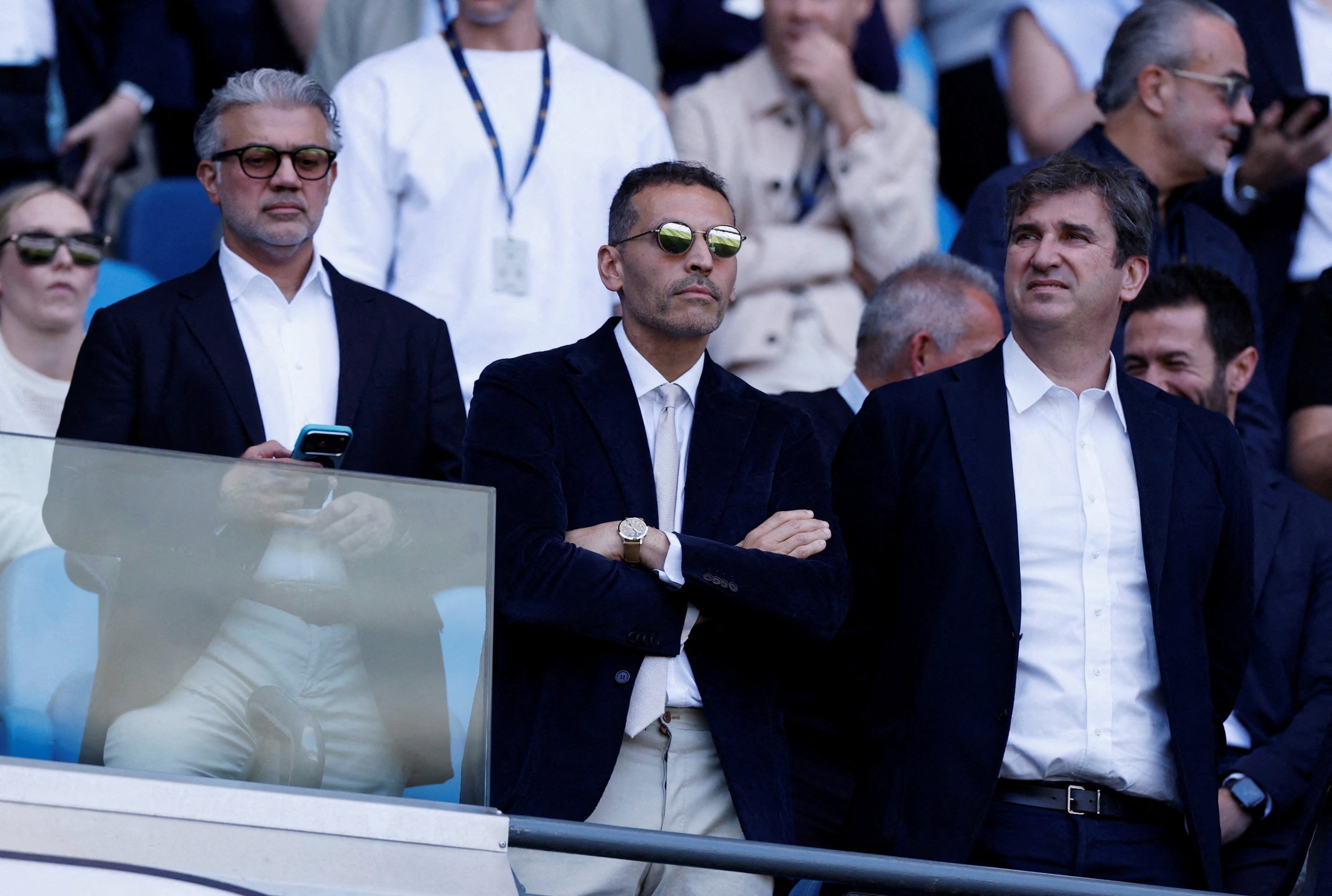
“The Premier League process still has a long way to run, and our confidence and intent in proving the club’s innocence is just as strong as when this began,” Al Mubarak wrote.
A three-person appeal board would hear any challenge against the independent judicial panel’s ruling. Unlike in UEFA cases, City cannot take the matter to the Court of Arbitration for Sport.
That distinction is significant because Court of Arbitration for Sport (CAS) overturned a two-year Champions League ban imposed on City by UEFA in 2020 over alleged breaches involving sponsorship revenue.
The Premier League case is considerably broader. The charges cover nine seasons between 2009 and 2018 and followed a four-year investigation that began after German publication Der Spiegel released leaked documents involving City executives in 2018.
Season in limbo
The timing could create an extraordinary situation for the Premier League.
City currently lead the table after five consecutive victories, but the club could potentially finish the season without knowing whether or how it will be punished.
Even if a verdict and sanction are announced during the campaign, an appeal could delay the implementation of any punishment.
A major points deduction could transform City from title contenders into relegation candidates, depending on its size and timing. Everton and Nottingham Forest were docked points during the 2023-24 season for financial-rule breaches, although City’s case involves a much larger number of alleged violations.
The most severe punishment could be expulsion from the Premier League.
That would raise another difficult question over timing. If a sanction were imposed immediately and later overturned, the consequences for the league table and European qualification could be difficult to reverse.
If enforcement were delayed until all appeals were exhausted, rival clubs could argue that they had suffered financial losses because City remained in the competition.
Titles at risk?
One of the most contentious issues would be what happens to the trophies City won during the period covered by the charges.
Between 2009 and 2018, City won four Premier League titles, four League Cups and the 2011 FA Cup, the club’s first major trophy in 35 years.
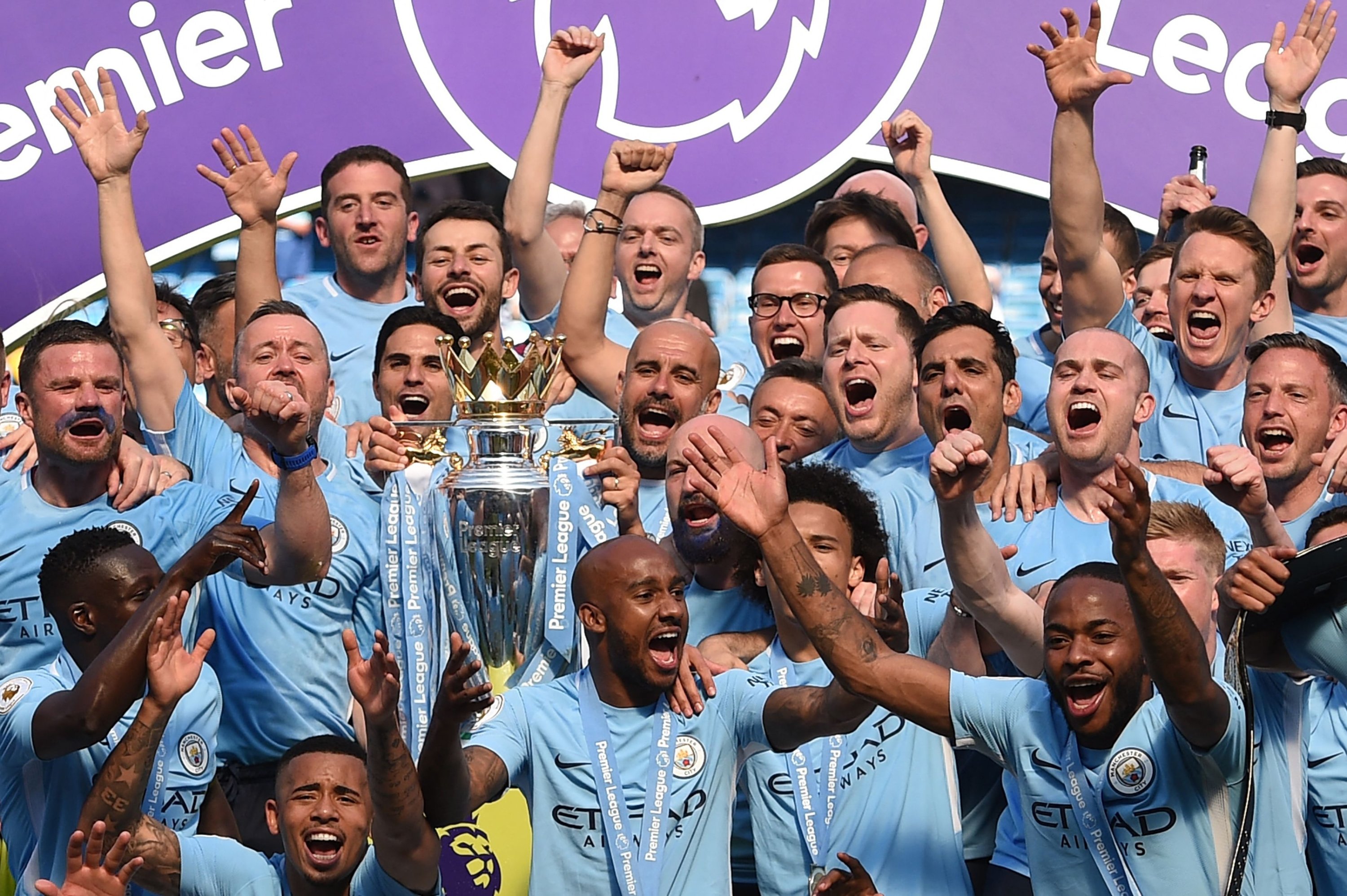
Manchester United and Liverpool finished second to City twice during those four title-winning campaigns.
That could fuel calls for titles to be retrospectively reassigned if City’s championships were deemed to have been secured through an unfair sporting advantage. But rewriting the Premier League record books would be a complicated process.
City have won four more league titles since 2018, creating further questions about whether later success could also be affected by the findings.
Former Stoke manager Tony Pulis, whose team lost the 2011 FA Cup final to City, said he did not expect trophies simply to be redistributed.
“I don’t seriously believe any other trophies and titles will be handed back over either,” Pulis told the BBC. “A points deduction and a massive fine feels far more likely. But I still feel cheated.”
The most prominent precedent is Juventus following the Calciopoli scandal in Italy. Juventus were stripped of two Serie A titles and relegated to Serie B in 2006 after a scandal involving the manipulation of referee assignments.
A similar decision in England would have major implications for the Premier League’s historical records.
Rival clubs could seek compensation
Financial compensation may prove a more realistic battleground than the redistribution of trophies.
If City are ultimately found to have gained a sporting or financial advantage through the breaches, rival clubs could seek compensation for lost prize money, European qualification revenue or other financial opportunities.
There is already a recent Premier League precedent. Everton were ordered in June to pay Burnley 35 million pounds ($46 million) after Burnley argued it had been harmed when Everton avoided relegation during a season in which the Merseyside club breached financial sustainability rules.
Similar claims against City could come from clubs that finished behind them in title races or missed out on European competition.
Establishing the precise financial loss suffered by each club, however, could create another lengthy legal battle.
What happens to City’s players?
The legal uncertainty has so far done little to affect City’s ability to attract and retain elite players.
The club recently spent about 460 million pounds in a single transfer window on players including Enzo Fernandez, Elliott Anderson and Ayyoub Bouaddi.
Erling Haaland also signed a nine-year contract in 2025 that could keep him at the Etihad Stadium until he is 34.
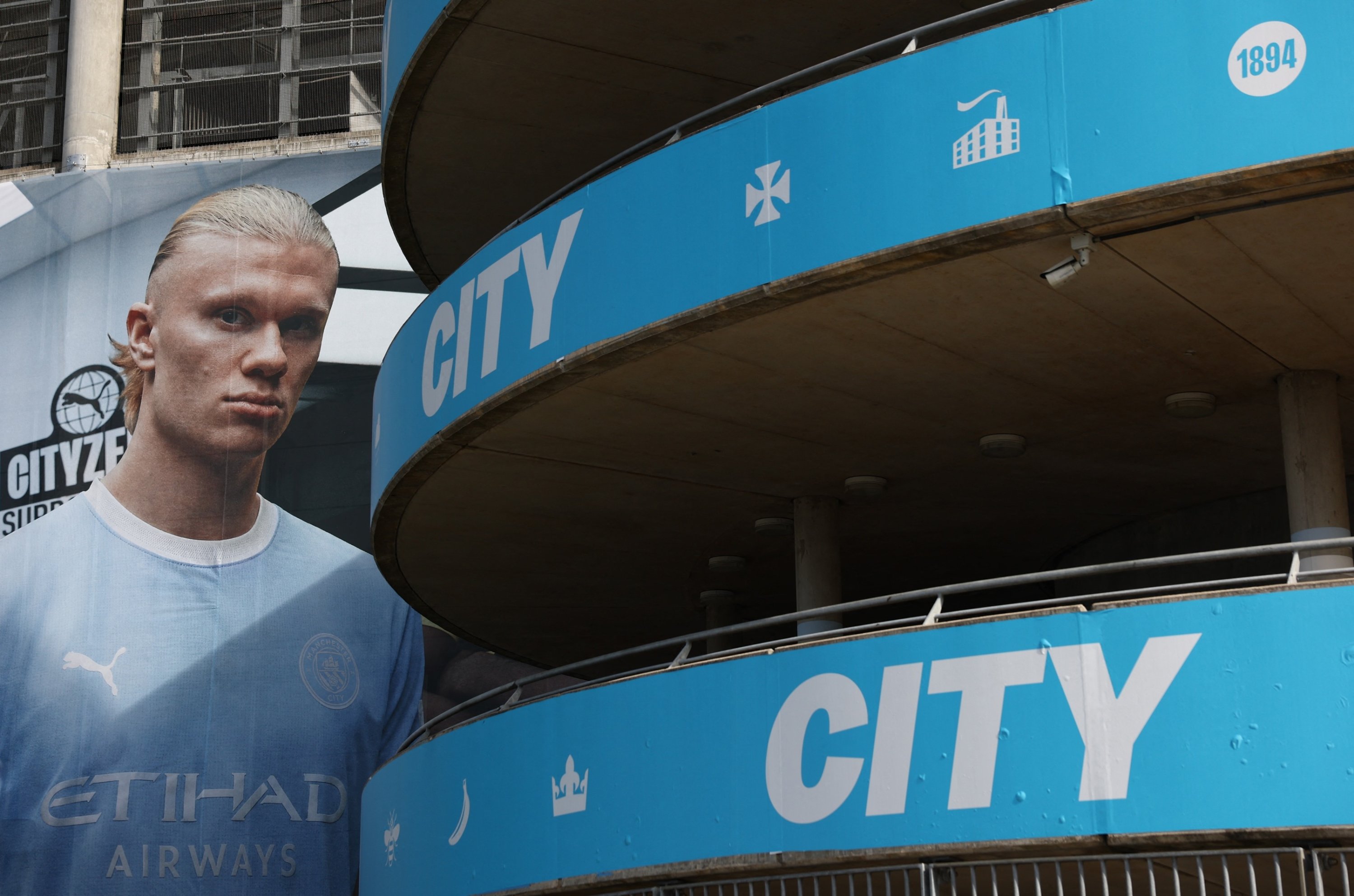
The question is whether players have negotiated clauses allowing them to leave if City receive a severe sporting punishment. Those contractual details are not publicly known.
A points deduction could affect the club’s appeal to some players, while relegation or expulsion would present a far greater challenge to its ability to retain its squad.
For now, there is no indication that City’s players will be forced to leave.
A case with major consequences
The Premier League case against City has become one of the most consequential legal disputes in English football.
The reported guilty findings do not represent the end of the process. A sanction, appeal and potentially further legal challenges still have to be resolved.
If the findings ultimately stand, the consequences could extend far beyond City, affecting league standings, European qualification, prize money and the historical record of the Premier League.
A major investigation into Türkiye’s football refereeing system has led to the detention of seven people, including Central Referees Committee (MHK) President Ferhat Gündoğdu, over allegations involving workplace bullying and official document forgery.
The Istanbul Chief Public Prosecutor’s Office launched the “Referees File” investigation after receiving a complainant’s statement on Sept. 15, 2025. Investigators said they examined open-source material, Financial Crimes Investigation Board (MASAK) findings, historical telephone records, witness and complainant statements, and expert reports before determining that Gündoğdu and others could be linked to the alleged offenses.
Police carried out simultaneous operations Tuesday in Istanbul, Ankara, Elazığ and Manisa. Seven suspects were detained, including Gündoğdu, who oversees refereeing through the MHK, a body operating under the Turkish Football Federation (TFF).
Those detained are Gündoğdu; Ferdi Karadoruk, president of the TFF Active Referees Association; Sebahattin Şahin, an MHK member and TFF education and fourth-region official; Emre Kosif, president of the TFF Referees and Observers Association’s Istanbul Provincial Referee Board; Alican Sağlar, organizational official of the association’s Istanbul branch; former MHK vice president Ahmet Şahin; and former MHK member Yunus Yıldırım.
Center of investigation
Investigators have examined message records that allegedly shed light on how referee examinations and appointments were handled.
According to records cited in the investigation, referee G.H.E. contacted Karadoruk on May 15, 2025, asking about questions for a refereeing examination. Karadoruk allegedly replied that he had requested them from Emre Kosif and would ask again.
Four days later, G.H.E. reportedly reminded Karadoruk about the questions. Karadoruk allegedly responded that he was asking Kosif for them for a third time and would return to the matter after a May 19 program.
The file also contains an alleged message from Karadoruk concerning Istanbul provincial referee board member Mehmet Çaylak. In the message, Karadoruk allegedly discussed withholding observer assignments from Çaylak and using pressure in an effort to make him resign.
The messages form part of the evidence being examined by prosecutors and do not, by themselves, establish that the alleged offenses occurred.
Alleged manipulation
The investigation extends beyond individual messages, with prosecutors examining alleged irregularities involving referee appointments, classifications, scoring and evaluation procedures.
Investigators are also examining claims of interference in refereeing examinations, including allegations that questions and grading were manipulated during a 2025 examination in Riva and that some results were subsequently changed.
WhatsApp conversations allegedly found on a phone belonging to Karadoruk have also been examined. The phone was reportedly seized and analyzed in connection with a separate obscenity investigation, with some messages allegedly concerning the selection of referee lists.
The investigation has also raised allegations involving the unlawful acquisition of personal data, breach of trust and other offenses against some of the suspects. The specific allegations vary by individual and remain subject to the ongoing investigation.
Searches across four provinces
The Istanbul Financial Crimes Branch conducted the operation under the coordination of the Istanbul Chief Public Prosecutor’s Office’s Illegal Betting and Sports Crimes Bureau.
Authorities said evidence gathered through financial investigations, telephone records, witness testimony, open-source research and expert analysis pointed to possible links between Gündoğdu, MHK members, referees and observers.
Searches were carried out at addresses connected to the suspects, with authorities seeking digital material, appointment records and documents potentially relevant to the investigation.
The suspects were taken for mandatory medical examinations before being transferred to police facilities for questioning.
Justice Minister Akın Gürlek confirmed the operation and said the investigation had uncovered findings concerning alleged interference in referee classifications, appointments, scoring and examination procedures.
Türkiye have dropped four places to 31st in the latest FIFA/Coca-Cola Men’s World Ranking after consecutive defeats to France and Italy in the UEFA Nations League.
Türkiye entered the latest ranking period 27th in the world following the 2026 FIFA World Cup but lost ground after opening their Nations League A campaign with a 1-0 defeat to France before falling 4-1 to Italy in Bursa.
The results cost Türkiye points under FIFA’s ranking formula, which takes into account the importance of a match, the strength of the opponent and the result. The drop leaves the national team in the mid-to-low 1500s in the latest points calculations.
Spain remain at the top of the rankings with 2,002.34 points after winning the 2026 World Cup, while Argentina are second with 1,970.37 and France third with 1,957.10.
England are fourth on 1,916.38, followed by Morocco on 1,806.87, Brazil on 1,802.90, Portugal on 1,797.39, Belgium on 1,779.63, the Netherlands on 1,778.65 and Mexico on 1,754.16.
Morocco’s position reflects a strong run of results, while Mexico have returned to the top 10 following the World Cup, which they co-hosted.
The latest positions and points are based on post-match calculations and remain unofficial until FIFA publishes their next full ranking release in early October.
Türkiye’s four-place slide comes during a difficult start to their Nations League campaign. They are bottom of Group A1 without a point after two matches, while France lead the group and Belgium and Italy have three points each.
Italy’s 4-1 victory in Bursa was particularly costly for Türkiye in ranking terms, with the defeat coming against a team ranked 15th in the world. France, meanwhile, are third, while Belgium sit eighth, underlining the strength of Türkiye’s group.
The Nations League results will also form part of the broader ranking cycle used in determining seeding and qualification pathways for future international competitions.
The latest setback has added pressure on Vincenzo Montella, although the coach said after the Italy defeat that he remained committed to his work with the national team. Türkiye were also without several key players, including Kenan Yıldız, Hakan Çalhanoğlu and Mert Müldür.
Montella acknowledged that the team’s performance against Italy was below expectations but pointed to Türkiye’s rise from League C to League A during his tenure and said the squad needed to adapt to the higher level of competition.
Türkiye will have an immediate opportunity to stop the slide when they visit Belgium on Oct. 2, but their recent Nations League results have already left them four places lower in the FIFA rankings than they were after the World Cup.


-

 Politics3 days ago
Türkiye pursues dialogue, diplomacy at UN General Assembly
-

 Economy3 days ago
Türkiye bolsters ‘agro diplomacy’ to minimize impact of geopolitical risks
-

 Politics3 days ago
Türkiye, Pakistan, Saudi military chiefs meet in Riyadh
-
 Politics2 days ago
Türkiye, UAE set for new talks amid Iran war, Israeli expansion
-

 Sports3 days ago
China teen takes record javelin gold to light up ‘sad’ Asian Games
-

 Politics3 days ago
Türkiye offers condolences as Kazakhstan exercise death toll hits 14
-

 Economy2 days ago
Trump Inc. faces congressional grilling if Democrats win midterms
-
 Politics2 days ago
Türkiye’s East Med leap leaves Tel Aviv cornered: Israeli media