
Economy
Türkiye vows to step up efforts to unlock vast wind energy potential

Türkiye on Monday pledged to intensify efforts to harness its wind energy potential, as it strives to reduce heavy external energy dependence and expand renewable generation capacity.
Wind power has grown to 15,075 megawatts (MW) as of the end of April, representing 12% of Türkiye’s total installed power capacity. That compares to just 19 MW of installed capacity and less than 0.1% of the total system in 2002.
Türkiye has vowed to gradually reduce its carbon emissions to zero by 2053, with ambitious renewable energy targets also aimed at reducing heavy energy import dependency.
The government has recently expanded renewable energy tenders and announced new offshore wind and grid infrastructure plans as electricity demand continues to rise.
About 7,110 electricity generation facilities had entered service in 2025, with a combined investment value of approximately $5.6 billion and installed capacity of 8,313 MW.
Of that total, 6,063 MW came from solar projects and 1,946 MW from wind farms, according to the Energy and Natural Resources Ministry.
New tenders to expand capacity
The ministry said on Monday it plans to continue allocating new capacity through its Renewable Energy Resource Zones (YEKA) mechanism, aimed at encouraging clean power investments.
According to the statement, the government conducts YEKA auctions for at least 2,000 MW of capacity annually. Under the revised YEKA model, 3,800 MW of new capacity was allocated during 2024 and 2025.
This year, authorities plan to launch new tenders exceeding 2,000 MW, including 1,500 MW dedicated to wind energy projects.
The YEKA scheme was introduced in 2016 to facilitate land allocation for investors, ease the deployment of large projects and encourage the domestic production of renewable energy technologies.
The government later unveiled updates to the model to draw greater investor interest. Key enhancements included simplifying post-tender permitting procedures and introducing financial incentives like exemptions from transmission fees.
Offshore wind projects move forward
Türkiye is also preparing to enter the offshore wind market.
The ministry said four offshore wind zones have been identified in the Saros Gulf, areas near the islands of Gökçeada, Bozcaada and the region off the coast of Edremit.
Once permitting procedures are completed, the country will hold its first offshore wind YEKA auction.
Energy and Natural Resources Minister Alparslan Bayraktar said Türkiye aims to reach a combined 120,000 MW of installed solar and wind capacity by 2035, including 5,000 MW of offshore wind power.
“We want to achieve 5,000 megawatts of installed offshore wind capacity by 2035,” Bayraktar said.
“Whether on land or at sea, we strive to place our national resources at the service of our people,” he added.
“We have a wind potential of 140,000 megawatts. We will work harder to unlock this potential. Wind turbines will continue to be among the strongest symbols of Türkiye’s energy independence.”
Domestic manufacturing
Bayraktar also emphasized the government’s focus on strengthening local manufacturing capabilities in the renewable sector.
According to the minister, domestic content in wind turbines has already exceeded 60%, while local production rates for key components such as towers, generators and blades have surpassed 70%.
“Today, we are no longer just a country that consumes energy,” Bayraktar said. “We are a country that develops technology with domestic capabilities, manufactures components and exports them.”

Ukraine has sent Russia an offer suggesting they both halt attacks on civilian targets in the Black Sea, a report said Thursday, after mounting strikes on vessels and ports there raised fears over global food supplies.
The offer to suspend attacks was transmitted by Kyiv via a third party, and Ukraine was still waiting for a response, Reuters said, citing a source who is familiar with the matter.
Both Russia and Ukraine, major players in the world agriculture market, have accused each other of intensified attacks on vessels used for exports.
Eu wheat pares gains after report
Kyiv was forced to turn to alternative shipment routes when many shipowners halted stops at ports in late July in the southern region of Odesa – a key hub for grain exports – wary after Russian strikes on dozens of ships.
For its part, Russia had to suspend operations at all three terminals at its Black Sea port of Novorossiysk on Wednesday and Thursday after a Ukrainian attack, and will have to cut its grain exports further.
Before the report, Deputy Russian Foreign Minister Alexander Grushko said Moscow had received no formal Black Sea cease-fire proposal.
“Recently, we have been hearing many calls for various kinds of moratoriums and truces. These ideas are being put forward through various channels, but we have not received any formal proposals,” he said, according to Russia’s state news agency TASS.
Euronext wheat pared gains in choppy trading on Thursday to come off a two-week high following the report.
Ukraine grain exports tumble
Russia has repeatedly aimed to block Ukrainian port operations and shipments that are key to Kyiv’s war-ravaged economy.
In the wake of Russia’s 2022 invasion, the United Nations and Türkiye brokered a deal allowing Ukrainian grain exports to continue to stave off a looming food crisis. In 2023, Russia refused to prolong the agreement.
After that, Ukraine established another sea route that had remained operational until the latest round of escalation. Alternatives – both rail and via the Danube – are extremely limited, Kyiv says.
On Sunday, Türkiye conveyed its concerns about attacks to Russia and Ukraine, saying both should declare a moratorium on attacks in the Black Sea.
The current de facto blockade of Black Sea ports has sent Ukrainian grain exports tumbling 76% year-over-year so far in August, with the agricultural sector warning of vast consequences for the economy should it persist.
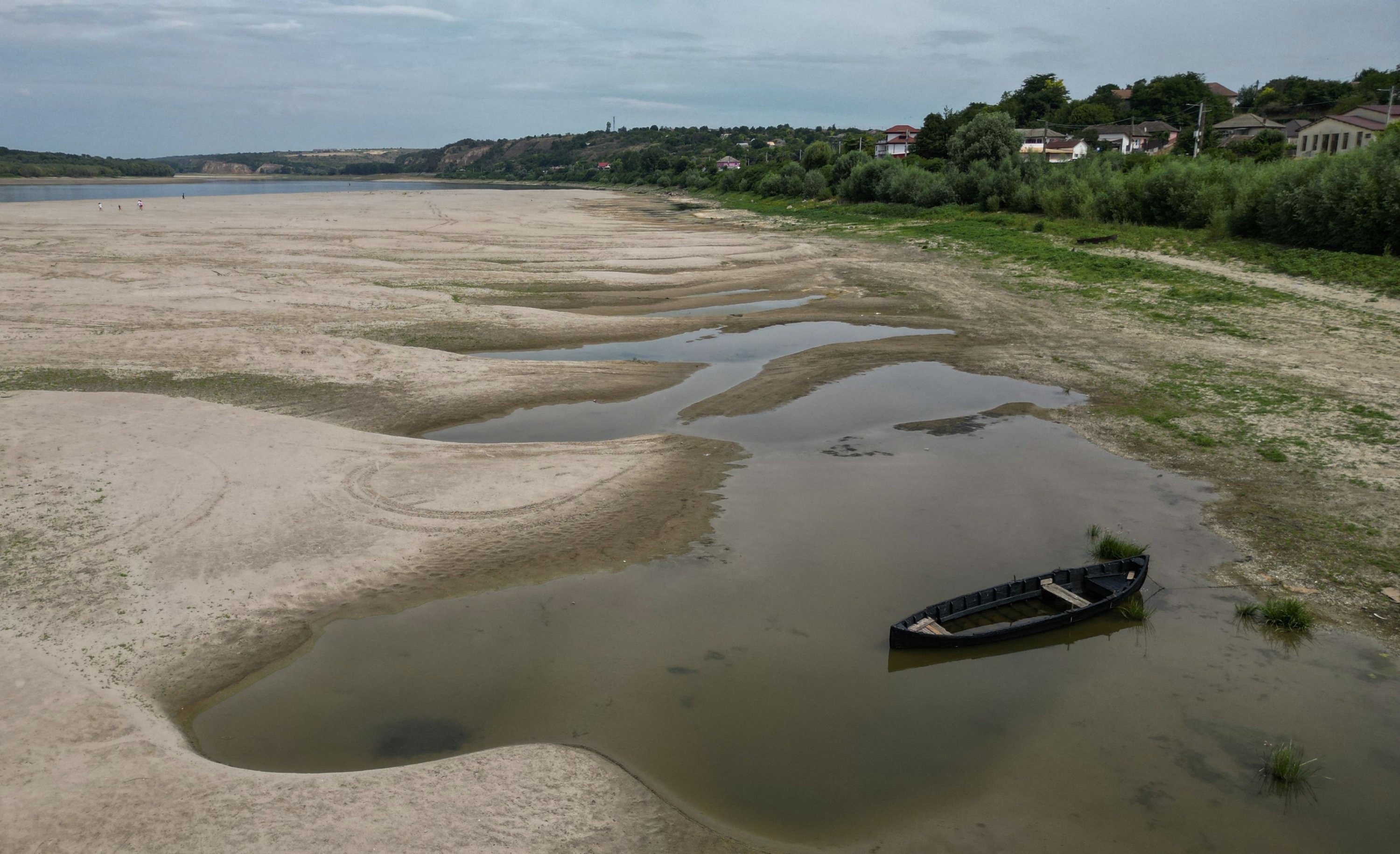
Romania shut down its only nuclear plant Thursday, in a rare move due to drought that has caused the Danube river, whose waters cool the plant, to fall to record lows.
Much of Europe is facing a new summer heatwave amid a drought that has driven rivers to historic lows.
The Cernavoda plant, which usually generates a fifth of Romania’s electricity, has been shut down just once before, in 2003, also due to drought.
The Nuclearelectrica company had already shut one of the plant’s two 700 megawatt (MW) reactors last month, and announced Thursday that it needed to shut the second “due to the significant and ongoing drop in the water level of the River Danube.”
“We do not foresee a restart within the next 10 days,” plant director, Romeo Urjan, told Agence France-Presse (AFP).
Efforts to divert Danube flow
To avert a complete shutdown of the reactors, the nuclear company had budgeted more than two million euros ($2.3 million) to divert the Danube’s flow to maintain the cooling of the reactors, including blowing up a rock and sinking four barges filled with rocks into the river.
Alternative power sources, including wind power as well as electricity imports, are expected to ensure adequate supplies, the Energy Ministry said Wednesday.
But it also reiterated an appeal for “responsible consumption.”
It has warned that as a last resort, large industrial users would have to face restrictions in the evening hours to save electricity.
In early August, the government said carmakers Dacia and Ford would pause production in the country until Aug. 19 to help with the power deficit.
Record-low flows
Nearly two-thirds of the Danube has seen flow rates that are the lowest on record for a month of July in 34 years, according to an analysis published Monday by the European climate change observatory Copernicus.
The drought has hit nuclear power providers across Europe.
France, which uses nuclear power to generate around 70% of its electricity, recorded a more than 20% shortfall in atomic production capacity this week, a record deficit caused by outages linked to drought, extreme heat and a jellyfish invasion, according to AFP calculations based on EDF data.
In total, 13 of the 57 reactors in EDF’s nuclear fleet were affected.
The drought in Europe has been exacerbated by human-induced climate change, according to the World Weather Attribution group of scientists, who warn that the problem will worsen.
Hungary races to keep its only nuclear plant online
Hungary, neighboring Romania, has avoided a complete shutdown of its only nuclear plant, Paks, whose four reactors are also cooled by the Danube. Only two of eight turbines at the plant are still working.
Nine days ago, Paks was on the verge of being completely shut down. The continued operation of the last turbine hinged on just a few millimeters of fluctuation in the Danube’s water level.
But with the river expected to drop further, Hungarian Prime Minister Peter Magyar said Wednesday that the government had ordered the construction of a submerged wall, or weir, to try to control flows near the plant.
Two 80-meter (260 feet) barges are also being stationed at Paks that could be sunk to raise the water level.
According to Magyar, Hungarian soldiers were working around the clock on the construction, which should be completed in the next four weeks. This is expected to raise the Danube’s water level by 1.2 meters in front of the cooling system of the plant.
The prime minister estimated the cost at 6 billion forints ($19 million).
The low levels of the Danube, Europe’s second-longest river, have also severely impacted shipping along its 2,850-kilometer (1,770-mile) route stretching from western Germany to its mouth on the Black Sea.
Türkiye plans to launch its lunar spacecraft, equipped with a domestically developed hybrid propulsion system, in the first months of 2027, the country’s industry and technology minister said Thursday.
Mehmet Fatih Kacır said Türkiye had finalized its launch schedule for the Moon mission and that the lunar spacecraft’s homegrown hybrid propulsion system had completed all testing phases.
“We will have achieved and brought to life a technological capability that very few countries in the world are capable of accomplishing,” he told reporters in the western province of Afyonkarahisar.
The minister said space infrastructure has become a strategic pillar of Türkiye’s defense capabilities, pointing to recent achievements in satellite projects including Türksat 6A, Imece, Bilsat, Rasat and Göktürk-2.
Türkiye is also working to secure independent and cost-effective access to space through the construction of its own equatorial spaceport in Somalia.
Kacır said the port is intended to eventually support launches of domestically developed satellites and spacecraft.
“We’re reaching the point where these efforts will enable Türkiye to produce rockets capable of launching our own satellites into space entirely through our own means,” he noted.
“Equatorial regions offer the opportunity to access space through more cost-effective means, taking advantage of the Earth’s rotational speed,” he added.
Kacır said these advances were supported by a growing domestic space ecosystem and that a planned space technopark at Middle East Technical University (METU) would bring together institutions and companies to conduct research and development activities.
Beyond its plans for independent launch capabilities, Türkiye is preparing to sign international cooperation agreements to develop and manufacture components for new space stations and is seeking to participate in additional crewed space science missions, he added.
Türkiye is set to host the 77th International Astronautical Congress (IAC) from Oct. 5-9. The event in the southern province of Antalya is expected to bring together about 10,000 participants from more than 100 countries.
Kacır said the event had already broken previous records for pre-registration and paper submissions and was poised to become one of the largest scientific gatherings ever held in Türkiye.
The congress will include a section dedicated to next-generation space startups, highlighting the role of emerging ventures alongside established companies.
A meeting of parliamentarians and government representatives will also culminate in the Antalya Declaration, which is expected to emphasize peace, security and stability amid global geopolitical divisions.
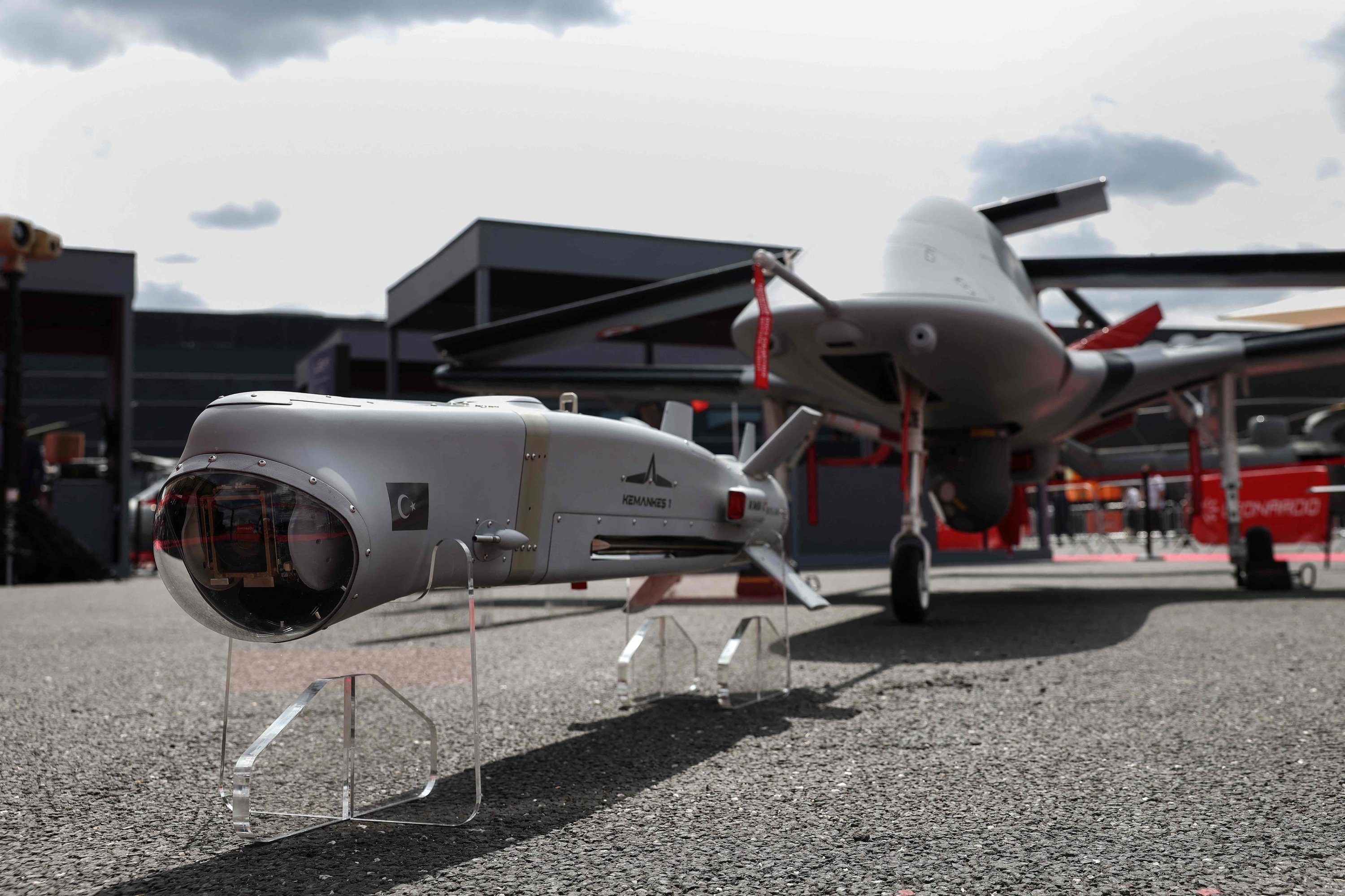
Global success in exporting domestically built drones has propelled top executives of Türkiye’s defense and tech giant Baykar onto the top of the list of highest individual taxpayers in the country for the fifth consecutive year.
The Turkish Revenue Administration (GIB) announced on Thursday its list of the 100 taxpayers who declared the highest amounts of tax nationwide, following its assessment of annual income and corporate tax returns for the 2025 tax year.
Accordingly, Selçuk Bayraktar, the chairperson of Baykar’s board of directors, and Haluk Bayraktar, Baykar’s CEO, were Türkiye’s highest individual income-tax payers for five consecutive years from 2021 through 2025.
For the 2025 tax year, Selçuk Bayraktar declared TL 2.99 billion ($63 million) in income tax, while Haluk Bayraktar declared TL 2.5 billion. Together, the two executives paid around TL 5.5 billion in income tax.

The taxes were paid following corporate income tax and withholding tax on profit distributions calculated on Baykar’s earnings from the previous year. The roughly 18-fold increase in the amount of tax paid by Baykar’s executives since 2021 was driven largely by the company’s export-focused growth model.
Since its establishment, Baykar has carried out all of its projects using its own resources and continues to operate without receiving cash incentives, grants, or purchase guarantees from the government. The company also says that, from its establishment to the present, it has financed its R&D and production processes by reinvesting its earnings, without even using bank loans.
Looking toward new areas of advanced technology, including space technologies, the company has generated approximately 90% of its total revenue from exports since beginning its R&D activities in 2003.
New export record of $2.2 billion
Baykar, which has been the leading exporter in Türkiye’s defense and aerospace sector for the past five years, has signed supply agreements with 39 countries in total, 36 countries for the Bayraktar TB2 drones and 16 countries for its Bayraktar Akıncı.
The company increased its exports from $664 million in 2021 to $1.2 billion in 2022, and then to $1.8 billion in both 2023 and 2024. In 2025, exports reached a new record of $2.2 billion.
With 90% of its revenue coming from exports, Baykar remained among the top 10 companies in Türkiye across all sectors by export volume for the third consecutive year, while further strengthening its leadership in the global armed-drone market.
Continuing to invest in highly skilled, technology-focused personnel, the company employs more than 8,500 people through its domestic and international subsidiaries.
Top 10 list
Rahmi Koç, honorary chair of Koç Holding, ranked third on the list of taxpayers declaring the income tax of nearly TL 831 million in 2025.
Mehmet Sinan Tara ranked fourth, with TL 676.3 million.
The individuals ranked fifth, sixth, and eighth on the list did not wish to have their names disclosed.
Erman Ilıcak ranked seventh with TL 557.7 million, Mehmet Cengiz ranked ninth with TL 448.7 million and Ceyda Lale Tara ranked 10th with TL 430.3 million.
Among the 100 taxpayers with the highest assessed income taxes, Istanbul ranked first with 78 individuals. It was followed by Ankara and Izmir.
A total of 78 taxpayers on the list chose not to have their names disclosed.
Turkish central bank lifted its inflation forecast for the end of 2026 to 28% but left its interim inflation target for the same period unchanged at 24%, while pledging to maintain a tight monetary stance, its chief said on Thursday.
Presenting the quarterly inflation report in Istanbul, Central Bank of the Republic of Türkiye (CBRT) Governor Fatih Karahan also said that the bank kept its interim inflation target for end-2027 steady at 15% and the interim target for end-2028 stayed at 9%.
“The CBRT will ensure the tightness required by the projected disinflation path in line with the interim targets,” Karahan said.
The bank revised its year-end forecast slightly from the earlier forecast of 26%, in line with market expectations, as it cited mainly developments related to energy prices. It also warned of higher food prices despite an increase in domestic production.
“The outlook for diesel, natural gas and commodity prices excluding energy contributed to the 2-percentage-point revision in the year-end 2026 forecast,” Karahan said.
The bank also incorporated the effects of changes to the fuel-price adjustment mechanism, higher food inflation assumptions and administered prices into its projections.
Türkiye’s annual consumer inflation stood at 31.75% in July, while annual inflation excluding energy and food remained slightly below 30%.
Karahan said the disinflation process had recently lost some momentum because of supply-side pressures stemming from geopolitical developments, but tight monetary policy was visibly restraining domestic demand.
“We observe a clearer slowdown in inflation in categories most directly affected by monetary policy,” he said.
Last month, the central bank left its key interest rate at 37%, as expected, keeping borrowing costs unchanged for a fourth consecutive meeting as it monitors the inflationary impact of the Iran war.
Energy, food prices
Among his remarks, Karahan pointed to improvement in the services side, including in categories that last year weighed more on the inflation outlook, such as rent and education, but instead flagged food prices and energy developments.
“The initial effects of geopolitical shocks on inflation were visible primarily through sub-categories with strong links to energy and petrochemicals,” he asserted.
“Accordingly, we witnessed stronger figures in energy and core goods inflation in the second quarter, which abated somewhat in July,” he further said.
Rising oil and gas prices following Strait of Hormuz disruptions have impacted energy-importing countries, including Türkiye, although authorities have moved to introduce measures such as a slide-scaling system to curb the increase in prices on consumers.
“Another notable factor in recent inflation developments has been food prices,” Karahan said.
The first crop production forecasts for 2026 suggest that production, which decreased amid drought and frost last year, rebounded this year, with fruits and cereals in the lead, he noted.
“This improvement in production exhibits a favorable supply-side outlook for food inflation. However, despite this overall improvement, the negative divergence in food inflation has become more pronounced,” the governor said.
Moreover, despite an overall better outlook in the services category, Karahan suggested that they see “a different course” in transport and communication services.
“Due to the rise in fuel prices, transport services posted strong price hikes in the first seven months,” he added.
Demand slowing down
Among others, Karahan also said domestic demand remained at disinflationary levels in the second quarter, with card spending and trend-adjusted retail sales indicating a continued loss of momentum.
“Thanks to our tight monetary policy stance, the weakening in domestic demand has become more pronounced,” said Karahan.
On the broader economic picture, he pointed out that Türkiye’s trade deficit narrowed in the second quarter from the first as exports increased and imports excluding gold and energy declined.
Furthermore, he indicated that the country’s gross foreign exchange reserves rose by $30 billion from March 27 to reach $185 billion as of Aug. 12, while net reserves excluding swaps increased by $35 billion to $56 billion.
Answering questions from journalists and economists, he also lauded the increase in the Turkish lira deposits, describing it as “a success.”
He also flagged supply-side shocks and emphasized there were many external shocks in recent years, while underlining the importance of tight monetary policy in this regard.
“Without tight monetary policy, we would have seen even higher levels (of inflation),” he said.
“The tight monetary policy stance will be decisively maintained until price stability is achieved in line with our interim targets,” the governor said.
Türkiye’s current account posted a smaller-than-expected deficit of $4.19 billion (TL 200.18 billion) in June, remaining below market expectations of around $5 billion, according to official data released by the Turkish central bank on Thursday.
Commenting on the data, Treasury and Finance Minister Mehmet Şimşek said that the deficit is expected to remain “at sustainable levels,” despite pressures related to energy and commodity prices.
The current account excluding gold and energy recorded a surplus of $1.46 billion during the month, the data from the Central Bank of the Republic of Türkiye (CBRT) showed.
The goods balance posted a deficit of $8.53 billion, while the services balance registered a net surplus of $6.85 billion.
Net revenues from travel services totaled $4.86 billion, while transportation services generated a surplus of $2.6 billion.
On an annualized basis, the current account deficit stood at $38.9 billion as of June. The 12-month goods deficit reached $76.5 billion, while services recorded a net surplus of $63.7 billion.
Primary and secondary income balances posted annualized deficits of $24.2 billion and $2 billion, respectively.
Portfolio investments attract $2.54 billion
Direct investments recorded a net outflow of $899 million in June, as non-residents invested a net $210 million in Türkiye while residents’ assets abroad increased by $1.11 billion.
Residents purchased $248 million worth of real estate abroad, while non-residents made net property purchases of $297 million in Türkiye.
Portfolio investments registered a net inflow of $2.54 billion during the month.
Non-residents made net purchases of $2.92 billion in equities and investment funds and $1.19 billion in government domestic debt securities.
Banks borrowed a net $3.5 billion through loans from abroad, while other sectors recorded net borrowing of $1.8 billion.
Non-resident banks’ deposits at domestic banks decreased by $3.89 billion, including declines of $2.17 billion in Turkish lira accounts and $1.72 billion in foreign currency accounts.
Current account gap expected at 2.3% of GDP
Şimşek, in a statement shared on X, said the current account deficit was expected “to equal approximately 2.3% of gross domestic product (GDP) as of the second quarter.”
Despite pressure from elevated energy and other commodity prices, the deficit is expected to remain at sustainable levels, the minister said.
He described strong access to external financing as an important indication of the confidence built during the government’s economic program.
External debt rollover ratios over the past year reached 161% for the banking sector and 246% for the real sector, he said.
He also noted that the government would “continue implementing productivity- and transformation-focused policies to make improvements in the current account permanent.”


-
 Politics2 days ago
Türkiye, Bulgaria aim to boost co-op against criminal gangs
-
 Politics3 days ago
‘Terror-free Türkiye model’: Parliament set to pass key law
-

 Economy3 days ago
Türkiye’s trade sales volume decreases, retail sales up in June
-

 Economy3 days ago
Economic losses from natural disasters drop to $100B in H1: Swiss Re
-
 Refugees2 days ago
Relief and uncertainty in Turkey’s Kurdish region as militants receive conditional pardon
-
 Economy1 day ago
Türkiye to launch its 1st offshore wind tender in Q1 2027
-

 Politics2 days ago
Palestinian leader Abbas returns to Türkiye, set to meet Erdoğan
-

 Sports2 days ago
Cristiano Ronaldo ties knot with longtime partner Georgina Rodriguez