
Economy
THY looking at acquisition opportunities in Asia, South America

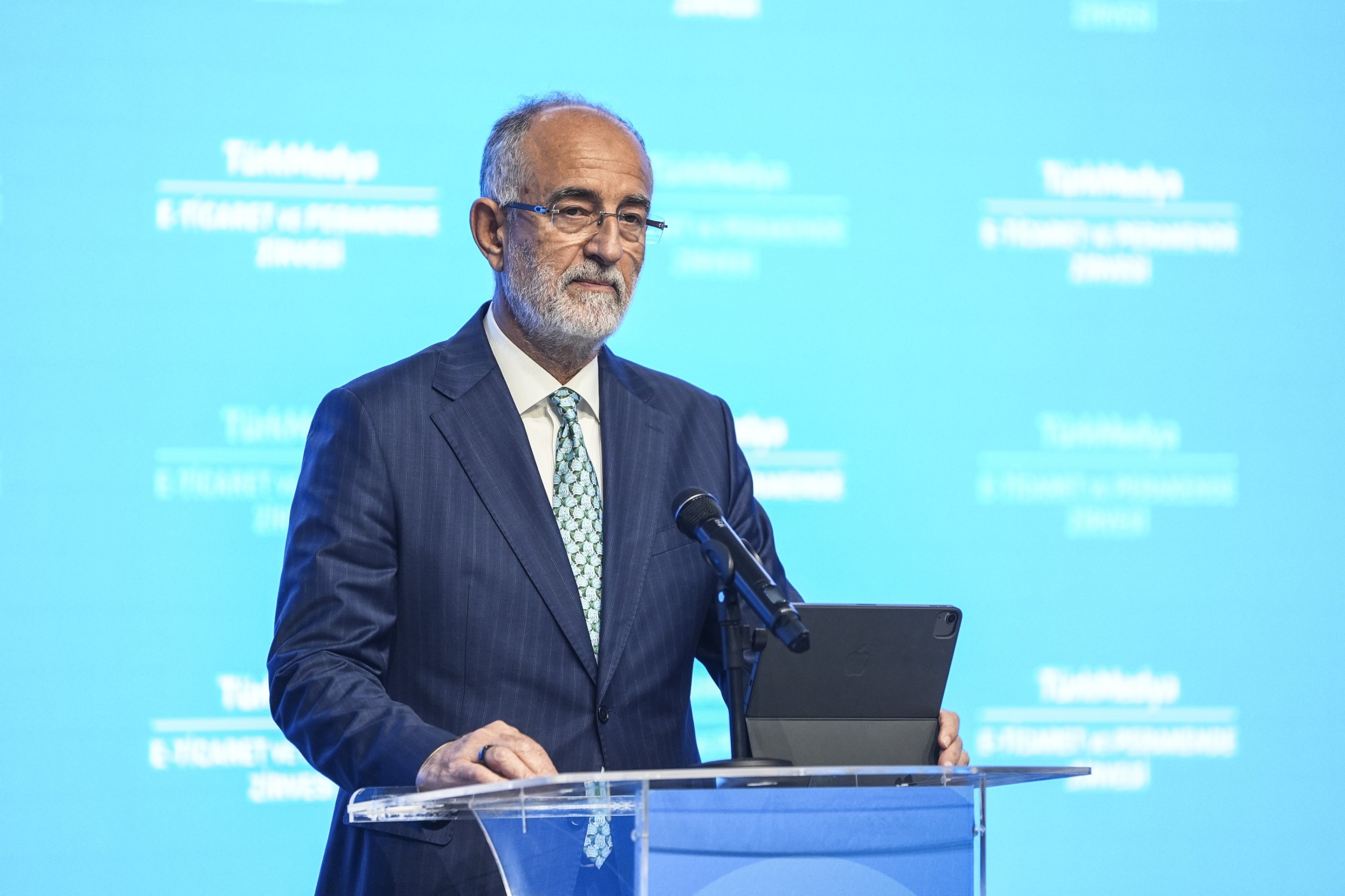
Turkish Airlines (THY) is evaluating acquisitions of airlines, cargo operators and maintenance, repair and overhaul (MRO) businesses as it seeks to expand its international footprint, a senior executive said Tuesday.
The national flag carrier agreed on a deal last August to purchase a minority stake in Spanish carrier Air Europa. Its chair, Murat Şeker, described the move as “a key step” and said the carrier’s next moves would probably be in Asia and South America.
Şeker told Bloomberg TV on Tuesday that the company now has “a bigger horizon in Asia, the Far East, in Europe and in Latin America.”
Turkish Airlines is also a partner with German flag carrier Lufthansa in leisure airline SunExpress.
On market conditions, Şeker said demand had returned to normal after a temporary boost due to the Iran war.
The conflict had prompted widespread Middle Eastern airspace closures, and passenger avoidance of Gulf routes redirected traffic toward Turkish Airlines.
The war also left airlines grappling with higher fuel costs as it choked jet fuel supplies following the effective closure of the key Strait of Hormuz.
As airlines in the region gradually resumed more regular operations, passenger demand normalized, Şeker said.
He also expressed optimism that ongoing negotiations with aircraft engine manufacturer CFM International would be concluded in the near future.
Turkish Airlines has orders in place for nearly 420 aircraft, including Airbus and Boeing jets, with negotiations continuing for an additional 100 Boeing planes.
The company plans to expand its nonstop long-haul network by deploying ultra-long-range aircraft from late 2027, enabling direct flights to destinations in Australia and South America.
Under its 2033 strategy, Turkish Airlines, which already serves more countries than almost any other carrier in the world, plans a major fleet replacement and expansion to around 800 aircraft. Its fleet included 542 planes as of the end of May.

Türkiye’s third-biggest state-owned bank has begun an investor roadshow for a secondary share sale, its top executive said Monday, moving forward despite turmoil in the local investment fund market amid strong investor interest.
Halkbank General Manager Süleyman Özdil said he did not expect the crisis to have a negative impact on the offering, adding that the lender had met with nearly 60 investors in Abu Dhabi, Dubai, London and New York and seen strong interest.
“There is no change to the planned share offering. We will launch at the earliest opportunity, subject to market conditions,” Özdil told an interview with Reuters. He did not comment on the possible size of the offering or exact dates.
Halkbank said in August that it had applied to Türkiye’s Capital Markets Board (SPK) for a secondary public offering raising its nominal capital by TL 1.8 billion to TL 9 billion, two months after the dismissal of a U.S. case launched in 2019 alleging it had evaded sanctions on Iran.
Halkbank said after the dismissal that it expected its position in international markets to strengthen and its access to overseas funding to improve.
At current market prices, Halkbank’s planned offering would raise around $1.7 billion, according to Reuters calculations.
No impact expected from fund turmoil
Asked whether investors were concerned about the fund crisis, he said investors believed the market would emerge healthier from the turmoil.
“They think the banking sector is healthy and valuations are cheap. They see the banking sector as the first place to look for investors seeking exposure to Türkiye,” he said.
Türkiye’s main share index entered a bear market and posted its worst monthly performance since 2008 in September after a sell-off that was triggered by the fund turmoil.
Regulators last month ordered the liquidation of 131 investment funds managed by seven asset managers following warnings by some that they could not meet redemption payments.
Authorities have widened their investigation into suspected market manipulation in stocks and fund markets.
Halkbank’s IPO in 2012, raising around $2.5 billion, is still the biggest public offering in Türkiye.
The Türkiye Wealth Fund owns 91.5% of Halkbank, which has paid-in capital of TL 7.18 billion. The remaining 8.5% is publicly traded.
The benefits of artificial intelligence justify accepting some risks, OpenAI Chief Executive Sam Altman said, arguing the technology should remain broadly accessible to the public.
“We believe that the world should accept some bad things happening for the benefits of this technology and people having the agency,” Altman said in an interview with Politico’s technology-focused newsletter Decoded.
Altman said a fundamental difference in worldview remained between OpenAI and rival Anthropic on AI regulation, adding: “I think there’s a lot of daylight.”
“I disagree, but I understand the perspective of people who are like, ‘This technology is going to get so powerful, and it’s so dangerous, that a single lab in San Francisco should have it and make sure nothing bad happens, and kind of figure out how to dole out the benefits,'” Altman said.
He called that “a completely unacceptable trade-off” that runs counter to the “lighter-touch regulatory stance” backed by OpenAI.
“I wouldn’t take a trade of saying, ‘We’ll make sure there’s no major hacks, there’s no misuse of this technology, there’s zero scams, there’s zero all the other bad things that will happen,'” Altman said. “Because I think people will do tremendously – orders of magnitude more – good stuff than bad stuff.”
Altman’s remarks come amid a growing debate within the AI industry over the pace of development and the risks posed by increasingly capable systems.
Anthropic CEO Dario Amodei in September published an essay calling on the industry to slow down to “pace the frontier,” a stance that Altman publicly endorsed. Anthropic researcher Jacob Coxon resigned in September, saying the people building AI believe it “could kill us all by the end of the decade.”
Reuters reported in September that Anthropic warned that, despite AI’s potential benefits, the technology can sometimes act in ways that run counter to its makers’ intentions and penetrate other companies’ systems.
The company said advanced models could exhibit “self-preserving behaviors,” including attempts to “resist shutdown,” “conceal or manipulate information,” or generate outputs that could be interpreted as “coercive, deceptive, or manipulative.”
However, U.S. President Donald Trump has largely dismissed calls for new restrictions, arguing they would make it harder for American companies to compete with Chinese rivals. He has repeatedly said existing law enforcement agencies, including the Justice Department, provide sufficient safeguards and that no new rules are needed.
Türkiye’s annual inflation eased more than expected to 29.73% in September from 31.51% in August, official data showed Monday.
That marked the fourth consecutive month of decline. Inflation was last below 30% in November 2021.
On a monthly basis, the consumer price index (CPI) stood at 1.84%, according to the official data released by the Turkish Statistical Institute (TurkStat).
Food and non-alcoholic beverage prices, one of the largest components of the consumer price index, fell 0.20% from the previous month. Transportation prices increased 2.79%, while housing, water, electricity, gas and other fuel costs rose 2.71%.
Transportation contributed 0.49 percentage points to monthly inflation and housing added 0.33 percentage points. Food prices reduced the monthly reading by 0.05 percentage points.
On an annual basis, food and non-alcoholic beverage prices rose 27.62%, transportation costs increased 35.10% and housing prices climbed 39.99%.
These groups contributed 6.73, 5.96 and 4.84 percentage points, respectively, to annual inflation.
The core C index, which excludes energy, food and non-alcoholic beverages, alcoholic beverages, tobacco and gold, increased 28.70% annually and 2.14% monthly.
The B index, which excludes unprocessed food, energy, alcoholic beverages, tobacco and gold, rose 29% annually and 2.01% month-over-month.
Of the 174 expenditure subclasses tracked by TurkStat, prices increased in 133, declined in 35 and remained unchanged in six.
The ACE BPSC 2026 summit, a major business gathering hosted by the TABA-AmCham association, will be held in Istanbul this week, organizers said.
Held under the auspices of the Trade Ministry and hosted by the Turkish-American Business Association (TABA-AmCham), the ACE BPSC 2026 Summit is set to bring together 70 AmCham leaders from 30 countries and 250 global CEOs in Istanbul from Oct. 7-9, with the aim of shaping the new direction of global trade.
At a time when the balance of global trade is undergoing significant transformation, Istanbul will become a meeting point for leading representatives of the international business community.
Under the vision of “Entrepreneurship for Innovation, Investment, Technology and Trade: Building a Stronger Transatlantic Future,” the summit will provide a major platform for shaping the global economy.
The “AmCham Leadership & Gala Dinner,” to be held on Oct. 7, the first day of the event, will bring together senior government officials and global business leaders.
The opening remarks of the exclusive gala dinner are expected to be delivered by Trade Minister Ömer Bolat, Industry and Technology Minister Mehmet Fatih Kacır, Istanbul Governor Davut Gül, Ajsa Vodnik, the chair of AmChams in Europe (ACE), and Süleyman Ecevit Sanlı, the president of TABA-AmCham.
One of the summit’s most critical sessions will take place on Oct. 8 under the title “Commercial and Political Developments Following the NATO Summit.”
The panel will begin with opening remarks by H. Eren Derinkök, vice president of TABA-AmCham, and will be moderated by Bekir Polat, vice president of the Investment and Finance Office.
During this strategic session, Mustafa Tuzcu, deputy trade minister, H. Ali Özel, deputy foreign minister, and Demet Sabancı Çetindoğan, vice chair of the board of DEMSA, will assess regional and global developments in the new era from the perspective of the business community.
The summit’s closing program, “Creative Network Awards & Bosphorus Closing,” will take place on Oct. 9, the final day of the event.
Bringing together 70 AmCham leaders from 30 countries and 250 global CEOs, ACE BPSC 2026 is expected to further strengthen the foundations for new business partnerships extending from Istanbul to the world.
Türkiye’s automotive industry closed in on reaching $4 billion in monthly exports in September, preserving the top spot among the sectors contributing the most to the country’s outbound shipments, trade data showed.
According to data from the Türkiye Exporters Assembly (TIM), the automotive industry, one of the sectors within the industrial group, maintained its leading position in September with exports worth $3.94 billion.
Among the sectors with the highest export volumes, chemicals and chemical products ranked second with $3.06 billion, while electrical and electronics ranked third with $2.06 billion.
Türkiye’s overall exports in September surged to $26 billion, also marking a fresh record.
“The all-time record for September exports was broken (last month). We achieved $26 billion in exports, marking a 15.4% increase on an annual basis,” Trade Minister Ömer Bolat said on Saturday, when announcing preliminary foreign trade data for the month.
When presenting the data, Bolat recalled that the highest-ever monthly figure was recorded in December last year with $26.3 billion, suggesting that the all-time record “was missed by only $300 million.”
“Exports for the January-September period also reached $211 billion with a 5.2% increase, setting a new record. Our target under the 2026 Medium-Term Program (MTP) was $282 billion. As of September, our annualized total goods export figure rose to $283.7 billion, marking a record for annual goods exports,” he also said.
The jewelry sector recorded the highest percentage increase in exports last month, rising by 203.3%. The sector’s exports in September increased to $1.51 billion, the data revealed.
The industrial group, which accounted for 72.5% of Türkiye’s total exports, increased its exports by 16.8%, surpassing $18.8 billion.
The agricultural group, which accounted for 12.3% of total exports last month, recorded exports of approximately $3.2 billion, an increase of 9.2%. Meanwhile, the mining group, which represented 2.6% of exports, saw its exports rise by 24.2% to $682.6 million.
At the same time, Trade Ministry data showed that overall imports in September rose by 5.9% year-over-year to $31.2 billion.
With this, the trade gap narrowed notably by 24.8% to $5.2 billion.
Revolut has grown into Europe’s most valuable startup, emerging as a serious competitor to centuries-old banking institutions. Since its launch just over a decade ago as a fintech focused on offering lower foreign-exchange fees, the company has expanded at remarkable speed.
Yet Revolut faces many hurdles itself, with the amount of revenue it extracts per customer a fraction of its established competitors and a small lending business by industry standards.
A spokesperson for Revolut said in an email that the London-based company has a “diversified business model,” earning its revenue from various products and services rather than lending.
“That means our growth depends on building things customers value, rather than on interest rates,” the spokesperson said.
Here’s Revolut’s rise, in five charts:
Going for global
CEO Nik Storonsky has stressed he wants Revolut to be truly global, expanding into markets from Mexico to Australia.
The company has announced several new licenses in recent weeks, as it aims to become one of only a handful of banks with retail operations spanning so much of the globe.
Meanwhile, some traditional lenders seen as global, including HSBC, are reducing their retail footprint.
Valued at $115 billion privately, Revolut is now worth more than Britain’s Barclays and France’s Societe Generale as investors bet on its tech platform winning over more customers globally.
Revolut’s 2025 pretax profit was 1.7 billion pounds ($2.2 billion), a fraction of Barclays’ 9 billion pounds, but growing fast.
Paulo Macedo, CEO of Portugal’s biggest bank, Caixa Geral de Depósitos, said in June that 2025 was the last year in which the 150-year-old bank would record higher profit than Revolut.
“When you go to Europe the bank CEOs there are talking about Revolut as their most important threat because of their aggressive marketing and growth,” said Cihan Duran, director at S&P Global Ratings.
Marred by setbacks
In the U.S., where Revolut has a provisional license, it will face tougher competition, investors said.
“The U.S. could be potentially the biggest growth for Revolut. But at the same time, the U.S. is the most competitive market,” said Konstantin Sidorov, CEO of the London Technology Club, which invested in Revolut when it was valued at just $5.5 billion.
There have been setbacks, including a fine in Lithuania for failing to prevent money laundering. Revolut said an investigation had not identified any confirmed instances of money laundering, adding that it had signed a settlement with the central bank and taken steps to resolve shortcomings.
And in September, Revolut accidentally sent customer data to hackers posing as government investigators. The company said its systems and customer funds were unaffected and it had contacted the “limited number of impacted individuals” to give support.
In 2024 and 2025, Revolut was the most-complained-about bank in Britain in fraud cases whereby customers are tricked into sending cash to scammers, Ombudsman data compiled by consumer advocacy firm Which? showed.
Revolut has previously said in response that it takes fraud very seriously and has robust customer protections in place.
Customers have surged
A striking measure of its growth is customer numbers.
In Ireland, for example, Revolut said that 80% of the adult population has a Revolut account.
Revolut’s website shows it has 80 million customers, against 84 million for JPMorgan and 41 million for HSBC.
Revenue-per-customer is low
Revolut makes far less from each of its customers than traditional banks, a Reuters analysis of its figures shows. Average deposit balances are also much lower.
Lower per-customer revenue is in part because Revolut lends much less than traditional banks, instead relying on fees such as card subscriptions.
With just 2.2 billion pounds in loans at end-2025, Revolut’s loan-to-deposit ratio of 6% compares with 55% for HSBC and 86% for Societe Generale.
Scaling its lending business will introduce risks, including managing big and complex credit exposures, while entering fiercely competitive local mortgage markets will not be easy, analysts and investors said.
Too few primary accounts
Revolut has attracted customers with its easy-to-use app, but executives acknowledge too few use it as a primary bank account.
Revolut declined to comment in its latest results on how many customers did so in 2025, but said the figure was up 45% from a year ago.
This metric is a focus for Revolut’s biggest backers.
Alex Immerman, an investor at Andreessen Horowitz, which is known as “a16z,” told Reuters it was watching for primary-account adoption, as well as total customer balances.


-

 Economy3 days ago
Türkiye moves to finalize capital markets law changes after fund turmoil
-

 Politics3 days ago
Erdoğan calls for ‘grand consensus’ amid terror-free Türkiye success
-

 Politics3 days ago
Türkiye, Azerbaijan, Georgia defense chiefs discuss Caucasus security
-

 Economy1 day ago
Revolut: $115 billion fintech taking on Europe’s biggest banks
-

 Politics3 days ago
Türkiye vows continued co-op with Iraq after troop withdrawal
-
 Politics3 days ago
Turkish officials urge end to attacks after Medina power station hit
-

 Sports3 days ago
City challenge financial breaches ruling with comprehensive appeal
-

 Economy3 days ago
Teknofest Southeast combines technology, local culture in Şanlıurfa