
Economy
US workers’ share of GDP slides to fresh record low

U.S. workers again saw their slice of the U.S. economy drop to a record low in the second quarter amid an ongoing productivity boom that is producing output gains that are outpacing wage growth, the Bureau of Labor Statistics (BLS) reported on Thursday.
The so-called labor share of nominal gross domestic product (GDP), which BLS defines as the percentage of output that accrues to workers in the form of compensation, fell to 52.9% in the second quarter from 53.7% in the first quarter.
That was the lowest since the series began in 1947, BLS said, as it reported stronger-than-expected growth in second-quarter productivity.
The labor share has been falling for decades, driven by forces such as the diminishing breadth and power of organized labor and globalization that shifted relatively high-paying manufacturing jobs to low-cost overseas production centers.
More recently, the economy has seen technological advances like automation and potentially artificial intelligence that allow companies to increase output without substantially adding to headcount.
The trend essentially means that benefits of productivity gains are accruing more toward business owners and shareholders than to workers through wage gains.
Real weekly earnings – which measure wage growth against inflation – were essentially unchanged during the first half of 2026, though the most recent data for June snapped three straight months of falling readings and was the strongest in six years.

Saudi Arabia has restarted operations at its vital East-West pipeline and could resume exports from the Red Sea port of Yanbu later Tuesday, a report said, as signs mount of an increase in Middle Eastern oil flows.
The resumption of supplies Tuesday helped to drive selling on global oil markets. Global oil benchmark Brent crude fell by more than $2 a barrel towards $97, its lowest since Sept. 8.
Drone attacks Saudi Arabia said were launched from Iraq forced the kingdom to shut the pipeline on Sept. 11, halting crude loadings at the key Yanbu port.
Since the U.S.-Israeli war on Iran disrupted oil flows from Saudi Arabia and its Gulf neighbors through the Strait of Hormuz, Riyadh has been using the pipeline to reroute around 4 million barrels per day, around 4% of global supply, to Yanbu.
Full resumption could take weeks
The pipeline was pumping at a low rate after its restart, Reuters reported, citing sources briefed on the matter.
Aramco was seeking to get the pumping rate back to 4 million bpd, one of the sources said. The pipeline has a capacity of 7 million bpd.
Reaching a rate of 40% of capacity will take a couple of days and a full restart will take 6 to 8 weeks, a security source said. A separate oil industry source said a return to full pumping rates would take up to six weeks.
Three pumping stations serving the pipeline were damaged in the drone attack, according to satellite imagery and industry sources. The line is serviced by 11 pumping stations and two separate pressure relief stations, according to industry assessments.
The pipeline will resume crude supply to Aramco refineries located on the Red Sea coast, one of the sources said, adding that one cargo was scheduled to load at Yanbu later Tuesday. The person said it would be bound for China.
Traders were getting ready for Saudi oil loadings by moving tankers to Egypt’s Mediterranean Port Said for ship-to-ship transfers and also to Sidi Kerir, another two trading sources said.
Oil prices have also dropped this week after Iran said it could reopen the Strait of Hormuz within seven days and because Saudi Arabia has loaded more ships at its Ras Tanura port, raising expectations of increased exports through the Strait.
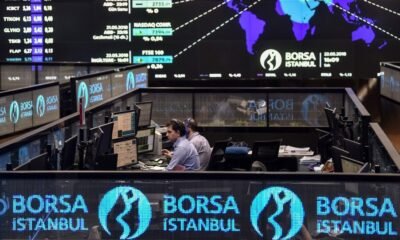
Türkiye’s stock exchange will replace more than a quarter of the constituents of its benchmark BIST 100 index, it said Tuesday, a move announced as regulators seek to ensure market stability following a liquidity crunch caused by a sell-off in investment funds.
The Borsa Istanbul did not provide a reason for removing index constituents, which will be effective from next month in the biggest reshuffle since the stock exchange announced new market structure rules six years ago.
Authorities intervened last week to shore up market stability after the liquidity crunch at investment funds triggered a sharp sell-off in the benchmark stock index, including demanding the liquidation of some investment funds.
They have also detained people as part of an investigation launched after some funds defaulted on redemption requests.
The benchmark index was down 0.23% at 10:11 a.m. GMT Tuesday, stabilizing so far this week after dropping about 8% last week.
Regulators also this month updated how they calculate free-float rates, which left out some fund holdings.
Financial services company Destek Finans Faktoring and savings financing firm Katılımevim, which have been among the companies at the center of suspicious share dealings, will leave the BIST 100, the statement from the exchange said.
Conglomerate Anadolu Grubu Holding and fast-food retailer TAB Gıda will return after being removed in the previous period, it added.
Esenboğa Elektrik, Işıklar Enerji Yapı Holding and Odine Teknoloji, which joined the BIST 100 in the previous quarterly reshuffle, will also be removed.
Destek Finans will also exit from the BIST 30, while TR Anadolu Metal will join.
BIST 30 companies are exempt from the new concentration limits, and a stock’s removal will require funds to reduce their holdings.
Healthier pricing
Onurcan Bal, an investment adviser at brokerage Gedik Yatırım, said the latest changes announced by Borsa Istanbul also include adjustments to shares of companies being removed, such as Işıklar Energy, Izdemir Energy, Kiler Holding and Odine Teknoloji, which had recently come under pressure and recorded floor-price trading.
“For the period ahead, when investors look at the indices and the market, they will be able to see healthier pricing, with the indices serving more clearly as the main benchmarks,” Bal told Reuters.
Cemal Demirtaş, deputy general manager responsible for research at Ata Yatırım, said the index changes would help lead to healthy functioning of the market and restoring investor confidence.
He said he expected further steps soon to support the healthy functioning of the fund market and Borsa Istanbul.
Fund investigation
The Capital Markets Board (SPK) last week mandated Işbank and Ziraat Bank to oversee the liquidation of 131 investment funds managed by seven portfolio management companies, including Tera Portföy, Pusula Portföy and Hedef Portföy, on the TEFAS electronic fund trading platform.
These funds hold large positions in stocks such as Destek Finans that are being removed from the indexes.
Market segment criteria changed
Borsa Istanbul has also added new criteria for companies seeking inclusion in the BIST 30 and BIST 100 indices.
Shares included in the BIST 30 and BIST 100 must be traded on the Star Market. Under a directive amended Monday, companies traded on the Star Market will now also be assessed based on the volatility of their share prices and the size of their equity.
Companies seeking to be listed on the Star Market will be assessed on whether they fall within the highest volatility bracket, with the threshold set at a maximum of 10%.
In addition, companies listed on the Star Market will be required to have equity above the median equity value of all companies subject to the assessment.
Bal at Gedik Yatırım said the changes mean that stocks characterized by excessive volatility and sharp price movements may fail to meet the Star Market criteria, while also limiting their ability to be included in major benchmark indices.
“From this perspective, we believe the regulation is not merely a change to the market-segment classification. It could also indirectly contribute to the structure of key benchmark indices such as the BIST 30, BIST 50 and BIST 100, which are important in terms of representing the broader market,” Bal said.
Bal said the Star Market was the most important segment of Borsa Istanbul’s equity market in terms of trading volume and the market size of listed companies.
“Therefore, taking excessive volatility in price movements into account when determining which companies qualify for the segment can be viewed as a positive development, as it could support more balanced price formation and make the Star Market a healthier benchmark for investors,” he said.
Europe needs to reconsider its trade relations with China as the imbalance between the two sides continues to grow, the European Union Chamber of Commerce in China warned on Tuesday, marking the latest in a series of statements highlighting the gap.
“I think what concerns us (is) that if you see these movements here it gives rise to some fundamental questions about trade,” the organization’s president Jens Eskelund said in Beijing.
Trade, when done right, creates value and efficiency, he said. “But if you are in a situation suddenly where trade is only creating value for one party and not the other, then of course the question becomes: why trade?”
Eskelund pointed to China’s trade surplus with Europe, estimated at around 1 billion euros ($1.15 billion) a day. The chamber has also long criticized competitive conditions in China.
According to Eskelund, the issue is not only whether European companies can succeed in China, but also whether the broader trade relationship remains stable.
“There needs to be a win also for Europe, and that’s what we need to get to,” he said.
Eskelund said there was growing agreement in Europe over the challenge China poses to European industry.
He also warned that China may not yet fully understand that attitudes are changing in Europe in a way that could ultimately allow it to take action.
Brussels and Beijing are currently negotiating over trade disputes, with possible solutions expected in October. New EU tariffs have also been discussed.
In a new position paper containing 1,096 policy recommendations, the chamber, which represents more than 1,600 EU companies operating in China, said some of the security concerns harboured in Beijing and Brussels were similar.
The EU is also developing a policy framework aimed at safeguarding its autonomy, industrial resilience and competitiveness, the report said.
A “healthy balance” between areas where economic security is a priority and those where greater openness for businesses is possible could benefit both economies, it added.
Türkiye expects to see its total trade with the U.S. surging by more than 10% this year to the level of around $42 billion to $43 billion, a top official said on Monday, reiterating the long-term goal of $100 billion.
“Our bilateral trade volume exceeded $38 billion last year. This year, we expect our total bilateral trade to increase by more than 10% and reach approximately $42 billion-$43 billion,” Trade Minister Ömer Bolat said during an address in New York.
“This means that annual trade between the two countries will reach $50 billion within two years,” he added.
Bolat was speaking during a reception hosted by the Türkiye-U.S. Business Council (TAIK) of the Foreign Economic Relations Board (DEIK) as part of the 19th Türkiye Investment Conference.
The reception, held at the New York Public Library, was attended by Bolat, Industry and Technology Minister Mehmet Fatih Kacır, Governor of the Central Bank of the Republic of Türkiye (CBRT) Fatih Karahan, DEIK head Nail Olpak, and TAIK chair Murat Özyeğin, as well as representatives of the business communities from Türkiye and the U.S.
Speaking at the event, Bolat said that the U.S. is Türkiye’s third-largest trading partner in terms of exports and fourth-largest in terms of imports.
Recalling that President Recep Tayyip Erdoğan and U.S. President Donald Trump have set a target of increasing bilateral trade to $100 billion, Bolat said that the two countries are on the right path to achieving this goal in the medium to long term.
Bolat said that the trade performance between the two countries demonstrates the depth and resilience of their economic relationship, adding that cooperation is not limited to trade.
He noted that the two countries are continuing to deepen cooperation in the fields of energy, defense, and technology, and said that “promising” figures have also been achieved in terms of mutual investments.
Bolat said that investments do not merely bring capital to countries in both directions, but also create significant added value through technology transfer, innovation, employment, and production.
He said these investments create jobs both in Türkiye and the U.S., adding that investments between the two countries strengthen supply chains on both sides of the Atlantic.
Emphasizing that Türkiye-U.S. economic relations are built on mutual trust rooted in decades of alliance, Bolat said they are determined to further strengthen this foundation and are exploring new areas of partnership.
Özyeğin, who noted that next year will mark the 100th anniversary of diplomatic relations between Türkiye and the U.S., said that as with all longstanding partnerships, “the foundation of this strength lies in dialogue, trust, and the determination to continue building together.”
“Throughout this conference, our goal is precisely to do that: deepen our dialogue, establish new connections, and identify new opportunities for the two business communities to work together,” he said.
On the first day of the conference, a meeting titled “Türkiye’s Economic Outlook and Investment Opportunities” was held with the participation of Treasury and Finance Minister Mehmet Şimşek and CBRT Governor Karahan.
In addition, the Turkish industry minister met with American business leaders at a roundtable discussion on “Industry and High Technology.”
The events, organized to increase trade and investment between Türkiye and the U.S., are set to run over three days, from Sept. 21 to Sept. 23.
Türkiye’s economy remains strong and resilient despite difficult global conditions and regional conflict, Treasury and Finance Minister Mehmet Şimşek told U.S. investors Monday, highlighting low debt, rising reserves and reduced external vulnerabilities.
Şimşek and Central Bank of the Republic of Türkiye (CBRT) Governor Fatih Karahan attended a meeting on Türkiye’s economic outlook and investment opportunities during the Türkiye Investment Conference, organized by the Foreign Economic Relations Board (DEIK) Türkiye-U.S. Business Council in New York.
Şimşek said Türkiye’s low overall debt burden, fiscal policy space, declining external vulnerabilities, rising international reserves and the exit from the foreign exchange-protected Turkish lira deposit scheme, known as KKM, had strengthened the economy’s ability to withstand shocks.
“Our economy is resilient to shocks. Our low overall debt-to-GDP ratio, our fiscal flexibility, declining external vulnerabilities, rising international reserves, and the phase-out of the KKM have all contributed to our economy’s resilience,” the minister was cited as saying by Anadolu Agency (AA).
The meeting focused on the road map outlined in the government’s recently announced Medium-Term Program (MTP), Türkiye’s investment environment and opportunities across key sectors. Karahan also discussed monetary policy and the macroeconomic outlook.
Investment opportunities
Şimşek highlighted Türkiye’s manufacturing and services base, strategic location, infrastructure and skilled workforce as factors supporting its position as a reliable supplier.
“Türkiye is a large economy that is growing strongly compared with its peers,” he said.
He noted the government was accelerating green and digital transformation, industrial transformation and investments in productive infrastructure, while recently announced tax incentives were intended to strengthen the investment and export environment.
He identified defense, tourism, health tourism and digital services exports, including television series and mobile games, as areas offering significant opportunities.
The defense industry is also an important driver of the transformation of Türkiye’s manufacturing sector, Şimşek said.
The meeting also highlighted opportunities in advanced manufacturing, defense and aerospace, health care, logistics and transportation, digital technologies, green and digital transformation and access to regional markets.
Türkiye seeks high-tech investment
A separate industry and high-technology roundtable attended by Industry and Technology Minister Mehmet Fatih Kacır focused on Türkiye’s potential to become a global hub for high-technology production and innovation.
The discussions covered Türkiye’s advantages in strategic areas including semiconductors, mobility, green energy, advanced manufacturing, healthy living, digital technologies, communications and space, as well as opportunities to establish complementary investments across different stages of global value chains.
Investors were also briefed on the government’s investment incentive programs.
DEIK President Nail Olpak said cooperation between Türkiye and the United States in industry and high technology was important. He highlighted what he said were opportunities arising from the combination of Türkiye’s industrial and technology strategy with U.S. strengths in artificial intelligence, semiconductors and software.
He said predictability was among the business community’s main expectations as global uncertainty increases. “We attach importance to having a clear road map for the future,” Olpak said.
Türkiye-U.S. Business Council Chair Murat Özyeğin said Türkiye was maintaining its commitment to disinflation and its policy direction despite increasingly challenging geopolitical and economic conditions.
He said the Medium-Term Program and investment framework demonstrated continuity in the government’s economic program and its intention to improve productivity and competitiveness.
Attracting long-term foreign direct investment that brings technology transfers and skilled employment to Türkiye is among the business community’s priorities, Özyeğin said.
Turkish military pension fund Oyak is in talks with one of the world’s largest energy companies over a strategic partnership in fuel distributor Güzel Enerji, with the outcome expected to become clear by early next year, its top executive said Tuesday.
Oyak General Manager Murat Yalçıntaş did not name the potential partner, but the fund has previously said it was holding talks with Saudi Arabia’s state oil company Saudi Aramco over a possible stake in Türkiye’s fourth-largest fuel retailer Güzel Enerji.
Oyak’s head of energy business Uğur Doğan said in May that talks were under way for Aramco to become a shareholder in Güzel Enerji.
Yalçıntaş said Oyak wants to expand its energy activities beyond fuel distribution into production and refining as part of its 2030 strategy to become an international player in core sectors.
He said the partnership under discussion would be an important step in Oyak’s push to build a more multinational structure.
“We have strategic partnership talks with one of the world’s largest energy giants. We think the picture will become clear by the end of this year or early next year,” Yalçıntaş told reporters in Istanbul.
The 2030 strategy was announced in late February when Yalçıntaş said the company had identified infrastructure, energy, logistics, high technology and mining as priority sectors.
Under the strategy, Oyak aims to strengthen its balance sheet and enhance cash generation and capital efficiency while nearly doubling its asset value to $60 billion by the end of the decade.
On a planned refinery investment, Yalçıntaş said Oyak was considering both greenfield projects and opportunities involving existing refineries, either in Türkiye or abroad.
Oyak operates more than 189 companies across 30 countries in sectors including mining and metallurgy, cement, automotive, energy, chemicals, food, finance and construction.
The group’s consolidated revenue reached TL 418 billion ($8.56 billion) in the first half of 2026, while consolidated net profit rose 66% year-over-year to TL 83 billion, Yalçıntaş said.
Consolidated assets increased 31% from the same period of 2025 to TL 1.85 trillion.
In the mining and metals sector, liquid steel production reached nearly 4.67 million tons in the first half, up 19% year-over-year, while finished product output rose 19% and sales volumes increased 15%.
Oyak’s automotive operations also maintained a strong position, with Renault’s Turkish joint venture Mais selling 100,256 vehicles in the first eight months of the year for a 13.9% market share, Yalçıntaş said.
Tekfen investment to support portfolio expansion
Yalçıntaş said Oyak’s acquisition of a 42.8% stake in Tekfen Holding was one of its most important strategic moves in 2026.
He said Tekfen’s international experience in engineering, procurement and construction would complement Oyak’s existing industrial ecosystem and support its 2030 strategy.
The investment would also strengthen Oyak’s agricultural industrial operations through Tekfen’s fertilizer, crop protection, seeds and agricultural production businesses, he said.
Energy and agriculture remain strategic priorities
In energy, Oyak has completed the acquisition of the remaining shares in ISKEN and Arkas Deniz Taşımacılığı, giving it full ownership of both companies, Yalçıntaş said.
ISKEN accounted for about 1.7% of Türkiye’s total electricity generation between January and August, while Güzel Enerji’s consolidated revenue reached TL 112.3 billion in the first half.
Yalçıntaş said Oyak was also continuing investments in steel, including planned investments at its electrical steel facility in Romania.
He described agriculture and food as strategic sectors for Türkiye, citing Oyak’s Hektaş and Toros businesses as key components of its strategy to strengthen agricultural production and input supply.
More Oyak companies could go public
Yalçıntaş said more Oyak companies could be listed on the Borsa Istanbul Stock Exchange in the coming years.
He said the group had previously indicated that investors would see more publicly traded Oyak companies and had followed through on that commitment within six months, adding that preparations for further listings were continuing.
Oyak also plans to expand its infrastructure investments in Türkiye and abroad, including ports and logistics projects. Yalçıntaş said the group was assessing opportunities in Africa, particularly infrastructure projects linked to the production and transportation of the continent’s natural resources.
The group is also continuing to evaluate strategic partnerships in areas where it can create synergies, while considering exits from businesses that do not fit its portfolio strategy.


-
 Economy1 day ago
AMD joins $1 trillion club as last chipmaker to cash in on AI rally
-
 Politics3 days ago
Türkiye launches raids on Israel-linked international fraud network
-
 Politics2 days ago
Erdoğan leaves for UN General Assembly with Gaza in mind
-
 Economy2 days ago
Türkiye extends funds liquidation process, freezes execs’ assets
-
 Economy3 days ago
Türkiye revokes license of Iranian Bank Mellat
-
 Economy1 day ago
US says all Iranian airlines to be ‘shut down’ Wednesday
-
 Politics3 days ago
Türkiye closely monitoring field as terror-free initiative advances
-

 Politics2 days ago
Sea Wolf maritime drill begins amid tensions between Greece, Türkiye