
Economy
Global goods trade remains firm despite tariffs, tensions: WTO

Global trade in goods has grown stronger since June despite geopolitical tensions and policy-related uncertainties, the World Trade Organization (WTO) said on Wednesday, pointing to the resilience in merchandise flows even as risks remain elevated.
The September reading of the WTO’s barometer tracking merchandise trade growth was 102, an improvement from the June barometer of 101.7, with growth remaining above trend.
The WTO publishes its Goods Trade Barometer four times a year. It covers export orders, air freight, container shipping, automotive products, raw materials and electronic components.
Readings above 100 indicate growth above the baseline trend of 100, while figures below 100 point to below-trend growth.
The Geneva-based trade body said the strengthening came despite uncertainty linked to geopolitical tensions and trade policy developments.
In March, the WTO forecast that growth in world trade in goods would slow down markedly to 1.9% this year from 4.6% in 2025, and could decelerate even more if the U.S. war with Iran continues to push up energy prices and disrupt global transport.
U.S. President Donald Trump has imposed sweeping tariffs on global trading partners, while shipping through the key Strait of Hormuz, through which a fifth of global oil supplies used to transit has been severely disrupted by conflict in the Middle East.
However, strong demand for electronic components tied to investment in AI and digital infrastructure was helping offset the negative effects from those factors, the WTO report said.
Trade growth remains uneven across sectors and regions, and the WTO warned that geopolitical and policy-related risks continue to cloud the outlook due to ongoing disruption to supply chains, shipping routes and transport costs.

Türkiye’s commitment to price stability remains “very strong,” Treasury and Finance Minister Mehmet Şimşek said, pledging that Ankara would maintain its economic program and deliver disinflation despite difficult global and geopolitical conditions.
Speaking to international media, Şimşek evaluated economic goals and the current picture days after the government unveiled a new road map for the 2027-2029 period.
“The only criticism we would accept is that we have been ambitious in our targets. We have, and there is, of course, a cost associated with that. But the commitment is there,” he said.
According to the 2027-2029 Medium-Term Program (MTP), the authorities have lifted their expectations for year-end inflation, mainly due to war-related effects, projecting it to decline to 9% by the end of the program.
Inflation is forecasted to come in at 28.4% this year, 21% in 2027 and 13.5% in 2028, before falling to single digits.
Annual inflation rate eased to 31.51% in August from 31.75% in July, according to official data.
Şimşek joined Vice President Cevdet Yılmaz and the head of the Presidency’s Strategy and Budget Office, Ibrahim Şenel, at the Presidential Complex for an international media meeting on MTP.
“We will stay the course and deliver. What is important is the direction of travel,” he said, according to remarks published late Wednesday.
Combating illicit finance
At the same time, the minister noted that Türkiye maintains close cooperation and effective information-sharing with its partners and allies, particularly the U.S.
“Türkiye is committed to combating terrorist financing, any form of illicit financial activity, money laundering, sanctions evasion and all forms of illicit trade,” he said.
All companies operating in Türkiye must fully comply with national regulations and avoid sanctions, while competent authorities are assessing recent U.S. Treasury announcements and allegations within the rule of law, he added.
“Our message to both the financial sector and other actors in the economy is that all companies have to conduct their activities in full compliance with national regulations,” Şimşek said in apparent reference to Iran-related sanctions.
The U.S. Treasury Department has recently moved with a campaign to increase economic pressure on Iran.
Well-established framework for Iran gas payments
Şimşek also said Türkiye’s gas contracts with neighbors such as Iran and Russia are long-term agreements, some of which have been in place for decades.
“We do not pay Iran directly for the natural gas. We have an understanding, again, with the U.S. The money sits in a very tightly regulated account, and payments can only be made for items such as food and medicine,” he said.
“There is a well-established framework governing how natural gas payments are managed.”
Iran accounts for a relatively small share of Türkiye’s gas imports, while the country has invested heavily in alternative supplies and storage, Şimşek said, noting that the U.S. is now one of Türkiye’s leading liquefied natural gas (LNG) suppliers.
Return to free float ‘desirable’
Moreover, Şimşek said that returning to a free-floating exchange rate is desirable because it acts as a shock absorber, but lower inflation, better-anchored inflation expectations and two-way foreign-exchange flows are needed first.
“This is not about being afraid of returning to a free float. It is about getting the conditions right,” he said, calling speculation over an imminent change “baseless.”
He stressed that daily exchange-rate policy is conducted by the central bank and that the Medium-Term Program assumes a neutral real exchange rate.
“We are not in the business of making bets on the exchange rate,” he added.
Price stability
Şimşek also rejected claims that the 2027 inflation target was revised upward to permit looser monetary policy.
“The idea that the inflation target for 2027 was revised upward to loosen monetary policy never came onto our agenda,” he said.
He said the program reflects significant changes in energy, agricultural and other commodity prices, as well as the difficult geopolitical environment.
“When the facts change, of course, forecasts change,” he said.
Housing and selective credit support
Şimşek also said Türkiye has invested $104 billion in earthquake reconstruction, with 621,000 housing units delivered or due to be delivered this year.
Rent inflation in earthquake-hit provinces is around 20%, compared with 50%-60% elsewhere, demonstrating that “supply-side measures make a huge difference,” he said.
The government also plans 750,000 state-funded social housing units to ease housing and rental costs.
Şimşek said selective credit programs support manufacturers, farmers, small businesses and technology investments, helping preserve employment and create jobs.
“The ultimate goal of this program is a sustainable high growth rate and better income distribution. So, basically, better standards of living for Turkish people,” he said.
The International Monetary Fund (IMF) has pushed borrowing countries to make bigger austerity cuts over the past decade, charity Oxfam said early Thursday, urging for alternatives to such measures.
“These cuts undermine vital spending on public services – from health care to education and housing – that protect low-income communities,” Oxfam warned in a statement.
It said the median annual austerity cuts required by the IMF rose from %0.21 of GDP between 2012 and 2017 to %0.85 of GDP between 2018 and 2025.
At the same time, the fund also weakened protections to social spending in its loan programs, Oxfam added.
One concern is that the IMF could “return to 1980s-style structural adjustment” by demanding large public spending cuts from governments at the start of a program, instead of phasing in reductions over years, Oxfam said.
“Frontloading austerity is like asking countries to swallow a whole bottle of poison that we already know is harmful in small doses,” said Nabil Abdo, Oxfam’s international senior policy advisor, in a statement.
The organization urged the IMF to ensure its programs do not worsen inequality, and called for alternatives to austerity.
Brent crude prices surged past $100 a barrel Wednesday for the first time since July 24, as escalating conflict in the Middle East fueled worries about energy-driven inflation and sent global stocks tumbling ahead of several major central bank decisions.
Brent crude futures were up $2.88, or 2.94%, at $100.80 a barrel by 1210 GMT, after earlier touching $100.95. U.S. West Texas Intermediate crude was up $2.57, or 2.76%, at $95.60 a barrel, its highest level since early June.
Since the Iran war began on Feb. 28, Brent has surged as high as $126.41 a barrel, a peak reached on April 30.
“The move toward and back above $100 Brent is reflecting a market that increasingly has to change its view on how long the Middle East crisis will continue to curb supply from the region,” said Ole Hansen, head of commodity strategy at Saxo Bank.
This week, attacks by Iran-backed Houthis on Saudi energy facilities set oil installations ablaze, threatening a significant expansion of the conflict.
The attacks also threaten crude shipments via the Red Sea, which has been a key alternative route to the crucial Strait of Hormuz, where oil flows have been severely curtailed.
In a sharp escalation of the six-month-old war, U.S. forces also hit multiple Iranian oil tankers and Iran targeted a U.S. base in Jordan and attacked ships.
Supply risks mount
“Market participants appear to be pricing in a more prolonged conflict in the Middle East as well as the risk that the latest escalation in military strikes disrupts oil flows from the Middle East,” said Hamad Hussain, senior climate and commodities economist at Capital Economics.
“The key risk is whether the recent attacks on oil tankers lead to fewer ship-to-ship transfers taking place in the Gulf of Oman, which have so far played a key role in providing oil to global markets and keeping a lid on prices.”
A tanker carrying about 2 million barrels of Iraqi fuel oil was struck by a drone in Iraqi territorial waters Wednesday, port officials said, while UKMTO, a British navy-linked agency, reported that several merchant vessels in the Gulf had been hit by disabling fire overnight.
In the week before a resumption in fighting on Aug. 30, roughly 8 million to 9 million barrels per day had flowed through Hormuz, double the previous week’s volume, according to Rystad Energy’s Chief Economist Claudio Galimberti. More recently, flows have fallen below 2 million bpd.
Fuels, physical crude oil already above $100
In the physical crude oil market, the dated Brent oil benchmark, against which roughly two-thirds of supply is priced, has been above $100 per barrel since Sept. 3, according to LSEG data.
Physical oil markets react quickly to supply disruptions as buyers need to go into the market to seek alternative cargoes.
Meanwhile, consumers have been paying over $100 for their oil in the form of refined fuels such as gasoline and diesel for most of this year, as conflicts created a global refining crunch which sent fuel prices soaring even relative to crude.
European diesel futures were trading at around $199 per barrel Wednesday, and have not been below $100 per barrel since the start of the Iran war.
Diesel refining margins, or the fuel’s premium to crude, have been at all-time highs since August as fuel shortages gripped markets, touching $78.90 per barrel on Sept. 1.
By contrast, the margin averaged $21 per barrel in 2025 and $19.52 in 2024.
“We’re in a situation where actually, if we had normal refining margins, crude would be the equivalent of about $150,” said Alan Gelder, senior vice-president for refining, chemicals and oil markets at Wood Mackenzie.
Refining is tight globally because of lower exports from the Strait of Hormuz and Russia, and restrained throughputs in Asia, he added.
European gasoline has also been above $100 since March, and its premium to crude neared all-time highs of above $60 per barrel at the start of the month.
In the U.S., consumers faced record gasoline prices over the Labor Day holiday weekend, while diesel prices hit all-time highs last week as supply concerns continued to tighten fuel markets.
“It complicates the picture because central banks around the world are trying to grapple with high inflation,” said Nitesh Shah, commodity strategist at WisdomTree.
Stocks under pressure
Stock markets across the globe were also under pressure Wednesday, as the latest surge in energy prices drives concerns that higher inflation will prompt central banks to keep monetary policy tighter for longer.
U.S. stock index futures fell about half a percent, setting Wall Street indexes up for a third consecutive day of losses.
The pan-European STOXX 600 index dropped 1.5% by 1123 GMT, on course for its biggest percentage drop in two months, with economically sensitive banking and industrial stocks among the top decliners.
“$100 is a round number, a psychological number, but the break-even point of oil prices for the developed markets is much higher,” said Societe Generale multi-asset strategist Manish Kabra. “We think crude needs to hit $150 to create a major drawback in demand cycle.”
However, Kabra cautioned that if price margins for refined products did not decline, “then diesel prices go up and there tends to be a trickle-down impact on inflation and services.”
U.S. inflation test, rate hike bets
The 10-year U.S. Treasury yield, the benchmark for global borrowing costs, traded at 4.808%. It touched a near three-year high of 4.818% last week as traders ramped up expectations of a tighter monetary policy.
U.S. producer and consumer price reports, set to be released later this week, are seen as a real test for those bets, with policymakers looking for further evidence that inflation pressures are continuing to cool.
Traders assign close to 60% odds for a quarter-point hike or a hold from the U.S. Federal Reserve (Fed) next week, while being all but certain of a quarter-point increase from the Bank of Japan (BOJ) two days later.
The yen strengthened toward the nearly seven-month high touched against the dollar Tuesday as traders exited short positions in the Japanese currency. Expectations are building for faster BOJ hikes and a potential rush of repatriation of Japanese capital.
The euro edged higher ahead of the European Central Bank’s (ECB) policy decision Thursday, with markets widely expecting a hike amid inflationary pressures from the Iran war. The currency rose to a more than one-week high of $1.16493.
Both Japan and the eurozone are energy importers.
Sterling edged 0.1% higher at $1.3558. The Bank of England (BoE) is due to announce its latest policy decision next Thursday, with economists predicting the key rate will be on hold for the remainder of this year.
Gold gained 1.1% to around $4,403 an ounce.
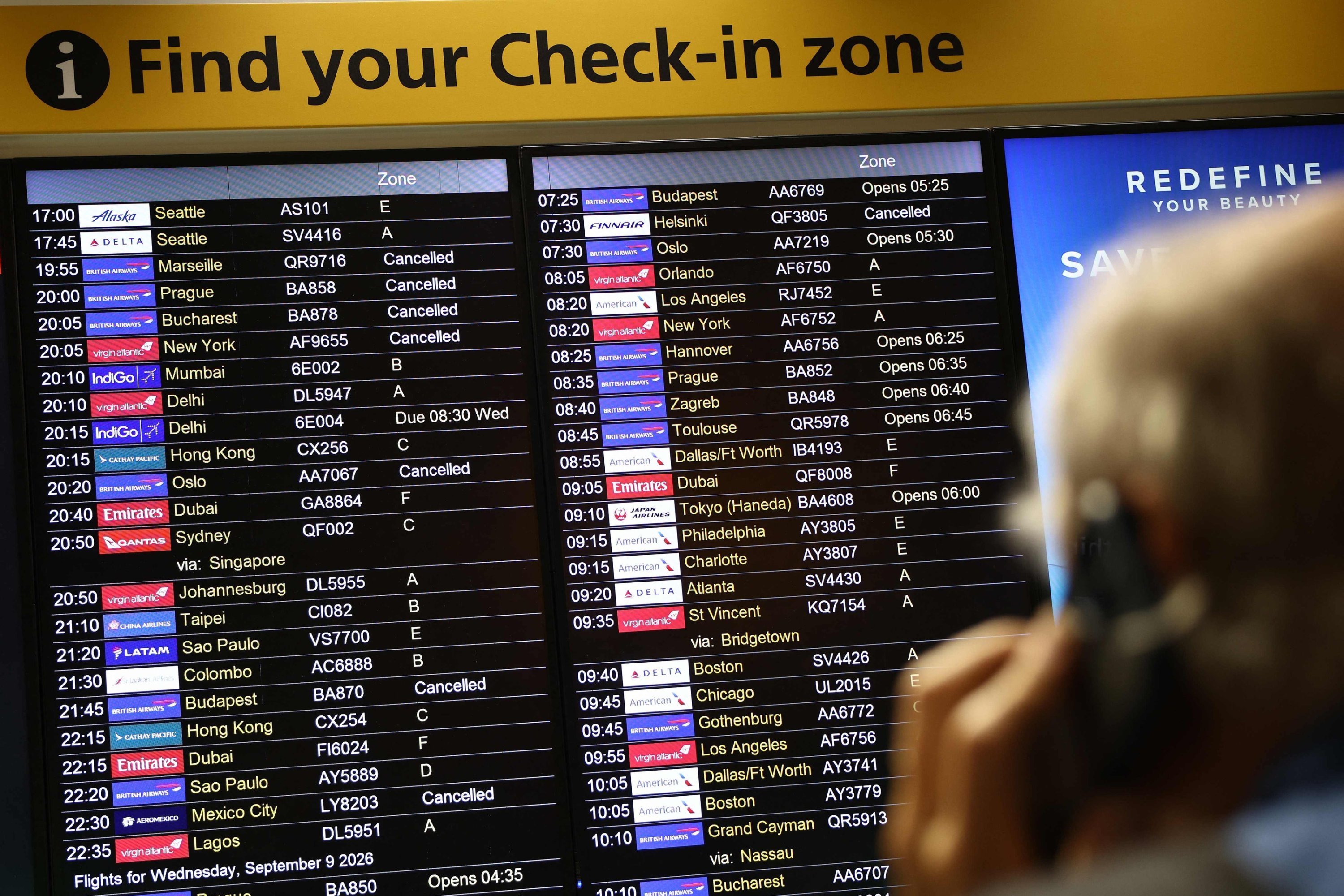
Airlines stepped up their criticism of Britain’s aviation systems Wednesday after a major air traffic control failure stranded hundreds of thousands of passengers, while ministers summoned the head of flight control to explain the shutdown.
Flights resumed at major airports across the country after the hours-long outage Tuesday, which resulted in the cancelation of 2,000 flights and ramped up pressure on air traffic control provider NATS and its boss Martin Rolfe.
Ryanair said NATS had told it that the cause of the shutdown was the same problem behind the last major air traffic outage in 2023, which cost airlines 100 million pounds ($135 million). The carrier has repeatedly called for Rolfe to step down.
Transport minister Heidi Alexander will later Wednesday hear directly from Rolfe after she summoned him to explain the fault, amid concerns over the resilience of the infrastructure and technology.
The NATS shutdown in August 2023 caused travel chaos, and there was also a radar-related technical issue in July 2025, which affected major airports including Britain’s largest, Heathrow.
“I am seeking assurances that lessons will be learned and systems that support aviation are up to the job,” Alexander said on the social media platform X.
‘Absolute rerun’ of 2023 meltdown
Michael O’Leary, group CEO of Ryanair, which is Europe’s biggest airline, told Reuters the outage was “an absolute rerun” of what happened in 2023, when a rogue flight plan caused the shutdown.
“Fire him. He’s been there since 2015. He is useless,” he said of Rolfe.
Apologizing to those affected by the issue, Rolfe had earlier said that the problem was not the same as in 2023.
“This will be something different that we’ve never seen in 50 years of operation,” he told BBC Radio, adding that NATS had ruled out a cyberattack.
Aviation analytics company Cirium confirmed about 2,000 flights to and from U.K. airports had been affected by the outage Tuesday and Wednesday combined, with 30% of scheduled departures grounded Tuesday and 5% Wednesday.
Ryanair, which said Britain’s air traffic services routinely underperformed those in other European countries, said its losses from Tuesday’s outage were 3 million pounds so far, after it canceled 260 flights affecting 48,000 passengers.
British Airways Tuesday canceled or diverted 100 flights with tens of thousands impacted, and said Wednesday 190 flights had been canceled as disruption continued.
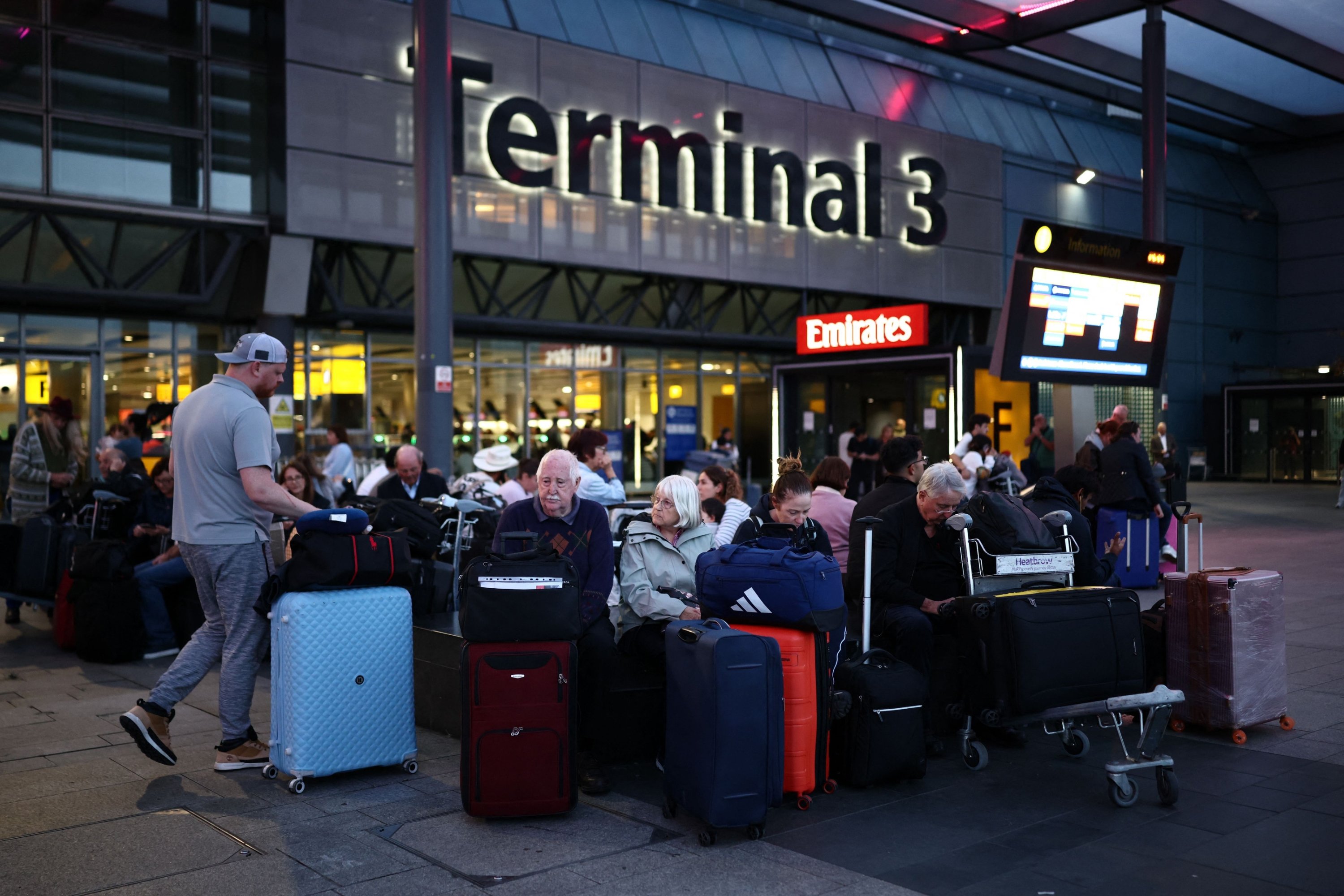
As operations restarted, Britain’s main airports – including London’s major Heathrow and Gatwick hubs – said passengers should check with their airline before heading to the airport as schedules would have changed.
“We are expecting knock-on impacts as aircraft and crew reposition,” the U.K.’s busiest hub said in a statement.
NATS, a public-private partnership which is partially owned by airlines including British Airways and easyJet, pension funds and the government, paid its owners dividends of 175 million pounds in 2025.
Ryanair is suing NATS at London’s High Court and seeking over 7 million pounds over the 2023 outage and has called on NATS to reinvest its profits into performance improvements and hiring more staff.
Türkiye and Russia have signed a memorandum of understanding (MoU) on mineral fertilizer shipments to strengthen Türkiye’s access to fertilizers and related raw materials, Agriculture and Forestry Minister Ibrahim Yumaklı said Tuesday.
“We are increasing the diversity of our sources against potential risks to fertilizer supplies caused by wars and conflicts in our region,” Yumaklı said on Turkish social media platform NSosyal.
The memorandum of understanding with Russia will further secure Türkiye’s supplies of fertilizers and fertilizer raw materials, he added.
The minister said Türkiye is taking strategic steps to ensure farmers’ uninterrupted and sustainable access to agricultural inputs in line with the country’s planned production targets.
He added that the agreement would support agricultural production and contribute to the uninterrupted supply of products to the market.
Türkiye will soon begin drilling a challenging oil-targeted well in the western Black Sea, Energy Minister Alparslan Bayraktar said Wednesday, the latest in the country’s efforts to expand domestic hydrocarbon reserves.
“We will start an oil-targeted drilling operation in the western Black Sea soon. It will be a difficult drilling operation and will take some time,” Bayraktar told private broadcaster CNBC-e.
Türkiye has expanded its offshore exploration capabilities in recent years, increasing its deep-water drilling fleet to six vessels. One of the vessels is currently operating in Somalia, while others are conducting exploration and production-development activities in the Black Sea.
Ankara has previously said it plans six exploration wells across the western, central and eastern Black Sea in 2026 as it seeks new oil and natural gas discoveries.
Black Sea output to double
Bayraktar said Türkiye plans to double the production capacity from its vast Black Sea reserve by the end of this year.
President Recep Tayyip Erdoğan announced the discovery of 320 billion cubic meters of gas in August 2020. The estimate was later revised upward to 405 billion cubic meters. Further discoveries in 2021, 2022 and 2025 brought the total estimated Black Sea gas reserves to 785 billion cubic meters.
Gas reached the shore in April 2023, and locally produced gas was fed into the national transmission network in late August the same year, after processing at a facility at a port in northern Zonguldak province.
As of May this year, Sakarya accounted for 92% of Türkiye’s total domestic gas production. Current production stands at around 9.5 million cubic meters per day, enough to meet the natural gas needs of approximately 4 million households.
This year’s output increase will lift that figure to 8 million households, Bayraktar said.
Production is then targeted to quadruple by 2028. At that point, Türkiye expects to produce around 16 billion to 17 billion cubic meters of natural gas annually from its Black Sea fields, equivalent to roughly 80% of the gas it currently imports from Russia.
The Black Sea gas project is a central part of Türkiye’s strategy to reduce its dependence on imported energy while diversifying supply sources and infrastructure.
Türkiye has also expanded LNG regasification capacity and aims to raise its daily gasification capacity to 200 million cubic meters. It has increased pipeline connections with neighboring countries and is seeking to develop additional routes for gas imports and exports.
Transit hub
Bayraktar said Türkiye had been pursuing a comprehensive strategy for gas exploration since 2016 under its National Energy and Mining Policy, with the Black Sea discoveries emerging as one of the main results.
The government is also seeking to diversify energy supply routes and strengthen Türkiye’s role as an energy transit hub. It is discussing a potential pipeline route that could carry Qatari gas through Türkiye to European markets.
Bayraktar said Türkiye was also looking to increase oil flows through its territory from the Gulf region. If Iraq and Kuwait were able to route part of their production away from the Strait of Hormuz, he said Türkiye could potentially handle as much as 2.5 million barrels per day for delivery to Europe.
COP31, energy transition
Bayraktar’s comments came as Türkiye prepares to host this year’s U.N.-backed climate summit in southern Antalya in November.
He said Türkiye’s main message at the COP31 would be to move from commitments to concrete action on climate change, while acknowledging the challenge posed by global energy security pressures.
The minister pointed to oil prices that surpassed $100 a barrel Wednesday amid escalation in attacks between Iran and the United States. That, along with an increase in global coal use, makes it more difficult to prioritize the climate agenda, said Bayraktar.
At the same time, Bayraktar said Türkiye needed to pursue energy security and the transition to cleaner energy simultaneously.
He said Türkiye was targeting a 35% share of electrification by 2035 and was preparing for a sharp increase in electricity demand driven by urbanization, artificial intelligence, electric vehicles and cooling needs.
Türkiye will need significant investment in its electricity transmission network through 2035, he added, as it seeks to connect areas with abundant generation to regions where demand is rising.
Works on 2nd, 3rd nuclear plants moving quickly
Bayraktar also said that work with Canada on Türkiye’s planned second and third nuclear power plants was moving quickly, adding that he hoped for a clearer picture on the matter in the coming months.
Türkiye is months away from the planned launch of the initial reactor of its first nuclear power plant, Akkuyu. The four-reactor plant is being built by Russia’s state-owned nuclear company Rosatom in the southern Mersin province.
Akkuyu’s four reactors will have a combined installed capacity of 4,800 megawatts (MW). Once all units are operational, it is expected to supply about 10% of Türkiye’s electricity demand.
Ankara plans to construct two additional plants, one in Sinop on the Black Sea coast and in the Thrace region.
Bayraktar said Ankara was still in talks with China, Russia and South Korea on the nuclear power plant projects in northwestern Türkiye.


-

 Economy2 days ago
OpenAI probed in EU over AI agents’ takeover of German site
-
 Economy3 days ago
Türkiye sticks to disinflation despite higher near-term outlook
-
 Politics3 days ago
Türkiye’s CHP set for key overhaul after shady election allegations
-

 Economy3 days ago
Türkiye plans child care, flexible work to boost labor participation
-

 Politics3 days ago
Patriarch prays for restoration of Turkish-Armenian ties
-

 Politics3 days ago
Türkiye’s DEM Party holds congress as it weighs future
-
 Economy3 days ago
Syria-Türkiye crossing sees 1.2M travelers, nearly 46,500 trucks in 8 months
-

 Economy3 days ago
UK finance chief pitches brighter vision ahead of tough budget