
Politics
Turkish candidate for top UN post reflects Ankara’s reform ambition

On Friday, Feridun Sinirlioğlu was scheduled to be interviewed by the United Nations in a broadcast session called “interactive dialogue,” as the international body seeks its next secretary-general, a prestigious job a Turkish national has never been nominated for before. His vision statement, presented to the U.N. as part of his application to the post, lays out his aspiration to uphold the body’s mission for global peace. Experts say this aligns well with Türkiye’s advocacy for a fairer world where the U.N. represents more than a bunch of major powers.
The 70-year-old diplomat is no stranger to the atmosphere, with a career that began at the Turkish Foreign Ministry in the 1980s and took him from Kenya to New York over decades. The former foreign minister worked as Türkiye’s representative at the United Nations between 2016 and 2023 and as a U.N. Special Coordinator on Afghanistan. He currently serves as secretary-general of the Organization for Security and Co-operation in Europe (OSCE).
He seems like the perfect candidate for Türkiye, which has raised its diplomatic profile in the past two decades as an influential actor in global affairs.
Professor Nurşin Ateşoğlu Güney of the National Intelligence Academy (MIA), a member of the Presidential Security and Foreign Policy Council, says Sinirlioğlu is “a highly experienced and respected diplomat with an extensive network in international relations.”
Merve Suna Özel Özcan, associate professor and the vice chair of the International Relations Department at Kırıkkale University, says Sinirlioğlu’s nomination is “an institutional and diplomatic manifestation of President Recep Tayyip Erdoğan’s longstanding principle that ‘the world is bigger than five.’” Erdoğan invokes this motto in almost all U.N.-related speeches, referring to the five members of the U.N. Security Council and how they shape current events, leaving little room for other countries.
“This nomination carries significance far beyond the candidacy of a Turkish diplomat for one of the highest positions in the international system. It reflects an attempt to translate Türkiye’s longstanding criticism of the existing international order into a willingness to assume greater institutional responsibility,” Özcan told Daily Sabah.
“For the past 15 years, Türkiye has been among the countries most openly calling for reform of the United Nations in terms of its structure, functions and scope, under the leadership of our president. Against this backdrop, I believe Türkiye’s candidate already stands apart from the other candidates. Indeed, when we look at the vision statement of Mr. Sinirlioğlu, we see important messages that distinguish him from the others, particularly his emphasis on the need for the United Nations to become much more effective, return to its founding principles and embrace reform,” Şuay Nilhan Açıkalın, associate professor at the International Relations Department of Ankara Hacı Bayram Veli University, said.
“International peace and security are under unprecedented strain. War is ravaging peoples and lands across the globe; widening economic inequalities undermine the legitimate aspiration of future generations to achieve greater prosperity than those who came before them; demographic shifts and global migration patterns raise new challenges that demand coordinated international responses; human rights are violated in plain sight and weakened by intolerable double standards; and transnational threats, including organized crime and terrorism, challenge states’ sovereignty and threaten the security of all. At the same time, a new technological revolution is unfolding, generating both extraordinary opportunities and profound uncertainty,” Sinirlioğlu said in his vision statement presented to the United Nations.
Özcan noted that Erdoğan’s “the world is bigger than five” principle “should not be understood merely as criticism directed at the five permanent members of the United Nations Security Council.”
“It represents a broader questioning of the international system’s structural problems of representation, justice and legitimacy. The growing discrepancy between the institutional order established after World War II and today’s increasingly complex distribution of global power has become more evident. In particular, the deadlocks experienced within the Security Council in responding to crises such as Gaza and the Russia-Ukraine war have exposed serious limitations in the United Nations’ ability to maintain international peace and security,” she said.
Conflicts have escalated throughout the past decade and linger to this day, in one way or another, continuing to test the U.N.’s effectiveness in thwarting them as the world edges closer to World War III at times and mobilizes for peace during respites from raging tensions, as was seen during the Russia-Ukraine conflict and in response to Israel’s atrocities that have claimed the lives of tens of thousands of Palestinians since 2023.
Yeliz Albayrak, a lecturer at Istanbul Aydın University and a political science and international relations expert, said the changes Türkiye called for at the United Nations “essentially reflect the recognition that the system established after World War II, particularly the overarching institution designed to regulate the entire international system, has proved inadequate.”
“I believe Sinirlioğlu’s nomination should be understood as Türkiye’s diplomatic response to the United Nations’ growing crisis of institutional effectiveness. Türkiye is not simply identifying the shortcomings of the existing international system. It is also expressing an aspiration to assume greater responsibility in efforts to make that system more inclusive, equitable and effective. In other words, we are witnessing an attempt to transform a longstanding critique of the international order into a concrete diplomatic initiative,” Özcan stated.
“The timing of the nomination should also be considered within this broader framework. Although its announcement at a relatively late stage is noteworthy, appointments to senior positions in international organizations are shaped not only by individual qualifications but also by multilateral negotiations and the dynamics of consensus among major powers. Sinirlioğlu’s experience as Türkiye’s foreign minister, permanent representative to the United Nations and secretary-general of the OSCE is particularly relevant in this context. Nevertheless, the position of United Nations secretary-general does not serve to represent the foreign policy priorities of any individual country. The broader international legitimacy of this candidacy will therefore depend on its ability to secure the confidence of different member states and demonstrate a genuinely independent commitment to multilateralism. I also associate this development with Türkiye’s approach to stability diplomacy. What the international system requires today is not merely a United Nations capable of responding to crises after they emerge, but an institution capable of preventing escalation, maintaining dialogue between conflicting parties and contributing to sustainable international stability. Ultimately, Sinirlioğlu’s nomination represents an attempt to translate the systemic criticism embodied in the principle that ‘the world is bigger than five’ into an aspiration for greater participation and responsibility in shaping the future of international institutions. What I find particularly significant is that Türkiye is not merely arguing that the international system must change; it is also seeking to take part, at the institutional level, in that process,” Özcan said.
“In this respect, the candidacy is quite critical. Of course, the candidacy processes at the United Nations are important for every country, both in terms of lobbying and diplomatic efforts. It is worth noting that securing this position is particularly significant for the candidate’s home country, regardless of which country they represent.
“In recent years, Türkiye has clearly emerged as one of the few countries making significant contributions to regional and global peace and stability through international diplomacy. Both its mediation efforts and its humanitarian aid policy, which places it among the world’s leading countries in this field, have made Türkiye a country held up as an example. Considering almost all the conflicts currently taking place around the world, we can say that Türkiye has adopted a much more active approach to these conflict situations. Perhaps it is worth sincerely emphasizing once again just how significant a message Türkiye’s decision to field a candidate for the United Nations sends. Türkiye attaches importance to the U.N. returning to its founding principles through a reform-oriented approach. As our president has put it, this is a particularly important candidacy and process in terms of ensuring that the United Nations, as an international organization, plays an effective role within the international system and contributes to building a fairer and more equitable world,” Açıkalın said.
“(Sinirlioğlu’s candidacy) is also directly linked to Ankara’s recognition as a respected and influential middle power in its region. Considering Ankara’s diplomatic engagement and influence both in its region and beyond, we can say that Sinirlioğlu is a highly suitable candidate, given his own expertise and experience,” Güney said.
“The issue of U.N. reform is an important matter that has been repeatedly raised by Türkiye’s president. At a time when serious conflicts are unfolding across the international arena, the U.N. Security Council frequently finds itself deadlocked. This is largely due to the failure to implement the reforms the council needs. Reform is essential to ensuring world peace and enabling the organization to play an effective role in this regard,” Güney said.
“Although some have described Türkiye’s decision to nominate a candidate as late or a last-minute move, there were, of course, certain processes that had to be taken into consideration.
“We know that there was an expectation for a candidate from Latin America, as candidates are selected from different regions on a rotational basis. There may have been a waiting period out of respect for this arrangement. However, since no consensus had emerged around a candidate and the end of the five-year term (of Guterres) was approaching, Türkiye put forward a candidate who had previously received broad support and had been endorsed by a large number of countries, including many that are currently at war with one another, through OSCE,” Albayrak said.
“This candidate had already brought these countries together through their joint support for his candidacy. We know that the OSCE has also played a diplomatic role in resolving disputes. It is not a military organization or a defense pact, nor is it an economic bloc; it is an organization for cooperation. In fact, we could describe it as the largest umbrella organization bringing together these states, including countries currently experiencing serious disputes and conflicts. Sinirlioğlu was a candidate jointly selected by countries across this broad spectrum, including Russia, nuclear powers and states involved in crises and wars. Seeking to appoint someone with such an extensive level of international backing to a position at the United Nations is particularly significant. His candidacy carries a much higher degree of acceptance and offers greater potential for cooperation,” Albayrak added.
Sinirlioğlu was in Belarus earlier this week as OSCE secretary-general and met President Aleksandr Lukashenko, as well as visiting Russian Foreign Minister Sergey Lavrov, in the first such visit by an OSCE chief since 2019.
Türkiye is one of the founding members of the United Nations. It joined the body in 1945 shortly after signing the U.N. Charter. As its Foreign Ministry puts it, it is a “strong supporter” of the international organization “at the center of multilateralism.” It was a non-permanent member of the U.N. Security Council for four terms, and its representative Volkan Bozkır served as the president of the 75th session of the U.N. General Assembly between 2020 and 2021. The country also hosts a large number of regional offices of the United Nations.
“Türkiye is proposing a new approach and road map within the United Nations system, including new initiatives that could be pursued where existing mechanisms have failed to produce solutions. Türkiye knows that the system no longer delivers solutions to issues that have been debated for years. It is no longer an effective deterrent against war crimes and crimes against humanity, nor can it enforce sanctions effectively,” Albayrak said.
“Decisions are repeatedly rendered ineffective because they become trapped in the conflicting interests of the five permanent members. We know that the United States has vetoed resolutions that could have been adopted against Israel concerning Palestine and Gaza. In other words, the U.N. Security Council has become a wall standing in the way of virtually every decision that could otherwise be adopted, with a single veto enough to block it,” she stated.
“This is why the call for reform is now also an explicit appeal for transforming the entire international system, including international organizations and the mechanisms through which crises are addressed. All U.N. member states around the world need equal representation and equal opportunities for their problems to be resolved. We know that the system has become deadlocked because decisions cannot continue to be based solely on the conscience, judgments or interests of five members. Change is now necessary.”
U.N.’s failure
“(The U.N.) has failed to find solutions to problems, has not been effective in terms of deterrence and has fallen short in addressing crises once they emerge. In many respects, this umbrella organization, which is supposed to regulate the entire system, has become dysfunctional. Its decision-making mechanisms have virtually lost their power to enforce decisions, leaving it with little more than the ability to produce independent reports. At this point, the proposed changes also concern the issue of permanent membership and represent a continuation of the long-standing message that ‘the world is bigger than five.’ The fact that an umbrella organization such as the United Nations is currently unable to intervene effectively in global crises, or to provide solutions or deterrence in the face of humanitarian crises, war crimes and major disputes, means that it has reached a point where reform is absolutely necessary,” Albayrak said.
“It is certainly not fair to leave the entire world at the mercy of the U.N. Security Council or the system regulated by its decisions. President Recep Tayyip Erdoğan has repeatedly raised this issue at meetings and on international platforms for years. However, the time has come to turn these calls into reality,” Albayrak added.
“What is needed is a systemic transformation and the introduction of a new approach. Even since its establishment, the United Nations has failed to provide genuine solutions to many problems. What is being proposed here is essentially a new mechanism and an incentive for finding solutions that would make the organization genuinely functional. These institutions must now become capable of taking concrete steps on the ground, genuinely changing circumstances, deterring potential wars before they break out and taking meaningful action to resolve crises. They must be able to offer genuine diplomatic platforms and solutions. Where necessary, they should also be capable of operating effective mechanisms in the field of defense,” she stressed.
Türkiye’s advantage
For years, Türkiye has been on the margins of the international community in terms of its influence in global affairs. Although its bilateral relations with other countries have been steady, Türkiye had little clout to impose its influence to change the course of global affairs for the better. Albayrak says this changed considerably in recent years, “particularly in the face of the conflicts and humanitarian crises unfolding around us.”
“These shifting balances have also given Türkiye a significant advantage: the ability to prevent crises, manage them and offer solutions, while serving as a diplomatic guide. We have seen Türkiye consistently seek to develop solutions amid the failure to take initiatives, the inability to establish alliances and the absence of viable proposals. It has always sought common ground to bring crises to an end. The Russia-Ukraine conflict is perhaps one example. Had the talks not been derailed by the Ukrainian and British sides, represented by Volodymyr Zelenskyy and Boris Johnson, the conflict might have been resolved at the negotiating table much earlier. Yet even now, Türkiye remains capable of holding talks with both Russia and Ukraine and maintaining dialogue with Moscow while defending Ukraine’s territorial integrity. Türkiye also brokered a major agreement, the grain corridor deal, which helped ease pressure on Europe on several fronts. We are talking about a country that can still consult with all parties to a conflict. Zelenskyy has indicated a willingness to return to Istanbul if negotiations are to resume, and Russia has also made statements along similar lines,” Albayrak said.
Indeed, Ankara is engaged in a new push in the Russia-Ukraine conflict, as indicated by the recent visit of Zelenskyy to Istanbul for talks with President Erdoğan. Erdoğan this week also revealed his intent to arrange a meeting with Russian President Vladimir Putin for the revival of comprehensive negotiations between the warring sides.
Being an influential diplomatic actor takes more than having superior military or economic power. Albayrak says Türkiye’s actions give its diplomatic position a stronger foundation, giving examples of Ankara’s support for the territorial integrity of states in the Gulf and the Middle East, its emphasis on the need for countries to remain united under a single central government and its fight against international terrorism.
“Across all the areas, Türkiye has been taking responsibility and working to produce solutions for years. The same applies to the attacks on Iran. Türkiye has done everything it can to help resolve the situation and has pursued shuttle diplomacy to reduce tensions and prevent the conflict from spreading to other countries. It has also consistently highlighted Israel’s expansionist policies and the genocidal policies it has pursued over the years, taking the initiative and assuming responsibility on every platform. Türkiye has positioned itself on the right side of history and has repeatedly drawn attention to humanity’s most pressing problems and the systemic crises facing the international order,” Albayrak said.
“We are now talking about a Türkiye that has become much stronger in terms of its international standing, diplomacy and foreign policy, as well as its hard power and its ability to combine hard and soft power,” she added.
“Türkiye is also demonstrating its soft power on the international stage and in diplomatic arenas, alongside its hard power. We can perhaps view this development as the cumulative result of the processes Türkiye has gone through, its changing geopolitical position, its growing importance, its increasing hard-power capabilities, its defense industry and indigenous development initiatives, as well as the determination and responsibility it has demonstrated over many years in fighting terrorism both within its region and beyond,” Albayrak said.
“We have gone through extremely difficult periods, and politically, we are on the brink of a major crisis in terms of finding solutions. We are even discussing whether World War III has already begun or whether it is about to break out. Yet even under these circumstances, Türkiye continues to establish new international and regional partnerships and cooperation mechanisms. The Mecca pact has been established, cooperation in the Gulf is expanding and the Organization of Turkic States is rapidly becoming more active and growing. Türkiye is also expanding its influence in Africa and even in the Balkans. It is a country that stands with those who are right and seeks to defend the rights of the oppressed.”
President Recep Tayyip Erdoğan on Friday condemned escalating Israeli settler violence against Palestinians in the occupied West Bank, warning that efforts to forcibly displace Palestinians from their homeland were becoming increasingly brazen amid what he described as international indifference.
Speaking at the TRT World Forum in Istanbul, Erdoğan said settler violence targeting Palestinians who have lived on their ancestral lands for centuries was intensifying as the international community failed to respond effectively.
“Settler terrorism aimed at forcibly displacing Palestinians from the lands they have inhabited for centuries is becoming more brazen by the day under the indifferent gaze of the modern world,” Erdoğan said.
Since Aug. 9, Israeli occupiers have besieged three Palestinian homes in Qusra, while the Israeli army has also prevented the families from entering or leaving them, claiming the area is a “closed military zone.”
The West Bank is home to some 500,000 illegal Israeli settlers and at least 3 million Palestinians. U.N. bodies and most countries deem the settlements illegal under international law regarding military occupations.
Erdoğan underlined that more than 3,000 attacks and violations targeting Palestinians in the West Bank had been recorded in October alone.
He further criticized the effectiveness of the international system in addressing conflicts and humanitarian crises, arguing that the international system established 81 years ago is no longer capable of addressing today’s global challenges, warning that wars, conflicts, instability, hunger and poverty continue to affect tens of millions of people worldwide.
“Not only we, but the entire world now sees and understands this reality: Yesterday’s solutions cannot resolve today’s problems. We are all closely witnessing the deadlocks of the current international system, designed 81 years ago by those who held power and privilege at the time,” Erdoğan said.
“When we look at developments unfolding in different parts of the world, particularly in our region, it is clear that the system has raised the white flag of surrender,” he added.
The president accused international organizations tasked with maintaining peace, security and stability of failing to act in response to the humanitarian crisis in Gaza.
“International institutions responsible for ensuring peace, security and stability are watching events in Gaza from the sidelines, just as they did in Rwanda, Srebrenica and many other places marked by bloodshed,” he said.
Israeli attacks have killed 1,583 Palestinians and wounded 5,711 others since the cease-fire took effect on Oct. 10, 2025, according to Gaza’s Health Ministry.
Israel’s genocidal war has killed more than 74,500 Palestinians, mostly women and children, and wounded more than 175,000 others since October 2023, the ministry also said.
Moreover, the president stated that the Gaza peace agreement, which Türkiye helped facilitate, is not being implemented, criticizing the failure to uphold commitments under the deal.
“The Gaza peace agreement, which we also contributed to bringing about, is unfortunately not being implemented. The principle of honoring commitments, a cornerstone of international relations, is not being upheld. Everyone must understand that no problem can be resolved this way,” Erdoğan said.
Erdoğan also referred to an Iranian proverb to highlight the inadequacy of the U.N. while accusing international institutions of failing to protect Palestinians: “They take no action beyond watching humanitarian tragedies with concern or expressing their worries. As the famous Iranian proverb goes, ‘they gather, talk and disperse.'”

Türkiye warned Friday that a French-flagged vessel was planning to conduct unauthorized maritime research within its continental shelf in the Eastern Mediterranean, stressing that any such activity requires Ankara’s prior consent under international maritime law.
In a statement, the Turkish Foreign Ministry said the vessel intended to carry out scientific research linked to undersea cable installation in an area whose outer continental shelf boundaries Türkiye formally notified to the United Nations on March 18, 2020.
The ministry said Türkiye had canceled unauthorized navigational warnings issued by Greece and the Greek Cypriot administration in connection with the planned activities.
It added that the necessary approval process for research within Türkiye’s continental shelf had not yet been completed, emphasizing that such operations require Ankara’s consent under established principles of international maritime law.
Türkiye reaffirmed its determination to safeguard its sovereign rights under international law while maintaining its commitment to regional cooperation.
Ankara will continue to prioritize dialogue, coordination and cooperation in addressing maritime issues in the Eastern Mediterranean, the ministry said.
Turkish Foreign Minister Hakan Fidan on Saturday urged the international community to launch a global initiative to protect critical maritime chokepoints and strengthen international connectivity, warning that rising geopolitical tensions and disruptions to vital trade routes pose growing threats to global economic and security stability.
Speaking at the TRT World Forum in Istanbul, Fidan called for new frameworks for international cooperation grounded in mutual trust, shared interests and regional ownership.
“No country, however powerful, can insulate itself from the consequences of a fragmented and insecure international environment. Security is indivisible,” he said.
“Your security cannot be sustained at the expense of the security of the others,” Fidan added, emphasizing that effective cooperation must be built around the priorities of the countries concerned rather than imposed by external actors.
Fidan warned that military confrontation in the Black Sea and growing insecurity around the Strait of Hormuz and Bab el-Mandeb pose serious risks to international trade, energy supplies and food security.
“The Black Sea has increasingly become an arena of military confrontation,” he said, noting that attacks on commercial vessels and disruptions to maritime traffic threaten the movement of essential goods, particularly grain shipments.
He said similar challenges in the Middle East were exacerbating global vulnerabilities.
“Israel’s expansionist policies, its continued aggression against neighboring countries, and the genocide in Gaza are undermining regional stability and prospects for a just and lasting peace in the region,” he said.
Fidan stressed that preventing escalation and addressing the root causes of conflicts were essential to protecting the networks that sustain the global economy.
Türkiye proposes a global cooperation framework
Highlighting the growing strategic importance of maritime chokepoints, Fidan said the concentration of global trade and energy flows along a limited number of routes creates structural vulnerabilities.
“A shipping lane can become a battlefield, as we’ve seen in the Black Sea. An energy pipeline can be turned into an instrument of political pressure. A single chokepoint can disrupt supply chains and economies thousands of kilometers away,” he said.
He said greater connectivity should not become a zero-sum geopolitical contest, calling instead for stronger existing networks and alternative transport corridors to reduce excessive dependencies.
“Diversification is not about replacing one dependency with another; it is about creating options, reducing vulnerabilities, and ensuring that no single disruption can paralyze the wider system,” he said.
Fidan highlighted Türkiye’s Middle Corridor, which connects Asia and Europe through the Caspian region and South Caucasus, as well as the Development Road Project, which links the Gulf to Europe through Iraq and Türkiye.
He said the projects were part of a broader strategy to strengthen regional economic integration and supply chain resilience.
Turning to the future of international cooperation, Fidan proposed a new global initiative focused on protecting maritime routes and preventing the weaponization of critical infrastructure.
“In this spirit, Türkiye believes that the time has come to consider a global initiative dedicated to safeguarding maritime chokepoints and strengthening the resilience of international connectivity,” he said.
He said the proposed initiative could bring countries together to preserve freedom of navigation, ensure uninterrupted flows of essential commodities, diversify transport and energy corridors, and prioritize diplomacy in addressing emerging threats.
“This should not be another exercise in creating institutional structures for their own sake. It should be a practical framework for collective action, bringing together states and relevant international stakeholders around shared responsibilities and tangible outcomes,” he said.
Regional ownership key to sustainable security
Fidan also emphasized the importance of regional cooperation mechanisms, saying security arrangements must reflect the needs and priorities of countries directly affected by regional challenges.
He cited Türkiye’s diplomatic efforts under the Black Sea Grain Initiative as an example of how sustained engagement can produce tangible results even during armed conflict.
“Our experience with the Black Sea Grain Initiative demonstrates the value of sustained diplomacy,” he said.
He also pointed to emerging regional cooperation formats involving Türkiye, Saudi Arabia, Pakistan and Egypt, as well as coordination with European partners, as mechanisms for addressing shared security challenges.
“With this understanding, Türkiye is pursuing complementary regional cooperation initiatives. The Mecca Alliance for Defense, bringing together Türkiye, Saudi Arabia and Pakistan, aims to strengthen cooperation in the field of collective defense through an approach that is inclusive and responsive to regional security needs,” Fidan said.
“The R4 mechanism, comprising Türkiye, Egypt, Pakistan and Saudi Arabia, provides a broader platform for developing common approaches and advancing practical cooperation on regional challenges. Furthermore, the R4-E4 format, bringing together the R4 countries with France, Germany, Italy and the United Kingdom, creates an additional channel for dialogue and coordination between regional and European partners,” he added.
“These initiatives are not competing with other instruments, nor are they intended to create new divisions,” he said.
“Their purpose is to expand the space for cooperation, strengthen regional capacity and connect different centers of responsibility.”
Fidan said the changing international environment offers an opportunity to build a more inclusive global order in which regional actors assume greater responsibility.
“A world without a major center of gravity does not need to be a world without order,” he noted.
“The emerging international order should be shaped not only by the dominance of a few, but by the capacity of many to act responsibly and collectively.”
Reaffirming Türkiye’s willingness to contribute to international efforts, Fidan said the ultimate goal should be to transform connectivity into an instrument of collective security and shared prosperity.
“Türkiye stands ready to contribute to such an effort and to work with all partners who share this vision,” the minister added.
“This is the kind of leadership our times demand, and this is the responsibility Türkiye is prepared to assume.”
Turkish gendarmerie forces detained 81 suspected migrant smugglers during coordinated operations across 34 provinces, with 63 formally arrested and 2,116 irregular migrants intercepted, the Interior Ministry announced Friday.
The nationwide operations, conducted under the coordination of the Gendarmerie General Command’s Department of Combating Migrant Smuggling and Human Trafficking, targeted networks suspected of facilitating illegal migration.
Of the 81 suspected organizers detained, 63 were formally arrested by courts, while the remaining 18 were placed under judicial supervision, the ministry said.
Gendarmerie public security, highway patrol and commando units participated in the operations, supported by gendarmerie unmanned aerial vehicles (UAVs) conducting aerial surveillance.
Security forces also seized 111 vehicles and 10 boats and boat engines allegedly intended for use in migrant smuggling activities, including illegal maritime crossings.
During the operations, authorities intercepted 2,116 irregular migrants attempting to leave Türkiye through unauthorized routes.
The migrants were transferred to provincial migration management directorates for deportation procedures following the completion of the necessary legal processes, according to the ministry.
The Interior Ministry commended the gendarmerie personnel involved in the operations and reiterated its commitment to combating irregular migration and migrant smuggling networks.
The ministry said efforts would continue with an emphasis on maintaining public order, protecting human rights and safeguarding national interests.
The coast guard, which operates around the clock to prevent unauthorized sea crossings and combat migrant smuggling, carries out patrols and surveillance using maritime and aerial assets.
Despite the decline in crossings, dangerous journeys continued to claim lives. Forty-six irregular migrants died at sea through Aug. 30 this year, according to the data.
Türkiye recorded 44 deaths in 2024 and 59 in 2025.
Authorities also detained 143 suspected migrant smugglers in maritime operations through August this year, compared with 484 in 2024 and 363 in 2025.
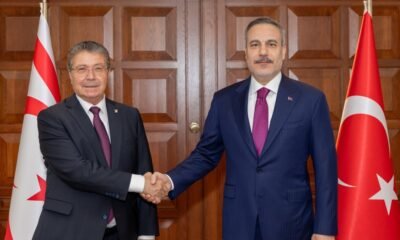
Foreign Minister Hakan Fidan met with Turkish Republic of Northern Cyprus (TRNC) President Tufan Erhürman during an official visit to the TRNC, discussing bilateral relations and the latest developments surrounding the Cyprus issue, diplomatic sources said Friday.
Fidan traveled to the TRNC for a series of high-level meetings with Turkish Cypriot officials.
The talks with Erhürman focused on relations between Türkiye and the TRNC, as well as recent developments concerning the longstanding Cyprus dispute, according to the sources.
As part of his visit, Fidan is also expected to meet with TRNC Prime Minister Ünal Üstel and Foreign Minister Tahsin Ertuğruloğlu.
Türkiye is among the guarantor states in talks to resolve the status of the island divided between Greek Cypriots and Turkish Cypriots and aligns with the Turkish Cypriot side. It advocates equal rights, freedoms and prosperity for the Turkish Cypriot community and actively supports the security, development and welfare of Turkish Cypriots.
The United Nations seeks to mediate between the sides and has managed to bring together Turkish and Greek Cypriot leaders in a new round of talks since 2024, though negotiations have failed to achieve a tangible solution so far.
In 2025, the talks took a new turn when guarantor states, including Greece and the United Kingdom, joined leaders of the two sides in Geneva for an expanded meeting and agreed upon six chapters of possible cooperation between Turkish and Greek Cypriots. A second meeting in July 2025 reviewed progress in the process, and last July, outgoing U.N. Secretary-General Antonio Guterres paid an inaugural visit to Cyprus for a new initiative to advance the process towards a solution.
Fidan’s visit comes ahead of a Nov. 9 meeting between Erhürman, Greek Cypriot leader Nikos Christodoulides and U.N. Secretary-General Antonio Guterres’ personal envoy, María Angela Holguin, amid renewed diplomatic efforts to advance the Cyprus peace process.
The talks are expected to focus on confidence-building measures, including proposals to open four new crossing points and expand mine clearance operations on the divided island.
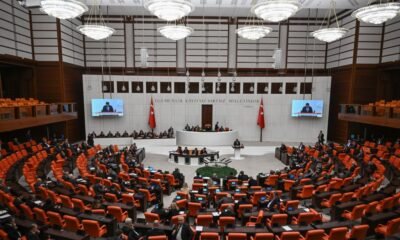
The Turkish Parliament on Thursday approved a bill ratifying the Mecca Agreement on Joint Defense with Pakistan and Saudi Arabia, paving the way for closer military cooperation among the three countries.
The Mecca Joint Defense Agreement was ratified by Parliament with the support of the ruling Justice and Development Party (AK Party), its ally the Nationalist Movement Party (MHP) and the main opposition Republican People’s Party (CHP).
Lawmakers approved the legislation during a General Assembly session chaired by Deputy Parliament Speaker Celal Adan following debates on the proposed agreement.
The pact establishes a framework for expanding defense and security cooperation among the three countries, covering military training, joint exercises, defense technology development, counterterrorism and logistical assistance.
Under the agreement, the countries will promote joint defense industry projects, including technology transfers, collaborative research and development, weapons production and defense innovation.
The partnership also aims to strengthen military interoperability through personnel exchanges, joint training programs and exercises involving their armed forces.
Intelligence sharing and military support
The agreement provides for closer intelligence cooperation through mutually agreed secure channels, subject to confidentiality and information security requirements.
The three countries will also coordinate efforts to combat terrorism and hold regular consultations on international security challenges.
The pact allows for individual and collective measures based on shared security assessments to protect their national interests.
It also establishes a framework for logistical assistance during peacetime, wartime and emergencies, including the provision of weapons, ammunition, fuel, spare parts and other military equipment.
Joint defense committee
A Strategic Political and Defense Committee will be established to oversee the agreement and coordinate cooperation among the three countries.
The committee will comprise foreign ministers, defense ministers and chiefs of general staff, with meetings generally scheduled twice a year. The frequency may be adjusted to once annually if the countries’ leaders deem it necessary.
A permanent secretariat will be established in Saudi Arabia to support the committee’s activities.
The secretariat will be headed by a secretary-general appointed on a rotating three-year basis among the founding members, with Pakistan providing the first officeholder.
The agreement also allows other countries to join, subject to the approval of the existing parties and procedures to be determined jointly.
Indefinite duration
The agreement will enter into force once all three countries complete their domestic ratification procedures and the final instrument of ratification is deposited with the committee’s secretariat.
It will remain in effect indefinitely, although any participating country may withdraw after 10 years by providing at least three months’ written notice through diplomatic channels.
Withdrawal or termination will not affect previously agreed projects or ongoing activities, while obligations to protect classified information will remain in force.
The pact also seeks to strengthen coordination among Türkiye, Pakistan and Saudi Arabia in regional and international organizations, encouraging common positions on international issues and closer cooperation on defense and security matters.


-
 Politics3 days ago
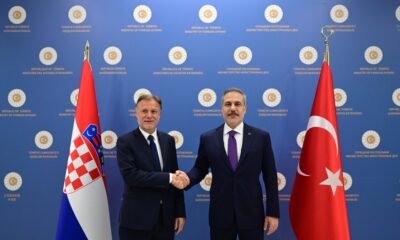
Türkiye’s FM Fidan meets Croatian parliament speaker in Ankara
-
 Politics2 days ago
Turkish FM visits Cyprus ahead of key talks on island’s fate
-
 Politics2 days ago
Turkish Parliament approves defense pact with Pakistan, Saudi Arabia
-
 Politics2 days ago
State, public united in Türkiye’s fight against terrorism: Kurtulmuş
-
 Politics2 days ago
President Erdoğan signals fresh Putin talks pushing for peace
-
 Politics3 days ago
FM Fidan, Araghchi discuss ongoing Iran-US talks, regional developments
-
 Politics3 days ago
Armenian PM Pashinyan plans Türkiye visit for COP31 summit
-
 Politics2 days ago
Turkish Parliament adopts 1st article of bill on Mecca alliance