
Politics
Terror-free Türkiye can be model for world: Kurtulmuş

Parliament Speaker Numan Kurtulmuş spoke at the “In Search of a New Social Contract in the Middle East” conference organized by the Center for Middle Eastern Studies (ORSAM) and the University of Oxford in Ankara on Monday and called for a new regional order built on justice, cooperation and shared prosperity, arguing that Middle Eastern countries must move beyond rivalries and external intervention to establish lasting peace. The veteran politician also touched upon the terror-free Türkiye initiative he was heavily involved in.
He described Türkiye’s ongoing initiative to end terrorism as a model that could offer lessons for other conflict-resolution efforts, stressing that its objectives extended beyond the disarmament of the terrorist group PKK. “The issue is not simply laying down arms or the disarmament and dissolution of a group,” he said, framing the process as an effort to rebuild social cohesion and enable communities divided by decades of conflict to live together in unity.
He said the initiative had advanced more quickly than some international examples, with progress achieved within approximately two years in areas where other processes had taken eight or nine years. However, Kurtulmuş cautioned against presenting the Turkish experience as a universal formula for resolving every conflict. Instead, he said, it should be considered a potential source of inspiration for international efforts to establish peace and social reconciliation.
He outlined several defining characteristics of the process, including its domestic origins, its grounding in national interests rather than party politics, parliamentary oversight, transparency and its connection to regional stability. Kurtulmuş emphasized that the initiative had emerged from Türkiye’s own political dynamics, historical experience and social needs rather than being designed in foreign capitals. He also rejected the idea that any major social issue could be entirely removed from politics, saying the distinction was that the process had not been confined to the agendas of individual political parties. The involvement of Parliament was particularly important, he said, as it provided a platform for different political views to be discussed and helped establish broader ownership of the process.
Kurtulmuş said the parliamentary commission had consulted academics, legal experts, civil society representatives and other segments of society, with their views recorded and considered as part of its work. He cited the commission’s report, which received 47 votes from its 50 members, and subsequent legislation that he said was supported by 467 lawmakers as significant milestones. The broad parliamentary backing, he argued, reflected a shared desire for peace, coexistence, economic development and social integration. He described the process as one of the most significant undertakings of the Republic of Türkiye’s second century, saying its success depended on ensuring that political disagreements were resolved through dialogue rather than coercion.
For decades, the PKK remained the main security threat for Türkiye, and its violent campaign is blamed for the deaths of thousands of people and immense economic losses, especially in southeastern Türkiye. The PKK claimed to be fighting for the rights of the Kurdish community and exploited the youth from the community for so-called Kurdish self-rule. Apart from small nationalist parties, almost all political parties openly supported the initiative, something rare in polarized Turkish politics. At Parliament, Kurtulmuş chaired the inaugural committee that sought input into the initiative, which eventually led to the inception of the bill on terror-free Türkiye.
Kurtulmuş stressed that lasting peace required recognition of the shared future of Turkish and Kurdish communities, rejecting approaches that treated their destinies as separate. “No proposal that fails to protect the honor of Turks and the pride of Kurds can establish lasting peace in this country,” he said, recalling the principle that had guided the initiative from its outset. He argued that the peoples of the region, including Turks, Kurds, Arabs, Sunnis, Shiites, Muslims and non-Muslims, shared interconnected interests and faced common challenges. “No people in this region can achieve prosperity on their own by following the dictates of imperialist powers,” he said, calling for a common social compact grounded in the recognition that the region’s communities shared both a history and a future.
Kurtulmuş also linked Türkiye’s domestic peace efforts to developments in neighboring countries, arguing that regional stability could not be secured through isolated national initiatives. He pointed to efforts to integrate the Syrian Democratic Forces (SDF) into Syria’s state structures and developments concerning armed groups in Iraq as important elements of the wider regional security environment. He said no country in the region could eliminate terrorism on its own, given the cross-border consequences of armed groups operating in neighboring states. Regardless of whether such groups were driven by ethnic, ideological or religious motivations, he argued, weapons should remain outside the control of nonstate armed actors. The objective of a terror-free Türkiye and a terror-free region, he said, should therefore be understood as a shared regional necessity rather than solely a national security goal.
Fairer order
The parliamentary speaker also said the international system was undergoing profound changes, requiring countries to reconsider the principles governing global power and international relations. “The issue is not who replaces whom at the center of power, but how power can be limited and how it can be transformed into a humane force within the framework of international law,” he said. Kurtulmuş said the emergence of a multipolar world would not, by itself, guarantee a fairer international order. He stressed the need for a system grounded in justice, fairness, the sovereign equality of nations and the fundamental rights and freedoms of all people.
Türkiye, situated at the crossroads of the Middle East, Eastern Mediterranean, Black Sea, Balkans and Caucasus, could not remain a passive observer of these transformations, he said, adding that Ankara sought to contribute proactively to regional and global solutions.
Turning to the Middle East, Kurtulmuş argued that outdated political approaches and externally imposed projects could no longer provide answers to the region’s challenges. “The old Middle East is over,” he said, calling on regional nations to develop common responses to global developments and work toward a new regional framework for peace. He said competition among countries could strengthen the region if it did not turn into hostility, emphasizing that each country’s prosperity and development should be regarded as contributing to the wider region. Peace and security, he added, must extend beyond silencing weapons to include stronger legal protections and the advancement of human rights.
Kurtulmuş called for a shift away from what he described as the region’s war and terrorism economies toward a peace economy capable of generating new opportunities for development. He said stronger regional cooperation could unlock economic potential through cross-border trade, infrastructure and shared projects, including the Development Road project linking Iraq with wider regional markets. Opening borders to trade and establishing economic corridors connecting Türkiye, Syria, Jordan, Iraq and other neighboring countries could create significant benefits for the region, he said. Kurtulmuş concluded that a new Middle East order would require countries to strengthen the rule of law, democracy and political pluralism at home while expanding cooperation across borders. He said Türkiye was prepared to contribute its experience and resources to this effort, expressing hope that the region’s peoples could move beyond divisions imposed over generations and build a future founded on unity, fraternity and peace.

A brief but important statement was jointly issued by Turkish and Iraqi officials on Sunday evening, catching the attention of a few. Yet, it marks a milestone in efforts to end the presence of the PKK as a terrorist group, especially in parts of Iraq other than the north, close to the Turkish border.
The Turkish Presidency’s Communications Directorate said leaders of the two countries agreed on a memorandum on Sept. 23 and, in line with it, the two countries affirmed a joint will to reestablish state order in Sinjar and end the PKK’s presence there. Beyond that, Türkiye confirmed taking steps for the gradual handover of the Bashika-Zilkan military complex to Iraqi authorities and formally establishing a Joint Security Coordination Committee, which was announced earlier to advance the elimination of the PKK presence through joint verification of the process. The military base was set up in 2015 to help Iraq fight against Daesh and later maintained its presence when the terrorist group PKK sought to replace Daesh following the liberation of Sinjar.
Hüseyin Fazla, founder and director of Strategic Research Centre (STRASAM) and a retired air force brigadier general, told Daily Sabah that the latest move and statement were a strategic advance, especially in terms of Türkiye’s “terror-free region” vision. Türkiye in 2024 launched the terror-free Türkiye initiative, calling on the PKK to dissolve itself. The initiative covers all wings of PKK, whose wings have spread to Iran and Syria over the past decades while its senior cadres are hiding out in Iraq’s mountainous north.
Fazla says the committee was an operational bridge that “combines Türkiye’s determination to fight terrorism with Iraq’s sovereign rights, translating theoretical agreements into concrete results on the ground.”
“The committee’s active functioning will not only eliminate one of the most significant security risks on the path toward the goal of a terror-free Türkiye but also elevate Türkiye-Iraq relations to the level of a strategic and lasting security partnership,” Fazla stated.
The presence of the PKK has stood out in otherwise normal relations between Türkiye and southern neighbor Iraq for years. Despite the well-documented presence of the terrorist group in the north, Iraq shied away from openly designating it as a terrorist group, unlike, for instance, European countries and the United States. This has seen a significant shift in the past decade, and in 2024, Baghdad finally moved to formally recognize the PKK as a security risk, designating it as a “banned organization.”
“For many years, Sinjar served as a critical corridor for the PKK’s logistical and manpower transfers between its headquarters in Qandil (the mountain in the north, which is home to PKK hideouts and vast underground networks the group uses to shelter from raids) and its Syrian offshoot, the YPG. The Iraqi central government’s establishment of full authority in the area plays a key role in directly cutting off the group’s geographical mobility and supply routes. The Joint Security Coordination Committee established as part of this process demonstrates that this authority will not remain merely on paper, but will be made permanent through practical implementation on the ground, with administrative and military mechanisms upheld and strengthened,” Fazla said.
“Intelligence sharing and operational coordination between Ankara and Baghdad are of vital importance in this process. In the past, coordination gaps and diplomatic difficulties have occasionally emerged between Türkiye’s cross-border operations in Iraq and the Iraqi central government. Such problems can now be minimized through institutional structures of this kind. By institutionalizing real-time intelligence sharing, joint monitoring of developments on the ground and operational oversight mechanisms, the committee ensures that the two countries act in concert in their fight against terrorism,” he added.
At the peak of PKK terrorism in the 1990s and 2010s, Türkiye carried out cross-border operations in Iraq, primarily the northern areas controlled by Iraq’s Kurdistan Regional Government (KRG). Operations have been successful to a degree, although Turkish forces suffered casualties in the rough terrain where ground operations have been a major challenge. Iraq occasionally issued messages of protest against what it saw as a violation of its sovereignty but has not actively sought to stop operations, which further confined the PKK to Qandil.
Win-win for Türkiye, Iraq
“Regional ownership will serve as a catalyst for achieving the goal of a terror-free region. The sustainability and permanence of the terror-free Türkiye strategy depends on completely eliminating the terrorist group’s room for maneuver across the border, thereby creating a terror-free region,” Fazla said. “Türkiye’s gradual handover of the Bashika-Zilkan military compound to Iraq, alongside the Joint Security Coordination Committee becoming operational, demonstrates that the fight is no longer a unilateral ‘necessity’ but is evolving into a shared commitment by two neighboring countries to the fundamental dynamics and requirements of regional security. This development contributes to the construction of Türkiye’s security architecture against terrorism while also strengthening Iraq’s territorial integrity and sovereignty from Baghdad’s perspective,” Fazla stated.
“The PKK’s regional strategy is based on exploiting power vacuums in Iraq and Syria to maintain its presence. Full coordination between Türkiye and Iraq at both the security bureaucracy and political leadership levels sends a clear message to the group that it will have no safe haven left in the region. The committee will also play an important role, through its capacity and positioning, in undermining the group’s propaganda mechanisms and psychological advantage on the ground, as the withdrawal and monitoring process in Sinjar is to be jointly verified through this body,” he also said.
Last month, Iraq announced that Sinjar Resistance Units, or YBS, an offshoot of the group, will disarm and integrate into the Iraqi army. YBS was originally founded in 2007 but rose to prominence as a force claiming to fight against Daesh, which launched an offensive to capture Sinjar in 2014. On Oct. 12, Turkish security sources said the PKK had evacuated four accommodation areas in Metina, a region in northern Iraq, as a process aimed at the group’s full disarmament continued. Earlier this month, media outlets reported that PKK members also “withdrew” from the outskirts of Karaçok mountain in northern Iraq.
Fazla, meanwhile, said the process with Iraq still has “the potential to encounter various risks and obstacles due to the complex geopolitical and local dynamics on the ground.”
“At this point, attention must be paid to constantly shifting local authorities and power vacuums on the ground. Geographically and demographically, Sinjar is not only an area of PKK activity but also a crossroads for Hashd al-Shaabi elements, local militia groups and the disputed territories between Baghdad and Irbil (the seat of the KRG), known as the Article 140 areas,” Fazla said, referring to the boundary dispute between the central government and the KRG and the Constitution’s relevant article that aims to settle the dispute and jurisdiction issues.
“Although the central government in Baghdad maintains that it has “established official authority” in Sinjar, failure to fully integrate local armed actors into the process, or potential attempts by the de facto chain of command on the ground to sabotage it, could create obstacles to progress. Meanwhile, the success of this process depends not only on military operations to clear the area but also on its economic integration, including through projects such as the Development Road Project,” Fazla also said. The Development Road forms part of Türkiye’s wider push to become a transit hub between Asia and Europe. It complements the Middle Corridor, the route across Central Asia and the Caucasus, and Ankara has described both as central to Türkiye’s strategy.
“The PKK is known to have established tactical alliances with certain local armed groups in Iraq and external actors, including Shiite militia networks close to Iran. The PKK and affiliated groups may resort to asymmetric sabotage, provocations or propaganda activities to prevent these strategic routes from becoming operational,” Fazla warned.
He also pointed to a rift between two parties in KRG, which, for decades, dominated Iraqi Kurdish politics. He said the rift “makes cooperation along the Ankara-Baghdad axis critical.”
“The growing divide between the Barzani and Talabani camps, particularly the PUK’s (Patriotic Union of Kurdistan) announcement under Bafel Talabani that it was withdrawing from the government and the possibility of a parallel administration being raised, has highlighted the risk that progress in the process could be derailed by conflicts of interest among local actors. In this context, Baghdad needs to consolidate its control over KRG and prevent tensions within the KRG from undermining the process,” he said.
“I believe Tehran should also be included in this process, alongside coordination along the Ankara-Baghdad axis and the ongoing regional diplomatic efforts. Given the presence of Shiite militia groups in Iraq and Iran’s indirect influence in the region, diplomatic channels should remain open to prevent Tehran from perceiving the security mechanism established with Baghdad as a ‘threat.’ The regional balance must be taken into account by clearly declaring that the committee’s objective is limited to ‘eliminating the PKK’s presence and ensuring border security,’” Fazla also said.
President Recep Tayyip Erdoğan held a series of bilateral meetings with leaders from Turkmenistan, Bangladesh, Ethiopia and Brazil on the sidelines of the COP31 climate summit in Antalya, focusing on expanding economic cooperation, strengthening diplomatic ties and addressing regional and global challenges.
The meetings, held as world leaders gathered for the U.N. climate conference running from Nov. 9-20, highlighted Türkiye’s efforts to deepen international partnerships while advancing cooperation on climate action.
During talks with Turkmenistan’s national leader and People’s Council Chairman Gurbanguly Berdimuhamedov, Erdoğan emphasized the importance of expanding cooperation in energy, trade, defense and investment, according to Türkiye’s Communications Directorate.
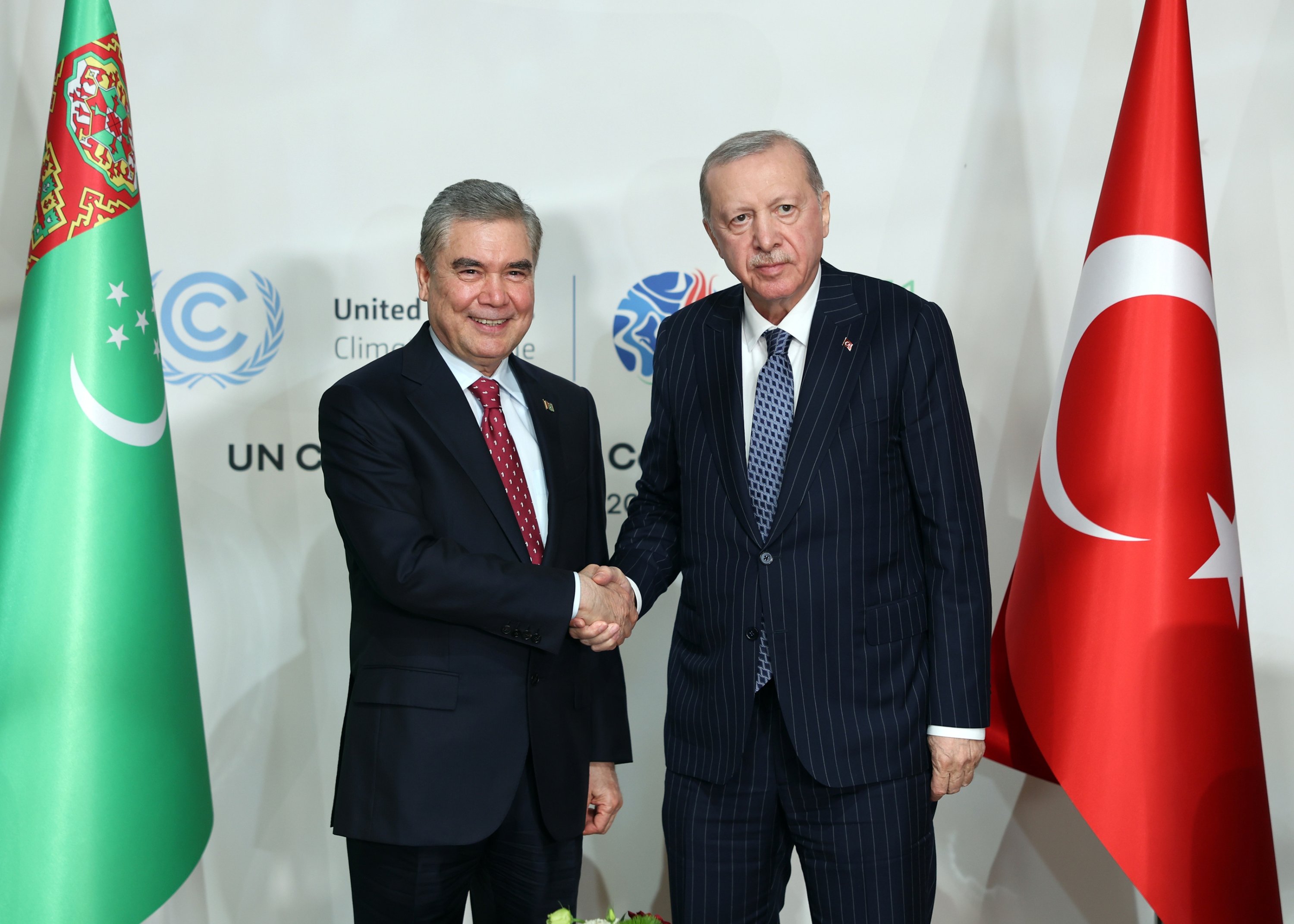
Erdoğan also welcomed the growing influence of the Organization of Turkic States (OTS), saying its strategic significance had been reaffirmed at the Ankara summit. He expressed hope that Turkmenistan would join the organization as a full member.
In a separate meeting with Bangladeshi Prime Minister Tarique Rahman, Erdoğan called for stronger bilateral cooperation, particularly in trade and the defense industry.
He reaffirmed Türkiye’s commitment to keeping the humanitarian situation in Cox’s Bazar on the international agenda, while highlighting Bangladesh’s vulnerability to climate change.
Erdoğan said COP31 would address the country’s needs in flood management and climate-resilient infrastructure, expressing hope that the Climate Implementation Bridge initiative would help deliver practical solutions.
During his meeting with Ethiopian Prime Minister Abiy Ahmed, Erdoğan pledged continued efforts to expand trade and investment ties and reiterated Türkiye’s support for peace and stability in the region.
He also congratulated Ethiopia on its selection to host COP32, the next U.N. climate conference after Türkiye.
Erdoğan, Lula discuss trade, climate cooperation
Erdoğan also met Brazilian President Luiz Inacio Lula da Silva, discussing bilateral relations and regional and global developments.
The Turkish president noted that Türkiye and Brazil would mark the 100th anniversary of diplomatic relations next year, emphasizing plans to strengthen cooperation in trade, defense and other strategic sectors.
Erdoğan praised Brazil’s work during its COP30 presidency and said Türkiye aimed to build on that progress by making COP31 a conference focused on implementing previously agreed climate commitments.
He also stressed the importance of continued cooperation between Ankara and Brasilia on international peace efforts.
Erdoğan congratulated Lula on his election victory, with the meeting marking the Brazilian leader’s first official engagement following his reelection.
Meanwhile, Azerbaijani President Ilham Aliyev arrived in Türkiye on Tuesday at Erdoğan’s invitation to attend the COP31 Leaders Summit, scheduled for Nov. 11-12.
The Antalya gathering brings together heads of state, policymakers and civil society representatives to advance global climate negotiations and strengthen international cooperation.
President Recep Tayyip Erdoğan used the COP31 climate summit in Antalya to advance Türkiye’s diplomatic and economic agenda, holding high-level talks with leaders from China, Armenia, Bosnia-Herzegovina and Australia that focused on regional peace, strategic trade corridors and deeper international cooperation, Türkiye’s Presidential Communications Directorate said.
During his meeting with Chinese Vice President Han Zheng, Erdoğan emphasized the need to accelerate cooperation between Ankara and Beijing, particularly in investment, energy, trade and tourism.
The president highlighted the potential to align Türkiye’s Middle Corridor with China’s Belt and Road Initiative, saying the two projects, alongside the Development Road Project, could unlock significant economic opportunities for both countries.
Erdoğan reaffirmed Türkiye’s determination to take concrete steps to strengthen bilateral ties and expand cooperation across key sectors.
In separate talks with Armenian Prime Minister Nikol Pashinyan, Erdoğan addressed the ongoing normalization process between Ankara and Yerevan, as well as broader regional developments.
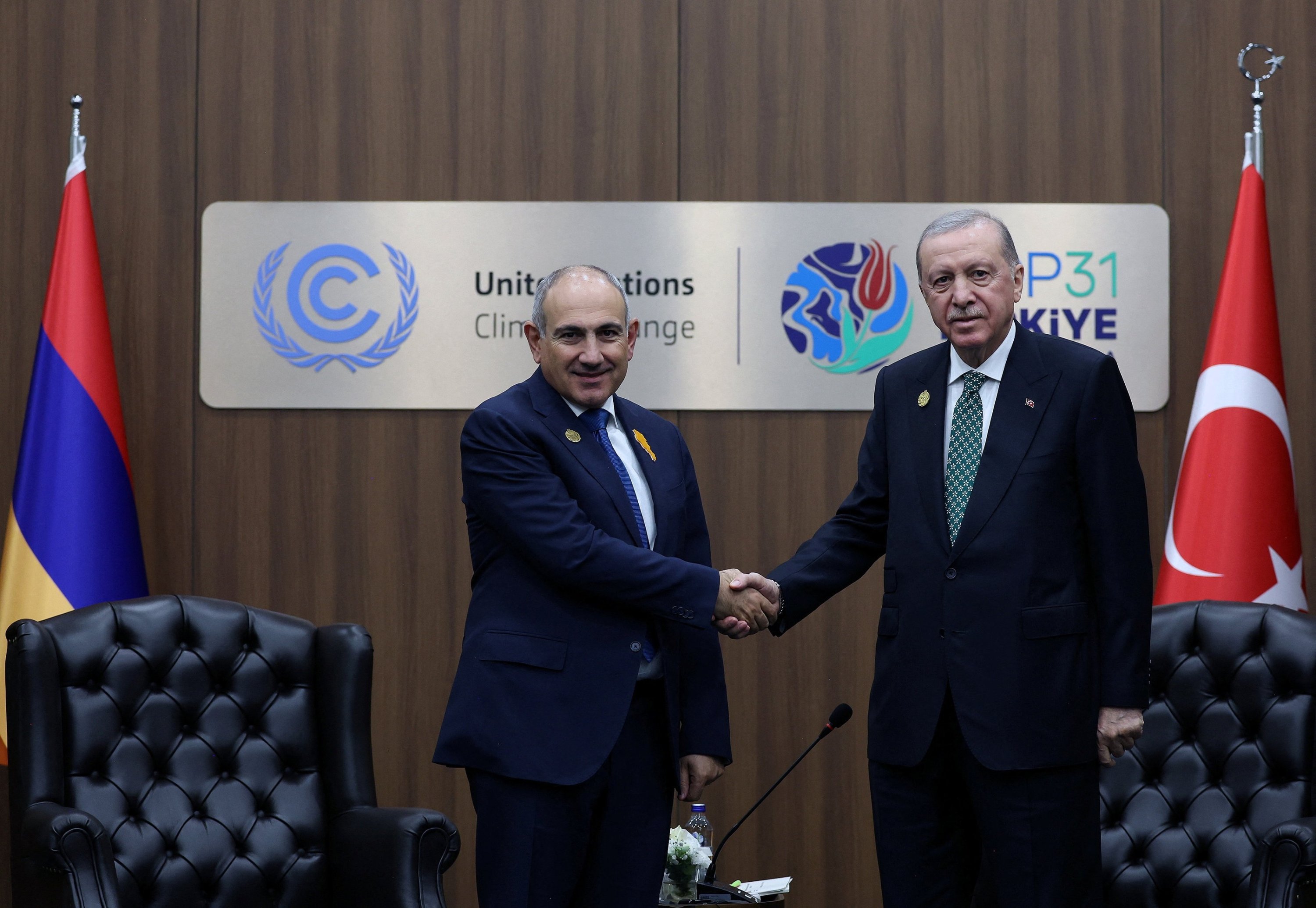
He said relations between Türkiye and Armenia were progressing through constructive measures, noting that several symbolic but significant steps had already been taken.
Erdoğan also reiterated Ankara’s support for the peace process between Armenia and Azerbaijan, stressing that Türkiye was closely monitoring developments aimed at securing lasting regional stability.
The president separately met with Bosnia-Herzegovina Presidency Chair Denis Becirovic and Presidency member Zeljko Komsic, reaffirming Türkiye’s commitment to the Balkan country’s sovereignty, territorial integrity and constitutional order.
Erdoğan emphasized Ankara’s friendship with all three constituent peoples of Bosnia-Herzegovina and pledged continued support for the European Union-led Operation Althea peacekeeping mission.
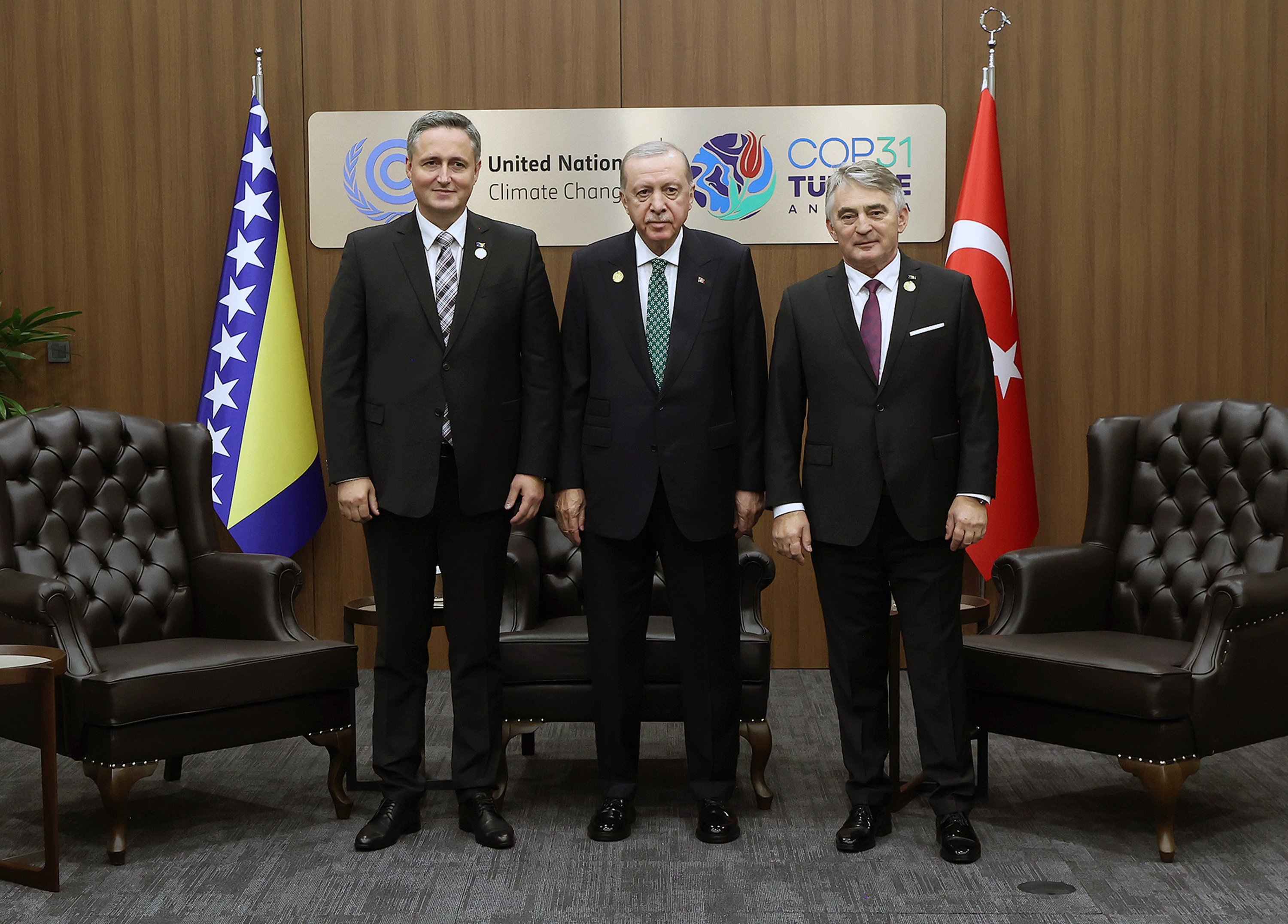
The discussions also covered opportunities to strengthen economic cooperation, particularly in trade and investment, alongside regional and international developments.
In another meeting, Erdoğan received Australian Prime Minister Anthony Albanese, with talks focusing on bilateral relations and regional and global issues.
Erdoğan said trade between Türkiye and Australia remained below its full potential and called for greater efforts to explore cooperation opportunities across multiple sectors.
He also highlighted the shared responsibilities of Türkiye and Australia at COP31 and thanked Albanese for his country’s contributions to the climate summit.
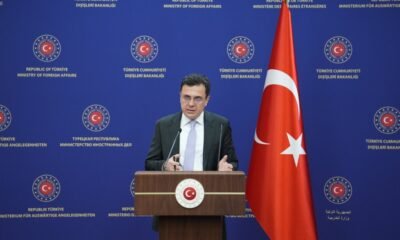
Türkiye on Tuesday called on the Greek Cypriot administration to adopt a more constructive approach to resolving longstanding disputes on the island, welcoming progress in confidence-building measures following trilateral talks on Cyprus.
Foreign Ministry spokesperson Öncü Keçeli said the meeting brought together Turkish Republic of Northern Cyprus (TRNC) President Tufan Erhürman, the Greek Cypriot leader and the U.N. secretary-general’s personal envoy on Monday.
“We welcome the fact that the trilateral meeting held yesterday (Nov. 9) on the island between Turkish Republic of Northern Cyprus (TRNC) President Tufan Erhürman, the Greek Cypriot leader and the U.N. secretary-general’s personal envoy addressed areas of cooperation aimed at building trust between the two sides, an issue on which the Turkish side has placed particular emphasis,” Keçeli said on X.
Keçeli noted that limited progress had been made on opening new crossing points, an issue on the agenda for the past year and a half.
He said discussions on the issue were part of a cooperation process launched in line with a proposal by the U.N. secretary-general.
“Further progress on areas of cooperation, including crossing points, at the trilateral meeting planned between the two leaders and the U.N. secretary-general in the coming period will be possible if the Greek Cypriot side changes its uncompromising stance,” he added.
Amid opposition from some countries littoral to the Mediterranean Sea, Libya’s acting Foreign Minister Taher al-Baour said that his country’s maritime agreement with Türkiye is not directed against any other state, stressing that both countries have the sovereign right to conclude such deals.
Speaking in an interview with Al Jazeera television aired Monday, al-Baour said the agreement, signed in 2019 by Libya’s then-Government of National Accord, was recently ratified by the country’s House of Representatives.
“This agreement is certainly not directed against any country,” he said, adding that it is a maritime cooperation agreement between the two nations. “Libya and Türkiye are sovereign states, and they have the right to enter into any agreements,” he said.
Al-Baour emphasized that Libya does not seek to create tensions in the region and recognizes the concerns of countries that have opposed the agreement. “We respect the concerns of the countries that rejected this agreement, but the door is certainly open to dialogue and discussions with everyone to reach the best possible solution,” he said.
The minister said Libya wants the region to become a center of stability, growth and development rather than a source of tensions. He reaffirmed Tripoli’s willingness to engage in dialogue and address questions raised by other countries regarding the agreement.
Libya’s eastern-based House of Representatives unanimously approved the boundary maritime agreement on Oct. 20, reversing its previous opposition to the deal and repealing resolutions adopted in 2020 that had rejected agreements with Türkiye and called for severing political ties with Ankara.
Türkiye and Libya signed the maritime jurisdiction agreement in November 2019 to establish the boundaries of their respective maritime areas in the Mediterranean.
Ankara welcomed the Libyan parliament’s decision, saying the memorandum safeguards the mutual rights and interests of both countries in accordance with international law and principles of equity. However, Greece, Egypt and the Greek Cypriot administration rejected the ratification.
Speaking at the Leaders Summit of COP31 in southern Türkiye’s Antalya on Wednesday, President Recep Tayyip Erdoğan said the world was going through one of the worst existential crises and he hoped that the event would be a turning point in the battle against climate change.
“We have no other sky, no seas, no forests but humanity is going through one of the worst existential crises. From ecological devastation to serious climate incidents, we face significant challenges. We will either complain from difficulties or cling to hope and take action, we choose lighting a candle instead of shaking fist at the darkness,” he said.
“Climate financing should be more accessible, predictable and cater to the needs,” he also said.
Erdoğan also touched upon “ecocide” in Gaza under Israeli occupation. “Gaza was exposed both to genocide and ecocide, century-old olive trees were cut down, soil and water was polluted, cities were razed to the ground,” he said.
The summit brings world leaders, negotiators and climate experts together as Türkiye seeks to move international climate commitments toward practical implementation and measurable results.
The summit, running from Nov. 9-20, comes as countries face mounting pressure to reduce emissions, strengthen resilience to extreme weather and mobilize the funding needed to protect vulnerable communities. Türkiye aims to make COP31 an “Implementation COP,” focusing on areas ranging from clean energy and climate-resilient cities to food and water security, industrial transformation and ocean protection.
DETAILS TO FOLLOW…


-
 Economy2 days ago
Türkiye, China gather at green development forum, assess co-op
-
 Politics2 days ago
Sea of Friendship: Türkiye, Egypt bond over Med drills
-
 Sports1 day ago
TVF takes sustainability drive to COP31 with solar energy project
-
 Economy2 days ago
‘Terror-free Türkiye’ to drive major economic leap: Erdoğan
-

 Sports1 day ago
Turkish sports honor Atatürk’s ideals on 88th death anniversary
-
 Politics3 days ago
Brothers in arms: Erdoğan receives warm welcome in Azerbaijan
-
 Politics10 hours ago
Türkiye urges Greek Cypriots to shift stance after Cyprus talks
-

 Lifestyle1 day ago
No mystery, just Italian glamor as Orient Express returns to Istanbul