
Politics
Turkish, Greek Cypriot leaders agree to open 2 new crossings

Turkish and Greek Cypriot leaders agreed to open two new crossing points on the divided island of Cyprus during U.N.-brokered talks in Lefkoşa, marking a step toward improving cooperation between the two communities.
Turkish Republic of Northern Cyprus (TRNC) President Tufan Erhürman and Greek Cypriot leader Nikos Christodoulides reached the agreement during a trilateral meeting mediated by Maria Angela Holguin Cuellar, the U.N. secretary-general’s personal envoy for Cyprus.
The meeting, held at the residence of the U.N. chief of mission in the buffer zone in Lefkoşa, began at 11 a.m. and lasted approximately three hours and 15 minutes.
Following the talks, Holguin and U.N. Peacekeeping Force in Cyprus spokesperson Aleem Siddique presented a joint U.N. statement to reporters after the two leaders departed.
According to the statement, the leaders agreed to establish new crossing points connecting Akıncılar with Lympia and Gemikonağı with Kambos-Karavostasi.
Discussions on additional crossings will continue, while Erhürman and Christodoulides are also expected to hold another trilateral meeting with U.N. Secretary-General Antonio Guterres.
The U.N. described the discussions as taking place in a positive atmosphere, with both sides agreeing on further confidence-building measures.
The leaders agreed to relaunch the bicommunal Imagine education program under the supervision of the Technical Committee on Education, which will determine the framework for its implementation.
They also tasked the Technical Committee on Crisis Management with establishing a mechanism to ensure rapid responses to emergencies.
Additionally, the leaders agreed that the Technical Committee on Cultural Heritage would begin restoration work on several Maronite churches and an Armenian monastery.
The agreements signal renewed efforts to strengthen practical cooperation between the island’s two communities amid continuing U.N.-facilitated dialogue.

Türkiye on Tuesday called on the Greek Cypriot administration to adopt a more constructive approach to resolving longstanding disputes on the island, welcoming progress in confidence-building measures following trilateral talks on Cyprus.
Foreign Ministry spokesperson Öncü Keçeli said the meeting brought together Turkish Republic of Northern Cyprus (TRNC) President Tufan Erhürman, the Greek Cypriot leader and the U.N. secretary-general’s personal envoy on Monday.
“We welcome the fact that the trilateral meeting held yesterday (Nov. 9) on the island between Turkish Republic of Northern Cyprus (TRNC) President Tufan Erhürman, the Greek Cypriot leader and the U.N. secretary-general’s personal envoy addressed areas of cooperation aimed at building trust between the two sides, an issue on which the Turkish side has placed particular emphasis,” Keçeli said on X.
Keçeli noted that limited progress had been made on opening new crossing points, an issue on the agenda for the past year and a half.
He said discussions on the issue were part of a cooperation process launched in line with a proposal by the U.N. secretary-general.
“Further progress on areas of cooperation, including crossing points, at the trilateral meeting planned between the two leaders and the U.N. secretary-general in the coming period will be possible if the Greek Cypriot side changes its uncompromising stance,” he added.
Amid opposition from some countries littoral to the Mediterranean Sea, Libya’s acting Foreign Minister Taher al-Baour said that his country’s maritime agreement with Türkiye is not directed against any other state, stressing that both countries have the sovereign right to conclude such deals.
Speaking in an interview with Al Jazeera television aired Monday, al-Baour said the agreement, signed in 2019 by Libya’s then-Government of National Accord, was recently ratified by the country’s House of Representatives.
“This agreement is certainly not directed against any country,” he said, adding that it is a maritime cooperation agreement between the two nations. “Libya and Türkiye are sovereign states, and they have the right to enter into any agreements,” he said.
Al-Baour emphasized that Libya does not seek to create tensions in the region and recognizes the concerns of countries that have opposed the agreement. “We respect the concerns of the countries that rejected this agreement, but the door is certainly open to dialogue and discussions with everyone to reach the best possible solution,” he said.
The minister said Libya wants the region to become a center of stability, growth and development rather than a source of tensions. He reaffirmed Tripoli’s willingness to engage in dialogue and address questions raised by other countries regarding the agreement.
Libya’s eastern-based House of Representatives unanimously approved the boundary maritime agreement on Oct. 20, reversing its previous opposition to the deal and repealing resolutions adopted in 2020 that had rejected agreements with Türkiye and called for severing political ties with Ankara.
Türkiye and Libya signed the maritime jurisdiction agreement in November 2019 to establish the boundaries of their respective maritime areas in the Mediterranean.
Ankara welcomed the Libyan parliament’s decision, saying the memorandum safeguards the mutual rights and interests of both countries in accordance with international law and principles of equity. However, Greece, Egypt and the Greek Cypriot administration rejected the ratification.
Speaking at the Leaders Summit of COP31 in southern Türkiye’s Antalya on Wednesday, President Recep Tayyip Erdoğan said the world was going through one of the worst existential crises and he hoped that the event would be a turning point in the battle against climate change.
“We have no other sky, no seas, no forests but humanity is going through one of the worst existential crises. From ecological devastation to serious climate incidents, we face significant challenges. We will either complain from difficulties or cling to hope and take action, we choose lighting a candle instead of shaking fist at the darkness,” he said.
“Climate financing should be more accessible, predictable and cater to the needs,” he also said.
Erdoğan also touched upon “ecocide” in Gaza under Israeli occupation. “Gaza was exposed both to genocide and ecocide, century-old olive trees were cut down, soil and water was polluted, cities were razed to the ground,” he said.
The summit brings world leaders, negotiators and climate experts together as Türkiye seeks to move international climate commitments toward practical implementation and measurable results.
The summit, running from Nov. 9-20, comes as countries face mounting pressure to reduce emissions, strengthen resilience to extreme weather and mobilize the funding needed to protect vulnerable communities. Türkiye aims to make COP31 an “Implementation COP,” focusing on areas ranging from clean energy and climate-resilient cities to food and water security, industrial transformation and ocean protection.
DETAILS TO FOLLOW…
Parliament Speaker Numan Kurtulmuş met with opposition Republican People’s Party (CHP) leader Kemal Kılıçdaroğlu on Tuesday and is set to hold more talks with other party leaders as part of the Terror-Free Türkiye initiative. Kurtulmuş was scheduled to hold talks with top officials of the New Path Party (YY) later on Tuesday and visit the parliamentary offices of the Peoples’ Equality and Democracy Party (DEM Party) and the ruling Justice and Development Party (AK Party) on Wednesday.
His talks focus on a “monitoring commission” expected to be established in Parliament for the purpose of monitoring the disarmament process of the terrorist group PKK. Kurtulmuş will seek the parties’ contribution to the commission, which is expected to follow the National Solidarity Commission. Established last year, the previous commission concluded its work after months of discussions with people, ranging from families of terror victims to academics, for input on shaping the initiative that aims to eliminate the PKK threat.
In remarks published on Monday, President Recep Tayyip Erdoğan vowed not to abandon the Terror-Free Türkiye initiative, adding that the government was ready to pay whatever price necessary for the initiative to succeed. “Our top priority is for all elements of the group to complete the dissolution process, fully surrender their weapons and for this situation to be concretely established and verified by the relevant state institutions. Every step and every move is being closely monitored by the relevant state institutions and our government. This will continue in the same manner. I also believe that the Monitoring Commission will hopefully be established soon,” Erdoğan said.
The government has set up a separate board under a bill approved by Parliament to “follow up and evaluate” the initiative, and at its latest meeting in September, the board decided to establish four subcommittees: the Subcommittee on Judicial and Legal Affairs Coordination, the Subcommittee on Monitoring and Verification, the Subcommittee on Social Cohesion and Integration and the Subcommittee on Disarmament and Strategic Coordination.
European Commission President Ursula von der Leyen on Monday called for the rapid operationalization of the Black Sea Maritime Security Hub, welcoming growing cooperation between Türkiye, Romania and Bulgaria to strengthen security in the strategic region.
“We need to operationalize the Black Sea Maritime Security Hub,” von der Leyen said during a joint news briefing with Romanian President Nicusor Dan in Bucharest.
She welcomed the “closer maritime cooperation” among the three countries, stressing that the EU must adopt an “urgency mindset” in addressing defense and security challenges.
“The skies over the Black Sea have darkened, particularly in recent weeks, with drone attacks targeting commercial ships off your coasts, innocent sailors having lost their lives, others are still missing at sea,” she said.
Von der Leyen called for restoring and preserving freedom of navigation in the Black Sea, highlighting its importance for Europe, Ukraine’s economy and global food security.
She also stressed the need to strengthen maritime surveillance and the bloc’s security in the information space.
“Hostile actors are weaponizing the information space, and drone incidents are often doubled by foreign information manipulation and interference,” she warned.
“They target relentlessly our citizens and democracies, sowing fear, spreading uncertainty,” she added.
Von der Leyen said Europe must strengthen its capacity to respond to crises along its borders.
“I am pleased to announce an additional €10 million ($11.2 million) in funding to Romanian authorities for search and rescue operations,” she said.
“This will support your capacity to respond to such incidents rapidly and effectively,” she added.
Turning to the upcoming U.S.-mediated peace negotiations between Russia and Ukraine in Abu Dhabi, von der Leyen reaffirmed European support for Kyiv.
She said Ukrainian President Volodymyr Zelenskyy had requested support from European partners for the negotiations and that the bloc was providing it.
“The focus of these peace talks is ending Russia’s war in Ukraine. That must be the goal,” she stressed.
Von der Leyen said the EU was also working on a post-war prosperity plan to support Ukraine’s stability and reconstruction.
“Any meaningful discussions about Europe’s security architecture can only be undertaken once a ceasefire in Ukraine has been achieved,” she said.
Such discussions must take place in an appropriate forum, particularly with NATO allies and EU members, she added.
Moscow has maintained that the U.S.-mediated negotiations should remain strictly trilateral, involving Russia, Ukraine and the U.S., without direct European participation.
The Abu Dhabi talks, scheduled for Tuesday and Wednesday, will mark the fourth round of U.S.-mediated negotiations between Russia and Ukraine under the Trump administration.
They will also be the first such meetings since the previous round in Geneva in February.
At 9:05 a.m., the time of his death, the nation stood still to observe a minute of silence in memory of Mustafa Kemal Atatürk, the great statesman and commander who led Türkiye’s liberation from the post-World War I invasion and established the Republic.
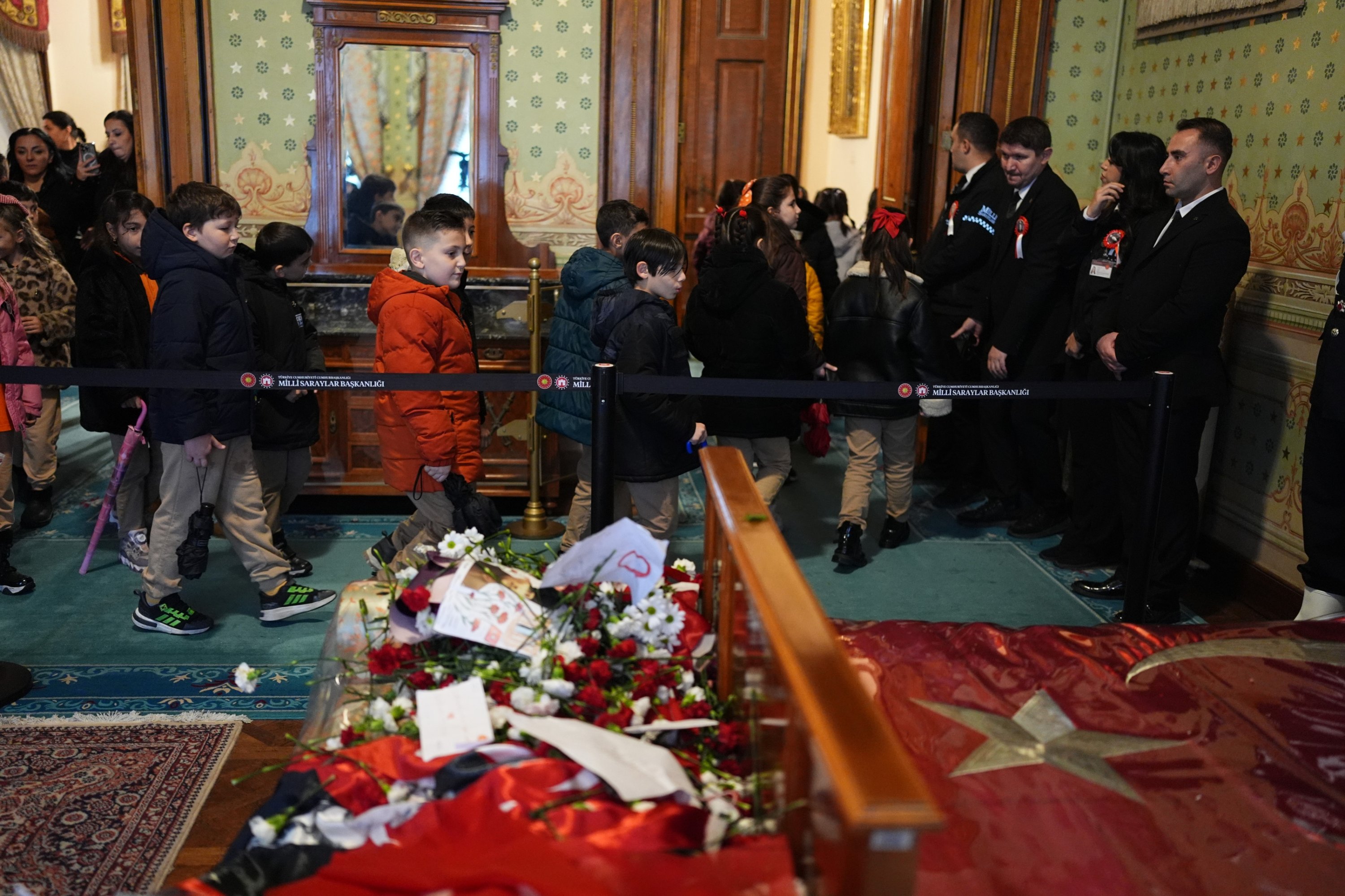
President Recep Tayyip Erdoğan, top officials, commanders of the Turkish Armed Forces (TSK) and politicians across the political spectrum gathered at Anıtkabir, Atatürk’s mausoleum in the capital, Ankara, where crowds flocked to pay tribute to Atatürk on the 88th anniversary of his death. In Istanbul, similar scenes unfolded at Dolmabahçe Palace, the Ottoman-era building where Atatürk spent his final days as he battled terminal illness.
“Beloved Atatürk, we remember you on the 88th anniversary of your passing, along with your comrades in arms, members of our parliament who led the War of Independence, our martyrs and veterans who paid a heavy price for our nation. In this challenging period, where our region and the world struggle with crises, we mobilized all our resources to carry the Republic of Türkiye and its 86 million members to a more prosperous future. We will continue resolutely to develop this paradise-like land entrusted to us by our martyrs and veterans, in unity with our nation. May your soul be blessed,” Erdoğan wrote in the memorial book at Anıtkabir.
Erdoğan later spoke at an event on the occasion held by the Atatürk Supreme Council for Culture, Language and History, the only high-level state institution specifically bearing the name of Atatürk. He delved into Atatürk’s past as leader of the independence movement. “At a time when enemies’ boots stained Izmir, he left Istanbul (then the capital of the Ottoman Empire) for Anatolia and sparked the torch of independence,” he said. He recited Atatürk’s remarks about those days when he saw what he defined as “a tendency among the nation for achieving independence that would put those hesitating fighting for it to shame.”
“These words are the crystal-clear indication that the liberation of the country was sought through resilience of the nation, not through submitting to the mandate of other countries, at a time where our independence and the future were threatened,” Erdoğan stated. “This was also a fight for the oppressed nation. As he told Azerbaijan’s representative Ibrahim Abilov when he hosted him in Ankara at the height of the War of Independence, Türkiye’s fight was not just about its own future and its cause was the cause of all oppressed nations, the entire East.”
Compared with subsequent presidents of the country, Atatürk had a relatively short life. He passed away at the age of 57 after suffering from cirrhosis of the liver, something attributed to his lifelong habit of smoking and drinking. The condition ultimately confined him to bed, a man who had survived an assassination attempt, multiple encounters with death on the World War I battlefronts and numerous other challenges throughout his life.
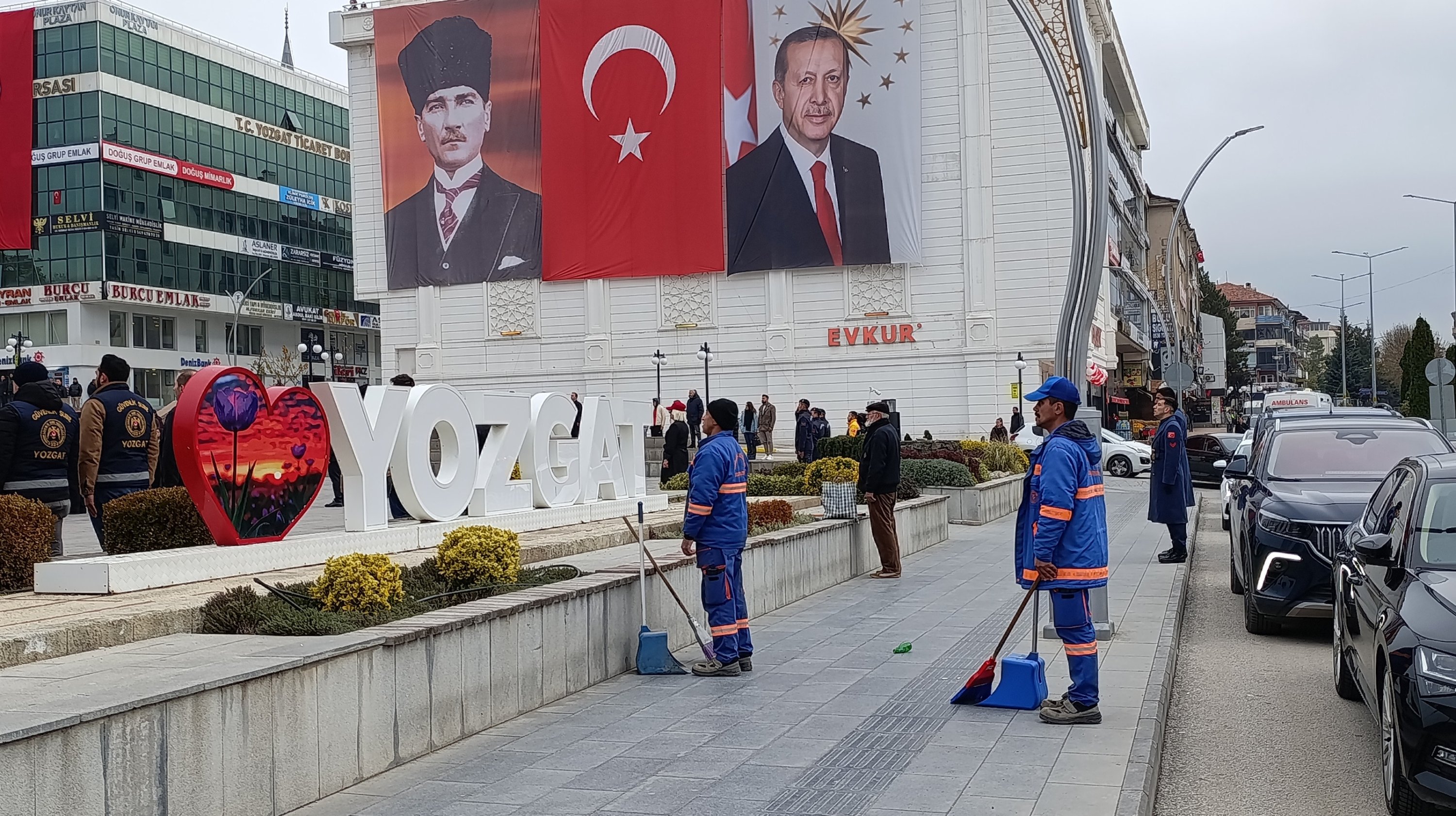
Born in 1881 in then-Ottoman Salonica (Thessaloniki), now in Greece, Mustafa Kemal, as he was known before he was given the unique surname that translates as “Father of Turks,” started a brilliant military career in the early 20th century and served on multiple fronts during the Ottoman Empire’s eventful last years, from Libya to the Balkans. While serving in Sofia as a military attache after years on the battlefield, he sought reassignment to the field. In 1915, he was appointed a division commander and proved his military mettle as a commander during World War I. He was nicknamed the “Hero of Anafartalar” after a decisive battle on the western front in Gallipoli. This feat later brought him wider recognition as a skilled commander and a trusted figure as he sought to rally the nation for independence in the aftermath of World War I. It was also his first brush with death, when a piece of shrapnel hit him in the chest but was stopped by a pocket watch he was carrying.
His next mission was on the eastern front in 1916, where he managed to stop the Russian incursion and reclaimed the eastern provinces of Bitlis and Muş from invading forces, a feat that helped secure his promotion to the rank of general. In the next two years, he served in Palestine and Syria as commander of the Seventh Army. After the war ended, he returned to Istanbul, the then capital of the Ottoman Empire, during a time when invading forces occupied the city, and secretly worked to organize a nationwide resistance. He found an opportunity to serve this purpose when he left the city as an “army inspector” under the guise of inspecting Ottoman troops scattered across the country. His arrival in the northern province of Samsun on May 19, 1919, is today viewed as the first step toward independence in postwar Türkiye. Once he drummed up the support of fellow commanders and the public during his travels across Anatolia, Atatürk started organizing a formal opposition to invading Allied forces through conventions in eastern and central Turkish cities. The conventions and congresses paved the way for the establishment of a temporary government independent of the Ottoman seat of power, which was then in its death throes, and a new Parliament firmly opposed to any foreign mandate. In 1920, he spearheaded the establishment of the Turkish Grand National Assembly (TBMM) and was elected as its president, as well as head of the interim government.
Under his leadership, an outnumbered army, with broad public support, was assembled and showed the world that a new country was rising from the ashes of the Ottoman Empire. Victories in central and western Türkiye against invading Greek forces in defensive battles in 1921 cemented trust in Atatürk. He was soon promoted to the rank of marshal. In 1922, the army launched the Great Offensive, the first counterattack against invaders. Months after a decisive victory against the Greek army, a cease-fire agreement was signed with the Allied forces, paving the way for their withdrawal from Turkish territories. The Treaty of Lausanne, signed in 1923, officially marked the end of the conflict between invading forces and Türkiye. A few months after it was signed, Atatürk pronounced the formation of the Republic of Türkiye and was elected as its first president. He remained in this post until his death, being elected to four consecutive terms as president.
After the foundation of the Republic, Atatürk devoted his life to the reconstruction of a war-torn country, which was also tested by a global economic crisis, while establishing ties with countries against which Türkiye had once fought. His diplomatic and economic efforts made Türkiye an emerging country with a say in international affairs. On the domestic front, Atatürk is credited with revolutionary changes, including a switch to a new alphabet, a new education system, and vast legal, social and economic reforms.
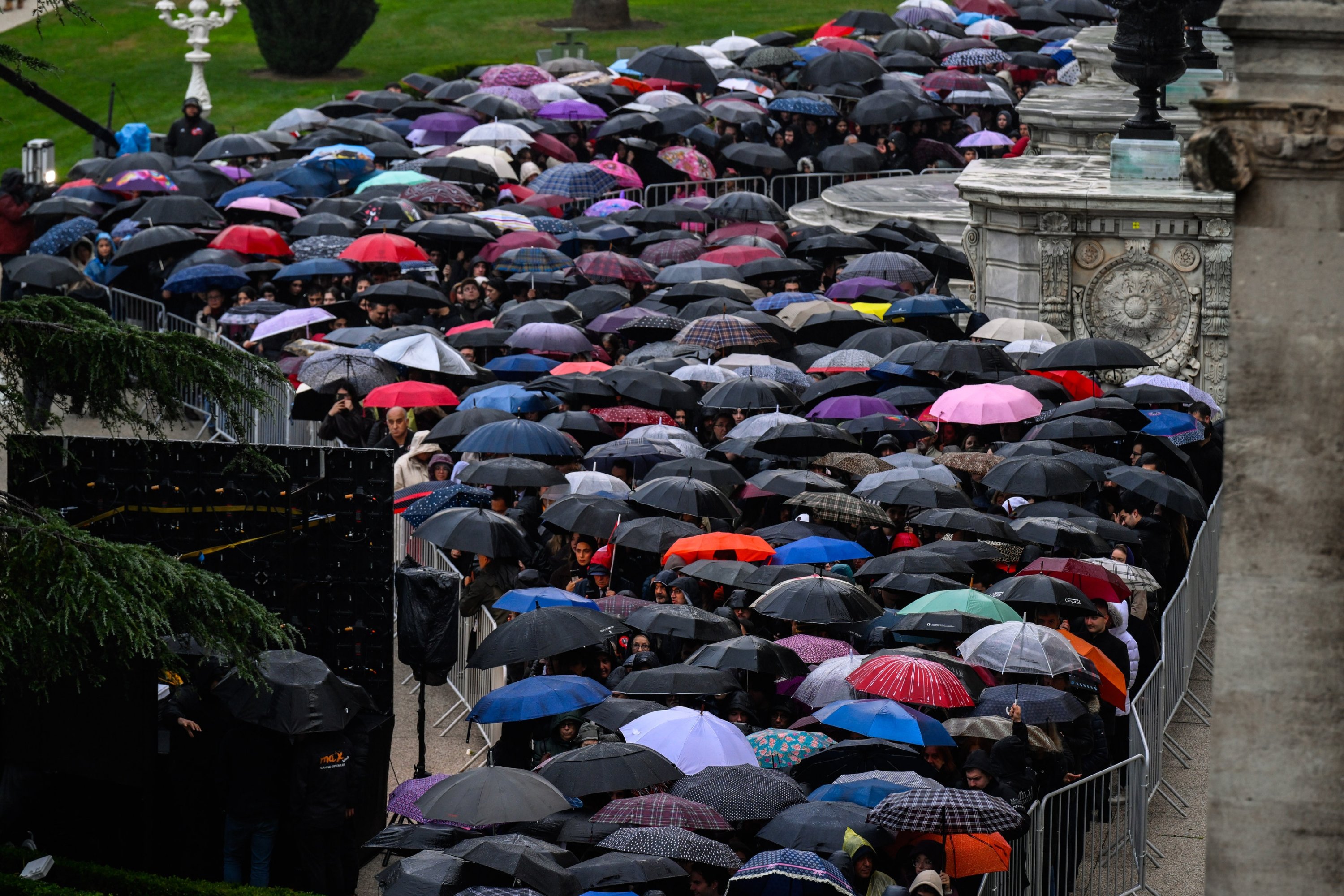
Every year on Nov. 10, solemn ceremonies are held across the country and in the country’s diplomatic missions abroad to pay respects to Atatürk, who remains a beloved figure for millions and a leader whose name adorns many places in Türkiye. A remembrance tradition involves honking horns and sounding sirens at the exact time of his death, as people observe a minute of silence.
As part of this year’s ceremonies, Savarona, the yacht Atatürk spent about two months on before his death, was anchored off the coast of Istanbul’s Dolmabahçe Palace. The yacht, restored a few years ago and now in service with the Turkish Naval Forces Command, hosted Atatürk for 56 days, during which the ailing leader continued governing the country and attending daily government affairs, from Cabinet meetings to hosting visiting foreign leaders. When his health deteriorated further, Atatürk had to disembark on July 25, 1938, and move to Dolmabahçe Palace. Savarona still houses Atatürk’s personal belongings, including his desk, slippers, towels, glasses and a bed cover stained with blood he spat during his illness, among other things.


-
 Politics3 days ago
Turkish candidate for top UN post reflects Ankara’s reform ambition
-
 Economy2 days ago
Türkiye, China gather at green development forum, assess co-op
-
 Sports3 days ago
Türkiye star Arda Güler steals show in Real victory over Valencia
-
 Politics2 days ago
Sea of Friendship: Türkiye, Egypt bond over Med drills
-
 Sports1 day ago
TVF takes sustainability drive to COP31 with solar energy project
-
 Politics2 days ago
Brothers in arms: Erdoğan receives warm welcome in Azerbaijan
-
 Economy2 days ago
Droughts test farmers in COP31 host Türkiye
-
 Sports1 day ago
Turkish sports honor Atatürk’s ideals on 88th death anniversary