
Politics
Türkiye remembers Atatürk on 88th anniversary of his death

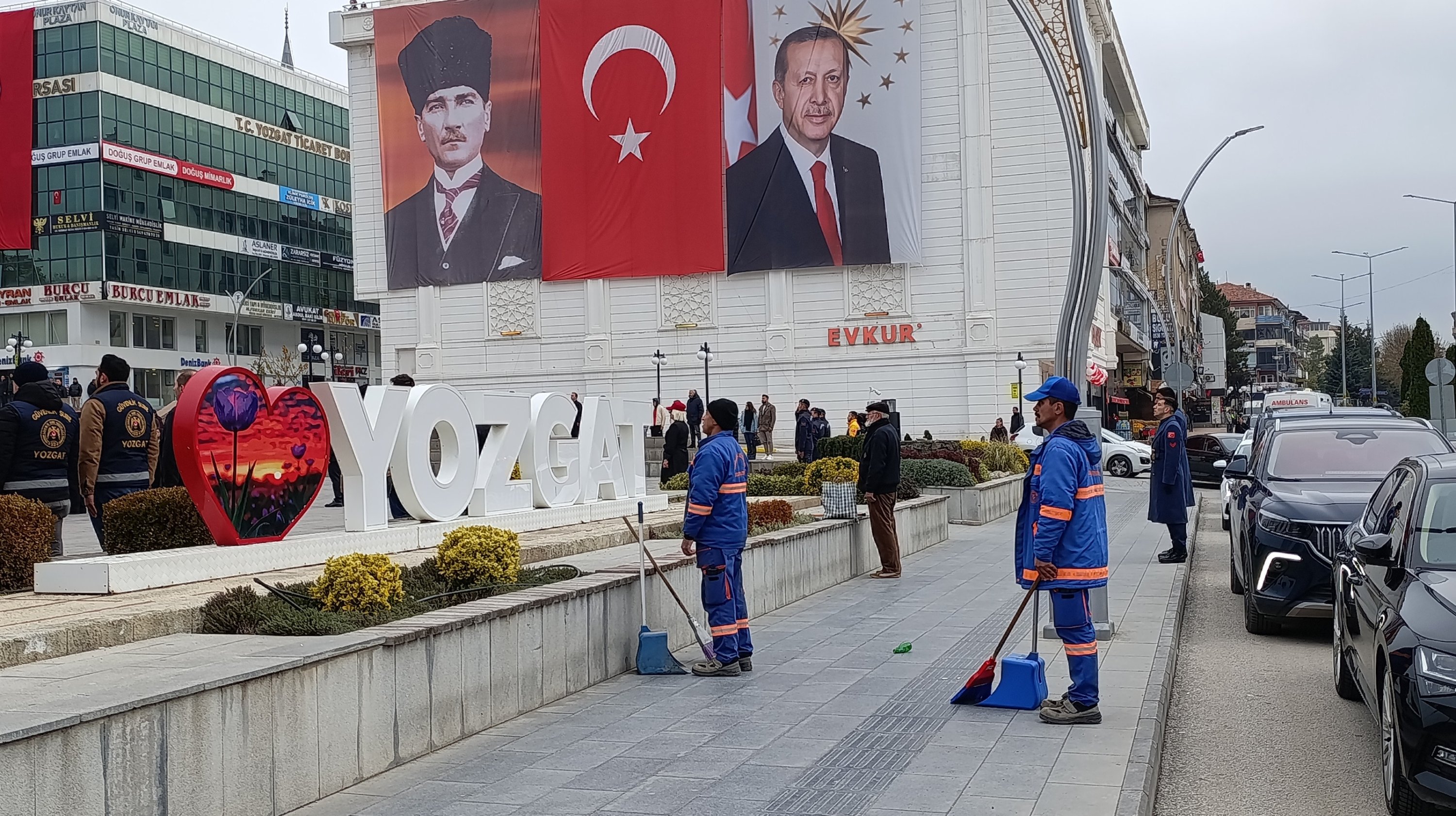
At 9:05 a.m., the time of his death, the nation stood still to observe a minute of silence in memory of Mustafa Kemal Atatürk, the great statesman and commander who led Türkiye’s liberation from the post-World War I invasion and established the Republic.
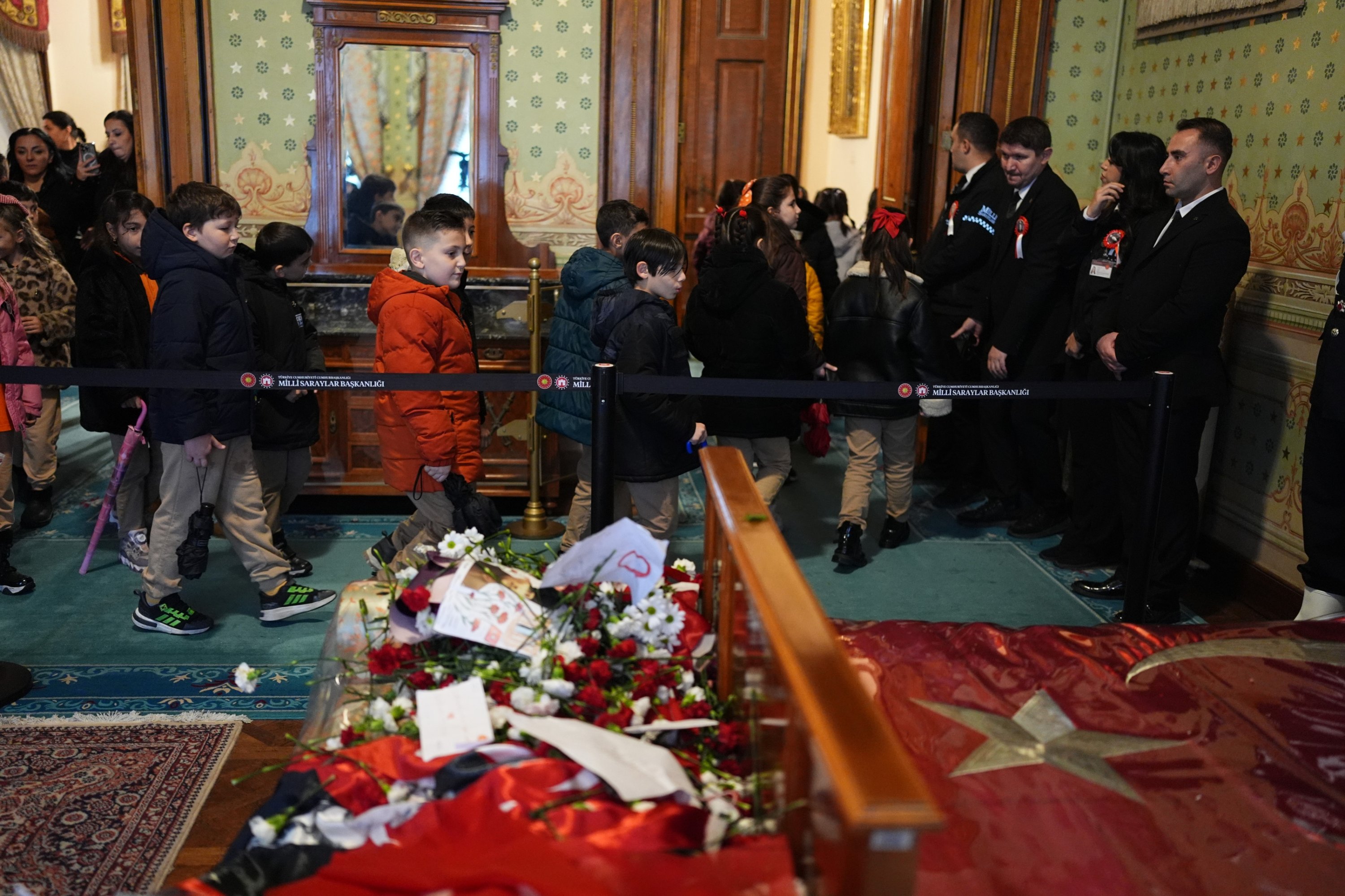
President Recep Tayyip Erdoğan, top officials, commanders of the Turkish Armed Forces (TSK) and politicians across the political spectrum gathered at Anıtkabir, Atatürk’s mausoleum in the capital, Ankara, where crowds flocked to pay tribute to Atatürk on the 88th anniversary of his death. In Istanbul, similar scenes unfolded at Dolmabahçe Palace, the Ottoman-era building where Atatürk spent his final days as he battled terminal illness.
“Beloved Atatürk, we remember you on the 88th anniversary of your passing, along with your comrades in arms, members of our parliament who led the War of Independence, our martyrs and veterans who paid a heavy price for our nation. In this challenging period, where our region and the world struggle with crises, we mobilized all our resources to carry the Republic of Türkiye and its 86 million members to a more prosperous future. We will continue resolutely to develop this paradise-like land entrusted to us by our martyrs and veterans, in unity with our nation. May your soul be blessed,” Erdoğan wrote in the memorial book at Anıtkabir.
Erdoğan later spoke at an event on the occasion held by the Atatürk Supreme Council for Culture, Language and History, the only high-level state institution specifically bearing the name of Atatürk. He delved into Atatürk’s past as leader of the independence movement. “At a time when enemies’ boots stained Izmir, he left Istanbul (then the capital of the Ottoman Empire) for Anatolia and sparked the torch of independence,” he said. He recited Atatürk’s remarks about those days when he saw what he defined as “a tendency among the nation for achieving independence that would put those hesitating fighting for it to shame.”
“These words are the crystal-clear indication that the liberation of the country was sought through resilience of the nation, not through submitting to the mandate of other countries, at a time where our independence and the future were threatened,” Erdoğan stated. “This was also a fight for the oppressed nation. As he told Azerbaijan’s representative Ibrahim Abilov when he hosted him in Ankara at the height of the War of Independence, Türkiye’s fight was not just about its own future and its cause was the cause of all oppressed nations, the entire East.”
Compared with subsequent presidents of the country, Atatürk had a relatively short life. He passed away at the age of 57 after suffering from cirrhosis of the liver, something attributed to his lifelong habit of smoking and drinking. The condition ultimately confined him to bed, a man who had survived an assassination attempt, multiple encounters with death on the World War I battlefronts and numerous other challenges throughout his life.
Born in 1881 in then-Ottoman Salonica (Thessaloniki), now in Greece, Mustafa Kemal, as he was known before he was given the unique surname that translates as “Father of Turks,” started a brilliant military career in the early 20th century and served on multiple fronts during the Ottoman Empire’s eventful last years, from Libya to the Balkans. While serving in Sofia as a military attache after years on the battlefield, he sought reassignment to the field. In 1915, he was appointed a division commander and proved his military mettle as a commander during World War I. He was nicknamed the “Hero of Anafartalar” after a decisive battle on the western front in Gallipoli. This feat later brought him wider recognition as a skilled commander and a trusted figure as he sought to rally the nation for independence in the aftermath of World War I. It was also his first brush with death, when a piece of shrapnel hit him in the chest but was stopped by a pocket watch he was carrying.
His next mission was on the eastern front in 1916, where he managed to stop the Russian incursion and reclaimed the eastern provinces of Bitlis and Muş from invading forces, a feat that helped secure his promotion to the rank of general. In the next two years, he served in Palestine and Syria as commander of the Seventh Army. After the war ended, he returned to Istanbul, the then capital of the Ottoman Empire, during a time when invading forces occupied the city, and secretly worked to organize a nationwide resistance. He found an opportunity to serve this purpose when he left the city as an “army inspector” under the guise of inspecting Ottoman troops scattered across the country. His arrival in the northern province of Samsun on May 19, 1919, is today viewed as the first step toward independence in postwar Türkiye. Once he drummed up the support of fellow commanders and the public during his travels across Anatolia, Atatürk started organizing a formal opposition to invading Allied forces through conventions in eastern and central Turkish cities. The conventions and congresses paved the way for the establishment of a temporary government independent of the Ottoman seat of power, which was then in its death throes, and a new Parliament firmly opposed to any foreign mandate. In 1920, he spearheaded the establishment of the Turkish Grand National Assembly (TBMM) and was elected as its president, as well as head of the interim government.
Under his leadership, an outnumbered army, with broad public support, was assembled and showed the world that a new country was rising from the ashes of the Ottoman Empire. Victories in central and western Türkiye against invading Greek forces in defensive battles in 1921 cemented trust in Atatürk. He was soon promoted to the rank of marshal. In 1922, the army launched the Great Offensive, the first counterattack against invaders. Months after a decisive victory against the Greek army, a cease-fire agreement was signed with the Allied forces, paving the way for their withdrawal from Turkish territories. The Treaty of Lausanne, signed in 1923, officially marked the end of the conflict between invading forces and Türkiye. A few months after it was signed, Atatürk pronounced the formation of the Republic of Türkiye and was elected as its first president. He remained in this post until his death, being elected to four consecutive terms as president.
After the foundation of the Republic, Atatürk devoted his life to the reconstruction of a war-torn country, which was also tested by a global economic crisis, while establishing ties with countries against which Türkiye had once fought. His diplomatic and economic efforts made Türkiye an emerging country with a say in international affairs. On the domestic front, Atatürk is credited with revolutionary changes, including a switch to a new alphabet, a new education system, and vast legal, social and economic reforms.
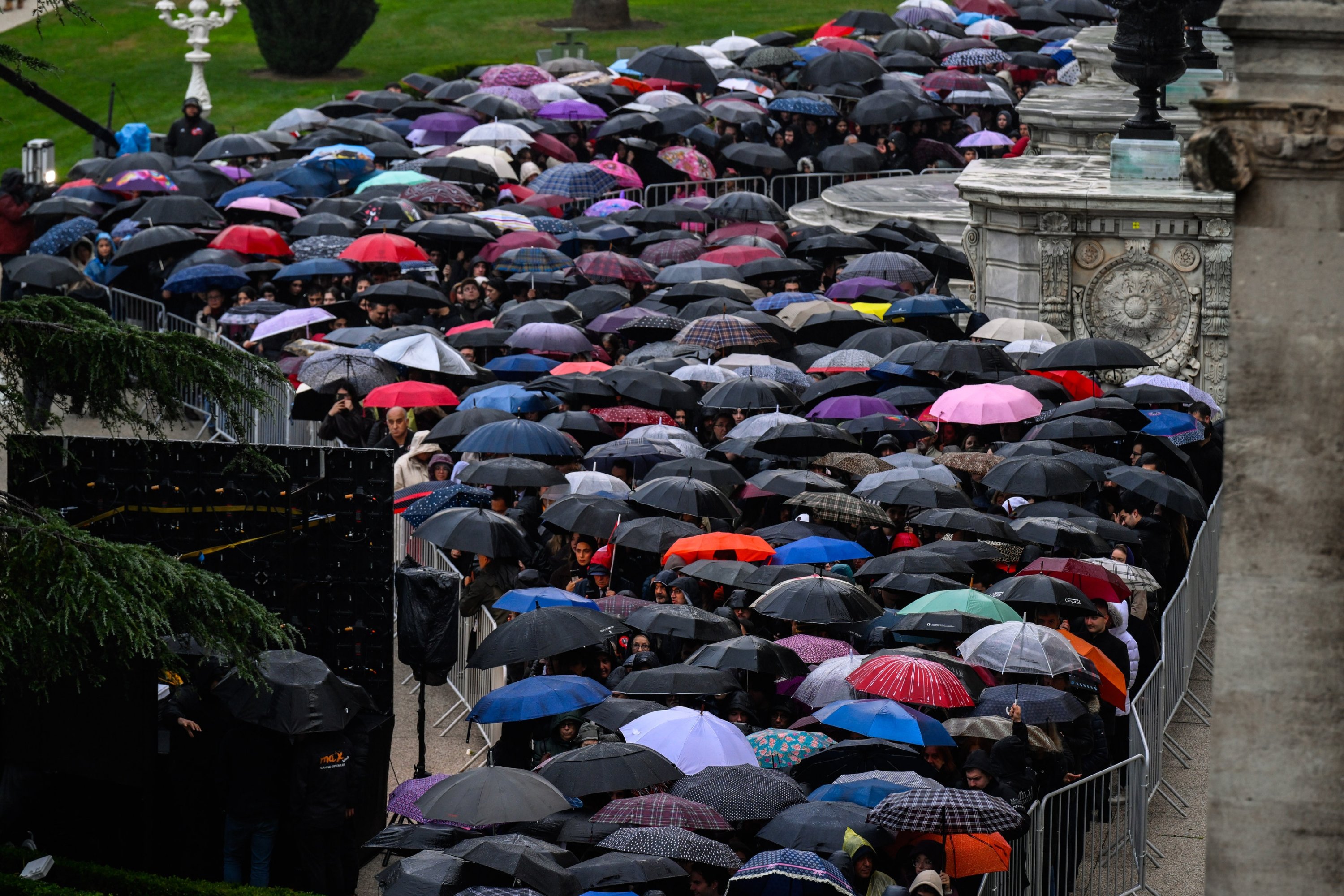
Every year on Nov. 10, solemn ceremonies are held across the country and in the country’s diplomatic missions abroad to pay respects to Atatürk, who remains a beloved figure for millions and a leader whose name adorns many places in Türkiye. A remembrance tradition involves honking horns and sounding sirens at the exact time of his death, as people observe a minute of silence.
As part of this year’s ceremonies, Savarona, the yacht Atatürk spent about two months on before his death, was anchored off the coast of Istanbul’s Dolmabahçe Palace. The yacht, restored a few years ago and now in service with the Turkish Naval Forces Command, hosted Atatürk for 56 days, during which the ailing leader continued governing the country and attending daily government affairs, from Cabinet meetings to hosting visiting foreign leaders. When his health deteriorated further, Atatürk had to disembark on July 25, 1938, and move to Dolmabahçe Palace. Savarona still houses Atatürk’s personal belongings, including his desk, slippers, towels, glasses and a bed cover stained with blood he spat during his illness, among other things.

European Commission President Ursula von der Leyen on Monday called for the rapid operationalization of the Black Sea Maritime Security Hub, welcoming growing cooperation between Türkiye, Romania and Bulgaria to strengthen security in the strategic region.
“We need to operationalize the Black Sea Maritime Security Hub,” von der Leyen said during a joint news briefing with Romanian President Nicusor Dan in Bucharest.
She welcomed the “closer maritime cooperation” among the three countries, stressing that the EU must adopt an “urgency mindset” in addressing defense and security challenges.
“The skies over the Black Sea have darkened, particularly in recent weeks, with drone attacks targeting commercial ships off your coasts, innocent sailors having lost their lives, others are still missing at sea,” she said.
Von der Leyen called for restoring and preserving freedom of navigation in the Black Sea, highlighting its importance for Europe, Ukraine’s economy and global food security.
She also stressed the need to strengthen maritime surveillance and the bloc’s security in the information space.
“Hostile actors are weaponizing the information space, and drone incidents are often doubled by foreign information manipulation and interference,” she warned.
“They target relentlessly our citizens and democracies, sowing fear, spreading uncertainty,” she added.
Von der Leyen said Europe must strengthen its capacity to respond to crises along its borders.
“I am pleased to announce an additional €10 million ($11.2 million) in funding to Romanian authorities for search and rescue operations,” she said.
“This will support your capacity to respond to such incidents rapidly and effectively,” she added.
Turning to the upcoming U.S.-mediated peace negotiations between Russia and Ukraine in Abu Dhabi, von der Leyen reaffirmed European support for Kyiv.
She said Ukrainian President Volodymyr Zelenskyy had requested support from European partners for the negotiations and that the bloc was providing it.
“The focus of these peace talks is ending Russia’s war in Ukraine. That must be the goal,” she stressed.
Von der Leyen said the EU was also working on a post-war prosperity plan to support Ukraine’s stability and reconstruction.
“Any meaningful discussions about Europe’s security architecture can only be undertaken once a ceasefire in Ukraine has been achieved,” she said.
Such discussions must take place in an appropriate forum, particularly with NATO allies and EU members, she added.
Moscow has maintained that the U.S.-mediated negotiations should remain strictly trilateral, involving Russia, Ukraine and the U.S., without direct European participation.
The Abu Dhabi talks, scheduled for Tuesday and Wednesday, will mark the fourth round of U.S.-mediated negotiations between Russia and Ukraine under the Trump administration.
They will also be the first such meetings since the previous round in Geneva in February.
President Recep Tayyip Erdoğan reaffirmed Türkiye’s commitment to easing escalating tensions between Iran and the United States and advancing diplomatic efforts to end the Russia-Ukraine war during talks with U.N. Secretary-General Antonio Guterres on the sidelines of the COP31 Leaders Summit in Antalya.
The meeting focused on pressing regional and global challenges, including ongoing conflicts and international efforts to address climate change.
Erdoğan welcomed Türkiye’s role as host and president of COP31, saying preparations for the international climate conference had been completed.
He expressed hope that the gathering in Antalya would mark a turning point in efforts to tackle climate-related challenges and strengthen international cooperation.
Addressing mounting tensions between Tehran and Washington, Erdoğan said Türkiye was working closely with regional countries to prevent further escalation and promote solutions through dialogue and diplomacy.
The Turkish president also reiterated Ankara’s commitment to ending the Russia-Ukraine war, emphasizing Türkiye’s readiness to support a renewed diplomatic process aimed at securing peace.
Erdoğan and Guterres also exchanged views on the latest developments in Gaza, Cyprus and Libya, underscoring the broad range of regional crises on the international agenda.
Turkish and Greek Cypriot leaders agreed to open two new crossing points on the divided island of Cyprus during U.N.-brokered talks in Lefkoşa, marking a step toward improving cooperation between the two communities.
Turkish Republic of Northern Cyprus (TRNC) President Tufan Erhürman and Greek Cypriot leader Nikos Christodoulides reached the agreement during a trilateral meeting mediated by Maria Angela Holguin Cuellar, the U.N. secretary-general’s personal envoy for Cyprus.
The meeting, held at the residence of the U.N. chief of mission in the buffer zone in Lefkoşa, began at 11 a.m. and lasted approximately three hours and 15 minutes.
Following the talks, Holguin and U.N. Peacekeeping Force in Cyprus spokesperson Aleem Siddique presented a joint U.N. statement to reporters after the two leaders departed.
According to the statement, the leaders agreed to establish new crossing points connecting Akıncılar with Lympia and Gemikonağı with Kambos-Karavostasi.
Discussions on additional crossings will continue, while Erhürman and Christodoulides are also expected to hold another trilateral meeting with U.N. Secretary-General Antonio Guterres.
The U.N. described the discussions as taking place in a positive atmosphere, with both sides agreeing on further confidence-building measures.
The leaders agreed to relaunch the bicommunal Imagine education program under the supervision of the Technical Committee on Education, which will determine the framework for its implementation.
They also tasked the Technical Committee on Crisis Management with establishing a mechanism to ensure rapid responses to emergencies.
Additionally, the leaders agreed that the Technical Committee on Cultural Heritage would begin restoration work on several Maronite churches and an Armenian monastery.
The agreements signal renewed efforts to strengthen practical cooperation between the island’s two communities amid continuing U.N.-facilitated dialogue.
Jean-Pierre Lacroix, United Nations under-secretary-general for peace operations, says Türkiye plays an important role in training peacekeepers and the U.N. is looking forward to enhancing cooperation with the country in this field.
Lacroix spoke to Anadolu Agency (AA) in Türkiye, where he attended an international forum, months after his visit to Ankara, where he met Turkish officials on peacekeeping operations. He said Türkiye made double contributions to their operations, both as a trainer and by deploying peacekeeping troops.
He said the current conflicts across the world were more connected and had global consequences and to deal with them, the international community needed a collective approach. “Multilateralism is certainly of critical importance but member states need to exhibit a strong will and resolution to actively support the efforts for peace. Türkiye is among those countries demonstrating that will,” he said. Lacroix noted that every crisis also had actors working for peace, “a few countries with special influence,” and noted that Türkiye was among them as it was in the past.
He pointed out that conflicts today have become more complex than in the past, saying, “We also need to adapt our existing peace operations to current conditions and be prepared to establish new peace operations that are quite different from those created 50 to 60 years ago.” However, Lacroix said the most critical factor was not new models but the political will of member states, stressing the importance of providing the necessary financial resources as well. Lacroix said the U.N. system had previously succeeded in developing different types of peace operations and had the capacity to do so in the future.
Addressing questions over the effectiveness of U.N. peace operations, Lacroix said many countries, including Cambodia, East Timor, Angola, Mozambique, Sierra Leone, Ivory Coast, Liberia and El Salvador, had regained stability with the support of peace operations.
Lacroix also addressed attacks targeting U.N. peacekeeping personnel, saying that despite all the challenges, peacekeepers protect hundreds of thousands of civilians every day and help prevent cease-fires from collapsing.
Noting that the safety of peacekeeping personnel was frequently put at risk and that the obligation to protect them was being violated, Lacroix said such incidents required a strong response. “Crimes committed against peacekeeping personnel must be held to account,” Lacroix said.
Lacroix welcomed the adoption by the U.N. Security Council, following an initiative by Pakistan and Denmark, of a resolution calling for accountability for crimes committed against peacekeeping personnel. He added that peacekeepers serve the cause of peace and people, and therefore deserve to be respected.
President Recep Tayyip Erdoğan reaffirmed Türkiye’s support for Niger’s territorial integrity and security during a phone call with Nigerien President Abdourahamane Tchiani, pledging Ankara’s assistance in strengthening regional dialogue and stability.
The two leaders discussed bilateral relations and regional developments, Türkiye’s Communications Directorate said in a statement.
Erdoğan emphasized that Türkiye would continue taking steps to deepen cooperation with Niger across various sectors, underscoring Ankara’s commitment to strengthening ties between the two countries.
He also expressed Türkiye’s readiness to support efforts aimed at establishing and reinforcing regional dialogue mechanisms.
During the conversation, Erdoğan extended his condolences to Tchiani and the people of Niger over the death of the Nigerien leader’s father.
Türkiye increased the number of its embassies across Africa from 12 in 2002 to 44 by 2024, while the number of African embassies in Türkiye rose from 10 in 2008 to 38 in 2024.
Speaking to reporters on his return flight from Azerbaijan, President Recep Tayyip Erdoğan commented on a broad range of issues from ties with Baku to Cyprus, terror-free Türkiye, the Russia-Ukraine conflict and the U.S.-Iran war.
Referring to his recent phone call with U.S. President Donald Trump, where they discussed the U.S.-Iran conflict, Erdoğan said, “I told Mr. Trump about our reservations, we hope common sense prevails and the region will be saved from the brink of (disaster).”
In remarks published on Monday, Erdoğan said they did not want a new wave of attacks against Iran, nor further destabilization of the region. “On every occasion, we raise the possibility of resolving this issue through dialogue and diplomacy. “Unfortunately, we are seeing a negative shift and we are doing all we can to prevent it,” he stated, adding that Türkiye conveyed its readiness to both sides to open the door for peace and diplomacy. “More clashes do not mean anything but more losses for our region. It is not only the warring sides paying the price. It affects everyone from Türkiye to the Gulf countries, from Iraq and Syria to Europe and Asia,” he emphasized.
Iran on Monday announced that it proposed to restart peace talks in as few as two days, while U.S. Secretary of State Marco Rubio lashed out “outrageous and ridiculous” demands by the Iranian side. To restart peace talks in as few as two days as the most reasonable offer on the table, after U.S. Secretary of State Marco Rubio called some of Iran’s conditions “outrageous and ridiculous.” Iran has made the offer to shorten the time to restart talks from an earlier seven-day proposal, which calls for Washington to first meet conditions including halting hostilities, lifting a blockade and waiving sanctions.
Trump, who suffers from midterm election losses at home, has said that renewed fighting was “highly unlikely” with Iran, despite his recent threats to resume strikes and amid worries that hostilities may return in full force after last Tuesday’s midterm elections.
The president told CNN in an interview on Sunday that his decision on new strikes “depends on whether or not they sign a very strong agreement.” “I would if necessary, but we hit them really hard. I hit them so hard. You don’t know how hard I hit them,” he said. Trump is scheduled to meet Qatar’s Prime Minister Sheikh Mohammed bin Abdulrahman Al Thani, who is also the country’s foreign minister, at the White House on Monday. The meeting will be Trump’s first with a foreign leader since a massive midterm loss that saw his Republican Party lose control of Congress. Iranian Foreign Minister Abbas Araghchi suggested on Sunday that peace talks had been paused while the political fallout of the vote was being assessed. “For the past few days, there has been no more travel (by mediators), and the reason for this is the shock that the election results in the United States have caused to everyone,” Araghchi told state television.
Türkiye attempted to resolve the conflict a few times, thanks to its position as an influential broker with close ties both with the United States and Iran. The only NATO ally neighboring Iran, Türkiye had its share of fallout from the conflict as the alliance’s defense systems intercepted several missiles in the early days of the conflict.
Russia-Ukraine conflict
Ankara also works to mediate another conflict, between Ukraine and Russia. Speaking on the matter, Erdoğan said that Türkiye was making intensive efforts to bring the war to a complete end and that they appreciated Trump’s efforts toward this goal. “Türkiye has made clear its stand for solution and peace despite every kind of reaction,” Erdoğan was quoted. Türkiye is among the few countries which enjoys close relations both with Russia and Ukraine. This helped it to mediate several rounds of talks between Russian and Ukrainian delegations and for a while, ensured grain shipments from Ukraine to other countries. Most recently, Erdoğan hosted Ukrainian leader Volodymyr Zelenskyy in Istanbul and expressed his desire to hold a separate meeting with Russia’s Vladimir Putin for peace efforts. “Remember how Europe reacted to our efforts. We faced harsh criticism, including accusations of violating sanctions and disregarding other countries’ foreign policy positions. Nevertheless, we emphasized that we supported a fair peace. Time proved us right. We still call for an end to bloodshed. I talked to Mr. Putin repeatedly, but I will continue talking to him. I talked to Mr. Zelenskyy last week and I will talk to him again. We are in touch with Mr. Trump, with European leaders,” he said.
“The negotiating platform we established in Istanbul, our Black Sea grain corridor initiative and the role we played in prisoner exchanges are unprecedented examples demonstrating Türkiye’s key position in efforts to achieve peace. As Türkiye, we stand ready to make Istanbul the center of negotiations once again when necessary and to employ all the instruments of human-centered diplomacy. We are hopeful. We are even more optimistic about the prospects for peace,” he said.
Ties with Azerbaijan
On relations with Azerbaijan, Erdoğan said: “Those who understood that they cannot subdue us may attempt to undermine our unity.” Erdoğan’s visit followed a campaign seemingly targeting the Ilham Aliyev administration of Azerbaijan on Turkish social media, which prompted a row over an alleged headscarf ban in Azerbaijan. When Aliyev skipped a summit of the Organization of Turkic States (OTS) last month, this was interpreted as a deterioration of ties, but Erdoğan has dismissed it and assured strong ties between the two countries. While returning from South Korea last week, he pledged to take “necessary steps” for relations and made good on his promise on Sunday when he showed up in Shusha, Azerbaijan, where a landmark declaration of alliance was signed between the two countries. The president posed arm in arm with Aliyev, who traveled from Baku to personally greet him at the airport and two men held talks on Azerbaijan’s Victory Day on Sunday.
Erdoğan told reporters that Türkiye emphasized solidarity with Azerbaijan during his visit, mentioning his attendance at ceremonies to remember the victims of the Khojaly genocide by Armenian forces in the 1990s and a visit to Khankendi, liberated from Armenian occupation by the Azerbaijani army.
He underscored that Türkiye and Azerbaijan are two brotherly countries bound by unbreakable ties. “Despite attempts to sow discord, we have crowned our cooperation with mega projects in many strategic fields, particularly energy, transportation and infrastructure. Allah willing, we will further strengthen our solidarity through new steps. We discussed all these issues during my meeting with my brother Ilham.” He said he had personally witnessed the development initiatives underway in Karabakh during his visit, adding: “As Türkiye, we are providing every possible support for Karabakh’s development, just as we did for its liberation. We are two brotherly states that stand as one in joy and sorrow and face every challenge together. No one can cast a shadow over the affection, solidarity and brotherhood between us.”
“There is complete solidarity, a shared destiny and a bond of brotherhood between Türkiye and Azerbaijan. Together with our other brothers, we will raise the strong voice of the Turkic world in our region and across the globe and build a prosperous future together. Those trying to drive a wedge between us are failing to take into account the affection our nations have for each other, our historical ties and our unwavering resolve. Allah willing, Türkiye and Azerbaijan will continue to move forward shoulder to shoulder for the peace, stability and prosperity of their region,” he said.
Erdoğan stressed that the unity between Türkiye and Azerbaijan was known to cause discomfort among certain parties. “We are different states. We also have different institutional structures. However, we are firmly bound to one another by the cement of brotherhood. This bond is the most important element that keeps us standing and makes us strong. This brotherhood is one of the strongest guarantees of our shared history, common culture and the great legacy we will leave to future generations. We must be particularly careful and vigilant against such schemes against us. We must not give credence to disinformation and should maintain direct, sincere and open channels of communication on every issue,” he said.
Standing with TRNC
Remarking on the Cyprus question, Erdoğan renewed Türkiye’s pledge to stand with Turkish Cypriots. Cyprus on Monday hosts a new round of talks between Turkish Cypriot and Greek Cypriot leaders who are accompanied by a U.N. special representative, to resolve their differences. Greek Cypriots are internationally recognized, while the Turkish Republic of Northern Cyprus (TRNC) seeks the same while refusing any other solution to the divide on the island other than recognition of their equal sovereignty.
“We will never leave the Turkish Cypriot people alone or helpless. The whole world must know and remember this. The Cyprus issue is not merely a foreign policy matter for us. We do not regard the status quo in Cyprus as a solution, and we stand behind a two-state solution. Our position on Cyprus is also extremely clear and unequivocal. The reality that there are two separate peoples and two separate states on the island must now be recognized. Models that have been tried repeatedly and have failed each time due to various maneuvers are a waste of time and energy. I call on all countries, particularly our friends and brothers, to recognize the Turkish Republic of Northern Cyprus and establish political, diplomatic and economic relations with it in order to support lasting peace on the island of Cyprus. As I said from the podium of the United Nations, the sovereign equality and equal international status of the Turkish Cypriot people must be recognized, and the inhumane isolation imposed on them must finally come to an end.”
Erdoğan stressed that Türkiye would continue taking steps in line with the same call in the new period, saying: “We will continue to stand by the Turkish Republic of Northern Cyprus on international platforms. Steps and projects aimed at increasing the visibility of the Turkish Republic of Northern Cyprus will continue. The Cyprus issue is a national cause that we will continue to pursue until justice is served. Everyone must now understand this.”
Terror-free Türkiye
On terror-free Türkiye initiative, Erdoğan said they embarked on it regardless of whatever the cost may and there was no turning back from their goal of eliminating terrorism. He was responding to a question about the state the initiative was in when it was launched in 2024. The terrorist group PKK announced dissolution last year, but full disarmament is still not verified by Turkish authorities, while Ankara took steps to facilitate it, including a law to help the return of PKK members not involved in acts of terrorism. On Sunday, Türkiye and Iraq announced the establishment of a coordination mechanism for PKK elements’ withdrawal from Iraq’s Sinjar. Türkiye will also set up a monitoring commission to further advance the process.
“First and foremost, no one should have any doubts about this matter. No one should have any concerns. People’s Alliance (Erdoğan’s Justice and Development Party (AK Party) and Nationalist Movement Party (MHP), whose leader Devlet Bahçeli first suggested the initiative) and the state, we have fully committed ourselves to the terror-free process, putting our entire being into it. Our nation and state have made the decision to resolve the terrorism issue, which has cost us half a century, drawn up a road map and taken action. There will be no turning back. Our priority is for the terrorist group to complete its dissolution process in all its elements, fully surrender all the weapons in its possession, and for this situation to be concretely established and verified by the relevant institutions of our state. The field is not left unattended. Every step and every move is being closely monitored by the relevant state institutions and our government. Caves are being evacuated according to a specific plan. This process will continue in exactly the same manner,” he said, referring to hideouts of PKK members in northern Iraq.
President Erdoğan said some had not expected the terror-free Türkiye process to proceed this far without difficulties. “We have maintained a very determined stance on this issue. Rather than setting a firm deadline, we are focused on ensuring that the process is completed in a sound, comprehensive and irreversible manner. There is a saying in Latin, ‘Festina lente,’ meaning ‘Make haste slowly.’ We, too, are proceeding carefully but swiftly. Allah forbid, we do not want to allow any mishaps along the way. Our hope is that the verification and confirmation stages will be completed in the not-too-distant future, paving the way, Allah willing, for a decision by the National Security Council. All our efforts are directed toward this goal.”
COP31 summit
Erdoğan is also expected to attend a leaders’ summit this week in Antalya during the COP31 event Türkiye hosts. Commenting on the summit, Erdoğan said it would be a platform where Türkiye’s vision in combating the consequences of climate change is better understood by more people.
“When we take up an issue, we develop concrete, sustainable solutions and set out a road map. The climate crisis is a problem both of today and of tomorrow, when its consequences will become even more severe if no action is taken. Let us not forget that the world is our home, and we have no right to pollute it. In Antalya, we will discuss the most concrete steps to secure humanity’s common future. At COP31, we are not simply bringing leaders together, delivering speeches and issuing declarations. Our goal is to turn this summit into a platform where tangible results are achieved and countries translate their commitments into action, because the time for promises that remain on paper is over. It is now time to act. We attach great importance to the issue of climate justice. Our agenda will cover a wide range of topics, from raising awareness in every field and green industrialization to resilient cities and climate action,” he said.


-
 Politics2 days ago
Turkish candidate for top UN post reflects Ankara’s reform ambition
-
 Economy2 days ago
Mideast war could fully alter regional economic landscape: Minister
-

 Sports2 days ago
UFC’s Dana White to meet Trump over White House press sec offer
-

 Sports2 days ago
Galatasaray enter int’l break on high after winning Amed thriller
-

 Sports2 days ago
Turkish star Arda Güler steals spotlight in Real win over Valencia
-
 Politics2 days ago
63 arrested in Türkiye’s nationwide anti-smuggling operations
-
 Economy1 day ago
Türkiye, China gather at green development forum, assess co-op
-

 Sports2 days ago
Türkiye star Arda Güler steals show in Real victory over Valencia