
Lifestyle
Cruises, cuisine, surf: Angola charts new tourism path

When Feliesiano Muteca started surfing a decade ago, he had the waves at Cabo Ledo on Angola’s long Atlantic coastline pretty much to himself.
Now, the unspoilt and sandy beach about 125 kilometres (75 miles) south of the capital Luanda has become a prized destination for international surfers, with a reputation as a hidden gem.
The Portuguese-speaking southern African nation is still scarred by a long post-independence civil war that stalled its development, although parts of Luanda flash with oil money.
Wary of its dependence on oil and already burned by the market’s volatility, Angola is embarking on a drive to lure back foreign tourists by easing access for travelers and boosting its attractions.
These include Cabo Ledo, where Muteca is a qualified surfing instructor with the sport’s accredited body.
“There are two of us, and we give surf lessons,” said Muteca, who started out when he was about 10 years old by borrowing boards from other surfers.
“Otherwise, we’re there to help out on the beach,” he said, pointing to thatched cabanas being assembled on the sand.
Further along, a small lodge has set up a beachside cafe, with cabins on the hillside overlooking the Atlantic.
It is filled with a group of Germans enjoying the shade between waves. The same company, Carpe Diem, has a larger resort just up the coast.
Nearby tourist sites like the dramatic seaside Miradouro da Lua cliffs once had little more than a dusty road to a lookout point.
Now there’s a smoothie hut, with a branded wooden frame showing the best angles for photos and selfies.
Cruises and cuisine
After five decades of war that ended in 2002, the vast country had a Stalinist government suspicious of the outside world.
Oil fuelled a post-war boom but an oil crash sent the kwanza currency tumbling. In 2014, it traded at around 100 to the U.S. dollar. It is now trading around 900 to $1.
The oil boom days sent tourism to a high of nearly $1.6 billion in 2014, with the yacht crowd filling Luanda Bay and splashing huge sums on lavish beach parties.
That plunged to just $14.8 million last year, according to the National Bank.
It led the government to adopt a new tourism strategy.
Since last year, dozens of countries have visa-free entry. An airport where soldiers once patrolled with AK-47s is now staffed with smiling young travel ambassadors wearing denim overalls with bibs that read: “Can I help you?”.
The yacht club remains busy but Luanda has also become a stop for cruise liners.
Local tour companies are opening to guide visitors through the less developed interior.
And high-end international companies are adding Angola to their itineraries.
Luanda-born writer Claudio Silva in June co-hosted a week-long journey for foodies, travelling with a top Angolan chef to visit new wineries and explore pre-colonial cuisine and heritage farming.
“Deep-dive gastronomic tours like the one we’re doing with Roads and Kingdoms are an opportunity for us to tell our own stories, through food and culture, in urban and rural settings, where our journey is guided by the experiences of the people who live here,” he said.
South African luxury train operator Rovos Rail has also added the Angolan port city of Lobito to its routes, creating overland treks that can run across the continent from the Indian Ocean to the Atlantic.
Those journeys pass through inland areas largely unseen by outsiders for decades. That means accommodation can be basic or require camping.
The once-rich wildlife population was decimated by the years of war but government-sponsored repopulation efforts are under way, said Pedro Monterroso of African Parks, a non-profit conservation group.
Local rangers and communities are also being trained to become involved in the safari sector, said Monterroso, whose organization has been hired by Angola to run Iona National Park along the Namibian border in the ancient Namib desert.
“The vision is they want to be Namibia or Botswana in 10 or 15 years,” Monterroso said, referring to Angola’s neighbors that draw tens of thousands of foreign tourists every year to their unspoiled natural riches.

A 190-year-old Greek Orthodox church in Kayseri, central Türkiye, whose restoration was completed last year, stands out for its striking wall paintings and is set to become part of the Cappadocia tourism circuit.
Built in 1836, the Church of St. Eustathios is an important historical and cultural landmark in Kayseri’s Incesu district and features numerous paintings and other remnants on its interior walls.
The three-aisled, vaulted church underwent restoration by the Kayseri Metropolitan Municipality in 2021. Its load-bearing walls and historic fabric were reinforced using materials and techniques compatible with the original structure.
The stonework and frescoes, or wall paintings, inside the church were preserved, while Karamanlı inscriptions – Turkish written in the Greek alphabet – depicting various scenes, as well as charitable endowment records, reliefs and carvings on the walls, were conserved and brought to light.
Restoration of the church was completed last year using archival photographs and documents as references to ensure the building remained faithful to its original appearance. The site, known for its distinctive wall paintings, will serve as the Incesu City Museum.
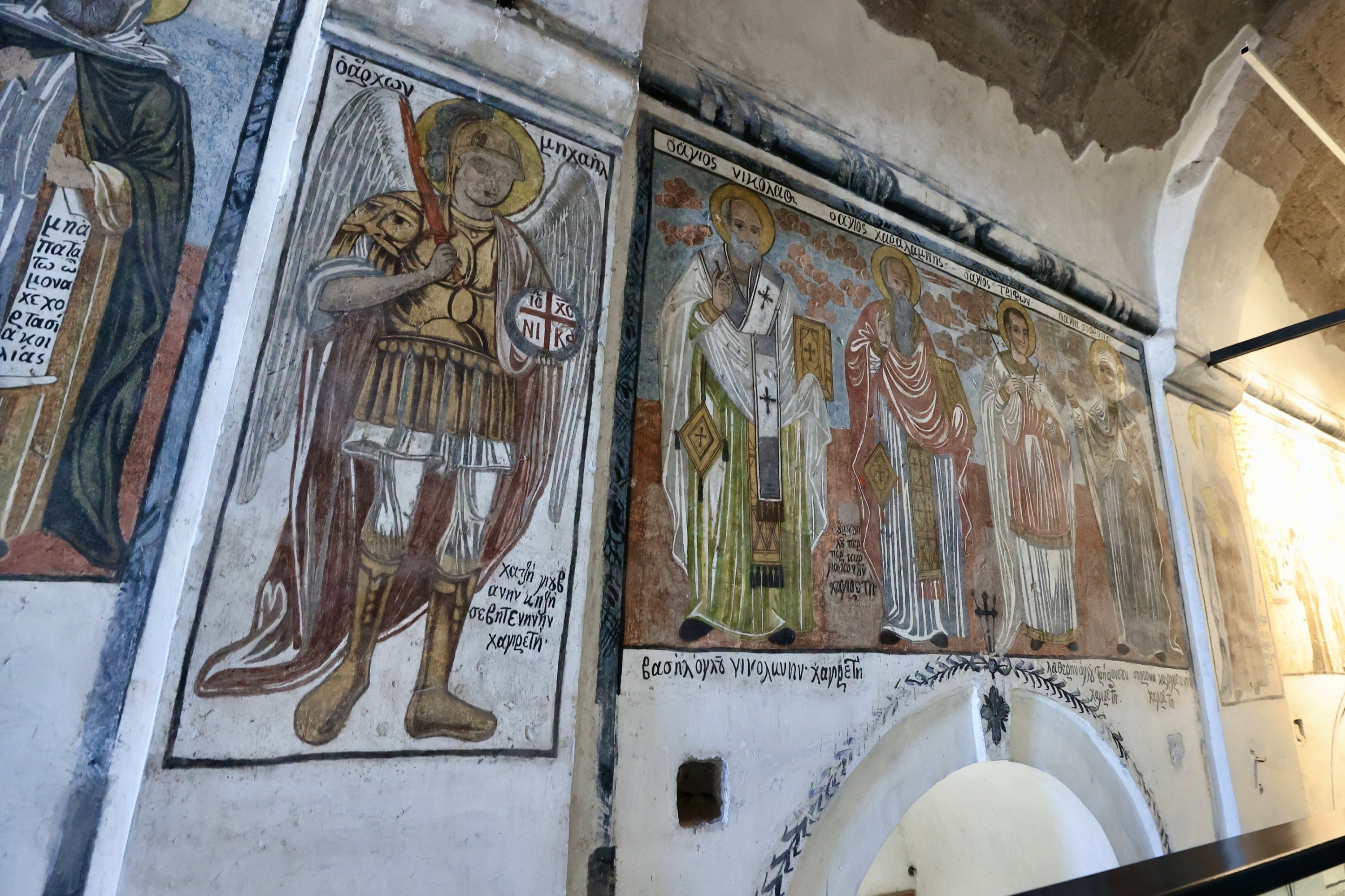
More than 80% of the exhibition and interior arrangement work has been completed. The church is also being prepared for inclusion in the Cappadocia tourism circuit, with nearby destinations such as Avanos, Ürgüp and Göreme located 45 to 50 kilometers (28 to 31 miles) from Incesu.
Tayfun Talaslı, head of the municipality’s Historical Buildings and Museums Branch Directorate, told Anadolu Agency (AA) that the three-aisled, vaulted church, built on a rectangular plan, is an example of classical Greek Orthodox architecture in Anatolia.
Talaslı said the building served as a place of worship until the 1923 population exchange between Greece and Türkiye, after which it was used for various purposes, including as a military warehouse, archive, theater and vocational school.
He said restoration work began toward the end of 2021 under a protocol signed between the Kayseri Metropolitan Municipality and Incesu Municipality and was completed last year.
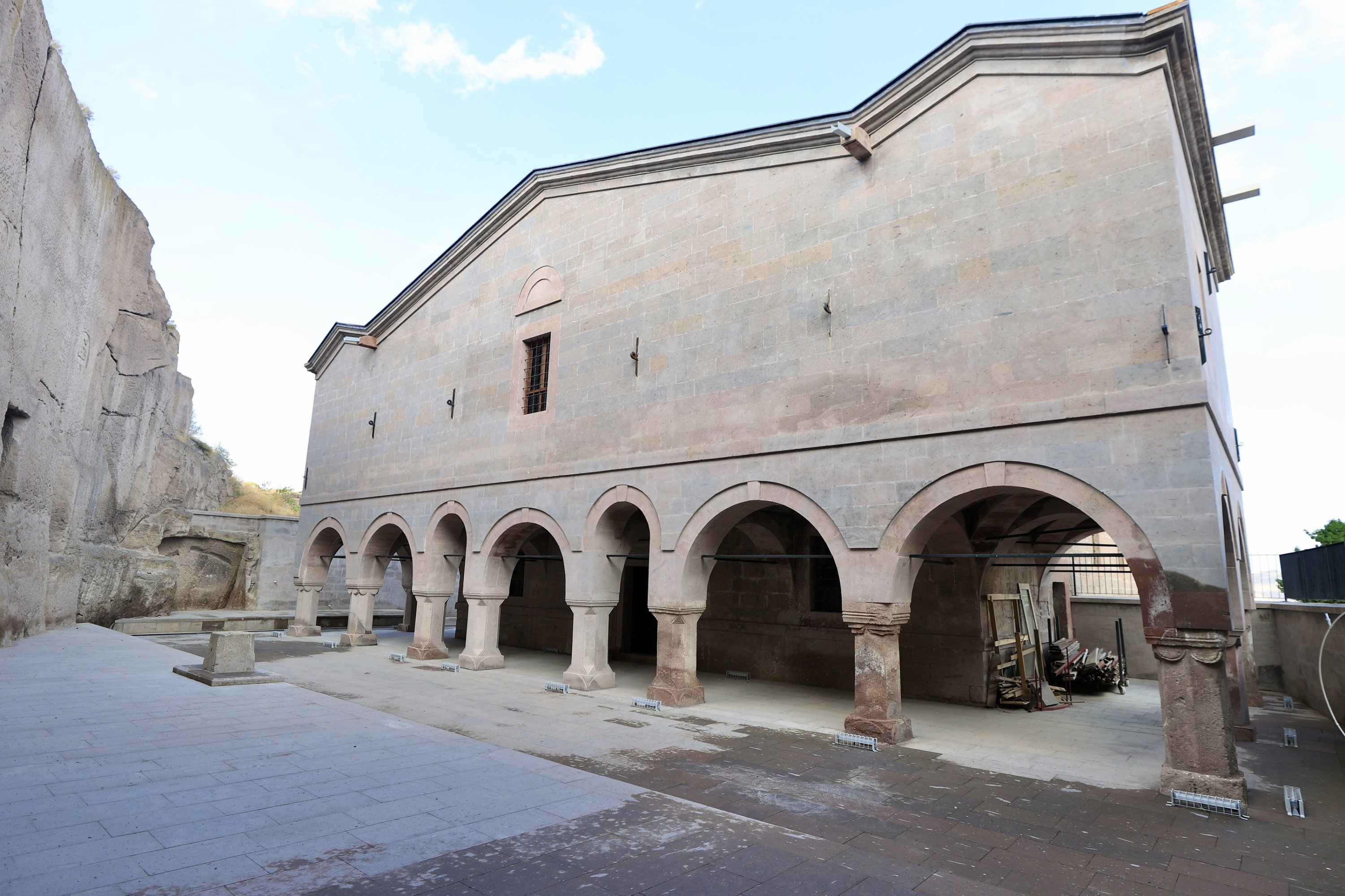
Talaslı emphasized that the main principle guiding the largely completed exhibition and interior arrangement work was to avoid causing any damage to the historic structure and said preserving the building’s original character was a top priority throughout the restoration.
“We used old photographs of the church as references during the restoration. We also based the project on art history reports that took into account the oral histories of people who once lived here,” he said.
He said the remaining work is expected to be completed soon, after which the museum will open to visitors.
“We are creating a museum on the ground floor of the building, which we have repurposed as the Incesu City Museum, focusing on the city’s tangible and intangible cultural heritage,” Talaslı said.

“Visitors will be able to trace Incesu’s history, learn about notable figures who were born here or left their mark on the city and explore its architectural heritage,” he said. “We will highlight a wide range of local treasures, from the Kara Mustafa Pasha Complex to the Roman-era milestone that has become one of the symbols of Incesu.”
Talaslı said visitors will also be able to see ceramics and other archaeological finds unearthed in Örenşehir, while the museum will offer a broader look at Incesu’s heritage, from its cuisine and population to the 1923 population exchange and the city’s historical development.
“We will cover everything from who the building was commissioned for to the area’s flora and fauna, geological structure, agriculture and grape production,” he said.
The Karaelmas Touristic Express, which operates between Ankara and Zonguldak, will return to the rails on Oct. 2, Transport and Infrastructure Minister Abdulkadir Uraloğlu announced, offering travelers a chance to explore the region’s natural, historical and cultural treasures by train.
In a written statement, Uraloğlu said the tourist train, launched by TCDD Transportation in cooperation with the Western Black Sea Development Agency (BAKKA) and the Zonguldak Provincial Special Administration, contributes to tourism-focused rail travel between Ankara and Zonguldak.
The train will begin this year’s service Oct. 2, Uraloğlu said.
The Ankara-Zonguldak service will depart on Oct. 2, 16 and 30 and Nov. 13, while trains traveling from Zonguldak to Ankara will depart on Oct. 3, 17 and 31 and Nov. 14.
Trains from Ankara to Zonguldak will leave at 11 p.m. on Fridays, while return services will depart Zonguldak at 11 p.m. on Saturdays. The train will have a total of seven carriages, including six sleeper cars and one dining car, with a capacity of 120 passengers.
The Karaelmas Express first operated as a tourist service in 2025, completing four outbound and four return journeys along the Ankara-Zonguldak-Ankara route, for a total of eight trips.
Since its inaugural journey, the train has offered passengers a different way to discover the Western Black Sea’s natural, cultural and industrial heritage, Uraloğlu said.
“For the 2026 schedule, passengers traveling from Ankara to Zonguldak will make sightseeing stops in Yenice, while those on the return journey will stop in Çankırı and Kalecik,” Uraloğlu said. “This journey, stretching from Yenice’s natural beauty and Zonguldak’s history to Çankırı’s cultural heritage and Kalecik’s local treasures, will bring rail travel and tourism together.”
Venice is looking at expanding its tourist entry fee, applying it for a longer period of the year and raising the daily charge to as much as €30 ($34), a senior official in the city government has said.
Budget and taxation councilor Michele Zuin said the current fee of €5 to €10 ($5.7 to $11.5 ) was too low to safeguard against overtourism, but said the new price for 2027 would have to be discussed and agreed with the government.
“The current €5-10 charge is affordable for virtually everyone; the risk is that it no longer has the deterrent effect that this measure is supposed to have,” Zuin told the Sunday edition of regional daily Il Gazzettino.
In remarks that were widely picked up by national media on Monday, the councillor said there was “even talk of (going up to) €50 ($57),” but added that authorities could settle for a maximum charge of €30.
The tourist fee, applicable only to day-trippers, was introduced in 2024, in a world first. Early bookers get to pay the lower rate and there are several exemptions, including for children under 14.
In 2026, it was operational on selected days from April 3 to July 26, from 8.30 a.m. to 4 p.m., and brought into city coffers more than €5.2 million ($5.9 million) from the sale of just under 680,000 entry tickets.
In a city that has long suffered from overtourism and depopulation, local officials say the scheme is meant to encourage visitors to avoid the most crowded periods of the year, such as the May Day public holiday.
Tokyo tourist hot spot Shinjuku will impose a ban on more than half of its holiday rentals, including homes on Airbnb, an official said Monday, after a surge in complaints about visitors.
Known for its buzzing commercial and entertainment district, the ward hosts nearly 10% of Japan’s 42,000 short-term rentals.
But it also has a large residential population, who have become increasingly exasperated with tourists who fail to properly dispose of rubbish, smoke where they’re not supposed to, and make too much noise.
A Shinjuku official supervising holiday rentals told Agence France-Presse (AFP) that the district was “planning to revise the current ordinance … to ban private lodging” in residential zones and areas near schools.
“As the number of private lodging businesses has risen, complaints and troubles around them have increased,” the official said on customary condition of anonymity.
More than 50% of short-term rentals in Shinjuku face a ban under the new rules, he said, adding that the plan would formally be announced by the Shinjuku mayor on Tuesday.
Shinjuku’s policy will apply to existing properties, he added.
The move comes as other cities around the world attempt to crack down on private lodgings available on Airbnb and other platforms, including New York City and Barcelona.
Like elsewhere, overtourism has emerged as a major issue in Japan.
Residents of Kyoto and other hot spots have expressed annoyance at selfie-taking crowds as well as traffic congestion and soaring land prices.
In Shinjuku, the number of complaints over vacation rentals increased by around 40% in the fiscal year to March, the official said.
“Many complaints are about the violation of trash disposal rules while others include smoking and trespassing,” he said.
Shinjuku’s ban comes after the Japan Tourism Agency in July gave municipalities the right to regulate short-term lodgings if “a tranquil living and educational environment” is under threat or if they “hinder the maintenance of a permanent population and local community.”
Japan’s ancient capital of Kyoto is also considering a ban on short-term lodging, but only for new rentals within residential and industrial areas.
Several Airbnb hosts contacted by AFP declined to comment.
Visitors to Hasankeyf, one of southeastern Türkiye’s major tourism destinations, are exploring the district’s historic and natural attractions through boat tours on the Ilısu Dam reservoir.
Located in Batman province, Hasankeyf is considered one of the world’s oldest settlements and continues to attract visitors with traces of civilizations that have shaped the region over centuries.
The district is known for historic landmarks including the Imam Abdullah Tomb, Zeynel Bey Tomb, Artuqid Bath, Hasankeyf Museum and Er-Rızk Mosque. The Ilısu Dam reservoir has also given the area a new character, offering visitors an opportunity to experience its landscape from the water.
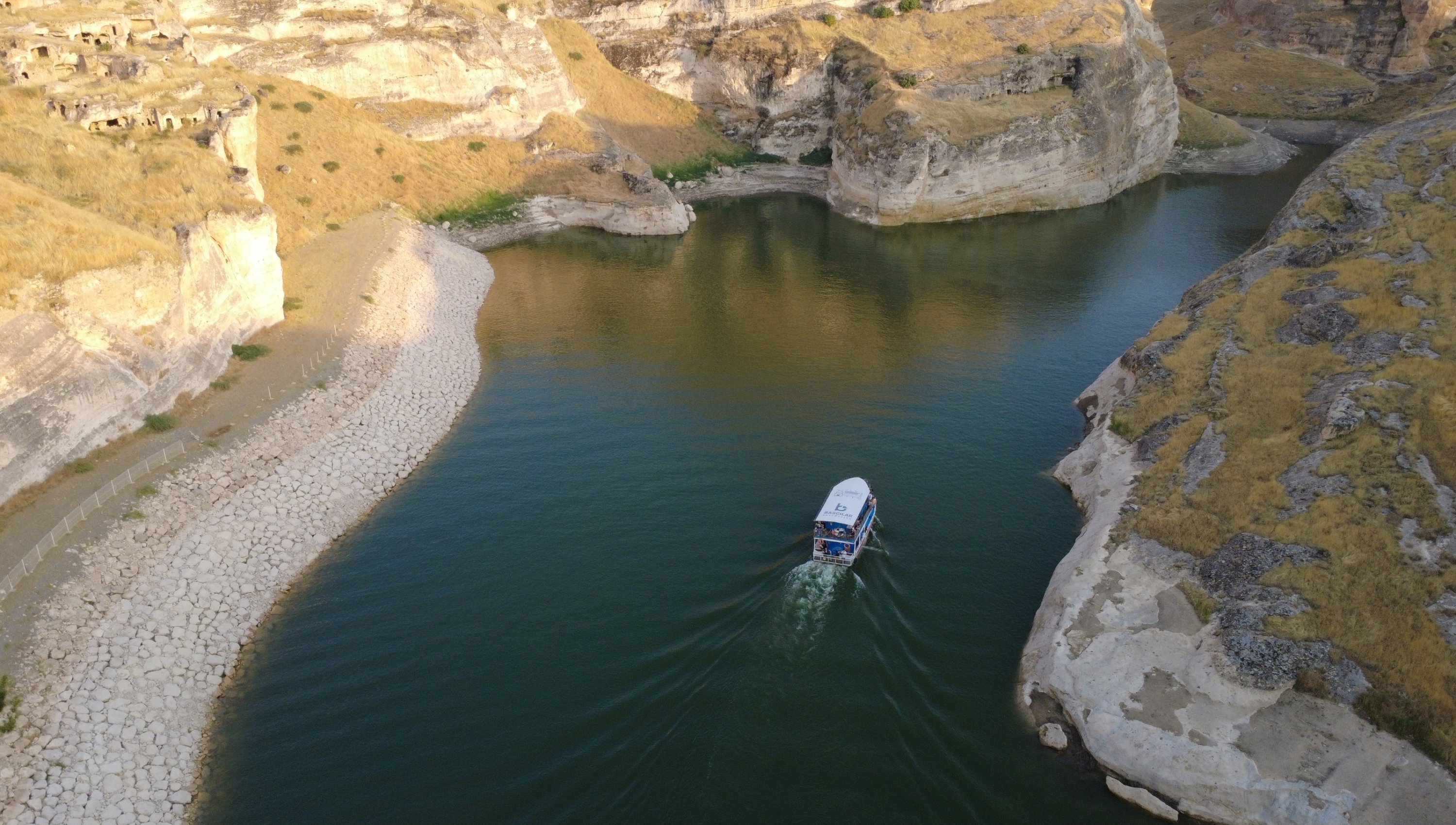
Domestic and international tourists visiting Hasankeyf can tour its historic sites before taking boat trips across the reservoir to see its canyons and Hasankeyf Castle.
Before setting off, guides brief passengers on safety rules and provide information about the historic castles, caves and canyons along the route. The boat tours last about an hour, allowing visitors to take in the area’s natural and historic scenery.
‘The boat tour was excellent’
Mustafa Yıldız, who traveled from Manisa as part of a tour of the southeastern Anatolia region, said his group visited Hasankeyf after stopping in Gaziantep, Şanlıurfa and Mardin.
“I really liked Hasankeyf. The boat tour was especially excellent. We really enjoyed seeing the canyons and caves,” Yıldız told Anadolu Agency.
Ramazan Kızar, who traveled from Batman to visit the district, said Hasankeyf was an important destination for cultural and historical tourism.
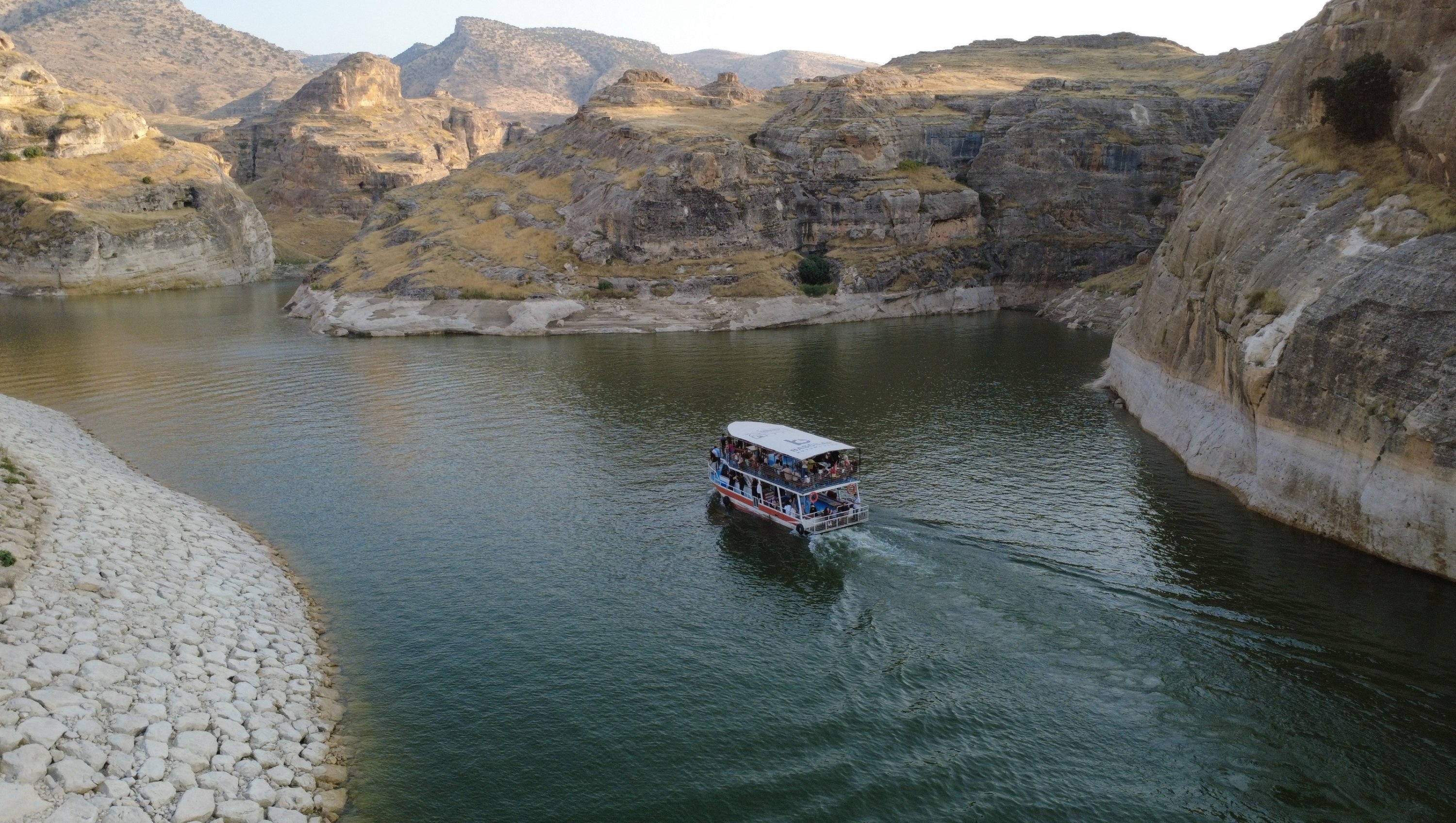
Kızar said the boat tour gave him the chance to see the historic castle and canyons.
“Thanks to the boat tour I took with my daughter and wife, we are exploring Hasankeyf’s unique beauty,” he said.
52,000 visitors take boat tours
Şehmus Batıhan, a captain and member of the Hasankeyf Kale Tourism Cooperative, said the cooperative operates eight boats offering tours of the reservoir.
Hasankeyf becomes particularly busy with domestic and international visitors during the summer months, Batıhan said, adding that the boat tours have brought additional activity to the district alongside its historic sites.
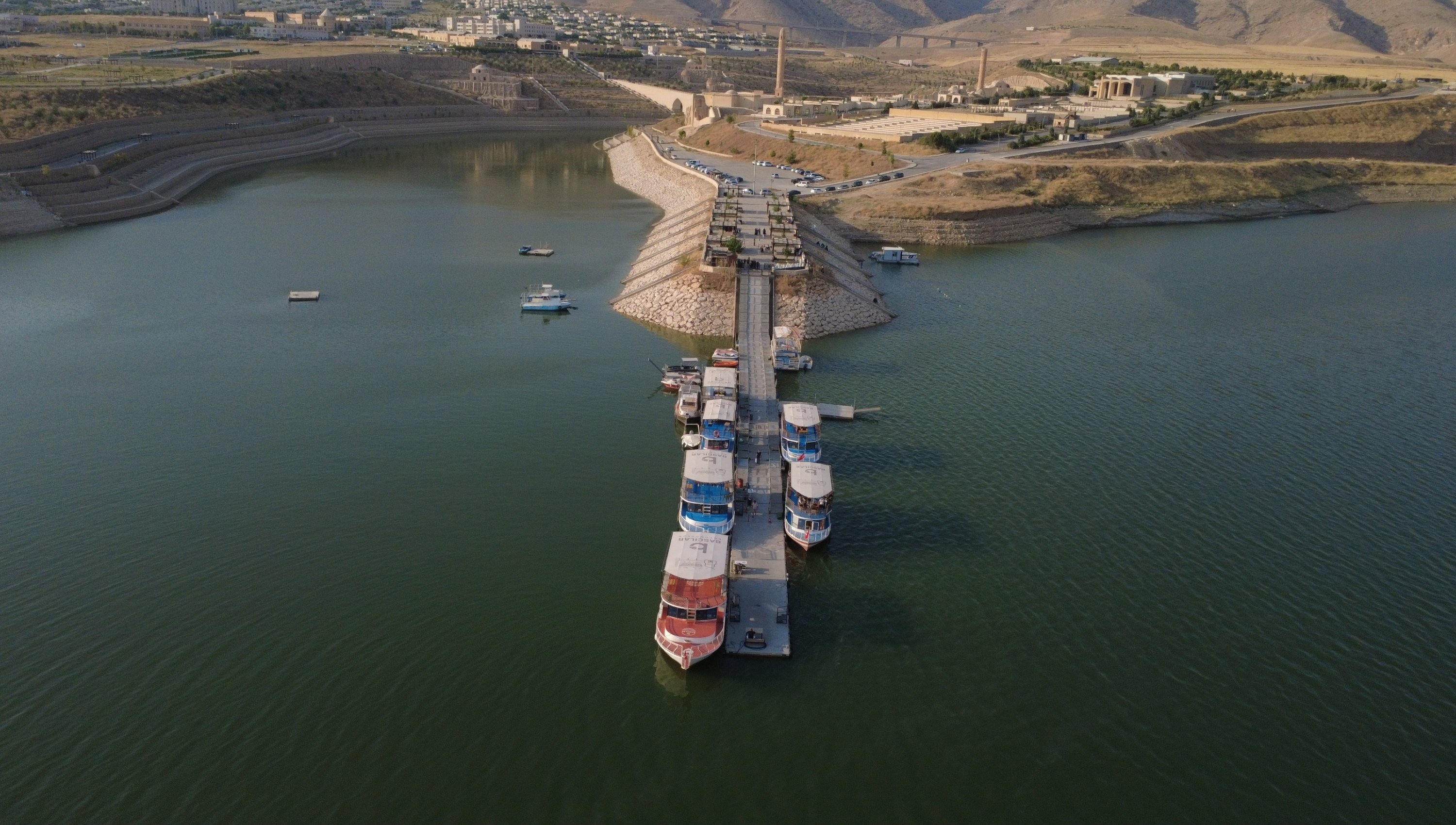
Visitors are picked up at the harbor and taken on a tour covering the area where the old settlement once stood. The tours last approximately one hour, he said.
“About 52,000 guests have taken advantage of the boat tours in the past eight months,” Batıhan said. “We also provide our guests with information about Hasankeyf’s history during the tours.”
He added that many visitors from European countries join the boat trips.
“Visitors can see many important historical works here and they really enjoy the boat tours,” Batıhan said.
Bosnia’s capital, Sarajevo, is enjoying a robust summer season, with concerts, cultural events and its internationally renowned film festival drawing visitors from across Europe and beyond.
More than 100,000 tourists visited the capital of Bosnia-Herzegovina in July, according to the Federal News Agency, as the city increasingly attracts travelers for its music, cinema, gastronomy and natural attractions alongside its historical heritage.
Three concerts by regional music star Dino Merlin at Kosevo Stadium in late July and early August attracted more than 200,000 people in total.
Visitors traveled from across the Balkans and other parts of Europe, putting hotels and private accommodation under significant pressure.
Sarajevo recorded nearly 78 million euros ($91 million) in fiscal turnover during the three concert days, with restaurants, cafes, shops and transportation companies benefiting from the influx.
The concerts were followed by a performance by British electronic music group The Prodigy on Aug. 13 and by the opening of the 32nd Sarajevo Film Festival (SFF) the following day.
Established in 1995 during the final year of the siege of Sarajevo, the festival has developed into one of southeastern Europe’s leading film events. This year’s guests included Woody Harrelson, Emily Watson, Pawel Pawlikowski, Diego Luna, Asghar Farhadi and Celine Sciamma.

In addition to these entertainment and cultural events, Sarajevo offers a blend of Ottoman and Austro-Hungarian architecture, along with landmarks linked to the assassination of Archduke Franz Ferdinand and sites preserving the memory of the 1992-1995 siege.
Its proximity to the Olympic mountains of Trebevic, Bjelasnica, Igman and Jahorina also allows travelers to combine a city break with hiking, cycling and winter sports.
Major events are becoming increasingly important for Sarajevo’s tourism economy by attracting new visitors, extending stays and boosting spending across the city.


-
 Economy2 days ago
Türkiye’s jobless rate falls to 7.8% in August
-

 Politics2 days ago
Türkiye’s CHP expels member caught with underage girl in China
-
 Economy3 days ago
China’s shift away from US puts pressure on Turkish exporters
-

 Economy3 days ago
Türkiye’s premier aviation, tech festival Teknofest kicks off
-

 Sports2 days ago
Manchester’s streets react with shock to City’s financial scandal
-

 Politics3 days ago
Terror-free Türkiye board seeks to speed up process at 2nd meet
-

 Politics2 days ago
Greece escalates Aegean tensions with military drill
-

 Politics2 days ago
1 in 10 CHP-elected mayors switch to Türkiye’s ruling AK Party