
Economy
Türkiye, Malaysia aim to strengthen cooperation in Islamic finance

Türkiye and Malaysia can and should work together in a time when the world is seeking more direction and clarity, the chairperson of a Malaysian center focusing on Islamic finance said in an interview published on Tuesday.
“Türkiye and Malaysia can and should work together in a time when the world is seeking more direction and clarity. We are in a phase where we must continue to build and strengthen our relations,” said Tan Sri Azman Mokhtar, the chairperson of Malaysia International Islamic Financial Centre (MIFC) Leadership Council (MLC).
Speaking to Anadolu Agency (AA), Mokhtar emphasized Türkiye’s significance, both in its region and globally, explaining that they aim to advance the strong economic, financial, and investment ties between Türkiye and Malaysia.
“The Future of Islamic Finance: Türkiye-Malaysia Business Forum” was held recently in cooperation with the Presidency’s Investment Office and MIFC MLC.
As part of the program, more than 20 senior financial representatives operating in areas such as Islamic banking, capital markets and takaful (Islamic insurance) came to Türkiye, along with heads of regulatory and supervisory institutions.
The program focused on promoting the Istanbul Financial Center (IFC), showcasing investment opportunities in Türkiye, strengthening public-private cooperation and evaluating investment prospects through one-on-one meetings.
Islamic finance, which has emerged in recent years as an alternative model, continues to grow and is expanding its influence, especially in the Gulf countries, Southeast Asia and Africa.
Due to its promotion of financial inclusion in developing countries and its foundation on ethical principles, Islamic finance is expected to become more widespread across broader geographies in the future. Türkiye stands out as a key part of this growing trend.
Legal reforms in participation finance, the establishment of new participation financial institutions, and the aim of turning Istanbul Financial Center into a global hub are all strengthening Türkiye’s Islamic finance ecosystem.
As of 2024, participation banking holds an 8.5% share in the country’s banking sector, and this is expected to reach double digits in the coming years.
Additionally, initiatives such as participation-based insurance, sukuk issuance (Islamic bonds) and the diversification of interest-free financial products support Türkiye’s goal of becoming a regional Islamic finance center.
In his remarks to AA, Mokhtar noted that trade between the two countries exceeds $5 billion (TL 200.87 billion), adding, however, that there is room to “grow this even further.”
“Our relationship is truly strong,” he said.
Mokhtar explained that in Malaysia, Islamic finance constitutes almost half of the banking system and two-thirds of the capital markets.
Highlighting Türkiye’s significance regionally and globally, Mokhtar added: “Malaysia currently holds the chairmanship of the Association of Southeast Asian Nations (ASEAN). Türkiye and Malaysia can and should work together in a time when the world is seeking more direction and clarity. We are in a process where we must continue to build and strengthen our relations.”
He also mentioned witnessing the development of the Istanbul Financial Center closely and recalled opening an office in Istanbul during his time as CEO of Khazanah Nasional to invest in Türkiye and the region, a branch that is still active today.
Moreover, he drew attention to Türkiye’s regional influence and its role in participation finance.
“Türkiye is not just about Türkiye. It is a bridge economy for Central Asia, Africa, the Middle East and North Africa. There is serious potential in the participation finance,” he remarked.
“Much of this potential is already being realized. As Malaysia, we will continue to be part of this bridge, just as we are in our own region,” he added.
Mokhtar emphasized that the global financial world is searching for direction, with ongoing issues and instability in monetary policy, climate initiatives, and environmental, social and governance (ESG) efforts.
He said that Islamic finance is rooted in social justice, and that they have transformed this tradition into a modern framework.
Highlighting the system’s growth potential, he added: “Islamic finance is growing much faster than the global financial system today, but in percentage terms, we are still relatively small. That means there is plenty of room for growth.”

For more than a century, cafes in the Italian northern city of Padua have grown accustomed in welcoming customers for an early evening drink, or aperitivo, encouraging them to sit outside and socialize just at the time before dinner.
As Europe bakes under its fifth heat wave of the year, the traditional 6 p.m. to 7 p.m. slot has all but disappeared as people seek air-conditioning indoors, cutting sales for many hospitality businesses.
Adding to the pressure, extreme heat often falls outside traditional business interruption insurance, exposing a growing protection gap for companies across Europe.
Moody’s has published estimates that last summer’s European heat waves cost 43 billion euros ($50 billion) in lost economic output while generating only about 500 million euros of insured payouts.
In Padua, aperitivo often now starts later, “which means that the outdoor seating areas, the terraces, the spaces outside … are left unused and empty,” said Federica Luni, president of hospitality association APPE Padova.
According to a survey of about 600 hospitality businesses in the city and its province, more than 80% reported turnover declines of around 20% during the recent heatwave.
“A 20% decline wipes out your margin,” Luni said.
Toll on economy
Heat waves are increasingly taking a toll on Europe’s economy, reducing productivity, curbing consumer spending and raising operating costs.
For insurers, such losses can be difficult to cover because they often stem from indirect operational disruption rather than property damage.
“Heat in itself is not a traditionally insured risk,” said Swenja Surminski, managing director for climate and sustainability at Marsh.
“Extreme heat rarely causes catastrophic physical damage the way a flood or a storm does, but the financial operational disruption that it triggers can be just as severe.”
A 2023 survey of 9,000 small and medium-sized firms for Europe’s insurance regulator found 28% held business interruption cover as part of their property insurance, while 17% had non-damage business interruption protection covering events such as strike action.
The protection gap is widening as the economic costs of extreme heat mount. Trains are delayed, agricultural yields fall and factory cooling costs rise, while workers often struggle to maintain productivity during prolonged spells of extreme temperatures.
Companies that flagged a hit from hot weather or warned about its potential future impact when reporting second-quarter earnings included Swedish shop-fitting provider ITAB Group, Italian cement producer Buzzi and French payments firm Worldline.
Compound risk
Heat often acts as a compound risk, interacting with drought, wildfire and water shortages rather than triggering a single identifiable loss event. That makes it harder to model and insure than some other natural catastrophes.
The challenge is particularly acute in Europe, the fastest-warming continent. Reuters Climate Monitor showed the average temperature across Western Europe was nearly 10 degrees Celsius (18 degrees Fahrenheit) above the 1961 to 1990 average on Aug. 11.
Data compiled by environmental disclosure platform CDP showed 35% of companies it tracks identified heatwaves as a risk driver, led by businesses in manufacturing, services, infrastructure and food-related sectors.
While insurance may cover some physical losses linked to events such as power outages, businesses often say compensation does little to offset lost sales and reduced customer activity.
“The real loss is the revenue you don’t make and the business activity that never takes place because of the outage,” Luni said.
To bridge the gap, insurers are increasingly exploring parametric products that pay out automatically when temperatures exceed predefined thresholds. Unlike traditional indemnity-based insurance, such policies do not require a lengthy loss-adjustment process.
The European market for parametric insurance is expected to reach $7.93 billion by 2031, according to a report by KBV Research, with compound annual growth of 9.5% between 2025 and 2032.
Such policies are already being used in agriculture, where heat can reduce crop yields or livestock productivity, and industry experts see scope for expansion into sectors including transport and workforce protection.
“Parametric insurance can really play a role,” said Aidan Kerr, head of U.K. and Ireland public sector solutions at Swiss Re.
Even so, many companies will need to focus primarily on adapting their operations to withstand more frequent periods of extreme heat through measures such as investing in cooling technologies, redesigning workplaces and stress-testing supply chains, Marsh’s Surminski said.
“Take action to avoid the losses rather than address them once they’ve occurred.”
Over nearly a quarter-century, Türkiye’s defense sector has transformed from foreign-dependent licensed manufacturing into a high-capacity industry driven by high domestic content and robust global exports.
The transformation coincides with the 25-year period of the ruling Justice and Development Party (AK Party), which marked its anniversary on Friday.
Türkiye now develops a broad range of indigenous platforms and systems, invests in critical technologies and exports high-value-added products across the globe.
In 2002, Türkiye had only 56 defense firms and some 62 projects underway. Those figures today stand at more than 4,500 and 1,400, respectively.
The total project volume skyrocketed from $5.5 billion in 2002 to over $100 billion today.
Defense and aerospace exports surged from just $248 million to $10.05 billion in 2025.
Shipments hit $5.79 billion in the first seven months of 2026 and totaled $11.2 billion on an annualized basis as of July.
Türkiye is currently the world’s 11th-largest defense exporter and is close to breaking into the ranks of the top 10.
For much of the past two decades, Ankara has expressed frustration over its Western allies’ failure to provide adequate defense systems against missile threats despite Türkiye being a major NATO member.
That prompted it to invest billions of dollars to transform from a nation heavily reliant on equipment from abroad to one that is a major exporter and where homegrown systems now meet almost all of its defense industry needs.
Its research and development spending increased from $49 million in 2002 to over $3.5 billion, while the domestically produced content ratio increased from 20% to more than 85%.
Shift to domestic development
The Turkish defense sector provides direct employment to over 100,000 people, and the average age of a defense industry worker is 34.
Turkish defense was dominated by off-the-shelf purchases, licensed production and technology transfer in the early 2000s. This trend gradually shifted to promote domestic development, homegrown original design and the localization of critical subsystems.
The sector’s scope of operations expanded as project scales grew, with a broad range of products and technologies emerging, such as armored vehicles, conventional platforms, unmanned systems, warships, jet aircraft, air defense systems, radar and electronic warfare systems, smart munitions, engines, space technology and advanced electronics.
The Turkish defense and aerospace industry made around $1.1 billion in revenue in 2002, while this figure exceeded $20 billion by 2026.
Unmanned aerial vehicles
Unmanned aerial vehicles have been one of the most significant areas of transformation over the past 25 years.
Defense firm Baykar’s Bayraktar TB2 unmanned combat aerial vehicle became one of the most symbolic breakthroughs in Turkish defense.
The combat drones earned worldwide fame after proving their capabilities in several conflicts, including Syria, Libya, Karabakh and Ukraine.
Their success eventually helped Türkiye become one of the world’s top drone exporters.
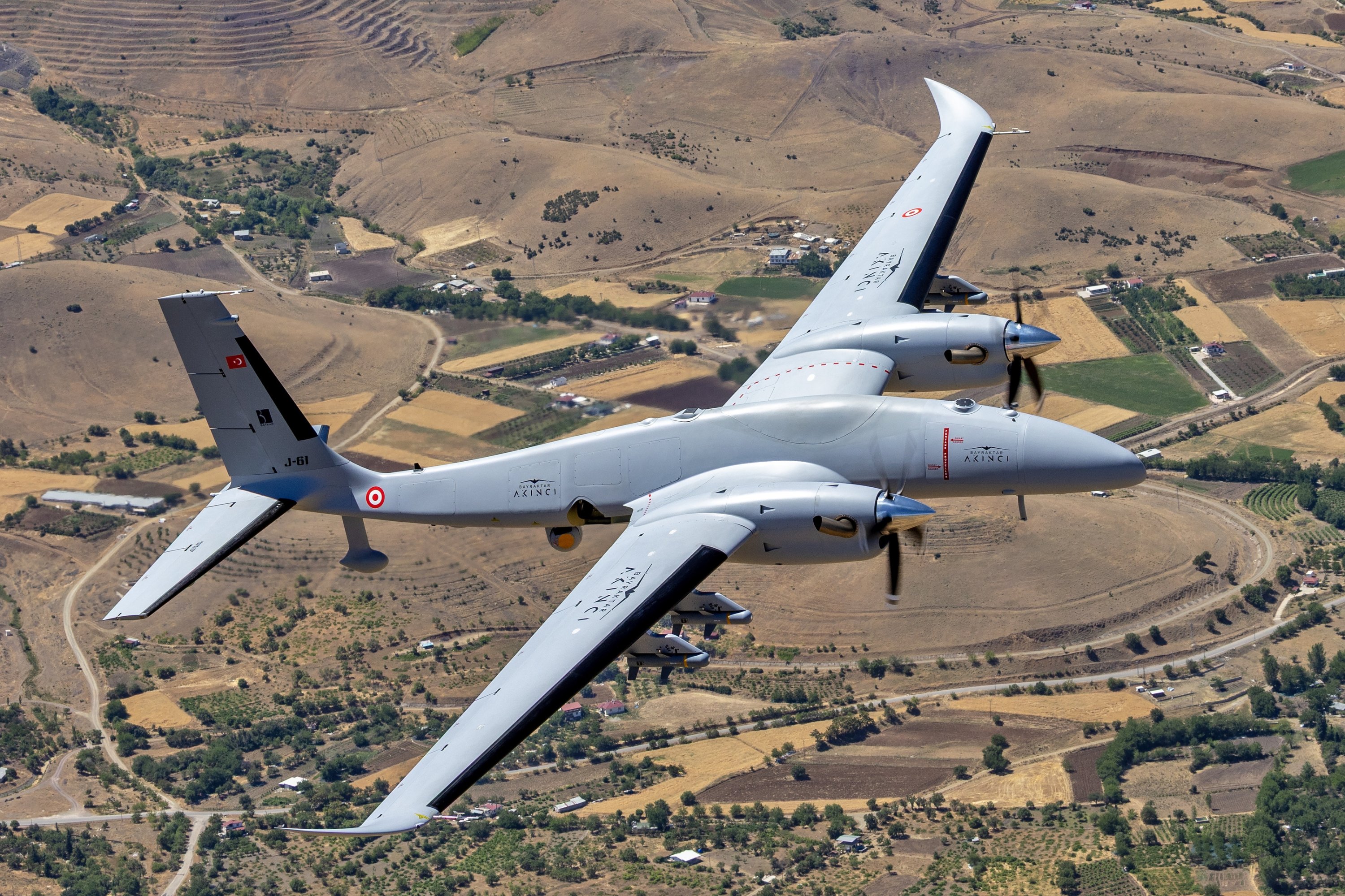
Baykar’s multirole Bayraktar Akıncı platform further improved Türkiye’s drone capabilities with its high payload capacity, long range, advanced sensors and heavy munitions integration.
Baykar’s Bayraktar Kızılelma carried Türkiye’s drone expertise into the unmanned fighter jet area by combining high speed, air-to-air and air-to-ground capabilities and the ability to operate from short-runway ships.
Turkish Aerospace Industries’ Anka and Aksungur unmanned combat aerial vehicles contributed to the development of high-altitude, long-endurance and strategic reconnaissance and surveillance capabilities of Turkish drones by integrating satellite communications, homegrown electro-optical systems, munitions and engines.
Growing aviation industry
The Turkish Aerospace Industries’ under-development twin-engine stealth fighter Kaan and the Hürjet jet trainer also marked major milestones in Türkiye’s manned aviation.
The Kaan is one of the most technologically ambitious programs in Turkish aviation with its low observability, advanced avionics, mission computer, radar and system integration.
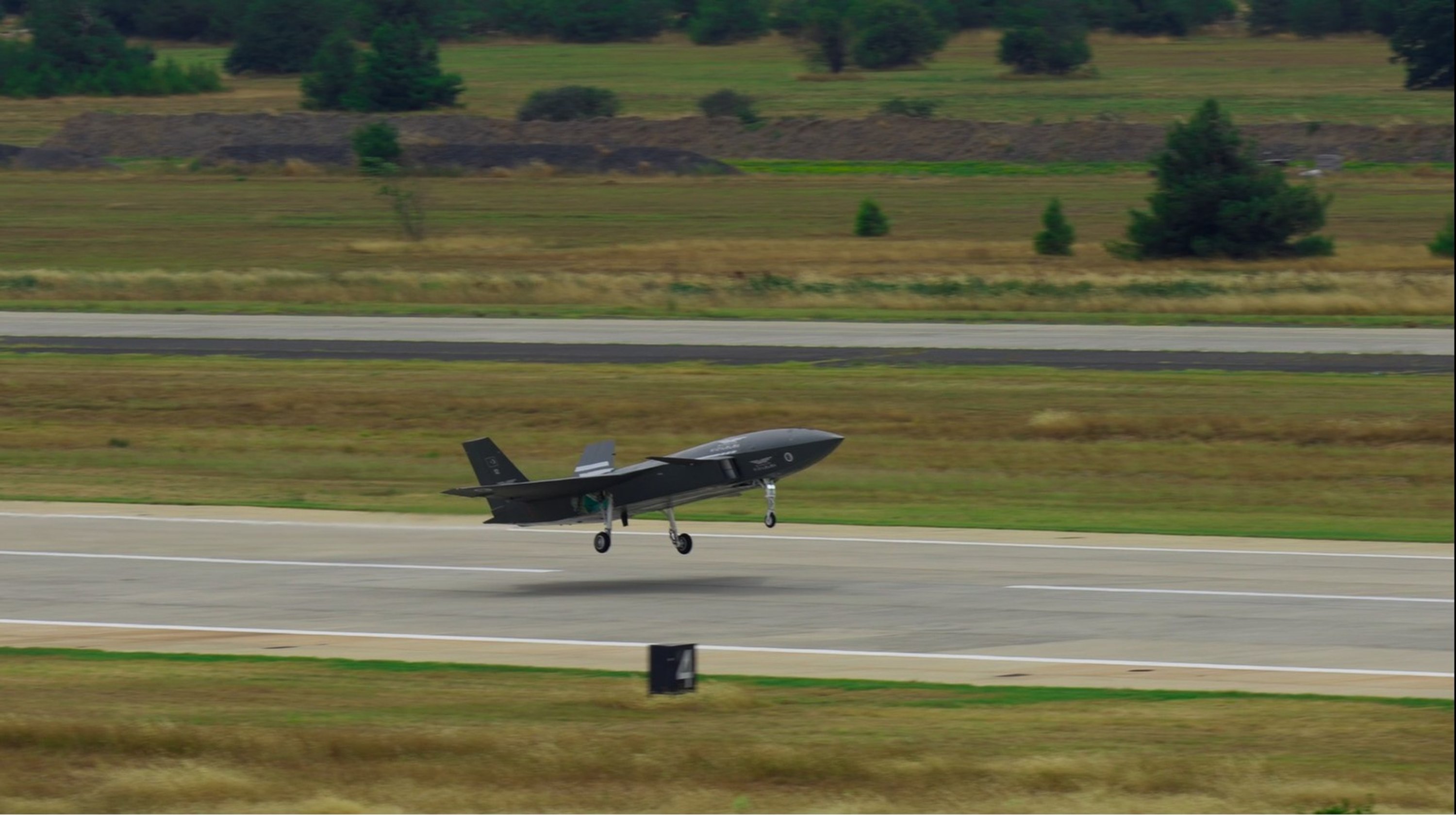
The Hürjet was developed to provide a homegrown trainer platform to advance the country’s capability to develop manned military aircraft.
The Turkish Aerospace Industries T129 Atak helicopter’s product and system integration experience translated into the homegrown T625 Gökbey helicopter, marking a giant leap in rotary-wing technologies.
State-of-the-art naval defense
Beyond aerial systems, Türkiye’s national ship project, called MILGEM, laid the foundation for domestic naval platform design, ranging from corvettes to frigates.
Advancements in combat management systems, sensors and weapon integration became key to ensuring independence and export capacity in naval defense.
The TF-2000 anti-air warfare guided-missile destroyer extended the Turkish Navy’s air defense capabilities to the high seas through its long-range air defense and advanced radar and weapon-sensor integration.
The unique naval engineering capabilities Türkiye gained through the MILGEM project enabled the development of the country’s domestic submarine project, called MILDEN, to develop underwater platforms.
The partnership between the TCG Anadolu drone carrier assault ship and the Bayraktar TB3 combat drone introduced a new sea-air operations concept to the Turkish defense industry, integrating amphibious capabilities with a UAV capable of operating from short runways.
Missile defense systems
Meanwhile, Türkiye’s air defense architecture also grew with Roketsan and Aselsan’s Hisar and Siper missile systems, which contributed to a layered air defense architecture combining integrated sensors, command-and-control systems and missile systems within a single domestic architecture against various threats at low, medium and high altitudes.
Türkiye’s multilayered air defense system, Steel Dome, has been developed by bringing together radars, electro-optical sensors, electronic warfare components, command-and-control infrastructure and air defense weapons of various ranges under a common network.
Roketsan’s Som, Atmaca and Kara Atmaca developed long-range precision strike capabilities for air, sea and land platforms, while the same firm’s Tayfun missile introduced the ability to engage long-range and precision land targets, boosting Türkiye’s strategic deterrence.
Turkish defense also evolved in surface vehicles, with the main battle tank Altay establishing a broad industrial ecosystem around critical technologies, such as armor, active protection, fire control and power packs, while also highlighting the strategic importance of reducing foreign dependence on engines and power packs.
Aselsan’s Koral electronic warfare system and other homegrown radar systems enhanced the effectiveness of air, land and sea platforms in modern warfare through radar detection, electronic jamming, early warning and sensor superiority.
Indigenous technologies
Meanwhile, the PD170, TF6000 and KTJ engine projects brought power system developments for UAV engines, turbofans, cruise missile engines and more.
These projects have been key to ensuring platform independence in defense through indigenous engine technologies.
At the same time, Turkish defense transformed its export model from direct product sales to a broader approach that includes training, maintenance and sustainment, system integration, co-production and technology cooperation.
Turkish defense products are exported to some 185 countries, and around 230 different product types are actively used worldwide.
The sector’s primary goal this year is to further independence efforts in critical technologies, establish high-volume mass production capacity and permanently expand its share in the global market.
Business partnerships should complement the strong political relations between Türkiye and Pakistan, Khawaja Khurram Naeem, the Consul General of Pakistan in Istanbul, said on Thursday, also pointing to the potential of the Pakistani economy and a push to encourage investment and growth.
“We strongly believe that government-to-government cooperation must be complemented by the robust business-to-business engagement,” Naeem said in an address to the “Global Excellence Award Ceremony,” organized by the Islamabad Chamber of Commerce and Industry (ICCI) in Istanbul.
Starting his speech, the consul general noted that the close relationship between Türkiye and Pakistan, two brotherly countries, is “based on a shared history, mutual trust, and a common vision for economic prosperity.”
He added that the business forum provided an important opportunity to further strengthen commercial and investment ties between the two nations.
Pointing to positive developments in Pakistan’s economy, Naeem said the Islamabad government has taken important steps to encourage investment and create a more business-friendly environment.
“The government’s commitment to gradually reducing the corporate tax rate to a more competitive level demonstrates the determination to encourage investment and economic growth,” he added.
He also went on to highlight the potential for regional cooperation involving Türkiye, Pakistan and Central Asia amid the changing geopolitical landscape.
Naeem said Pakistan has particularly significant potential in the textile and ready-made garment sectors, while also noting that the country has extensive production capacity and a young population.
“Sustainable economic growth can only be achieved through active cooperation between the private sectors of both countries, reciprocal visits, and the establishment of long-term partnerships,” he said.
Naeem invited business representatives to explore new opportunities, forge new connections, and develop mutually beneficial partnerships through the forum.
In his speech, Naeem also thanked all the institutions that contributed to organizing the event, particularly the Islamabad Chamber of Commerce and Industry and the Istanbul Chamber of Commerce (ITO), and other Turkish partners, and expressed hope that economic activities between Pakistan and Türkiye would continue to grow stronger.
At the event, the business leaders recalled that the current bilateral trade volume between Türkiye and Pakistan of around $1.2 billion is relatively modest and urged for more steps, including more B2B meetings and reciprocal visits, to elevate the cooperation.
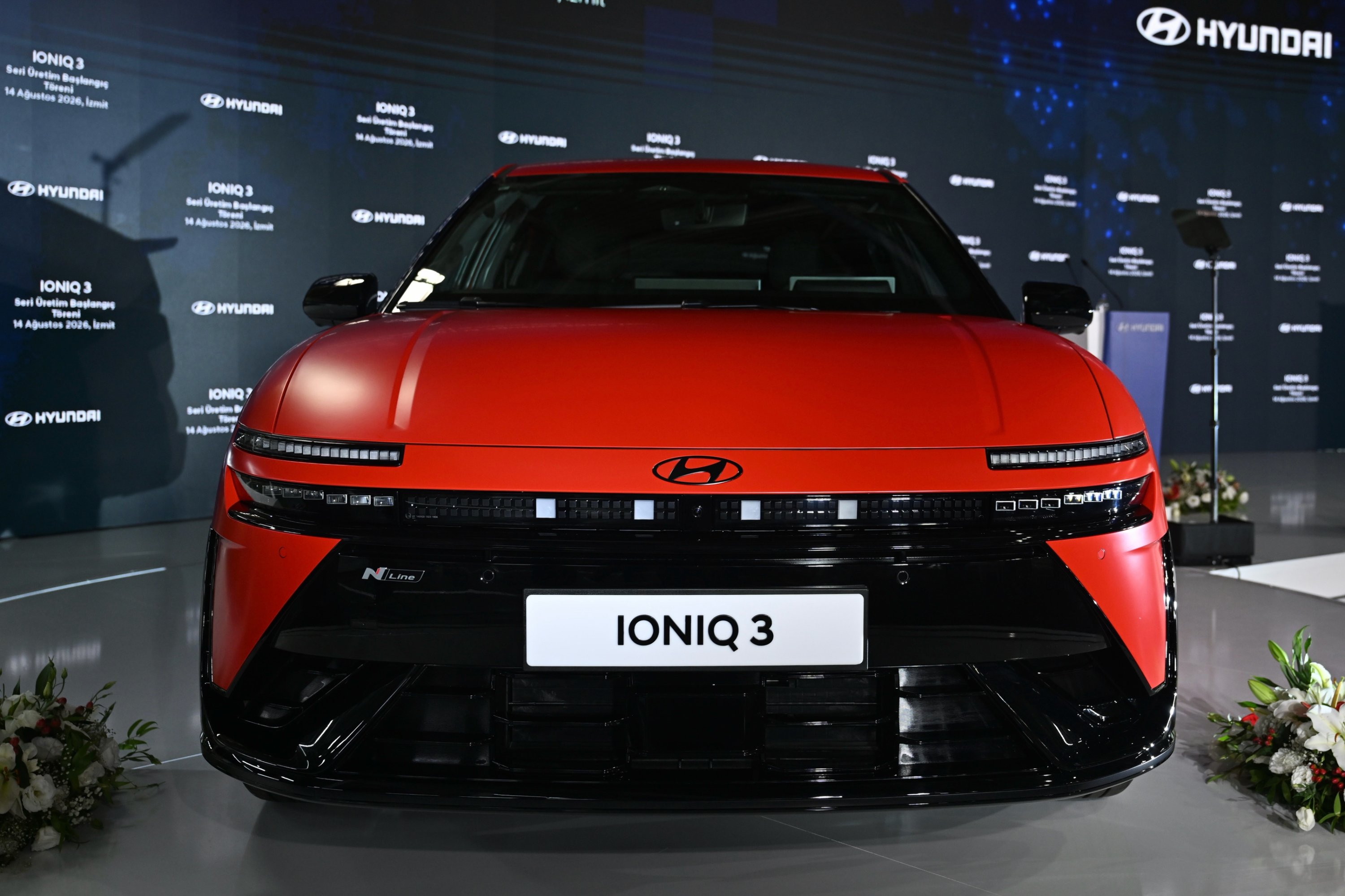
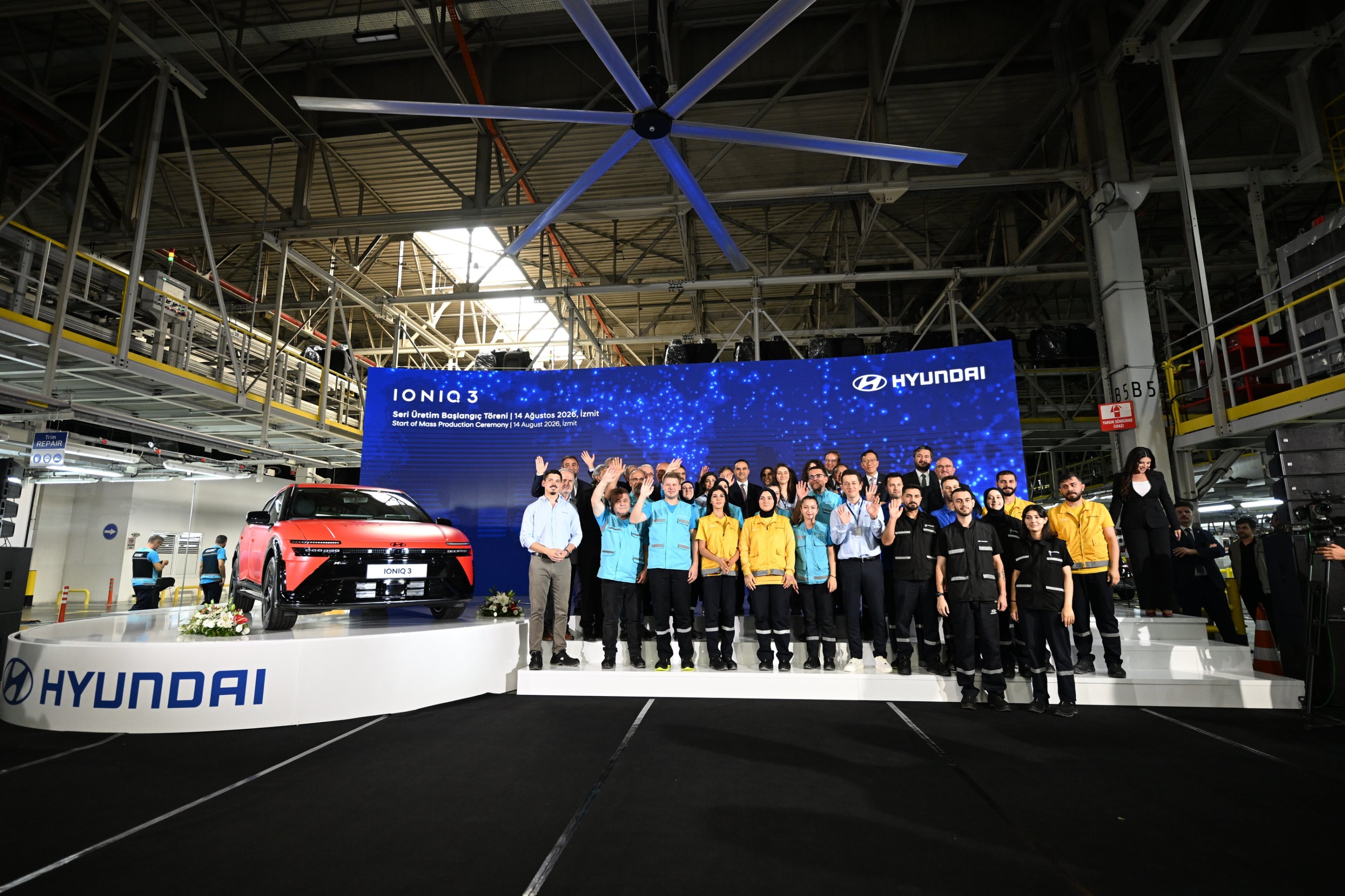
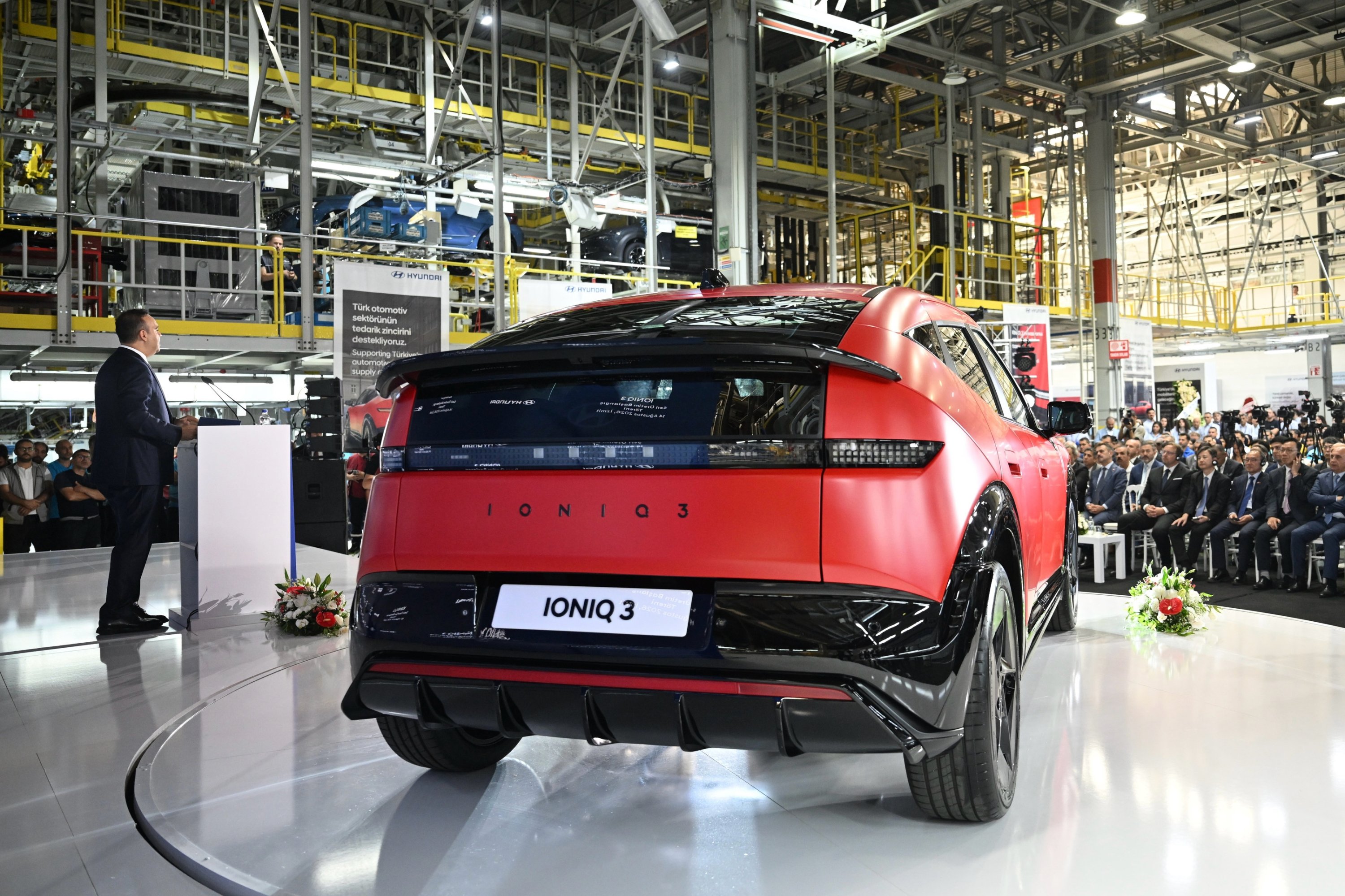
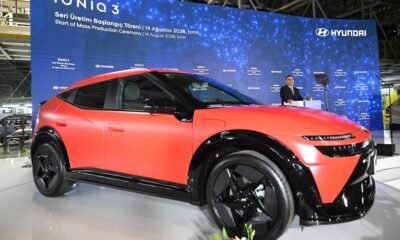
South Korean automaker Hyundai on Friday started mass production of its new all-electric IONIQ 3 model at a factory in Türkiye’s northwestern Kocaeli province.
It makes Hyundai the first foreign automaker to manufacture battery-powered passenger cars in Türkiye and also marks the company’s first EV production in Europe.
The launch represents a significant step in Türkiye’s strategy to position itself as a regional production hub for electric vehicles and battery technologies while attracting new investments in next-generation mobility.
Industry and Technology Minister Mehmet Fatih Kacır said the investment demonstrates growing international confidence in Türkiye’s manufacturing capabilities and industrial ecosystem.
“The investment is one of the most concrete outcomes of our vision to make Türkiye one of the leading countries in next-generation mobility technologies,” Kacır told the start-of-production ceremony at Hyundai Motor Türkiye’s Izmit plant.
In June, Hyundai also announced it would build a new 55 million euros ($63.8 million) battery assembly facility that it says will strengthen the investment in the production of the IONIQ 3.
The facility will assemble battery packs using automated systems in cooperation with Hyundai Mobis.
“An international automaker is producing a fully electric passenger vehicle in our country for the first time,” said Kacır.
“The accompanying battery investment demonstrates that Türkiye has crossed an important threshold in its goal of becoming a global production hub for electric vehicles and battery technologies.”
Hyundai is investing approximately 250 million euros in the project and will initially produce 30,000 IONIQ 3 vehicles annually at the Izmit facility.
The plant has operated in Türkiye for nearly three decades and is Hyundai’s first and longest-running overseas manufacturing facility outside South Korea.
It has produced 13 different models and about 3.3 million vehicles since operations began in 1997. The Izmit plant currently produces the i20 and Bayon models.
Government investment incentives have helped expand the factory’s annual production capacity from 50,000 vehicles in 2002 to 230,000 today.
Hyundai Motor Group plans to invest $90 billion globally by 2030, launching 21 fully electric and 13 hybrid models.
Building on Türkiye’s automotive industry
Kacır said the automotive industry has become one of the main pillars of Turkish manufacturing, increasing annual production from 357,000 vehicles to 1.5 million over the past 23 years.
Automotive exports have risen to $41.5 billion from $4.8 billion in 2002.
The sector directly employs around 60,000 workers in vehicle manufacturing and nearly 250,000 in the supplier industry.
Kacır said the government views the global shift toward electrification, connected vehicles and autonomous driving technologies as an opportunity to strengthen Türkiye’s industrial competitiveness.
He reiterated that the domestically developed Togg electric vehicle project was conceived not only as a car brand but as the foundation of a broader mobility ecosystem encompassing battery technologies, software, power electronics and charging infrastructure.
“The success of our new mobility vision depends on expanding the transformation initiated by Togg across the entire automotive industry,” he said.
“It is therefore extremely important that global manufacturers already producing in Türkiye direct their next-generation mobility investments to our country.”
EV market expanding rapidly
Türkiye’s domestic electric vehicle market has also grown rapidly.
Kacır said more than 450,000 electric vehicles are currently on Turkish roads, while fully electric models account for more than 17% of local vehicle sales this year.
The government expects the number of electric vehicles in circulation to exceed 1.5 million by 2030.
Kacır said Türkiye offers international investors significant advantages, including a large domestic market of 86 million people, a $1.6 trillion economy, an extensive supplier network and logistics infrastructure, as well as preferential access to around one billion consumers through the customs union with the European Union and free trade agreements.
Kacır said Hyundai’s investment is expected to encourage additional next-generation mobility projects and attract further foreign investment, particularly from South Korean companies.
“We hope Hyundai’s investment decision will serve as an example for other South Korean companies,” he said.
“Türkiye will continue to support all investors who produce, develop technology, create qualified employment and strengthen our position in global value chains.”
Inflation expectations among market participants in Türkiye rose slightly for the end of the year but dropped for the 12-month horizon, a survey showed on Friday.
According to the Central Bank of the Republic of Türkiye’s (CBRT) survey for August, year-end consumer price inflation is expected to reach 29.43%, up from 29.21% in the previous survey.
The 12-month inflation forecast declined to 23.69% from 23.95%, indicating that participants continue to expect disinflation over the coming year despite a slightly higher projection for the end of 2026.
Forecasts for inflation in 24 months time, however, edged up to 18.03% from 17.83%, the survey showed.
Türkiye’s annual consumer price inflation eased to 31.75% in July 2026, down from 32.11% in June.
On Thursday, the CBRT adjusted its end-2026 inflation forecast upward to 28% from 26% mainly due to energy and food price pressures. But it left its interim target unchanged at 24%.
The bank also kept its interim inflation targets for end-2027 and end-2028 at 15% and 9%, respectively.
Friday’s survey also showed a weaker outlook for the Turkish lira. Participants raised their year-end U.S. dollar/lira forecast to 51.66 from 51.55, while the 12-month exchange rate expectation increased to 57.43 from 56.69.
Growth expectations were broadly unchanged. Respondents maintained their 2026 GDP growth forecast at 3.1%, while trimming their projection for the following year to 4% from 4.1%.
The survey continued to point to expectations of gradual monetary easing by the central bank.
Participants expect the CBRT to keep its policy rate at 37% at its next Monetary Policy Committee (MPC) meeting. They see the one-week repo rate declining to 36.13% at the following meeting and 35.25% at the third meeting.
Respondents now expect the policy rate to stand at 29.59% in 12 months time, slightly higher than in the previous survey.
Higher oil prices that have weighed on inflation expectations have prompted the CBRT to keep its one-week repo rate unchanged for four straight months.
Azerbaijan overtook Russia to become Türkiye’s largest pipeline natural gas supplier in June, according to official data.
Türkiye imported around 1.01 billion cubic meters (bcm) of pipeline gas from Azerbaijan in June, data compiled from the Energy Market Regulatory Authority (EPDK) showed.
Iran was the second-largest supplier, with 883 million cubic meters (mcm), while Russia ranked third with 882 mcm.
Russia had been Türkiye’s largest pipeline gas supplier in each of the first five months of 2026. Azerbaijan, however, has ranked as Türkiye’s top supplier for June since 2023.
Azerbaijan supplied 744 mcm of pipeline gas to Türkiye in June 2023, around 997 mcm in June 2024 and 1.02 bcm in the same month of 2025.
The EPDK data showed Türkiye’s total natural gas imports fell 6.19% year-over-year to around 3.06 bcm in June.
Pipeline deliveries accounted for about 2.78 bcm of total imports, while liquefied natural gas (LNG) imports stood at 282 mcm. All of Türkiye’s LNG imports in June came from Algeria.
Despite the decline in imports, Türkiye’s natural gas consumption rose 4.59% year-over-year to approximately 2.83 bcm.
Industrial consumption accounted for around 1.09 bcm, while gas use in the transformation and conversion sector, which includes electricity generation, reached 594 mcm. Household consumption stood at 710 mcm.
Türkiye’s natural gas storage volume stood at around 5.27 bcm at the end of June. Underground storage facilities held approximately 4.97 bcm, while LNG terminals accounted for the remaining 296 mcm.


-
 Sports2 days ago
6 Arab federations reaffirm support for Infantino amid FIFA rift
-
 Politics3 days ago
Türkiye says Mecca pact to enhance regional security, not rival NATO
-
 Economy2 days ago
Can global oil stocks weather another 6 months of US-Iran war?
-
 Economy3 days ago
Record-low Danube forces Romania to shut its only nuclear plant
-

 Sports21 hours ago
Ferran Torres joins PSG from Barcelona on contract through 2031
-

 Sports2 days ago
Beşiktaş sign Juventus forward Vlahovic on 3-year deal
-
 Economy3 days ago
Baykar duo tops list of highest taxpayers in Türkiye for 5th year
-
 Economy2 days ago
Hyundai launches IONIQ 3 production to embolden Türkiye’s EV ambitions