
Politics
Syrian security forces enter YPG-held Hassakeh

Internal security units of Syria’s Interior Ministry began entering Hassakeh on Monday as a deal with the U.S.-backed terrorist group YPG is being implemented.
To begin the implementation process, a convoy consisting of eight armored personnel carriers belonging to Syria’s Interior Ministry, numerous four-wheel-drive pickup trucks, an ambulance, and a mobile base station vehicle moved toward the city center, which has been under the occupation of the YPG.
According to a written statement by Syria’s Interior Ministry, Hassakeh Internal Security Commander Brig. Gen. Marwan al-Ali issued instructions to internal security forces to enter the city. Al-Ali emphasized that security duties should be carried out in line with designated plans, with full compliance with laws and regulations, all procedures conducted with discipline, public security and order maintained, and the safety of citizens as well as public and private property ensured.
Under the agreement reached between the Syrian government and YPG, it is envisaged that security responsibilities and state institutions in the city of Hassakeh and the district of Qamishli, currently under the group’s occupation, will be handed over to the Syrian administration.
On Jan. 30, it was announced that the Interior Ministry forces would enter Hassakeh under a cease-fire and expanded integration agreement signed between Damascus and the YPG.
The agreement includes the integration of public institutions in central Hassakeh with those of the Damascus government, with current employees to be absorbed into the state payroll.
No detailed statement has yet been made regarding the exact mission of the Interior Ministry forces in Hassakeh or how long they will remain in the city.
The Syrian Army launched an operation against the YPG on Jan. 16 in areas west of the Euphrates River. The operation later expanded east of the river with the participation of tribal forces, leading to most of the territories previously occupied by the group coming under the government’s control.

A ballistic missile intercepted after being detected heading toward Turkish airspace has renewed debate about NATO’s collective defense principle under Article 5, though alliance officials say the provision has not been triggered in the latest incident.
Türkiye said Wednesday NATO air defenses destroyed an Iranian ballistic missile as it headed into Turkish airspace, marking the first time the alliance member has been drawn into the widening war between Iran, Israel and the United States, and raising the possibility of an expansion involving its bloc allies.
Iran’s General Staff denied the claim the following day, saying that no missile had been launched toward Turkish territory and emphasizing that Tehran respects “the sovereignty of neighboring and friendly country Türkiye.”
U.S. Defense Secretary Pete Hegseth said Washington did not believe the situation would trigger Article 5 of the NATO treaty.
NATO Secretary-General Mark Rutte also described the event as serious but said the alliance was not considering invoking the clause.
“Nobody is talking about Article 5,” Rutte said, adding that the most important outcome was that NATO’s adversaries had seen the alliance is “so strong and so vigilant.”
The following overview of NATO’s collective defense clause was outlined in a report by BBC Türkçe.
What is Article 5?
Article 5 of the North Atlantic Treaty forms the basis of NATO’s collective defense principle, under which an armed attack against one or more allies is considered an attack against all members.
The article states that if such an attack occurs in North America or Europe, each member will assist the attacked ally by taking “such action as it deems necessary,” including the possible use of armed force, in line with the right to individual or collective self-defense recognized by Article 51 of the United Nations Charter.
The treaty also stipulates that any such attack and the measures taken in response must be immediately reported to the U.N. Security Council. Those measures would end once the council takes steps necessary to restore international peace and security.
Is Article 5 automatic?
The North Atlantic Treaty does not specify a detailed procedure for activating Article 5. However, two conditions generally need to be met for the collective defense obligation to arise.
The first is that a NATO ally must have been subjected to an armed attack. While the most severe example would be a military invasion, the clause may also apply to lower-level armed attacks.
Attacks targeting land, sea or air assets, including unconventional forms of attack, may fall within its scope.
An armed attack is typically expected to involve damage to property, destruction of assets, or injury or death.
Because Article 5 carries major political and potential military implications, each case is assessed individually.
The second condition is that the NATO member under attack must request or consent to collective action under Article 5. In such a situation, NATO’s main decision-making body, the North Atlantic Council, convenes to determine whether the incident qualifies as an Article 5 case.
A consensus among member states is required for the article to be invoked.
If both conditions are met, NATO allies issue a political declaration stating that collective defense measures are being taken under Article 5.
What happens if invoked?
If Article 5 is invoked, each ally is obligated to assist the NATO member that has been attacked in a manner it considers necessary.
Although the clause is often associated with military intervention, the treaty does not require allies to provide direct military support.
Assistance may include military, political or other forms of support, depending on consultations among allies.
NATO plays a central coordinating role in those discussions and helps establish a common position among member states.
The attacked ally can outline its security needs and receive offers of assistance from other members.
NATO then works to synchronize the support provided by allies.
At the same time, coordination through NATO does not prevent allies from taking unilateral or bilateral measures.
Alternatives in case of attacks
Article 5 is widely seen as a last-resort option within the alliance.
It has been invoked only once in NATO’s history, following the Sept. 11, 2001 terrorist attacks in the United States.
In many past incidents, including missile strikes or border violations, allies have instead opted for consultations under Article 4 of the North Atlantic Treaty.
Article 4 allows member states to request consultations if they believe their territorial integrity, political independence or security is threatened.
Such consultations, however, are not a prerequisite for invoking Article 5, nor does activating Article 4 automatically lead to the collective defense clause being considered.
Due in part to its geographic location and regional security developments, Türkiye has been among the NATO members that most frequently invoke Article 4.
In the latest Iran-linked incident, however, no such consultation request was made within NATO.
Türkiye’s National Intelligence Organization (MIT) helped dismantle a Daesh cell preparing sabotage attacks in Damascus, with three suspects detained and a bomb-laden vehicle seized after intelligence shared with Syrian authorities led to a coordinated operation.
The operation followed intelligence work by MIT, which identified a Daesh-linked cell operating in the Syrian capital and passed the information to Syria’s Internal Security Service Command and General Intelligence Service.
Syrian intelligence units then monitored the suspects’ movements closely and identified their exact location before launching a raid. The operation resulted in the detention of three Daesh members – Omar Hashem, Muhammad Hammad and Hussein Khalef.
At the same time, bomb disposal teams intervened to neutralize a vehicle packed with explosives that had been prepared for remote detonation at a key location. Authorities said the vehicle contained large quantities of C4 and TNT capable of causing major destruction.
The detained suspects were transferred to the counterterrorism department of Syria’s General Intelligence Service for further interrogation and to help identify additional members or supporters linked to the cell.
Security sources said the raid prevented a planned attack believed to have been ordered after a recent Daesh audio message urging terrorists to prepare for operations.
At its peak in 2015, Daesh controlled a swath of territory across Iraq and Syria, half the size of the United Kingdom. It was notorious for its brutality against religious minorities, as well as Muslims who do not follow the terrorists’ ideology.
After years of fighting, the U.S.-led coalition broke the group’s last hold on territory in late 2019, but Daesh cells in multiple countries continue to carry out periodic attacks.
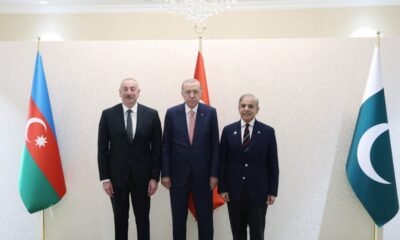
Pakistan said Thursday it stands in strong solidarity with Türkiye and Azerbaijan following recent attacks targeting the two countries, warning that such actions violate international law and risk further escalating regional tensions.
In a statement shared on social media, Pakistan’s Foreign Ministry said Islamabad is seriously concerned over the incidents and reaffirmed its support for the two “brotherly countries.”
The ministry stressed that attacks directed at Türkiye and Azerbaijan represent a clear breach of international law and the principles governing relations between states, cautioning that such developments could push the region toward greater instability.
Pakistan reiterated its strong solidarity with Ankara and Baku and called on all parties to exercise restraint while prioritizing dialogue and diplomacy to preserve regional peace and stability.
On Wednesday, Türkiye’s Defense Ministry announced that a ballistic munition launched from Iran toward Turkish airspace had been intercepted and neutralized by NATO air and missile defense assets deployed in the Eastern Mediterranean.
In response, Turkish Foreign Minister Hakan Fidan raised the issue during a phone call with his Iranian counterpart Abbas Araghchi, conveying Türkiye’s reaction and stressing the need to avoid steps that could further expand the conflict.
Meanwhile, Azerbaijan’s Foreign Ministry reported that drones launched from Iranian territory had targeted the Nakhchivan Autonomous Republic. Following the incident, Iran’s ambassador to Baku, Mojtaba Demirchilou, was summoned and handed a protest note.
A parliamentary commission established to examine the causes behind children being drawn into crime will continue its work for an additional month, Ankara announced on Friday.
The decision to extend the mandate of the commission was approved during a parliamentary session on March 4 and published in the Official Gazette, allowing the body to continue its research from March 10 for another month.
The commission was formed to investigate the root causes that lead children into criminal activity and to propose preventive and protective policies aimed at improving their participation in social life.
Steps against juvenile crime
On the other hand, Justice Minister Akın Gürlek said the government is preparing additional legal measures to protect children from criminal environments and strengthen penalties for those who exploit minors in illegal activities, according to the ministry statement published on Friday.
Gürlek noted that authorities aim to prevent children from being drawn into crime while also ensuring rehabilitation for those who have already committed offenses, emphasizing that the ultimate goal is to reintegrate them into society.
“We must keep children away from environments that lead them to commit crimes,” Gürlek said. “If they do commit an offense, we must rehabilitate them and ensure they can return to society.”
He also remarked that the government introduced several provisions in the 11th Judicial Reform Package targeting criminal groups that use minors in illegal activities. The reforms increased penalties for organized crime leaders and members who involve children in crimes.
He added that the government is considering further increases to those penalties under the upcoming 12th Judicial Reform Package, which is currently being prepared.
“In cases where organized crime groups, their leaders or members use children in criminal activities, we have already raised the penalties,” Gürlek said. “We are now considering increasing those penalties again in the 12th Judicial Reform Package.”
The minister emphasized that protecting children and safeguarding their future is a fundamental responsibility of the state.
“Children are entrusted to us,” Gürlek said. “We have a duty to protect their future.”
He also stressed that the role of the state extends beyond preventing crime, noting that authorities must also help create social opportunities that allow young people to build stable futures.
“The state not only prevents crime,” Gürlek said. “It must also offer individuals a social future.”
According to Gürlek, the planned measures aim both to deter criminal groups from exploiting minors and to ensure that children who become involved in crime receive support and rehabilitation so they can return to society as productive individuals.
The proposed changes are expected to be included in the next judicial reform package that the government plans to present to Parliament.
Gürlek previously announced that the Justice Ministry has launched a joint platform with the Ministry of Family and Social Services and the Ministry of National Education to study the issue.
The platform will examine social, educational and family-related factors that may lead children toward criminal activity or violent behavior, he said.
“We aim to conduct a comprehensive study on the circumstances that lead children toward violence, starting from family structures and education,” Gürlek stressed. “We are also considering measures to ensure that children who are driven into crime serve the full duration of their sentences.”
He added that the government intends to introduce policies that respond to public concerns over crimes involving minors and perceptions that offenders are not sufficiently punished.
“We will take steps to address crimes involving children and to break the perception of impunity in society,” Gürlek said. “Our goal is to produce regulations that deliver concrete improvements in practice.”
The minister also highlighted ongoing efforts to combat violence against women, noting that recent legislation had established stronger legal tools to address such crimes. Gürlek said additional provisions related to the protection of victims could be included in the upcoming judicial reform package.
“We closely monitor the problems experienced by women who are victims of violence,” he said. “We plan to introduce further regulations on this issue in the 12th Judicial Reform Package and present them to Parliament.”
A series of fatal stabbing incidents involving teenagers has intensified public debate in Türkiye over youth violence and the factors driving minors toward crime. One of the most widely reported cases occurred on Jan. 24, 2025, when 14-year-old Mattia Ahmet Minguzzi was stabbed by a 15-year-old attacker at a street market in Istanbul. Minguzzi died on Feb. 9 after spending 16 days in intensive care.
Just two months later, another fatal stabbing shocked the public in the northern province of Tokat, where 17-year-old national athlete Berkay Melikoğlu was killed.
In one of the most recent incidents, 17-year-old Atlas Çağlayan died after being stabbed during an argument in Istanbul on Jan. 14, with initial findings indicating that the suspect is a 15-year-old.
Foreign ministers from the Organization of Turkic States (OTS) will gather in Istanbul on March 7 for an informal meeting aimed at strengthening cooperation among member countries and addressing pressing regional and global issues, Turkish diplomatic sources said.
The meeting will be hosted by Foreign Minister Hakan Fidan and attended by representatives from Azerbaijan, the current chair of the organization, as well as Kazakhstan, Kyrgyzstan and Uzbekistan. Officials are expected to review recent developments within the OTS and discuss priorities and steps for the coming period.
Comprehensive consultations are also planned on current global and regional challenges. On the sidelines of the meeting, Fidan is expected to hold bilateral talks with his counterparts. Delegation heads are also scheduled to be received collectively by President Recep Tayyip Erdoğan.
In his address, Fidan is expected to stress the importance of expanding cooperation among Turkic states at a time when the region and the international system face growing difficulties in producing peace, stability and justice. He is also expected to highlight the need for a unified stance within the Turkic world calling for an end to ongoing conflicts involving the United States, Israel and Iran, and attacks targeting third countries, urging renewed space for diplomacy.
The Turkish minister is further expected to underline the importance of preventing further escalation of tensions between Pakistan and Afghanistan through dialogue and peaceful solutions. He will also call for an end to what Ankara describes as the unjust isolation imposed on Turkish Cypriots and the Turkish Republic of Northern Cyprus (TRNC), encouraging OTS members to deepen political, economic and cultural ties with the community.
Fidan is also expected to outline Türkiye’s priorities regarding the planned “OTS+” format aimed at expanding cooperation with third parties within the organization.
Justice Minister Akın Gürlek said Türkiye wants to see the “terror-free Türkiye” process for the disarmament of the PKK terrorist group reach its conclusion, emphasizing that Parliament will ultimately determine legal arrangements as political consultations continue.
Speaking during an iftar gathering with Ankara bureau chiefs at the Ankara Judges’ House, Gürlek said discussions about potential legislation are ongoing and that public expectations for progress have grown.
“We want the terror-free Türkiye process to reach its conclusion,” Gürlek said. “There is now an expectation in society. Our people are ready.”
Türkiye’s efforts to end PKK violence that killed over 50,000 people and remove the division the terrorist group has fostered for over four decades have entered the second stage.
After the group announced it would dissolve itself last year, a parliamentary committee recently approved a report for legislation to speed up the process. The report, which will serve as a guide for Parliament to draft legislation, will help facilitate the process after authorities confirmed that the PKK fully abandoned arms.
Gürlek said the head and members of the parliamentary Justice Commission, as well as the Peoples’ Equality and Democracy Party (DEM Party) delegation, also expressed support for swift legal steps following negotiations in Parliament.
A negotiation text prepared in Parliament has already been submitted to the Justice Commission, he said, adding that the commission will decide the next steps.
The Justice Ministry, Gürlek noted, is not directly involved in drafting the legislation but stands ready to provide technical support if requested. Judges and prosecutors within the ministry can assist lawmakers during the legislative process.
The National Solidarity, Brotherhood and Democracy Committee, set up exclusively for the PKK’s disarmament, has heard from all segments of society since last August and wrapped up the work with a report offering advice on the fate of PKK members. The report involves suggestions for the rehabilitation of terrorists after the complete dissolution of the PKK. The Justice Ministry will set up a working group on legislation, while the ruling Justice and Development Party (AK Party) will invite other political parties to set up an informal working group in Parliament to debate future legislation.
Gürlek emphasized that Türkiye cannot adopt arrangements resembling a “personalized general amnesty” for PKK members, suggesting that any legal changes would likely come through temporary provisions within existing laws.
Possible amendments could involve legislation such as the Penal Execution Law, the Turkish Penal Code and the Code of Criminal Procedure, he said, though the scope and framework would be determined by Parliament. Legal amendments would be categorized in three groups: those involved in acts of terrorism, those who were not involved and those already incarcerated in PKK-related crimes.
Members of the PKK who were not involved in any acts of terrorism will be subject to legal proceedings once they return to Türkiye and judicial monitoring. The PKK announced last year that all of its members in Türkiye had left the country as part of the initiative. The PKK’s senior leadership and most members hide out in mountainous territories in northern Iraq, particularly in and around the Qandil mountain area.
The nature of judicial control is not clear, but it will most likely be similar to judicial control for other crimes, in which convicts are required to report to a local police station regularly and/or are banned from traveling abroad. PKK members in this category will also benefit from a string of rehabilitation and reintegration programs, including education, vocational training and psychiatric support.
Gürlek also underscored that the process requires the complete disarmament and dissolution of the PKK terrorist organization before legal steps move forward.
“First, the organization must fully lay down its arms and dissolve itself,” Gürlek said, adding that official confirmation that the group has ended its activities would be necessary.
The National Intelligence Organization (MIT) and the Defense Ministry are tasked with supervising the PKK’s disarmament and full dissolution in the field.
Responding to questions about the “status” of jailed PKK leader Abdullah Öcalan, Gürlek said the government is not overseeing that aspect of the process and that decisions on possible legal status changes rest with Parliament.
He also reiterated that under current Turkish law, there are no conditional release provisions for terrorism-related crimes, including sentences of aggravated life imprisonment, unless Parliament decides otherwise through legislative changes.

President Erdoğan signed: Appointment decisions in the Official Gazette

AK Party member Veysel Tipioğlu spoke at the Turkish Grand National Assembly General Assembly: “Türkiye has the power to manage security risks.”

BREAKING NEWS… Minister of Transport Uraloğlu announced: Flight cancellations have been extended in 5 countries!
President Erdoğan signed: Appointment decisions in the Official Gazette
AK Party member Veysel Tipioğlu spoke at the Turkish Grand National Assembly General Assembly: “Türkiye has the power to manage security risks.”
BREAKING NEWS… Minister of Transport Uraloğlu announced: Flight cancellations have been extended in 5 countries!
-
 Economy17 hours ago
Ukraine accuses Hungary of detaining bank workers, seizing cash
-
 Daily Agenda15 hours ago
BREAKING NEWS… There is no room for manipulation on social media! Director of Communications Duran announced: Access to 41 social media accounts has been blocked
-
 Daily Agenda16 hours ago
President Erdoğan met with the Italian Prime Minister
-
 Politics16 hours ago
Italian PM Meloni condemns ‘missile attack’ against NATO ally Türkiye
-
 Politics9 hours ago
Pakistan voices strong solidarity with Türkiye, Azerbaijan after attacks
-

 Sports15 hours ago
Verstappen, Norris, Russell face mixed start in Australian GP
-

 Economy3 days ago
Economic impact of Mideast war to depend on duration, damage: IMF
-
 Politics18 hours ago
NATO allies boost missile defense posture after Türkiye incident