
Economy
Trump picks former Fed official Kevin Warsh to run US central bank

President Donald Trump announced on Friday that he will nominate former Federal Reserve (Fed) official Kevin Warsh to be the next chair of the U.S. central bank, a pick likely to result in sharp changes to the powerful agency that could bring it closer to the White House and reduce its longtime independence from day-to-day politics.
Warsh would replace current chair Jerome Powell when his term expires in May. Trump chose Powell to lead the Fed in 2017 but this year has relentlessly assailed him for not cutting interest rates quickly enough.
“I have known Kevin for a long period of time, and have no doubt that he will go down as one of the GREAT Fed Chairmen, maybe the best,” Trump posted on his Truth Social site. “On top of everything else, he is ‘central casting,’ and he will never let you down.”
The appointment, which requires Senate confirmation, amounts to a return trip for Warsh, 55, who was a member of the Fed’s board from 2006 to 2011. He was the youngest governor in history when he was appointed at age 35. He is currently a fellow at the right-leaning Hoover Institution and a lecturer at the Stanford Graduate School of Business.
In some ways, Warsh is an unlikely choice for the Republican president because he has long been a hawk in Fed parlance, or someone who typically supports higher interest rates to control inflation. Trump has said the Fed’s key rate should be as low as 1%, far below its current level of about 3.6%, a stance few economists endorse.
During his time as governor, Warsh objected to some of the low-interest rate policies that the Fed pursued during and after the 2008-09 Great Recession. He also often expressed concern at that time that inflation would soon accelerate, even though it remained at rock-bottom levels for many years after that recession ended.
But more recently, however, in speeches and opinion columns, Warsh has said he supports lower rates.
Warsh’s appointment would be a major step toward Trump asserting more control over the Fed, one of the few remaining independent federal agencies. While all presidents influence Fed policy through appointments, Trump’s rhetorical attacks on the central bank have raised concerns about its status as an independent institution.
The announcement comes after an extended and unusually public search that underscored the importance of the decision to Trump and the potential impact it could have on the economy. The chair of the Federal Reserve is one of the most powerful economic officials in the world, tasked with combating inflation in the United States while also supporting maximum employment. The Fed is also the nation’s top banking regulator.
The Fed’s rate decisions, over time, influence borrowing costs throughout the economy, including for mortgages, car loans and credit cards.
For now, Warsh would fill a seat on the Fed’s governing board that was temporarily occupied by Stephen Miran, a White House adviser who Trump appointed in September. Once on the board, Trump could then elevate Warsh to the chair position when Powell’s term ends in May.
Since Trump’s reelection, Warsh has expressed support for the president’s economic policies, despite a history as a more conventional, pro-free trade Republican.
In a January 2025 column in The Wall Street Journal, Warsh wrote that “the Trump administration’s strong deregulatory policies, if implemented, would be disinflationary. Cutbacks in government spending – inspired by the Department of Government Efficiency – would also materially reduce inflationary pressures.” Lower inflation would allow the Fed to deliver the rate cuts the president wants.
Since his first term, Trump has broken with several decades of precedent under which presidents have avoided publicly calling for rate cuts, out of respect for the Fed’s status as an independent agency.
Trump has also sought to exert more control over the Fed. In August he tried to fire Lisa Cook, one of seven governors on the Fed’s board, in an effort to secure a majority of the board. He has appointed three other members, including two in his first term.
Cook, however, sued to keep her job, and the Supreme Court, in a hearing last week, appeared inclined to let her keep her job while her suit is resolved.
Economic research has found that independent central banks have better track records of controlling inflation. Elected officials, like Trump, often demand lower interest rates to juice growth and hiring, which can fuel higher prices.
Trump had said he would appoint a Fed chair who will cut interest rates, which he says will reduce the borrowing costs of the federal government’s huge $38 trillion debt pile. Trump also wants lower rates to boost moribund home sales, which have been held back partly by higher mortgage costs. Yet the Fed doesn’t directly set longer-term interest rates for things like home and car purchases.
If confirmed by the Senate, Warsh would face challenges in pushing interest rates much lower. The chair is just one member of the Fed’s 19-person rate-setting committee, with 12 of those officials voting on each rate decision. The committee is already split between those worried about persistent inflation, who’d like to keep rates unchanged, and those who think that recent upticks in unemployment point to a stumbling economy that needs lower interest rates to bolster hiring.
Financial markets could also push back. If the Fed cuts its short-term rate too aggressively and is seen as doing so for political reasons, then Wall Street investors could sell Treasury bonds out of fear that inflation would rise. Such sales would push up longer-term interest rates, including mortgage rates, and backfire on Warsh.
Trump considered appointing Warsh as Fed chair during his first term, though ultimately he went with Powell. Warsh’s father-in-law is Ronald Lauder, heir to the Estee Lauder cosmetics fortune and a longtime donor and confidant of Trump’s.
Prior to serving on the Fed’s board in 2006, Warsh was an economic aide in George W. Bush’s Republican administration and was an investment banker at Morgan Stanley.
Warsh worked closely with then-Chair Ben Bernanke in 2008-09 during the central bank’s efforts to combat the financial crisis and the Great Recession. Bernanke later wrote in his memoirs that Warsh was “one of my closest advisers and confidants” and added that his “political and markets savvy and many contacts on Wall Street would prove invaluable.”
Warsh, however, raised concerns in 2008, as the economy tumbled into a deep recession, that further interest rate cuts by the Fed could spur inflation. Yet even after the Fed cut its rate to nearly zero, inflation stayed low.
And he objected in meetings in 2011 to the Fed’s decision to purchase $600 billion of Treasury bonds, an effort to lower long-term interest rates, though he ultimately voted in favor of the decision at Bernanke’s behest.
In recent months, Warsh has become much more critical of the Fed, calling for “regime change” and assailing Powell for engaging on issues like climate change and diversity, equity and inclusion, which Warsh said are outside the Fed’s mandate.
His more critical approach suggests that if he does ascend to the position of chair, it would amount to a sharp transition at the Fed.
In a July interview on CNBC, Warsh said Fed policy “has been broken for quite a long time.”
“The central bank that sits there today is radically different than the central bank I joined in 2006,” he added. By allowing inflation to surge in 2021-22, the Fed “brought about the greatest mistake in macroeconomic policy in 45 years, that divided the country.”
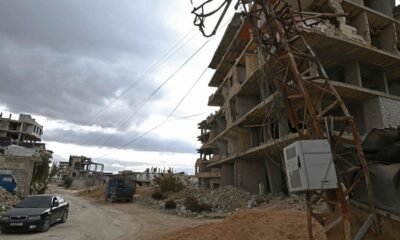
The United States has cautioned Syria against turning to Chinese technology for its telecommunications infrastructure, arguing such reliance would undermine U.S. interests and pose risks to national security, a report said on Thursday.
The message was conveyed during an unreported meeting between a U.S. State Department team and Syrian Communications Minister Abdulsalam Haykal in San Francisco on Tuesday, Reuters reported, citing three sources familiar with the matter.
Washington has been coordinating closely with Damascus since 2024, when Syria’s current President Ahmad al-Sharaa ousted longtime dictator Bashar Assad, who had a strategic partnership with China.
Syria is exploring the possibility of procuring Chinese technology to support its telecommunications towers and the infrastructure of local internet service providers, according to a Syrian businessman involved in the procurement talks.
“The U.S. side asked for clarity on the ministry’s plans regarding Chinese telecom equipment,” said another source briefed on the talks.
But Syrian officials said infrastructure development projects were time-critical and that Damascus was seeking greater vendor diversity, the source added.
U.S. export controls cited as barrier
Syria is open to partnering with U.S. firms but the matter was urgent and export controls and “over-compliance” remained an issue, according to person familiar with the meeting in San Francisco.
A U.S. diplomat familiar with the discussions told Reuters that the U.S. State Department “clearly urged Syrians to use American technology or technology from allied countries in the telecoms sector.”
It was unclear whether the United States pledged financial or logistical support to Syria to do so.
Responding to Reuters questions, a U.S. State Department spokesperson said: “We urge countries to prioritize national security and privacy over lower-priced equipment and services in all critical infrastructure procurement. If it seems too good to be true, it probably is.”
The spokesperson added that Chinese intelligence and security services “can legally compel Chinese citizens and companies to share sensitive data or grant unauthorized access to their customers’ systems” and promises by Chinese companies to protect customers’ privacy were “entirely inconsistent with China’s own laws and well-established practices.”
China has repeatedly rejected allegations of it using technology for spying purposes.
The Syrian Ministry of Telecommunications told Reuters any decisions related to equipment and infrastructure are made “in accordance with national technical and security standards, ensuring data protection and service continuity.”
The ministry said it is also prioritizing the diversification of partnerships and technology sources to serve the national interest.
Syria’s telecom infrastructure has relied heavily on Chinese technology due to U.S. sanctions imposed on Assad regime over the civil war that grew from a crackdown on anti-government protests in 2011.
Huawei technology accounts for more than 50% of the infrastructure of Syriatel and MTN, the country’s only telecom operators, according to a senior source at one of the companies and documents reviewed by Reuters. Huawei did not immediately respond to a request for comment.
Syria is seeking to develop its private telecommunications sector, devastated by 14 years of war, by attracting foreign investment.
In early February, Saudi Arabia’s largest telecom operator, STC, announced it would invest $800 million to “strengthen telecommunications infrastructure and connect Syria regionally and internationally through a fibre-optic network extending over 4,500 kilometers.”
The Ministry of Telecommunications says that U.S. restrictions “hinder the availability of many American technologies and services in the Syrian market.” It emphasized that it welcomes expanding cooperation with U.S. companies when these restrictions are lifted.
Syria has inadequate telecommunications infrastructure, with network coverage weak outside city centers and connection speeds in many areas barely exceeding a few kilobits per second.

Borge Brende, president and chief executive of the World Economic Forum (WEF), said he was resigning on Thursday amid controversy over his links to late sex offender Jeffrey Epstein, becoming the latest in several high-profile personalities to leave the post in the face of the Epstein files’ revelations.
Brende, a former Norwegian foreign minister who led the WEF for over eight years, is the latest figure to step down after his name was discovered in the millions of newly released documents related to the investigation into the late U.S. sex offender.
Being named in the files does not in itself imply wrongdoing or illegal behavior.
“After careful consideration, I have decided to step down as President and CEO of the World Economic Forum,” Brende said in a statement released by the WEF that does not explicitly mention Epstein.
“I am grateful for the incredible collaboration with my colleagues, partners, and constituents, and I believe now is the right moment for the Forum to continue its important work without distractions.”
WEF co-chairs Andre Hoffmann and Larry Fink thanked Brende for his “significant contributions” to the organization, which is best known for its annual high-profile gathering in the Swiss resort town of Davos.
Following massive public pressure, the Trump administration late last year began releasing millions of files from federal investigations into Epstein, who died in a New York prison in 2019 after being charged with sex trafficking of minors.
The Epstein files include scores of documents that have laid open the late billionaire’s wide-ranging contacts with the world’s elite, from politicians and royalty to scholars and actors.
Brende’s name also appears in the files, showing that he had been in touch with Epstein in 2018, years after he was first convicted of procuring a minor for prostitution in 2008.
Brende initially denied having had any contact with Epstein. He later admitted to having dined with the U.S. financier several times in 2018 and 2019.
According to Norwegian broadcaster TV2, Brende sent Epstein several text messages, which Brende said he had no recollection of. He also denied having been aware of Epstein’s criminal behaviour as well as his past.
An independent review launched by the WEF into the matter did not find any “additional concerns beyond what has been previously disclosed,” according to the statement.
Brende, in comments to Norwegian daily Dagens Næringsliv, acknowledged that his links to Epstein could distract from the WEF’s work.
However, the “external review” into the matter did not reveal anything that was “not already known and thoroughly covered in the media,” he said.
Brende served as Norwegian foreign minister from 2013 to 2017, when he became president and chief executive of the WEF. The organization’s annual conference in Davos brings together some of the most powerful figures from the worlds of politics and finance.
Other high-profile Norwegian figures that feature in the Epstein files include Crown Princess Mette-Marit and former prime minister Thorbjorn Jagland.
The European Bank for Reconstruction and Development (EBRD) has upgraded its growth outlook for Türkiye as the macroeconomic stabilization program balances growth and disinflation objectives, it said in a report published on Thursday, citing also a better-than-expected performance in 2025.
Real gross domestic product (GDP) growth is now projected to accelerate and stand at 4.0% in 2026 and 4.5% in 2027, the bank said in its report covering regional prospects. Earlier, in the report from September 2025, the bank predicted Türkiye’s growth to be at 3.5% this year.
“In Türkiye, growth picked up from 3.3% in 2024 to an estimated 3.7% in 2025, reflecting better-than-expected outturns across most sectors despite episodes of market volatility and a tight fiscal and monetary policy mix,” the EBRD said.
Strong private consumption and investment offset lower net exports on the demand side, while weak agricultural performance was compensated for by stronger activity in other areas of production.
Financial conditions stabilized and investor confidence recovered in the second half of 2025, the bank suggested, as evidenced by narrower credit default swap (CDS) spreads and improved access to international capital markets. Meanwhile, gross international reserves climbed above $200 billion for the first time, it added.
The EBRD, in its report, also pointed out that the seasonally adjusted unemployment rate fell from 8.6% at the end of 2024 to 7.7% at the end of 2025 and that headline annual inflation declined from its May 2024 peak of 75.5% to 30.9% in December 2025, supported by tight monetary conditions.
Meanwhile, average growth in the EBRD regions picked up to stand at an estimated 3.4% in 2025, with the bank expecting average growth to rise to 3.6% in 2026 and 3.7% in 2027.
The economies where the EBRD invests are continuing to navigate global trade tensions and geopolitical uncertainty, while resilient domestic demand and rapid adjustments in global supply chains are supporting economic activity.
The EBRD is one of Türkiye’s key investors, with more than 23 billion euros ($27.1 billion) committed across the country since 2009, largely in the private sector.
Tariffs impact
Meanwhile, the bank also said that the economic impact of U.S. President Donald Trump’s tariffs was “much lower” than expected last year, as it raised its growth forecast for 2026.
The U.S. Supreme Court last week struck down much of Trump’s tariff policy, prompting him to impose a new 10% duty under a different law, which he has vowed to raise to 15%.
But for countries where the European Bank for Reconstruction and Development operates, these developments will only bring “very limited” changes, chief economist Beata Javorcik told Agence France-Presse (AFP).
The EBRD was founded in 1991 to help former Soviet bloc nations embrace free-market economies, before extending its reach to the Middle East, North Africa and parts of sub-Saharan Africa.
“The impact of the U.S. tariffs for our countries of operation has been limited, much lower than anticipated,” Javorcik said.
“There are some countries that potentially could gain to see lower tariffs, like Serbia, Bosnia-Herzegovina, Moldova or Tunisia, but overall the picture is unchanged,” Javorcik said.
She cautioned that “we have not felt the full impact of tariffs yet,” as a large share of 2025 exports reached U.S. markets before the measures took effect.
The EBRD also said that the artificial intelligence boom has boosted U.S. imports of technology-related goods, including semiconductors.
This could benefit countries in Central Europe, the Baltics, Bulgaria and Romania that export these types of products, Javorcik said.
The International Monetary Fund (IMF) has unlocked close to $2.3 billion in funding for Egypt after its latest program reviews, it said on Wednesday, as the country pushes to liberalize its economy.
Egypt secured an expanded $8 billion package over nearly four years from the IMF in March 2024, contingent on a series of economic reforms.
In March last year, the global lender approved a new loan worth $1.3 billion for Egypt.
After completing the fifth and sixth reviews of the Extended Fund Facility, the IMF said on Wednesday that around $2 billion will be unlocked for Egypt.
At the same time, it will be able to draw an extra $273 million under the Resilience and Sustainability Facility (RSF) after the first review was completed, the IMF said in a statement.
“Egypt’s macroeconomic situation has improved amid sustained stabilization efforts,” the organization said.
“Tight monetary and fiscal policies together with exchange rate flexibility have helped restore macroeconomic stability, reduce inflation, and strengthen the external position.”
But it warned that structural reforms under the program have been “uneven” and efforts to reduce the state’s footprint “have been slower” than predicted.
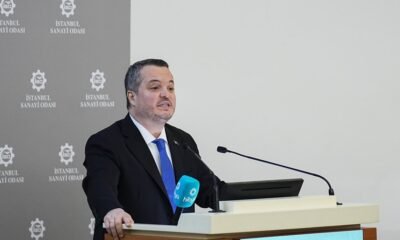
Türkiye’s sovereign wealth fund is in talks with international partners on a potential $10-billion petrochemical project in the country, according to its chief executive, Salim Arda Ermut, on Wednesday.
Ermut also said the Türkiye Wealth Fund (TWF) was ready to use its mandate to invest abroad, when conditions are favorable, citing recent cooperation agreements with the Abu Dhabi sovereign wealth fund, Hungary, Oman and most recently Bank of China.
It aims to establish joint vehicles with the partners to provide financing in those countries and in third markets, he told a meeting of the Istanbul Chamber of Industry (ISO).
At home, the fund has long been working on strategic sectors such as petrochemicals and conducted studies for a major project, he said.
“In petrochemicals, we are in contact with international companies. It is a project worth a total of $10 billion. This could move forward through a partnership structure or in the form of a cluster,” he added.
The TWF was established in 2016 to manage state-owned assets and make strategic investments to support economic development. It holds stakes across sectors, including finance, energy, transport, telecommunications, and now also owns the country’s largest gold producer, Turkish Gold Mining.
Ermut also said TWF was working on an agreement with an international fund to invest in local companies with export potential.
Türkiye is keen to deepen cooperation with South Korea in nuclear power, artificial intelligence, semiconductors, battery technologies and renewable energy, Energy and Natural Resources Minister Alparslan Bayraktar said on Wednesday.
Bayraktar was speaking in Seoul on the sidelines of the Türkiye-South Korea Joint Economic Commission meeting, which he co-chaired with South Korea’s Deputy Prime Minister and Finance Minister Koo Yun-cheol.
Opening the meeting, Bayraktar said the relationship between the two countries rests not only on trade and diplomacy but also on shared history and strong people-to-people ties.
He said bilateral trade reached $11 billion in 2025 and that South Korea’s investment stock in Türkiye stands at about $1.9 billion.
Bayraktar said South Korean President Lee Jae-myung’s recent visit to Türkiye and his talks with President Recep Tayyip Erdogan had given fresh momentum to relations.
“Supporting this political will with concrete projects in the economic field should be our common goal,” he said.
The minister described Türkiye as a competitive production and export hub for South Korean companies, pointing to its young and skilled workforce, large domestic market and access to the European Union through the customs union, as well as to the Middle East, North Africa and Central Asia.
He said Ankara wants to expand cooperation in energy, transportation, infrastructure, defense, science and technology.
“We prioritize the development of joint projects in strategic areas such as nuclear energy, artificial intelligence, semiconductors, battery technologies, critical minerals, innovation and renewable energy,” he said.
The two sides signed the protocol of the Joint Economic Commission meeting after the talks.
Talks on new reactors
During his visit, Bayraktar also met executives from major South Korean energy and mining companies and industrial groups at a roundtable where he outlined Türkiye’s long-term energy plans.
He reiterated Türkiye’s goal of reaching 20 gigawatts of nuclear power capacity by 2050 and noted that four reactors are currently under construction.
“We are a growing market and our demand is constantly increasing,” he said. “The current construction is being carried out by a Russian company, but within the scope of our nuclear vision, we are in very close and intensive talks with KEPCO for new reactors.”
During the visit, Bayraktar also met Kim Dong-cheol, chief executive of the Korea Electric Power Corporation.
He added that Türkiye is closely monitoring developments in small modular reactors, or SMRs, and signaled further discussions on their potential role in the country’s energy transition.
Bayraktar also encouraged cooperation beyond the two countries’ borders. “With Turkish companies, Türkiye and Korea can collaborate in the Middle East, Africa, and Central Asia,” he said. “This way, we can combine our strengths to act jointly in different countries and regions.”
On the sidelines of the meeting, Bayraktar held talks with South Korea’s Minister of Climate, Energy and Environment Kim Sung-hwan.
In a post on Turkish social media platform NSosyal, he said that they reviewed existing partnerships and explored new opportunities in renewable energy, nuclear power and electricity transmission infrastructure.
“We agreed on a working agenda that will reflect the experience of both countries, primarily focusing on supply diversity to strengthen energy supply security and potential collaborations in third countries,” he said.
Bayraktar also met South Korea’s Trade, Industry and Energy Minister Kim Jung-kwan to discuss cooperation in nuclear energy and critical minerals.
He said Türkiye sees nuclear power as a key pillar of its energy supply security in line with its 2053 net-zero emissions target.
“We evaluated areas of joint work that will strengthen technical cooperation in nuclear technologies, engineering capacity and local industry contributions,” he said.
“We also discussed concrete cooperation options that will enhance the complementary capacities of the two countries in the field of critical minerals,” he said.

Young people have always been with us – Last Minute News

‘Terror-free Türkiye’ message from Kurtulmuş: “We are about to cross a historical threshold”

Birthday gift from MHP leader Devlet Bahçeli to President Erdoğan for his 72nd birthday
Young people have always been with us – Last Minute News
‘Terror-free Türkiye’ message from Kurtulmuş: “We are about to cross a historical threshold”
Birthday gift from MHP leader Devlet Bahçeli to President Erdoğan for his 72nd birthday
-

 Daily Agenda2 days ago
BREAKING NEWS I Clear message from President Erdoğan: “We will build a Türkiye without terrorism”
-

 Politics3 days ago
Turkish deputy FM labels Gaza crisis ‘genocide’ urges global action
-
 Economy20 hours ago
Türkiye’s wealth fund in talks on $10B petrochemicals project
-
 Economy10 hours ago
Syria reportedly pressed by US to shift from Chinese telecom systems
-

 Daily Agenda1 day ago
Büyükgümüş had an iftar meal with citizens in the ‘GençNokta’ tent
-

 Daily Agenda3 days ago
The 17th hearing of the Aziz İhsan Aktaş criminal organization case has started
-
 Daily Agenda1 day ago
Minister Göktaş attended the “Brotherhood Table Iftar Program” in Batman
-
 Politics3 days ago
Terror-free Türkiye architect Bahçeli calls for clarification in plan