
Politics
Turkish authorities capture several suspects over alleged FETÖ-links

Turkish authorities have detained eight suspects as part of an investigation into what prosecutors described as the “current financial structure” of the Gülenist terror group (FETÖ), the Ankara Chief Public Prosecutor’s Office said Tuesday.
In a statement, the prosecutor’s office said the suspects were detained following a joint operation by the National Intelligence Organization (MIT) and the Ankara Police Department’s counterterrorism units. The investigation also covers FETO’s alleged clandestine network within the Turkish Armed Forces (TSK), known as the group’s secretive military (“mahrem”) structure.
Authorities said the suspects were identified through technical and physical surveillance and the examination of digital materials.
Two of the eight detainees had previously been dismissed from public service, while all were found to have continued alleged organizational activities despite earlier prosecutions for membership in the group, prosecutors said.
During searches of homes and locations allegedly used for organizational activities, security forces seized financial assets and digital equipment, including promissory notes valued at TL 2.5 million ($57,298.45), as well as cash in Turkish lira, U.S. dollars and euros, gold bars, and coins, authorities said.
Police also seized mobile phones, laptops, storage devices, SIM cards and other electronic materials.
One of the suspects has been formally arrested by a criminal court of peace, while judicial procedures for the remaining seven were continuing, the prosecutor’s office said.
Separately, Interior Minister Ali Yerlikaya said nationwide operations against FETÖ had intensified in recent weeks. In a post on the social media platform NSosyal, Yerlikaya said gendarmerie units conducted operations in 29 provinces over the past two weeks, detaining 63 suspects.
According to Yerlikaya, those detained were accused of maintaining contact with senior members of the terrorist group through pay phones, providing financial support to groups linked to FETÖ, spreading propaganda on social media and attempting to flee abroad.
Of the 63 suspects, 41 have been arrested and four placed under judicial supervision, while legal proceedings for the others are ongoing, he said.
“Traps set against the national will are being dismantled one by one,” Yerlikaya said, praising security personnel involved in the operations.
Meanwhile, police in the northwestern province of Çanakkale arrested a fugitive convicted in a FETÖ-related case. The suspect, who had been sentenced to 14 years and two months in prison, was taken into custody during routine security checks and transferred to a high-security prison, authorities said.
FETÖ has been facing increased scrutiny following the July 15, 2016 coup attempt that killed 251 people and injured nearly 2,200 others. Tens of thousands of people were detained, arrested or dismissed from public sector jobs following the attempt under a state of emergency.
Last year, more than 1,600 FETÖ suspects were arrested, while 1,524 other suspects were released under judicial control, according to figures from the Interior Ministry as of December 2025.

Türkiye on Thursday expressed concern over an attack on a Turkish-operated oil tanker in the Black Sea, warning the incident poses serious risks to maritime safety and could signal a dangerous expansion of regional conflict.
Foreign Ministry spokesman Öncü Keçeli said the vessel, identified as the Altura, a Sierra Leone-flagged tanker carrying crude oil and operated by a Turkish company, was targeted earlier in the day in the Black Sea.
He confirmed that all 27 Turkish crew members on board are safe, while technical inspections and response measures are ongoing following the incident.
Keçeli noted that the attack took place within Türkiye’s exclusive economic zone and constituted a violation of international law, as he raised concerns over the safety of navigation, environmental security and the protection of life and property in the region.
He warned that such incidents heighten the risk of the conflict spreading further into the Black Sea, stressing the need to prevent escalation.
The foreign ministry spokesman said Ankara is maintaining diplomatic contacts with relevant parties and emphasized that it reserves the right to take necessary measures under international law to safeguard its economic interests and activities in the region.
The Sierra Leone-flagged vessel had departed from Russia’s port of Novorossiysk carrying crude oil, according to ship-tracking data.
In December, Türkiye witnessed a series of security incidents linked to the Russia-Ukraine conflict, with President Recep Tayyip Erdoğan warning against the Black Sea becoming an “area of confrontation” between the warring parties.
Türkiye, whose northern shore faces Ukraine and annexed Crimea, has maintained close ties with both Kyiv and Moscow since Russia’s invasion of Ukraine in February 2022.
President Recep Tayyip Erdoğan warned that ongoing conflicts will impose growing costs on the entire world if they are not brought to an end, stressing that geography will offer no protection from the consequences of war.
Speaking at the World Economic Forum Türkiye Country Strategy Meeting held at the Dolmabahçe Presidential Office in Istanbul, Erdoğan said the burden of ongoing conflicts is being felt far beyond the immediate region.
“If conflicts do not end, the price to be paid will only grow. Geographical distance will have no meaning in this process,” Erdoğan said.
He emphasized that while opportunities exist to reach common ground through diplomacy and dialogue, sabotaging these efforts forces all of humanity to bear the consequences.
Erdoğan described the war that has shaken the region for the past month as “meaningless, unlawful and unnecessary,” adding that its cost is being borne not only by the parties involved but by the entire global community.
He noted that the negative effects of war are already being felt worldwide, from energy markets to production, information systems, transportation and trade networks.
The meeting brought together senior Turkish officials, including Vice President Cevdet Yılmaz, Foreign Minister Hakan Fidan and Treasury and Finance Minister Mehmet Şimşek, along with global CEOs, international financial representatives and major fund managers.
Later, Erdoğan held a closed-door meeting with Laurence Douglas Fink, head of World Economic Forum and BlackRock, at the Dolmabahçe office.
All necessary measures have been implemented along the Türkiye-Iran border amid the ongoing conflict involving Iran, the U.S. and Israel, Interior Minister Mustafa Çiftçi said Wednesday, stressing that authorities see no immediate security concerns.
Speaking to reporters at the Gürbulak border crossing in the eastern province of Ağrı, Çiftçi noted that Turkish officials had reviewed contingency plans in response to the war across the border, which has been ongoing since Feb. 28. “I can clearly state that all planning and precautions have been taken here. There is no problem at the moment,” he said.
Çiftçi visited the region as part of a series of inspections, including stops at a migrant repatriation center operated by the provincial migration authority and the Sarısu Border Trade Center near the frontier. He later traveled to the Doğubayazıt district, where he received briefings from local officials, including Governor Önder Bozkurt and District Governor Murat Ekinci.
The minister said authorities had assessed potential spillover effects of the conflict and were closely monitoring developments on the Iranian side of the border, noting that the duration and outcome of the war remain uncertain.
During his visit, Çiftçi also expressed condolences for two Turkish soldiers killed in a military vehicle accident in Doğubayazıt, identified as transportation specialist Sgt. Selman Akarsel and infantry specialist Sgt. Yusuf Açay.
He said Türkiye hopes the conflict will end soon, allowing for a return to stability in the region.
Sharing a border of 560 kilometers (348 miles) with Iran, Türkiye is naturally vigilant over the impact of the ongoing conflict between the U.S.-Iran alliance and Iran.
Çiftçi also chaired a border security meeting earlier this month on the issue, discussing top-level protection of the borders, additional measures against the possible influx of irregular migrants, crisis scenarios, emergency action plans and better coordination between different government agencies, as well as increasing the capacity of border forces with high-ranking officials.
At the meeting with representatives of the agencies, from police and gendarmerie to governors of border provinces, Çiftçi said Türkiye made no concessions in ensuring border security, public order and migration management, and was following the developments, noting that all units were on alert.
The views and opinions expressed in this article are solely those of the author. They do not necessarily reflect the editorial stance, values or position of Daily Sabah. The newspaper provides space for diverse perspectives as part of its commitment to open and informed public discussion.
Efkan Ala, deputy chair of the ruling Justice and Development Party (AK Party), said on Thursday that the terror-free Türkiye initiative for disarmament of the terrorist group PKK may be affected by the ongoing U.S.-Israel-Iran war. However, he reaffirmed that the process would be completed anyway.
Ala, a former interior minister who played an active role during the past “reconciliation process” to end the PKK threat, spoke to broadcaster NTV about the initiative launched by government ally Nationalist Movement Party (MHP) in 2024.
He pointed out that the region was embroiled in an unstable situation and that a terror-free Türkiye was important to maintain the country’s unity among such uncertainties. The government views the initiative as a step to strengthen Turkish-Kurdish unity. For decades, the PKK exploited the Kurdish community in the region, under the pretext of fighting for a so-called Kurdistan in the southeastern Türkiye. During the ongoing war, the U.S. floated the idea of recruiting Kurds in the region to battle the Iranian regime, before scrapping the idea.
Ala said the initiative would be completed within the framework they envisioned and urged the public to heed the official statements rather than rumors. He underlined that the initiative had political and social support. “The timeframe and other aspects require work, and any regulation on the matter will be carried out by jurists. Once the group completes disarmament, laws will be enacted,” he said.
The initiative, so far, proceeded with the PKK’s announcement that it started laying down arms, but the terrorist group anticipates the removal of counterterrorism laws in place in Türkiye for full dissolution, as statements of the group’s senior members indicate. A parliamentary committee exclusively set up for the initiative recently wrapped up a report including recommendations for Parliament. Parliament, in the coming days, will start working on drafting bills or amending existing ones for lenient sentences for surrendered PKK members and other steps.
In a related development, the pro-PKK Peoples’ Equality and Democracy Party (DEM Party) announced on Thursday that a delegation from the party would visit the PKK’s jailed ringleader, Abdullah Öcalan, on Friday. DEM Party spokesperson Ayşegül Doğan told a news conference that it was an important meeting as the delegation would consult with Öcalan on the legal aspects of the initiative.
Pakistan on Thursday confirmed its direct role in relaying messages between the U.S. and Iran toward ending the war in the Middle East.
“There has been unnecessary speculation in the media regarding peace talks to end the ongoing conflict in the Middle East,” Foreign Minister Ishaq Dar said on the U.S. social media company X.
“In reality, U.S.-Iran indirect talks are taking place through messages being relayed by Pakistan,” said Dar, confirming that the U.S. has shared 15 points that are “being deliberated upon by Iran.”
The statement came as sources in Islamabad told Anadolu Agency (AA) that this week was crucial in any possible breakthrough on talks between Washington and Tehran.
The sources also said Islamabad expects a U.S. delegation but said Tehran was still wary due to mistrust.
Dar also lauded the role of “Türkiye and Egypt, among others” which are “extending their support to this initiative.”
“Pakistan remains fully committed to promoting peace and continues to make every effort to ensure stability in the region and beyond,” said Dar, emphasizing: “Dialogue and Diplomacy is the only way forward!”
The entire region has been on alert since the U.S. and Israel launched a joint offensive on Iran on Feb. 28, so far killing over 1,340 people, including then-Supreme Leader Ali Khamenei.
Tehran has retaliated with drone and missile strikes targeting Israel, along with Jordan, Iraq and Gulf countries hosting U.S. military assets, causing casualties and damage to infrastructure while disrupting global markets and aviation.
The views and opinions expressed in this article are solely those of the author. They do not necessarily reflect the editorial stance, values or position of Daily Sabah. The newspaper provides space for diverse perspectives as part of its commitment to open and informed public discussion.
The main opposition Republican People’s Party (CHP) is facing internal strife. The strife may deal another blow to Türkiye’s oldest party, which is grappling with corruption trials against its municipalities and the risk of dissolution of the current administration amid vote-buying allegations at an intra-party election.
Dissidents of incumbent Chair Özgür Özel reportedly plot to draw more members to their ranks, a report by the Sabah newspaper says. For months, they have been urging the party to get rid of members involved in the corruption, while the Özel administration stood firmly with mayors tainted with the corruption allegations.
The Sabah report says dissidents are making intense efforts to recruit nearly 30 deputies who were close to Özel’s predecessor, Kemal Kılıçdaroğlu, but fell silent after Özel was elected chair.
The policies determined by Özel and his staff since his 2023 election, without consultation, have long divided the party on almost every topic. The intra-party opposition, which was also subjected to disciplinary action, had a six-hour meeting in Ankara last February, according to the report. The participation of 13 current and 13 former deputies in the meeting caused great discomfort at the party’s headquarters.
Party sources say the policies set by the headquarters are implicitly criticized by more than 40 deputies. It is claimed that many members prefer to remain silent on critical issues or take a stand alongside the headquarters because the party management constantly initiates disciplinary processes and starts online mobbing campaigns against dissenting voices.
According to another party member who attended the first meeting of the dissidents in Ankara, preparations for a second meeting continue. In this context, it is emphasized that intense negotiations are ongoing to increase the number of deputies attending the meeting. It was reported that details such as location and date for the second meeting have not yet been finalized. While more than 40 current deputies are expected to attend the next meeting, it is also claimed that a significant show of force is planned with this move. Some deputies who have sharp differences of opinion with the party management stand out, including Gamze Akkuş Ilgezdi, Mahir Polat, Orhan Sarıbal, Rıfat Nalbantoğlu, Sevda Erdan Kılıç, Hüseyin Yıldız, Hasan Öztürkmen and Deniz Demir.


-

 Sports2 days ago
Shaq-Erdoğan 2.0 loading as Türkiye prepares for 5G leap
-
 Daily Agenda3 days ago
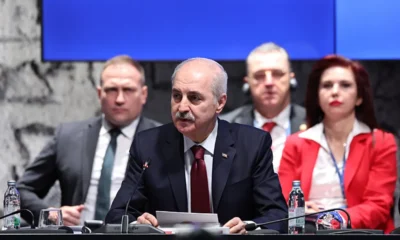
Speaker of the Grand National Assembly of Turkey, Numan Kurtulmuş: It is not possible for us to remain indifferent to the humanitarian tragedy taking place in the Middle East.
-
 Politics3 days ago
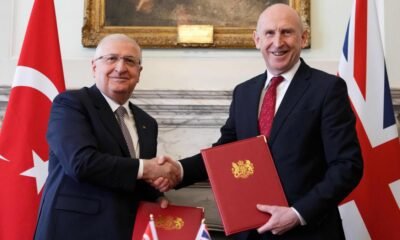
Türkiye signs key deal for acquiring Eurofighter jets
-
 Politics1 day ago
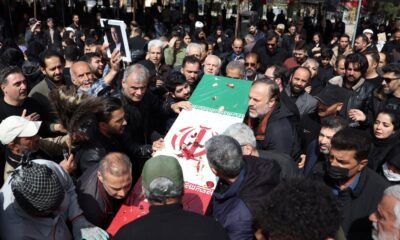
Erdoğan opposes bloodshed in Iran, Gulf, calls for unity against Zionists
-
 Sports3 days ago
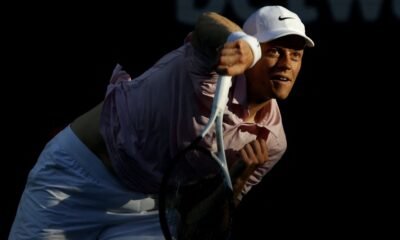
Sinner survives Michelsen scare to secure Miami quarterfinals spot
-
 Politics3 days ago
Iranian leader thanks Erdoğan, Türkiye for solidarity, condemning Israel
-
 Daily Agenda23 hours ago
Zero Waste and COP31 diplomacy in the USA from Minister Kurum
-

 Sports23 hours ago
Ancelotti backs Brazil squad, spurns Neymar calls after France loss