
Sports
Turkish center Alperen Şengün named in 2026 NBA All-Star

Turkish center Alperen Şengün of the Houston Rockets on Sunday was named an NBA All-Star for the second time in his career.
“Houston Rockets center Alperen Şengün has been named by NBA Commissioner Adam Silver to replace injured Oklahoma City Thunder guard Shai Gilgeous-Alexander on Team World for the 2026 NBA All-Star Game (Sunday, 2/15 on NBC & Peacock),” the NBA said in a statement on Sunday.
Canadian star Gilgeous-Alexander has been sidelined by an abdominal strain but was voted a starter in taking his fourth All-Star selection in a row.
The 75th NBA All-Star Game will be played next Sunday at Intuit Dome, home of the Los Angeles Clippers.
Şengün was named an All-Star for the first time last year. In his fifth NBA campaign, Şengün is averaging 20.8 points, 9.4 rebounds, and 6.3 assists over 44 games.
Şengün has helped the Rockets to a 32-19 record, sharing fourth place in the Western Conference.
In a revamped All-Star format, the World squad will face two teams of American players, USA Stars and USA Stripes, in a round-robin mini-tournament with three 12-minute games deciding which two sides advance to the 12-minute final.

The Justice Department is investigating the NFL for potential anticompetitive practices, according to a government official.
The official, who was not authorized to discuss an ongoing investigation by name and spoke on condition of anonymity Thursday, said the investigation is “about affordability for consumers and creating an even playing field for providers.”
The investigation was first reported by The Wall Street Journal.
The NFL has not received a notification that the league is being investigated, according to two other people with knowledge of the situation. Those people spoke on condition of anonymity because they are not authorized to speak on possible legal matters.
The investigation comes amid increasing federal scrutiny of the amount of money fans are paying to watch sports on television. The Federal Communications Commission, for example, is seeking public comments on the ongoing shift of live sports from broadcast channels to streaming services.
The NFL said in a statement Thursday that over 87% of its games are available on broadcast television, including all that are played in a team’s local market.
“The NFL’s media distribution model is the most fan and broadcaster-friendly in the entire sports and entertainment industry. The 2025 season was our most viewed since 1989 and reflects the strength of the NFL distribution model and its wide availability to all fans,” the league said in its statement.
Utah Sen. Mike Lee, chair of the Senate judiciary subcommittee on antitrust, competition policy, and consumer rights, wrote a letter to the Justice Department and the Federal Trade Commission on March 3 urging them to review whether the NFL’s distribution methods are in line with the Sports Broadcasting Act, which grants limited antitrust immunity to allow teams to collectively license game broadcasts to national networks.
“The modern distribution environment differs substantially from the conditions that precipitated this exemption. Instead of a small number of free broadcast networks, the NFL now licenses games simultaneously to subscription streaming platforms, premium cable networks, and technology companies operating under different business models,” the Republican senator wrote. “To the extent collectively licensed game packages are placed behind subscription paywalls, these arrangements may no longer align with the statutory concept of sponsored telecasting or the consumer-access rationale underlying the antitrust exemption.”
Lee said in his letter that football fans spent almost $1,000 on cable and streaming subscriptions. Forbes estimated the cost of watching every NFL game via streaming last season at $765.
The NFL aired games last season on CBS, NBC, ABC/ESPN/ESPN+, Fox, NFL Network, Amazon Prime Video, Netflix and YouTube TV.
The league averages nearly $11 billion per season in revenue from its media deals. That could increase since the sale of Paramount to Skydance Media allows the league to renegotiate its deal with CBS.
The rights deals go through 2033 with most outlets and 2034 with ESPN. The league has an opt-out clause after the 2029 season, which it is likely to exercise since 83 of the top 100 broadcasts last year were NFL games, according to Nielsen.
The Sports Broadcasting Act exemption passed in 1961 applies only to broadcast television. Courts have ruled in the past that it does not apply to other media, including cable, satellite and streaming.
The law includes a rule allowing blackouts of local games, which still applies to out-of-market packages sold by the league. The NFL ended local TV blackouts, which applied to games within 75 miles of a team’s market if they did not sell out 72 hours before kickoff, after the 2014 season.
Last year, the House Judiciary Committee requested briefings from the NFL, NBA, NHL and MLB on whether antitrust exemptions should still be granted for coordinating their broadcast television rights.
All four of the major North American professional sports leagues have deals with streaming platforms.
In 2024, a jury in U.S. District Court in Los Angeles ruled the NFL violated antitrust laws in distributing out-of-market Sunday afternoon games on a premium subscription service and awarded $4.7 billion in damages.
A federal judge overturned the verdict in the class-action lawsuit because the testimony of two witnesses for the subscribers had flawed methodologies and should have been excluded.
The lawsuit covered 2.4 million residential subscribers and 48,000 businesses in the United States who paid for the “Sunday Ticket” package on DirecTV of out-of-market games from the 2011 through 2022 seasons.
Because damages can be tripled under federal antitrust laws, the NFL could have been liable for $14,121,779,833.92.
The World Cup has always been more than the matches on the pitch. For a brief, electrifying moment every four years, it extends into the streets, bars, and living rooms of millions of fans worldwide. And for a long stretch, from 1998 through 2010, that heartbeat came in the form of music.
The songs weren’t just background noise as they carried motivational fire, capable of uniting entire nations and turning casual spectators into believers.
Ricky Martin’s “The Cup of Life” in 1998 was the spark that changed everything.
The horn-driven salsa, the chantable “¡Ale, ale, ale!”, the relentless energy, it bypassed language barriers and demanded participation.
My friend, who watched his first World Cup in 1998, always says it felt like every stadium and every living room with a TV was beating to the same unstoppable rhythm.
It wasn’t merely a hit song; it was the tournament itself distilled into four minutes of explosive Latin fire.
Suddenly, the World Cup had a voice, a pulse, and a personality that echoed far beyond the Stade de France.
The golden era of World Cup music continued into the early 2000s, each official track carrying its own energy and flair. Anastacia’s “Boom” in 2002 delivered dance-pop adrenaline, while Il Divo and Toni Braxton’s 2006 ballad “The Time of Our Lives” added cinematic drama without losing its motivational core.
These songs shared a crucial DNA: they were alive. They were tied to place, time, and the communal joy of sport.
Then came 2010 in South Africa.
This one hits especially close to home, as Africans, it felt like the world was in our hands, with every street from Cape Town to Cairo alive with the roar of vuvuzelas.
The undeniable peak of World Cup anthems accompanied the traditional instrument.
Shakira’s “Waka Waka (This Time for Africa)” fused Afro-pop rhythms, South African instrumentation, and a chorus designed for stadium-wide sing-alongs.
K’naan’s “Wavin’ Flag” became a companion piece, a deeply personal anthem transformed into a celebration of resilience and triumph.
For the first time, the tournament felt truly global, yet rooted in the spirit of its host continent.
Fans across Africa and the world debated which track carried more weight: Waka Waka’s infectious party energy or Wavin’ Flag’s emotional depth.
Together, they created a sonic moment that remains unmatched, a reminder of what happens when music and sport converge perfectly.
Even controversies, like the plagiarism of Cameroon’s “Zangalewa” by Shakira, couldn’t diminish the impact.
These songs didn’t just play during matches; they defined them. They moved crowds, motivated players, and turned the World Cup into a festival that transcended sport.
After 2010, the magic began to fade. By the 2014 Brazil World Cup, the anthem formula had shifted.
Pitbull, Jennifer Lopez, and Claudia Leitte’s “We Are One (Ole Ola)” carried star power and carnival energy, but it felt manufactured.
It was polished, professional, and commercially successful, but it lacked the heartbeat of previous anthems.
Four years later, “Live It Up” in Russia, with Nicky Jam, Will Smith, and Era Istrefi, felt even more engineered for mass appeal, a boring song built to hit streaming charts rather than to unite fans in stadiums.
By Qatar 2022, FIFA abandoned the single-track model entirely, splintering its soundtrack across multiple artists and genres.
The result was the safe Dreamers by BTS’ Jung Kook, forgettable music that rarely inspired a crowd to sing in unison or move with genuine energy.
The first preview for 2026, “Lighter” by Jelly Roll and Carin Leon, has already sparked criticism online.
Too country, too slow, too disconnected from the global pulse of football, it signals a continued departure from the era when World Cup songs felt like an event in themselves.
The stadium-shoutable chorus, the infectious beat, the cultural authenticity all seem absent.
In their place are tracks designed for streaming algorithms and cross-market appeal, losing the grit, the soul, and the communal energy that once made the World Cup soundtrack a global event in its own right.
The decline is not accidental. It is a product of three converging forces.
First, commercial pressures turned the anthem into a multi-track, multi-market production, diluting focus and emotional impact.
Second, safety and formula replaced risk and cultural authenticity. Producers optimized for global streaming trends rather than creating music grounded in the host nation’s rhythms and identity.
And third, the modern digital era, dominated by TikTok snippets and short-form virality, undermines the long-form build-up that makes a song a communal, stadium-filling experience.
A track can be a social media hit, but it cannot be chanted by 80,000 fans in unison if it was designed for a 15-second clip.
And so, the motivational fire of World Cup songs, once capable of turning ordinary fans into believers, has dwindled.
Today’s tracks play and fade, rarely leaving a lasting imprint. The memories of Ricky Martin’s La Copa de la Vida, Shakira’s Waka Waka, and K’naan’s Wavin’ Flag endure precisely because they carried emotional weight, cultural grounding, and raw energy.
They remind us that the right song can transform a tournament into an unforgettable moment in history.
Tyson Fury is back in the ring and already looking ahead, with the long-delayed all-British showdown against Anthony Joshua once again taking center stage.
Fury returns from yet another retirement on Saturday at Tottenham Hotspur Stadium, where he faces dangerous puncher Arslanbek Makhmudov in his first fight since a December 2024 defeat to Oleksandr Usyk. But even before the opening bell, the 37-year-old is plotting his next move.
If he gets through the weekend, Fury wants Anthony Joshua next, no more delays, no more detours.
“I’ve got Makhmudov to think about, but all going well, Joshua is the fight I want next,” Fury said. “Let’s do it straight away.”
The fight has hovered over British boxing for more than a decade, repeatedly collapsing at the final hurdle. Now, with both men in the twilight of their careers, Fury is urging urgency, wary of how quickly fortunes can shift in the heavyweight division.
“This fight was supposed to happen so many times,” he said. “One more fight in between, someone gets knocked out or injured, and it’s gone again. In this division, nothing is guaranteed.”
Joshua, 36, has rebuilt momentum after stopping Jake Paul with a brutal sixth-round knockout in December. Days later, however, his career was overshadowed by tragedy, surviving a car accident in Nigeria that killed two close friends. He has since returned to training, signaling a renewed push toward the sport’s biggest fights.
Fury is not interested in alternatives. Not even a resurgent Deontay Wilder, who edged Derek Chisora in a split decision last weekend, has caught his attention.
“I’ve never seen two men slide as much,” Fury said of that bout. “Forget Wilder. I want Joshua.”
It is a rivalry that has simmered for years, fueled by near-misses and shifting circumstances. Fury insists the timing must finally align.
“I’ve been out of the ring 16 months,” he said. “Let’s do it. Let’s dance.”
Even the noise outside the ropes has done little to distract him. Whether Joshua attends Saturday’s fight remains uncertain. Fury’s father, John Fury, may also be absent after publicly urging his son to retire, claiming the former champion is past his peak.
Fury shrugs it off.
“I’ve got business to take care of,” he said. “Who’s in the crowd doesn’t matter.”
Oscar Piastri, aware of how quickly dominance can vanish in Formula One, is approaching his unexpected early-season break with cautious optimism that McLaren can challenge Mercedes once racing resumes.
The Australian endured a disastrous start, crashing en route to the grid at his home Grand Prix in Melbourne and then failing to start in China because of an electrical fault in his car.
Round three in Japan, however, offered a reminder of his talent, as Piastri finished second behind Mercedes’ Kimi Antonelli, echoing the form that left him 34 points clear in last season’s title race after 15 rounds.
With the Bahrain and Saudi Arabian Grands Prix postponed amid the Middle East crisis, Formula One now faces nearly a month off before action returns in Miami in early May.
Piastri, who turned 25 on Monday, views the pause in the season as an opportunity for McLaren to work on closing the gap with Mercedes, which has won all three grands prix and the China sprint so far this year.
“Obviously the off-season this year was very short, so it’s a nice little window for everyone to get some good training in,” he said in a video posted on social media this week.
“Just some more time to prepare, basically. I think we’ve learned a lot in the first few races and still have plenty more to learn. It just gives us more time to analyze stuff, sit down, digest it and try to come back stronger for Miami.”
Humbling Experience
Piastri, in his third season in Formula One, was named Wednesday as Australia’s top-earning sportsperson by the Sydney Morning Herald, with an estimated income of A$57 million to A$59 million ($40.31 million to $41.72 million).
His marketability soared last year when he won seven of the first 15 races in the then-dominant McLaren, threatening to end Australia’s 46-year wait for a world champion.
In the end, the wins stopped, and his teammate Lando Norris took the crown, with Max Verstappen’s late-season surge for Red Bull relegating Piastri to third in the final standings.
It was a humbling experience for Piastri but one he has clearly learned from as McLaren aims to close the performance gap Mercedes has opened under the new regulations this season.
“We know from last year that even when you have the best car, you still need to operate it at an incredibly high level,” he said after holding off Mercedes’ George Russell at times during his run to the Suzuka podium.
“I think it’s interesting to see that when someone else has the fastest car, it’s not that straightforward. The fact that I could keep George behind for so long was really encouraging, but we’re under no illusion.
“We did everything right this weekend and still got beaten by 15 seconds, so we have a pretty big gap to fill. I’m confident we can get there, but yes, we still have some work to do.”
Confederation of African Football (CAF) President Patrice Motsepe said he would welcome any investigation into alleged corruption within the organization, insisting there is nothing to hide after meeting Senegalese officials in Dakar on Wednesday.
The push for scrutiny comes after Senegal’s government last month called for a formal probe following the decision by the CAF Appeal Board to strip the country of its 2025 Africa Cup of Nations title and award it to Morocco.
The ruling stemmed from chaotic scenes during the Jan. 18 final in Rabat, which Senegal initially won 1-0 before leaving the pitch for several minutes in protest of a late refereeing call.
Motsepe met representatives of the Senegalese Football Federation and President Bassirou Diomaye Faye, urging unity in the aftermath of the controversy. He is scheduled to travel to Morocco on Thursday for similar talks aimed at easing tensions.
“I would welcome any investigation into corruption at CAF, be it by a government or any institution,” Motsepe told reporters. “In fact, I would encourage it. We will give them our full cooperation.
“I have been told there were problems in the past, and we intervened. It is not just in football, but in business and politics too. We cannot give our children the perception that if you want to succeed in life, be corrupt. There has to be zero tolerance for corruption.
“That’s the best gift we can give football in Africa. Not just talking about corruption, but intervening, putting the necessary laws in place and implementing them.”
Motsepe would not be drawn on the matter between Senegal and Morocco, which is now before the Court of Arbitration for Sport.
“There is nothing I can tell you that I haven’t said already 10, 15, 20 times. You can ask me the same question 100 times, I’ll give you the same answer 100 times. I have an obligation to respect that the matter is now before the highest court in world sport.”
Motsepe quashed any suggestion that Morocco had been treated favorably in the appeal process.
“Under no circumstances will any single country in Africa be treated more preferentially or more favorably than any other. That will never happen,” he said.
“We are confident we will come out of these challenges more united among the 54 nations in Africa.”
The Europa League quarterfinals begin Thursday with four finely poised first-leg ties, each shaped by contrasting domestic fortunes, tactical identities and mounting pressure as the road to Istanbul narrows.
At Estadio do Dragao, Porto return to a familiar position of strength, blending domestic control with European consistency.
Francesco Farioli’s side have built their season on structure and balance, opening a five-point lead atop Liga Portugal while advancing deep in both cup and continental competitions.
Their response to adversity has been particularly telling. Since a narrow cup defeat to Sporting, Porto have tightened defensively and rediscovered rhythm, going six matches unbeaten with a blend of control and efficiency.
Their home form remains a cornerstone. The Dragons have turned the Dragao into a stronghold, dropping points there only once all season and winning every Europa League game on home soil. That authority, however, is not without cracks.
Nottingham Forest already exposed them earlier in the campaign, delivering a clinical 2-0 win that still stands as one of Porto’s rare European setbacks.
Forest arrive as one of the competition’s great contradictions. Domestically unstable, they sit just above the Premier League drop zone after cycling through four managers in a chaotic season.
Yet in Europe, they have shown composure and resilience. Narrow knockout wins over Fenerbahçe and Midtjylland underlined a team capable of managing moments, even when overall form dips. Their recent 3-0 win over Tottenham before the break offered a glimpse of their ceiling, while improved away performances suggest they are no longer easy prey on the road.
The tactical battle may hinge on availability. Porto are without strikers Samu Aghehowa and Luuk de Jong, forcing Terem Moffi into a central role supported by wide threats William Gomes and Borja Sainz. Forest are equally stretched, missing key names including Chris Wood and Ola Aina, while Elliot Anderson’s suspension disrupts midfield balance. In tight ties, such absences often tilt margins.
In Germany, Freiburg stand on the brink of history. Hosting Celta Vigo at Europa-Park Stadion, they are chasing a first major European breakthrough. Julian Schuster’s team have built their run on discipline and a formidable home edge, winning nine consecutive European matches at their stadium. Their comeback demolition of Genk in the previous round signaled both belief and attacking fluency.
Yet vulnerabilities remain. Back-to-back home defeats in the Bundesliga, including a dramatic late collapse against Bayern Munich, exposed lapses in concentration that elite opponents punish. Freiburg must now reconcile those domestic setbacks with the confidence drawn from their European form.
Celta Vigo arrive as a side growing in stature at the right time. Their route has been tougher, navigating the playoffs before eliminating Lyon with a composed away performance. In La Liga, they continue to climb, sitting sixth and pushing for Champions League qualification. Claudio Giraldez’s side carry attacking variety and momentum, though their record in Germany raises questions about consistency in hostile environments. Injury concerns, particularly surrounding Iago Aspas and several defensive options, could test their depth across both legs.
In Bologna, Aston Villa resume their campaign after an unusual pause that may prove either a reset or a disruption. Unai Emery’s influence is unmistakable. His team have won nine of 10 Europa League matches this season, combining tactical flexibility with knockout experience. Villa remain locked in a tight Premier League race for a top-five finish, making Europe both an opportunity and a safety net.
Emery’s track record in this competition looms large. Four titles reflect not only pedigree but an ability to manage two-legged ties with precision. His familiarity with Bologna coach Vincenzo Italiano adds another layer to a contest already shaped by recent meetings between the clubs.
Bologna, however, have quietly built one of the tournament’s most resilient profiles. Unbeaten in 11 European matches, they edged Roma in a high-scoring, emotionally charged last-16 tie that showcased both endurance and attacking threat. Domestic inconsistency has left them trailing in Serie A, effectively placing their European hopes in this competition alone.
Their strength lies in structure and belief. Federico Bernardeschi’s goals, Lewis Ferguson’s midfield presence and a collective defensive discipline have made them difficult to break. Even with injuries and suspensions affecting squad depth, Bologna have repeatedly found ways to stay competitive.


-
 Daily Agenda14 hours ago
By-election message from Deputy Speaker of the Grand National Assembly of Turkey Bekir Bozdağ: Turkish people do not have such an agenda
-

 Daily Agenda2 days ago
Minister Göktaş: “We do not have an agenda to close or ban the games”
-
 Politics2 days ago
Russian FM confirms attendance to Antalya Diplomacy Forum in Türkiye
-

 Sports2 days ago
Spain’s RFEF under FIFA fire as Islamophobic chants spark backlash
-

 Daily Agenda11 hours ago
Scientific touch to historical artifacts in museums
-
 Politics2 days ago
Türkiye joins global push to limit social media for under 15s
-
 Politics2 days ago
Turkish police, gendarmerie capture 29 in coordinated FETÖ raids
-
 Politics3 days ago
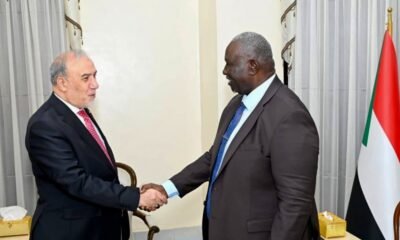
Türkiye, Sudan reaffirm ties during political consultation talks