
Politics
Turkish intel captures defector who helped Assad regime

Önder Sığırcıkoğlu, a Turkish national on the run for 12 years after smuggling anti-Assad officers back to Syria, was captured on the Syrian-Lebanese border, National Intelligence Organization (MIT) announced on Monday.
Security sources said the suspect was captured thanks to a joint operation with the Syrian intelligence, two years after the Assad regime was overthrown. Sığırcıkoğlu was brought to Ankara for questioning by police and prosecutors.
Sığırcıkoğlu was accused of kidnapping Hussein Harmoush and Mustafa Kassum, two commanders of the opposition Free Syrian Army, at the height of Syrian civil war and handing them over to the oppressive Assad regime. Harmoush later died of torture by the Baathist regime.
Sığırcıkoğlu was sentenced in 2013 to 20 years in prison for “deprivation of liberty through force, threat, or deceit,” but he escaped from Osmaniye prison in southern Türkiye, where he was held in 2014. Subsequent investigation discovered that suspects linked to the Gülenist Terror Group (FETÖ) helped him escape.
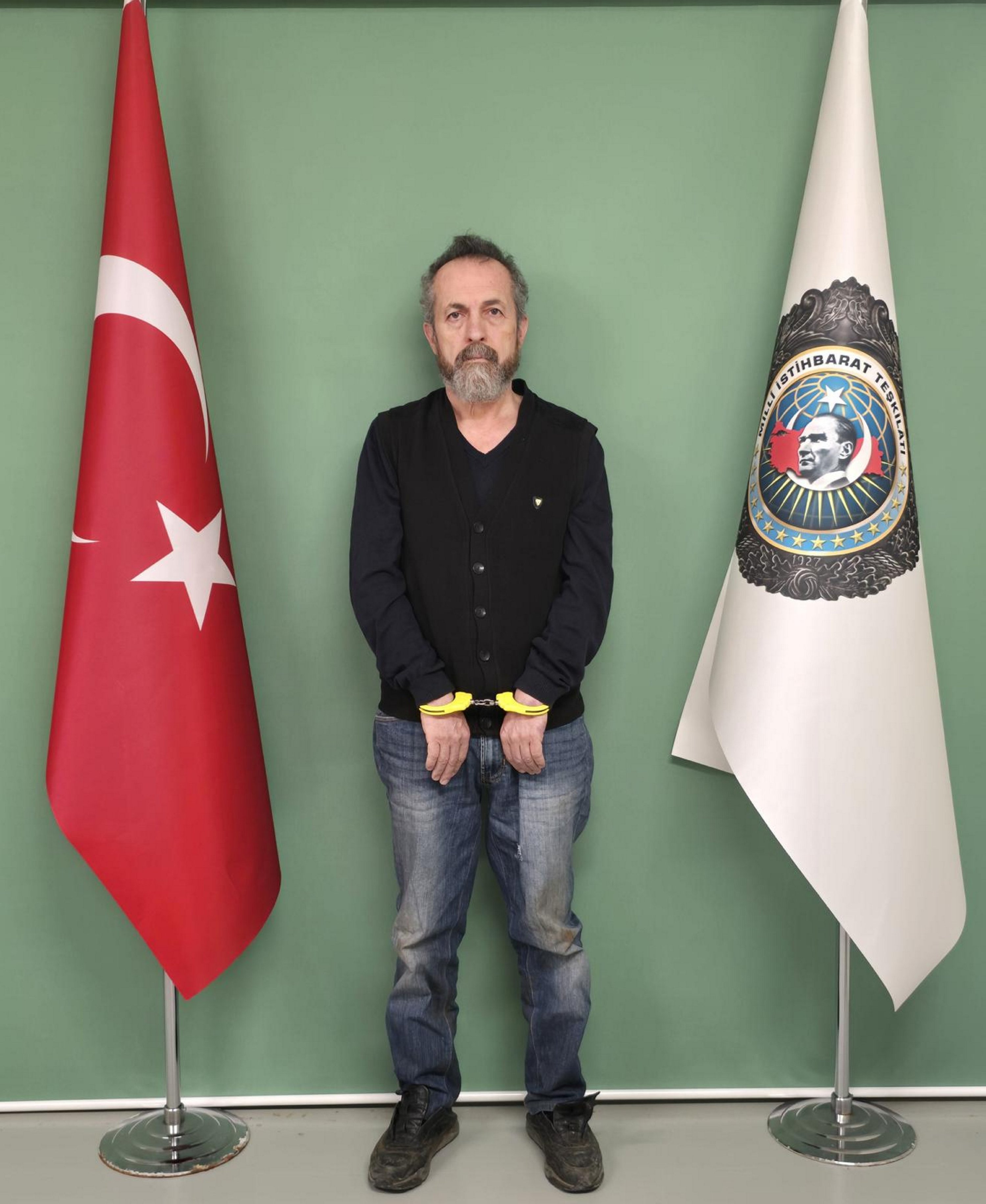
After his escape, Sığırcıkoğlu hid in Syria, Russia, and Lebanon while MIT doggedly pursued him.
While in Syria, Sığırcıkoğlu was protected by the Assad regime and in exchange, he conducted espionage against Türkiye, providing the identities and movements of individuals working for Türkiye’s interests to Syrian officials, security sources said.
The investigation also highlighted Sığırcıkoğlu’s close relationship with Mihraç Ural, leader of the terrorist group THKP/C-Acilciler and Yusuf Nazik, the perpetrator of the 2013 Reyhanlı bombings in southern Türkiye linked to the Baathist Syria’s intelligence service. Under Ural’s direction, Sığırcıkoğlu engaged in anti-Türkiye propaganda and psychological operations using manipulated media and doctored imagery, sources aid.
In a past interview, Sığırcıkoğlu admitted to planning and executing the kidnapping of Harmoush, stating he felt no remorse and acted because he disagreed with Türkiye’s Syria policy. Reports indicate he and Nazik shared a residence in Syria for a period, maintaining a close operational bond.
Önder Sığırcıkoğlu also established contact and held meetings with Russian intelligence, sharing strategic and sensitive information regarding Türkiye.
Through intelligence analysis, it was determined that Sığırcıkoğlu first hid in Syria, then in a house in the Jabal Mohsen region of Lebanon, subsequently moved to the Krasnodar region of Russia, and later returned to Lebanon via Egypt.
Upon receiving information that Sığırcıkoğlu would attempt to cross back into Syria, a joint operation was planned between MIT and Syrian Intelligence. Intelligence agencies from both countries acted in coordination along the border line, waiting for the individual’s crossing. After 12 years on the run, Önder Sığırcıkoğlu was captured in a joint operation conducted on the Syria-Lebanon border.
Following the capture, MIT and Syrian Intelligence established a joint working group regarding the process leading up to the execution of Hussein Harmoush.
Sığırcıkoğlu has been handed over to judicial authorities. In addition to his existing 20-year prison sentence, he is expected to face trial for political and military espionage, aiding and abetting a terrorist organization, abuse of office, and aiding in a homicide.
The capture of Önder Sığırcıkoğlu also signals a new era in regional balances through intelligence-level cooperation between Türkiye and Syria, security sources said.
The views and opinions expressed in this article are solely those of the author. They do not necessarily reflect the editorial stance, values or position of Daily Sabah. The newspaper provides space for diverse perspectives as part of its commitment to open and informed public discussion.

A key partner of NATO, Türkiye will host the leaders’ summit of the alliance for the second time in more than two decades. Heads of state and top figures from member countries will be in the capital Ankara for the summit scheduled to be held on July 7-8. Some 6,000 participants are expected to attend the event.
Preparations are underway in the Turkish capital for the event, where alliance leaders will likely discuss its future as conflicts proliferate across the world, forcing them to bolster defense expenditures.
A series of panels are being held in NATO member countries as preparation for the summit, with the first one held in Spain. In Ankara, authorities renovate Etimesgut military airport, which will be the main transport hub for guests. Airport’s runways are being expanded, the Sabah newspaper reported on Sunday, while a guest house will be constructed to accommodate delegations.
The presidential complex and a congress hall in the capital will be the main venues of the summit. A press center is being set up at the complex where heads of state will hold news conferences. The Presidency of Defense Industries will also host a defense forum on the margins of the summit, at the ATO Congressium hall.
Türkiye this year marks the 74th anniversary of its admission to NATO and boasts the second biggest army of the alliance. It is the only country in NATO’s “southern flank” with a sizeable military power and a gateway to the Middle East and wider Asia. Security of the Black Sea also largely depends on Türkiye, especially amid the Russia-Ukraine conflict which threatens maritime security.
In the last summit in The Hague last year, NATO members agreed to spend
Some 5% of their GDP in defense expenditures by 2035. Ankara will be the stage where the first progress reports on this massive investment drive are measured. A NATO report last week showed military spending rose by a fifth year-on-year in 2025 to $574 billion.
US President Donald Trump has repeatedly sought higher defense spending by the alliance’s 32 member states, pushing Europe to take primary responsibility for its own security. With the increase by NATO’s European members and Canada, all allies are now devoting more than 2% of gross domestic product to military spending, a goal set in 2014 for 2024, a NATO report said.
In presenting the report, NATO Secretary General Mark Rutte said he expected “Allies to show they are on a clear and credible path towards the five percent” when they hold their next summit in Ankara.
The headline target breaks down as 3.5% on core defense spending and 1.5% on a looser range of areas such as infrastructure and cybersecurity. Only three countries met the 3.5% goal last year, Poland, Latvia, and Lithuania.
All NATO countries increased their military spending last year, but three saw a slight drop in the share of spending relative to their GDP. The United States went from 3.30% in 2024 to 3.19%, the Czech Republic from 2.07% to 2.01%, and Hungary from 2.21% to 2.07%.
July’s summit will also be the venue for support to Ukraine where member countries will likely review and update their commitments to help the country.
For Türkiye, the summit will additionally serve as a platform to promote its flourishing defense industry. In the past two decades, the country evolved from a mere buyer of defense technologies to an exporter of everything defense related, from unmanned aerial vehicles to naval platforms, air defense technologies etc.
Türkiye seeks to expand its role in NATO as a power broker and the summit will cement it. It emerged as a key mediator in Russia-Ukraine conflict and nowadays work for a peaceful resolution to US-Israel-Iran war. Moreover, the country aims to integrate itself more to security architecture of Europe which makes the bulk of NATO member states. Recently, Ministry of National Defense has announced that Ankara applied for establishment of a multinational corps. Türkiye showcased this ambition when it joined alliance’s biggest exercise Steadfast Dart in February, dispatching 2,000 military personnel to the exercise in Germany, along with locally-made weapons systems.
Although it has started courting NATO’s traditional rivals more in recent years, Türkiye is firmly aligned with the alliance, as its leaders repeatedly confirmed. Türkiye’s membership is viewed as winning a reliable ally in NATO’s southern wing in terms of air, land and maritime defense.
Türkiye’s strategic location makes it the first defense against threats and risks in the region for NATO. In the Balkans, Türkiye is the top contributor to the alliance’s Kosovo Force (KFOR), which maintained command of the forces between 2023 and 2024. It currently holds deputy command of the force, while it was the top contributor to the reserve battalion in Kosovo to ensure the security of the Balkan country and the region.
It is also a top contributor in terms of personnel to NATO’s Iraq mission, which was founded in 2018 to provide consultancy and training to Iraqi security forces.
In NATO’s military exercises, Türkiye is a prominent actor. It also commands NATO’s permanent maritime task group and a task group against naval mines.
Türkiye also hosts critical NATO facilities, including Allied Land Command, which is located in the western city of Izmir, and Rapid Deployable Corps, which is based in Istanbul. In the capital, Ankara, it hosts the Centre of Excellence for Defence Against Terrorism (COE-DAT) and the Partnership for Peace Training Center. Istanbul hosts the NATO Maritime Security Centre of Excellence (MARSEC COE).
Yılmaz Ateş, who served as deputy chair of main opposition Republican People’s Party (CHP) said the party which expelled him in 2019, was occupied by Gülenist Terror Group (FETÖ). Ateş was one of the figures close to late Chair Deniz Baykal, who stepped down in 2010 after a sex tape of an extramarital affair surfaced. The scandal was the work of police officers linked to FETÖ, as subsequent investigation revealed years later.
Ateş told Tuba Kalçık of the Sabah newspaper in remarks published on Monday that FETÖ’s conspiracy was a turning point for CHP, which took a turn for the worse. “After Baykal left, the patriotic cadres of the party were expelled and those who remained were neutralized. Those who took over the party in 2010 trampled upon the values of CHP,” he said.
Baykal was succeeded by Kemal Kılıçdaroğlu, who served 13 years as the party’s chair, before a disastrous election defeat in 2023 prompted an intraparty election. Kılıçdaroğlu was succeeded by incumbent Özgür Özel, who now faces a trial over allegations of vote-buying during the intraparty election to defeat Kılıçdaroğlu.
Ateş said he was aware of mounting threats against Baykal, noting that FETÖ was very influential back then. FETÖ, which posed as a charity movement with religious undertones, managed to infiltrate into state institutions over decades. In 2013, it openly declared war on the government by plotting two attempts to topple it under the guise of a graft probe launched by its infiltrators in the law enforcement and judiciary. In 2016, FETÖ used its infiltrators in the army and attempted to overthrow the government once again, only to fail due to a strong public resistance under the leadership of President Recep Tayyip Erdoğan.
Ateş told Sabah that at one point, he was worried that Baykal could share the fate of Muhsin Yazıcıoğlu, the late leader of the Greater Unity Party (BBP), who died in a helicopter crash in 2009, an accident largely viewed as a conspiracy by FETÖ to kill the nationalist politician. A trial is still underway over the alleged role of military officers and others in thwarting the rescue of Yazıcıoğlu after his helicopter crashed in a mountainous area in southern Türkiye. “I was worried that CHP’s plane would also be sabotaged,” he said.
He stated that CHP had a history of over a century and led the establishment of modern Türkiye. “It defended the democratic republic and this is why it faced harsh attacks,” he said. He portrayed the post-Baykal era in the party as a time of “return of those expelled from the party earlier for corruption.” “Some assigned to the party’s assembly, some people recruited as advisers turned out to have ties with FETÖ. This is unacceptable,” he said.
Israel’s support for terrorist groups claiming to represent Kurdish interests in the Middle East is no secret but recent media reports have pointed out that Tel Aviv wanted to take it a step further. Reports say Israel, with its ally the United States, sought to employ those groups as a proxy force in a ground offensive in Iran where the duo launched strikes in February. Türkiye, however, intervened and prevented the plan.
Amid reports that the U.S. is planning to deploy thousands of soldiers in an impending land operation against Iran, another plan by Israel seeking to recruit Kurds in Iraq and within Iran was exposed. Israel went as far as bombing Iran’s military outposts on the Iranian-Iraqi border to clear the way for the said groups. Eventually, a group of about 500 people left Iraq for Iran, supposedly to join a fight against Iran. Yet, Türkiye, monitoring the situation, stepped in and eventually forced Israel to scrap its plans to employ about 10,000 as a proxy force.
Türkiye held senior-level talks with top officials in Iraq’s Kurdistan Regional Government (KRG) to prevent arming Kurds for a war against Iran and urged the representatives of the region’s political dynasties, the Barzanis and Talabanis, not “to fall for the trap.” Ankara stressed that Kurds would not be supported in any way if they joined the war against Iran. This staunch stand forced Kurdish groups to stand down.
Separately, Türkiye indirectly warned the PKK, a terrorist group known for exploiting the Kurdish community in Türkiye, not to join Israel. Turkish officials warned that Ankara would take action if this happened, giving the example of Syria. Türkiye deployed troops in Syria during the civil war when the PKK affiliate YPG sought to control Syrian towns near the Turkish border.
The PKK’s jailed ringleader, Abdullah Öcalan, who joined the terror-free Türkiye initiative for disarmament of the PKK, also warned the PKK not to act upon the instructions of Israel and not to join the war against Iran.
President Recep Tayyip Erdoğan voiced Türkiye’s concerns about the war in talks with U.S. President Donald Trump earlier this month, highlighting that Ankara did not want to be a part of the conflict. During the same phone call, Erdoğan relayed Türkiye’s stand on the use of Kurdish groups as a proxy force to Trump.
Efkan Ala, deputy chair of the ruling Justice and Development Party (AK Party), said last Thursday that the terror-free Türkiye plan may be affected by the ongoing U.S.-Israel-Iran war. However, he reaffirmed that the process would be completed anyway. He pointed out that the region was embroiled in an unstable situation and that a terror-free Türkiye was important to maintain the country’s unity among such uncertainties. The government views the initiative as a step to strengthen Turkish-Kurdish unity. For decades, the PKK exploited the Kurdish community in the region, under the pretext of fighting for a so-called Kurdistan in the southeastern Türkiye.
The U.S.-Israel-Iran war follows lengthy protests against the Tehran administration. The U.S. and Israel openly endorsed the protests and called for regime change. When this failed, they carried out strikes that slaughtered top figures, including Ayatollah Ali Khamenei. Iran had already been facing a separatist threat from the PJAK, the PKK’s arm in Iran, though its campaign appears to have died down in parallel with the PKK’s dwindling attacks thanks to a comprehensive counterterrorism campaign by Türkiye.
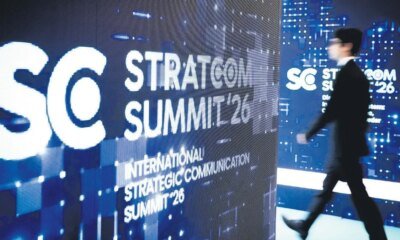
Speaking on Saturday at the International Strategic Communication Summit 2026 (Stratcom Summit ’26) held in Istanbul by Türkiye’s Directorate of Communications, National Intelligence Organization (MIT) head Ibrahim Kalın warned against “a fireball of strife” unfolding in the region. “The calculated consequences of this war are not confined to eliminating Iran’s nuclear capacity, but they also include steps that may pave the way for a decades-long feud between Turks, Kurds, Arabs and Farsi communities. This is far more dangerous than other consequences. Türkiye, nevertheless, is on alert against this,” he said. Kalın highlighted that Türkiye has never fuelled strife. “We are ready to handle this fireball and cool it off. We will stand against those attempting to spread the strife, with our values, our leadership, our priorities. We are aware who the enemies are and who the friends are,” he said.
The spillover of Ukraine-Russia war continues threatening the security in Black Sea. Türkiye has identified 275 suspicious objects in the Black Sea to date, including drifting mines, kamikaze drones and unmanned surface vehicles, the Ministry of National Defense said Saturday.
Of them, 29 have been neutralized, the ministry said in a statement.
Amid threats posed by drifting mines during the Russia-Ukraine War, an agreement was signed on Jan. 11, 2024, under Türkiye’s leadership, with the participation of Romania and Bulgaria, to establish the Black Sea Mine Countermeasures Task Group (MCM Black Sea).
The statement noted that since March 26, 2022, following the outbreak of the war, the Turkish navy has continuously carried out reconnaissance, surveillance, patrol and disposal operations targeting mines, unmanned surface vehicles (USVs), unmanned aerial vehicles (UAVs) and unexploded ordnance in the Black Sea.
“As part of efforts to protect our maritime jurisdiction areas, under Operation Black Sea Harmony, two frigates, one submarine, one patrol vessel, one maritime patrol aircraft, one helicopter and one UAV are deployed. For mine surveillance activities, two minehunter ships, one fast attack craft, three helicopters, one underwater defense team and one UAV are on duty,” the statement said.
It added that during operations and surveillance activities conducted so far, Turkish naval units logged 28,150 hours at sea, while maritime patrol aircraft, helicopters and UAVs carried out 1,554 sorties totaling 7,711 flight hours.
“A total of 275 suspicious objects have been detected to date. Of these, 10 were identified as mines, eight as kamikaze UAVs and 11 as kamikaze USVs. All identified threats were successfully neutralized by underwater defense teams,” it said.
The ministry said three Bayraktar TB2 drones have been deployed to Cengiz Topel Airport since Dec. 17, 2025, alongside two additional frigates assigned to the Black Sea to strengthen surveillance and respond to aerial and maritime threats.
Currently, four maritime patrol sorties and four UAV sorties are conducted weekly in the Black Sea, alongside helicopter-supported mine surveillance flights, the statement said.
The ministry said operations are being conducted in close coordination with the Turkish Coast Guard Command, relevant ministries, civilian maritime institutions, and neighboring Black Sea countries’ surveillance assets.
It added that monitoring of drilling, research, and support vessels in the western Black Sea continues uninterrupted.
The Turkish navy has taken maximum precautions since the start of the Russia-Ukraine war to protect Türkiye from drifting mines, UAVs and USVs, while maintaining close coordination with relevant state institutions, the statement concluded.
In the latest instance of Black Sea security risk, a marine drone struck a crude oil tanker that had departed Russia, causing an explosion in the Black Sea near Istanbul’s Bosphorus strait on Thursday.
“The attack on the Sierra Leone-flagged, Turkish-operated tanker ALTURA carrying crude oil is of great concern,” Foreign Ministry spokesperson Öncü Keçeli said on X, adding that the 27 crew members were in good health.
Keçeli said the attack took place within Türkiye’s exclusive economic zone and violated international law, warning such incidents posed serious risks to life, property, navigation and the environment in the Black Sea. He added that Türkiye was in contact with relevant parties to prevent further escalation and reserved the right to take necessary measures under international law to protect its economic interests and activities in the region.
The views and opinions expressed in this article are solely those of the author. They do not necessarily reflect the editorial stance, values or position of Daily Sabah. The newspaper provides space for diverse perspectives as part of its commitment to open and informed public discussion.
Israel poses the biggest obstacle to peace in the region, as it continues to leverage its structural influence over U.S. politics while pursuing a broader strategic agenda for the region, Foreign Minister Hakan Fidan said, warning that continued war risks deepening regional instability and creating long-term divisions between societies.
Speaking on a live broadcast on a Haber, Fidan said the war, unfolding “before the eyes of the entire world,” is having severe consequences for both the region and global politics, adding that Türkiye’s priority from the outset has been to prevent the conflict, contain its spread and keep the country out of the war.
He reiterated that Israel’s position remains the primary barrier to achieving peace, as Türkiye continues to push for an immediate cease-fire and a diplomatic resolution.
Fidan said Israel continues to leverage its structural influence over U.S. politics while pursuing a broader strategic agenda for the region, warning that this dynamic remains the biggest obstacle to peace.
“If Israel believes there are further opportunities to exploit or deepen the conflict based on its analysis of the current war, it will continue on this path,” he said. “At this point, the biggest obstacle to peace is Israel’s position.”
Fidan noted that the United States is facing growing domestic pressure ahead of upcoming elections, with public scrutiny mounting over the continuation of the war.
He said Washington’s initial military objectives – first targeting Iran’s nuclear capabilities and later its missile and defense industry infrastructure – have largely been declared achieved, raising questions about the rationale for prolonging the conflict.
“Both the American public and the international community are asking: if these objectives have been met, why continue a war that carries serious global economic consequences?” Fidan said.
He pointed to increasing pressure on the U.S. administration to justify the continuation of the conflict, adding that this has also fueled ongoing, albeit cautious, efforts toward a diplomatic resolution.
Fidan stressed, however, that a key challenge remains the international community’s inability to exert effective pressure on Israel, similar to the situation seen in Gaza.
“The problem, as in Gaza and other cases, is that the world cannot apply meaningful pressure on Israel,” he said.
He added that if the U.S. seeks to reach a negotiated settlement with Iran, it will need to be prepared to use its influence over Israel more decisively.
“If Washington is to reach an agreement with Iran, it must be willing to exercise serious leverage over Israel. We will see who can exert influence over whom,” Fidan said, describing the situation as a structural issue at the heart of the conflict.
He warned that beyond immediate destruction, the conflict risks leaving behind long-term instability, comparing its impact to lasting damage that can prevent recovery for decades.
“Even if this war ends at some point, the instability it leaves behind could last for years. Conflicts between societies and countries can create deep-rooted hostility, making cooperation, development and prosperity nearly impossible,” Fidan said.
Fidan noted that Türkiye has been working intensively through diplomatic channels since the outbreak of the conflict, as it did during last year’s “12-day war,” to push for a cease-fire and de-escalation.
He said negotiations appear to have reached an initial stage, with indirect contacts underway through Pakistan and coordination continuing with both the U.S and Iran.
“Today, we held extensive talks with both sides to better understand their positions and expectations,” he said, adding that Türkiye is actively conveying messages between the parties.
Fidan underlined that current negotiating positions have shifted significantly compared to those before the war, particularly for Iran, which had entered talks to avoid such a conflict.
“Now that the war has caused a certain level of destruction, Iran’s expectations in negotiations will naturally be different,” he said, noting that this complicates mediation efforts.
He emphasized that initial positions in negotiations are often deliberately set high and should not be taken at face value.
“If there is genuine intent on both sides, a point of convergence can always be found,” Fidan said.
The top Turkish diplomat stressed that the key to progress lies in sustaining negotiations, ensuring sincerity and rebuilding trust between the parties.
He pointed to Iran’s deep loss of confidence in the United States following previous negotiation rounds that collapsed into conflict, while noting that Washington is currently showing willingness to engage diplomatically.
Israel’s strategy risks deepening divisions among Muslim countries
Fidan said Israel’s actions during the war risk planting long-term divisions across the region, warning that the conflict could make unity among Muslim countries increasingly difficult.
“At this stage, we see that as war was launched against Iran, a dangerous seed of discord has also been sown in the region through Israeli expansionism — one that could make it nearly impossible for Muslims in the region to come together again,” he said.
He stressed that Türkiye’s top priority is to prevent such divisions from taking root, adding that Ankara had advised Iran from the outset to avoid actions that could escalate tensions with neighboring countries.
Fidan recalled that during the previous “12-day war,” Iran refrained from targeting Gulf countries despite being attacked, and said Türkiye encouraged a similar approach in the current situation.
He warned that retaliatory actions could create long-term consequences that would ultimately serve Israel’s strategic interests.
“We advised all parties: remain patient and avoid reactions that could leave lasting damage. This would play directly into Israel’s desired scenario – prolonged conflict among Islamic countries in the region,” he said.
Fidan said Türkiye has consistently urged both Iran and other regional actors not to fall into what he described as a trap, emphasizing that Ankara’s diplomatic efforts are built around preventing such escalation.
“This is why we are often targeted by Israel, because we recognize this strategy and are trying to counter it,” he added.
He acknowledged that the prevailing mood in the region is far from calm, with countries increasingly adopting more hardline positions due to ongoing attacks.
“The dominant psychology is: ‘We are under attack and must respond,” Fidan said, noting that even countries that have supported Iran are now leaning toward stronger reactions.
He said Türkiye, along with Pakistan, has been among the few actors reminding regional countries to focus on the broader picture and underlying causes of the conflict.
“Many countries are acting under pressure, as they are facing missile strikes and attacks, and are struggling to respond to their own public, which is living under constant alarm and in shelters,” he said.
Fidan added that Türkiye has sought to calm tensions, including during a high-level meeting in Riyadh convened to address the attacks.
He said Türkiye emphasized that the strikes were not isolated incidents but part of a broader pattern of U.S. and Israeli actions in the region.
“While we consider these attacks unjustified, our position is clear: countries that have not provoked conflict should not be targeted. Such actions neither serve Iran’s strategy nor regional stability, and instead create conditions that benefit Israel in the long term,” he said.
Fidan noted that tensions escalated further even during the Riyadh meeting, with missiles launched toward the Saudi capital.
Fidan also warned that unforeseen developments could still arise, regardless of the parties’ intentions, but said Türkiye is maintaining intensive contacts at the highest level to prevent escalation.
He highlighted the role of regional mediators, saying Pakistan is playing a central role, while Türkiye is in constant coordination with Egypt and other countries in the region. European partners are also closely engaged in diplomatic efforts.
Fidan said there is a broad global consensus, similar to the Gaza war, that the conflict must end as soon as possible, stressing that this expectation now needs to be translated into concrete action by key countries.
Foreign Minister Hakan Fidan held talks with his Pakistani counterpart Mohammad Ishaq Dar on Sunday, hours after he arrived for talks on the U.S.-Israel-Iran war.
Fidan and Dar are expected to be joined by their Egyptian and Saudi counterparts in Islamabad for two days of talks to end the raging conflict.
Türkiye and Pakistan have been active in working to end the conflict, with both also mentioned as possible venues for direct talks between Iran and the U.S. toward a peaceful settlement.
Top diplomats from Riyadh, Cairo and Ankara are due in the Pakistani capital Sunday and Monday for “in-depth discussions on a range of issues, including efforts to de-escalate tensions in the region,” the Pakistani Foreign Ministry said on Saturday.
As part of preparations, Pakistani Prime Minister Shahbaz Sharif said he had a “detailed telephone conversation with my brother President Masoud Pezeshkian of Iran earlier today (Saturday), lasting over one hour.”
“I reiterated Pakistan’s strong condemnation of the continued Israeli attacks on Iran, including recent strikes on civilian infrastructure, and conveyed Pakistan’s solidarity with the brave people of Iran,” he wrote on X.
Sharif said he also expressed his condolences “on the tragic loss of precious lives and prayed for the swift recovery of the injured and displaced.”
“I apprised him of Pakistan’s ongoing diplomatic outreach, engaging the United States and brotherly Gulf and Islamic countries, to facilitate dialogue and de-escalation.”
Sharif’s office said separately that Pezeshkian “stressed upon the need to build trust in order to facilitate talks and mediation.”
The pair have spoken previously in recent weeks about the conflict and Pakistan’s commitment to bringing it to an end.
Islamabad has longstanding links with Tehran and close contacts in the Gulf, while Sharif and army chief Field Marshal Asim Munir have struck up a personal rapport with U.S. President Donald Trump.
Late on Friday, Foreign Minister Hakan Fidan told the private A Haber broadcaster that the meeting was initially planned to be held in Türkiye.
Germany’s Foreign Minister Johann Wadephul said earlier on Friday he expected a direct U.S.-Iran meeting in Pakistan “very soon,” without revealing his source.
While Tehran has refused to admit to holding official talks with Washington, Iran has passed a response to Trump’s 15-point plan to end the war via Islamabad, according to an anonymous source cited by the Iranian Tasnim news agency.
Fidan said on Saturday that the “unlawful strikes” against Iran are pushing the region toward the brink of a wider war, fueled by “relentless Israeli escalation.”
Speaking at the opening of the second day of the International Strategic Communication Summit (STRATCOM) 2026 in Istanbul, Fidan said: “We reject any scenario that drags regional states into a devastating conflict,” adding: “Iranian actions affecting Gulf nations carry precisely this risk. Let us be clear. This may be Israel’s war of choice, but the entire world is paying the price.”
Fidan stated that as the conflict prolongs, the geopolitical and economic complications multiply at an alarming rate. “From day one, Türkiye has grown against this dangerous trajectory.”
“This is a war engineered for Netanyahu’s political survival, yet its burden unfortunately falls upon the rest of the world,” the foreign minister said, warning that the crisis could leave enduring scars not only in cities but also in the hearts and minds of the peoples of the region.
“There is only one viable way out for us. That is the escalation and diplomacy,” Fidan emphasized.
Regarding Israel’s latest aggression in Lebanon, he said: “We (Türkiye) declared our strong opposition to Israel’s expansionist policies, particularly its latest aggression against Lebanon. To operationalize these efforts, we continue our constant high-level dialogue. Our objective is to chart out actionable steps to end this conflict as soon as possible.”
“This senseless war must end. Before further destruction unfolds, before deeper enmities take root, before the global economy suffers irreversible damage. The channels of dialogue must be open, and a result-oriented negotiation process must commence swiftly,” Fidan further added.
Fidan warned that while pursuing peace, Türkiye’s leadership must not let Netanyahu’s extreme stance derail diplomacy, highlighting that “this engineered chaos” aims to keep the regional nations “weak, divided, and vulnerable.”

Türkiye gears up for key NATO summit as major actor

‘Zero Waste’ message from Director of Communications Burhanettin Duran: Our common responsibility towards future generations

Former vice chair accuses FETÖ of taking over Turkish opposition CHP
Türkiye gears up for key NATO summit as major actor
‘Zero Waste’ message from Director of Communications Burhanettin Duran: Our common responsibility towards future generations
Former vice chair accuses FETÖ of taking over Turkish opposition CHP
-
 Economy24 hours ago
Iran signals tighter control, possible tolls for Strait of Hormuz
-
 Daily Agenda2 days ago
MİT President İbrahim Kalın: As Türkiye, we will fight vigilantly until the end
-
 Daily Agenda2 days ago
Bahçeli: If there is to be a regime change, it should start with Israel
-
 Daily Agenda3 days ago
Minister Göktaş: “We made the payments of marriage loans of 133 thousand young people”
-
 Daily Agenda2 days ago
Our peace-oriented stance will continue – Last Minute News
-

 Daily Agenda1 day ago
CHP municipality remained silent to the risk of disaster
-
 Politics1 day ago
Experts see Türkiye filling gap as Gulf reassesses security strategy
-
 Daily Agenda1 day ago
Harsh response from AK Party member İnan to Özgür Özel: You are the puppet of thieves! Support for Özlem Çerçioğlu