
Politics
Turkish minister steadfast on Ramadan decree, slams Islamophobes

Education Minister Yusuf Tekin, who found himself at the heart of a secularism debate after he instructed schools to organize Ramadan-themed events, stood his ground as more people came out to endorse the practice.
Prior to Ramadan, a so-called “secularism declaration” by a group of celebrities, writers and intellectuals claimed Türkiye was becoming “Talibanized” and with Ramadan, the debate heightened, with the opposition parties joining the chorus against the events.
Speaking at an event in Istanbul on Saturday, on the anniversary of the Feb. 28, 1997 coup, Tekin drew parallels with that process, which was basically a witch hunt targeting Muslims in Türkiye.
Tekin said that during the Feb. 28 process, pressure spread from school gates and campus corridors to teachers’ lounges and even into families’ private decisions at home. Girls wearing headscarves, students of imam-hatip schools (which offer additional curriculum on religion) and devout working families all bore the heavy burden of the intervention together.
Referring to recent criticism surrounding Ramadan activities in schools, Tekin said the country is now facing an updated version of the same language used by proponents of the coup and that the issue should be addressed openly and directly.
“When our children learn about Ramadan, understand the discipline of fasting, grow curious about the meaning of prayer and meet the voice of their own civilization through hymns in the schoolyard, who exactly is triggered into an ideological alarm, and why?” he asked.
“How can a child learning about iftar, patience, charity and respect be construed as a threat? What kind of regime crisis can you manufacture from children decorating for Ramadan? Please explain to me which legal order is harmed by children singing hymns during recess. Those who speak of pedagogy, by what pedagogical standard do you exclude children’s right to know their own culture? Those who speak of freedom, why do you resort to prohibitive language when it comes to the nation’s faith and this country’s spiritual memory? How do those who claim to defend secularism justify portraying the joy of Ramadan in a schoolyard as reactionism, children’s engagement with values education as a threat and society’s genuine bond with faith as a danger?”
Tekin said statements circulated in response to the activities once again revealed what he described as a longstanding intolerance toward the public visibility of the nation’s faith.
“The language that labels a Ramadan event a regime crisis, while targeting the joy of children in schoolyards, clearly shows discomfort with the authentic bond formed with the essence of these lands,” he said. “From this perspective, we can better understand why debates on secularism are repeatedly dragged into the same channel.”
Tekin underlined that secularism in Türkiye had been turned into one of the sharpest tools of tutelage. Responding to those who repeat that “defending secularism is not a crime,” Tekin said, “Of course it is not. The problem lies in a mentality that uses that sentence as a shield while hurling insults at women wearing headscarves, people in religious attire or even an elected mayor because of traditional dress.”
He said the same mindset that once expelled headscarf-wearing students from campuses as centers of reactionism and profiled teachers as “bearded, unionized, risky personnel” now appears in those who cry that “secularism is under threat” over Ramadan activities.
“The problem is not secularism,” he said. “The problem is an obsessive and arrogant understanding of secularism. Those who try to manufacture a regime crisis out of children singing hymns during recess or learning about their own culture and calendar under values education are effectively saying: ‘This society’s faith cannot be visible in the public sphere.’”
Tekin noted that in Western countries, a vast industry has grown out of church-based gospel music without prompting concerns that secularism is under threat.
He said there is an effort to confine children’s awareness of national and spiritual values and their singing of hymns to the home, opposing the reflection of those values in schools, streets or even Parliament. In Türkiye, however, he said, a single hymn, a single piece of traditional clothing or a single Ramadan activity is enough to trigger what he called secular anxiety.
“This is nothing more than the marketing of naked Islamophobia under the packaging of secularism,” Tekin said. “This nation does not have to feel embarrassed for defending its faith and its children’s education. Our objection is to a tutelary language that repeatedly turns the principle of secularism into a pretext for attacking the nation’s beliefs and values.”

President Recep Tayyip Erdoğan stressed that escalating regional conflicts underscore the urgent need for meaningful diplomacy, telling NATO Secretary-General Mark Rutte that lasting peace will depend on giving dialogue real space to work.
In a statement, Türkiye’s Communications Directorate said Erdoğan stressed that Ankara is closely monitoring the growing instability across the region and believes diplomacy must be prioritized to prevent further escalation.
The discussions come as Türkiye emphasizes the need for dialogue in the face of U.S. and Israeli attacks on Iran, which have escalated regional tensions.
He also highlighted preparations for the upcoming NATO Leaders Summit in Ankara, saying Türkiye is ready to host the gathering and expects productive outcomes at a time when the alliance faces mounting security challenges.
Rutte said NATO will continue working to ensure the security of all member states through a 360-degree approach, according to the statement.
The conversation comes as multiple crises strain Euro-Atlantic security, prompting calls within the alliance for stronger coordination and a renewed focus on diplomatic solutions.
“Türkiye remains focused on peace, stability and diplomacy,” President Recep Tayyip Erdoğan said as he urged for peace to prevail in the region stuck between the U.S.-Israel attacks on Iran.
Speaking at an event in Ankara on Tuesday, the president stated: “While events are unfolding in every corner of our geography, as Türkiye, we are resolutely continuing our efforts centered on peace, tranquility and stability.” He added, “Through the peace-oriented diplomacy we are conducting intense efforts to ensure that problems are resolved at the negotiating table through dialogue and negotiations in a fair and equitable manner.”
He outlined that Ankara has mobilized all available means to help the region emerge from the crisis “without further bloodshed and without deepening hostility among brotherly nations.”
Echoing the president, Foreign Minister Hakan Fidan also on Monday warned that escalating hostilities involving Iran could spiral into a broader regional conflict, disrupt global energy supplies and destabilize financial markets, as Ankara intensifies diplomatic efforts to halt the fighting and return to negotiations.
Speaking at an iftar dinner with Ankara representatives of media organizations, Fidan said preserving stability in Iran and across the wider region is “critical,” stressing that Türkiye is working intensively to ensure calm and helping reestablish a diplomatic track.
Fidan said recent developments risk undermining both the future of the region and global stability.
Türkiye, he emphasized, is pursuing creative diplomatic initiatives and has previously helped delay the outbreak of war. “The war would have started earlier; we delayed it somewhat with our efforts,” he said, adding that the conflict resumed in the midst of negotiations, which Iranian officials have characterized as a betrayal of diplomacy.
Asked whether retaliation by Iran against targets in the region could include Türkiye, Fidan said Ankara always maintains the will and capability to defend itself, regardless of the specific context.
He described the worst-case scenario as a prolonged escalation drawing Iran and the broader region into sustained instability. The crisis, he added, must be examined through multiple lenses: military, security, political, economic and energy.
On the energy front, Fidan warned that any interruption of natural gas flows from Iran or major disruptions to imports from Gulf countries could pose significant risks to global energy security. He also pointed to the Strait of Hormuz as a potential flashpoint. Closure of the strategic waterway, he said, could cause serious turbulence in global financial and energy markets and might compel outside powers to seek a rapid resolution.
Fidan cautioned that if Iran were to directly target U.S. bases located in Arab countries, the risk of a broader regional security crisis would increase. At the same time, he said Tehran appears to be attempting to “generate costs” by striking energy-related targets in the Gulf. However, he suggested that Iran may not receive the external pressure on Washington that it expects from such actions.
“Iran can seriously harass Israel if it uses its missiles and drones effectively,” Fidan noted, adding that the duration and intensity of such exchanges remain uncertain.
Türkiye takes precautions
Fidan said Ankara is closely monitoring movements among various groups in the region and assessing how evolving dynamics might affect local ethnic balances and security calculations. He reiterated that Türkiye’s goal of a “terror-free Türkiye” is linked to achieving a “terror-free region,” encompassing developments in Syria, Iraq and Iran.
He stressed that meaningful steps toward eliminating terrorism require changes in the broader regional equation and that Türkiye continues to evaluate political developments domestically alongside external risks.
Ankara is also in contact with Oman and the United States, while Gulf states face what he called a serious situation. In parallel, Ankara is monitoring the safety of Turkish citizens in the region.
Fidan also announced that approximately 20,000 Turkish nationals, including dual citizens, are in Iran. So far, no Turkish citizen has been killed or injured. Türkiye’s three border crossings with Iran remain operational, allowing Turkish and third-country nationals to enter without major problems.
The Foreign Ministry’s consular call center, embassies and consulates are operating around the clock, he said. Around 1,500 citizens have sought information. Airspace closures have complicated travel for some Turks returning from the Gulf, though Saudi Arabia has reopened its airspace, enabling return flights via Riyadh and Jeddah.
Addressing the possibility of a migration wave from Iran, he said contingency planning has been coordinated with the Interior Ministry, disaster management authorities and intelligence services. At present, he said, Iran is not allowing its citizens to leave via the border, and no influx into Türkiye is occurring.
Proceeding diplomacy traffic
Ankara has engaged in intensive shuttle diplomacy over the past three days following joint U.S. and Israeli strikes on Iran and Tehran’s subsequent retaliation, holding a series of phone calls with regional and European counterparts to push for de-escalation.
After the attacks began on Feb. 28, Foreign Minister Hakan Fidan spoke by phone with his counterparts from Iran, Iraq, Saudi Arabia, Qatar, Syria, Egypt and Indonesia to discuss the latest developments and possible steps to halt the fighting.
He also held separate calls the same day with the foreign ministers of the United Arab Emirates (UAE), Spain and Hungary to address the escalating violence.
Additional calls followed with Iran, Oman, Azerbaijan, Bulgaria, France and Jordan’s foreign ministers.
European leaders have been in close contact, Fidan said, noting calls from EU foreign policy chief Kaja Kallas, French officials, German Chancellor Friedrich Merz, President Recep Tayyip Erdoğan’s counterparts and European Commission President Ursula von der Leyen.
On the other hand, responding to questions about the possibility of Iran targeting the island of Cyprus, Fidan said he sees limited risk at present for both the Turkish Republic of Northern Cyprus (TRNC) and the island’s south, particularly regarding civilian facilities.
Fidan also warned that the conflict could negatively affect Gaza, where Israel has reportedly halted entry and exit. He said Ankara continues to provide humanitarian assistance and remains ready to support diplomatic platforms aimed at resolving the Palestinian issue.
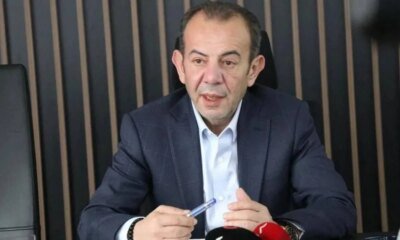
The mayor of the northwestern Turkish city of Bolu from Türkiye’s main opposition, the Republican People’s Party (CHP), and his deputy were arrested Monday in an investigation into alleged extortion by coercion, while 11 other suspects were released under judicial supervision, authorities said.
The arrests came as part of a probe launched by the Bolu Chief Public Prosecutor’s Office. Provincial gendarmerie teams detained 13 suspects in an operation carried out on Feb. 28 targeting the Bolu Municipality.
Among those taken into custody were Mayor Tanju Özcan, Deputy Mayor Süleyman Can, several municipal officials and former administrators, including department heads and members of the municipal council.
After completing procedures at the gendarmerie, the suspects were transferred to the courthouse under tight security and brought into the building through a rear entrance.
Following questioning by prosecutors, Özcan and Can were referred to a criminal court with a request for arrest on charges of “extortion by coercion.” One additional suspect was also referred for arrest, while the remaining 10 were referred for release under judicial control measures. The court ordered the arrest of Özcan and Can and released the other 11 suspects under supervision.
In a statement issued Tuesday, the Interior Ministry said Özcan had been suspended from office as a temporary measure under Article 127 of the Constitution and Article 47 of the Municipal Law No. 5393 following his arrest.
Authorities said the investigation remains ongoing.
CHP-run municipalities across Türkiye are mired in corruption allegations. Most cases have been in Istanbul. The city’s mayor, Ekrem Imamoğlu, was arrested in March 2025 in a wide-ranging probe where he is accused of running a criminal network thriving on bribes and tender-rigging.
The head of the Nationalist Movement Party (MHP), Devlet Bahçeli, on Tuesday sharply criticized the United States and Israel over reported attacks on Iran, calling the actions illegitimate and warning they could destabilize both regional and global balances.
Bahçeli said during his party’s parliamentary group meeting that any U.S. attack on Iran, which he described as influenced by “Zionist provocation and planning,” would damage regional and global equilibrium.
“This aggression is illegitimate, unlawful and immoral,” Bahçeli said.
His remarks came amid heightened tensions in the Middle East and following reports of Israeli strikes that targeted senior Iranian officials and strategic infrastructure. Bahçeli questioned the state of ongoing diplomatic efforts, asking: “Weren’t negotiations continuing? Wasn’t it being claimed that talks were progressing and close to agreement?”
Bahçeli reminded that both the United States and Iran had signaled progress in the talks and that further discussions were expected to continue in Vienna.
According to Bahçeli, an Israeli attack took place on Feb. 28 while Iran’s Supreme Leader Ayatollah Ali Khamenei was meeting with senior political and bureaucratic officials to discuss developments related to the negotiations. He described the alleged killing of participants in that meeting as “an act of treachery,” claiming that intelligence infiltration had reached critical levels within Iran.
Bahçeli argued that Tehran had been subjected to intelligence operations and coercive tactics regarding the elimination of Iran’s top leadership and its military and strategic team.
He added that negotiations had been used as a pretext to set a trap for Iran.
Peace efforts in region
At the same time, Bahçeli called for peaceful solutions to regional conflicts, including tensions between Pakistan and Afghanistan. He said the only reality that should dominate global affairs is peace and urged direct diplomatic engagement to resolve both the Iran crisis and clashes between Kabul and Islamabad.
“Peace has no losers; war has no winners,” he said. “To choose war instead of reconciliation is a crime.”
Bahçeli also stressed that Iran’s political and territorial integrity must be preserved. He said the future of the Islamic Republic should be determined solely by the will of the Iranian people and warned that any external imposition or attempt to divide the country along ethnic or sectarian lines would violate international law and the U.N. Charter.
Referring to comments attributed to former Israeli Prime Minister Naftali Bennett and U.S.-based analyst Michael Rubin that compared Türkiye’s future to Iran’s current situation, Bahçeli said Ankara could not ignore what he described as hostile rhetoric.
“Whoever comes against us must be prepared to face the consequences,” he said, adding that Türkiye would not refrain from speaking out against what it sees as wrongdoing.
Moreover, he stressed that his purpose was not to recount details of the attacks but to underline what he described as urgent lessons for Türkiye.
“We must recognize how close and ruthless the threat has become,” he said, emphasizing the importance of national unity and solidarity.
Bahçeli argued that developments affecting neighboring Iran could not be separated from Türkiye’s own security considerations.
He further pointed to recent public debate in Türkiye over the government’s “terror-free Türkiye” initiative and calls for unity between Turks and Kurds, suggesting that regional instability underscored the need for internal cohesion.
The initiative, which aims to disarm the terrorist group PKK, has largely succeeded so far. It took a new turn last week when a parliamentary committee approved a final report on proposals for new laws and regulations to facilitate the process. The initiative has been unilateral, after the PKK announced it would dissolve itself following a February 2025 call by its jailed ringleader, Abdullah Öcalan. Lawmakers are now expected to discuss amendments to existing laws or implement new ones for the integration of PKK members not involved in acts of terrorism.
Concluding his remarks, Bahçeli extended condolences to those who lost their lives, including Iran’s Supreme Leader, and expressed sympathy to the Iranian people, describing Iran as a friendly, neighboring country.
The Turkish Republic of Northern Cyprus’ (TRNC) National Security Council convened Monday under President Tufan Erhürman to assess regional developments following joint U.S.-Israeli strikes on Iran and Tehran’s retaliatory attacks across the Middle East.
According to a statement from the TRNC Presidency, the council evaluated the security situation triggered by large-scale U.S. and Israeli operations against Iran and discussed possible implications for the TRNC under various scenarios.
The meeting, called by Erhürman, brought together senior officials including the parliament speaker, the prime minister, the foreign and interior ministers, the commander of the security forces, the leader of the main opposition party and the head of the civil defense organization.
The U.S. and Israel launched a major offensive against Iran on Saturday, killing several senior Iranian figures, including Supreme Leader Ayatollah Ali Khamenei.
In response, Iran has carried out drone and missile strikes targeting Israel and regional locations hosting U.S. military assets, escalating tensions across the Middle East.
Following the council meeting, Erhürman contacted Turkish authorities for diplomatic coordination and held a phone call with Foreign Minister Hakan Fidan. The two discussed the latest developments in the region and exchanged views on emerging security concerns.
Foreign Ministry advisory
On Feb. 28, the TRNC Foreign Ministry issued a travel and safety advisory for its citizens in Iran and Gulf countries.
In a written statement, the ministry said the security environment in the region had entered a “sensitive and fragile phase” as a result of Israeli and U.S. strikes on Iran. It said developments were being closely monitored in coordination with Türkiye’s Foreign Ministry and through TRNC diplomatic missions in the region.
“Our citizens in Iran and Gulf countries are advised to remain in safe areas and closely follow statements and warnings issued by local authorities,” the ministry said.
The statement added that in emergencies, “citizens could contact TRNC diplomatic missions in the region or the Foreign Ministry’s 24-hour Consular Call Center at +90533 851 40 06.”
The ministry expressed hope that the current situation would not escalate into a broader conflict or lead to further humanitarian losses, urging citizens in Iran and Gulf countries to follow official instructions from the Foreign Ministry and diplomatic missions.
Türkiye’s Foreign Minister Hakan Fidan said stability in Iran and the wider region is critical, stressing that Ankara is making intensive efforts to ensure calm and help restore a climate of peace, according to the statements published on Tuesday.
Fidan made the remarks during an iftar program with Ankara representatives of media organizations, according to information shared from the meeting.
Fidan underlined the importance of preserving stability in Iran and across the region, amid heightened regional tensions, noting the fact that the latest developments are of a nature that could jeopardize both the future of the region and global stability.
He also said Türkiye is working actively through diplomatic channels to support de-escalation and contribute to the reestablishment of a peaceful environment.


-

 Daily Agenda2 days ago
BREAKING NEWS: New development in the imaging of Incirlik base! ANKA News Editor-in-Chief Kenan Şener is in custody
-

 Politics2 days ago
Türkiye calls on US, Israel, Iran to cease attacks ‘immediately’
-

 Politics2 days ago
President Erdoğan discusses US-Iran war with Saudi crown prince
-
 Politics2 days ago
Laws of terror-free Türkiye set to reintegrate PKK members
-

 Politics2 days ago
Turkish FM holds talks with Iran’s Aragchi as war unfolds
-

 Daily Agenda2 days ago
Minister of Internal Affairs Mustafa Çiftçi: “The rising threats in our region show us a truth once again”
-

 Daily Agenda2 days ago
Minister Göktaş: “A strong future is possible with young people who do not break away from their values”
-
 Daily Agenda3 days ago
Tanju Özcan is in custody: He demanded extortion under the guise of a scholarship