
Politics
Türkiye pushes for climate diplomacy lead with COP31

The first preparatory meeting for the upcoming COP31 summit was held in Antalya, a Mediterranean city at the heart of a major diplomatic forum and a popular tourist destination.
Speaking at the meeting on Saturday, Environment, Urban Planning and Climate Change Minister Murat Kurum said the leadership of the summit was crucial as every country declaring a decision on the fight against climate change would heed Türkiye’s guidance.
The 31st Conference of the Parties is scheduled to take place on Nov. 9-20, 2026, primarily in Antalya, with a leaders’ summit in Istanbul.
Türkiye secured the hosting and presidency of COP31 following negotiations led by Kurum at the United Nations Framework Convention on Climate Change (UNFCCC) COP30 conference, held last year in Brazil. The hosting “battle” pitted Türkiye against Australia, with Ankara ultimately succeeding. Ankara and Canberra had both submitted bids in 2022 to host COP31. They had refused to stand down before the deal in Brazil, which set out that Türkiye would serve as the venue while delegating negotiating responsibilities to Australia.
On Saturday, Kurum joined representatives from six ministries to coordinate efforts to host the summit. As the official chair of the summit, he visited the Antalya EXPO Fairgrounds, the venue, and held talks with local administrators.
He told reporters that the world’s focus would be on Antalya and Türkiye would be a signatory to every major decision made at the summit.
“More than 80,000 people from 196 countries will be here, and we will show them Türkiye’s power to hold such summits and our hospitality,” he said.
The Conference of the Parties summit is held annually in a different country, where countries discuss greenhouse gas emission reduction goals, policies to combat climate change, climate funding and carbon market regulations. The COP summit also set rules for implementing the Paris Agreement, a key agreement to combat climate change. Countries hosting COP summits increase their diplomatic visibility, as they are at the heart of global climate policy.
Expectations were high at COP30, held in Belem in November 2025, for a concrete, time-bound road map to phase out fossil fuels. Instead, the final document made no firm commitment to exit fossil fuels, leaving what many consider the most critical issue in the climate crisis unresolved.
Speaking to Anadolu Agency (AA) last week, Ümit Şahin, coordinator of Climate Change Studies at Sabancı University’s Istanbul Policy Center, said COP30 was severely undermined by the absence of the U.S., one of history’s largest polluters, following President Donald Trump’s decision to withdraw from the Paris Agreement and pursue policies openly hostile to the expansion of renewable energy.
Şahin noted that strong competition between Australia and Türkiye to host the conference has already raised expectations.
“COP31 is expected to be both ambitious and distinctive,” he said.
He also highlighted growing climate cooperation among Mediterranean civil society organizations in recent years. Given the Antalya venue, he expects forest fires, heat waves, extreme temperatures and other Mediterranean-specific climate risks to feature prominently on the agenda for coastal countries.
“Deforestation was one of COP30’s clearest failures,” Şahin reiterated. “I believe Türkiye has a genuine opportunity to drive progress on this issue at COP31.”
Electrification, accelerating efforts to phase out fossil fuels and stronger mitigation commitments are also expected to dominate discussions, he added.
As host and president of COP31, Türkiye will face close scrutiny of its own climate policies, beginning with the ambition of its updated Nationally Determined Contribution (NDC), Şahin said.
He stressed that hosting the summit requires credible leadership at home. Türkiye must fully embrace its 2053 net-zero pledge, publicly commit to a clear coal phase-out timeline and align national policies with global climate goals, according to Şahin.
COP meetings have been held on a rotating basis across continents since 1995. Some notable hosts include Germany (Berlin) for COP1, Japan (Kyoto) for COP3 Denmark (Copenhagen) for COP15, France (Paris) for COP21, where the Paris Agreement was adopted, the United Kingdom (Glasgow) for COP26, Egypt (Sharm el-Sheikh) for COP27, the United Arab Emirates (Dubai) for COP28, Azerbaijan (Baku) for COP29 in 2024 and Brazil (Belem) for COP30 in 2025.
Hosting a COP requires large-scale organizational capacity. The host country must prepare infrastructure capable of serving more than 100,000 participants, including expansive meeting halls and media centers, as well as spaces for side events, and comprehensive security arrangements. An event of this scale also demands strong logistics and transportation planning.
The host nation is responsible for meeting the U.N.’s security standards and implementing zero-waste practices, sustainability criteria, and a carbon-neutral operations plan. Because heads of state and government attend the summit, the country must also conduct high-level diplomatic preparations and coordinate pre-negotiation meetings and technical committee sessions without disruptions.
In this sense, the host country is not only responsible for managing the logistics of a massive event but also for ensuring that global negotiations take place in a constructive environment.
For Türkiye, hosting the summit would position the country as a hub of global climate diplomacy for two weeks. The process is expected to significantly increase international interest in Türkiye in areas such as climate finance, clean energy and green technology.
Türkiye’s climate policies, emissions-reduction targets, and green transition programs would serve as a global example.

Aziz İhsan Aktaş, a prominent businessperson accused of running a criminal ring thriving on briberies to municipalities run by the main opposition Republican People’s Party (CHP) will make his first court appearance this week.
He is among 200 defendants on a case that shed light on bribes and tender-rigging processes in municipalities that also netted prominent mayors of the CHP. Aktaş was released and sentenced to house arrest last year after his initial arrest in 2024, when he decided to collaborate with authorities. In January, the first hearing of defendants in the case was held in Istanbul. An indictment says Aktaş and his associates bribed their way into lucrative tenders and building permits. Several CHP mayors in Istanbul, including Beşiktaş’ Rıza Akpolat, Avcılar District Mayor Utku Caner Çaykara, as well as mayors of southern city of Adana and southeastern city of Adıyaman were also named in the indictment. The latter two were released before the trial began.
An Istanbul court heard testimonies of 33 defendants so far in the previous hearings. Among them were Akpolat who faces prison terms up to 337 years on charges of corruption.
Aktaş faces prison terms up to 450 years for his role as the “leader of the criminal ring” as prosecutors defined him.
The arrests of Aktaş and Akpolat were first in a long line of investigations into alleged rampant corruption in CHP-run municipalities. In March 2025, Istanbul Mayor Ekrem Imamoğlu, a prominent figure in the party, was arrested on the same charges. More arrests followed on similar charges in the following months as investigations also expanded to other cities run by the CHP, such as Antalya in the south. The CHP claims the arrests are politically motivated and regularly holds public rallies to denounce them and call for release of mayors. The government insists that the judiciary is independent.
Prosecutors say Imamoğlu’s win in the 2024 election, where he secured a second term as Istanbul mayor, helped Aktaş’s criminal network to enter “into a golden age” of their corruption web. They say the network secured public tenders from the IBB and district municipalities of Türkiye’s most populated city since 2020, including Beşiktaş, Avcılar and Esenyurt municipalities.
Mesut Özarslan, mayor of Ankara’s Keçiören district for the main opposition Republican People’s Party (CHP), announced his resignation from the party on Sunday evening, after disclosing that the party’s chair, Özgür Özel, sent him derogatory messages.
Özarslan, elected to office in the 2024 municipal elections, was long rumored to join the ruling Justice and Development Party (AK Party). His meeting with Environment, Urban Planning and Climate Change Minister Murat Kurum further triggered the rumors. Özarslan disclosed that it was his meeting with Kurum that led to a defamation campaign by “some cliques” within the CHP against him.
In a lengthy social media post on Sunday, Özarslan said it was common for him to meet government officials to find solutions to Keçiören’s issues, but his Jan. 6 meeting with Kurum fueled “gossip by certain cliques in the party.” “I tried to remain silent in the face of pressure, rumors and defamation, but CHP chair, Mr. Özgür Özel, started sending me WhatsApp messages on Saturday, at 23:59. His messages contained insults, threats and slander contradicting political etiquette and humanity. Does a party chair insult a mayor and his family? Does a party chair have the right to insult by using swear words? I cannot continue serving in the CHP in the face of messages where even my parents are sworn at. I believe I cannot serve as a mayor (for CHP) in the face of those messages. I am not reacting against CHP, its voters. I am reacting only against the current administration, which has lost political etiquette,” he wrote.
“We were committed to serving people when we were nominated and elected, committed to walk together on this path to gain the favor of people and Allah. But at this point, I don’t see that either Özel or his colleagues have any sacred values. I call upon all my friends (in the CHP) to save themselves from this network of immoral people,” he added.
Along with Özarslan, seven members of the Keçiören municipal assembly resigned from the CHP on Sunday, while Deputy Mayor Emir Can Tunç and acting Mayor Tolga Turgut announced their resignation from the post and said they would remain in the CHP.
Several media outlets published unconfirmed screenshots of messages Özel sent to Özarslan, including ones where he called the mayor “b**tard.” Özel, quoted by pro-CHP Halk TV, denied using swear words in the messages, though he acknowledged that he wrote “harsh words.”
Özarslan quit the Good Party (IP) in 2023 and joined the CHP, working alongside Ankara Mayor Mansur Yavaş, a former nationalist politician. He is the first CHP mayor this year so far to quit the party, which boosted its vote in the 2024 municipal elections. Last year, Özlem Çerçioğlu, mayor of Aydın province in western Türkiye, resigned from the CHP and joined the AK Party, though she faced a barrage of slander on social media by CHP supporters and was repeatedly targeted in Özel’s speeches.
Türkiye’s National Intelligence Organization (MIT) has documented alleged links between a key suspect in a political espionage investigation and multiple foreign intelligence figures, according to indictment materials seen by prosecutors.
The investigation centers on former Istanbul Mayor Ekrem Imamoğlu, who is accused in an indictment of ordering an election-related data operation in which the personal information of millions of citizens was allegedly copied. Prosecutors say the operation was carried out by Hüseyin Gün, a businessperson now described by authorities as operating under the cover of private-sector activity.
According to Sabah newspaper, two intelligence reports prepared by MIT were included in the indictment, prosecutors said. The reports’ findings were said to match evidence independently obtained by police during the investigation.
According to the first report, Gün maintained ties with Christopher Paul McGrath, a former intelligence official who later moved into the private sector. McGrath previously served in the United Kingdom’s technical intelligence community and later held senior roles in maritime technology and risk intelligence firms, the report said.
MIT assessed that McGrath had served in managerial roles connected to information collection under the direction of Britain’s signals intelligence service, GCHQ.
The report also said McGrath later acted as a consultant for a Switzerland and Türkiye-linked cybersecurity firm beginning in May 2024, but announced his departure shortly after his name appeared in the Turkish investigation.
A second MIT report focused on individuals listed in Gün’s mobile phone contacts, identifying 10 figures described as “critical” and conducting detailed background analysis on each.
According to the report, other individuals listed among Gün’s contacts included Christopher Charles James Sturgess, described as a former senior figure within the United Kingdom’s GCHQ, who currently serves as chief technology officer at the London-based firm Clearwater Dynamics.
The report also cited Martin Howard, who held the post of director for cyber policy and international relations at GCHQ between 2011 and 2014 and later served as deputy head of defense intelligence at the U.K.’s Ministry of Defense.
Another individual named was David John Charters, identified as a member of Britain’s foreign intelligence service, MI6, and described in Gün’s phone contacts as “a close friend of former MI6 chief Richard Moore.”
Additional names included David Frank Richmond, a former director general for defense and intelligence at the British Foreign Office; Joseph Charles French, who headed defense intelligence at the Ministry of Defense from 2000 to 2003; former British special forces commander John Taylor Holmes; Brian Scott, who has worked with U.S.-based intelligence firms Patriot Defense Group and The Ascendancy Group; Fiona Hill, a former analyst at the U.S. National Intelligence Council who served as a deputy assistant to then-President Donald Trump between 2017 and 2019; and David Meidan, a former deputy head responsible for foreign relations and operational cooperation at Israel’s intelligence agency, Mossad.
Espionage disguised as business
The prosecutor’s office concluded that Gün operated “under the appearance of a businessman” while acting as an intelligence asset, a finding it said was supported by both intelligence and police assessments.
In earlier testimony, Gün told investigators that he owned a company named Piiq and claimed to have partnered with Aaron Barr, whom he described as a former CIA officer.
Gün’s arrest last July triggered a new probe into the activities of Imamoğlu, who already faces several lawsuits, ranging from forging his university diploma and insulting public officials to rampant corruption in the Istanbul Metropolitan Municipality (IBB), where he and dozens of other suspects are accused of enriching themselves through bribes and rigging public tenders.
Juvenile crime, crimes committed by minors, have troubled Türkiye in recent years, especially after well-publicized cases and online outrage. Underage people are often exploited by gangs to carry out hits, while the murder of children by their peers adds another layer of concern to the issue.
The Turkish Parliament set up a “Committee for Research on Children Driven to Crime,” and its members explained their work and suggestions to Anadolu Agency (AA) on Sunday.
Şebnem Bursalı, a lawmaker for the ruling Justice and Development Party (AK Party), recalled the recent murder of Atlas Çağlayan and how it left “a deep wound in public conscience.”
“This wound can only be healed by taking responsibility, pinpointing any negligence and finding permanent solutions. We are committed to such solutions,” she said. Seventeen-year-old Çağlayan was stabbed to death by a 15-year-old boy in Istanbul on Jan. 14 after a dispute.
Bursalı said such violent crimes involving children cannot be treated solely as criminal cases. She noted that children reached that point after a chain of negligence, spanning from family and education to digital environment and “reality on the street.” “We cannot overlook this; otherwise, it will be turning a blind eye to new tragedies,” she said.
“The need to update preventive social policies, the proliferation of unregulated digital content, the rise in violent rhetoric on the streets, and the failure to adequately protect children must all be addressed as part of the background to this murder,” she said.
Bursalı noted that the committee will present an effective, deterrent and preventive road map that treats children pushed into crime not as criminals but as individuals who must be protected and rehabilitated, while also prioritizing public safety and a sense of justice. “I would especially like to emphasize that our president is closely following the issue and has instructed the relevant institutions to take all necessary measures to prevent similar incidents from occurring. As the AK Party, we are striving to voice and put into practice his determined stance on every platform. We will follow this process through to the end under the roof of Parliament to ensure that similar tragedies are not repeated.”
Sibel Suiçmez, a lawmaker from the main opposition Republican People’s Party (CHP), noted that the committee was formed after the murder of 15-year-old Mattia Ahmet Minguzzi last year in Istanbul. “Unfortunately, the murder of Atlas Çağlayan followed it. The rise in the actions of children driven into crime, changes in their actions make this a worrying trend and something we have to tackle comprehensively,” she said.
Suiçmez said that they had to act in a calm manner and base their work on scientific data. “We should both address people’s safety concerns and delve into the root causes of the problem.”
“It is not correct to tie these only to children, their families, education and the judiciary system. In fact, they are all interconnected. This is something that should be tackled by several ministries, and a solution mechanism should involve harmony between different ministries,” she said.
Divisions and impunity
Suiçmez noted that the issue was divisive as well. “We see social media campaigns and prejudiced people handing out their ‘verdicts,’” she lamented. “We have to come up with a solution appropriate to our judicial system,” she said. Suiçmez cited surveys highlighting that increasing sentences did not prevent new crimes. “Of course, the children should be held accountable for crimes they committed, but this issue should not be confined merely to sentencing. Children are born innocent, and we have to discuss everything that brought them to that level, from their family, the place where he/she raised, whether they had equal access to education and whether they had sufficient support from the state,” she underlined.
She said violence was on the rise across the world and the number of minors driven to crime also increased, adding that digital platforms played a role in promoting crimes. “Türkiye has sufficient sentencing for such crimes, though public perception is different,” she stressed.
“In recent years, sentences have been significantly increased, particularly for crimes such as violence against women and the abuse of children, but the problem is not the severity of the punishment. The problem is that the sentences imposed are effectively reduced in their execution through changes to enforcement laws. If sentences handed down not only to children pushed into crime but also in other offenses are served consistently and as required, the public perception of impunity would be dismantled,” she said.
She added that while authorities call for harsher penalties and longer detention to prevent children from being drawn into crime, at the same time, releasing individuals whose convictions are final under criminal law early by amending the Law on the Execution of Sentences creates, rightly or wrongly, a perception of impunity in society. “That is why everyone must be sincere. In Türkiye, there is no deficiency in criminal law or in the sentences themselves; the problem lies in their implementation,” she said.
Suiçmez said the number of children driven into crime could be reduced despite economic difficulties through stronger coordination among institutions, an increase in the number of social workers and psychologists, the provision of sufficient police forces and proper working conditions for them, and training for judges, prosecutors and police officers on the juvenile justice system.
The number of incidents involving children reported to or brought before security units in Türkiye rose significantly in 2024, reaching 612,651, an increase of 9.8% compared to the previous year, according to data released by the Turkish Statistical Institute (TurkStat) last year.
The statistics reveal a broad picture of the reasons children interact with law enforcement across the country. Of the total cases, 279,620 children were identified as victims, while 202,785 were involved due to alleged criminal behavior, categorized as “children driven to crime.” Additionally, 96,438 children were questioned for informational purposes, 18,561 were reported missing and later found, 8,729 were involved in minor offenses, and 6,518 came to security units for other reasons not otherwise classified.
Among the children driven to crime, 40.4% were involved in assault-related incidents, 16.6% in theft and 8.2% in drug-related offenses, including use, sale or purchase of illegal substances. Other allegations included threats 4.6%, crimes creating general danger 4.2% and a wide array of other offenses accounting for 26% of the total.
Children who were victims represented 45.6% of the total number of cases. Of the 279,620 victimized children, 86.1% were victims of criminal acts, while the remaining 13.8% were involved in incidents requiring official follow-up but not necessarily categorized as crimes.
The most common offenses among child victims were assaults at 55.3%, followed by sexual crimes, 10.8%, human trafficking and migrant smuggling, 9.5%, family-related crimes at 8%, and other offenses, 16.5%.
Naci Şanlıtürk, member of the parliamentary committee for the Nationalist Movement Party (MHP), says the public was angered on sentence reduction for offenders below the age of 18. “If someone is aware that they committed a murder, even if he or she is below the age of 18, they should be tried on the same laws applying to adults,” he said.
Şanlıtürk pointed out different aspects of crimes committed by children. “We see bullying, football ultras forming criminal networks, we see sentence reductions serve as an incentive for children into crimes. On the other side, films and video games promote violence. We have to review those,” he said. Şanlıtürk says the family plays a central role in the life of a child, and they should reinforce laws to strengthen family bonds. He said their suggestions focused on mothers, such as paying monthly allowances to mothers-to-be without any social protection and payment of minimum wage for unemployed mothers of three.
Drawing attention to scenes of violence in television series and films, Şanlıtürk said movies and mafia-themed series must be closely scrutinized. “Films that glorify violence should be reviewed and not broadcast. When you look at the content of games, children sometimes do not even realize that what they are doing is a crime. They see it in society, on the internet, in films and in games. A comprehensive effort is needed to prevent this,” he said.
Emphasizing the need to stop criminal networks from exploiting children, Şanlıtürk said. “We must prevent criminal gangs from laying their hands on our children, we must break those hands. It is wrong to lure 15- and 16-year-olds into crime with money on the assumption that there will be sentence reductions. There is also strong public sensitivity on this issue,” he added.
Authorities announced on Sunday that a suspect insulting a woman mayor was arrested while his party moved to expel him.
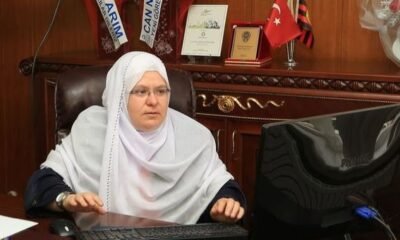
Mehmet Emin Korkmaz was behind a scandalous tweet that made rounds on the social media. Korkmaz, a member of the far-right Good Party (IP) hurled insults on Zeynep Güneş, mayor of Mihalgazi district of central province of Eskişehir. “Look at this mayor! She is more appropriate for milking cows in her farm than running a town,” Korkmaz wrote in a tweet accompanying a photo of Güneş. Güneş, a three-term mayor, usually wears a traditional dress popular among female villagers in parts of Türkiye. Korkmaz further disparaged Güneş as “uneducated” and mocked her şalvar, a part of her outfit.
Among mounting public outrage over remarks, prosecutors in Eskişehir launched an investigation into Korkmaz on charges of inciting hatred in public. Korkmaz was detained and remanded into custody on Sunday. IP Secretary-General Osman Ertürk Özel announced on the same day that they referred Korkmaz to the party’s disciplinary board for expulsion as he offered the party’s support to Güneş for “rude behavior she is exposed to.” Özel said in a social media post that only heinous people would insult others based on their choice of dressing. “Turkish women can rule the world, whatever they prefer to wear,” Özel wrote.
Ömer Çelik, spokesperson for ruling Justice and Development Party (AK Party) where Güneş serves as mayor, denounced the incident in a social media post and described it as “hate speech.” “We are grateful to everyone condemning this toxic rhetoric,” he wrote. Eskişehir Mayor Ayşe Ünlüce, of the main opposition Republican People’s Party (CHP) rushed to the side of Güneş. Ünlüce posted a photo of “Mayor Zeynep” in the same dress she was wearing when Korkmaz insulted her. “I condemn the discriminatory expressions towards the mayor. We fight this disrespectful mindset against women. As a member of the republic, which granted right to elect and be elected to women, I cannot accept this dirty language attacking women on what they wear. We are with Mayor Zeynep and against this mindset, the women will prevail in every venue,” she said in a statement.
President Recep Tayyip Erdogan on Saturday welcomed Jordan’s King Abdullah II with an official ceremony during the monarch’s visit to Türkiye.
Following the ceremony at the Dolmabahçe Presidential Office in Istanbul, Erdoğan and King Abdullah held a one-on-one meeting before talks expanded to include delegations from both countries.
Senior Turkish officials attending the meetings included Defense Minister Yaşar Güler, Foreign Minister Hakan Fidan, National Intelligence Organization head Ibrahim Kalın, and Erdoğan’s chief foreign policy and security adviser, Akif Çağatay Kılıç.
“In addition to bilateral relations, the two leaders will discuss current developments in the region and steps that can be taken to ensure stability,” Communications Director Burhanettin Duran said on X.
No further details were immediately available about the meeting.

Aktaş arraigned for corruption plaguing cities run by Türkiye’s CHP

He entered UYAP with the prosecutors’ password and closed the FETO files! The trial of the court clerk continued

Mayor quits Türkiye’s CHP after chairperson’s insults
Aktaş arraigned for corruption plaguing cities run by Türkiye’s CHP
He entered UYAP with the prosecutors’ password and closed the FETO files! The trial of the court clerk continued
Mayor quits Türkiye’s CHP after chairperson’s insults
-
 Daily Agenda2 days ago
Historical blow from MİT to Mossad: Trade-masked assassination network collapsed
-
 Daily Agenda21 hours ago
Minister of Justice Tunç: “The regulation regarding children involved in crime will come to the parliament after the commission works are completed.”
-

 Economy19 hours ago
Facing US tariffs, South Africa steps toward trade deal with China
-

 Daily Agenda10 hours ago
Immoral and excessive attack on women
-
 Daily Agenda3 days ago
Breaking news! President Erdoğan spoke in Osmaniye on February 6: We were reborn to 86 million people, we showed the power of Türkiye!
-

 Sports20 hours ago
Turkish center Alperen Şengün named in 2026 NBA All-Star
-

 Sports6 hours ago
Akar carries Türkiye’s hopes into Olympic short track spotlight
-
 Politics6 hours ago
Arrest, outrage after far-right man targets Turkish mayor’s dress