
Politics
Türkiye refutes claims Epstein’s jet used Incirlik Air Base

Türkiye’s defense minister on Friday dismissed allegations that the private jet of U.S. financier and convicted sex offender Jeffrey Epstein used Incirlik Air Base, saying there is no evidence the aircraft landed, took off or transited through the strategic military facility.
Defense Minister Yaşar Güler made the statement in response to a written parliamentary question from opposition Good Party (IP) lawmaker Selcan Taşcı, who asked whether Incirlik, a Turkish Air Forces Command base that hosts NATO operations, had been used in connection with Epstein’s jet and whether any safeguards were in place to prevent human trafficking and the illegal transport of children at military bases.
In his reply, Güler stressed that all Turkish military air bases are classified as first-degree restricted zones under national law, accessible only to authorized personnel and vehicles with special permits subject to biometric checks and identity verification.
“The facility is a Turkish Air Force installation owned by the Republic of Türkiye,” Güler said in a written response. “All materials entering or leaving Incirlik Air Base from abroad are handled by the Incirlik Customs Directorate under the Trade Ministry, and individuals entering or exiting from abroad are processed by the Passport Police under the Interior Ministry in accordance with relevant legislation. There is no report, complaint or official notification regarding the allegations.”
Epstein, an American financier who was jailed and died in U.S. custody in 2019 while awaiting trial on federal charges of sex trafficking of minors, owned and operated a fleet of private jets during his lifetime. Some of those aircraft were reportedly used to fly associates, clients and young women between his properties in the U.S. and the Caribbean, including his private island in the U.S. Virgin Islands and his Zorro Ranch in New Mexico.
Taşcı’s question also asked whether the Defense Ministry had put in place special monitoring or risk-prevention mechanisms to guard against exploitation related to human trafficking at military facilities. Güler’s statement reiterated that strict access controls and security procedures govern all Turkish military air bases but did not provide additional details on any dedicated anti-trafficking measures.
The views and opinions expressed in this article are solely those of the author. They do not necessarily reflect the editorial stance, values or position of Daily Sabah. The newspaper provides space for diverse perspectives as part of its commitment to open and informed public discussion.

Legal troubles are mounting for Türkiye’s main opposition Republican People’s Party (CHP) as a fresh wave of bribery and corruption investigations has led to the detention of another mayor and dozens of municipal officials, prosecutors said Friday.
Operations targeting CHP-run municipalities in Uşak and Marmaris resulted in the detention of 24 people, including Özkan Yalım and a deputy mayor in Marmaris, according to authorities. The detentions mark the latest development in a series of probes focusing on opposition-led local governments.
At least a dozen CHP mayors have been detained or arrested since last year, with several more facing ongoing corruption and bribery investigations or trials. High-profile cases include Istanbul’s suspended mayor, Ekrem Imamoğlu, and Antalya’s ousted mayor, Muhittin Böcek, whose cases have drawn national attention following their arrests late last year and trials that began earlier this month.
Friday’s operation was coordinated by the Istanbul Chief Public Prosecutor’s Office, with raids carried out in Uşak, Ankara and Kocaeli. Prosecutors allege that Yalım and 12 others received bribes from individuals and companies in connection with municipal tenders.
According to the investigation, Uşak Municipality is accused of using duplicate invoicing in public tenders, with the difference allegedly collected as illicit payments. Authorities also claim that companies were pressured to provide business partnerships to individuals linked to the mayor’s family in exchange for securing contracts.
Prosecutors further allege that deputy mayors collected large sums of money under the guise of donations to Uşakspor, a local football club, but transferred the funds into personal accounts. Some payments were allegedly delivered in cash to the mayor’s office and handled without receipts.
The investigation also points to alleged misuse of municipal funds, including expenses at entertainment venues that were reportedly billed to the municipality as “representation and hospitality” costs.
Authorities claim that Yalım transferred all his registered assets to his driver, Cihan Aras, in 2025 to avoid possible seizure. Prosecutors also allege that a municipal position was given to an individual with personal ties to the mayor despite no evidence of actual employment.
Financial findings by the Financial Crimes Investigation Board (MASAK) revealed high-value money movements, including large cash deposits, asset purchases and international transfers with unidentified sources. Investigators said these transactions were inconsistent with the suspects’ financial profiles and supported by communication records and witness statements.
Authorities also allege that personnel working at a facility linked to Yalım were registered as municipal employees, with their insurance premiums paid by the municipality. In another claim, prosecutors said a businessman who refused to meet a vehicle request from the mayor later faced administrative penalties against his business.
Marmaris probe
Separately, prosecutors in Muğla launched an investigation into the CHP-run Marmaris Municipality over alleged bribery and irregularities in zoning and permit processes.
The probe alleges that certain municipal officials coordinated irregular transactions through selected personnel for financial gain, particularly in construction, tourism and business licensing.
Arrest warrants were issued for multiple suspects, including the deputy mayor, urban planning officials and municipal police personnel. Police conducted searches at residences, workplaces and municipal offices.
Thirteen people, including eight municipal employees, were detained as part of the operation.
CHP Muğla lawmaker Cumhur Uzun described the investigation as an isolated case in remarks to reporters outside the municipality building.
The latest developments add to growing scrutiny surrounding CHP-run municipalities, as investigations into alleged bribery, corruption and financial misconduct continue across multiple regions.
Hostilities in the Middle East have intensified following joint U.S.-Israeli attacks on Iran, which have killed thousands since Feb. 28. As Tehran retaliates with drone and missile strikes targeting Israel, along with Jordan, Iraq and the Gulf countries, states in the region reconsider their security strategies with Türkiye emerging as a potential key partner in defense and military cooperation.
While noting that the Middle East, which has become the scene of comprehensive attacks jointly waged by the United States and Israel against Iran, is experiencing one of the most critical periods in its history, “The conflict presents opportunities to redefine relations between Türkiye and the Gulf countries, Saudi Arabia, the United Arab Emirates (UAE), Qatar and Kuwait, particularly along the axis of defense and security architecture,” Hüseyin Fazla, a retired air force brigadier general and founder and director of STRASAM told to Daily Sabah.
Foreign Minister Hakan Fidan visited Riyadh, Doha and Abu Dhabi from March 18-20 as part of a three-day Gulf tour following the outbreak of war, in what marked his first high-level diplomatic outreach after the conflict.
Beginning in Riyadh, Fidan attended a Saudi-led meeting bringing together foreign ministers from Türkiye, Qatar, Azerbaijan, Bahrain, Egypt, Jordan, Kuwait, Lebanon, Pakistan, Syria and the UAE.
During the tour, he underscored Türkiye’s support for Gulf countries in the face of Iran’s attacks, warning that continued escalation could prompt countermeasures from the region and urging Tehran to abandon its retaliation policy to prevent a wider war.
According to Fazla, the ongoing conflict between the U.S.-Israel and Iran is reshaping the Middle East’s strategic landscape, creating an opportunity for Türkiye to help fill emerging security gaps in the Gulf with domestically produced, high-tech defense systems that are not tied to political conditions. Turkish defense products, proven in combat, could appeal to Gulf states seeking greater strategic autonomy and reduced reliance on external powers.
“Gulf capitals are likely to seek a balancing role for Türkiye as a regional power and a strategic partner that provides depth in safeguarding their interests,” he stated, warning that although drone and ballistic missile threats may diminish after the clash, new geopolitical dynamics will emerge.
“In this context, future relations between Türkiye and these countries could be assessed under a new framework that goes beyond a commercial partnership to include active defense cooperation.”
Fazla also underlined that Türkiye’s “Steel Dome” architecture, developed in line with its layered and integrated air defense vision, could offer Gulf countries, particularly the United Arab Emirates and Saudi Arabia, a more comprehensive and cost-effective alternative to Western systems such as Patriot and THAAD against ballistic missiles, aircraft and kamikaze drones.
He described the Steel Dome as a turnkey national air defense model with strong appeal for Gulf states seeking integrated and sovereign defense solutions, as the system brings together capabilities including the HISAR and SIPER air defense systems, KORKUT and other point-defense platforms, as well as laser-based weapons such as ALKA and short-range systems like SUNGUR, under a network-centric command and control structure.
Minister Fidan previously signaled that rising tensions are likely to fundamentally shape the future policies and strategies of Gulf countries, suggesting they may explore new options, particularly in security and defense industries.
On the other hand, Ayhan Sarı, an associate professor at the Turkish-German University and security and foreign policy expert at the Turkish Research Foundation, said the U.S., despite drawing trillions of dollars in Gulf capital and selling hundreds of billions of dollars in arms to the region, has failed to provide adequate security for its partners.
Sarı noted that reports of damage to U.S. bases, downed aircraft and American casualties highlight Washington’s own vulnerabilities.
“What is striking is that the United States has not been able to fully protect even itself in this environment,” he said, arguing that this has exposed limits to U.S. security guarantees for Gulf states.
The expert also added that, despite vast financial resources, advanced weaponry and technology, the U.S. has struggled to ensure uninterrupted maritime traffic through the Strait of Hormuz, calling it a clear indication of military shortcomings in the region.
Türkiye, which has gained prominence in recent years for advances in its defense sector, is already engaged in substantial cooperation with Gulf states. Following Iran’s recent attacks, multiple countries have reportedly offered partnerships to Gulf nations in areas such as air defense and counter-drone technologies.
Sarı added that Washington’s stance during the Russia-Ukraine war, which many in Europe viewed as leaving the continent to shoulder the burden alone, has further deepened these concerns.
“In this context, relying on the West to build a national security architecture would be a serious miscalculation,” the expert said.
“What was once seen as a strong warning has now, with the latest war, become a tangible reality.”
Türkiye, which maintains high-level military cooperation with Qatar, has also indicated the possibility of a partnership with Saudi Arabia in the development of its domestically produced Kaan fighter jet.
Kaan is a fifth-generation stealth jet that Türkiye has worked on for almost a decade. The jet was first publicly unveiled in 2023 before it performed its maiden test flight in early 2024. Its serial production is expected to begin in 2028.
The aircraft is designed to perform air-to-air combat with next-generation weapons and conduct precision strikes from internal weapon bays at supersonic speeds, supported by artificial intelligence and neural-network systems.
Moreover, Fazla also offered that Türkiye’s 2026 vision in the defense industry, particularly its “local production” model that enables technology transfer to partner countries, could offer Gulf states an opportunity to reduce external dependency.
Within this framework, he pointed to armed unmanned surface vessel platforms such as ULAQ and MARLIN, which could contribute to maritime security in the Persian Gulf and the Strait of Hormuz.
“In addition, the uninterrupted munitions supply chain provided by Türkiye through MKE and ROKETSAN, including systems such as SOM, TAYFUN and ATMACA will ensure logistical continuity for Gulf militaries.”
Last month, Türkiye and Saudi Arabia signed a memorandum of understanding covering a joint production of the Turkish indigenous Gökbey multirole helicopter, marking the platform’s first overseas manufacturing agreement.
This agreement on Gökbey comes just days after President Recep Tayyip Erdoğan said Ankara and Riyadh could opt for joint investment in Türkiye’s homegrown fifth-generation stealth fighter jet program at “any time.”
Path to regional defense pact
Minister Fidan’s meeting in Riyadh with his counterparts from Saudi Arabia, Pakistan and Egypt also added momentum to ongoing discussions in recent months about a possible “alliance” among these countries.
The instability triggered by the war with Iran and the growing demand for security could push Gulf countries to seek a regional security pact with a strong partner beyond the United States.
According to Hüseyin Fazla, the Saudi Arabia-Pakistan Strategic Mutual Defense Agreement signed on Sept. 17, 2025, could be expanded into a broader regional defense framework including powers such as Türkiye and Egypt, and potentially even Iran in the future, depending on postwar developments.
“Such a structure, combining Pakistan’s nuclear deterrence with Türkiye’s defense industry capabilities, could reduce Gulf dependence on the United States while forming a regional bloc capable of countering emerging threats and strengthening collective deterrence.”
Additionally, reiterating that historical precedents such as the Sadabad Pact and the Balkan Pacts exist, Ayhan Sarı offered that updated versions adapted to current conditions, with real operational relevance on the ground and the capacity to effectively deter Israeli aggression, are possible.
“The core of such an alliance could perhaps be formed by Türkiye, Pakistan and Saudi Arabia,” he emphasized.
President Recep Tayyip Erdoğan said Friday that the international system established after World War II is facing a deep legitimacy crisis, as conflicts, power struggles and humanitarian crises spread across the globe.
“The post-World War II order built by its victors faces a deep legitimacy crisis across nearly all domains,” Erdoğan said in a video message sent to the International Strategic Communication Summit 2026 (Stratcom Summit ’26) held in Istanbul by Türkiye’s Directorate of Communications.
“The institutions, rules and set of values underpinning the system are gradually losing their function,” he added.
“The world is going through a challenging period marked by escalating genocides, wars and crises, where power competition is spreading across areas such as energy, technology and trade, and disputes are increasingly attempted to be resolved through force rather than dialogue.”
“Ending tragedies, as in Gaza, and restoring peace, stability and prosperity worldwide, especially in the region, is more important than ever,” said Erdoğan.
He stressed the need to strengthen communication and cooperation mechanisms to counter disinformation and distorted narratives, calling on governments, academics, civil society and think tanks to take more active roles.
“Türkiye will resolutely maintain its principled, determined, peace-centric stance focused on humanitarian values and justice, mobilizing all its means to help rebuild peace and security not only in our region but across the world,” Erdoğan added.
The views and opinions expressed in this article are solely those of the author. They do not necessarily reflect the editorial stance, values or position of Daily Sabah. The newspaper provides space for diverse perspectives as part of its commitment to open and informed public discussion.
Türkiye’s Parliament is set to review starting next week a sweeping proposal that would expand maternity and paternity leave and impose new regulations on social media use for minors, lawmakers said Friday.
The 29-article package, including amendments to the Social Services Law, will be discussed in the Family, Labor and Social Affairs Committee on April 2.
The proposal, put forward by the ruling Justice and Development Party (AK Party), aims to strengthen family policies while enhancing protections for children both online and offline. If approved, maternity leave for working mothers would increase from 18 weeks to 24 weeks, with mothers currently on leave benefiting from the extension.
The plan also allows mothers to transfer six weeks of their eight-week prenatal leave to the postnatal period upon request. Paternity leave for fathers would rise from five days to 10, aligning it with civil servants’ entitlements.
The legislation also targets children’s online safety. It would prohibit social media use for those under 15, requiring social network providers to implement algorithm-based age verification and parental control systems. Accounts found to belong to users under 15 would be closed, and companies distributing online games in Türkiye would be required to maintain local representatives.
Experts stress the importance of monitoring children’s social media use alongside these regulations. Kerime Begüm Özkaya, a specialist psychologist at Sivas Medicana Hospital, said that such oversight should focus on guidance rather than coercion. “Knowing their circle of friends is extremely important. Families need to know very well who their children spend time with, where they spend their time, who their friend groups are. Social media use, in particular, should be monitored,” Özkaya said.
Other measures in the package aim to support family structures more broadly. Foster families would receive a 10-day leave to spend with children in their care, while the state could cover social security premiums for spouses without insurance.
The proposal further seeks to protect children from potential harm by banning individuals convicted of crimes against minors from working in environments where children are concentrated, including schools, nurseries, day care centers, student dormitories and on school transportation. Businesses operated by such individuals that serve children would be transferred within six months to new management.
Following committee discussions, the legislation is expected to be approved and forwarded to Parliament for final passage, potentially reshaping parental leave policies and child protection in Türkiye.
Türkiye on Thursday expressed concern over an attack on a Turkish-operated oil tanker in the Black Sea, warning the incident poses serious risks to maritime safety and could signal a dangerous expansion of regional conflict.
Foreign Ministry spokesman Öncü Keçeli said the vessel, identified as the Altura, a Sierra Leone-flagged tanker carrying crude oil and operated by a Turkish company, was targeted earlier in the day in the Black Sea.
He confirmed that all 27 Turkish crew members on board are safe, while technical inspections and response measures are ongoing following the incident.
Keçeli noted that the attack took place within Türkiye’s exclusive economic zone and constituted a violation of international law, as he raised concerns over the safety of navigation, environmental security and the protection of life and property in the region.
He warned that such incidents heighten the risk of the conflict spreading further into the Black Sea, stressing the need to prevent escalation.
The foreign ministry spokesman said Ankara is maintaining diplomatic contacts with relevant parties and emphasized that it reserves the right to take necessary measures under international law to safeguard its economic interests and activities in the region.
The Sierra Leone-flagged vessel had departed from Russia’s port of Novorossiysk carrying crude oil, according to ship-tracking data.
In December, Türkiye witnessed a series of security incidents linked to the Russia-Ukraine conflict, with President Recep Tayyip Erdoğan warning against the Black Sea becoming an “area of confrontation” between the warring parties.
Türkiye, whose northern shore faces Ukraine and annexed Crimea, has maintained close ties with both Kyiv and Moscow since Russia’s invasion of Ukraine in February 2022.
President Recep Tayyip Erdoğan warned that ongoing conflicts will impose growing costs on the entire world if they are not brought to an end, stressing that geography will offer no protection from the consequences of war.
Speaking at the World Economic Forum Türkiye Country Strategy Meeting held at the Dolmabahçe Presidential Office in Istanbul, Erdoğan said the burden of ongoing conflicts is being felt far beyond the immediate region.
“If conflicts do not end, the price to be paid will only grow. Geographical distance will have no meaning in this process,” Erdoğan said.
He emphasized that while opportunities exist to reach common ground through diplomacy and dialogue, sabotaging these efforts forces all of humanity to bear the consequences.
Erdoğan described the war that has shaken the region for the past month as “meaningless, unlawful and unnecessary,” adding that its cost is being borne not only by the parties involved but by the entire global community.
He noted that the negative effects of war are already being felt worldwide, from energy markets to production, information systems, transportation and trade networks.
The meeting brought together senior Turkish officials, including Vice President Cevdet Yılmaz, Foreign Minister Hakan Fidan and Treasury and Finance Minister Mehmet Şimşek, along with global CEOs, international financial representatives and major fund managers.
Later, Erdoğan held a closed-door meeting with Laurence Douglas Fink, head of World Economic Forum and BlackRock, at the Dolmabahçe office.


-
 Daily Agenda18 hours ago
MİT President İbrahim Kalın: As Türkiye, we will fight vigilantly until the end
-
 Daily Agenda17 hours ago
Bahçeli: If there is to be a regime change, it should start with Israel
-
 Daily Agenda2 days ago
Exemplary compensation of 10 million lira
-
 Politics2 days ago
Erdoğan opposes bloodshed in Iran, Gulf, calls for unity against Zionists
-
 Daily Agenda3 days ago
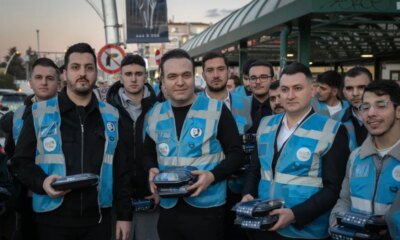
AK Party distributed 1 million 175 thousand iftar meals at the ‘5 Before Iftar’ events
-
 Daily Agenda2 days ago
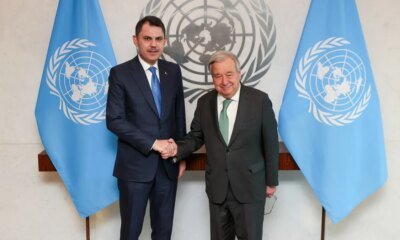
Zero Waste and COP31 diplomacy in the USA from Minister Kurum
-

 Sports2 days ago
Ancelotti backs Brazil squad, spurns Neymar calls after France loss
-
 Politics2 days ago
Top official says terror-free Türkiye will succeed despite war