
Politics
‘Türkiye won’t let terror-free initiative go to waste’

President Recep Tayyip Erdoğan highlighted that Türkiye’s commitment to protect and preserve its efforts to eliminate terrorism within the country and will not allow those efforts to be undermined, reversed, or sabotaged in order to maintain national security and ensuring that its progress in counterterrorism is not lost.
Speaking at a news conference after a Cabinet meeting in the capital, Ankara, Erdoğan said some actors have been trying to sabotage the initiative.
‘It appears that certain elements both within the country and within the PKK terrorist group are pursuing sabotage efforts aimed at derailing the terror-free Türkiye process, but our state will not fall into these traps,” he told reporters.
The PKK terrorist group is expected to start laying down arms this week.
The terror-free Türkiye initiative was first hinted at by officials, including Nationalist Movement Party (MHP) Chairman Devlet Bahçeli and President Recep Tayyip Erdoğan, months before the initiative took its present form. Erdoğan and Bahçeli had repeatedly highlighted ensuring Türkiye’s unity and establishment of “a home front” as they cited that Israel sought to expand its conflict with the Palestinians to the wider region and eventually to Türkiye.
Bahçeli’s call was followed by visits from a delegation from the DEM Party to PKK’s jailed ringleader Abdullah Öcalan in the island prison where he is held in the Marmara Sea.
After decades of military operations to eradicate the group, Türkiye initiated a “reconciliation process” in 2013 in a bid to prevent the PKK from justifying its actions. The process saw the reinstatement of the rights of the Kurdish community, but it ultimately collapsed when the PKK resumed its terror attacks after a brief lull.
The new initiative is expected to move forward this summer, with the PKK handing over arms to authorities in Syria and Iraq in a process that will be overseen by Turkish intelligence. After the handover, PKK members not involved in terrorism will be accepted into Türkiye to serve their sentences, according to the media outlets, while the group’s ringleaders holed up in Iraq will likely leave for third countries, the unconfirmed reports say.
Erdoğan also announced that Ankara will host the NATO summit to be held in Türkiye in 2026. He said the summit will take place in July.
“At the 2026 NATO Summit of Heads of State and Government, we will host NATO leaders in our capital, Ankara, and pave the way for the adoption of very important decisions,” Erdoğan said.

Nationalist Movement Party (MHP) Chairman Devlet Bahçeli warned that attempts are underway to provoke conflict between Türkiye and Iran and ignite broader regional tensions, vowing that Ankara will not bow to any threats.
Speaking at an iftar gathering attended by members of the party’s Central Executive Board, Central Disciplinary Board and lawmakers, Bahçeli said there were efforts aimed at pushing Türkiye and Iran into confrontation while also fueling clashes between Iran and Gulf countries to influence the course of regional conflicts.
Bahçeli stressed that Türkiye is not a state that would fall into intelligence or perception traps designed to destabilize the country.
He warned that Türkiye must remain vigilant against geopolitical schemes seeking to drag the country into chaos and reshape the regional balance through conflict.
The MHP leader said Türkiye should be prepared for all possible scenarios and act carefully to prevent such plans from succeeding.
His remarks came days after ballistic missiles fired from Iran toward Turkish airspace were intercepted by NATO defense systems, with Turkish officials condemning the violation of the country’s airspace and warning that Ankara would take necessary measures to protect its sovereignty.
Türkiye has recently intensified diplomatic contacts with regional and international partners as fighting in the Middle East raises concerns about the risk of a broader regional conflict and its potential impact on the country’s security.
Türkiye on Thursday marked the 10th anniversary of a car bombing in central Ankara, one of the deadliest attacks carried out by the PKK terror group during a wave of urban violence in 2015-2016.
The March 13, 2016, attack targeted bus stops in the capital’s busy Kızılay district, where a car packed with explosives was detonated at Güvenpark, killing 36 people and injuring 344 others.
Among those killed were four children. Thirty-two children were also among the wounded.
Authorities said the vehicle was detonated by PKK members Seher Çağla Demir and Özgür Ünsal. The attackers were killed in the explosion.
One of the victims was an unborn baby carried by six-month pregnant Songül Yılmaz, who was injured in the blast. The baby was later described as the youngest victim of the attack.
The bombing came after the PKK launched a violent campaign in several southeastern districts, including Şırnak, Silopi, Cizre, Nusaybin, Derik, Idil, Sur and Yüksekova, where militants dug trenches, erected barricades and declared so-called “autonomous zones.”
Security forces responded with operations to restore control in those areas. After failing to sustain the campaign, the group carried out the Güvenpark bombing targeting civilians waiting at bus stops in the capital.
Perpetrators brought to justice
Following the attack, the Ankara Chief Public Prosecutor’s Office launched an investigation that led to an indictment against 55 suspects, including senior PKK figures. The trial began on June 19, 2017, and concluded on Nov. 21, 2018, at an Ankara court.
Mehmet Veysi Dolaşan received 37 aggravated life sentences for the killing of 36 victims and for attempting to undermine the unity and territorial integrity of the state. He was also sentenced to an additional 10,260 years in prison for the attempted murder of the 344 people injured in the blast, along with further prison time and a fine for explosives-related offenses.
Two other defendants, Sebahattin Karakoç and Azamattin Karakoç, were also given aggravated life sentences.
In a separate trial concluded in November 2020, Ferit Ak and Salih Şahin were each sentenced to 15 years in prison for knowingly aiding the terrorist group.
The Güvenpark bombing remains one of the most devastating attacks in Ankara’s recent history and a stark reminder of the PKK’s campaign of violence targeting civilians in Türkiye.
Major PKK attacks
The PKK terrorist group has carried out numerous deadly attacks in Türkiye over the past decades, targeting both security forces and civilians as part of its terror campaign that began in 1984. More than 40,000 people have been killed since then.
Türkiye first sought a political solution to the PKK issue in the early 1990s under then-President Turgut Özal, who promoted a civilian approach and explored greater rights for the country’s Kurdish community. His outreach contributed to a brief PKK cease-fire, but the effort faltered after renewed attacks and Özal’s death in 1993.
The violence continued until PKK leader Abdullah Öcalan’s capture in 1999. A second peace initiative began in 2012, known as the reconciliation process, during which the government expanded cultural and language rights. The process collapsed in 2015, after which the PKK resumed attacks, prompting intensified Turkish counterterrorism operations at home and across the border.
The following year saw back-to-back PKK attacks across Türkiye, many involving explosives targeting security forces and civilians.
In January 2016, militants attacked a district police headquarters in the Çınar district of Diyarbakır with a truck bomb, rockets and gunfire, killing at least six people, including civilians and children, and wounding dozens.
Two months later, in March 2016, a car bomb targeting an armored police vehicle near a bus terminal in Diyarbakır killed seven police officers and injured 27 people, including civilians.
In May that year, a bomb-laden truck detonated in the Durumlu area of Diyarbakır after civilians intercepted the vehicle suspected of carrying explosives. The blast killed 16 people and wounded more than 20.
The attacks continued through the summer. In August 2016, a suicide car bomb struck a police checkpoint outside district headquarters in Cizre, in the southeastern province of Şırnak, killing 12 police officers and injuring dozens.
Later the same month, a car bomb targeting a police station in Elazığ killed at least six people and wounded more than 200 others.
In October 2016, another large car bomb targeted a military facility in the district of Şemdinli in Hakkari province, killing soldiers and civilians and injuring dozens more.
PKK disarmament
Today, Türkiye is working to bring a permanent end to PKK terrorism with its “terror-free Türkiye” initiative, first conceived in October 2024 by government ally Devlet Bahçeli, who extended an olive branch to Öcalan should he urge his terror group to lay down arms.
After Öcalan appealed to his group last year, the PKK formally disbanded, withdrawing all members from Turkish soil and even holding a symbolic ceremony in northern Iraq where a group of PKK members burned their weapons.
In Ankara, a cross-party parliamentary commission last month published a key report meant to prepare the legal groundwork to advance the process, backing plans to reintegrate former PKK members. Ankara has repeatedly ruled out amnesty for Öcalan or PKK terrorists, with officials saying the legal framework would only consider integration for PKK members who have not engaged in terrorist activities.
The report is expected to be put before Parliament sometime this month, likely after the end of Islam’s holy month of Ramadan. If it passes, it will be the first concrete step taken by Türkiye.
Good Party (IP) leader Müsavat Dervişoğlu said decisions regarding any potential alliances would be discussed within the party’s internal decision-making bodies when the appropriate time comes.
“Decisions about whether to form alliances or not are not something I would decide alone,” Dervisoglu told journalists during an iftar dinner with reporters in Ankara on Wednesday evening.
He responded to the comments, stressing, “Issues concerning my party and my country should be discussed and decided within the party’s authorized institutions.”
Remarks by the leader of Türkiye’s nationalist Victory Party (ZP) about a possible election alliance with the Good Party have sparked renewed debate in Turkish politics over the possibility of a broader nationalist bloc ahead of future elections.
ZP leader Ümit Özdağ said Tuesday during an interview with Turkish media that his party was open to forming an alliance with the IP, describing such cooperation as “perhaps the most natural alliance in Turkish politics.”
Özdağ said both parties’ supporters favored closer political cooperation, raising speculation about whether nationalist-oriented opposition parties could coordinate their strategies in upcoming elections.
Dervisoglu also noted the IP has not held formal alliance talks with any political party since Türkiye’s 2023 elections.
He also acknowledged that opinion polls showing the party’s support at around 8% to 9% would not be sufficient under Türkiye’s current political system.
“Nine percent does not benefit either us or Türkiye,” he said, arguing that the country’s political system requires either winning the presidency or building a parliamentary majority strong enough to govern effectively.
Dervisoglu said the IP aims to become a political platform capable of bringing together different segments of society, describing the party as a potential “umbrella” under which other political groups could gather.
Asked about public trust in the opposition, he said skepticism was not limited to opposition parties.
“This nation does not distrust only the opposition; it does not fully trust the government either,” he said, adding that voters may still be searching for a political leadership they can place their confidence in.
The comments of the leaders have fueled discussions about whether nationalist parties in Türkiye could cooperate more closely in future elections.
The ZP and IP have overlapping political stances, although the ZP stood out with its more hawkish tone, especially in anti-refugee policies that led to an indictment against its chair, Özdağ, on charges of inciting riots against Syrian refugees in Türkiye.
Özdağ was detained last year initially over accusations that he “insulted” the president, but the scope of the investigation was later expanded to include charges of inciting public hatred and hostility.
Moreover, Özdağ was later formally arrested and charged with inciting hatred against migrants. He was blamed for anti-Syrian refugee riots in the central province of Kayseri, during which hundreds of homes and businesses were attacked.
In the 2023 elections, Özdağ endorsed Kemal Kılıçdaroğlu, the candidate of a six-party opposition bloc against President Recep Tayyip Erdoğan, while the ZP won 2.2% of the vote in legislative elections where it jointly ran with the Justice Party under the ATA Alliance. In last year’s municipal elections, it won only 1.74% of the vote.
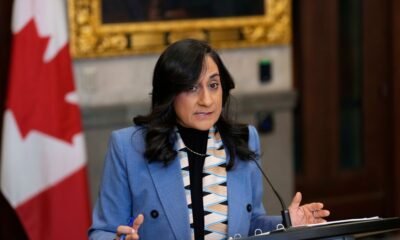
Canadian Foreign Minister Anita Anand said Thursday she will travel to Türkiye in the coming days to meet Foreign Minister Hakan Fidan for talks on the escalating conflict in the Middle East and efforts to reduce tensions.
Anand said at a news conference that she will be “emphasizing and pushing on the needs of Canadians in the region, as well as the need for de-escalation and the protection of civilian lives and civilian infrastructure.”
Her remarks came as Canada announced new humanitarian funding for Lebanon.
Randeep Sarai, Canada’s secretary of state for international development, said Ottawa is providing $37.7 million in assistance to support urgent humanitarian needs.
Canada is working with “trusted humanitarian partners, including Canadian NGOs, such as Humanity and Inclusion Canada, Oxfam Quebec, International Medical Corps Canada, U.N. agencies and the Red Cross to ensure this life saving assistance goes directly to those who desperately need it,” he said. “We call on all actors to immediately de-escalate the situation and engage in constructive dialogue to prevent further suffering. The people of Lebanon deserve safety, dignity and a future free from violence.”
The escalation in the Middle East flared since Israel and the U.S. launched a joint attack against Iran on Feb. 28, killing more than 1,300 victims to date, including then-Supreme Leader Ayatollah Ali Khamenei and over 150 schoolgirls.
Iran has retaliated with drone and missile strikes targeting Israel, Jordan, Iraq and Gulf countries hosting U.S. military assets, killing at least eight U.S. service members and injuring 140.
On March 2, the Lebanese resistance group, Hezbollah, began attacking Israeli military sites in response to repeated Israeli attacks against Lebanon and the killing of Khamenei in a U.S.-Israeli strike.
Israel retaliated by launching a military campaign against Lebanon, carrying out airstrikes on Beirut’s southern suburbs and areas in the south and east. On March 3, it began a limited ground incursion in southern Lebanon.
Türkiye and Germany are expected to discuss strengthening bilateral ties, expanding trade and addressing regional crises during talks between Foreign Minister Hakan Fidan and his German counterpart Johann David Wadephul, who will visit Ankara this week, Turkish diplomatic sources said.
Wadephul will hold talks in Ankara on March 12 with Foreign Minister Fidan as the two NATO allies seek to deepen cooperation in political, economic and security fields.
According to Turkish diplomatic sources, the discussions are expected to highlight the momentum gained through recent high-level visits between the two countries and the importance of maintaining close dialogue.
Fidan is also expected to underline the significance of the third meeting of the Türkiye-Germany Strategic Dialogue Mechanism, scheduled to take place in Berlin on May 18, which aims to further strengthen the multidimensional relationship between the two countries.
Economic cooperation will also feature prominently in the talks, with Türkiye seeking to expand trade with Germany toward a $60 billion bilateral trade target. Officials are expected to discuss continued collaboration through mechanisms such as the Joint Economic and Trade Committee and the Energy and Mining Forum.
Defense industry cooperation and broader security issues are also set to be addressed during the meeting.
Fidan is expected to stress the importance of the European Union adopting a strategic approach toward relations with Türkiye and voice Ankara’s expectation that Germany support the revival of Türkiye’s EU accession process.
Türkiye will also convey its expectations regarding key issues in relations with the EU, including the modernization of the Customs Union and progress in the Visa Liberalization Dialogue.
On European security initiatives launched by the EU, Fidan is expected to emphasize that such efforts should be coordinated under NATO and include the participation of allied countries that are not EU members.
The Turkish minister is also expected to underline the importance Ankara attaches to the welfare and security of the approximately 3.5 million people of Turkish origin living in Germany, whom Türkiye views as a bridge between the two countries.
Regional developments are also expected to be high on the agenda, including the situation in Gaza and the broader Palestinian issue, the Russia-Ukraine war and the latest developments in Syria.
According to the sources, Fidan is expected to stress that attacks in the region are endangering energy supply security while also creating risks in areas such as migration and counterterrorism.
Türkiye is also expected to reiterate that diplomacy remains the only viable path to reducing tensions and resolving conflicts in the region.
Türkiye and Germany maintain a multifaceted relationship covering political, economic, military and parliamentary cooperation. Germany remains one of Türkiye’s largest trading partners, with bilateral trade reaching $52.2 billion in 2025.
Around 6.7 million German tourists visited Türkiye in 2025, while the large Turkish community in Germany continues to serve as a key link between the two nations.
Türkiye condemned Israel’s attacks on Lebanon that have displaced nearly one million people, calling them a grave violation of international humanitarian law and warning that the assaults are deepening regional instability.
In a statement published Thursday, the Foreign Ministry said Israel’s actions demonstrate an expansionist approach that is further destabilizing the region.
Ankara also warned that the Netanyahu government should not be allowed to continue in Lebanon the destructive policies it has pursued in Gaza.
Türkiye reaffirmed its solidarity with Lebanon, saying it will continue to stand with the Lebanese people and government against attacks that threaten the country’s sovereignty and territorial integrity.


-

 Daily Agenda3 days ago
Special session with war agenda in the Turkish Grand National Assembly! Speaker of the Turkish Grand National Assembly Numan Kurtulmuş: Developments cannot be considered as a temporary crisis
-
 Politics2 days ago
Turkish comms director stresses role of accurate information
-
 Politics13 hours ago
Canada’s foreign minister to visit Türkiye for talks on Iran war
-
 Daily Agenda2 days ago
Minister of Justice Akın Gürlek: No one can give orders to the courts
-
 Daily Agenda2 days ago
Minister of Family Göktaş addressed from the UN rostrum: Women and children are under threat
-
 Economy3 days ago
Halkbank stock soars as US drops case against Turkish public lender
-

 Daily Agenda2 days ago
The world saw Türkiye’s power, CHP could not
-
 Politics3 days ago
36 detained in Türkiye corruption probe linked to ex-Manavgat mayor