
Economy
War leaves Sudan’s infrastructure shattered, with costly rebuild needed

Destroyed bridges, blackouts, empty water stations and looted hospitals across Sudan bear witness to the devastating impact on infrastructure from two years of war.
Authorities estimate hundreds of billions of dollars’ worth of reconstruction would be needed. Yet there is little chance of that in the short term given continued fighting and drone attacks on power stations, dams and fuel depots.
Not to mention a world becoming more averse to foreign aid, where the biggest donor, the U.S., has slashed assistance.
The Sudanese army and paramilitary Rapid Support Forces (RSF) have been battling since April 2023, with tens of thousands of people killed or injured and about 13 million uprooted in what aid groups call the world’s worst humanitarian crisis.
Residents of the capital, Khartoum, have to endure weekslong power outages, unclean water and overcrowded hospitals. Their airport is burnt out with shells of planes on the runway.
Most of the main buildings in downtown Khartoum are charred and once-wealthy neighborhoods are ghost towns with destroyed cars and unexploded shells dotting the streets.
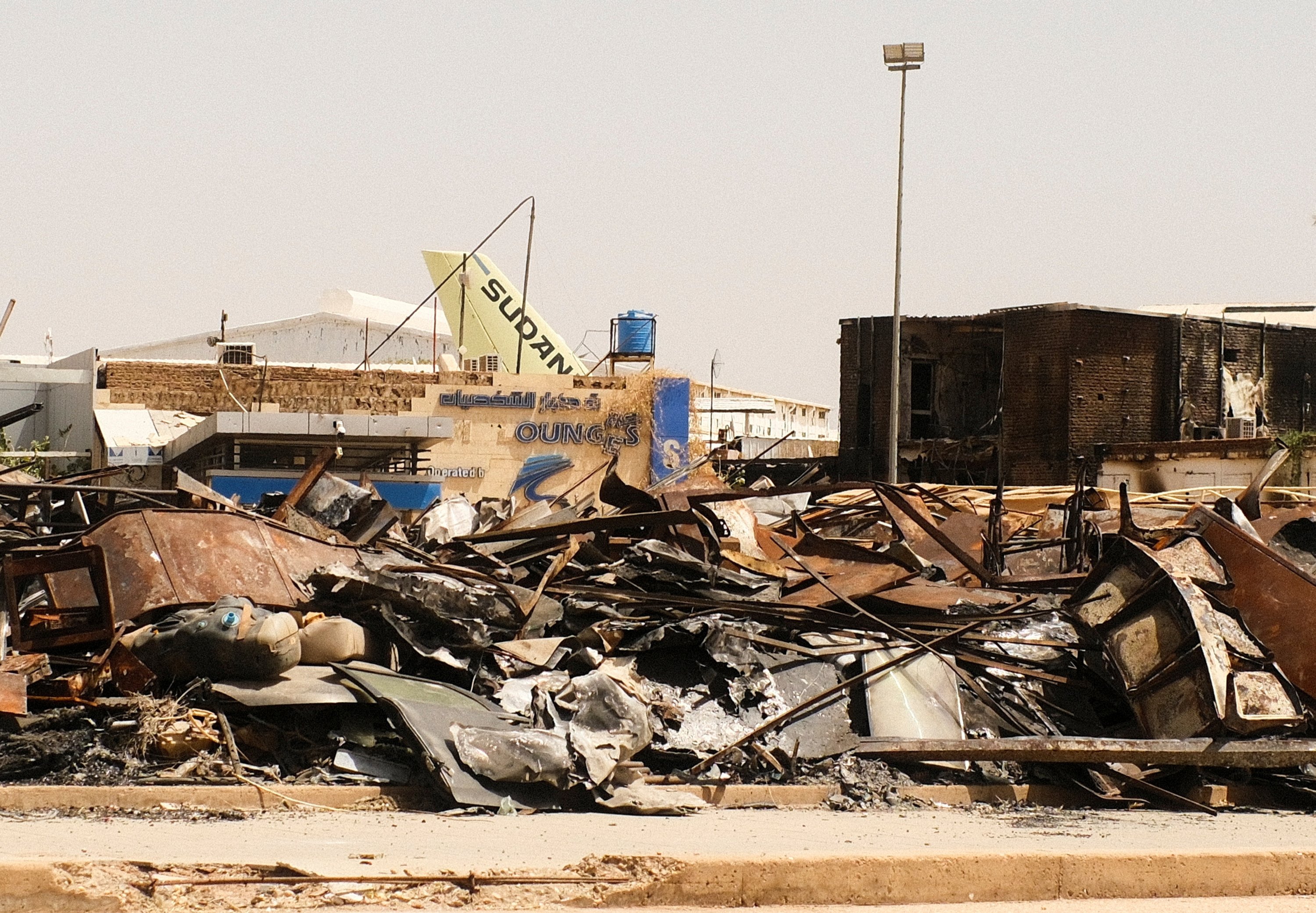
“Khartoum is not habitable. The war has destroyed our life and our country and we feel homeless even though the army is back in control,” said Tariq Ahmed, 56.
He returned briefly to his looted home in the capital before leaving it again, after the army recently pushed the RSF out of Khartoum.
One consequence of the infrastructure breakdown can be seen in a rapid cholera outbreak that has claimed 172 deaths out of 2,729 cases over the past week alone, mainly in Khartoum.
Other parts of central and western Sudan, including the Darfur region, are similarly ravaged by fighting, while the extensive damage in Khartoum, once the center of service provision, reverberates across the country.
Sudanese authorities estimate reconstruction needs at $300 billion for Khartoum and $700 billion for the rest of Sudan.
The U.N. is doing its own estimates.
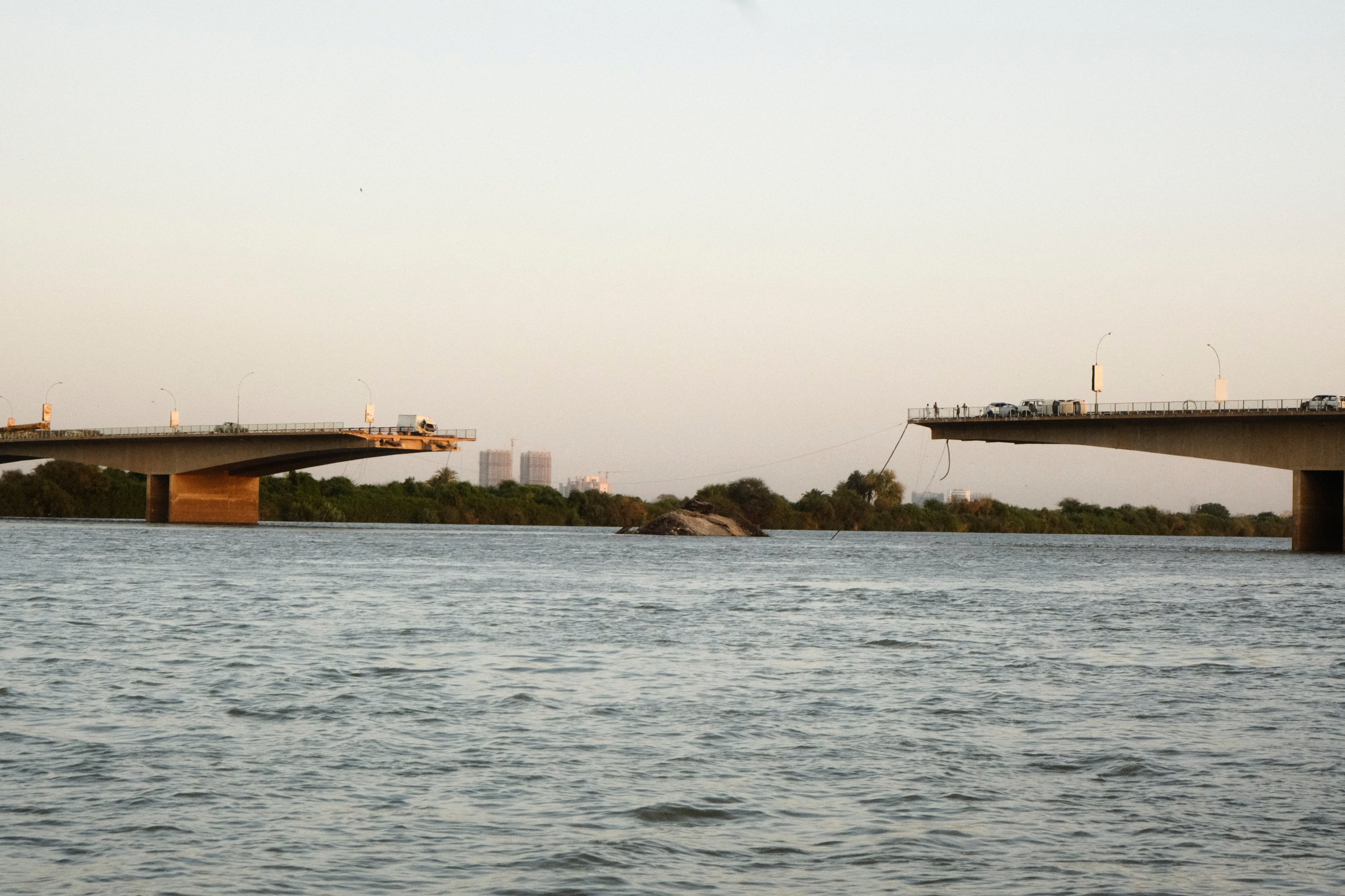
Sudan’s oil production has more than halved to 24,000 barrels-per-day and its refining capabilities ceased as the main al-Jaili oil refinery sustained $3 billion in damages during battles, Oil and Energy Minister Mohieddine Naeem told Reuters.
Without refining capacity, Sudan now exports all its crude and relies on imports, he said. It also struggles to maintain pipelines needed by South Sudan for its own exports.
Earlier this month, drones targeted fuel depots and the airport at the country’s main port city.
All of Khartoum’s power stations have been destroyed, Naeem said. The national electrical company recently announced a plan to increase supply from Egypt to northern Sudan and said earlier in the year that repeated drone attacks to stations outside Khartoum were stretching its ability to keep the grid going.
Looted copper
Government forces retook Khartoum earlier this year and as people return to houses turned upside down by looters, one distinctive feature has been deep holes drilled into walls and roads to uncover valuable copper wire.
On Sudan’s Nile Street, once its busiest throughway, there is a ditch about 1 meter (3 feet) deep and 4 kilometers (2.5 miles) long, stripped of wiring and with traces of burning.
Khartoum’s two main water stations went out of commission early in the war as RSF soldiers looted machinery and used fuel oil to power vehicles, according to Khartoum state spokesperson Altayeb Saadeddine.
Those who have remained in Khartoum resort to drinking water from the Nile or long-forgotten wells, exposing themselves to waterborne illnesses. But there are few hospitals equipped to treat them.
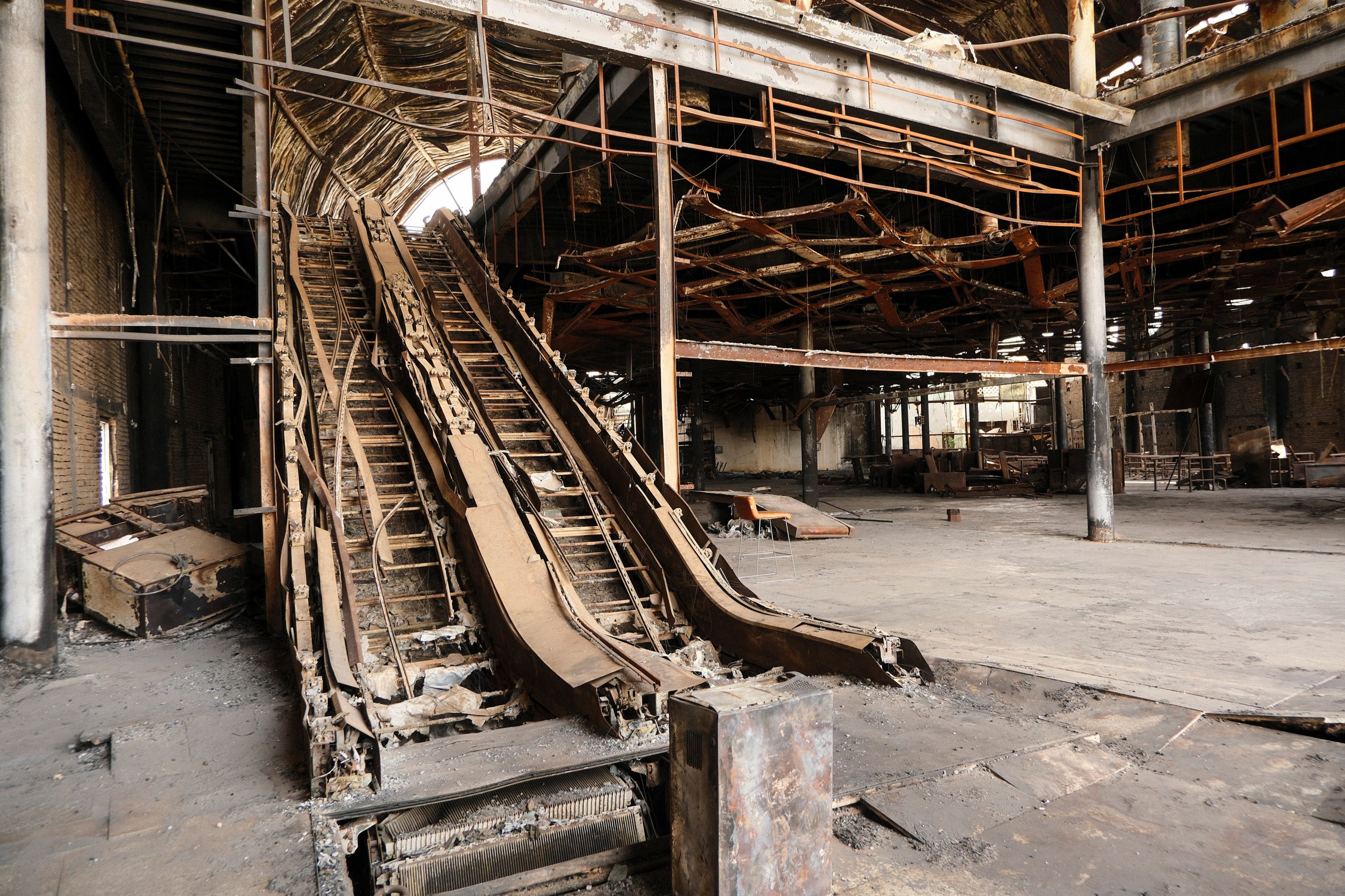
“There has been systematic sabotage by militias against hospitals, and most medical equipment has been looted and what remains has been deliberately destroyed,” said Health Minister Haitham Mohamed Ibrahim, putting losses to the health system at $11 billion.
With two or 3 million people looking to return to Khartoum, interventions were needed to avoid further humanitarian emergencies like the cholera outbreak, said United Nations Development Programme resident representative Luca Renda.
But continued war and limited budget mean a full-scale reconstruction plan is not in the works.
“What we can do … with the capacity we have on the ground, is to look at smaller-scale infrastructure rehabilitation,” he said, like solar-powered water pumps, hospitals, and schools.
In that way, he said, the war may provide an opportunity for decentralizing services away from Khartoum, and pursuing greener energy sources.

Turkish authorities are rolling out a credit volume of TL 120 billion (around $2.7 billion) to shield its tourism and exports sectors amid global tensions, according to a report on Saturday.
The Treasury and Finance Ministry is introducing this volume under the credit guarantee system for sectors engaged in tourism and exports to minimize the impact of geopolitical and regional developments, a report by Anadolu Agency (AA) said.
The ministry is implementing the credit guarantee system in line with the financial stability objectives of its economic program, according to information obtained by AA.
While working on a new package and the limit updates related to the credit guarantee system, the ministry aims to ensure uninterrupted access to financing for the real sector.
Now, the ministry will take another strategic step under the Treasury-backed guarantee system to minimize the effects of the global outlook and regional risks on economic activity.
Within the framework of the investment, employment, and export-oriented growth strategy outlined in the economic program, the ministry will inject an additional TL 120 billion in credit into the economy.
This step will be taken to update the packages of the Export Development Inc. (IGE) and Participation Finance Guarantee Inc. (KFK), whose limits have been reached due to strong demand.
Thus, the aim is to take precautions against the potential indirect effects of geopolitical tensions in the region on tourism, Türkiye’s most important foreign currency-earning service sector.
Through the Tourism Support Package, a credit facility of TL 60 billion has been created to help tourism businesses maintain operational efficiency. This resource is intended to help the sector withstand pressure from regional volatility in advance.
Under the Export Breakthrough Support Package, a credit facility of TL 30 billion has been allocated for exporters via IGE. An additional TL 12 billion will be made available to exporters through KFK.
Moreover, an additional limit of TL 18 billion has been defined for the existing support package carried out through KFK. With this limit, it is envisaged that businesses will gain fast and cost-effective access to the working capital they need in the face of rising costs.
Treasury and Finance Minister Mehmet Şimşek stated that these packages were designed in full coordination with the disinflation process and the selective credit policy.
“The additional volume will be directed toward ‘targeted’ areas that directly enhance production, foreign currency-earning activities, and economic resilience,” he said.
“To limit potential deterioration in the external balance due to geopolitical developments, we are providing strong support to tourism, the leading sector in service exports. With these packages, we aim to prevent possible tightening in access to financing and to preserve the working capital cycle of the real sector,” he added.
“In this way, while strengthening the financial resilience of the real sector, we also ensure the sustainability of growth without compromising macroeconomic stability targets.”
“Our efforts to limit the potential impact of the war in our region on our current account balance will continue,” Vice President Cevdet Yılmaz separately said in a social media post.
Investor-directed measures
Also, a report on Sunday suggested that Ankara has begun work to provide incentives and attract foreign capital amid ongoing regional crisis.
Among measures reported by AA, Türkiye is said to be working to reduce the corporate tax rate, especially for manufacturers and exporters, while also the introduction of a special taxation regime that encourages foreign individuals to come to Türkiye is reportedly on the agenda.
Moreover, studies are being carried out extensively on the advantages to be provided to qualified investors who will choose Türkiye.
The relevant ministries are also expected to carry out studies on residence permits, work permits and digital visas in order to facilitate the arrival of these investors to the country, it added.
The Middle East war “presents a serious risk to Africa,” the African Union (AU) and the African Development Bank (AfDB) cautioned in a report seen by Agence France-Presse (AFP) on Saturday.
The conflict threatens to increase the cost of living and curtail growth on the continent, the report warned.
The Middle East accounts for 15.8% of Africa’s imports and 10.9% of its exports, the report noted.
“The conflict, which already has triggered a trade shock, could quickly turn into a cost-of-living crisis across Africa through higher fuel and food prices, rising shipping and insurance costs, exchange rate pressures, and tighter fiscal conditions,” it added.
The growth rate of most African countries continues to be slower than before the COVID-19 pandemic, it noted.
“A loss in output growth of 0.2 percentage points on Africa’s GDP is projected for 2026 if it (the conflict) exceeds six months,” it said.
“The longer the conflict lasts and the more severe the disruption to shipping routes and energy and fertilizer supplies, the greater the risk of a significant growth slowdown across the continent.”
Reduced deliveries of liquefied natural gas (LNG) from the Gulf will impact fertilizer production, limiting its availability during the crucial planting period up to May, it added.
Currencies hit
The report was compiled by the U.N. Development Programme (UNDP) and the United Nations Economic Commission for Africa (UNECA).
According to recent data from the AfDB, the currencies of 29 African countries have already depreciated, increasing the cost of servicing external debt, making imports more expensive and reducing foreign exchange reserves,
Some countries could see some short-term gains, such as Nigeria for its oil exports or Mozambique for its LNG.
Also, the rerouting of ships around Cape of Good Hope could benefit ports in Mozambique, South Africa, Namibia and Mauritius.
Kenya is establishing itself as a logistics hub in East Africa, while Ethiopian Airlines, the leading carrier in Africa, is serving as an “emergency air bridge” between the continent, Asia, and Europe, the report noted.
But these gains are likely to be uneven and will not offset the consequences for inflation, budgets, and food security in Africa, they warned.
Above all, the current crisis could hit the costs of humanitarian aid and divert donor funds toward other priorities.
Turkish authorities denied on Sunday allegations related to recent briefings with investors in London, also rebuffing claims that assessments tied to interest rates were made.
The Turkish central bank said in a written statement that claims that previously undisclosed information and assessments were shared with investors during technical briefings in London were “completely unfounded.”
“The Central Bank of the Republic of Türkiye (CBRT) conducts its communication policy based on the principles of transparency, consistency, and real-time disclosure. Accordingly, the CBRT regularly hosts comprehensive briefings with both domestic and international market participants,” the bank said.
Reuters reported on Friday that three people who took part in the briefings were left with the impression that an interest rate hike was an option as Turkish authorities seek to address the economic effects stemming from the Iran war.
The central bank said Sunday its briefings “were strictly limited to publicly available monetary policy texts and published macroeconomic data.”
“The CBRT does not, under any circumstances, disclose non-public information or policy assessments to any external parties, whether domestically or internationally,” the bank said in a statement.
It added that such briefings address technical questions on the broader macroeconomic outlook, financial markets, and the banking sector, aimed at fostering a clear understanding of monetary policy implementation.
In a separate statement, the Treasury and Finance Ministry said that Treasury and Finance Minister Mehmet Şimşek never comments on interest rate policy at any domestic or foreign meetings as a matter of principle.
The private meetings with dozens of foreign investors were held last week after a series of policy steps taken by authorities, including a measure to limit fuel price increases since the start of the U.S.-Israel-Iran war in order to keep disinflation on track.
Turkish annual inflation slowed to 30.87% in March from 31.53% in February, official data showed on Friday.
Türkiye’s inflation rate cooled at a faster pace than analysts anticipated both on an annual and a monthly basis in March despite pricing pressures amid the Iran war, official figures showed on Friday.
Annual inflation dipped to 30.9%, compared to 31.5% in February, according to the Turkish Statistical Institute (TurkStat).
Energy prices have been soaring after the U.S.-Israel attacks on Iran unleashed a conflict that has run for more than a month and effectively closed the Strait of Hormuz, through which a fifth of global oil and liquefied natural gas is shipped.
That came as a test for the world economies, including Türkiye, where authorities have acted to limit the pass-through of volatile energy costs to domestic prices.
On a monthly basis, consumer prices rose 1.9%, compared with 2.96% in February, the TurkStat data showed.
Surveys had forecast monthly inflation to be 2.32%, with the annual rate seen at 31.4%, driven by a rise in fuel prices and weather-related pressures on food inflation.
Friday’s data showed the biggest annual price increases were in education, at 51.97%, housing, at 42.06%, and transport, at 34.35%.
Food inflation improving
Food inflation eased by 4.8 percentage points compared with the same month last year to an annual rate of 32.4%.
Treasury and Finance Minister Mehmet Şimşek said improving climate conditions following last year’s frost and drought are expected to support the food inflation outlook in 2026.
Disinflation in services, Şimşek said, is likely to become more visible thanks to declining rent inflation, government policies aimed at increasing housing supply and rule-based pricing in education.
Annual services inflation has fallen by 16.1 percentage points over the past year, he said.
The data showed the smallest increases in March were recorded in clothing and footwear, at 7.2%, furnishings and household equipment, at 20.2%, and information and communication, at 24.12%.
The food group was the key driver for the positive surprise in the headline rate, though pricing pressures in the energy group have increased with the geopolitical shock, as expected, said analysts at the Dutch financial giant ING.
The data showed transport and food prices were the biggest monthly drivers of inflation in March.
Vice President Cevdet Yılmaz linked transport cost increase to higher energy prices due to the Iran war, which he said created upward risks for the global inflation outlook.
Separate data on Friday also showed the domestic producer index rose 2.30% month-over-month in March for an annual increase of 28.08%.
Central Bank of the Republic of Türkiye (CBRT) raised its year‑end inflation forecast range by two percentage points to 15%-21%, while keeping its interim 16% target unchanged in February.
CBRT Governor Faith Karahan said earlier this week that the bank would maintain the needed tight policy to continue disinflation.
The bank has halted its easing cycle with the main rate at 37%, lifted its overnight rate by about 300 basis points to near 40%, and undertaken heavy sales and swaps of foreign exchange and gold reserves to support the Turkish lira.
Karahan defended the moves as a “natural choice” amid such market turmoil.
Fiscal room used to limit shocks
A slide presentation that Şimşek made to investors in London, published on Wednesday, said short-term war effects were negative but manageable.
On Friday, he said the government had taken the necessary steps to limit the economic impact of the conflict.
He said the fiscal room created during the government’s medium-term program period has enabled authorities to quickly and effectively reintroduce measures such as the fuel price adjustment mechanism to ease inflationary pressures.
The “sliding-scale” system, launched last month, adjusts the special consumption tax (ÖTV) on fuel products and prevents higher oil prices from being fully passed through to consumers. Yılmaz said a significant portion of fuel price increases is being absorbed through the budget.
The mechanism has absorbed roughly two-thirds of the oil price shock and reduced the impact on the monthly figure, analysts at ING said.
While short-term geopolitical shocks may have some impact on inflation, Şimşek said, “We continue to implement our holistic and decisive policy set that will ensure we reach our goal of permanent price stability.”
Yılmaz said authorities would continue to offset the direct and indirect impact of geopolitical developments through coordinated monetary, fiscal and income policies, while supporting disinflation with supply-side measures in social housing, food supply, logistics and renewable energy.
Hydroelectric plant power production in Türkiye nearly doubled in March from a year earlier to 40%, official data shows, as heavy rainfall helped to ease pressure on the energy bill of one of Europe’s largest natural gas importers.
Türkiye used 16 billion cubic metres, or more than a quarter, of the natural gas it imported last year for electricity generation, according to market regulator EPDK. Natural gas, along with crude oil, constitutes the largest item in its energy import bill, which was $62 billion last year.
Hydroelectric plants lessen the need for thermal plants to use imported natural gas, which like oil, has seen a global price surge due to the war in the Middle East.
According to data from Türkiye’s national energy exchange and market operator EPIAŞ, the share of hydroelectric power plants in licensed electricity production was only 21% in March last year and amounted to 16% throughout 2025, which was the driest year in five decades.
Elvan Tuğsuz Güven, head of Türkiye’s private hydroelectric power plant operators’ body HESIAD, told Reuters the plants will maintain a high share of electricity production until June, unless an extraordinary situation arises.
“We expect the momentum to continue in the short term. It’s difficult to say anything about the long term, but we expect production to gradually decline to a 25%-30% range by June,” she said, compared with a 17% decrease a year earlier.
The share of natural gas power plants in overall production fell to 8% in March from 20% last year due to the sharp increase in hydroelectric production and the contribution of coal-fired power plants.
Güven said the increase in hydroelectric power plant (HPP) production, which was 26% of Türkiye’s electricity generation capacity at the end of 2025 with 32 gigawatts (GW) of installed power, has replaced natural gas.
“They play and will continue to play a significant role in supply… and are an important resource to support energy security,” she said.
A one percentage point increase in HPP production can save more than $300 million annually, Güven said.
About two-thirds of Türkiye’s 32 GW of installed HPP capacity are reservoir-type plants that can produce electricity year-round, while the remaining third are run-of-river type plants with very limited water storage capacity.
The effective closure of the Strait of Hormuz following attacks by the U.S. and Israel on Iran has disrupted global energy supplies and increased interest in alternative export routes.
And many see Türkiye emerging as one of the key options due to its multiple pipeline and transit links.
While the Strait of Hormuz has not been formally declared closed, Iranian authorities have imposed tight controls and restrictions on maritime traffic and oil shipments.
Only ships from selected countries are reportedly being allowed to pass freely, while other vessels face conditional access.
The Strait of Hormuz handles around 20% of global oil trade, and disruptions have put roughly 15 million barrels per day of crude oil flows at risk.
Tanker movements in the area have slowed dramatically, with some days seeing almost no traffic and overall transit falling by more than 90%.
Rising insurance costs and security concerns have added further pressure on shipments.
Oil prices have climbed from around $70 per barrel to as high as $120, marking an increase of roughly 70%, while Europe’s benchmark TTF gas contracts have risen from around 30 euros ($35) to between 60 and 70 euros.
Although the International Energy Agency (IEA) has moved to release 400 million barrels of emergency oil stocks to ease market pressure, concerns over a broader regional war continue to drive volatility.
Existing alternatives have limited capacity
Alternative routes through Saudi Arabia and the United Arab Emirates (UAE) remain available, but their combined spare capacity is limited.
According to International Energy Agency data, about 20 million barrels per day passed through Hormuz in 2025, while alternative pipelines through Saudi Arabia and the UAE can only provide between 3.5 million and 5.5 million barrels per day of additional capacity.
The UAE exports around 1.1 million barrels per day through the Abu Dhabi-Fujairah pipeline and has roughly 700,000 barrels per day of spare capacity.
Saudi Arabia’s East-West crude oil pipeline has a design capacity of around 5 million barrels per day, though only 3 million to 5 million barrels per day of additional space is available after current usage.
Strategic route
Energy Minister Alparslan Bayraktar recently highlighted the potential role of the Iraq-Türkiye Crude Oil Pipeline, which stretches from Kirkuk to Ceyhan.
Bayraktar said the pipeline has a capacity of 1.5 million barrels per day and could be used more intensively to transport Iraqi crude to the Mediterranean.
He also pointed to the possibility of transporting gas from Qatar to Türkiye and potentially onward to Europe through pipelines, especially at a time when LNG exports face risks from damaged infrastructure and Hormuz-related disruptions.
Türkiye has also been discussed as a possible destination for future oil pipelines terminating in Hatay as part of longer-term diversification efforts.
While some alternatives exist for crude oil, experts say the LNG market remains far more vulnerable because Hormuz remains a critical route for global liquefied natural gas shipments.
Türkiye is also strengthening its role in natural gas transit to Europe.
Flows through the TurkStream pipeline rose 22% year-over-year in March to 55 million cubic meters per day.
Exports through the Kirkuk-Ceyhan pipeline, which resumed on March 17, are expected to rise from an initial 170,000 barrels per day to 250,000 barrels per day.
Türkiye’s role likely medium-term
Claudia Kemfert, head of the Energy, Transportation and Environment Department at the German Institute for Economic Research, said a prolonged disruption in Hormuz would keep oil and LNG prices elevated and increase dependence on strategic reserves.
Kemfert said existing alternative pipelines, particularly those in Saudi Arabia and the UAE, do not have enough capacity to offset a major disruption, leaving global markets structurally vulnerable.
She said Türkiye could strengthen its role as a transit corridor connecting the Caspian region, the Middle East and Europe in the medium term,
“However, current infrastructure constraints limit the capacity to compensate for large-scale disruptions in the short term. Türkiye’s alternative role may predominantly be at a strategic and medium-term level,” Kemfert noted.
She also said prolonged instability in Hormuz is likely to accelerate a shift away from Gulf dependence and benefit LNG exporters such as the U.S., as well as pipeline gas suppliers, including Norway and North African producers.


-

 Daily Agenda2 days ago
Minister Göktaş: “9 thousand 152 foster families offer a warm home to 10 thousand 897 children”
-

 Lifestyle3 days ago
Antwerp: Europe’s most individual fashion pilgrimage
-
 Economy3 days ago
Global food prices could keep rising if Iran war lasts, FAO warns
-

 Sports3 days ago
Italy haunted by Gattuso’s ghost of 1990 as modern game moves on
-
 Politics3 days ago
Turkish, German foreign ministers speak on regional developments
-
 Politics3 days ago
Turkish VP warns Iran-Israel-US conflict threatens wider region
-

 Economy3 days ago
Türkiye’s inflation dips more than expected in March
-
 Daily Agenda3 days ago
They promised 169 facilities but did not deliver 127