Three years after the devastating Feb. 6, 2023, twin earthquakes, Turkish sport is still reckoning with a tragedy that silenced arenas, reshaped seasons and claimed lives across nearly every discipline.
Centered in Kahramanmaraş and rippling through Gaziantep, Şanlıurfa, Diyarbakır, Adana, Adıyaman, Osmaniye, Hatay, Kilis, Malatya and Elazığ, the disaster halted daily life and with it, the rhythm of sport.
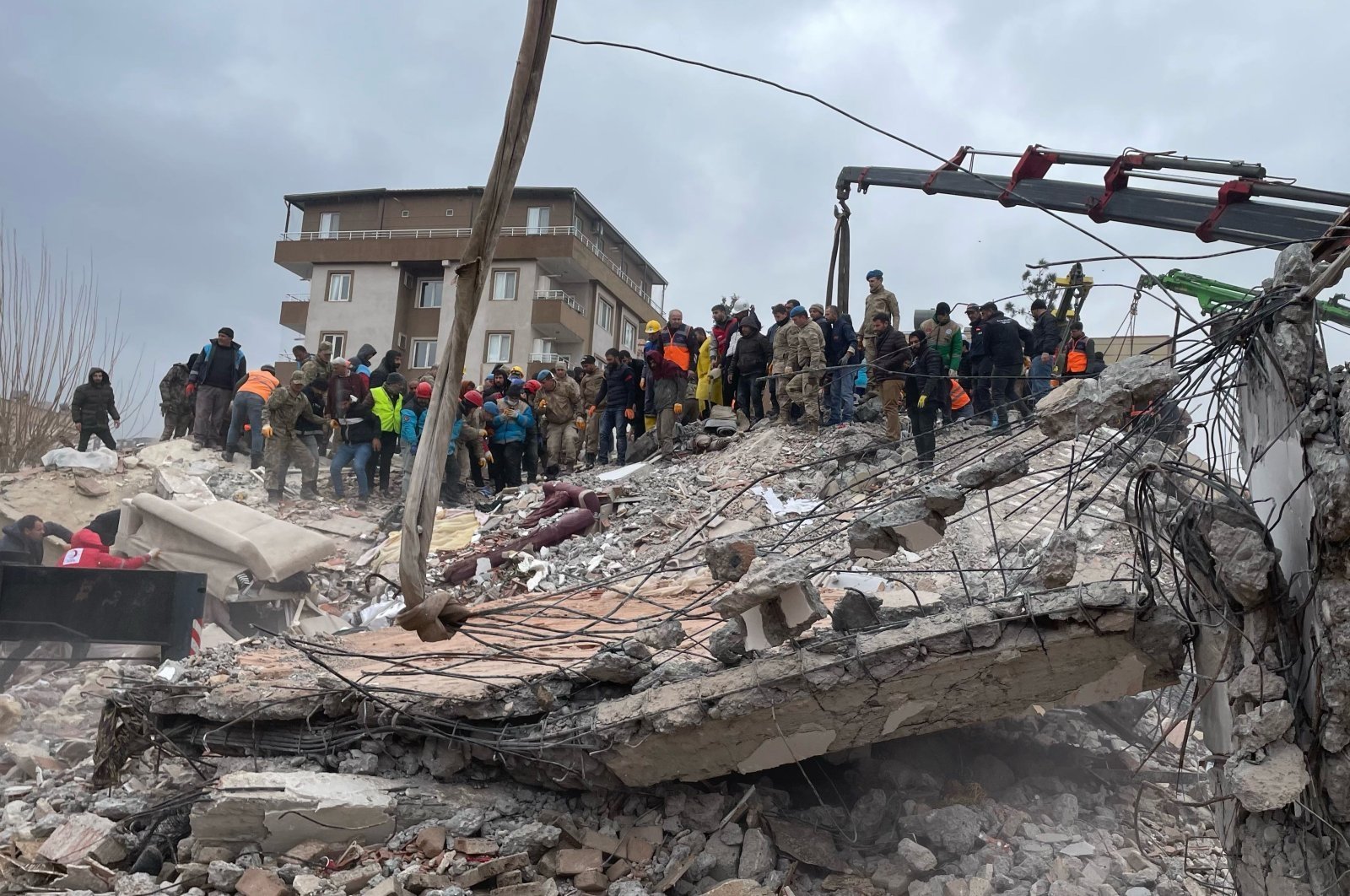
Rescuers search for survivors under the rubble following an earthquake in Kahramanmaraş, central Turkey, Feb. 6, 2023. (AA Photo)
All competitions nationwide were immediately suspended.
Federations later approved special measures allowing clubs from the affected cities to withdraw from leagues without relegation, acknowledging that survival had replaced competition.
Football resumed on Feb. 25, but the scars were visible.
In the Süper Lig, Gaziantep FK and Hatayspor withdrew, while Yeni Malatyaspor and Adanaspor stepped away from the second tier.
Basketball, volleyball and handball leagues restarted in March, though several clubs were unable to complete the 2022-23 season.
International events were also disrupted. The European Indoor Archery Championships scheduled for Feb. 13-18 in Samsun were first postponed, then canceled. The 58th Presidential Cycling Tour of Türkiye was pushed from April to October.
Voices from the rubble
Former Turkish internationals Volkan Demirel and Gökhan Zan became two of the most powerful public voices from the disaster zone.
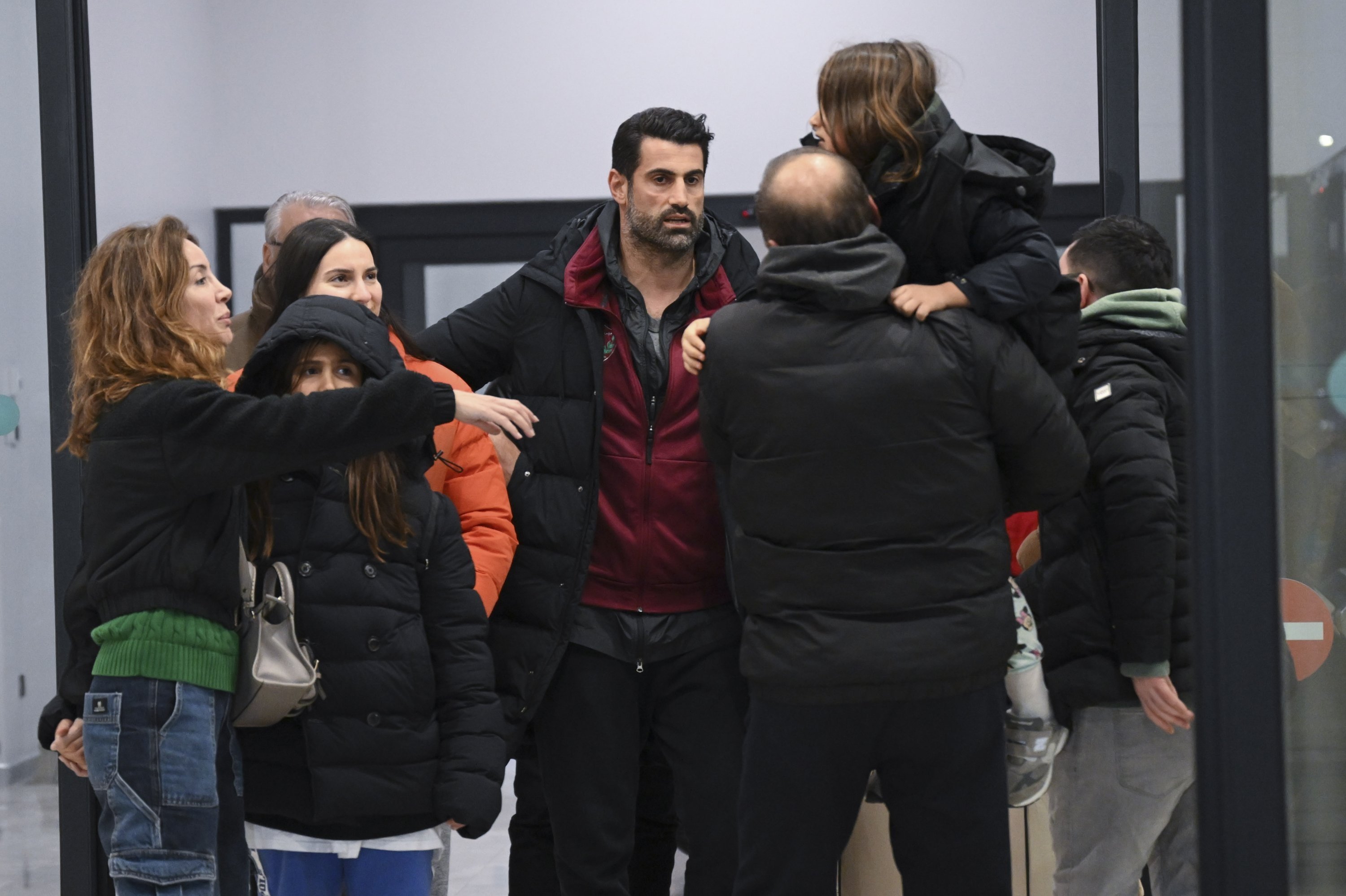
Hatayspor coach Volkan Demirel (C) arrives at Istanbul Airport with his team, Istanbul, Türkiye, Feb. 8, 2023. (AA Photo)
Demirel, then head coach of Hatayspor, was in Hatay when the quake struck.
His tearful plea for help on social media became one of the defining images of the catastrophe.
Zan, a former Beşiktaş and Galatasaray defender who had also worked at Hatayspor, used live broadcasts to direct aid into the region. Both were later honored with the Turkish Football Federation’s 2022-23 Fair Play Special Award.
Community in mourning
The losses cut deeply across sports.
National handball captain Cemal Kütahya, a key player for Hatay Büyükşehir Belediyespor, was killed alongside his four-months-pregnant wife Pelin Kütahya, their 5-year-old son Çınar Kütahya and his mother-in-law when their home collapsed.
He was 32. Metin Muhacir, one of the pioneers of Turkish men’s handball and his wife Nuran Muhacir also lost their lives in Adana.
In tribute, the Turkish Handball Federation named the 2022-23 Men’s Süper Lig after Kütahya and the Men’s First League after Muhacir.
Shocking losses
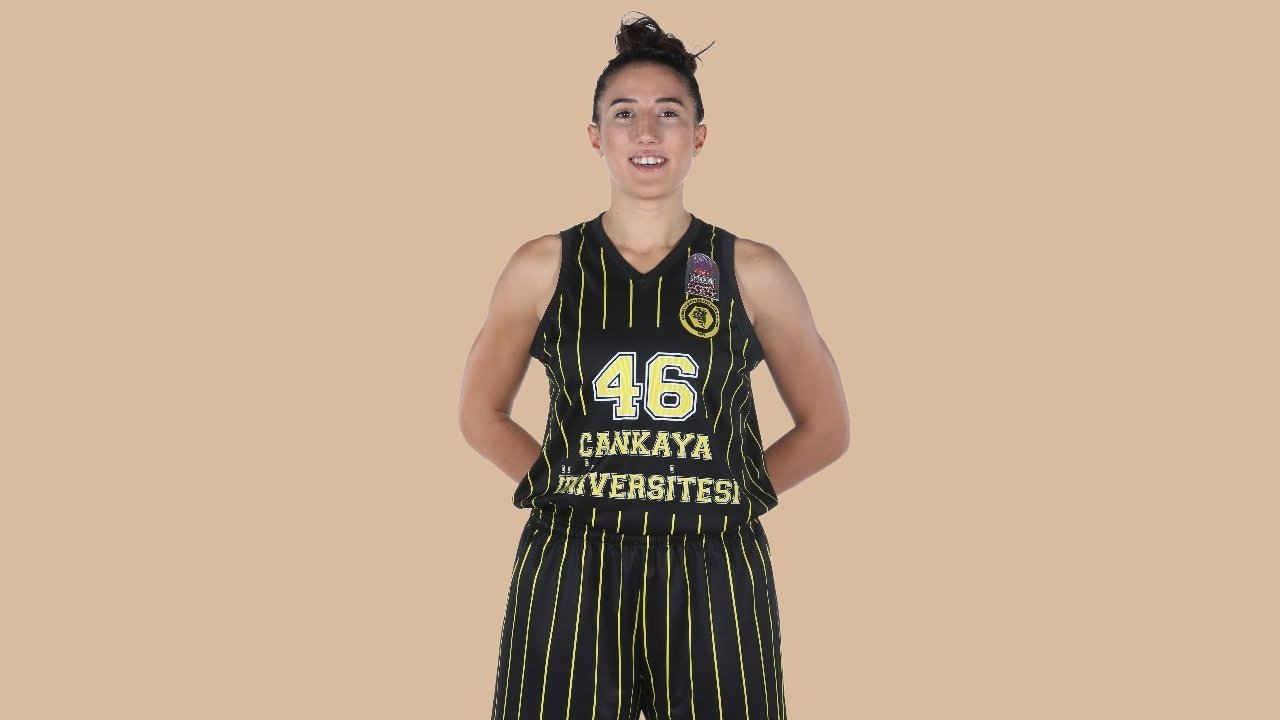
In women’s basketball, national team player Nilay Aydoğan died at age 30 after being trapped in a collapsed building in Malatya while visiting her grandmother, who also perished.
An undated photo of Çankaya University’s late basketball player Nilay Aydoğan. (Photo Courtesy of Çankaya University)
The remainder of the ING Women’s Basketball Süper Lig season was played in her name and her club, Çankaya University, retired her No. 46 jersey.
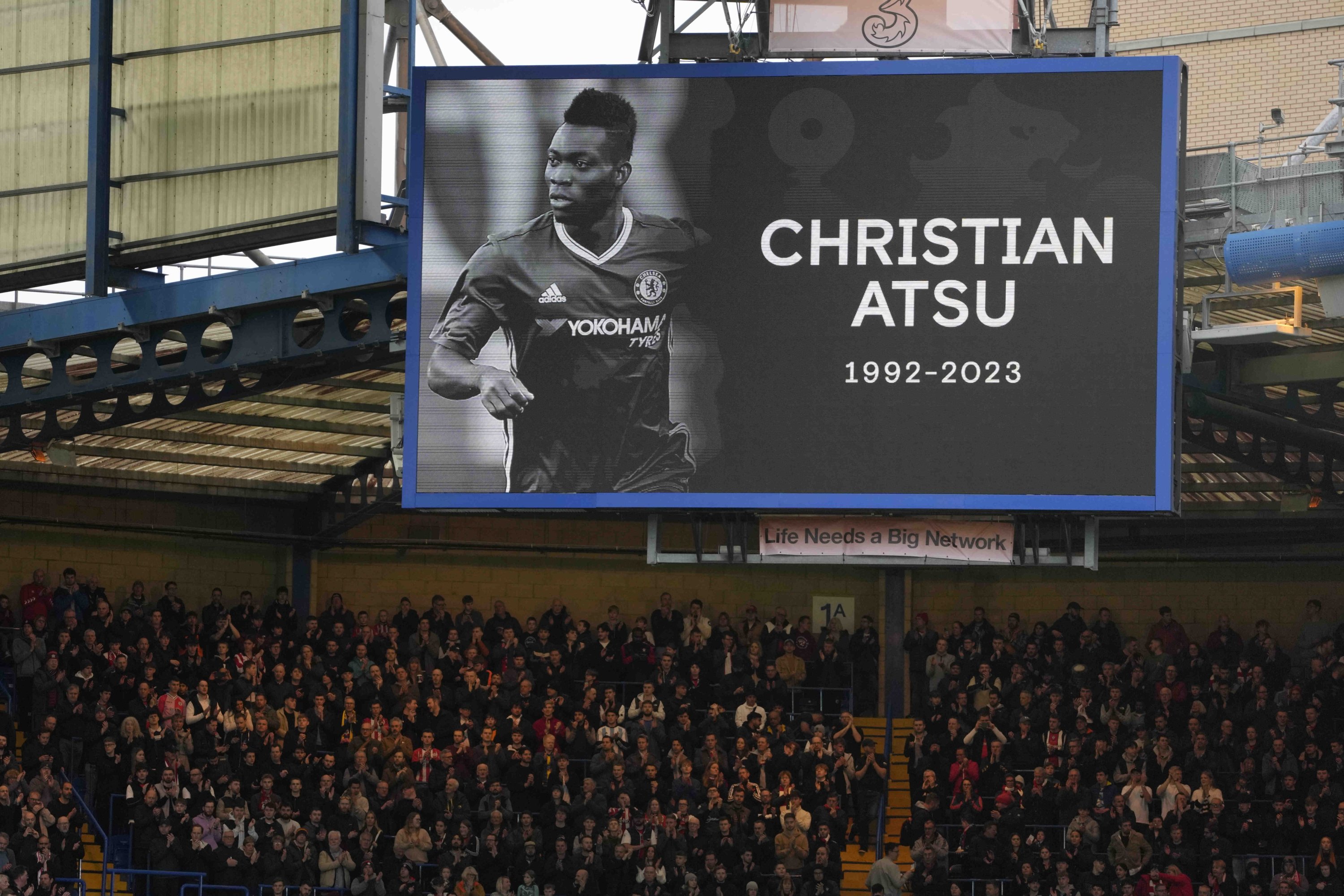
Hatayspor’s Christian Atsu, the Ghanaian international who had played for Porto, Chelsea and Newcastle United, was found dead 12 days after the quake beneath the rubble of a collapsed residence in Antakya.
Spectators observe a moment of silence for Christian Atsu who died in Turkey earthquake before the English Premier League soccer match between Chelsea and Southampton at the Stamford Bridge stadium in London, Saturday, Feb. 18, 2023. (AP Photo/Kirsty Wigglesworth)
Ghana’s football federation later retired the national team’s No. 7 jersey in his honor. Atsu’s final goal, a stoppage-time free kick, came just one day before the disaster.
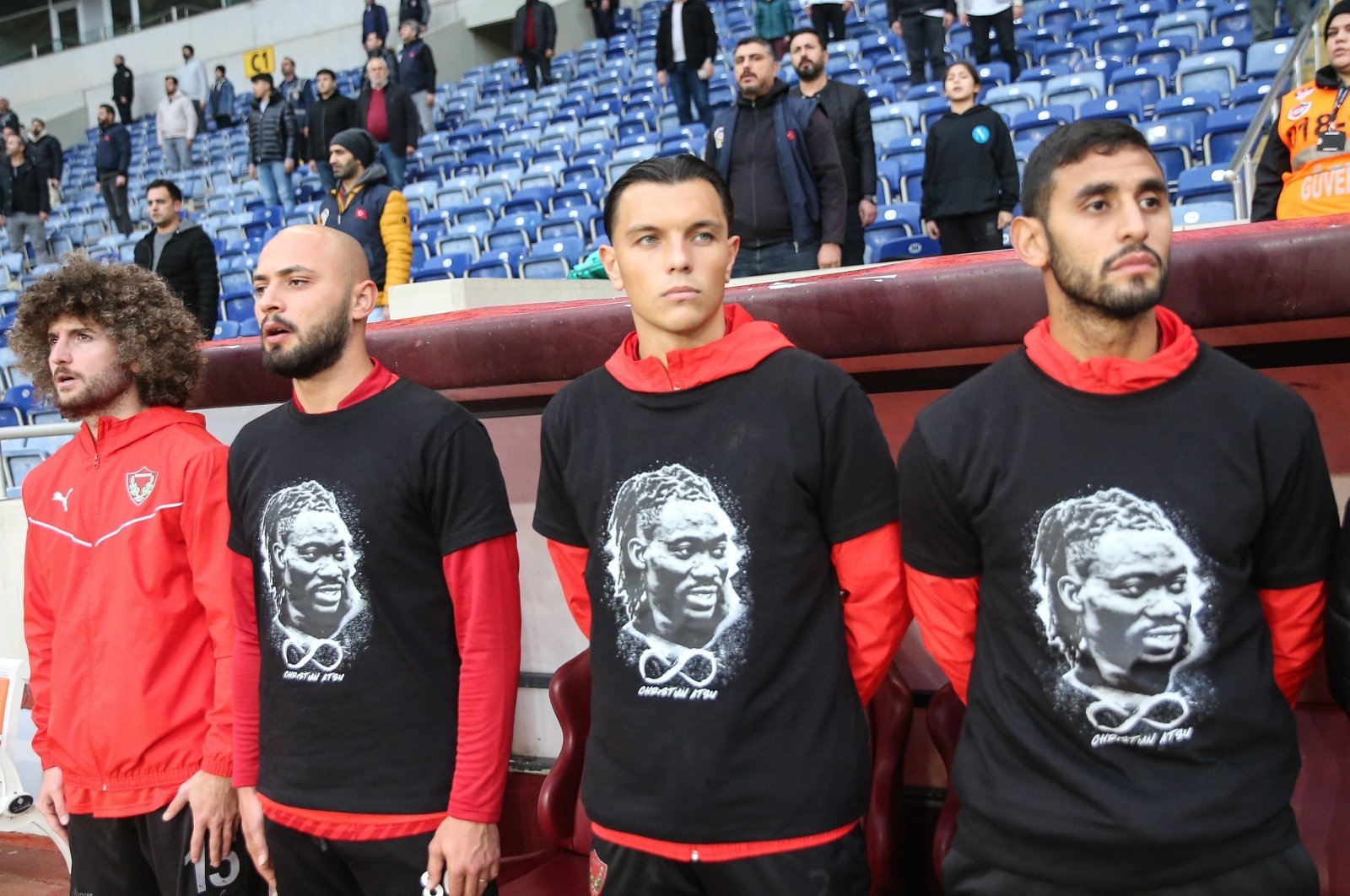
Hatayspor footballers wear t-shirts commemorating late teammate Christian Atsu, Mersin, Türkiye, Jan. 10, 2024. (AA Photo)
Hatayspor also lost sporting director Taner Savut. Yeni Malatyaspor goalkeeper Ahmet Eyüp Türkaslan was killed after remaining in the city while most teammates had left following a league match.
Among other victims were women’s footballer Verda Demetgül of Onvo Hatayspor, three Iranian players from Malatya’s amputee football team and Cameroonian player Elvis Nkam Teneng.
“Champion Angels”
One of the most heartbreaking losses came in Adıyaman, where a 35-member delegation from Northern Cyprus, including students, teachers and parents from Gazimağusa Turkish Maarif College, died when their hotel collapsed during a school volleyball tournament.
The children are remembered as the “Champion Angels,” their memory honored through poetry and music across the Turkish Cypriot community.
In Kahramanmaraş, nine wrestlers from Büyükşehir Belediyespor lost their lives when their residence collapsed.
Rescue teams saved several athletes, but Ahmet Taş, Mehmet Eskisarılı, Ali Gürsoy, Aslan Ekiz, Eray Şimşek, Halil İbrahim Edirne, Hasan Sarıtürk, Ozan Datlı and Ahmet Durman could not be reached in time.
The Daily Sabah Newsletter
Keep up to date with what’s happening in Turkey,
it’s region and the world.
SIGN ME UP
You can unsubscribe at any time. By signing up you are agreeing to our Terms of Use and Privacy Policy.
This site is protected by reCAPTCHA and the Google Privacy Policy and Terms of Service apply.
Tyson Fury is back in the ring and already looking ahead, with the long-delayed all-British showdown against Anthony Joshua once again taking center stage.
Fury returns from yet another retirement on Saturday at Tottenham Hotspur Stadium, where he faces dangerous puncher Arslanbek Makhmudov in his first fight since a December 2024 defeat to Oleksandr Usyk. But even before the opening bell, the 37-year-old is plotting his next move.
If he gets through the weekend, Fury wants Anthony Joshua next, no more delays, no more detours.
“I’ve got Makhmudov to think about, but all going well, Joshua is the fight I want next,” Fury said. “Let’s do it straight away.”
The fight has hovered over British boxing for more than a decade, repeatedly collapsing at the final hurdle. Now, with both men in the twilight of their careers, Fury is urging urgency, wary of how quickly fortunes can shift in the heavyweight division.
“This fight was supposed to happen so many times,” he said. “One more fight in between, someone gets knocked out or injured, and it’s gone again. In this division, nothing is guaranteed.”
Joshua, 36, has rebuilt momentum after stopping Jake Paul with a brutal sixth-round knockout in December. Days later, however, his career was overshadowed by tragedy, surviving a car accident in Nigeria that killed two close friends. He has since returned to training, signaling a renewed push toward the sport’s biggest fights.
Fury is not interested in alternatives. Not even a resurgent Deontay Wilder, who edged Derek Chisora in a split decision last weekend, has caught his attention.
“I’ve never seen two men slide as much,” Fury said of that bout. “Forget Wilder. I want Joshua.”
It is a rivalry that has simmered for years, fueled by near-misses and shifting circumstances. Fury insists the timing must finally align.
“I’ve been out of the ring 16 months,” he said. “Let’s do it. Let’s dance.”
Even the noise outside the ropes has done little to distract him. Whether Joshua attends Saturday’s fight remains uncertain. Fury’s father, John Fury, may also be absent after publicly urging his son to retire, claiming the former champion is past his peak.
Fury shrugs it off.
“I’ve got business to take care of,” he said. “Who’s in the crowd doesn’t matter.”
The Daily Sabah Newsletter
Keep up to date with what’s happening in Turkey,
it’s region and the world.
SIGN ME UP
You can unsubscribe at any time. By signing up you are agreeing to our Terms of Use and Privacy Policy.
This site is protected by reCAPTCHA and the Google Privacy Policy and Terms of Service apply.
Oscar Piastri, aware of how quickly dominance can vanish in Formula One, is approaching his unexpected early-season break with cautious optimism that McLaren can challenge Mercedes once racing resumes.
The Australian endured a disastrous start, crashing en route to the grid at his home Grand Prix in Melbourne and then failing to start in China because of an electrical fault in his car.
Round three in Japan, however, offered a reminder of his talent, as Piastri finished second behind Mercedes’ Kimi Antonelli, echoing the form that left him 34 points clear in last season’s title race after 15 rounds.
With the Bahrain and Saudi Arabian Grands Prix postponed amid the Middle East crisis, Formula One now faces nearly a month off before action returns in Miami in early May.
Piastri, who turned 25 on Monday, views the pause in the season as an opportunity for McLaren to work on closing the gap with Mercedes, which has won all three grands prix and the China sprint so far this year.
“Obviously the off-season this year was very short, so it’s a nice little window for everyone to get some good training in,” he said in a video posted on social media this week.
“Just some more time to prepare, basically. I think we’ve learned a lot in the first few races and still have plenty more to learn. It just gives us more time to analyze stuff, sit down, digest it and try to come back stronger for Miami.”
Humbling Experience
Piastri, in his third season in Formula One, was named Wednesday as Australia’s top-earning sportsperson by the Sydney Morning Herald, with an estimated income of A$57 million to A$59 million ($40.31 million to $41.72 million).
His marketability soared last year when he won seven of the first 15 races in the then-dominant McLaren, threatening to end Australia’s 46-year wait for a world champion.
In the end, the wins stopped, and his teammate Lando Norris took the crown, with Max Verstappen’s late-season surge for Red Bull relegating Piastri to third in the final standings.
It was a humbling experience for Piastri but one he has clearly learned from as McLaren aims to close the performance gap Mercedes has opened under the new regulations this season.
“We know from last year that even when you have the best car, you still need to operate it at an incredibly high level,” he said after holding off Mercedes’ George Russell at times during his run to the Suzuka podium.
“I think it’s interesting to see that when someone else has the fastest car, it’s not that straightforward. The fact that I could keep George behind for so long was really encouraging, but we’re under no illusion.
“We did everything right this weekend and still got beaten by 15 seconds, so we have a pretty big gap to fill. I’m confident we can get there, but yes, we still have some work to do.”
The Daily Sabah Newsletter
Keep up to date with what’s happening in Turkey,
it’s region and the world.
SIGN ME UP
You can unsubscribe at any time. By signing up you are agreeing to our Terms of Use and Privacy Policy.
This site is protected by reCAPTCHA and the Google Privacy Policy and Terms of Service apply.
Confederation of African Football (CAF) President Patrice Motsepe said he would welcome any investigation into alleged corruption within the organization, insisting there is nothing to hide after meeting Senegalese officials in Dakar on Wednesday.
The push for scrutiny comes after Senegal’s government last month called for a formal probe following the decision by the CAF Appeal Board to strip the country of its 2025 Africa Cup of Nations title and award it to Morocco.
The ruling stemmed from chaotic scenes during the Jan. 18 final in Rabat, which Senegal initially won 1-0 before leaving the pitch for several minutes in protest of a late refereeing call.
Motsepe met representatives of the Senegalese Football Federation and President Bassirou Diomaye Faye, urging unity in the aftermath of the controversy. He is scheduled to travel to Morocco on Thursday for similar talks aimed at easing tensions.
“I would welcome any investigation into corruption at CAF, be it by a government or any institution,” Motsepe told reporters. “In fact, I would encourage it. We will give them our full cooperation.
“I have been told there were problems in the past, and we intervened. It is not just in football, but in business and politics too. We cannot give our children the perception that if you want to succeed in life, be corrupt. There has to be zero tolerance for corruption.
“That’s the best gift we can give football in Africa. Not just talking about corruption, but intervening, putting the necessary laws in place and implementing them.”
Motsepe would not be drawn on the matter between Senegal and Morocco, which is now before the Court of Arbitration for Sport.
“There is nothing I can tell you that I haven’t said already 10, 15, 20 times. You can ask me the same question 100 times, I’ll give you the same answer 100 times. I have an obligation to respect that the matter is now before the highest court in world sport.”
Motsepe quashed any suggestion that Morocco had been treated favorably in the appeal process.
“Under no circumstances will any single country in Africa be treated more preferentially or more favorably than any other. That will never happen,” he said.
“We are confident we will come out of these challenges more united among the 54 nations in Africa.”
The Daily Sabah Newsletter
Keep up to date with what’s happening in Turkey,
it’s region and the world.
SIGN ME UP
You can unsubscribe at any time. By signing up you are agreeing to our Terms of Use and Privacy Policy.
This site is protected by reCAPTCHA and the Google Privacy Policy and Terms of Service apply.
The Europa League quarterfinals begin Thursday with four finely poised first-leg ties, each shaped by contrasting domestic fortunes, tactical identities and mounting pressure as the road to Istanbul narrows.
At Estadio do Dragao, Porto return to a familiar position of strength, blending domestic control with European consistency.
Francesco Farioli’s side have built their season on structure and balance, opening a five-point lead atop Liga Portugal while advancing deep in both cup and continental competitions.
Their response to adversity has been particularly telling. Since a narrow cup defeat to Sporting, Porto have tightened defensively and rediscovered rhythm, going six matches unbeaten with a blend of control and efficiency.
Their home form remains a cornerstone. The Dragons have turned the Dragao into a stronghold, dropping points there only once all season and winning every Europa League game on home soil. That authority, however, is not without cracks.
Nottingham Forest already exposed them earlier in the campaign, delivering a clinical 2-0 win that still stands as one of Porto’s rare European setbacks.
Forest arrive as one of the competition’s great contradictions. Domestically unstable, they sit just above the Premier League drop zone after cycling through four managers in a chaotic season.
Yet in Europe, they have shown composure and resilience. Narrow knockout wins over Fenerbahçe and Midtjylland underlined a team capable of managing moments, even when overall form dips. Their recent 3-0 win over Tottenham before the break offered a glimpse of their ceiling, while improved away performances suggest they are no longer easy prey on the road.
The tactical battle may hinge on availability. Porto are without strikers Samu Aghehowa and Luuk de Jong, forcing Terem Moffi into a central role supported by wide threats William Gomes and Borja Sainz. Forest are equally stretched, missing key names including Chris Wood and Ola Aina, while Elliot Anderson’s suspension disrupts midfield balance. In tight ties, such absences often tilt margins.
In Germany, Freiburg stand on the brink of history. Hosting Celta Vigo at Europa-Park Stadion, they are chasing a first major European breakthrough. Julian Schuster’s team have built their run on discipline and a formidable home edge, winning nine consecutive European matches at their stadium. Their comeback demolition of Genk in the previous round signaled both belief and attacking fluency.
Yet vulnerabilities remain. Back-to-back home defeats in the Bundesliga, including a dramatic late collapse against Bayern Munich, exposed lapses in concentration that elite opponents punish. Freiburg must now reconcile those domestic setbacks with the confidence drawn from their European form.
Celta Vigo arrive as a side growing in stature at the right time. Their route has been tougher, navigating the playoffs before eliminating Lyon with a composed away performance. In La Liga, they continue to climb, sitting sixth and pushing for Champions League qualification. Claudio Giraldez’s side carry attacking variety and momentum, though their record in Germany raises questions about consistency in hostile environments. Injury concerns, particularly surrounding Iago Aspas and several defensive options, could test their depth across both legs.
In Bologna, Aston Villa resume their campaign after an unusual pause that may prove either a reset or a disruption. Unai Emery’s influence is unmistakable. His team have won nine of 10 Europa League matches this season, combining tactical flexibility with knockout experience. Villa remain locked in a tight Premier League race for a top-five finish, making Europe both an opportunity and a safety net.
Emery’s track record in this competition looms large. Four titles reflect not only pedigree but an ability to manage two-legged ties with precision. His familiarity with Bologna coach Vincenzo Italiano adds another layer to a contest already shaped by recent meetings between the clubs.
Bologna, however, have quietly built one of the tournament’s most resilient profiles. Unbeaten in 11 European matches, they edged Roma in a high-scoring, emotionally charged last-16 tie that showcased both endurance and attacking threat. Domestic inconsistency has left them trailing in Serie A, effectively placing their European hopes in this competition alone.
Their strength lies in structure and belief. Federico Bernardeschi’s goals, Lewis Ferguson’s midfield presence and a collective defensive discipline have made them difficult to break. Even with injuries and suspensions affecting squad depth, Bologna have repeatedly found ways to stay competitive.
The Daily Sabah Newsletter
Keep up to date with what’s happening in Turkey,
it’s region and the world.
SIGN ME UP
You can unsubscribe at any time. By signing up you are agreeing to our Terms of Use and Privacy Policy.
This site is protected by reCAPTCHA and the Google Privacy Policy and Terms of Service apply.
Turkish football paused in rare unity on Tuesday, mourning the loss of Mircea Lucescu, a coach whose influence cut across rivalries and eras, and whose final days reflected the same relentless commitment that defined his career.
Lucescu died at 80 in Bucharest following a series of heart complications, just days after stepping down as Romania’s head coach.
His health had deteriorated rapidly after a heart attack in early April, itself linked to earlier arrhythmia issues that surfaced during training.
Still, he remained on the touchline until the very end. His last match, a 2026 FIFA World Cup playoff defeat to Türkiye in Istanbul on March 26, quietly closed the book on a managerial journey spanning more than five decades and redefining longevity in elite football.
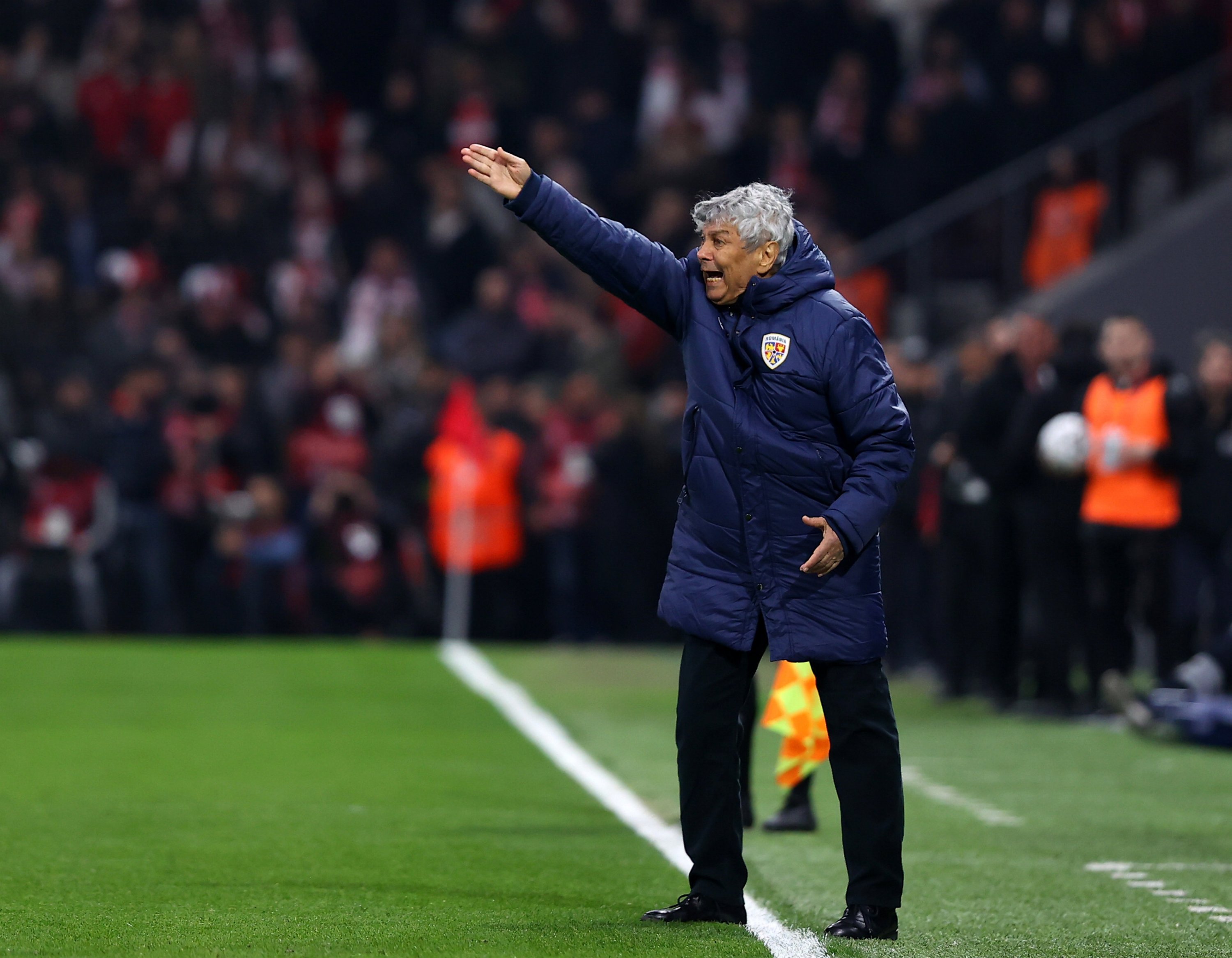
Romania head coach Mircea Lucescu gives instructions to his players during the 2026 FIFA World Cup European Qualifiers playoff semifinal match against Türkiye at Tüpraş Stadium, Istanbul, Türkiye, March 26, 2026. (AA Photo)
At 80, he was still setting records, the oldest active national team coach in a competitive fixture.
Hero in Türkiye
In Türkiye, where his legacy carries a distinct emotional weight, tributes arrived swiftly and in unison.
The Turkish Football Federation (TFF) led the response, joined by rivals Galatasaray, Beşiktaş, Fenerbahçe and Trabzonspor, all setting aside competition to honor a figure who transcended it.
Their statements echoed a shared sentiment: Lucescu was not just a winning coach, but a builder of teams, a mentor of players and a rare bridge between divided football cultures.
His Turkish story began in 2000, when he succeeded Fatih Terim at Galatasaray, inheriting a squad still echoing the club’s golden era.
Lucescu did not merely maintain that standard, he elevated it.
Within months, he guided Galatasaray to UEFA Super Cup glory against Real Madrid, adding a European crown that still stands among the club’s proudest achievements.
He followed with the 2001-02 Süper Lig title and a Champions League quarterfinal run, imprinting a style that balanced structure with attacking clarity.
Then came one of the boldest moves of his career. In 2002, Lucescu crossed Istanbul’s fiercest divide to take charge of Beşiktaş, a switch that would have broken lesser managers.
Instead, he delivered one of the most dominant seasons in Turkish league history.
Beşiktaş stormed to the 2002-03 title in their centenary year with a record 85 points, losing just once. It was a campaign defined by tactical discipline, squad harmony and a coach who understood both the psychology and pressure of Turkish football.
Yet Lucescu’s impact went beyond trophies.
During his tenure with the national team from 2017 to 2019, he oversaw a transitional period that laid the groundwork for future success. Results were uneven, but his long-term vision proved decisive.
He introduced a new generation to international football, handing debuts to Irfan Can Kahveci, Merih Demiral, Mert Müldür and Zeki Çelik, players who would later form the backbone of Türkiye’s resurgence and successful World Cup qualifying campaign.
Global icon
On the global stage, his achievements were equally commanding.
At Shakhtar Donetsk, he built a modern powerhouse, winning eight league titles and lifting the 2009 UEFA Cup, the final edition of the competition.
His ability to sustain success across different countries, cultures and competitive environments set him apart. Whether in Ukraine, Italy or Türkiye, his teams shared a clear identity: tactically adaptable, mentally resilient and relentlessly organized.
Tributes across Turkish football captured both the breadth of his success and the depth of his character. The federation highlighted his silverware and his role in reshaping the national team. Galatasaray remembered the European nights he delivered. Beşiktaş honored the architect of their historic centenary triumph. Fenerbahçe and Trabzonspor, fierce rivals in their own right, joined in recognition of a coach who earned universal respect in a deeply divided landscape.
Moments from his final days now carry added weight. After the playoff match in Istanbul, Hakan Çalhanoğlu was seen embracing Lucescu, a quiet exchange between generations that now feels like a symbolic farewell. It was a fitting image for a coach who spent much of his later career guiding the next wave.
Born in 1945, Lucescu transitioned into management at just 34 and went on to become one of football’s most decorated figures, collecting more than 30 major trophies. But his legacy cannot be measured by silverware alone. He thrived in complexity, won with rivals, rebuilt struggling teams and remained driven long after most of his contemporaries had stepped away.
In Türkiye, his story feels uniquely personal. He arrived as an outsider and left as a figure woven into the fabric of the game, respected not just for what he won, but for how he carried himself.
The Daily Sabah Newsletter
Keep up to date with what’s happening in Turkey,
it’s region and the world.
SIGN ME UP
You can unsubscribe at any time. By signing up you are agreeing to our Terms of Use and Privacy Policy.
This site is protected by reCAPTCHA and the Google Privacy Policy and Terms of Service apply.
FIFA has escalated its response to discriminatory fan behavior, opening disciplinary proceedings against the Royal Spanish Football Federation after Islamophobic chanting marred Spain’s World Cup warm-up against Egypt, a match that has quickly shifted from routine preparation to a defining test of football’s commitment to confronting abuse.
Played at the RCDE Stadium, home of RCD Espanyol, the March 31 friendly ended 0-0 but carried a far heavier consequence.
Throughout the first half, pockets of the crowd repeatedly chanted “who doesn’t jump is a Muslim,” a phrase widely recognized as discriminatory, weaponizing religion in a way that cut beyond rivalry and into outright intolerance.
The reaction inside the stadium was immediate but telling.
The public-address announcer issued a warning before halftime, urging supporters to stop, while anti-discrimination messages were displayed across the big screens.
Those messages were repeated after the interval, an indication that the issue had not subsided.
Reports of whistles from sections of the crowd in response only underscored the tension, exposing the persistent challenge authorities face in curbing such behavior in real time.
FIFA’s intervention followed days of mounting pressure. In a brief but pointed statement, the governing body confirmed it had formally opened proceedings into the conduct of the crowd, placing responsibility on the Spanish federation as the organizing authority.
While no sanctions or timeline have been announced, the move aligns with FIFA’s disciplinary framework, which allows for fines, partial stadium closures, or more severe measures in cases involving discriminatory conduct.
Parallel to FIFA’s action, Catalan regional police launched their own investigation, treating the chants as a potential violation under Spain’s laws against hate speech and discrimination.
The dual track of sporting and legal scrutiny reflects the seriousness of the incident, pushing it beyond football’s internal governance and into the broader social sphere.
The strongest voice to emerge from within the game came from Lamine Yamal.
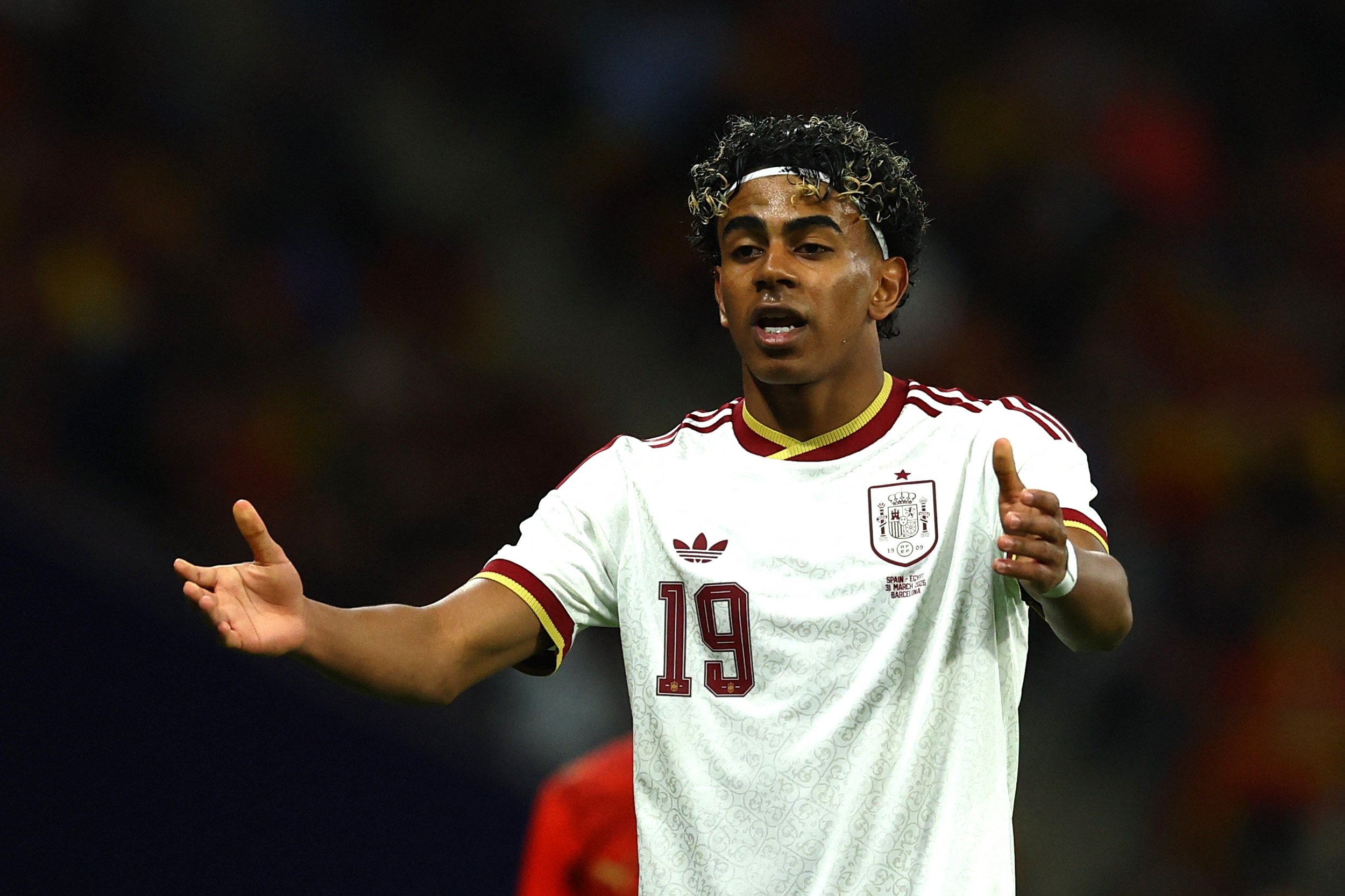
Spain’s Lamine Yamal reacts during the international friendly match between Spain and Egypt at the RCDE Stadium, Cornella de Llobregat, Spain, March 31, 2026. (Reuters Photo)
The Spain and Barcelona winger, who is Muslim, addressed the incident directly in a widely shared statement, describing the chants as “disrespectful” and “intolerable.”
His words carried weight not only because of his profile, but because they framed the issue in personal terms, stripping away any attempt to dismiss the chants as harmless banter.
Yamal acknowledged that the abuse was not aimed at him individually, yet made clear that targeting a religion, in any context, crosses a line football cannot afford to ignore.
Spain’s federation responded swiftly after the match, condemning the chants and reiterating its stance against racism and violence in stadiums.
Behind the scenes, efforts were also made to contain the fallout, including direct communication with Egyptian officials. Still, FIFA’s decision to proceed with disciplinary action ensures the matter will not be resolved by statements alone.
The Egyptian Football Association delivered an equally forceful condemnation, labeling the incident a “repugnant act of racism” and an “unacceptable” stain on the occasion.
The federation also pointed to the booing of Egypt’s national anthem, broadening the scope of concern beyond a single chant.
Yet in a measured response, it emphasized that the actions of a small group would not damage the relationship between the two nations, signaling a desire to separate institutional ties from the misconduct of individuals.
What makes the episode particularly significant is its timing.
With the 2026 World Cup approaching, international friendlies are meant to fine-tune squads and build momentum. Instead, this match has reignited scrutiny over fan culture in European football, where governing bodies have long struggled to eradicate discriminatory behavior despite repeated campaigns and sanctions.
For FIFA, the case represents another test of its zero-tolerance policy, one that critics often argue lacks consistency in enforcement.
For Spain’s federation, it is a moment of accountability, with the potential for disciplinary consequences that could extend beyond financial penalties and into reputational damage.
The Daily Sabah Newsletter
Keep up to date with what’s happening in Turkey,
it’s region and the world.
SIGN ME UP
You can unsubscribe at any time. By signing up you are agreeing to our Terms of Use and Privacy Policy.
This site is protected by reCAPTCHA and the Google Privacy Policy and Terms of Service apply.





 Daily Agenda1 day ago
 Economy2 days ago
 Politics2 days ago
 Politics22 hours ago
 Daily Agenda3 days ago
 Politics2 days ago
 Politics23 hours ago
 Daily Agenda3 days ago