
Politics
Türkiye reinforces Iraq border with security walls, high-tech systems

Turkish authorities have strengthened security measures along the Türkiye-Iraq border in the southeastern province of Hakkari, where a newly constructed security wall and a network of deep trenches aim to curb illegal crossings, smuggling activities and potential terrorist threats, officials announced on Wednesday.
The 2,152-meter (7,060-foot) modular concrete wall, built in the Derecik district’s Anadağ village, was completed last year under the coordination of the Interior Ministry’s Directorate of Migration Management and the Hakkari Governor’s Office. The project also includes a 10-kilometer (6-mile) trench system measuring 7 meters deep and 7 meters wide.
Military units stationed in the area operate using advanced surveillance technologies to monitor the frontier. Panoramic wall-mounted cameras, thermal PTZ (Pan-Tilt-Zoom) systems and night-vision equipment feed into a centralized monitoring hub within the border outpost, enabling rapid responses to any suspicious movement. The measures also include acoustic sensors capable of detecting vibrations and movements along the wall.
The 1st Border Battalion’s commander told Anadolu Agency (AA) that the reinforced physical security structures have proven effective in deterring illegal activity. “The 2,152-meter modular concrete wall provides significant deterrence. Our surveillance systems, including panoramic and thermal cameras, are fully integrated and monitored 24/7 from our operations center. Our unit is determined to fulfill every task assigned to it,” the commander said.
The region, which includes the Hacıbey Stream marking part of the Türkiye-Iraq boundary, is designated as a First-Degree Military Restricted Zone under Turkish law. Local residents are allowed controlled access to water resources during dry seasons through gates built along the trenches, provided that requests are coordinated with local authorities.
Officials say the combined system of artificial and natural barriers, supported by continuous reconnaissance and drone monitoring, has significantly improved security along the border and enhanced the military’s ability to intervene in illegal incidents.
Between 2017 and 2025, 363 kilometers of security walls and 367 kilometers of patrol roads have been built along 560 kilometers of the 1,182-kilometer-long eastern border with Iran, covering 81 kilometers in Ağrı, 54 kilometers in Iğdır, 19 kilometers in Hakkari and 209 kilometers in Van provinces.

“Even though barbarians disguised as civilized people forget it, we will never forget the children on the other side of the Euphrates,” President Recep Tayyip Erdoğan said on Tuesday. In a speech he made at the Presidential Complex after hearing a chorus performance on “Those We Forgot on the Other Side of the Euphrates,” during an event on the launch of the new academic year in Türkiye.
Erdoğan’s speech came one day before the third anniversary of the onset of Israel’s genocide targeting Palestinians in Gaza and beyond. The president has been a staunch opponent of the genocide and a critic of the West’s inaction in the face of Israel’s unbridled aggression. “We will never forget the children on the other side of the Euphrates, we will always stand with them, we will always defend their righteous cause,” he said.
The president said that he was emotional after hearing the song dedicated to the children of Gaza deprived of their right to life and education. “On this occasion, I send my message of solidarity on behalf of my country and nation to all Gazan students who were forced to bury their mothers, fathers, siblings and friends in the past three years, students whose houses, universities, schools were demolished by a Zionist network of genocide perpetrators, who, despite all this, have not made concessions on their bid to live a dignified life, to all oppressed people across the world,” Erdoğan stated.
“May Allah bless the souls of our 74,000 mothers, mostly children and women who have been victims of Israel’s state terrorism in Gaza and the occupied Palestinian territories,” he said.
Wednesday is the third anniversary of the start of a new round of the Palestine-Israel conflict after Hamas’ Operation Al-Aqsa Flood. It triggered the most violent Israeli response to the Palestinians’ fight for their rights and to retake the occupied territories. Israel’s indiscriminate attacks across the Palestinian enclave occasionally came to a halt, though casualties exceeded 70,000 in three years. A cease-fire brokered by the United States has been in place since last year but Israel repeatedly violated it, killing at least 1,400 Palestinians.
Erdoğan used his address to the United Nations General Assembly last month to press the international community for stronger action over Israel’s genocidal conduct in Gaza and renewed recognition of Palestinian statehood.
Canada’s Prime Minister Mark Carney will be visiting Türkiye for a three-day official trip on Oct. 21, his office said Tuesday.
Carney, who will be the first Canadian leader to make a bilateral trip to Türkiye, will visit the capital, Ankara and Istanbul. He will be holding bilateral talks with President Recep Tayyip Erdoğan to advance bilateral partnership, his office said.
In Istanbul, he will meet with the Turkish business community and investors to highlight Canada’s position as an important partner in trade and investment.
“The Prime Minister will emphasise opportunities to expand that growing trade relationship in priority sectors, including energy, aerospace, advanced technologies, and mining and critical minerals,” his office said.
The visit is expected to mark Carney’s latest effort to diversify Canada’s economic ties as he seeks to reduce the country’s reliance on the United States, by far its largest trading partner, following the collapse of trade talks in August.
Carney has vowed to double Canada’s non-U.S. trade over the next decade and has moved to strengthen ties with a range of countries, including China and India.
Türkiye, whose largest trading partner is the European Union, is also seeking new partnerships and investment in energy, infrastructure and mining, while expanding opportunities for its growing defense industry.
No Canadian prime minister is known to have made a standalone bilateral visit to Türkiye in recent decades, though Canadian leaders have met Erdoğan and other Turkish officials on the sidelines of multilateral gatherings, including NATO and G20 summits hosted by Türkiye.
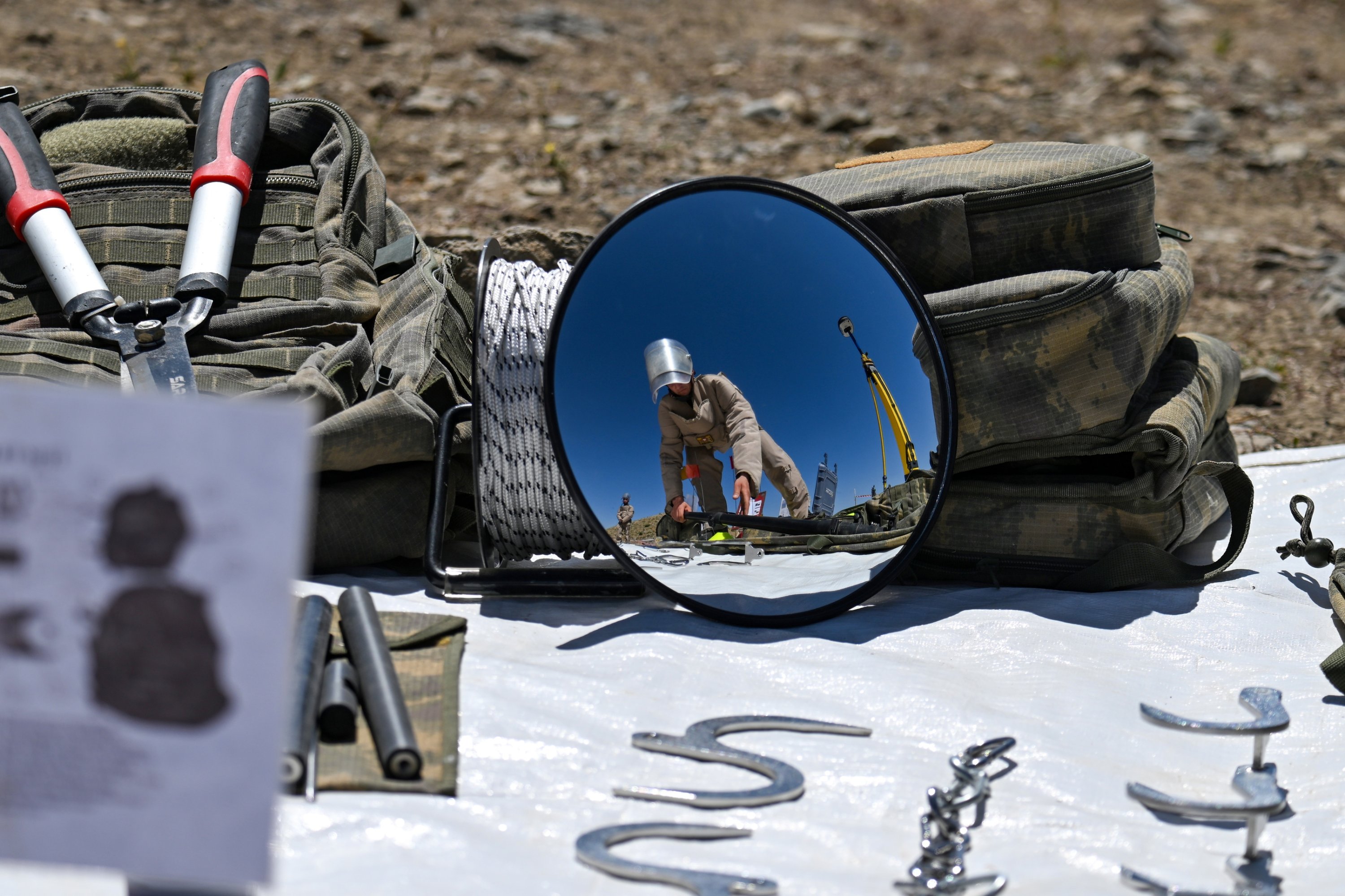
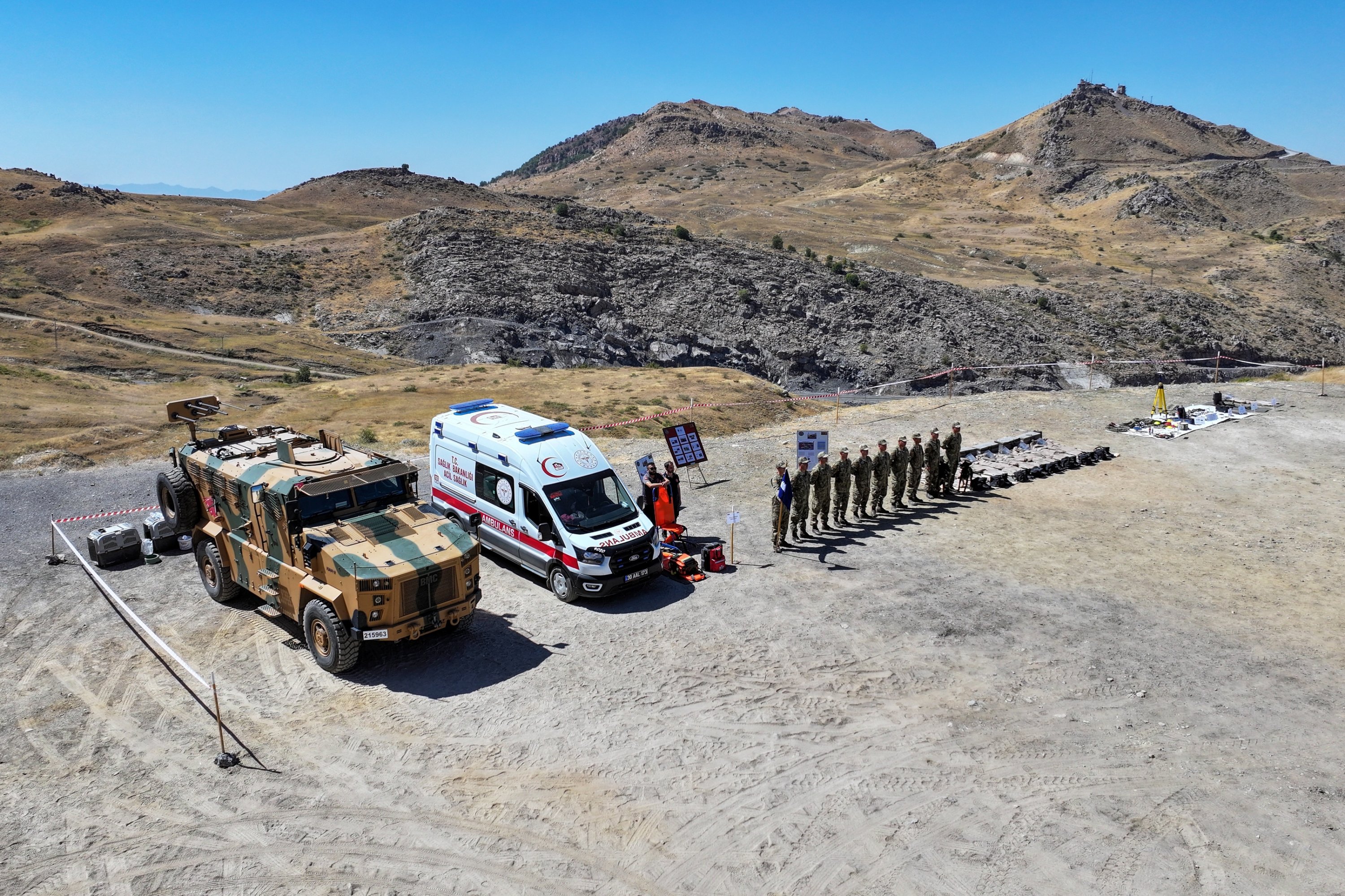
The Special Mine Search and Clearance (ÖMAT) teams of the Turkish Armed Forces (TSK) are conducting operations in rural areas of Çukurca district in the southeastern province of Hakkari as part of efforts to make the region safe for civilian use. The military teams are carrying out mine and explosive clearance operations in areas near the Iraqi border that have been cleared of terrorist activity.
Work is underway around the villages of Kurudere, Kavuşak and Işıklı, near the Iraqi border, which were evacuated in 1995 due to terrorism.
Specialist teams affiliated with the Defense Ministry are clearing mines and unexploded ordnance from the area following the restoration of security, paving the way for the villages and surrounding land to be used again.
ÖMAT teams from the 2nd Army Engineer Brigade Command, comprising experienced personnel equipped with advanced mine detection equipment, undergo extensive preparations before entering the field.
The equipment used in search and clearance operations is inspected before personnel put on protective gear and receive briefings on terrain, weather conditions and potential hazards.
After security measures are established, teams scan designated areas using mine detectors. The explosives discovered during the searches are identified and destroyed under controlled conditions.
Specially trained mine-detection dogs are also deployed during the operations, while emergency medical teams remain on standby.
By becoming a party to the Ottawa Convention in 2004, Türkiye agreed to phase out antipersonnel land mines and establish a humanitarian border surveillance system. Türkiye abolished the use of antipersonnel land mines by the Turkish Armed Forces (TSK) in 2011.
A mine clearance agency tasked with removing land mines planted in the country’s border regions was established in 2015. In 2013, Türkiye requested and was granted an extension of its March 2014 deadline to clear all antipersonnel mines in its territories under the Ottawa Convention.
Speaking to Anadolu Agency (AA) reporters, a company commander overseeing the operation said the work is being conducted under the supervision of Türkiye’s National Mine Action Center (MAFAM), using trained personnel, advanced detection equipment and methods compliant with international standards.
“Our mission is to protect human life and make the land safe and habitable again,” the commander said.
He noted that mine clearance requires patience, discipline and careful coordination because of the risks involved.
The commander added that areas cleared by the teams could eventually be returned to civilian use, including agriculture and residential use.
“Our goal is to clear the land of mines and make every part of our country safe for our people,” he said.
Turkish authorities have strengthened security measures along the Türkiye-Iraq border in the southeastern province of Hakkari, where a newly constructed security wall and a network of deep trenches aim to curb illegal crossings, smuggling activities and potential terrorist threats.
The 2,152-meter (7,060-foot) modular concrete wall, built in Anadağ, a village in the Derecik district, was completed last year under the coordination of the Interior Ministry’s Directorate of Migration Management and the Hakkari Governor’s Office. The project also includes a 10-kilometer (6-mile) trench system measuring 7 meters deep and 7 meters wide.
Israel has sparked outrage with new activities in violation of Syria’s sovereignty. The Turkish Foreign Ministry on Monday strongly condemned Israel’s resumption of activities along the so-called Sufa 53 line in Syria’s Quneitra province, saying the move was aimed at creating new faits accomplis in the country.
“We strongly condemn Israel’s erosion of the 1974 Disengagement Agreement by resuming its activities along the so-called ‘Sufa 53 line’ in Syria’s Quneitra province and its attempts to create new faits accomplis in Syria,” the Turkish Foreign Ministry said in a statement.
It called on the international community to take effective and decisive steps without delay to end Israel’s expansionist policies that escalate tensions in the region and to ensure its withdrawal from occupied Syrian territory. Ankara stressed that it would resolutely continue to support Syria’s sovereignty, political unity, and territorial integrity and, together with countries in the region, continue taking the necessary steps.
Israeli forces restarted excavation work Sunday west of al-Asha village in Syria’s southern Quneitra as part of a project known as the “Sufa Line,” or “Sufa 53,” according to Syria Alikhbaria TV. Military vehicles and bulldozers were seen digging near the separation line with the occupied Syrian Golan Heights, extending a route that runs through rural communities from northern to southern Quneitra. For residents, the project has meant the loss of agricultural land, damage to grazing areas and vegetation, and changes to the natural flow of rainwater in a province where many families depend on farming and livestock.
Israel began work on Sufa 53 in mid-2022 near Hadr in northern Quneitra before extending it south through areas near Jubata al-Khashab, al-Hamidiyah, Qahtaniyah, Bir Ajam and Bariqa toward al-Asha. The project includes a military road roughly 8 meters wide, deep trenches, earth berms reaching about 5 meters in height, observation posts and military positions. Israel claims that the fortifications are designed to prevent possible attacks by Iran-backed armed groups.
Construction continued after the fall of the Baathist regime in December 2024 and intensified as Israeli forces expanded their presence in and around the area of separation in southern Syria. Syrian accounts say Israeli troops have moved between 300 and 1,000 meters into the area in some locations as work on the project expanded.
The impact has been particularly severe on agricultural communities. Local authorities previously estimated that around 12,000 dunams (1,200 hectares) of land in northern and central Quneitra had been affected by Israeli construction. In Jubata al-Khashab alone, local officials said around 7,000 dunams (700 hectares) of land had been lost, while another 6,000 dunams (600 hectares) belonging to al-Hamidiyah and al-Hurriyah were taken over for the project. Residents have also reported extensive damage to grazing land, trees and wild vegetation that had provided an important source of income for local families.
Quneitra media director Mohammad al-Saeed previously told Anadolu Agency (AA) that the project had caused widespread damage across the province, while access to affected areas remained limited. Mohammad Mazen Maryoud, mayor of Jubata al-Khashab, said the trenches had disrupted rainwater flows and contributed to soil erosion, directly affecting farming and livestock. Residents also say the construction has come alongside repeated Israeli raids, detentions, checkpoints and restrictions on access to agricultural land.
Syria’s Foreign Ministry on Sunday condemned the renewed work on Sufa 53, describing it as a “flagrant breach” of the 1974 disengagement agreement and a violation of international resolutions. The ministry warned that continued Israeli incursions and military activity threatened regional security and stability and undermined international law. Damascus reaffirmed its right to exercise sovereignty over all Syrian territory and urged the international community to uphold Syria’s territorial integrity and act against continued Israeli violations.
Justice Minister Akın Gürlek said on Monday that 89 people wanted in connection with ordinary and terrorism-related crimes were extradited to Türkiye from 16 different countries during the third quarter of 2026, covering the period from July 1 to Sept. 30.
“With this, the total number of people brought to Türkiye during the first nine months of 2026 reached 294,” Gürlek said.
Gürlek shared the figures for the third quarter and first nine months of 2026 concerning the extradition of criminals who fled abroad in a post on his NSosyal account.
“There is nowhere for criminals to hide,” Gürlek said, adding that Turkish justice would sooner or later take the necessary action. Gürlek said Türkiye, under the leadership of President Recep Tayyip Erdoğan, was continuing its fight against crime and criminals with the same determination beyond its borders, adding that all available means were being mobilized to apprehend fugitives abroad and bring them back to Türkiye.
Gürlek said the extradition processes were being followed without compromise, stating: “Through efforts led by our Justice Ministry and carried out in coordination with our Interior and Foreign Ministries, we are closely and continuously monitoring the extradition processes of criminals who have fled abroad. On July 1, we said, ‘Those who think they can commit crimes and escape justice will not feel safe no matter where in the world they hide.’ We have not wavered from this determination over the past three months.
“During the third quarter of 2026, covering the period from July 1 to Sept. 30, 89 people wanted in connection with ordinary and terrorism-related crimes were extradited to Türkiye from 16 different countries. Of these, 48 were brought from Georgia, 12 from Germany, 10 from Greece and three from the United Kingdom. Thus, the total number of people brought to Türkiye during the first nine months of 2026 reached 294. During this period, Georgia ranked first with 137 people, followed by Germany with 67, Greece with 19, Montenegro with nine, Bulgaria with eight and the United Kingdom with five.”
Gürlek said Türkiye would continue to observe the principle of reciprocity in international judicial cooperation and take into account how justified extradition requests were reciprocated.
“No matter which criminal organization they belong to or which country they flee to, we will not stop pursuing terrorists, members of organized crime groups, fraudsters and criminal elements seeking to undermine the peace and security of our people,” he said.
Türkiye particularly seeks extradition of members of the Gülenist Terror Group (FETÖ) scattered across the world when the crackdown escalated on the group, especially after the July 15, 2016 coup attempt it carried out with its military infiltrators.
According to the Justice Ministry, Turkish judicial authorities have so far prepared 2,950 extradition requests involving 2,765 suspects and submitted them to 119 countries.
The largest number of requests were sent to Germany, the United States and Belgium. Authorities submitted 777 extradition files to Germany, 428 to the United States and 142 to Belgium.
However, many of the requests have either been rejected or remain unresolved. Germany has rejected 519 requests, while 355 cases submitted to the United States are still pending, according to ministry figures.
One of the most significant obstacles remains the position of Interpol. Turkish authorities have repeatedly sought Red Notices for wanted FETÖ members, but none have been approved by Interpol’s General Secretariat.
Turkish officials point to a 2018 decision by Interpol’s Executive Committee, which concluded that requests related to FETÖ could fall under Article 3 of the organization’s constitution, prohibiting intervention in matters considered political in nature.
Foreign governments have frequently cited asylum status, citizenship protections, concerns over alleged political motivations and potential risks of mistreatment as reasons for rejecting extradition requests.
Türkiye’s opposition New Party (YP) is facing growing internal tensions during its ongoing provincial and district congresses, with disputes over membership numbers, leadership and voting procedures emerging in several provinces.
The latest disagreements surfaced in the southern province of Antalya and the western province of Izmir, following tensions at party congresses in Trabzon, Istanbul, Eskişehir and Mersin.
In Antalya, Nail Kamacı, the party’s acting provincial chair, questioned a sharp increase in membership ahead of the provincial congress.
Speaking at the party’s first ordinary district congress in Konyaaltı, Kamacı said 10,000 of the party’s 27,000 members in the province had joined within the past 35 days.
“Why? For the provincial chairmanship,” Kamacı said, arguing that the increase did not represent a “healthy” membership figure.
In late July, Özgür Özel launched the New Party after being ousted from the main opposition Republican People’s Party (CHP) following a court ruling that invalidated the party’s previous congress.
Özel had led the CHP to a historic victory in the 2024 local elections, winning control of several major municipalities, including Istanbul, Ankara and other major urban centers. After the split, he argued that the YP could build on that momentum and develop into a broader political movement.
Tensions also emerged in Izmir, where former Izmir Mayor Aziz Kocaoğlu sharply criticized the New Party Izmir provincial chair, Çağatay Güç, during the party’s district congress in Urla.
Kocaoğlu accused the provincial leadership of engaging in political maneuvering and called on party members to field an alternative candidate.
“Izmir is nobody’s property,” Kocaoğlu noted, urging members to replace the current provincial leadership.
A separate dispute erupted during an internal party vote in Izmir’s Buca district.
An argument between supporters of rival candidates broke out following the vote count and escalated into a physical confrontation. Party members and security personnel intervened to separate the sides.
The disputes follow tensions at several other New Party congresses, including in Mersin, where gunshots were reportedly heard during unrest surrounding a district congress last week.


-

 Economy2 days ago
Revolut: $115 billion fintech taking on Europe’s biggest banks
-

 Economy2 days ago
Global M&A deal rush slowed down in Q3 as borrowing costs bite
-

 Economy1 day ago
Brazilian assets rally as Flavio Bolsonaro tops first-round vote
-

 Economy1 day ago
Türkiye’s Halkbank after secondary offering amid strong interest: CEO
-
 Politics1 day ago
MP hints at more access for Öcalan amid terror-free Türkiye bid
-
 Economy23 hours ago
Türkiye says Development Road could become $80B ‘energy corridor’
-
 Economy22 hours ago
Top central bankers due in Istanbul to discuss policy challenges
-
 Politics23 hours ago
Türkiye’s CHP seeks removal of mayor with divided loyalty