
Politics
Syria-YPG talks intensify but officials play down odds of breakthrough

Syrian authorities, U.S. officials and the U.S.-backed YPG terrorist group have stepped up talks ahead of a year-end deadline to implement a long-delayed integration deal, according to several people involved in or familiar with the talks.
Discussions have accelerated in recent days despite growing frustrations over delays, according to the Syrian, Kurdish and Western sources who spoke to Reuters, some of whom cautioned that a major breakthrough was unlikely.
The interim Syrian government has sent a proposal to the YPG, the PKK terrorist group’s Syrian offshoot that controls the country’s northeast, according to five of the sources.
In it, Damascus expressed openness to the YPG reorganizing its roughly 50,000 fighters into three main divisions and smaller brigades as long as it cedes some chains of command and opens its territory to other Syrian army units, according to one Syrian, one Western and three YPG officials.
‘Save face’
It was unclear whether the idea would move forward, and several sources downplayed prospects of a comprehensive 11th-hour deal, saying more talks are needed. Still, one YPG official said: “We are closer to a deal than ever before.”
A second Western official said that any announcement in the coming days would be meant in part to “save face,” extend the deadline and maintain stability in a nation that remains fragile a year after the fall of dictator Bashar Assad.
Whatever emerges was expected to fall short of the YPG’s full integration into the military and other state institutions by year-end, as was called for in a landmark March 10 agreement between the sides, most of the sources said.
Failure to mend Syria’s deepest remaining fracture risks an armed clash that could derail its emergence from 14 years of war, and potentially draw in neighboring Türkiye, which has warned of an operation against the YPG terrorists entrenched near its borders.
Both sides have accused the other of stalling and acting in bad faith. The YPG is reluctant to give up the so-called autonomy it won as the main U.S. ally during the war, after which it controlled Daesh prisons and rich oil resources.
The U.S., which backs Syrian President Ahmed al-Sharaa and has urged global support for his interim government, has relayed messages between the YPG and Damascus, facilitated talks and urged a deal, several sources said.
A U.S. State Department spokesperson said Tom Barrack, the U.S. ambassador to Türkiye and special envoy to Syria, continued to support and facilitate dialogue between the Syrian government and the YPG, saying the aim was to maintain momentum toward integration of the forces.
Türkiye says patience thin
Since a major round of talks in the summer between the sides failed to produce results, frictions have mounted, including frequent skirmishes along several front lines across the north.
The YPG took control of much of northeast Syria, where most of the nation’s oil and wheat production is, after driving out Daesh terrorists in 2019. It said it was fighting for the rights of the Kurdish minority, but resentment against its rule has grown among the region’s population, including against the forced conscription of young Arab men.
A Syrian official said the year-end deadline for integration is firm and only “irreversible steps” by the YPG could bring an extension.
Türkiye’s foreign minister, Hakan Fidan, said on Thursday it does not want to resort to military means but warned that patience with the YPG is “running out.”
YPG officials have downplayed the deadline and said they are committed to talks toward a just integration.
“The most reliable guarantee for the agreement’s continued validity lies in its content, not timeframe,” said Sihanouk Dibo, an official with the so-called “Rojava autonomous administration,” suggesting it could take until mid-2026 to address all points in the deal.
The YPG had, in October, floated the idea of reorganizing into three geographical divisions as well as the brigades. It is unclear whether that concession, in the proposal from Damascus in recent days, would be enough to convince it to give up territorial control.
Abdel Karim Omar, representative of the “Rojava autonomous administration,” said the proposal, which has not been made public, included “logistical and administrative details that could cause disagreement and lead to delays.”
A senior Syrian official told Reuters the response “has flexibility to facilitate reaching an agreement that implements the March accord.”

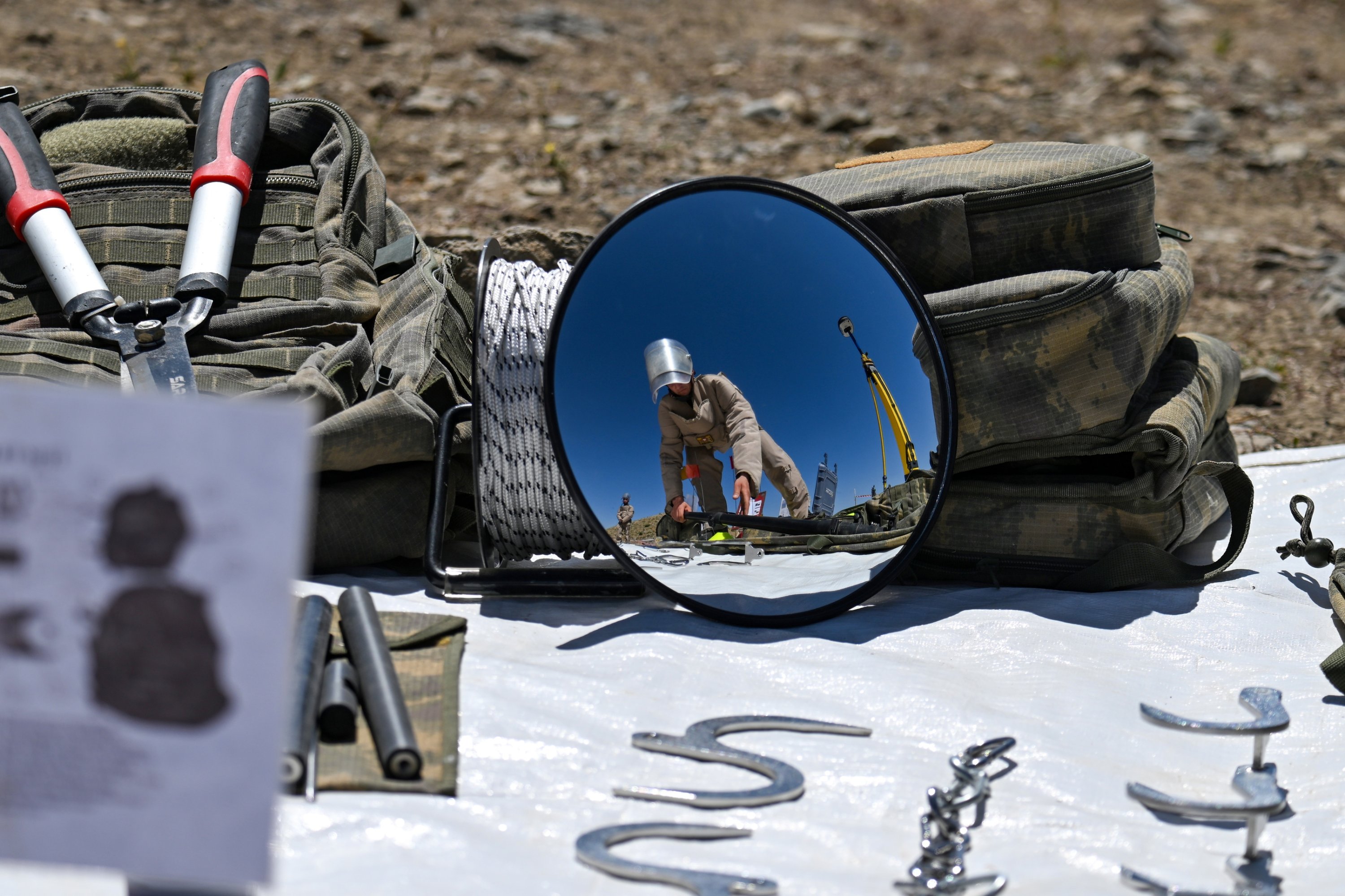
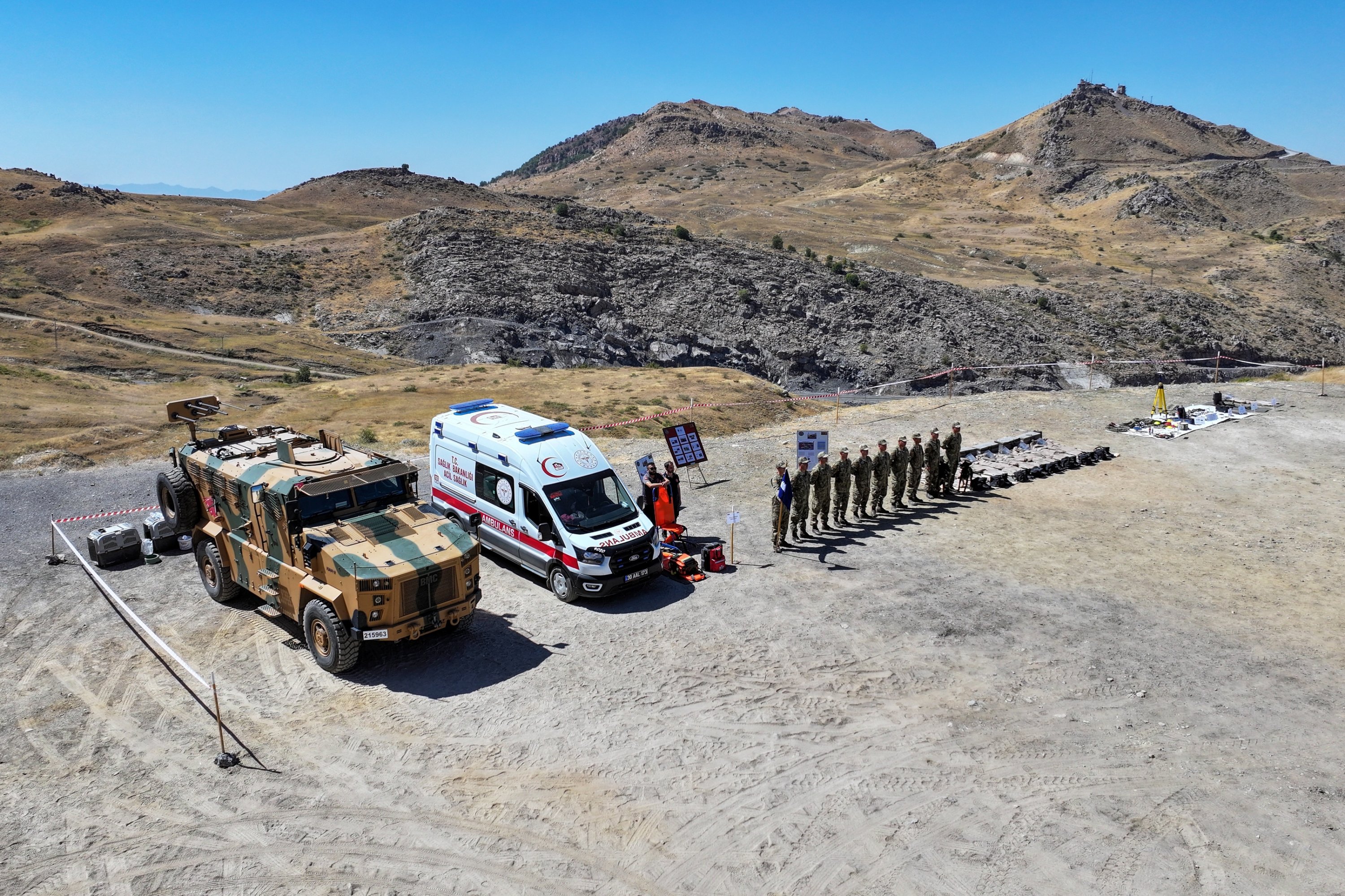
The Special Mine Search and Clearance (ÖMAT) teams of the Turkish Armed Forces (TSK) are conducting operations in rural areas of Çukurca district in the southeastern province of Hakkari as part of efforts to make the region safe for civilian use. The military teams are carrying out mine and explosive clearance operations in areas near the Iraqi border that have been cleared of terrorist activity.
Work is underway around the villages of Kurudere, Kavuşak and Işıklı, near the Iraqi border, which were evacuated in 1995 due to terrorism.
Specialist teams affiliated with the Defense Ministry are clearing mines and unexploded ordnance from the area following the restoration of security, paving the way for the villages and surrounding land to be used again.
ÖMAT teams from the 2nd Army Engineer Brigade Command, comprising experienced personnel equipped with advanced mine detection equipment, undergo extensive preparations before entering the field.
The equipment used in search and clearance operations is inspected before personnel put on protective gear and receive briefings on terrain, weather conditions and potential hazards.
After security measures are established, teams scan designated areas using mine detectors. The explosives discovered during the searches are identified and destroyed under controlled conditions.
Specially trained mine-detection dogs are also deployed during the operations, while emergency medical teams remain on standby.
By becoming a party to the Ottawa Convention in 2004, Türkiye agreed to phase out antipersonnel land mines and establish a humanitarian border surveillance system. Türkiye abolished the use of antipersonnel land mines by the Turkish Armed Forces (TSK) in 2011.
A mine clearance agency tasked with removing land mines planted in the country’s border regions was established in 2015. In 2013, Türkiye requested and was granted an extension of its March 2014 deadline to clear all antipersonnel mines in its territories under the Ottawa Convention.
Speaking to Anadolu Agency (AA) reporters, a company commander overseeing the operation said the work is being conducted under the supervision of Türkiye’s National Mine Action Center (MAFAM), using trained personnel, advanced detection equipment and methods compliant with international standards.
“Our mission is to protect human life and make the land safe and habitable again,” the commander said.
He noted that mine clearance requires patience, discipline and careful coordination because of the risks involved.
The commander added that areas cleared by the teams could eventually be returned to civilian use, including agriculture and residential use.
“Our goal is to clear the land of mines and make every part of our country safe for our people,” he said.
Turkish authorities have strengthened security measures along the Türkiye-Iraq border in the southeastern province of Hakkari, where a newly constructed security wall and a network of deep trenches aim to curb illegal crossings, smuggling activities and potential terrorist threats.
The 2,152-meter (7,060-foot) modular concrete wall, built in Anadağ, a village in the Derecik district, was completed last year under the coordination of the Interior Ministry’s Directorate of Migration Management and the Hakkari Governor’s Office. The project also includes a 10-kilometer (6-mile) trench system measuring 7 meters deep and 7 meters wide.
Israel has sparked outrage with new activities in violation of Syria’s sovereignty. The Turkish Foreign Ministry on Monday strongly condemned Israel’s resumption of activities along the so-called Sufa 53 line in Syria’s Quneitra province, saying the move was aimed at creating new faits accomplis in the country.
“We strongly condemn Israel’s erosion of the 1974 Disengagement Agreement by resuming its activities along the so-called ‘Sufa 53 line’ in Syria’s Quneitra province and its attempts to create new faits accomplis in Syria,” the Turkish Foreign Ministry said in a statement.
It called on the international community to take effective and decisive steps without delay to end Israel’s expansionist policies that escalate tensions in the region and to ensure its withdrawal from occupied Syrian territory. Ankara stressed that it would resolutely continue to support Syria’s sovereignty, political unity, and territorial integrity and, together with countries in the region, continue taking the necessary steps.
Israeli forces restarted excavation work Sunday west of al-Asha village in Syria’s southern Quneitra as part of a project known as the “Sufa Line,” or “Sufa 53,” according to Syria Alikhbaria TV. Military vehicles and bulldozers were seen digging near the separation line with the occupied Syrian Golan Heights, extending a route that runs through rural communities from northern to southern Quneitra. For residents, the project has meant the loss of agricultural land, damage to grazing areas and vegetation, and changes to the natural flow of rainwater in a province where many families depend on farming and livestock.
Israel began work on Sufa 53 in mid-2022 near Hadr in northern Quneitra before extending it south through areas near Jubata al-Khashab, al-Hamidiyah, Qahtaniyah, Bir Ajam and Bariqa toward al-Asha. The project includes a military road roughly 8 meters wide, deep trenches, earth berms reaching about 5 meters in height, observation posts and military positions. Israel claims that the fortifications are designed to prevent possible attacks by Iran-backed armed groups.
Construction continued after the fall of the Baathist regime in December 2024 and intensified as Israeli forces expanded their presence in and around the area of separation in southern Syria. Syrian accounts say Israeli troops have moved between 300 and 1,000 meters into the area in some locations as work on the project expanded.
The impact has been particularly severe on agricultural communities. Local authorities previously estimated that around 12,000 dunams (1,200 hectares) of land in northern and central Quneitra had been affected by Israeli construction. In Jubata al-Khashab alone, local officials said around 7,000 dunams (700 hectares) of land had been lost, while another 6,000 dunams (600 hectares) belonging to al-Hamidiyah and al-Hurriyah were taken over for the project. Residents have also reported extensive damage to grazing land, trees and wild vegetation that had provided an important source of income for local families.
Quneitra media director Mohammad al-Saeed previously told Anadolu Agency (AA) that the project had caused widespread damage across the province, while access to affected areas remained limited. Mohammad Mazen Maryoud, mayor of Jubata al-Khashab, said the trenches had disrupted rainwater flows and contributed to soil erosion, directly affecting farming and livestock. Residents also say the construction has come alongside repeated Israeli raids, detentions, checkpoints and restrictions on access to agricultural land.
Syria’s Foreign Ministry on Sunday condemned the renewed work on Sufa 53, describing it as a “flagrant breach” of the 1974 disengagement agreement and a violation of international resolutions. The ministry warned that continued Israeli incursions and military activity threatened regional security and stability and undermined international law. Damascus reaffirmed its right to exercise sovereignty over all Syrian territory and urged the international community to uphold Syria’s territorial integrity and act against continued Israeli violations.
Justice Minister Akın Gürlek said on Monday that 89 people wanted in connection with ordinary and terrorism-related crimes were extradited to Türkiye from 16 different countries during the third quarter of 2026, covering the period from July 1 to Sept. 30.
“With this, the total number of people brought to Türkiye during the first nine months of 2026 reached 294,” Gürlek said.
Gürlek shared the figures for the third quarter and first nine months of 2026 concerning the extradition of criminals who fled abroad in a post on his NSosyal account.
“There is nowhere for criminals to hide,” Gürlek said, adding that Turkish justice would sooner or later take the necessary action. Gürlek said Türkiye, under the leadership of President Recep Tayyip Erdoğan, was continuing its fight against crime and criminals with the same determination beyond its borders, adding that all available means were being mobilized to apprehend fugitives abroad and bring them back to Türkiye.
Gürlek said the extradition processes were being followed without compromise, stating: “Through efforts led by our Justice Ministry and carried out in coordination with our Interior and Foreign Ministries, we are closely and continuously monitoring the extradition processes of criminals who have fled abroad. On July 1, we said, ‘Those who think they can commit crimes and escape justice will not feel safe no matter where in the world they hide.’ We have not wavered from this determination over the past three months.
“During the third quarter of 2026, covering the period from July 1 to Sept. 30, 89 people wanted in connection with ordinary and terrorism-related crimes were extradited to Türkiye from 16 different countries. Of these, 48 were brought from Georgia, 12 from Germany, 10 from Greece and three from the United Kingdom. Thus, the total number of people brought to Türkiye during the first nine months of 2026 reached 294. During this period, Georgia ranked first with 137 people, followed by Germany with 67, Greece with 19, Montenegro with nine, Bulgaria with eight and the United Kingdom with five.”
Gürlek said Türkiye would continue to observe the principle of reciprocity in international judicial cooperation and take into account how justified extradition requests were reciprocated.
“No matter which criminal organization they belong to or which country they flee to, we will not stop pursuing terrorists, members of organized crime groups, fraudsters and criminal elements seeking to undermine the peace and security of our people,” he said.
Türkiye particularly seeks extradition of members of the Gülenist Terror Group (FETÖ) scattered across the world when the crackdown escalated on the group, especially after the July 15, 2016 coup attempt it carried out with its military infiltrators.
According to the Justice Ministry, Turkish judicial authorities have so far prepared 2,950 extradition requests involving 2,765 suspects and submitted them to 119 countries.
The largest number of requests were sent to Germany, the United States and Belgium. Authorities submitted 777 extradition files to Germany, 428 to the United States and 142 to Belgium.
However, many of the requests have either been rejected or remain unresolved. Germany has rejected 519 requests, while 355 cases submitted to the United States are still pending, according to ministry figures.
One of the most significant obstacles remains the position of Interpol. Turkish authorities have repeatedly sought Red Notices for wanted FETÖ members, but none have been approved by Interpol’s General Secretariat.
Turkish officials point to a 2018 decision by Interpol’s Executive Committee, which concluded that requests related to FETÖ could fall under Article 3 of the organization’s constitution, prohibiting intervention in matters considered political in nature.
Foreign governments have frequently cited asylum status, citizenship protections, concerns over alleged political motivations and potential risks of mistreatment as reasons for rejecting extradition requests.
Türkiye’s opposition New Party (YP) is facing growing internal tensions during its ongoing provincial and district congresses, with disputes over membership numbers, leadership and voting procedures emerging in several provinces.
The latest disagreements surfaced in the southern province of Antalya and the western province of Izmir, following tensions at party congresses in Trabzon, Istanbul, Eskişehir and Mersin.
In Antalya, Nail Kamacı, the party’s acting provincial chair, questioned a sharp increase in membership ahead of the provincial congress.
Speaking at the party’s first ordinary district congress in Konyaaltı, Kamacı said 10,000 of the party’s 27,000 members in the province had joined within the past 35 days.
“Why? For the provincial chairmanship,” Kamacı said, arguing that the increase did not represent a “healthy” membership figure.
In late July, Özgür Özel launched the New Party after being ousted from the main opposition Republican People’s Party (CHP) following a court ruling that invalidated the party’s previous congress.
Özel had led the CHP to a historic victory in the 2024 local elections, winning control of several major municipalities, including Istanbul, Ankara and other major urban centers. After the split, he argued that the YP could build on that momentum and develop into a broader political movement.
Tensions also emerged in Izmir, where former Izmir Mayor Aziz Kocaoğlu sharply criticized the New Party Izmir provincial chair, Çağatay Güç, during the party’s district congress in Urla.
Kocaoğlu accused the provincial leadership of engaging in political maneuvering and called on party members to field an alternative candidate.
“Izmir is nobody’s property,” Kocaoğlu noted, urging members to replace the current provincial leadership.
A separate dispute erupted during an internal party vote in Izmir’s Buca district.
An argument between supporters of rival candidates broke out following the vote count and escalated into a physical confrontation. Party members and security personnel intervened to separate the sides.
The disputes follow tensions at several other New Party congresses, including in Mersin, where gunshots were reportedly heard during unrest surrounding a district congress last week.
Ukrainian President Volodymyr Zelenskyy said Monday that two Russian drones struck a Turkish-owned civilian vessel carrying corn in neutral waters in the Black Sea, killing the ship’s captain.
Zelenskyy said Azerbaijani and Indian nationals were aboard the vessel at the time of the attack.
Eleven crew members were rescued, including one who was injured, while the fate of another person was initially unknown, he said in a statement on social media platform X.
The Ukrainian leader described the vessel as a Turkish-owned civilian ship carrying corn and said it was sailing in neutral waters when it was hit by two Russian drones.
Ukraine had proposed measures aimed at reducing tensions and improving security in the Black Sea, and that proposals had also been put forward by third countries, Zelenskyy said.
He accused Russia of choosing attacks rather than ensuring the safe passage of civilian vessels and called for international pressure to restore security in the Black Sea and protect global food supplies.
The incident comes amid heightened security concerns over commercial shipping in the Black Sea as the Russia-Ukraine war continues.
Türkiye extended condolences to the people of Nigeria on Monday and said that it is “deeply saddened” over a deadly military aircraft crash in its Ondo state.
“We are deeply saddened by the loss of lives resulting from the crash of a military aircraft today in Ondo state of Nigeria,” the Foreign Ministry said in a statement.
The statement also offered the nation’s condolences to those who lost their relatives in the accident and to the people of Nigeria.
A military helicopter crashed in the southwestern state of Ondo on Monday, according to Jimoh Abayomi, public relations officer for the state police.
Abayomi said an investigation into the accident had been launched and that security forces had been deployed to the crash site.
Nigerian Aviation Minister Festus Keyamo told reporters that the helicopter crashed near the Igbokoda Naval Base.
He said 25 passengers and seven crew members were on board, adding that the wreckage had been located and search and rescue operations in the area are ongoing.
Keyamo did not provide any information on casualties or injuries from the crash.
However, media reports quoted the African country’s president, Bola Tinubu, as saying that all 32 people on board lost their lives.
The crash was seen as one of the worst air disasters in recent years in Africa’s most populous country.
“The president extends his deepest condolences to the family of the 25 passengers and seven crew members involved,” Tinubu’s office said in a statement.
A video circulating on social media showed a small crowd gathered near a river while rescuers searched the area by boat.
The president said he had “directed the Nigerian Air Force to immediately commence a thorough investigation into the cause of the crash to prevent future occurrences.”


-

 Economy2 days ago
Revolut: $115 billion fintech taking on Europe’s biggest banks
-

 Economy2 days ago
Global M&A deal rush slowed down in Q3 as borrowing costs bite
-

 Economy23 hours ago
Brazilian assets rally as Flavio Bolsonaro tops first-round vote
-

 Economy1 day ago
Türkiye’s Halkbank after secondary offering amid strong interest: CEO
-
 Politics1 day ago
MP hints at more access for Öcalan amid terror-free Türkiye bid
-
 Economy1 day ago
Türkiye’s inflation drops below 30% for 1st time in nearly 5 years
-
 Economy19 hours ago
Türkiye says Development Road could become $80B ‘energy corridor’
-
 Economy18 hours ago
Top central bankers due in Istanbul to discuss policy challenges