
Economy
Türkiye’s construction output hit peak in December 2025

Output in Türkiye’s construction sector surged 7.5% on an annual basis as of December last year, and the construction index saw its record high, according to data from the country’s statistical office compiled by Anadolu Agency (AA) on Monday.
Türkiye’s construction output index, without calendar effects, rose to its highest at 151.2 points in December 2025, the data showed.
The index reached 150.4 points when adjusted for calendar effects, the highest since January 2022, when the data began to be collected, up 7.5%.
The index, adjusted for both calendar and season effects, totaled 129.1 points at the same time.
Meanwhile, all sub-sector indices of the construction production index in December 2025 reached peak highs.
The building construction index rose 8.4%, the civil engineering index 5.8%, and the specialized construction activities index 5.5% year-over-year.
Construction in 2025 offsets 2024’s slowdown
Ali Hepşen, a professor of business administration at Istanbul University, told AA that the country’s construction production saw volatility for a long time, especially due to difficulties in financing, which suppressed production in 2024.
“However, reaching a peak level like 150.4 points is important – the acceleration on construction sites has already been felt in the field since the second half of last year, and the data reflects that,” he said.
He noted that the 8.4% rise in the building construction index reflects that housing remains the sector’s driver, while the rise in non-building construction, which Turkish Statistical Institute (TurkStat) calls the civil engineering index in its data, reflects the support from public investments. Meanwhile, specialized construction activities indicate that “the supply chain is working.”
He said these developments point to a “normalization rather than a new leap.”
“The slowdown in 2024 was offset in 2025,” he said. “The relative decrease in cost uncertainty accelerated unfinished projects.”
“However, the data alone does not indicate demand health or predictability since production and financial resilience are not the same – it’s necessary to make this distinction,” he added.
Hepşen said that extending this momentum into 2026 “would not be easy,” and that the rise last year was led by the completion of delayed production, so the continuation of this momentum depends on the start of new projects, which require financing.
He mentioned that contractors are more selective than before when it comes to starting new projects due to slow sales in certain price segments, but “there is no scenario that could completely slow down the sector.”
Urban transformation, earthquake-related projects
“Investments in earthquake-prone regions, urban transformation, and public projects may continue this year, but I don’t expect the same high momentum as last year, a more limited and balanced increase is the likely outcome this year, yet the peak of last year is still very important,” he said.
“The sector likes confidence, so when the index rises, suppliers relax, and banks become less distant, but the volume growth alone doesn’t measure success, as sustainability will be determined by financing conditions and demand levels,” he added.
Mustafa Ekiz, head of Turkish construction sector service provider Real Estate and Construction Platform, said that the rise in the index shows the sector “has once again assumed its role as the driver of the economy.”
“The rise shows that the housing demand is strong,” he said, noting that the construction production activity will continue into this year, “but the growth is expected to progress more steadily.”
“Access to financing, land costs and credit conditions will determine the pace of the sector this year,” he added.
Ekiz said the sector creates employment and stimulates related sectors, while shaping the future of cities.
“Planned production, appropriate financing models, and a quality urbanization approach are needed for sustainable growth,” he said.

Türkiye and the European Space Agency (ESA) are reportedly holding talks to renew cooperation and develop joint orbital programs, an expert said Friday.
Gülin Dede, partnerships director at the nonprofit Space Renaissance International (SRI), said she had heard that discussions were underway and expressed optimism that they would lead to positive results and revive previous cooperation agreements between Ankara and the agency.
Dede, Türkiye’s first female analog astronaut who previously worked at ESA’s technology development center in the Netherlands, said European space officials were showing growing interest in expanding cooperation with Türkiye.
She also welcomed Türkiye’s signing of the Artemis Accords, an international framework for cooperation in civil space exploration.
Dede was speaking on the sidelines of the International Astronautical Congress (IAC) in the southern Antalya province, which she said helped raise Türkiye’s profile within the global space community.
“That this event is being held in Türkiye sends a wonderful message to the global space community and ecosystem, evident from the academic contribution of the delegates and their satisfaction with the expo, the evaluation of Turkish firms’ exhibits and presentations from other countries,” she said.
“I’m here myself as a committee member, and our work is progressing successfully,” she added.
Dede said ESA had “always sought cooperation with Türkiye” and stressed the importance of maintaining the momentum generated by the congress through sustained investment in the country’s space capabilities.
She also said greater participation by Turkish astronauts in international missions and activities could help strengthen Türkiye’s position as a partner in future space projects.
Dede urged Ankara to take a more active role in the European Organization for the Exploitation of Meteorological Satellites (EUMETSAT) and deepen its engagement with the U.N. Committee on the Peaceful Uses of Outer Space (COPUOS).
Türkiye opened the Çerkezköy-Kapıkule section of its Halkalı-Kapıkule railway on Friday, extending the national high-speed network to the Bulgarian border.
The new section is 153 kilometres (95.07 miles) long. It starts at Çerkezköy, a town in Tekirdağ province in southeastern Thrace, west of Istanbul inside Europe. It ends at Kapıkule, Türkiye’s main rail and road border crossing with Bulgaria, near the city of Edirne in the country’s far northwest.
“With the launch of our project, a new era will begin, and we will see its effects across a wide range of areas,” President Recep Tayyip Erdoğan told the opening ceremony in Kırklareli province in northeastern Thrace. EU Enlargement Commissioner Marta Kos was also present.
Erdoğan said it would eventually serve as a boost to production, exports, employment, trade and tourism. “Our project will make a significant contribution to the Turkish economy,” he noted.
The new section is the longest part of the 229-kilometer Halkalı-Kapıkule project, which begins at Halkalı on Istanbul’s western edge. With the opening, Tekirdağ, Kırklareli and Edirne join the high-speed network.
Tekirdağ lies on the Sea of Marmara coast, Kırklareli in the northeast of Thrace along the Bulgarian border, and Edirne in the northwest corner where Türkiye meets both Bulgaria and Greece.
The line will connect not only continents but also Türkiye and the European Union, Transport and Infrastructure Minister Abdulkadir Uraloğlu said.
“We will continue to work together to further advance our cooperation with the European Union on this project,” Uraloğlu added.
Greater capacity, faster journeys
The new line raises the number of Turkish provinces reached by high-speed rail to 14.
Erdoğan said the line will cut travel times sharply.

Passenger journeys between Halkalı and Kapıkule will fall from four hours to 1.5 hours, while freight transit will drop from 8.5 hours to 3.5.
Annual passenger capacity is expected to rise from 600,000 to about 3 million, and annual freight capacity from 1.5 million to 9.5 million tons, according to officials.
“This means that transportation will become faster, logistics will improve, and travel times will be reduced,” said Erdoğan.
The project also covers new station buildings at Babaeski, Lüleburgaz and Büyükkarıştıran, and the reconstruction of the Kapıkule and Edirne stations. Babaeski and Lüleburgaz are towns in Kırklareli province, and Büyükkarıştıran is a settlement in Lüleburgaz district, also in Kırklareli.
European link
Transport and Infrastructure Minister Abdulkadir Uraloğlu described the line as one of the most critical structures linking the Middle Corridor to Europe.
The Middle Corridor is the trade route connecting Asia and Europe through Central Asia, the Caucasus and Türkiye. Kapıkule, on the Bulgarian frontier, is where this line meets the European rail network. The project is designed for 200 kph passenger services and is part of the Trans-European Transport Networks.
The EU contributed to the financing. The 153-kilometer section was co-financed by the EU and Türkiye, while the remaining 76 kilometers of the Halkalı-Kapıkule route was built by the Transport and Infrastructure Ministry.
Uraloğlu acknowledged the EU’s role, saying the project was partly financed with EU pre-accession (IPA) funds.
Uraloğlu also placed the project within Türkiye’s wider rail expansion, saying the country has grown its rail network from 10,948 to 14,272 kilometers and built 2,604 kilometers of high-speed track from scratch.
Erdoğan said transportation investments have been at the top of the list of areas where he says they have propelled Türkiye forward over the past 24 years.
“During our time in office, the present-day value of our transportation investments has risen to $354 billion. Railways account for $80 billion of this total,” he noted.
Ukraine struck and partly disabled a data center operated by Russian technology company Yandex on Friday, a day after it hit a similar but more significant facility, widening the scope of its attacks against Russia after Moscow targeted data hubs inside Ukraine.
Yandex, which is heavily involved in Russia’s AI development and is sometimes called “Russia’s Google,” said its data center in the Kaluga region southwest of Moscow had been struck by Ukrainian drones and partly put out of action.
A day earlier, a Ukrainian attack shut down Yandex’s major data hub in Sasovo in the Ryazan region, where two of the three supercomputers used to develop the company’s AI model are housed. Yandex has said it is assessing the damage from that strike and cannot confirm whether the equipment can be restored.
Locked in an escalating and deadly war of attrition after more than four years of fighting, both Russia and Ukraine have expanded drone attacks this year on infrastructure targets, from energy facilities and refineries to ports and vessels carrying oil and grain, e-commerce warehouses and, most recently, data centers.
Yandex, whose apps have become an indispensable part of many Russians’ lives, said the attacks had struck at the core of its operations and that it was trying to keep its services going.
“Data centers are the iron heart of Yandex. Their operation is critical for services that have become part of people’s everyday lives. Millions of users check traffic and plan routes, listen to music, watch movies, order groceries and get answers to their questions,” it said in a statement.
“Our technology helps hundreds of thousands of companies run their businesses. They use it to take orders, serve customers and work with partners,” it said.
Yandex shares were the biggest faller on the Moscow exchange, down 3.75%.
“The risks involve not only the potential temporary unavailability of Yandex services and lost revenue in specific segments but also the company’s extensive base of B2B clients,” said Maryana Lazaricheva, head of equity research at T-Investments.
She said the company could redistribute some of the load to its other data centers. “However, if the chain of attacks continues, this possibility vanishes, which could lead to even more severe consequences.”
The full scale of the disruption caused by the attacks was not immediately clear, although messages appeared on at least one Yandex app warning of potential problems in its operation.
Yandex said it was working around the clock to try to restore services that had been disrupted.
“Right now this is our most important task, but unfortunately it is not an easy one,” it said in the same statement.
Tit-for-tat strikes
Russia has struck Ukrainian data centers and telecommunications infrastructure over the past month, including targets in central Kyiv.
“We always respond in mirror-like fashion,” Ukrainian President Volodymyr Zelenskyy said on Thursday. “You all know, they have been hitting and continue to hit our data centers. We are responding. I can’t share all the details.”
Ukraine has previously targeted the warehouses of specific companies inside Russia which it deems central to Russia’s economy, including e-commerce giants Wildberries and Ozon, which then prompted Russia to strike their Ukrainian equivalents.
Yandex operates five data centers, two of which have already been hit. Two of the other three are in the Moscow region, and another is in the Vladimir region, according to publicly available information.
Yandex said in 2021 that the Sasovo data hub, which was struck on Thursday, hosted two of its three supercomputers built around Nvidia A100 chips, which it uses to train its YandexGPT large AI model. Yandex has declined to say whether the supercomputers were affected by the attack.
Multiple online services in Russia reported technical issues on Thursday, including real estate aggregator Cian, a book portal called Litmarket, and the websites of Russian Railways and professional football club Spartak Moscow.
Previous Ukrainian attacks on Russia have led to fuel shortages and queues at petrol stations, losses for tens of thousands of small businesses involved in e-commerce, and higher inflation as rising fuel costs feed through to consumer prices.
Russian attacks on Ukrainian data centers have forced some of them to suspend operations after sustaining damage, while 100,000 households suffered temporary internet outages after one attack.
Ukraine’s digital minister told Reuters last month that the country was moving digital infrastructure underground in response to Russian attacks.
Turkish solar technology manufacturer Kalyon PV said Thursday it plans to establish a new production facility in the United States as part of its global expansion strategy, targeting direct sales to the U.S. market and seeking to benefit from incentives supporting domestic manufacturing.
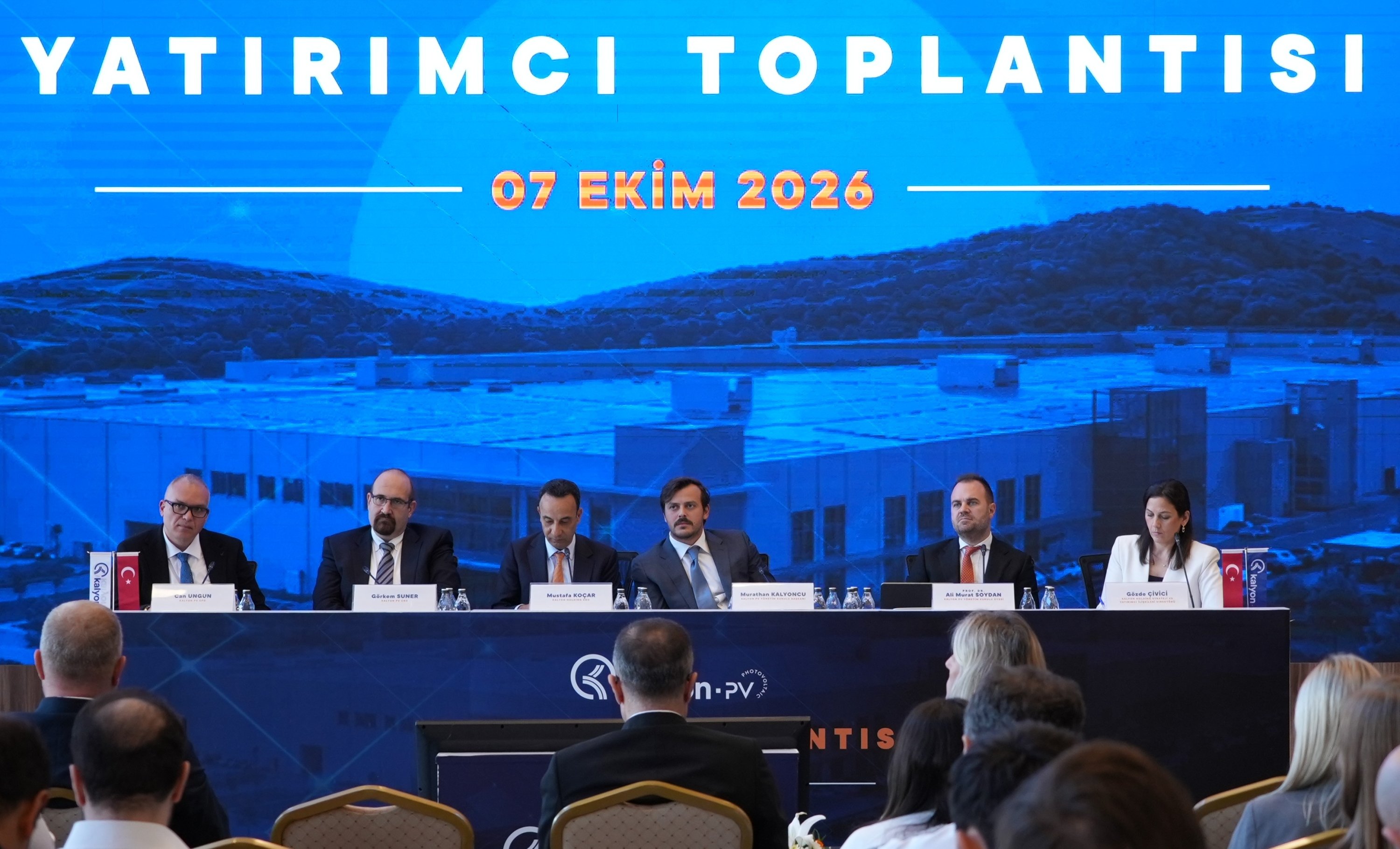
The company announced the investment at an investor meeting held Wednesday at its integrated manufacturing complex in Ankara, where it outlined its domestic and international growth strategy, production and technological capabilities, financial outlook and future targets.
The meeting was hosted by Kalyon PV Chair Murathan Kalyoncu and attended by investors and analysts, who also toured the factory to observe the production process, from ingots and wafers to solar cells and panels.
Under the planned investment, Kalyon PV intends to establish a new manufacturing facility through a U.S.-based partnership in which it holds a majority stake. The company has completed the establishment of the U.S. entity, according to its statement.
The facility is expected to manufacture solar panels and other products for the solar energy industry in compliance with relevant U.S. regulations and domestic-content requirements. The company also plans to establish a sales and marketing operation in the country to serve the market directly.
U.S. incentives
The United States has become a key market in Kalyon PV’s international growth strategy amid accelerating solar energy investment, rising demand and incentive mechanisms designed to support domestic production.
U.S. targets to substantially expand installed solar capacity by 2035, alongside advantages offered to local manufacturers, provide the strategic basis for the investment, the company said.
Kalyon PV is working with a U.S.-based consultancy on tax, legal and investment matters. It expects to pursue federal tax incentives as well as economic development incentives offered at state and local levels.
‘New era’
Kalyoncu said the company aimed to take the manufacturing experience and capabilities it had developed in Türkiye into international markets.
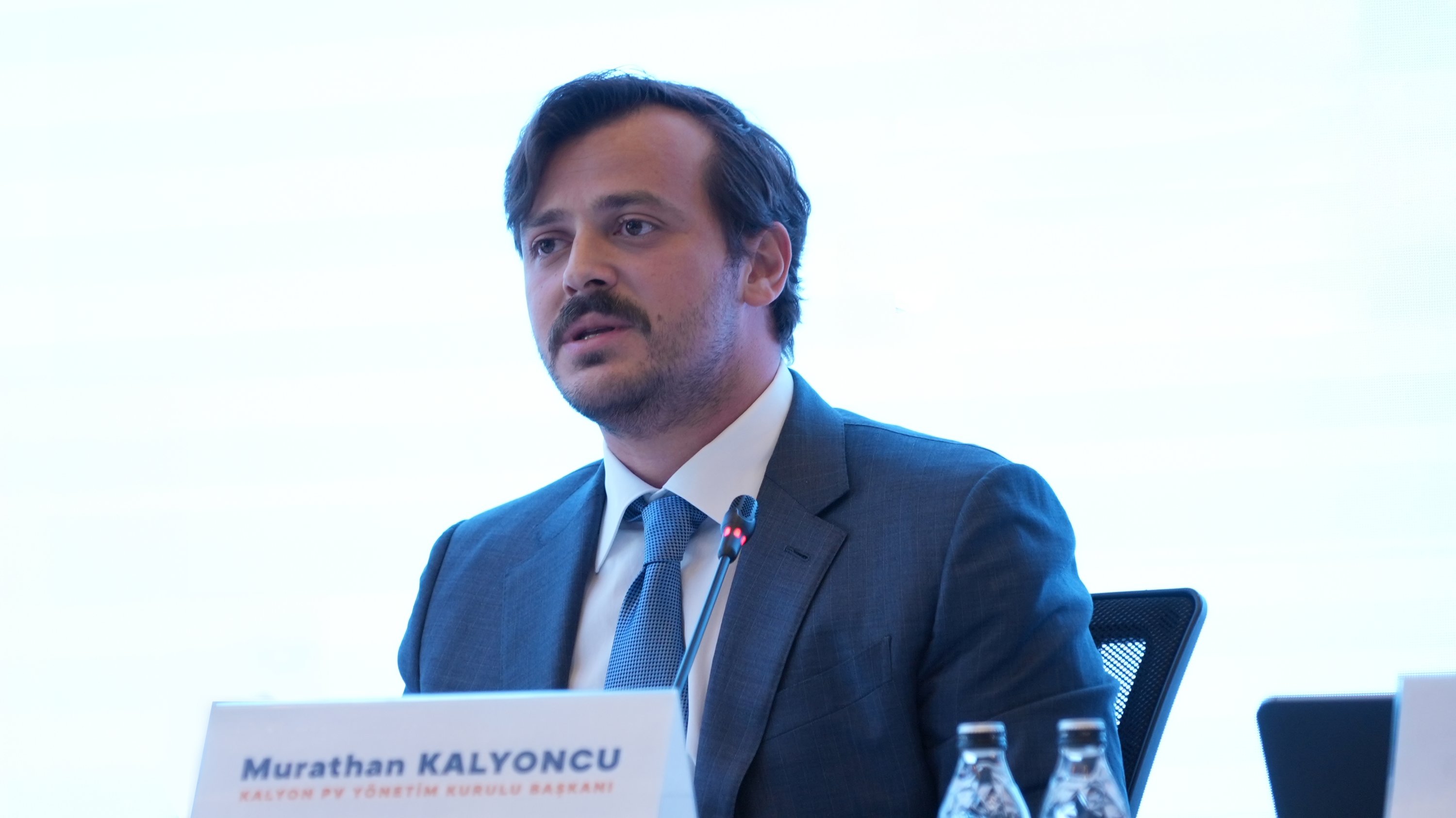
“Since our establishment, we have manufactured panels to meet the needs of our industry, particularly for the Kalyon Karapınar Solar Power Plant, one of Europe’s largest and among the world’s leading solar power plants,” he said.
Kalyon PV had continuously invested in research and development, technology and human resources, Kalyoncu said, adding that these efforts had helped the company achieve a series of milestones.
“Today, we are entering a new era in which we will take the experience and manufacturing strength we have built in Türkiye to global markets,” he said. “The company we have established in the United States is an important step in our international growth strategy.”
Each new investment strengthens the company’s production capabilities, while each new market supports its global expansion strategy, Kalyoncu said.
Drones hit a data center owned by Russia’s Yandex, the country’s leading AI and technology company said on Thursday, in the first major attack on a Russian data hub since the start of the war with Ukraine.
Yandex later Thursday said it could not yet determine whether equipment at the center could be restored.
Mutual drone attacks by Russia and Ukraine this year have gradually spread across the economy, from energy facilities and refineries to ports and vessels carrying oil and grain, e-commerce warehouses and, most recently, data centers.
Russia has conducted a strike campaign on Ukrainian data centers and telecommunications infrastructure over the past month, including targets in central Kyiv.
Yandex said the attack on its Sasovo hub, one of its five large data centers, caused a fire and forced it to suspend operations at the site, which hosts tens of thousands of servers.
The company, often dubbed “Russia’s Google,” said its core consumer services were not affected, but did not describe the extent of the damage.
“The scale of the damage to the infrastructure is still being assessed,” Yandex said in a statement later on Thursday. “For the moment, we cannot confirm whether it is possible to restore the data center equipment in Sasovo.”
On the website of its Yandex Cloud service, the company advised customers there were problems with the electricity supply to one data center “zone” and recommended using others.
Yandex said in 2021 that the Sasovo hub hosted two of its three supercomputers built around Nvidia A100 chips, which it uses to train its YandexGPT large AI model. Yandex declined to say whether the supercomputers were affected by the attack.
Multiple online services in Russia reported technical issues on Thursday, including real estate aggregator Cian, a book portal called Litmarket, and the websites of Russian Railways and professional football club Spartak Moscow.
A state-owned bus company in the Moscow region said online ticket sales were currently unavailable due to the “temporary shutdown of a data center.”
Online monitoring service Detector404 said it had received 58,268 user complaints over the past day. Yandex shares at the Moscow Exchange, where it is a proxy stock for the Russian technology sector, were down 3%.
Previous Ukrainian attacks on Russia have led to fuel shortages and queues at petrol stations, losses for tens of thousands of small businesses involved in e-commerce, and higher inflation as rising fuel costs feed through to consumer prices.
Critically important infrastructure
Russian President Vladimir Putin in August gave the state the power to take control of critically important infrastructure if it is deemed to be poorly protected from drone attacks.
There were previously no confirmed major Ukrainian drone attacks on Russian data centers.
Russia’s RBC news outlet reported on Thursday, quoting sources, that businesses were in talks with the government on developing data centers in countries deemed “friendly” by Moscow.
Some Ukrainian data centers were forced to suspend operations after sustaining damage, while 100,000 households suffered temporary internet outages after one attack.
Ukraine’s digital minister told Reuters last month that the country was moving digital infrastructure underground in response to Russian attacks.
Yandex, which created Russia’s first search engine in 1997 and is one of the few major Russian companies not under Western sanctions, runs YandexGPT, one of Russia’s leading AI models, as well as a cloud computing service and a range of other consumer products, including Yandex Taxi and Yandex Music.
Sberbank, Yandex’s main domestic competitor, which is developing the rival GigaChat model, says Russian AI developers lag their U.S. and Chinese counterparts by six to nine months, with difficulties in importing advanced chips due to sanctions seen as the main bottleneck.
U.S. President Donald Trump, who has said he wants the term “super intelligence” to replace artificial intelligence, said Thursday that anyone who does not heed his wishes will be treated as “THE ENEMY,” without saying what the consequences would be.
“The White House considers anyone that uses the term, ‘Artificial Intelligence,’ as opposed to the highly accepted new and more accurate term, ‘Super Intelligence,’ THE ENEMY!” Trump said in a post on his Truth Social network.
Trump mentioned his proposed name change in a speech before the U.N. General Assembly last month, saying his new term “sounds much better.”
Then in late September, Trump signed an executive order, imposing the use of “super intelligence” across the U.S. government.
That same obligation does not affect the private sector, but some there are already adopting it, including Mark Zuckerberg’s Meta group.
Trump ally Elon Musk is using “super intelligence” in his posts on his social media network X.
Musk has already announced plans to rename his AI company SpaceXAI to SpaceXSI.
The security pledge signed by major AI companies at the White House at the end of September also used the term “super intelligence.”
Industry heavyweights OpenAI and Anthropic, meanwhile, continue to use the well-known term “artificial intelligence” widely.
Even on Truth Social, a link to the platform’s own search function – “Truth Search AI” – remains visible alongside Trump’s post.
The semantic debate is primarily a political one: the U.S. president, who has stridently defended the use of AI, is trying to put a positive spin on it in the face of mounting worries about AI security and anger over the proliferation of data centers in the U.S.
More generally, Trump is a fan of renaming things or creating nicknames: he now calls the Gulf of Mexico the “Gulf of America” and has converted Lake Ontario into “Lake America.”


-

 Politics3 days ago
Turkish police detain 14 suspects linked to Daesh, al-Qaida
-
 Economy3 days ago
Over $16B shifted into deposits amid fund exits: Turkish central bank
-

 Politics3 days ago
Mecca Alliance activates collective deterrence over Saudi attacks
-
 Economy3 days ago
Türkiye sets new record for solar, wind power generation
-

 Economy2 days ago
Inside Türkiye’s plan to repay investors caught up in fund turmoil
-
 Economy2 days ago
CBRT chief vows cautious stance to preserve disinflation gains
-

 Economy21 hours ago
Trump says anyone who doesn’t call AI ‘super intelligence’ is ‘enemy’
-
 Politics3 days ago
Erdoğan denounces Israel’s state terrorism on Gaza genocide anniversary