
Politics
Turkish minister vows fight against drugs, ‘fight for future’

Mustafa Çiftçi, who was appointed as Interior Minister in February, underlined that they were working for the “Century of Peace” as the Republic of Türkiye is now in its second century. “Our security paradigm is centered on prevention,” he told journalists at a panel in Ankara on Tuesday about the media’s role in the fight against drugs.
Çiftçi said drugs were “a cluster of problems” and expanded organized crime networks, adding that they were also a source of revenue for financing terrorism. “It is a dark swamp feeding many crimes. It is our responsibility as the state to drain it,” he said.
Türkiye has long been a critical transit hub for illicit drug trafficking due to its location bridging Europe and Asia. It is on the so-called Balkan Route where heroin from Asia is trafficked to Europe, while synthetic drugs manufactured in Europe are trafficked to Asian countries.
The minister said Türkiye’s strategic location meant great opportunities in other fields, but it also meant a greater responsibility for the fight against crimes across borders. He noted that Türkiye’s struggle was not only a security matter confined to its own borders, citing the drug trafficking routes, international crime rings and regional instability, adding that it contributed to regional and global security. “Under the leadership of President Recep Tayyip Erdoğan, we are building upon a vision for peace, security, stability and a strong social structure. We center our vision on family, youth, the future,” he said.
Çiftçi noted that the fight against drugs was not limited to counternarcotics operations, capturing suspects and legal procedures. “We are operating on a holistic approach, diagnosing the risk at its source, closing the paths to crimes, protecting the youth, raising awareness among families,” he said. The minister stated that one of the most important tools of this approach is the Project Support System (PRODES), carried out within the ministry’s Directorate General for Relations with Civil Society. “Our ministry provides grant support to associations in exchange for projects, the institutional capacities of our NGOs are strengthened, public-NGO cooperation is improved, and solutions to social problems are produced through voluntary organizations.”
Referring to the prevention projects carried out by the Ministry of Interior, Çiftçi reported that 9,798,000 citizens have been reached through these efforts.
“Between Jan. 1 and April 25, 2026, we carried out 17,188 operations against drug manufacturing and trafficking. In these operations, 16.8 tons of narcotics, 51.2 million drug pills, and 49,000 cannabis and skunk drugs (a cheap hybrid drug) were seized. The fact that 46 of the 298 organized crime groups we targeted were focused on narcotic crimes clearly shows how intertwined the drug threat is with organized crime, street violence, illegal money networks and the financing of terrorism.”
Expressing that the role of the media in the fight against drugs is a matter of utmost importance, Çiftçi said: “We see the media as one of our most strategic stakeholders that raises social awareness, warns families, protects youth, brings the public together with accurate information, and carries the will to fight to the broad masses. I would especially like to state that every media representative here undertakes a very valuable responsibility that appeals to the common conscience of society. This is because, in this struggle, words are at least as important as operations. News language, visual choices, headlines, repeated expressions and broadcast flow directly affect social perception. Any narrative that encourages, normalizes, sensationalizes or arouses curiosity about drugs causes great harm to the struggle.”
Çiftçi stated that any expression that portrays drugs as attractive, pleasurable, or easily accessible creates a risk for young people. He emphasized the need to avoid news language that marginalizes, hurts or portrays addicted individuals as helpless or dangerous. Since last year, a string of high-profile drug busts targeted celebrities, from singers and actors to social media influencers. Dozens of suspects were detained and tested for drugs.

Turkish authorities have detained 25 suspects in a sweeping operation linked to the long-running investigation into the 2009 helicopter crash that caused the death of the former Grand Unity Party (BBP) leader Muhsin Yazıcıoğlu, Justice Minister Akın Gürlek said Monday.
The arrests were made as part of an investigation transferred last month from the Kahramanmaraş Chief Public Prosecutor’s Office to the Ankara Chief Public Prosecutor’s Office, Gürlek said in a statement shared on social media.
According to the minister, prosecutors identified 29 suspects believed to have committed the offenses of establishing, leading or being a member of an armed terrorist organization and premeditated murder.
Police carried out simultaneous raids at 30 addresses across 10 provinces, including Ankara, Istanbul, Izmir, Balıkesir, Adana, Antalya, Çanakkale, Bursa, Isparta and Afyonkarahisar.
Gürlek said 25 suspects were taken into custody. Two suspects were already in prison, while two others were determined to be abroad. Efforts to locate and detain the remaining fugitive suspects are continuing, he added.
During searches of the suspects’ homes and workplaces, officers seized 20 handguns, 2,507 rounds of ammunition of various calibers, 35 magazines and two shotguns, prosecutors said.
In 2009, during the local elections, Yazıcıoğlu rented a helicopter to attend a rally in Kahramanmaraş. His helicopter, along with five others, tragically crashed in the Göksun district after leaving a rally in Çağlayancerit. Following extensive search efforts, their bodies were discovered on Keş Dağı Kurudere Kanlıçukur.
Yazıcıoğlu was laid to rest on March 31, 2009, with a ceremony at Kocatepe Mosque and buried at the Taceddin Dergahı, as per his wishes. His coffin, wrapped in the Turkish flag, was adorned with flowers by mourners.
Yazıcıoğlu’s death and rescue efforts in its aftermath courted controversy and his friends had claimed he was “killed” by his opponents. Several public officials linked to the Gülenist Terror Group (FETÖ) face trial over abuse of duty for charges stemming from closing the case about the crash on a snowy mountain and for hindering rescue efforts after the crash.
The investigation examined military jet pilots who were found to have flown over the crash area on the day of the incident, as well as personnel assigned to a military crash investigation team sent to the site after a military helicopter dispatched to the area was reportedly damaged.
Prosecutors also assessed civilian crash investigators suspected of acting together with the military team to remove devices from the wreckage, along with personnel from the General Directorate of Security who were responsible for determining the crash coordinates.
The prosecutor’s office said evidence indicated that the suspects may have committed premeditated murder as part of activities linked to FETÖ.
Known for his principled stance and opposition to military coups, Yazıcıoğlu remains an unforgettable figure in Turkish politics. His legacy lives on through his contributions to the political scene and his firm beliefs in democracy and national unity.
Gürlek described the case as one that has left a deep mark on the public conscience and said judicial authorities and law enforcement agencies were continuing to work in close coordination to establish the material facts and ensure that anyone responsible is held accountable.
“No matter how many years pass, no case will be allowed to remain in darkness and no suspicion will be left unanswered,” Gürlek said, adding that authorities would pursue the investigation until every aspect of the incident is clarified.
Talip Güler, codenamed “Abdüsselam Türki,” was captured in Syria and brought to the country by the National Intelligence Organization (MIT), security sources said on Monday.
Güler was the brother of Kasım Güler, another top Daesh figure and was part of the group’s network in Türkiye known as “Farouk Office” or Maktab Al-Faruq.” He was on the Interior Ministry’s most wanted list. Kasım Güler himself was captured in another MIT operation in 2021 and brought to Türkiye.
Security sources said Güler illegally crossed into Syria in January 2014, at the height of the civil war in the country where Daesh thrived. He coordinated the activities of the group alongside his elder brother. After apprehending elder Güler, MIT closed in on Talip Güler, running surveillance on his every step, sources said.
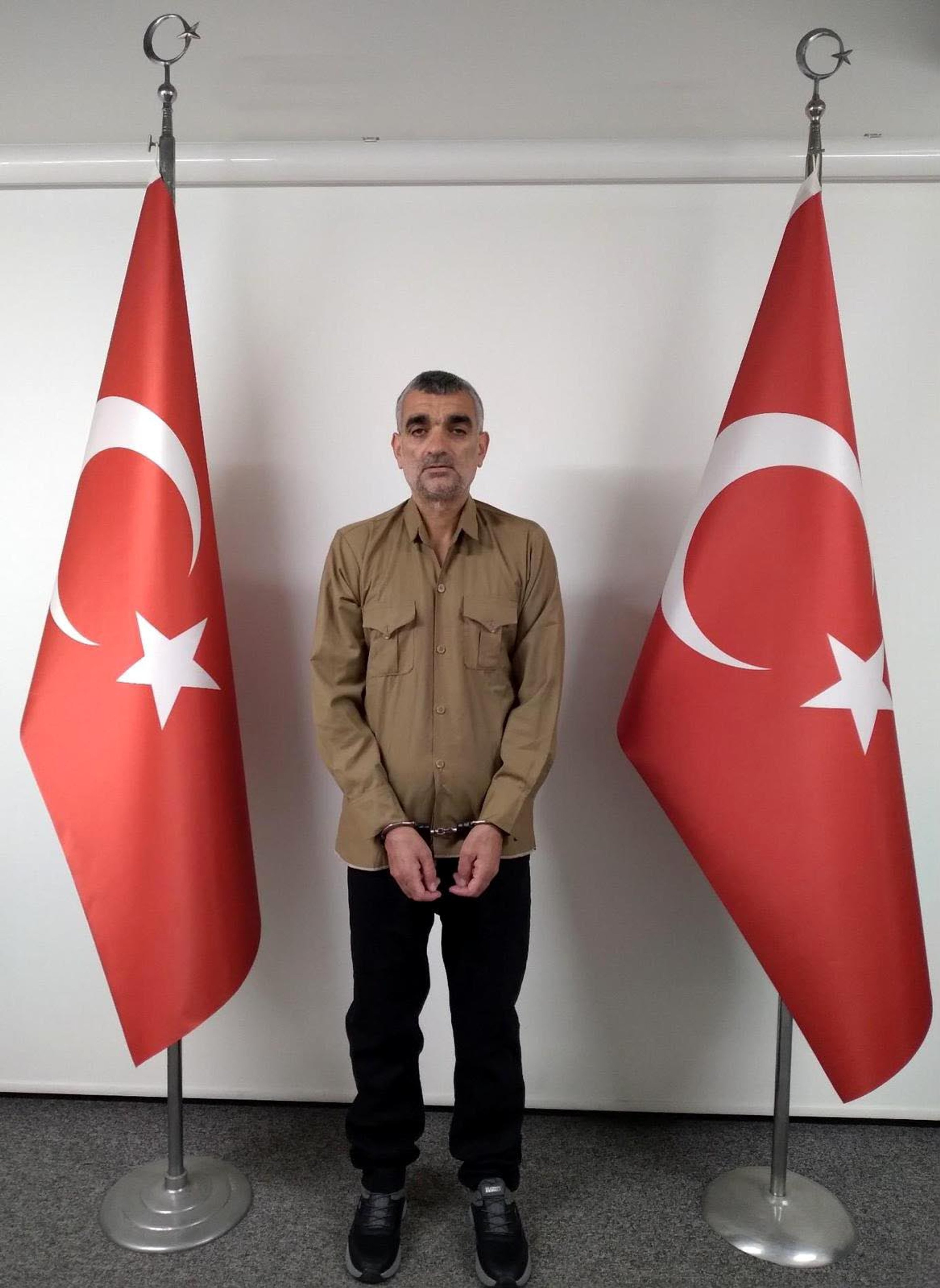
Güler was cooperative with authorities after he was taken to Türkiye and elaborated on how he was “radicalized,” how he sneaked into Syria and joined the terrorist group and his actions for Daesh in cooperation with his brother.
Last month, MIT also apprehended Ahmet Kazancı, another top Daesh figure, as he was planning to infiltrate Türkiye.
Daesh remains a threat to Türkiye, which lost dozens of citizens in attacks by the group that thrived in its southern neighbors, Iraq and Syria.
Since the 2019 collapse of the self-proclaimed “caliphate,” some suspected Daesh members have settled in Türkiye, operating the so-called Khorasan Province (Daesh-K) network, which looks for “new methods” and recruits more foreign nationals for its activities after constant counterterrorism operations became a “challenge,” according to Turkish security sources.
MIT thwarted the terrorist group’s efforts for recruitment, obtaining funds and logistics support after its latest operation in the aftermath of a church shooting in Istanbul in January 2024.
Türkiye was one of the first countries to declare Daesh a terrorist group in 2013 and carried out a steady stream of operations to thwart the group, rounding up hundreds of suspects over the past few years. Operations prevented plots by Daesh to attack places of worship in Türkiye. Terrorists from Daesh and other groups, such as the PKK and its Syrian wing, the YPG, rely on a network of members and supporters in Türkiye. Turkish authorities have ordered the freezing of millions of lira worth of assets since 2013 to crack down on terrorism financiers in line with U.N. sanctions.
Addressing a symposium in Ankara on Monday, Turkish Vice President Cevdet Yılmaz said the state’s institutions learned their lessons from the “painful experience” that was the July 15, 2016 coup attempt by military infiltrators of the Gülenist Terror Group (FETÖ).
The symposium organized by Turkish think-tank, the Foundation for Political, Economic and Social Research (SETA), brought together academics, researchers, jurists and journalists. The two-session symposium focused on legal, political and social dimensions of the coup attempt, how it is remembered in collective memory and the transformation of Türkiye during and after the coup attempt.
Yılmaz was deputy chair of the Justice and Development Party (AK Party) at the time of the coup attempt. He told the symposium that 10 years that followed the coup attempt have been an era of comprehensive restructuring. “Our institutions achieved a stronger capacity that can respond to a shifting security environment and new threats (after the coup attempt),” Yılmaz stated.
He emphasized the importance of “assessing major incidents correctly” that could be translated into a social conscience. “It is as important to explain it correctly as remembering July 15,” he said.
Yılmaz stated that although FETÖ was “gone,” it was essential to remain alert against similar networks and Türkiye still had a responsibility to fight the terrorist group internationally.
He noted how Türkiye transformed, especially in terms of security, after the attempt.
“In my opinion, the execution of cross-border operations (against terrorist groups) immediately after the coup attempt is one of the best examples of this. Some Western circles back then were putting forward arguments like ‘FETÖ members are being purged, the institutions have weakened.’ On the contrary, with the purge of FETÖ members, many of our institutions, particularly our army, began to fulfill their true duties in a much more effective manner,” Yılmaz said.
“With the reforms implemented under the leadership of our President, important steps have been taken in many areas, from security to public administration, and from intelligence to the judiciary. Coordination among our institutions has strengthened, decision-making processes have accelerated, and our state’s maneuverability during moments of crisis has significantly increased. The institutional resilience we possess today is the product not only of the steps taken in the wake of July 15 but also of a strong vision that shapes our state experience in line with future needs,” he added.
A delegation from the Peoples’ Equality and Democracy Party (DEM Party) is scheduled to meet Parliament Speaker Numan Kurtulmuş and senior ruling Justice and Development Party (AK Party) official Efkan Ala on Wednesday as part of ongoing efforts surrounding Türkiye’s “terror-free Türkiye” initiative.
The delegation, consisting of DEM Party lawmakers Pervin Buldan and Mithat Sancar, is expected to discuss legal steps that could support the initiative, including a framework law that lawmakers say may be submitted to parliament later this month.
The meetings will focus on the legal basis for the process and possible legislative measures aimed at facilitating the disarmament of members of the PKK, which Türkiye, the United States and the European Union classify as a terrorist group.
Kurtulmuş has previously said the planned legislation would be a temporary and narrowly tailored law applying only to members of the dissolved terrorist group who surrender their weapons and publicly renounce organizational activities within a specified period.
“The law will be exclusive and temporary. It will not remain in force indefinitely,” Kurtulmuş said in earlier remarks, adding that parliament could begin considering the legislation in July.
President Recep Tayyip Erdoğan has also expressed support for the initiative, saying its success would open “a new chapter” for Türkiye both domestically and internationally.
DEM Party Co-Chair Tülay Hatimoğulları has called for swift progress on the legislation, urging parliament to use July effectively to finalize the framework law and respond to public expectations.
The planned meetings come as Ankara continues consultations with political parties over the legal framework of the initiative. Turkish officials have presented the process as part of broader efforts to permanently end terrorism and strengthen domestic stability.
Türkiye criticized the European Union on Monday following the European Commission’s appointment of a new special representative for the island of Cyprus, accusing the bloc of maintaining a biased approach to the decades-old dispute.
Foreign Ministry spokesperson Öncü Keçeli said Ankara views the appointment as an internal matter of the European Union, as it has with previous appointments.
However, Keçeli argued that the EU lost its neutrality on the Cyprus issue when it admitted the Greek Cypriot administration as a member in 2004 despite its rejection of the U.N.-backed Annan Plan.
He also accused EU institutions, including the European Parliament, of continuing with a one-sided approach to the issue.
Keçeli said Ankara expects the newly appointed envoy to work toward changing the EU’s position and to recognize that a lasting settlement can only be achieved through negotiations between “two sovereignly equal states” based on the realities on the island.
Türkiye supports a two-state solution for the island, while the United Nations continues to back a federal settlement framework.
Egypt’s Defense Minister Lt. Gen. Ashraf Salem Zaher met his Turkish counterpart Yaşar Güler on Monday in Ankara. The two ministers signed a memorandum of understanding (MoU) for defense cooperation, the ministry announced after the meeting.
Ankara and Cairo gradually rebuilt their ties in the past three years after years of chill in their long-standing relationship. As Israel increased its violent campaign of expansion in the region, two countries grew closer. They explored more political, economic and security cooperation.
In his last visit to Egypt, President Recep Tayyip Erdoğan highlighted the need to deepen cooperation, especially in maritime trade and transportation, freedom of navigation and maritime security.
The two countries have also coordinated on humanitarian efforts related to Gaza, which is bordered by Egypt.
Earlier this month, Türkiye and Egypt also signed a memorandum of understanding on cooperation in the use of maritime routes and regional and international transport corridors.

TC ŞEREFLİKOÇHİSAR 2ND CIVIL COURT OF FIRST INSTANCE

Governor Gül: “On July 15, our nation showed our friends and enemies that a coup cannot be carried out in Türkiye without any hesitation.”

Türkiye expands Yazıcıoğlu helicopter crash probe with 25 detentions
TC ŞEREFLİKOÇHİSAR 2ND CIVIL COURT OF FIRST INSTANCE
Governor Gül: “On July 15, our nation showed our friends and enemies that a coup cannot be carried out in Türkiye without any hesitation.”
Türkiye expands Yazıcıoğlu helicopter crash probe with 25 detentions
-
 Daily Agenda3 days ago
We will continue to support Lebanon – Last Minute News
-
 Economy1 day ago
Turkish ship, yacht exports hit $1.5B in H1, sector eyes new record
-
 Daily Agenda2 days ago
Bribery operation against Çankaya Municipality – Last Minute News
-

 Economy2 days ago
China’s economy likely slowed down in Q2: Survey
-
 Daily Agenda3 days ago
From purchasing weapons to selling missiles – DİLEK GÜNGÖR
-
 Daily Agenda2 days ago
BREAKING NEWS: Director of Communications Burhanettin Duran announced: Access to 2 thousand 702 social media accounts linked to FETO has been blocked
-
 Politics2 days ago
CHP may replace parliamentary group leader Özel: Turkish media report
-
 Daily Agenda2 days ago
Safety shield against earthquake risk