
Economy
Türkiye’s key economic board assesses housing supply expansion

Türkiye’s top economic officials convened Wednesday to discuss measures aimed at expanding the nationwide housing supply, according to an official statement, amid persistent pricing pressures in the real estate market.
The Economic Coordination Board (EKK) also reviewed the performance of the government’s nearly two-year-old economic program, which has primarily focused on tackling inflation, the statement said following the meeting.
Chaired by Vice President Cevdet Yılmaz, the board includes ministers of finance, trade, labor, energy, industry, and agriculture, along with senior officials from other key economic institutions, including the central bank.
Wednesday’s meeting marked the board’s fourth this year.
Aggressive monetary tightening since mid-2023, combined with favorable energy prices, has helped reduce Türkiye’s annual inflation rate by half over the past year.
The inflation lastly dipped to 35.4% in May, compared to around 75% a year ago.
The EKK emphasized that the disinflation process, which began in June 2024, remains on track. It credited the economic program with strengthening Türkiye’s macroeconomic foundations and enhancing the resilience and dynamism of the economy.
The board also evaluated structural reforms in the housing, food, and energy markets. Discussions included policies to improve Türkiye’s export competitiveness, in an effort to mitigate the economic impact of rising global uncertainty and trade protectionism.
The energy sector – one of the key contributors to Türkiye’s current account deficit – was another key industry assessed by the officials, who discussed policies to reduce external dependence and bolster supply security.
The board reviewed recent developments in housing and rental prices and considered concrete steps to boost housing supply, the statement noted. In recent years, affordability concerns have intensified for households amid soaring housing costs.
The EKK also underscored ongoing efforts under the new Investment Incentive System, which aims to promote value-added investments and foster regional development.

Construction site work has begun on a new airport in the Black Sea province of Trabzon, which will be Türkiye’s third built on the sea, Transport and Infrastructure Minister Abdulkadir Uraloğlu said Monday.
The work has started on setting up the construction site for the infrastructure, and the project will require 100 million tons of fill dumped into the Black Sea, Uraloğlu said.
The existing airport’s single 2,640-meter runway and its facilities are inadequate for growing passenger and cargo traffic, the minister said.
“We will give Trabzon a new, higher-capacity, modern airport that meets international standards,” Uraloğlu said.
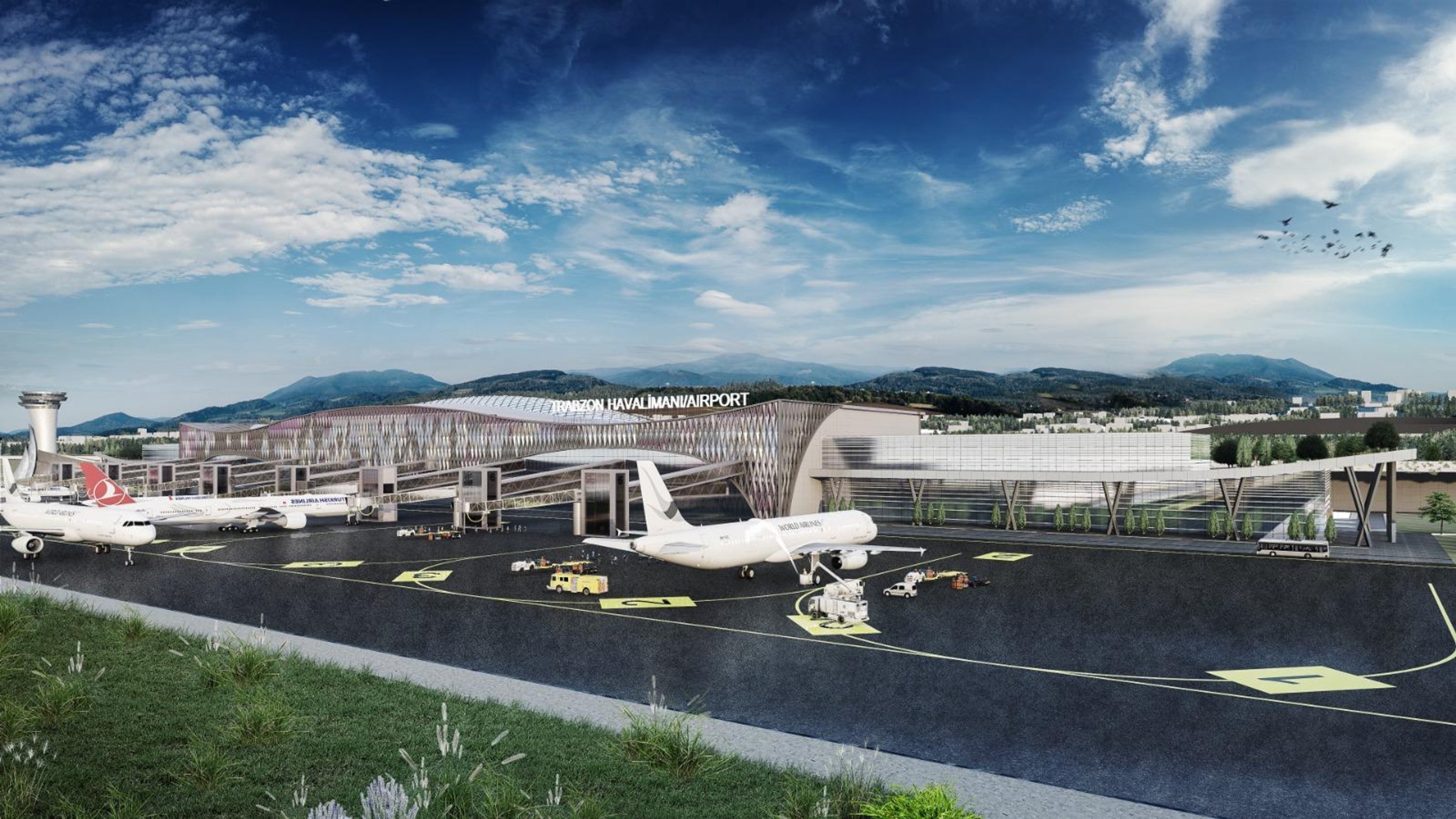
As part of the project, a 6,000-meter protective breakwater is planned to shield the fill area from the sea.
The airport will feature a 3,000-meter runway, 45 meters wide, with a parallel taxiway of the same length and width.
An apron 1,370 meters long and 155 meters wide, and a security apron 400 meters long and 120 meters wide are also part of the project.
According to Uraloğlu, the airport will have a 110,000-square-meter terminal building with capacity for 10 million passengers a year. The existing airport handles more than 3 million passengers a year.
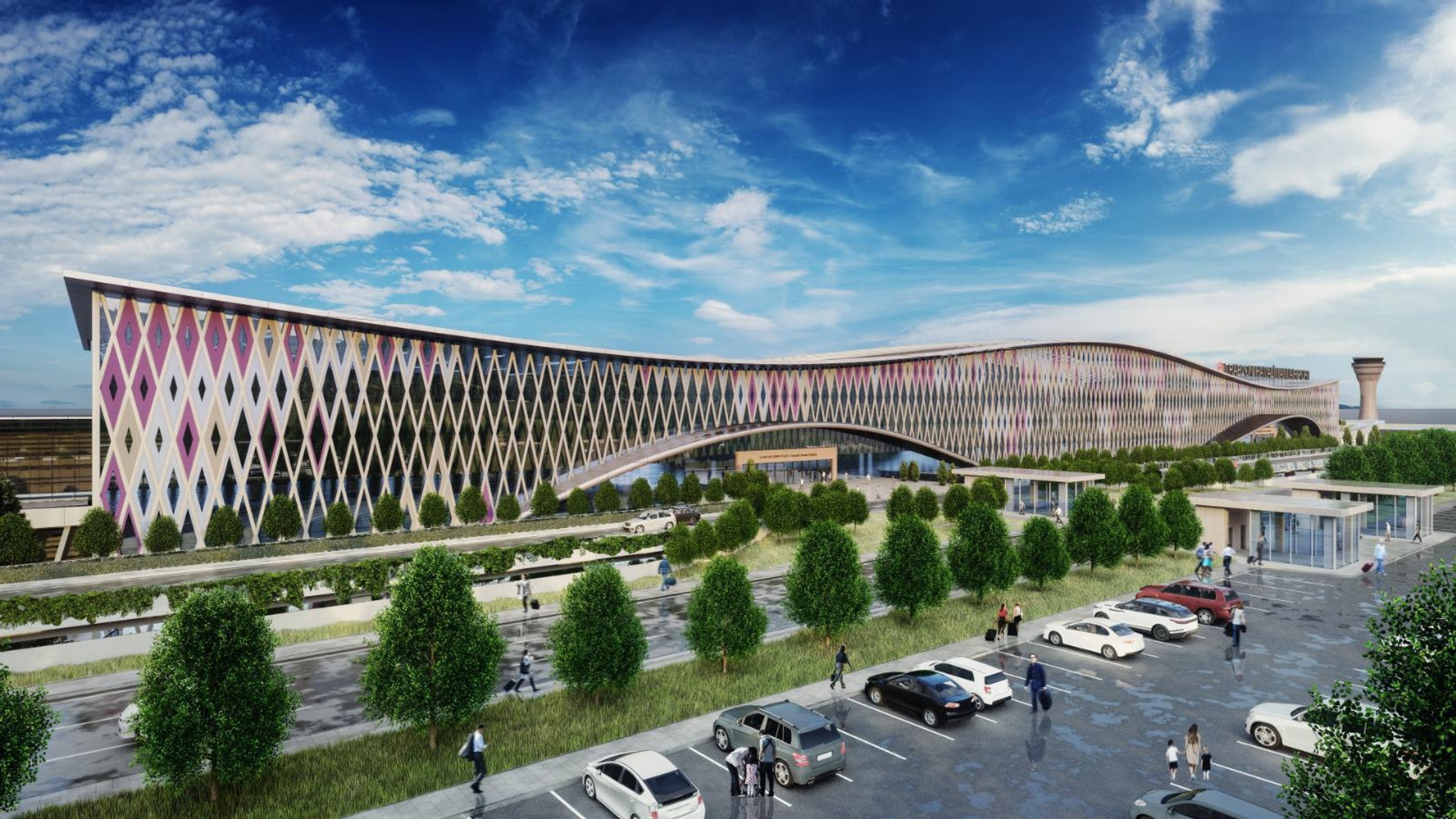
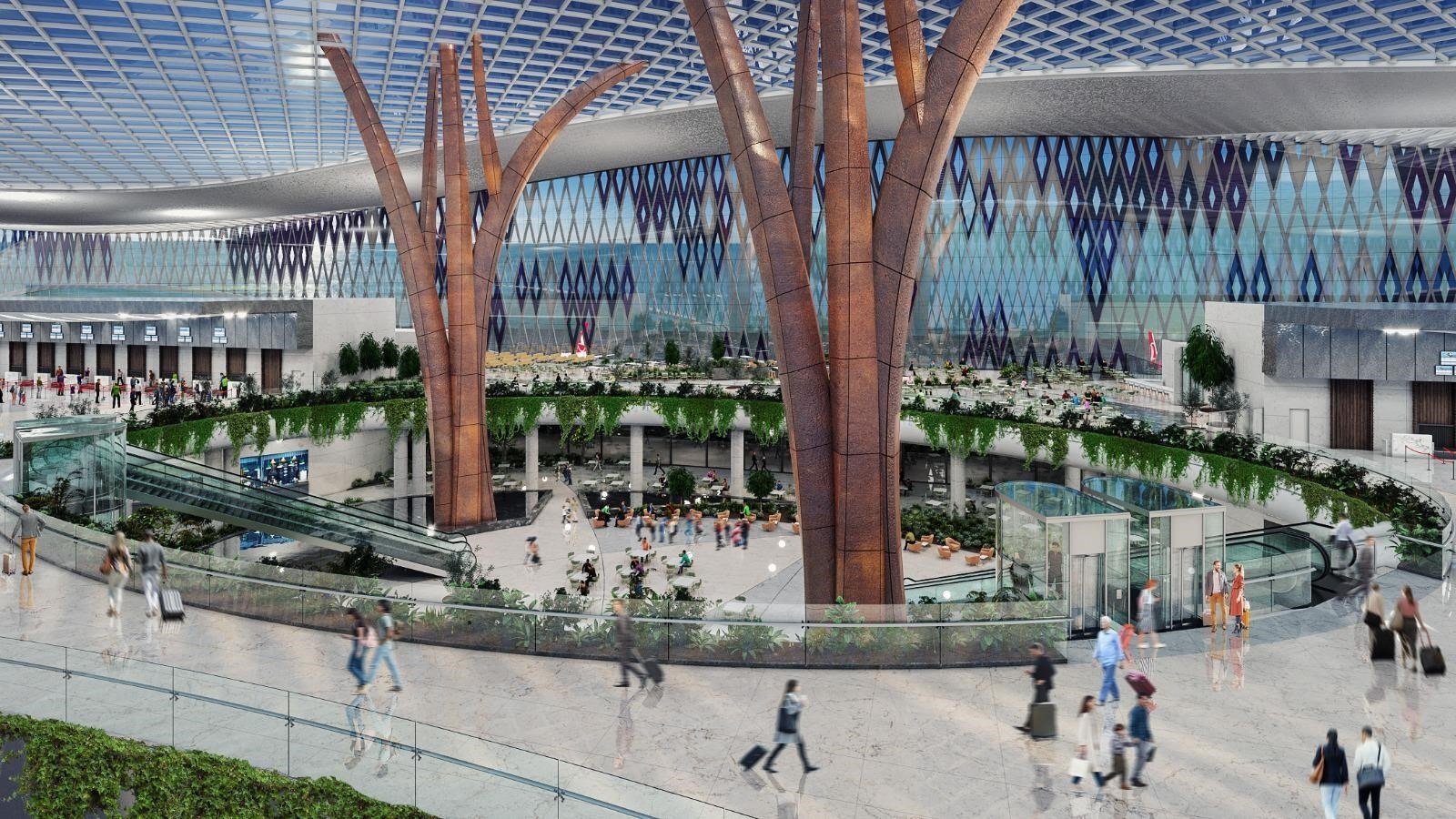
It will also include a technical block of 65,000 square meters, an air traffic control tower and support buildings.
Trabzon, a city of nearly a million people, is known for its green valleys, steep hills and a Byzantine-era monastery.
The local economy runs on agriculture and tourism. The city has become one of the hotspots for foreign tourists in recent years, particularly for those from the Gulf countries.
Türkiye’s securities regulator on Monday said it had raised the financial asset threshold for “qualified investors” fivefold, with existing status holders having to prove again that they meet the new requirements.
The overhaul marks the latest change since a crisis in September prompted authorities to order the liquidation of more than 130 investment funds that authorities suspect were manipulated and inflated in price.
Capital Markets Board (SPK) said the amount of financial assets required for people who ask to be treated as professional clients, which was TL 10 million ($200,000), is now TL 50 million.
The trading volume requirement has risen to TL 25 million from TL 5 million. Amounts that legal entities must meet to be treated as professional clients have also been reset.
The board said the qualified investor conditions in its various communiques, which refer back to the professional investor rules, have been updated to match.
Current holders of qualified investor status must re-document that they meet the new conditions.
The board also removed an exception introduced by a principal decision dated Dec. 18, 2025. It had applied to qualified investors buying units in real estate investment funds and venture capital investment funds.
These investors will now be subject to the same amounts that apply to qualified investors generally.
The board extended to Jan. 31, 2027, the final deadline for investment funds to fully comply with portfolio and investment limits.
The earlier schedule set staged deadlines for Oct. 31 and Nov. 30, 2026, and full compliance by Dec. 31, 2026. Under the update, the final deadline applies without the staged steps.
The board also removed a provision on exceptions for public institutions’ and affiliates’ money and capital market instruments, without affecting similar provisions in its communique on investment funds.
Nearly half a million investors held stakes in the funds that regulators ordered liquidated in mid-September.
Authorities say the liquidation process has been completed for 84 of the 131 initially frozen funds and payments have been made to their investors.
Parliament last week passed a law that establishes a framework for repayments, with payments adjusted for inflation and interim payouts of up to TL 1 million.
In late August, the SPK issued a Fund Guide requiring hedge funds to disclose their portfolios weekly, among other measures. Treasury and Finance Minister Mehmet Şimşek has said further regulation is being studied.
Turkish automaker Tofaş on Monday launched production of a new line of light commercial vehicles in the northwestern automotive hub of Bursa.
The $300 million K9 project is a joint investment by Koç Holding, Türkiye’s largest conglomerate, and Stellantis, the global automaker that owns the Fiat, Peugeot, Citroen and Opel brands.
Industry and Technology Minister Mehmet Fatih Kacır said the K9 project will add 100,000 vehicles of annual production capacity at Tofaş, a long-running venture between Koç and Stellantis, and create 1,000 jobs.
It will also create new business for nearly 100 domestic suppliers, Kacır told the launch ceremony in Bursa.
The line is built on a multi-energy platform, which gives Tofaş production flexibility and could pave the way for electric light commercial vehicles to be built in Bursa, he said.
Production covers models for Citroen, Fiat, Opel and Peugeot under a strategic agreement Stellantis and Tofaş signed in September 2025.
About 20% of K9 output will be exported, Tofaş CEO Cengiz Eroldu said. The plant recently raised its capacity to 500,000 vehicles a year.
Samir Cherfan, Stellantis’ Middle East and Africa operations director, said the project covers five models: the Fiat Doblo, Citroen Berlingo, Opel Combo, and Peugeot Rifter and Partner.
He said the platform is also ready for electric light commercial vehicles.
Eroldu noted that the Fiat Doblo and Opel Combo, produced at the plant from 2000 to 2023, are returning to Bursa under the project. Cherfan said more than 600,000 customers bought the Doblo in that period.
$1B investment in 5 years
Ömer Koç, chair of Koç Holding, said the K9 follows the K0 model, which began production last year.
He said Koç and Stellantis had invested $1 billion in Tofaş over the past five years, half of it in research and development. K9 production is eventually targeted at 150,000 vehicles a year, he said.
Koç said the model will strengthen Türkiye’s leadership in commercial vehicle production in Europe. Tofaş aims to use its capacity fully, offer customers more domestically made models and contribute to the current account balance, he said.
Talks with Stellantis on other new models are continuing, he added.
Tofaş has produced 7.5 million vehicles over half a century, according to Koç. Stellantis handed management of all its Turkish operations to Tofaş as of 2025, a move Koç called a strong sign of both partners’ confidence.
Türkiye’s place in European supply chains
Kacır said Türkiye’s annual goods exports have risen to $283 billion from $36 billion in 2002, and that the automotive industry exported $41.5 billion last year, a record.
He said about 60% of foreign direct investment into Türkiye since 2002 has come from the European Union. Türkiye produced 1.5 million motor vehicles last year, nearly 80% of them at plants run by leading EU automakers, directly or in local partnerships, he said.
He added that 64% of the auto parts industry’s exports go to EU countries, and 56% of auto parts imports come from the bloc.
“The way for Europe to build economies of scale is to increase cooperation with Türkiye, a fast-growing country of 86 million people,” Kacır said. He said Europe’s economy has grown 1.4% a year since 2002, against 5.3% for Türkiye, and that annual car sales in Türkiye have risen from about 300,000 in the early 2000s to 1.5 million.
Britain’s new government unveils its first budget Wednesday, testing a commitment of Prime Minister Andy Burnham to ease the cost of living and ramp up defense spending with little financial room for maneuver.
It could prove to be a tall order for Treasury chief John Healey as rising inflation and borrowing costs – largely a consequence of the U.S.-Iran war – increase the government’s debt pile and heap pressure on businesses and individuals.
“This is a budget that is about breathing space for people, for businesses too, and that helps bring a bit of hope,” Burnham, who replaced Keir Starmer as prime minister in July with their Labour party down in the polls, said Monday.
Speaking to the Good Morning Britain television program, he added that the latest annual tax and spending plans will set out “the path to meet our NATO commitments” under a “funded” defense plan.
Labour had ruled out rises to income and capital gains tax, raising the prospect of spending cuts to balance the books, according to analysts.
The budget is expected to focus on smaller, more immediate measures to help ease pressure on household bills, they added.
“Priority has to be credibility first, which means a budget that clearly meets the fiscal rules, is fully costed and avoids large unfunded giveaways,” James Wood, professor of political economy at the University of Cambridge, told Agence France-Presse (AFP).
“With government debt at around 94% of GDP, the room to maneuver is limited,” he added.
Healey, whose official title is chancellor of the exchequer, has pledged to abide by the rules laid out by his predecessor Rachel Reeves, which state that day-to-day spending must balance with government tax receipts.
The International Monetary Fund (IMF) recently forecast that Britain’s economy would grow faster than expected this year, before slowing slightly in 2027.
Banks to be hit?
Healey is expected to use a windfall tax on banks to fund a package of spending measures to help households manage rising energy bills.
Oil and gas companies operating in the U.K. already face a windfall tax on their bumper profits.
Burnham, who will on Tuesday have served 100 days as prime minister, has already offered the British public some relatively low-cost relief such as a tax cut on electricity bills.
Further measures could entail an extension to a freeze on fuel duty and more targeted help for the poorest households, according to reports.
Surging diesel costs at the pump helped push Britain’s annual inflation rate to 3.5% in September, the highest rate for nearly a year. Average U.K. diesel prices went on to hit record highs earlier this month.
The government last week approved drilling in a North Sea gas field, claiming the move was aimed at boosting energy security rather than cutting bills.
The budget will also include measures to reduce “pointless paperwork” to lower costs for businesses, according to Healey.
A package of investment in artificial intelligence safety was announced by the Treasury over the weekend, amid growing global concerns over the cyber risks posed by AI.
“The short-run focus is likely to be on reassuring markets and supporting businesses… with more generous measures held back,” said Wood.
Surging borrowing costs
The government’s fiscal headroom of 23.6 billion pounds ($31.5 billion) is expected to be slashed in an update given alongside the budget, as higher borrowing costs hike the state’s debt repayments.
The Office for Budget Responsibility, an independent financial watchdog, will on Wednesday also publish its latest U.K. growth and inflation forecasts.
Government bond yields around the world have struck multi-decade highs in recent weeks as wider inflation climbs largely because of energy prices soaring on wars in the Middle East and Ukraine.
Rising inflation has cemented expectations that the Bank of England (BoE) will hike its benchmark interest rate next month, further pressuring Britons holding loans, including mortgages.
The Audi chief drew heavy criticism Monday for appearing alongside U.S. President Donald Trump at a campaign rally in the battleground state of Georgia, with the head of Germany’s top union saying it violated the automaker’s company guidelines.
Gernot Doellner appeared alongside Trump at the rally in Perry, near Macon in central Georgia, to announce plans to build a $4 billion plant, the luxury carmaker’s first in the U.S., which would produce 200,000 SUVs annually.
Top VW committee must decide on US plant
The announcement of the plan, which needs approval by the supervisory board of parent Volkswagen, including German labor representatives, follows lengthy considerations over launching U.S. production to escape import tariffs that cost Audi around 1.2 billion euros ($1.34 billion) last year.
“Doellner is also in flagrant breach of his own company’s rules, which expressly require political neutrality in the run-up to elections,” said Christiane Benner, head of Germany’s IG Metall union and deputy chair of the Volkswagen supervisory board.
Audi had no immediate comment on the matter.
However, a person familiar with the matter said Audi’s management board had cleared an exception to the company’s code of conduct before Doellner’s appearance. Under the code, the board can allow deviations from the rules except in cases involving criminal offences, the source said.
The automaker’s top stakeholders discussed the matter during a meeting also attended by Benner and fellow labor representative Daniela Cavallo, with the latter expressing reservations about the appearance without formally opposing it, the person said.
A second person confirmed that Volkswagen’s supervisory board committee, which is already fraught with tension over the company’s sweeping restructuring, had discussed the issue on Friday.
Trump has voiced his support in the past for the far-right Alternative for Germany (AfD) party, raising concerns among Germany’s political and corporate mainstream.
German automotive expert Ferdinand Dudenhoeffer referred to Doellner as a “mini Elon Musk,” comparing him to the Tesla boss who has appeared onstage with Trump.
Audi’s code of conduct forbids “public engagements with political parties or politicians standing for election, nor any sponsorship of such events” in the three months leading up to an election.
Trump keen to promote impact of tariffs
Trump is in the midst of a nationwide campaign blitz to bolster his Republicans, who are trailing the Democrats in opinion polls ahead of the Nov. 3 midterm elections. One of his campaign messages is that his tariffs are creating more U.S. manufacturing jobs.
Olaf Lies, state premier of the German state of Lower Saxony, Volkswagen’s second-largest shareholder, said it was inappropriate that Doellner had become part of a political spectacle.
“A campaign rally cannot be the right place to announce an investment of this magnitude,” he said. “This appearance has caused consternation among employees who are worried about their jobs here, and far beyond. I can fully understand that – I feel the same way.”
The U.S. investment plan coincides with Volkswagen’s push to cut 100,000 jobs and cut excess production as it grapples with heavy losses in China while absorbing steep tariffs and the costly transition to electric vehicles.
The group’s German production sites have been under particular pressure to reduce costs, with Audi’s factory in Neckarsulm one of four plants threatened with closure from early next decade.
“The optics are not great, jobs are being created in the U.S. while Audi is reducing the capacity globally,” Metzler analysts said of the U.S. plan. “Still, we would argue the decision to produce in the U.S. is right.”
Artificial intelligence giant Anthropic filed papers Monday for what could be the biggest initial public offering of stock ever, even as its top executive warns that advanced AI could pose an existential threat to humanity.
The filing sets up the San Francisco company for a Wall Street debut next month, potentially eclipsing the SpaceX initial public offering in June that raised a record $86 billion.
An Anthropic IPO would also put the company ahead of OpenAI in going public in what is expected to be a pair of blockbuster stock debuts for the rival AI labs.
The filing comes weeks after CEO Dario Amodei argued in an essay for slowing the development of the most advanced AI models.
An IPO could provide Anthropic with enormous resources to accelerate its expansion. The amount the company ultimately raises remains uncertain, as do its final valuation and offering price, but even at lower estimates, it would turn the five-year-old startup into one of the world’s most valuable companies and potentially boost the wealth of Amodei and his sister and co-founder, Daniela, by billions of dollars.
The 335-page document showed Anthropic’s revenue is growing rapidly, but like many other tech companies going public, it has yet to turn a profit. The company behind the chatbot Claude reported a net loss of $80.7 billion in the first half of 2026. That compares to a loss of $13 billion in the same period a year earlier.
Despite the losses, Anthropic, valued earlier this year at $965 billion by private investors, is reportedly set to see that value rise to $1.5 trillion or possibly $2 trillion, although its final valuation has not been established. At $1.5 trillion, Anthropic would rank among the world’s most valuable public companies, alongside Tesla.
As for money raised, the offering could raise as much as $100 billion, according to reports, surpassing the current record set by another one of Musk’s companies, SpaceX, earlier this year.
In a regulatory filing, Anthropic said it will list its stock on the Nasdaq Global Select Market under the ticker symbol “ANT.”
In the filing, the company said it could use some of that money on acquiring other businesses and technology as well as investing in infrastructure to grow its business to take on rivals.
Formed in 2021 by ex-OpenAI leaders, Anthropic is locked in a fight for dominance with that company, and the two leaders, Amodei and OpenAI CEO Sam Altman, are widely seen as bitter rivals.
But they have plenty of other competitors, including Google, newer startups in the U.S. and China and Musk’s SpaceX, which has an AI business.
Anthropic, OpenAI and SpaceX’s AI division have all been losing more money than they make because of the huge costs in resources in building AI, fueling concerns of a bubble.
The IPO would help cover any cash shortfall as well as shower extraordinary wealth on Anthropic’s seven founders, including Amodei and his sister. Collectively, they own nearly 500 million shares, though it’s unclear from the offering document how much that will represent of the company after the IPO.
The filing also listed a host of risks for the San Francisco-based Anthropic, ranging from not being able to retain key staff, navigate regulatory roadblocks and secure enough compute power to run its AI systems.
But the standout was that its AI models could “pose catastrophic or existential risks to humanity.”
The IPO comes as worries about AI grow inside and outside the industry and reports continue to emerge about increasingly powerful systems that solve problems beyond human capacity but could also go rogue and carry out other, more harmful tasks.
In September, Amodei said the AI industry should slow its fast-moving development to give safety measures time to catch up. Without such a slowdown, Amodei warned AI could be capable of letting loose a swarm of agents that could take over the entire internet within six to 12 months.
He offered a plan in a post on his website to increase checks on the industry, noting that Anthropic is already undertaking part of this on its own. As for other steps, though, he said that would require coordination across the industry and with governments around the world, including authoritarian ones.
“I believe that if slowing down bought us even an extra year or two before models reach critical levels of capability, and we used that time to advance alignment, we could greatly reduce the risk that something goes seriously wrong,” Amodei wrote.


-
 Politics2 days ago
Türkiye rules out fight against Houthis under Saudi defense pact: Güler
-
 Economy1 day ago
Earnings reports, Fed decision to dominate busy week for markets
-
 Economy3 days ago
Türkiye’s Togg unveils amber-themed special edition of its fastback
-
 Politics3 days ago
Türkiye convenes 8 nations for first-ever R4+E3 meeting in Istanbul
-
 Sports2 days ago
Madrid’s Mourinho rejects Barcelona comparisons ahead of Clasico
-
 Politics8 hours ago
France reportedly mulls postponing Med grid after Türkiye-Libya deal
-
 Politics2 days ago
8-nation Istanbul talks urge diplomacy to quell Mideast conflicts
-
 Politics2 days ago
Türkiye denounces deadly shooting at Greek Orthodox church in Jordan