
Sports
Somali World Cup referee denied US entry, sent back to Türkiye

A Somali referee on course to become the first official from the Horn of Africa nation to work at a FIFA World Cup finals tournament has been refused entry to the United States, casting uncertainty over a landmark moment for Somali football.
Omar Artan, the first Somali referee appointed by FIFA to officiate at a World Cup, was denied entry upon arriving in the U.S. and was subsequently returned to Istanbul, according to reports.
Artan departed Istanbul Airport on June 6 aboard a Turkish Airlines flight bound for Miami, where he was scheduled to continue preparations for the World Cup.
However, after landing at Miami International Airport, U.S. authorities informed him that he would not be permitted to enter the country.
He was placed on a return Turkish Airlines flight to Istanbul and arrived back in Türkiye on Monday afternoon.
It was not immediately clear why Artan was barred from entering the U.S. at Miami International Airport, but Somalia is one of several countries on a travel ban list introduced by President Donald Trump’s administration.
Reports indicated that Artan was denied entry despite holding the necessary travel documents and visa. The decision is believed to be linked to entry restrictions imposed on Somali citizens. He is expected to return to Somalia on Tuesday.
“Omar Artan is among Africa’s most respected referees and deserves the support of the entire football community,” Ciise Aden Abshir, a senior adviser to Somalia’s Ministry of Youth and Sports and a former national team captain, told Agence France-Presse (AFP).
Artan had a valid visa for the U.S., Abshir said. He has flown back to Istanbul, where he has been staying.
“Denying him entry to the United States and preventing him from officiating scheduled matches harms not only him personally but also undermines football’s commitment to fairness, merit, and the spirit of fair play,” Abshir added.
Artan was among the 52 referees announced by FIFA to officiate at the June-July World Cup finals in Canada, Mexico and the United States.
He has officiated in Somalia’s national league since becoming a FIFA referee in 2018 and has steadily risen through the ranks of African football officiating.
Artan also worked at the 2023 African Cup of Nations finals in Algeria and was named the Confederation of African Football’s men’s referee of the year in 2025.
Somalia’s president, Hassan Sheikh Mohamud, praised Artan in April after he made history by becoming the first Somali selected to officiate at a World Cup finals tournament.
“I commend the effort, professionalism, and integrity shown by referee Omar, as he has become a symbol of inspiration for the new generation of Somalis,” Mohamud said.

Manchester City’s legal battle with the Premier League could take months or even years to resolve, but reports that the club has been found guilty of 114 of 115 financial charges have already raised major questions about sanctions, titles, compensation and the future of its squad.
The Athletic first reported Friday that an independent panel had found City guilty on all but one of the 115 charges brought against the club. A soccer source familiar with the case confirmed the reports to Reuters, saying the process was expected to “drag on.”
No punishment has been formally imposed, and City are expected to appeal any sanction.
Under Premier League rules, punishments can range from a fine or points deduction to expulsion from the competition. The scale of any penalty would depend on the findings and the specific breaches involved.
City chairman Khaldoon Al Mubarak addressed the reports in an open letter to supporters Saturday, reiterating the club’s position that it has committed no wrongdoing.
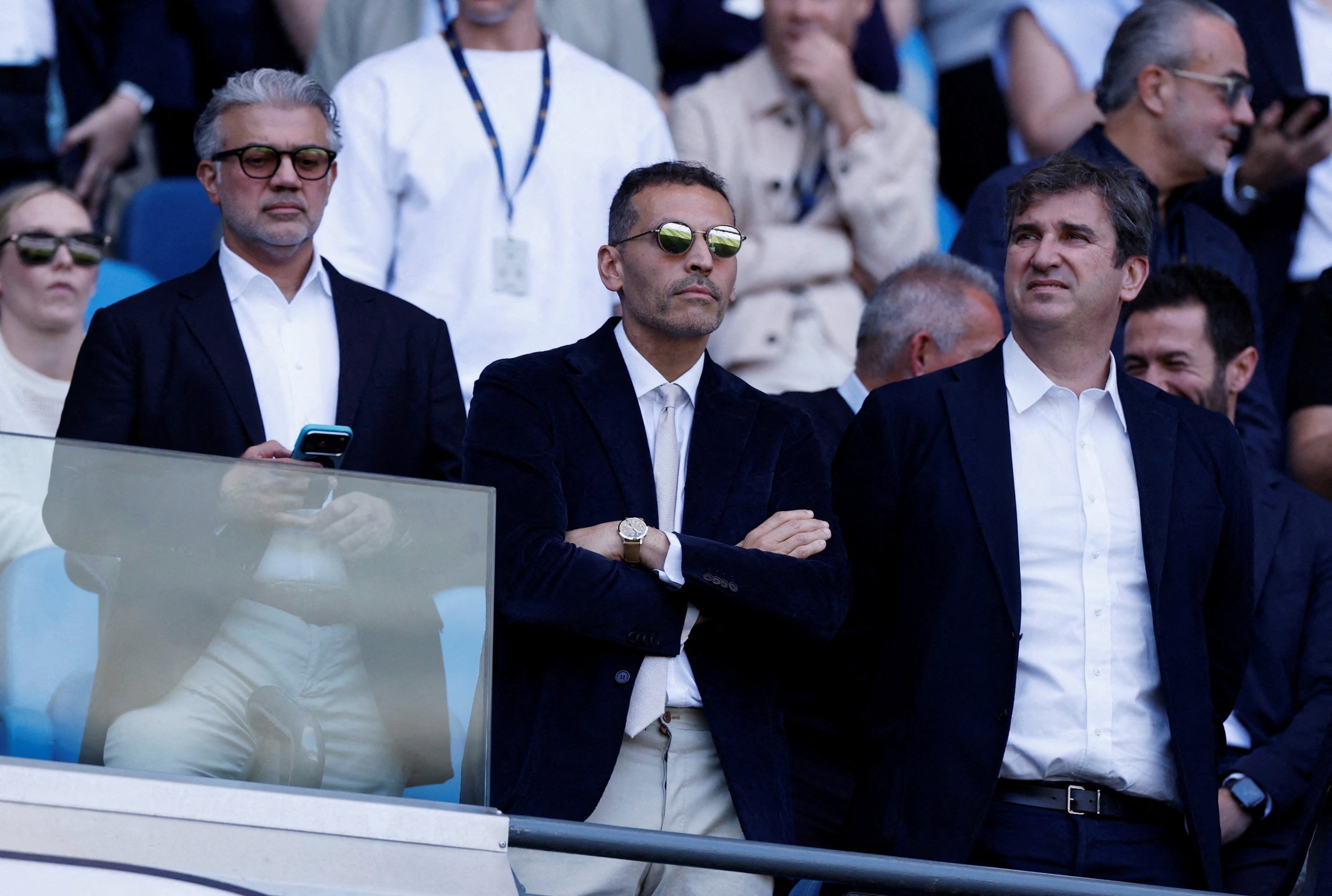
“The Premier League process still has a long way to run, and our confidence and intent in proving the club’s innocence is just as strong as when this began,” Al Mubarak wrote.
A three-person appeal board would hear any challenge against the independent judicial panel’s ruling. Unlike in UEFA cases, City cannot take the matter to the Court of Arbitration for Sport.
That distinction is significant because Court of Arbitration for Sport (CAS) overturned a two-year Champions League ban imposed on City by UEFA in 2020 over alleged breaches involving sponsorship revenue.
The Premier League case is considerably broader. The charges cover nine seasons between 2009 and 2018 and followed a four-year investigation that began after German publication Der Spiegel released leaked documents involving City executives in 2018.
Season in limbo
The timing could create an extraordinary situation for the Premier League.
City currently lead the table after five consecutive victories, but the club could potentially finish the season without knowing whether or how it will be punished.
Even if a verdict and sanction are announced during the campaign, an appeal could delay the implementation of any punishment.
A major points deduction could transform City from title contenders into relegation candidates, depending on its size and timing. Everton and Nottingham Forest were docked points during the 2023-24 season for financial-rule breaches, although City’s case involves a much larger number of alleged violations.
The most severe punishment could be expulsion from the Premier League.
That would raise another difficult question over timing. If a sanction were imposed immediately and later overturned, the consequences for the league table and European qualification could be difficult to reverse.
If enforcement were delayed until all appeals were exhausted, rival clubs could argue that they had suffered financial losses because City remained in the competition.
Titles at risk?
One of the most contentious issues would be what happens to the trophies City won during the period covered by the charges.
Between 2009 and 2018, City won four Premier League titles, four League Cups and the 2011 FA Cup, the club’s first major trophy in 35 years.
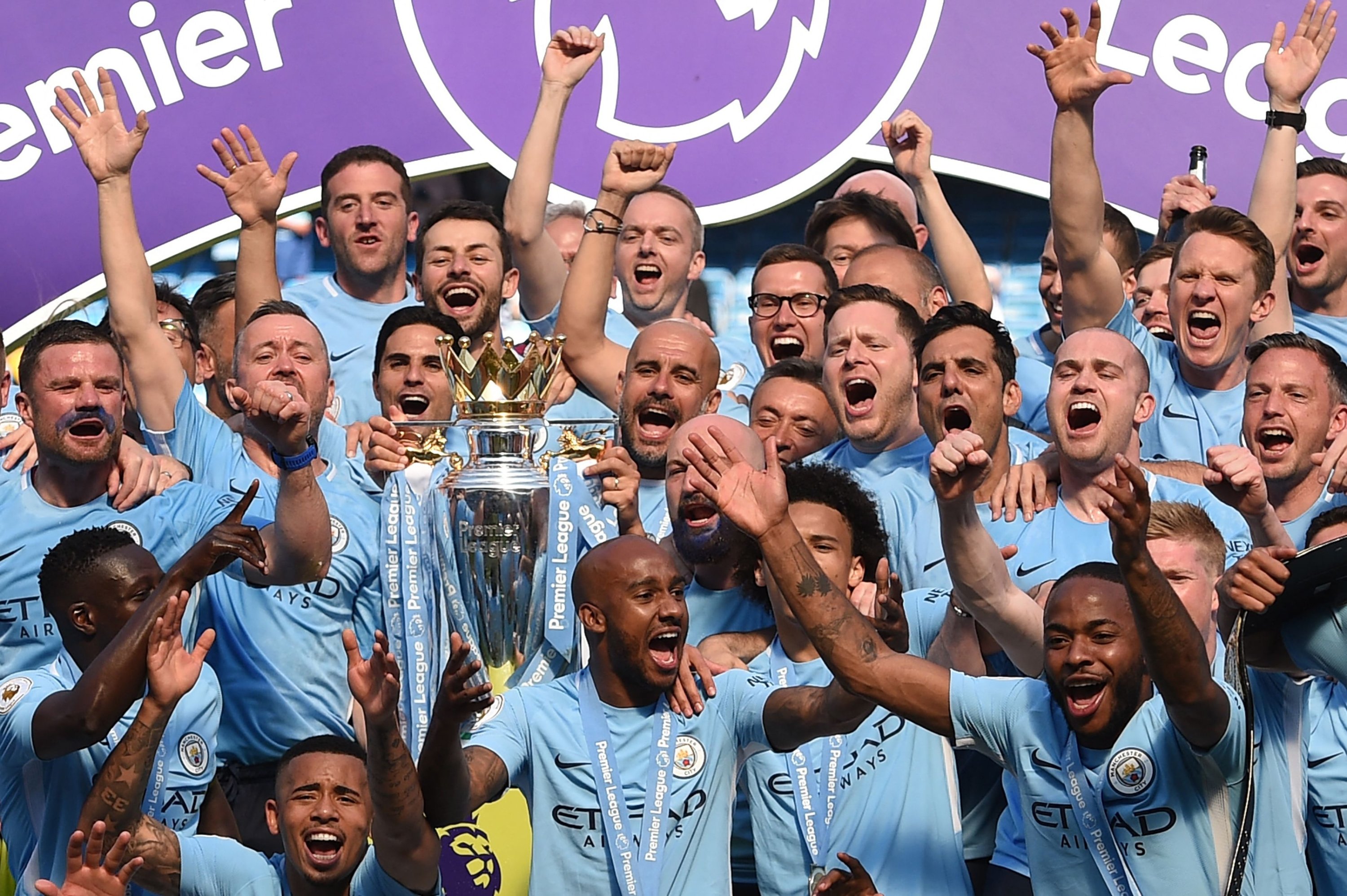
Manchester United and Liverpool finished second to City twice during those four title-winning campaigns.
That could fuel calls for titles to be retrospectively reassigned if City’s championships were deemed to have been secured through an unfair sporting advantage. But rewriting the Premier League record books would be a complicated process.
City have won four more league titles since 2018, creating further questions about whether later success could also be affected by the findings.
Former Stoke manager Tony Pulis, whose team lost the 2011 FA Cup final to City, said he did not expect trophies simply to be redistributed.
“I don’t seriously believe any other trophies and titles will be handed back over either,” Pulis told the BBC. “A points deduction and a massive fine feels far more likely. But I still feel cheated.”
The most prominent precedent is Juventus following the Calciopoli scandal in Italy. Juventus were stripped of two Serie A titles and relegated to Serie B in 2006 after a scandal involving the manipulation of referee assignments.
A similar decision in England would have major implications for the Premier League’s historical records.
Rival clubs could seek compensation
Financial compensation may prove a more realistic battleground than the redistribution of trophies.
If City are ultimately found to have gained a sporting or financial advantage through the breaches, rival clubs could seek compensation for lost prize money, European qualification revenue or other financial opportunities.
There is already a recent Premier League precedent. Everton were ordered in June to pay Burnley 35 million pounds ($46 million) after Burnley argued it had been harmed when Everton avoided relegation during a season in which the Merseyside club breached financial sustainability rules.
Similar claims against City could come from clubs that finished behind them in title races or missed out on European competition.
Establishing the precise financial loss suffered by each club, however, could create another lengthy legal battle.
What happens to City’s players?
The legal uncertainty has so far done little to affect City’s ability to attract and retain elite players.
The club recently spent about 460 million pounds in a single transfer window on players including Enzo Fernandez, Elliott Anderson and Ayyoub Bouaddi.
Erling Haaland also signed a nine-year contract in 2025 that could keep him at the Etihad Stadium until he is 34.
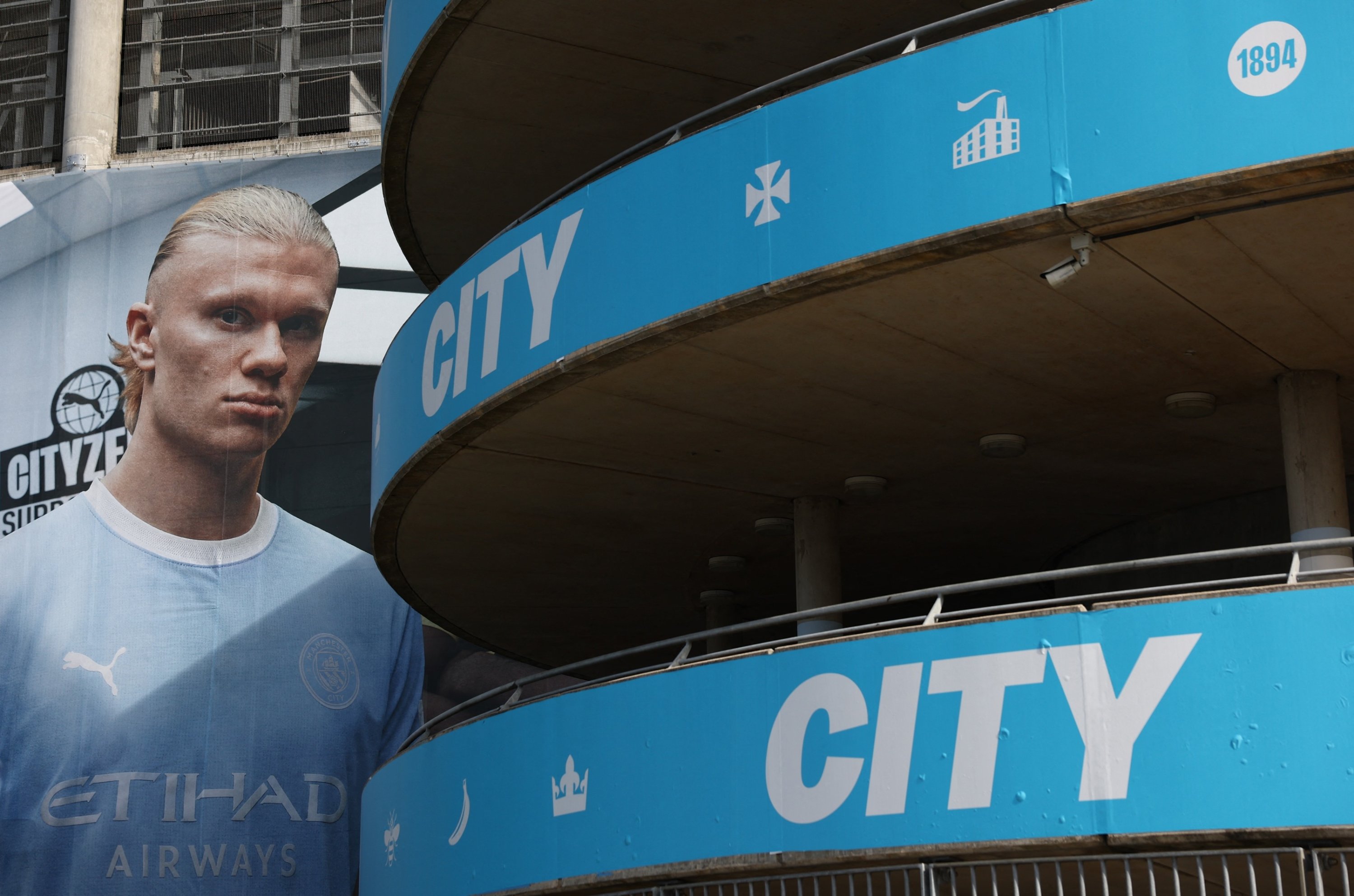
The question is whether players have negotiated clauses allowing them to leave if City receive a severe sporting punishment. Those contractual details are not publicly known.
A points deduction could affect the club’s appeal to some players, while relegation or expulsion would present a far greater challenge to its ability to retain its squad.
For now, there is no indication that City’s players will be forced to leave.
A case with major consequences
The Premier League case against City has become one of the most consequential legal disputes in English football.
The reported guilty findings do not represent the end of the process. A sanction, appeal and potentially further legal challenges still have to be resolved.
If the findings ultimately stand, the consequences could extend far beyond City, affecting league standings, European qualification, prize money and the historical record of the Premier League.
A major investigation into Türkiye’s football refereeing system has led to the detention of seven people, including Central Referees Committee (MHK) President Ferhat Gündoğdu, over allegations involving workplace bullying and official document forgery.
The Istanbul Chief Public Prosecutor’s Office launched the “Referees File” investigation after receiving a complainant’s statement on Sept. 15, 2025. Investigators said they examined open-source material, Financial Crimes Investigation Board (MASAK) findings, historical telephone records, witness and complainant statements, and expert reports before determining that Gündoğdu and others could be linked to the alleged offenses.
Police carried out simultaneous operations Tuesday in Istanbul, Ankara, Elazığ and Manisa. Seven suspects were detained, including Gündoğdu, who oversees refereeing through the MHK, a body operating under the Turkish Football Federation (TFF).
Those detained are Gündoğdu; Ferdi Karadoruk, president of the TFF Active Referees Association; Sebahattin Şahin, an MHK member and TFF education and fourth-region official; Emre Kosif, president of the TFF Referees and Observers Association’s Istanbul Provincial Referee Board; Alican Sağlar, organizational official of the association’s Istanbul branch; former MHK vice president Ahmet Şahin; and former MHK member Yunus Yıldırım.
Center of investigation
Investigators have examined message records that allegedly shed light on how referee examinations and appointments were handled.
According to records cited in the investigation, referee G.H.E. contacted Karadoruk on May 15, 2025, asking about questions for a refereeing examination. Karadoruk allegedly replied that he had requested them from Emre Kosif and would ask again.
Four days later, G.H.E. reportedly reminded Karadoruk about the questions. Karadoruk allegedly responded that he was asking Kosif for them for a third time and would return to the matter after a May 19 program.
The file also contains an alleged message from Karadoruk concerning Istanbul provincial referee board member Mehmet Çaylak. In the message, Karadoruk allegedly discussed withholding observer assignments from Çaylak and using pressure in an effort to make him resign.
The messages form part of the evidence being examined by prosecutors and do not, by themselves, establish that the alleged offenses occurred.
Alleged manipulation
The investigation extends beyond individual messages, with prosecutors examining alleged irregularities involving referee appointments, classifications, scoring and evaluation procedures.
Investigators are also examining claims of interference in refereeing examinations, including allegations that questions and grading were manipulated during a 2025 examination in Riva and that some results were subsequently changed.
WhatsApp conversations allegedly found on a phone belonging to Karadoruk have also been examined. The phone was reportedly seized and analyzed in connection with a separate obscenity investigation, with some messages allegedly concerning the selection of referee lists.
The investigation has also raised allegations involving the unlawful acquisition of personal data, breach of trust and other offenses against some of the suspects. The specific allegations vary by individual and remain subject to the ongoing investigation.
Searches across four provinces
The Istanbul Financial Crimes Branch conducted the operation under the coordination of the Istanbul Chief Public Prosecutor’s Office’s Illegal Betting and Sports Crimes Bureau.
Authorities said evidence gathered through financial investigations, telephone records, witness testimony, open-source research and expert analysis pointed to possible links between Gündoğdu, MHK members, referees and observers.
Searches were carried out at addresses connected to the suspects, with authorities seeking digital material, appointment records and documents potentially relevant to the investigation.
The suspects were taken for mandatory medical examinations before being transferred to police facilities for questioning.
Justice Minister Akın Gürlek confirmed the operation and said the investigation had uncovered findings concerning alleged interference in referee classifications, appointments, scoring and examination procedures.
Türkiye have dropped four places to 31st in the latest FIFA/Coca-Cola Men’s World Ranking after consecutive defeats to France and Italy in the UEFA Nations League.
Türkiye entered the latest ranking period 27th in the world following the 2026 FIFA World Cup but lost ground after opening their Nations League A campaign with a 1-0 defeat to France before falling 4-1 to Italy in Bursa.
The results cost Türkiye points under FIFA’s ranking formula, which takes into account the importance of a match, the strength of the opponent and the result. The drop leaves the national team in the mid-to-low 1500s in the latest points calculations.
Spain remain at the top of the rankings with 2,002.34 points after winning the 2026 World Cup, while Argentina are second with 1,970.37 and France third with 1,957.10.
England are fourth on 1,916.38, followed by Morocco on 1,806.87, Brazil on 1,802.90, Portugal on 1,797.39, Belgium on 1,779.63, the Netherlands on 1,778.65 and Mexico on 1,754.16.
Morocco’s position reflects a strong run of results, while Mexico have returned to the top 10 following the World Cup, which they co-hosted.
The latest positions and points are based on post-match calculations and remain unofficial until FIFA publishes their next full ranking release in early October.
Türkiye’s four-place slide comes during a difficult start to their Nations League campaign. They are bottom of Group A1 without a point after two matches, while France lead the group and Belgium and Italy have three points each.
Italy’s 4-1 victory in Bursa was particularly costly for Türkiye in ranking terms, with the defeat coming against a team ranked 15th in the world. France, meanwhile, are third, while Belgium sit eighth, underlining the strength of Türkiye’s group.
The Nations League results will also form part of the broader ranking cycle used in determining seeding and qualification pathways for future international competitions.
The latest setback has added pressure on Vincenzo Montella, although the coach said after the Italy defeat that he remained committed to his work with the national team. Türkiye were also without several key players, including Kenan Yıldız, Hakan Çalhanoğlu and Mert Müldür.
Montella acknowledged that the team’s performance against Italy was below expectations but pointed to Türkiye’s rise from League C to League A during his tenure and said the squad needed to adapt to the higher level of competition.
Türkiye will have an immediate opportunity to stop the slide when they visit Belgium on Oct. 2, but their recent Nations League results have already left them four places lower in the FIFA rankings than they were after the World Cup.
Goalkeeper Vozinha helped Cape Verde reach this year’s World Cup round of 32 with clean sheets against Spain and Saudi Arabia, but the 40-year-old says he is struggling to cope with the sudden fame.
Cape Verde, a collection of islands near Africa’s west coast with a population of some 500,000, surprisingly reached the knockout stage in their first appearance at the global tournament before losing 3-2 to Argentina.
Vozinha, whose performances earned him a Yashin Trophy nomination for the year’s best goalkeeper, has become a global star, with his Instagram follower count ballooning from 56,000 to 28 million people.
“I’ve lost my peace and tranquillity. I no longer have any privacy,” Vozinha told Britain’s Observer newspaper.
“I go to a restaurant, and there’s always someone who wants to take a photo with me or asks me for an autograph. Or worse, someone’s filming me … I don’t think there’s anything I can do about it.”
His family members have also been affected, with fans showing up daily at his mother’s house in Cape Verde.
“I’m not there, so I can’t help them,” said Vozinha, who left Portuguese second-tier club Chaves to join Chile’s Colo-Colo in July.
“A lot of people want to be famous … but they only see the positive side of that reality. To be honest, if I were offered the life I have today or the life I had before, I’d choose the one I had before.”
Greek substitute Dimitrios Kourbelis scored a solitary goal to stun Germany 1-0 away in the Nations League Sunday, while Ireland’s players – in remembrance of Gaza – wore black armbands during their match against Israel.
Portugal coach Jorge Jesus dropped Cristiano Ronaldo and was rewarded as his replacement Goncalo Ramos scored the winner in a 2-1 success away to Norway.
Jurgen Klopp, however, was made to wait for his maiden victory in charge of an ineffective Germany as Kourbelis’s deflected second-half strike settled the game in Augsburg.
The former Liverpool and Borussia Dortmund boss had made five changes to his team which drew 1-1 with the Netherlands Thursday as he sought to give more of his players a chance to impress him.
Although midfielder Bambase Conte had an impressive debut and Germany dominated possession, they rarely threatened Konstantinos Tzolakis’s goal.
“Personally, I’m completely unbothered by it. I’ve lost far more matches in my life than I would have liked,” Klopp told ARD.
“We absolutely need these kinds of matches – they are exactly the games we wanted to have.”
Ireland back Gaza
Ireland’s players came out wearing black armbands for their match with Israel in Hungary which almost did not take place due to heavy pressure back in Ireland on the team to boycott the game over the war in Gaza.
Only a player vote in midweek allowed the game to go ahead.
Ireland has long been a strong supporter of the Palestinian cause and the players bowed their heads as the Israeli anthem was played before the match.
The teams skipped the traditional prematch handshakes and did not exchange pennants either in a near-empty stadium in Debrecen.
Troy Parrott made a heart sign with his hands after opening the scoring on 14 minutes, while Jack Moylan kissed the Irish badge on his jersey and his black armband after netting the third goal 25 minutes in.
Ireland won the game 3-0 but Israeli Foreign Minister Gideon Saar accused them of being “on the wrong side of history” over the players’ actions.
In Oslo, Joao Felix gave Portugal a 17th-minute lead as an unusually profligate Erling Haaland squandered a succession of chances.
He did eventually equalize for the hosts six minutes into the second half, but almost immediately, goalkeeper Orjan Nyland gifted Ramos a simple finish for the winner.
“The most important thing is to show what I can do whenever I’m called upon and to contribute to the team,” Ramos told Sport TV, without being drawn on his selection ahead of Ronaldo.
Meerdink brace gives Xavi win
The Netherlands gave Xavi Hernandez his first win as head coach as Mexx Meerdink’s brace earned a 2-1 success over Serbia in Belgrade.
The Oranje turned to Barcelona great Xavi after a disappointing World Cup last-32 exit at the hands of Morocco.
But Xavi’s men forged ahead on the half-hour mark as AZ Alkmaar striker Meerdink drilled in a penalty to score his first international goal after Aleksa Terzic fouled Crysencio Summerville.
Half-time substitute Luka Jovic turned in the equalizer following a goalmouth scramble less than a minute after the restart.
But the visitors reclaimed the lead in the 69th minute as Meerdink, who made his Netherlands debut against Germany, fired a left-footed shot into the bottom corner after being played in by substitute Guus Til.
Denmark bounced back from Thursday’s dramatic loss to Norway by seeing off Wales 2-0 in Copenhagen in Group A4.
The Scandinavians, who missed out on the World Cup with a penalty shoot-out defeat by the Czech Republic in the play-offs, have now won their last four meetings with Wales.
They went ahead eight minutes into the second period when Wales skipper Ben Davies diverted Mikkel Damsgaard’s free-kick into his own net with his arm.
Denmark doubled their advantage 13 minutes later when Gustav Isaksen’s deflected shot spun in off the crossbar.
In League B, Austria made it two wins from two as David Affengruber, Junior Adamu and Carney Chukwuemeka scored in a 3-1 win over Kosovo in Vienna.
China’s 18-year-old Yan Ziyi shattered the Asian Games record to win javelin gold, showcasing her rare talent on a day marked by a medalist’s failed doping test and a decorated badminton player calling the event “sad.”
Day eight saw golds awarded in athletics, diving, skateboarding, squash and weightlifting.
On another wet day in Aichi-Nagoya, Yan dominated the women’s javelin with her first and only throw of 70.46 meters.
The throw set a new Games record, surpassing the 66.09-meter mark by compatriot Liu Shiying in 2018 and placing Japan’s reigning Olympic champion Haruka Kitaguchi in a distant second with 62.70 meters.
Yan’s remarkable throw was the sixth-best of all time. The world record of 72.28 meters was set by Barbora Spotakova in 2008.
Yan is closing in. She hurled 71.74 meters in May, the second-best throw of all time.
On the track, Thailand’s Puripol Boonson completed a sprint double, winning the men’s 200-meter after his 100-meter victory.
His time of 19.88 seconds equaled the Asian record.
Asked how much faster he can run, the 20-year-old said: “I can’t say how fast it’s going to be, but it’s going to be more records and faster.”
By the end of day eight, China topped the medals table with 119 golds, followed by Japan with 37 and South Korea with 20.
North Korea had more record-setting success in weightlifting, bringing its total to six golds out of 10 available in the sport so far.
China maintained its unbeaten start in diving, while two teenagers won gold in the street skateboarding finals.
China’s Zhu Yuanling, 15, won the women’s event, and South Korea’s Juni Kang, 17, won the men’s title.
Kang aims for the 2028 Los Angeles Games.
“I want to be No. 1 in LA,” he said.
Malaysia dominated the squash, with Ng Eain Yow winning the men’s event and compatriot Sivasangari Subramaniam winning the women’s singles.
Both secured spots at the Los Angeles Games.
‘Disappointing experience’
To save money, organizers in Aichi-Nagoya did not build a traditional athletes’ village. Competitors instead stayed in hotels, temporary wooden units or on a cruise ship.
India’s multiple badminton medalist H.S. Prannoy said that made for a disappointing experience.
“It was sad,” said the 34-year-old, who won team bronze, in a YouTube video published by the Badminton Association of India.
The Games have experienced problems, including a shortage of rooms, long delays at the airport and poor transport services.
Uzbekistan’s Nodirbek Shavkatov became the first medalist at the Games to test positive for doping.
Shavkatov, who won bronze in mixed martial arts, was provisionally suspended after testing positive for the banned substance meldonium, the International Testing Agency said.
The drug is a prescription heart medication that improves endurance and accelerates muscle recovery.


-
 Economy2 days ago
US, China agree to AI dialogue, tariff cuts on $30B in goods
-
 Politics2 days ago
Turkish officials hit back at Israeli minister over remarks on Erdoğan
-
 Politics2 days ago
Mecca defense pact brings military chiefs together in Saudi Arabia
-
 Politics2 days ago
Türkiye pursues dialogue, diplomacy at UN General Assembly
-
 Economy2 days ago
Türkiye bolsters ‘agro diplomacy’ to minimize impact of geopolitical risks
-
 Politics2 days ago
Türkiye, Pakistan, Saudi military chiefs meet in Riyadh
-
 Politics2 days ago
Erdoğan highlights Mecca pact as Ankara takes initiatives for peace
-

 Economy2 days ago
Europe turns to tax breaks, subsidies to tackle record-high fuel prices