A new tourism route inspired by the ancient Greek commander and historian Xenophon’s account of the March of the Ten Thousand is bringing visitors from eastern Anatolia to Türkiye’s Black Sea coast.
The Anabasis Northern Route, the third stage of the “Route of Ancient Cities” project developed by the Turkish Tourism Promotion and Development Agency, connects the provinces of Erzurum, Bayburt, Gümüşhane and Trabzon.
The route takes its name from Xenophon’s Anabasis, which recounts the retreat of about 10,000 Greek mercenaries following the death of Cyrus the Younger at the Battle of Cunaxa in 401 B.C.
Having lost their leader and commanders, the soldiers embarked on a difficult journey through Mesopotamia and Anatolia before eventually reaching the Black Sea. Xenophon’s account provides information not only about the military expedition but also about the geography, communities and living conditions of the period.
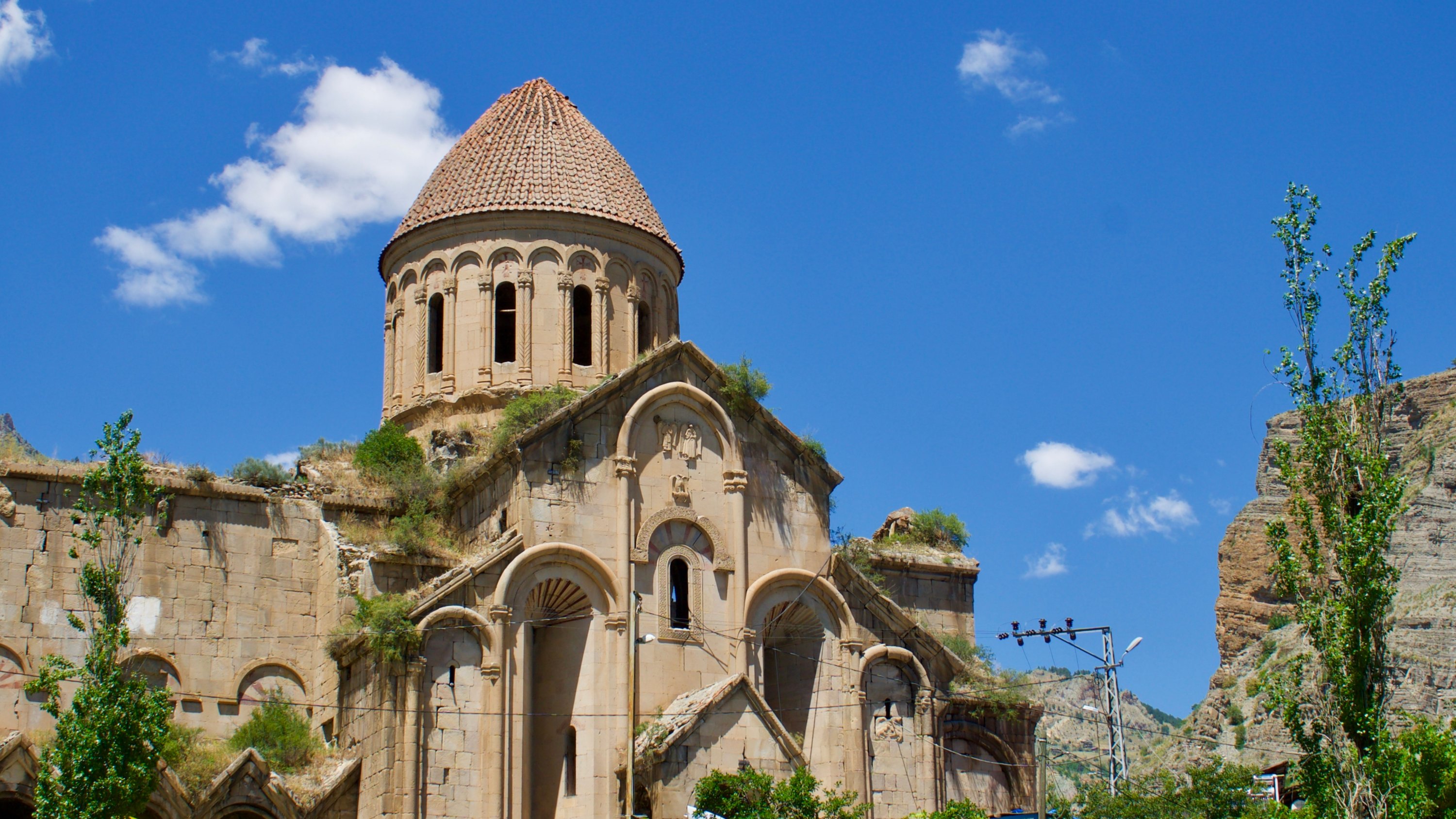
An undated exterior view of the Old Armenian Osvank church in Erzurum, Türkiye. (Shutterstock Photo)
The modern route brings together archaeological sites, historic settlements, religious buildings and natural landscapes on a journey through eastern Anatolia, the Çoruh River basin and the mountain passes leading to the Black Sea.
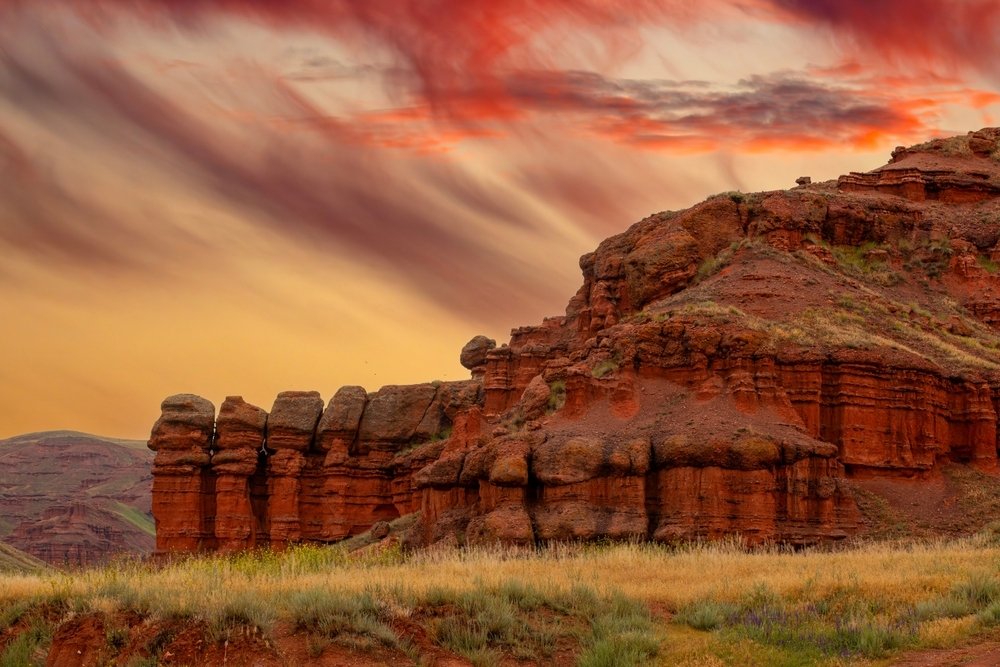
In Erzurum, visitors can explore the Narman Fairy Chimneys, Oltu, Rainbow Hills, Engüzek Castle, the Pirinkayalar Observation Terrace and Osvank Monastery.
The Bayburt section includes Bayburt Castle, the Ulu Mosque and Aydıntepe Underground City.
An undated view of the red fairy chimneys, Erzurum, Türkiye. (Shutterstock Photo)
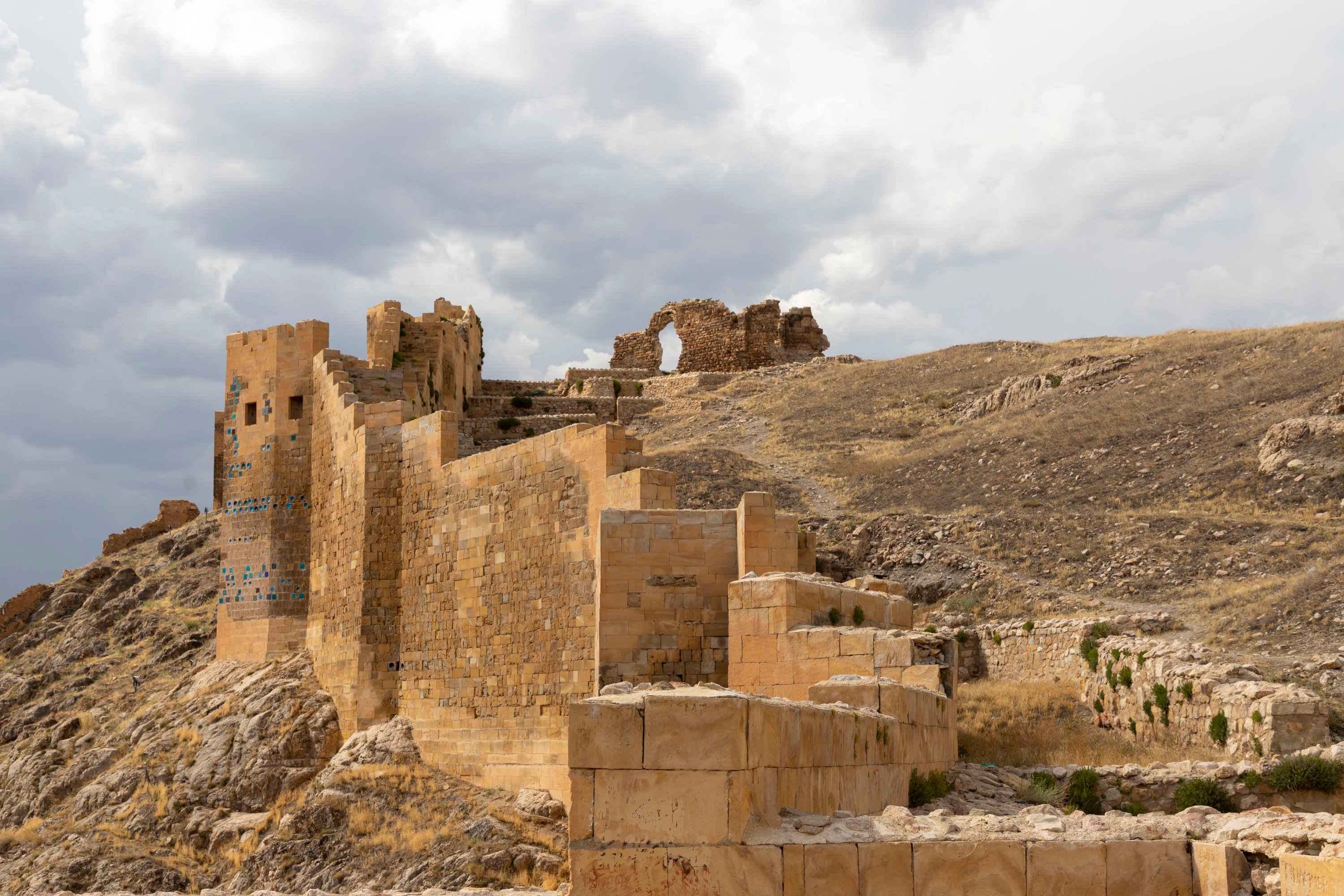
Rising above the Çoruh River, Bayburt Castle once played an important role in protecting the routes between eastern Anatolia and the Black Sea. The structure was repaired during the Byzantine period and later reinforced under several Turkish dynasties and the Ottoman Empire.
Nearby, Bayburt’s Ulu Mosque is considered an important example of Seljuk religious architecture. Although it has undergone extensive restoration, parts of its original structure survive, including sections of the minaret and other decorative elements.
In Gümüşhane, the route passes through the ancient city of Satala, the Santa ruins and the historic Süleymaniye neighborhood, also known as Old Gümüşhane.
Süleymaniye developed into an important mining and commercial center thanks to its silver deposits and position along the Silk Road. Mosques, churches, baths, bridges and schools reflect the area’s multicultural past, when Turkish, Greek and Armenian communities lived side by side.
An undated view of the historical Bayburt Castle, Bayburt, Türkiye. (Shutterstock Photo)
The Santa ruins, which are spread across mountain slopes near Dumanlı village, contain more than 300 houses as well as churches and other stone structures. Once a major mining settlement, the area was largely abandoned after the 1923 population exchange and is now protected as an archaeological and natural site.
The route ends in Trabzon, where visitors can explore Cal Cave, Canikdere Waterfall, the Girls’ Monastery and traditional Black Sea architecture.
Other attractions include the cable car running from the Beşikdüzü coast to Beşikdağı, offering panoramic views of the Black Sea, and the Atatürk Mansion, where Mustafa Kemal Atatürk stayed during visits to the city.
The Daily Sabah Newsletter
Keep up to date with what’s happening in Turkey,
it’s region and the world.
SIGN ME UP
You can unsubscribe at any time. By signing up you are agreeing to our Terms of Use and Privacy Policy.
This site is protected by reCAPTCHA and the Google Privacy Policy and Terms of Service apply.
Tucked away in the Alps, there is a destination that may not be on every traveler’s radar but promises an unforgettable Alpine experience. But before taking you there, I would like to share a little about North Tyrol and what makes this part of Austria so special.
North Tyrol lies in western Austria, at the heart of the Alps. With Innsbruck as its capital, the region is home to lush green valleys, majestic Alpine peaks and fairy-tale villages, making it one of Europe’s most captivating destinations for nature lovers and adventure seekers.
A little historical context also helps explain the region’s geography and its place on the map today.
After World War I, the historic Tyrol region was split in two: its southern part became part of Italy, while the north remained Austrian and eventually became the state of Tyrol. Having explored South Tyrol on an earlier trip, I was surprised by how seamlessly its landscape seemed to continue across the border into Austria. Discovering this side of Italy only deepened my appreciation for the country. The lush Alpine scenery I had admired in South Tyrol, I later realized, was part of the same magnificent mountain landscape extending into North Tyrol.
Despite their similar landscapes, the two regions each have a character of their own. South Tyrol is known for the dramatic peaks of the Dolomites and its steep mountain scenery, while North Tyrol is characterized by its charming, traditional Alpine villages.
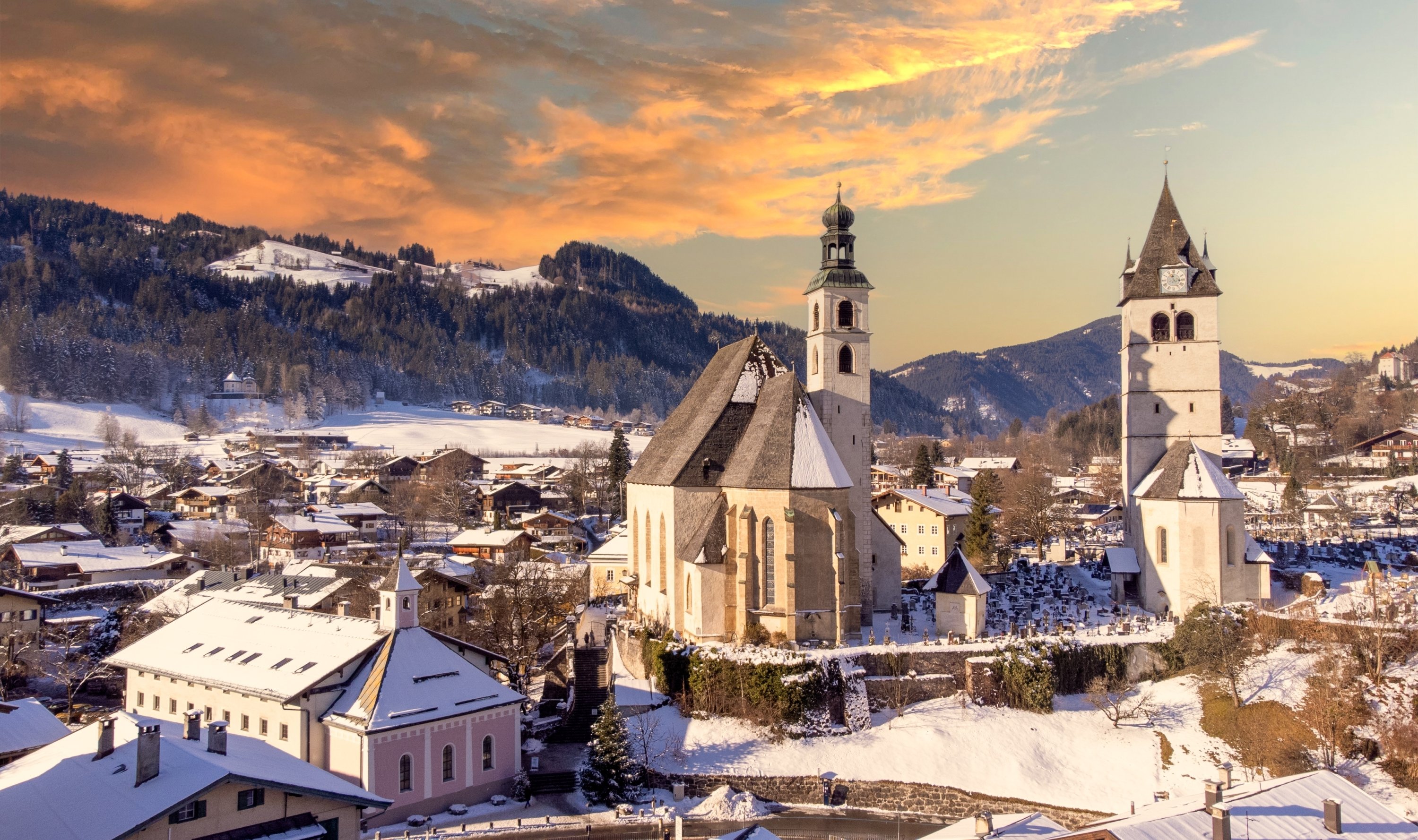
An undated general view of the town of Kitzbühel at Wilder Kaiser, Austria. (Shutterstock Photo)
Skier’s dream: Kitzbühel
Now, let’s take a closer look at Kitzbühel, the main destination of this journey.
Nestled in eastern North Tyrol, Kitzbühel is one of the region’s oldest towns and among the most historic settlements in the Alps.
While Kitzbühel may not be widely known among international travelers, it has long been a favorite among skiers and winter sports lovers. We discovered its charms during the summer, too, and it quickly became one of our favorite stops. I can only imagine how magical it must be under a blanket of snow. In fact, Kitzbühel is one of those rare destinations where the Alpine spirit shines through in every season.
Unlike purpose-built ski resorts, Kitzbühel is a town where skiing has long been part of everyday life. Even in summer, its strong connection to winter sports is hard to miss, with ski schools and related facilities scattered throughout the area. Renowned for its world-class slopes, Kitzbühel also hosts major international ski competitions and sporting events throughout the winter season.
While Kitzbühel is best known for its skiing and winter sports, there’s much more to the town than its slopes. Its charming streets, lined with colorful houses straight out of a fairy tale, are reason enough to visit. Even if you’re staying elsewhere in the region, I’d definitely recommend setting aside some time to explore the town.
As you wander along the cobblestone streets, surrounded by traditional Alpine houses in vibrant pastel shades, you almost feel as though you’ve stepped back into the Middle Ages. One detail that particularly caught my eye was that these colorful facades belong not only to local homes but also to boutiques belonging to some of the world’s most renowned luxury brands, each occupying its own distinct pastel-colored building. The result is a fascinating blend of elegance and tradition. Kitzbühel’s town center has an unmistakably sophisticated feel, yet it remains wonderfully authentic and welcoming.
After soaking up the town’s elegant, colorful and romantic atmosphere, we headed toward another exciting destination in the region: Hinterglemm.
Although the Saalbach-Hinterglemm Valley is geographically part of the Kitzbühel Alps, administratively it belongs to the Pinzgau (Zell am See) district of the state of Salzburg. Its proximity to both Salzburg city and Kitzbühel also makes it relatively easy to reach.
I decided to include the Saalbach-Hinterglemm Valley in my Kitzbühel travel story for two reasons: It lies within the Kitzbühel Alps and is just a short distance from the town. There’s one geographical detail worth clarifying, though: while Kitzbühel is in the state of Tyrol, the Saalbach-Hinterglemm Valley belongs to Salzburg.
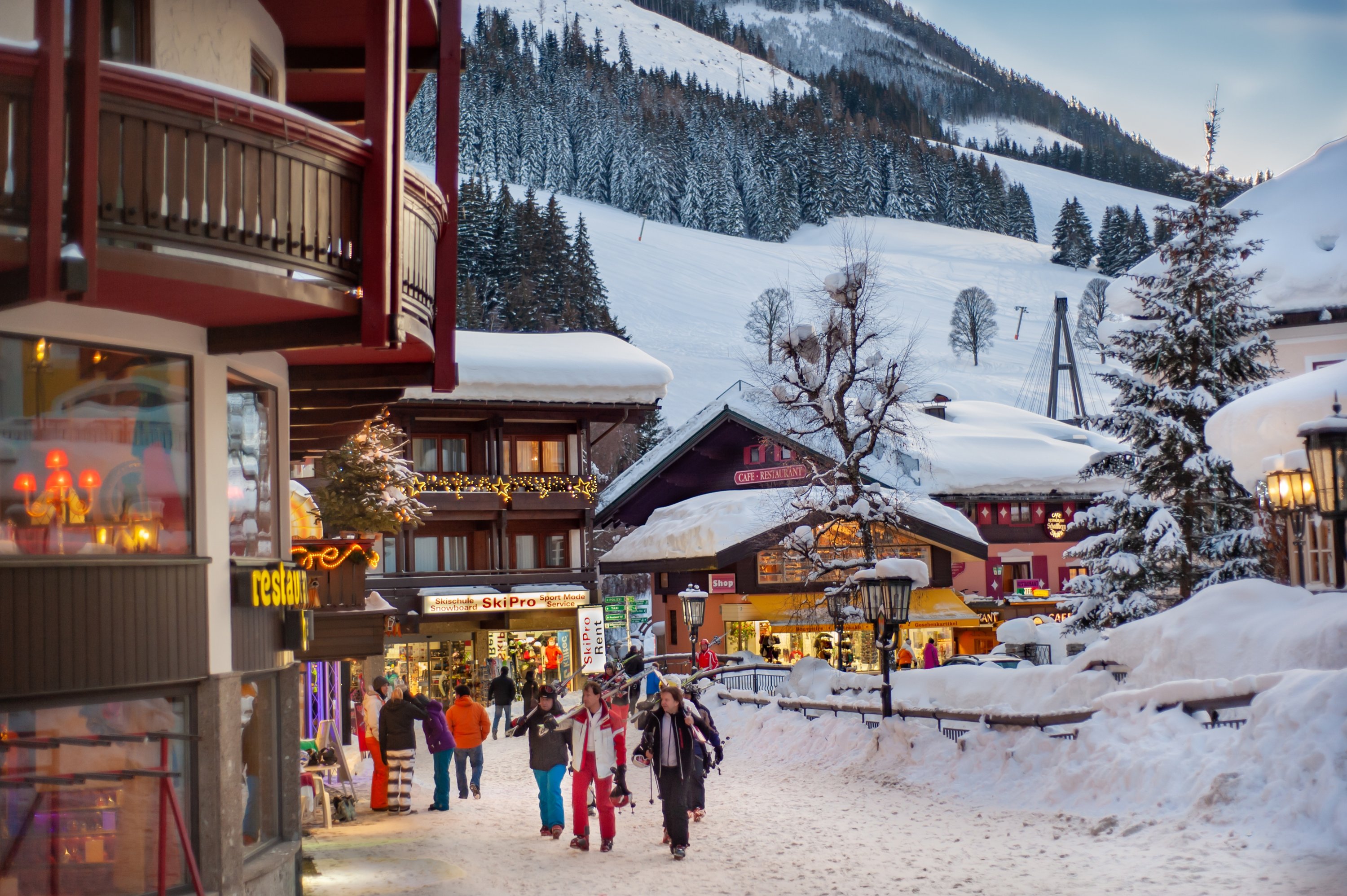
Tourists walk along the main street of the Saalbach-Hinterglemm ski resort, Saalbach, Austria, Jan. 14, 2012. (Shutterstock Photo)
Winter wonderland: Hinterglemm
One of the best parts of traveling with children is finding destinations that offer plenty of ways for the whole family to have fun.
That was certainly one of the reasons we chose to stay in the Hinterglemm Valley.
The area is home to a wide range of family-friendly hotels and mountain attractions, many of them easily accessible by cable car. There’s something for children at almost every summit, whether it’s a network of walking trails, adventure playgrounds or activity-packed outdoor parks.
In spring and summer, these mountain peaks become popular starting points for hiking, too. Some of the trails are particularly well suited to families with younger children, making it easy for little ones to enjoy the outdoors. Forest adventure parks, Alpine coasters and interactive discovery areas add even more to the experience, making Hinterglemm a wonderful choice for families and anyone who enjoys an active holiday in nature.
Up for a challenge?
When winter arrives, the region turns into a paradise for ski lovers. Several popular Alpine destinations, including Saalbach, Hinterglemm, Leogang and Fieberbrunn, are linked by an extensive network of slopes known as Skicircus Saalbach Hinterglemm Leogang Fieberbrunn.
There is a good reason behind the name. The neighboring valleys and villages of Saalbach, Hinterglemm, Leogang and Fieberbrunn are linked by an enormous network of ski slopes, allowing visitors to move seamlessly between them.
Skicircus is simply the shortened name for this vast winter sports destination. The word means “ski circus,” and the resort’s circular layout allows skiers to complete a famous 65-kilometer (40.4-mile) route known as the Skicircus Circuit in a single day.
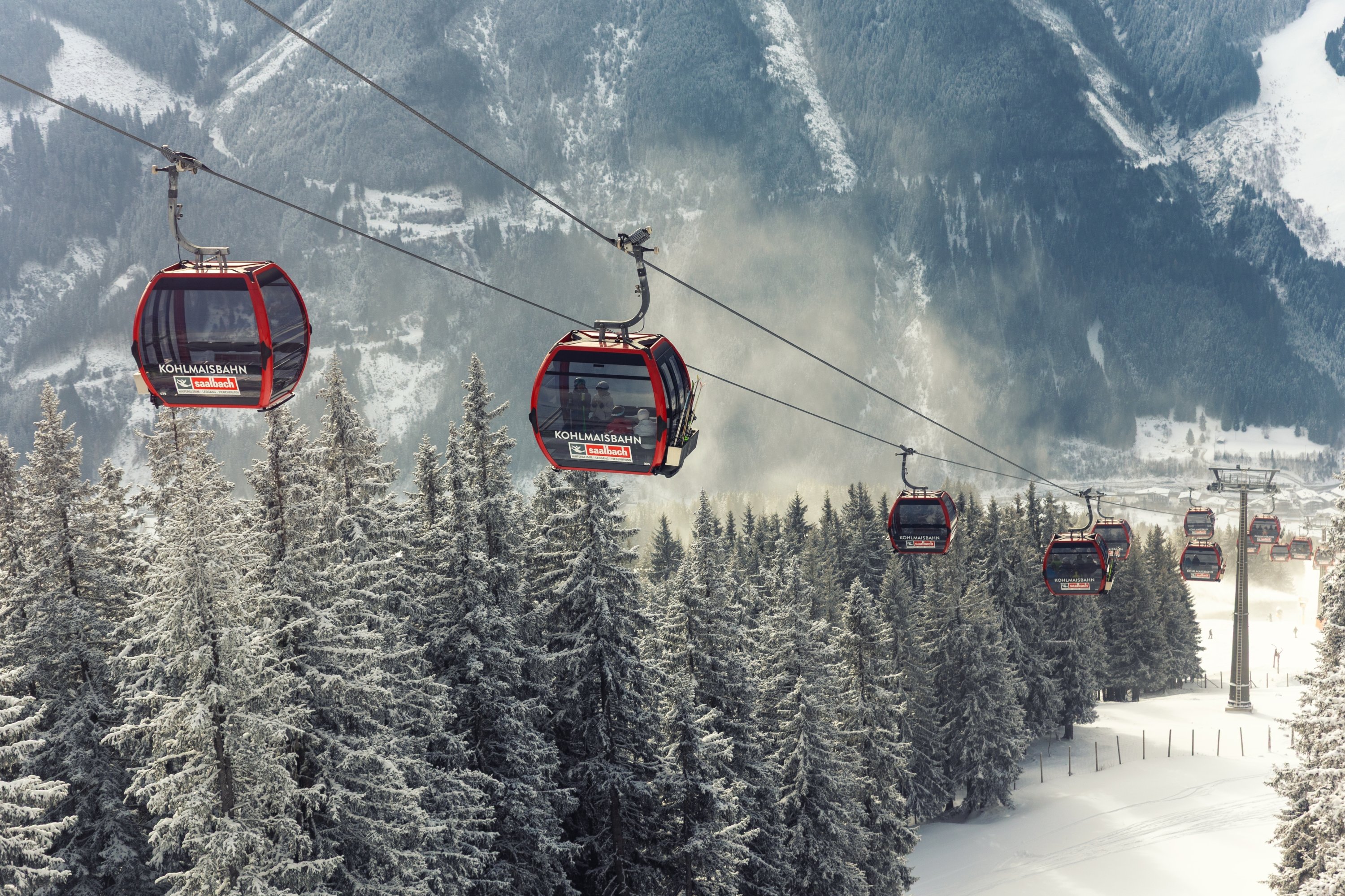
A view of the snow-covered slopes and Kohlmaisbahn cable car station at the Skicircus Saalbach Hinterglemm Leogang Fieberbrunn ski resort, Saalbach-Hinterglemm, Austria, Dec. 31, 2025. (Shutterstock Photo)
Here, a day on the slopes can take you from one mountain to an entirely different valley, all with the same lift pass. With more than 70 cable cars and chairlifts linking its vast network of runs, the resort offers seemingly endless possibilities for ski enthusiasts.
But the region’s appeal to winter sports enthusiasts goes far beyond the size of its ski network. Every January, Kitzbühel hosts the legendary Hahnenkamm Races, one of the highlights of the international skiing calendar. The competition takes place on the infamous Streif course, widely regarded as one of the most challenging downhill runs in the world. With gradients of up to 85% and skiers reaching breathtaking speeds, the course puts even the world’s top athletes to the test.
For those seeking an extra dose of adrenaline, the region also offers plenty of opportunities to venture off the beaten track. Around Fieberbrunn, skiers can explore vast stretches of untouched snow, making it a popular destination for off-piste and freeride skiing. Its reputation in the sport is reflected in its annual hosting of the Freeride World Tour, which brings together some of the world’s top freeride athletes. Whether you prefer well-maintained pistes or the thrill of skiing through fresh, untouched powder, there’s something here for every kind of skier.
The experience isn’t limited to daytime skiing, either. Night skiing on illuminated slopes, sampling traditional Alpine delicacies as you make your way from one village to another, and taking in spectacular sunsets before joining the region’s lively après-ski scene all add to the magic of a winter getaway here.
Whether you’re traveling with a child eager to try skiing for the first time or you’re an experienced skier looking to push your limits, Kitzbühel and Hinterglemm offer far more than an ordinary winter holiday. They promise a picture-perfect Alpine escape filled with adventure, charm and unforgettable moments.
And if you’re thinking of planning a trip, we’ll be taking a closer look at family-friendly hotels and the best cable car routes to help you make the most of your stay together in my next article.
In 1934, Agatha Christie trapped a dozen suspicious passengers on a snowbound train, gave Hercule Poirot a magnifying glass and turned a luxury rail journey into the world’s most famous crime scene. Fast forward nearly a century, and the Orient Express has once again slipped into Istanbul – though this time the only thing being executed is three-star Michelin fine dining, and the only “crime” committed is overindulging in handmade pasta.
Completing its historic inaugural international run from Rome, the ultra-luxurious La Dolce Vita Orient Express made its grand entry into Istanbul in late October before embarking on its return leg to the Eternal City on Nov. 1. While Christie’s fictional passengers were busy swapping alibis in the dining car, press representatives and invited guests gathered at Bakırköy Station to step aboard, tour the historic carriages and experience a taste of modern rail glamour firsthand.
Red carpets, Ottoman delights
The magic was instantly tangible the moment one arrived at the platform at Bakırköy Station. Red carpets led guests toward the train, flanked by live folklore performances, traditional Ottoman-style music and vibrant cultural demonstrations.
Platform lounges were turned into lavish sensory showcases where guests indulged in artisanal Turkish delights, baklava and freshly brewed Turkish coffee served from traditional copper samovars. Custom handmade souvenirs were presented to departing travelers, setting a celebratory tone as the platform buzzed with journalists, local authorities and railway enthusiasts capturing the moment before the train began its journey westward.
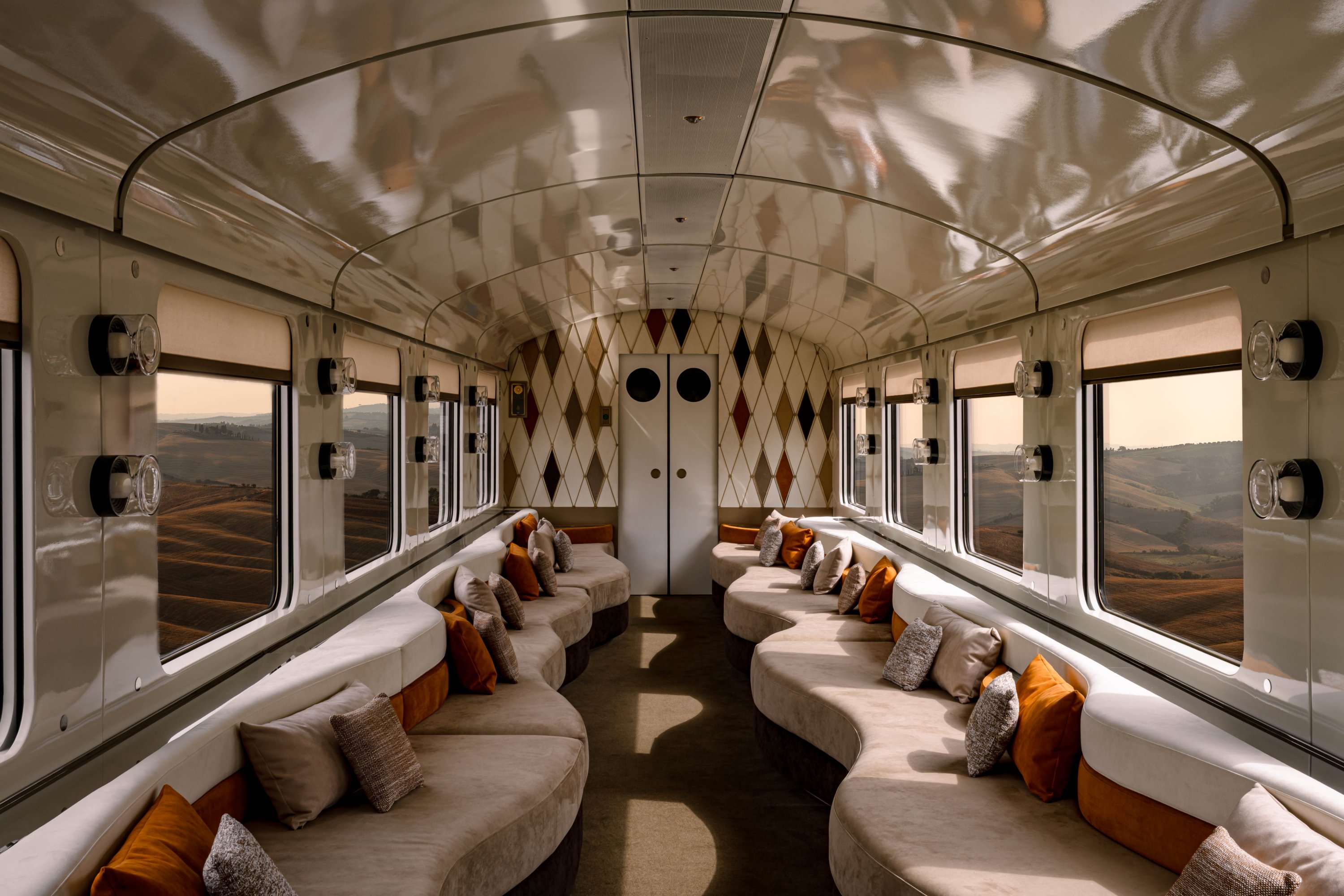
The bar car aboard the La Dolce Vita Orient Express. (Courtesy of Derya Taşbaşı)
1960s Italian glamour
Walking through the polished doors of the carriages, one is instantly transported into an entirely different realm. Designed by the internationally acclaimed Dimorestudio, the train’s interiors pay homage to the avant-garde spirit of 1960s and 1970s Italy. Drawing inspiration from design icons like Cini Boeri, Claudio Salocchi and Mario Marenco alongside artists Giuseppe Capogrossi and Agostino Bonalumi, the 12 Deluxe Cabins, 18 Suites and the exclusive La Dolce Vita Suite are masterclasses in midcentury elegance.
Inside the cabins, rich walnut wood, polished brass accents and jewel-toned velvets meet custom lighting fixtures inspired by midcentury aesthetics. The impeccably tailored vintage uniforms of the staff, their effortless grace and an atmosphere of timeless sophistication immediately make you feel as though you’ve stepped onto a living film set from a bygone golden era – evoking the enchantment of Fellini’s Rome and the captivating charm of Sophia Loren and Marcello Mastroianni.
It becomes immediately clear that this is not merely a mode of travel; it is a meticulous invitation to step inside a living story. For those observing the sheer grandeur of the setup, the true value of such an experience becomes obvious: you are not just looking at a high-end transport option, but witnessing passage to a parallel world – a floating hotel where memories are crafted to last a lifetime.
Haute cuisine
The culinary voyage aboard La Dolce Vita Orient Express is curated by three-star Michelin chef Heinz Beck. Operating from a state-of-the-art Restaurant Car, Beck’s menus blend Italy’s rich culinary traditions with modern innovation and well-being. Each plate reflects the terroir of the regions traversed – from delicate Sicilian brioche with caponata to Gnocchetti di zita cacio e pepe on herb foam, and Piedmontese Fassona tartare with hazelnuts.
Meals are served on fine porcelain while live piano melodies fill the adjacent Bar Car, keeping the festive spirit alive long into the night. Even before departure in Rome, guests begin this journey in the exclusive La Dolce Vita Lounge at Roma Ostiense station, designed by Hugo Toro with striking orange reflective ceilings and preserved historical mosaics by Giulio Rosso and Maria Zaffuto.
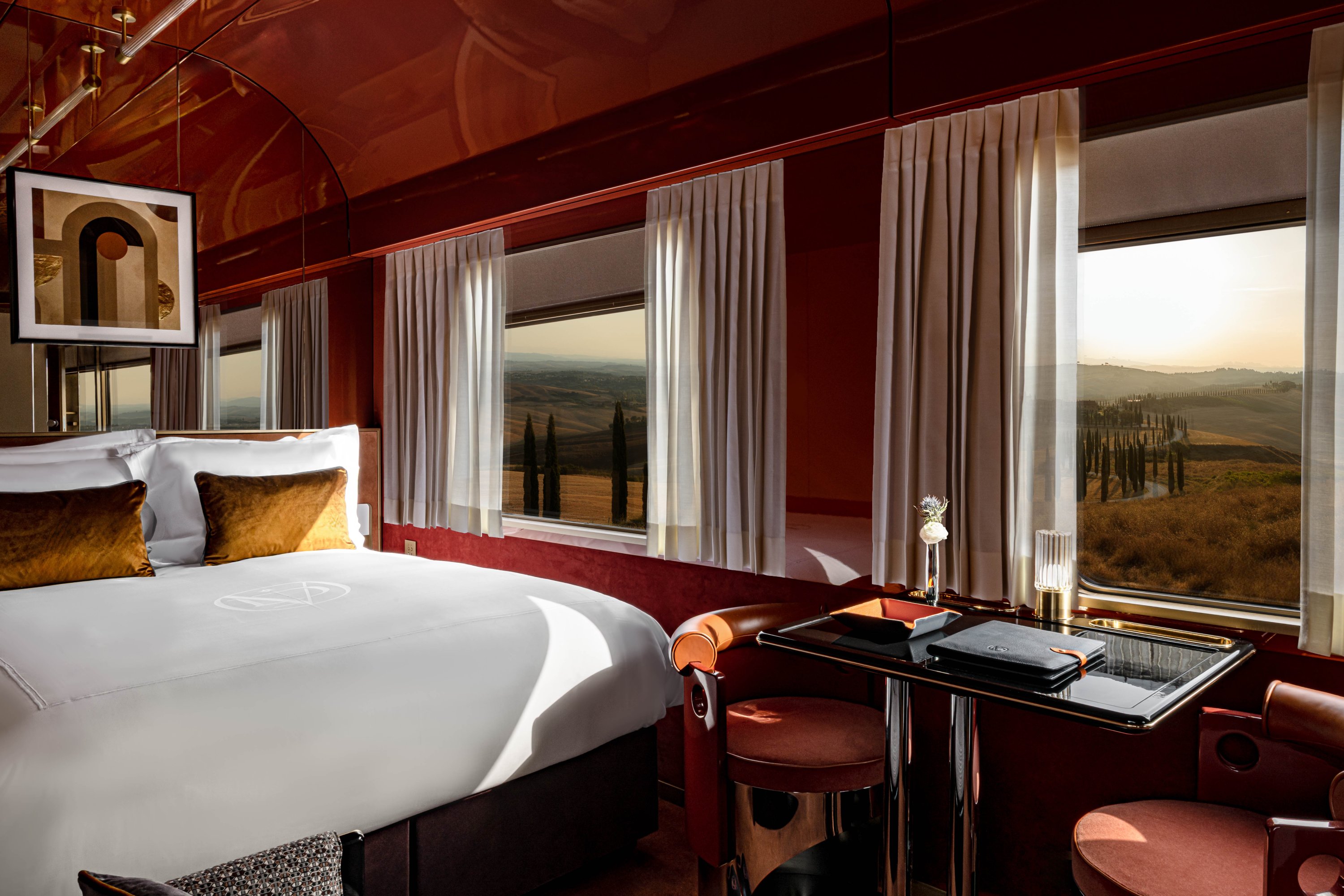
A suite aboard the La Dolce Vita Orient Express. (Courtesy of Derya Taşbaşı)
14 regions, 131 cities
Unlike the 1929 blizzard that stranded the real Orient Express near Çatalca, inspiring Christie’s legendary murder mystery, this journey offered a seamless, highly curated passage through Europe’s most breathtaking capitals. Across its fleet of 6 trains operating 12 cars each, the La Dolce Vita network spans 14 Italian regions and 131 cities, offering diverse itineraries ranging from Tuscan wine routes and the truffle hills of Alba to curated “Golf Train” journeys across Italy’s premier greens.
On its maiden international leg from Rome to Istanbul, the route glided through Venice, Budapest and the fairy-tale landscapes of Romania, featuring exclusive excursions around Transylvania’s iconic Bran and Peleș castles before reaching the shores of the Bosphorus. The return journey back to the Eternal City was designed to be equally majestic, carrying its 62 passengers through Plovdiv and Sofia in Bulgaria – complete with a private classical concert – onward to Timișoara in Romania, an after-hours private tour of Vienna’s Schönbrunn Palace in Austria and the romantic canals of Venice before pulling into Rome.
According to Stefano Ferrari, general manager of La Dolce Vita Orient Express, the project is far more than a luxury train – it represents a traditional Italian philosophy of living life to its fullest. Ferrari emphasized that the team was deeply moved by the extraordinary warmth and hospitality extended by the Turkish people, local authorities and visitors throughout their stay in Istanbul. He noted that both the inaugural outbound and return journeys were completely sold out, an overwhelming response that has prompted organizers to expand the Istanbul schedule for next year.
The successful maiden visit to the Queen of Cities marks a revival of the legend of continental rail travel, combining eco-sustainable luxury mobility with the restoration of historic Italian carriages. And as the midnight-blue carriages rolled out toward Europe, one thing remained clear: the spirit of the Orient Express is very much alive in Istanbul – no detective required.
The Daily Sabah Newsletter
Keep up to date with what’s happening in Turkey,
it’s region and the world.
SIGN ME UP
You can unsubscribe at any time. By signing up you are agreeing to our Terms of Use and Privacy Policy.
This site is protected by reCAPTCHA and the Google Privacy Policy and Terms of Service apply.
In my previous article, I took you to the town of St. Wolfgang in Austria’s Salzkammergut Lake District. The region is a wonderful destination where lakes lie close to one another, connected by scenic roads offering breathtaking views. This makes it easy to travel between them while enjoying some spectacular landscapes along the way. As you drive along the roads winding between the lakes, a new and enchanting view seems to emerge around every bend. After exploring St. Wolfgang, the first stop on our itinerary, we made our way to St. Gilgen, located on the opposite shore of the lake, accompanied by stunning scenery and Mozart’s symphonies playing in the background.
The two towns are about 18 to 20 kilometers (11 to 12 miles) apart, making it a roughly 20-minute drive. You can also catch a ferry from St. Wolfgang to St. Gilgen, but since we had a rental car, we decided to take the scenic route. The drive was a treat in itself, with beautiful views of rolling green hills and blue waters along the way. Once we arrived, we left the car in one of the parking lots at the edge of town and set off to explore on foot.
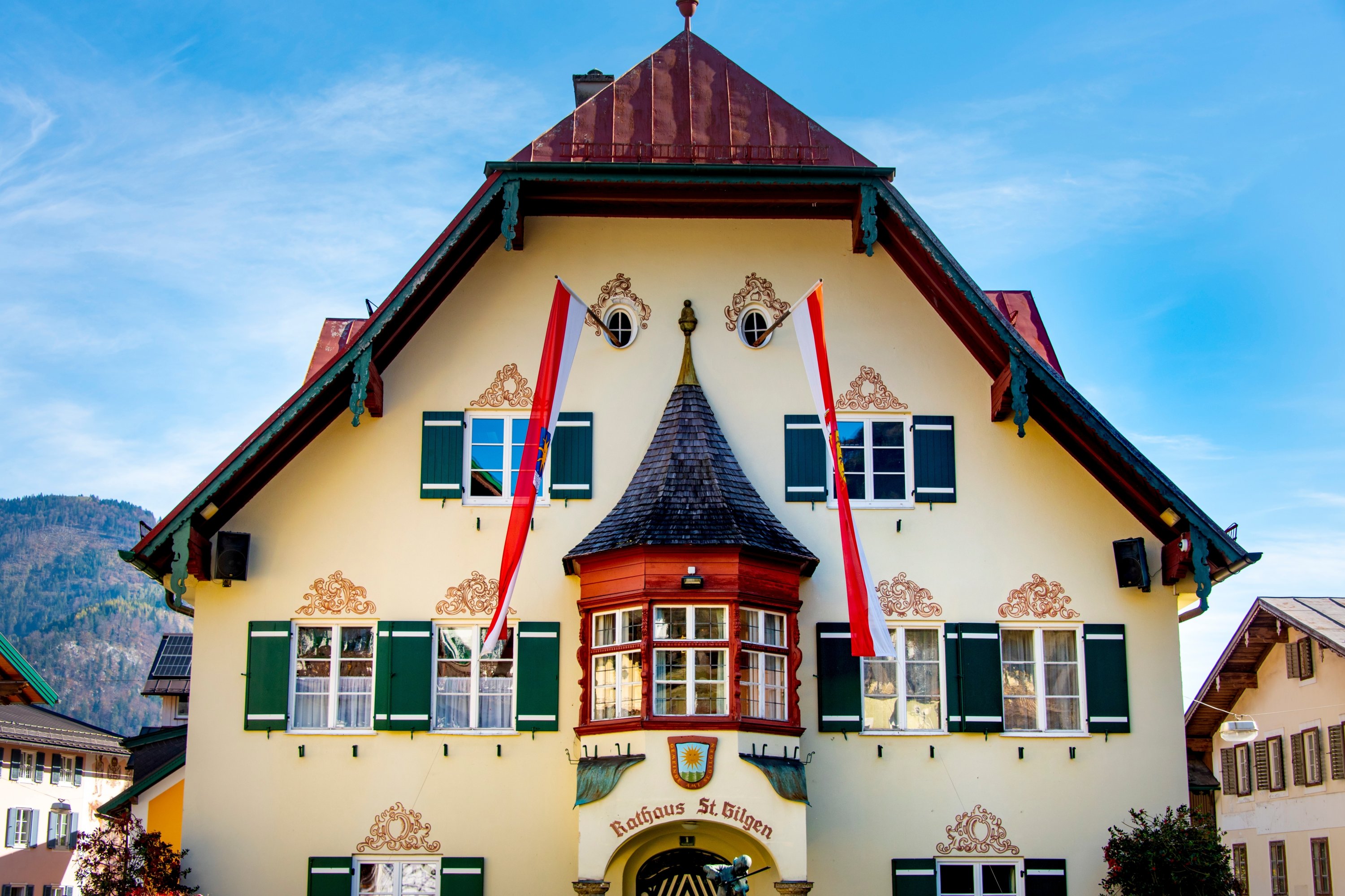
An exterior view of the Town House (Rathaus) of St. Gilgen, Austria, Oct. 26, 2024. (Shutterstock Photo)
First impressions
Compared with St. Wolfgang, St. Gilgen struck us as a quieter, more laid-back town, with fewer crowds. One of the first things we noticed was how beautifully maintained everything was. The buildings seemed to have been carefully preserved, and traditional Austrian houses were everywhere, with steep roofs, wooden shutters and windows overflowing with colorful geraniums and hydrangeas.
Wandering through the streets, we also came across small craft workshops. Traditional woodcarving and the making of traditional garments are still part of everyday life here, and you can find locally made pieces in the shops, including some lovely souvenirs to take home. Just as in St. Wolfgang, one of the pleasures of exploring St. Gilgen was simply wandering down its little side streets without worrying about where they might lead. Traffic is restricted in certain parts of town, making it especially pleasant to explore the center and lakeside on foot with our child.
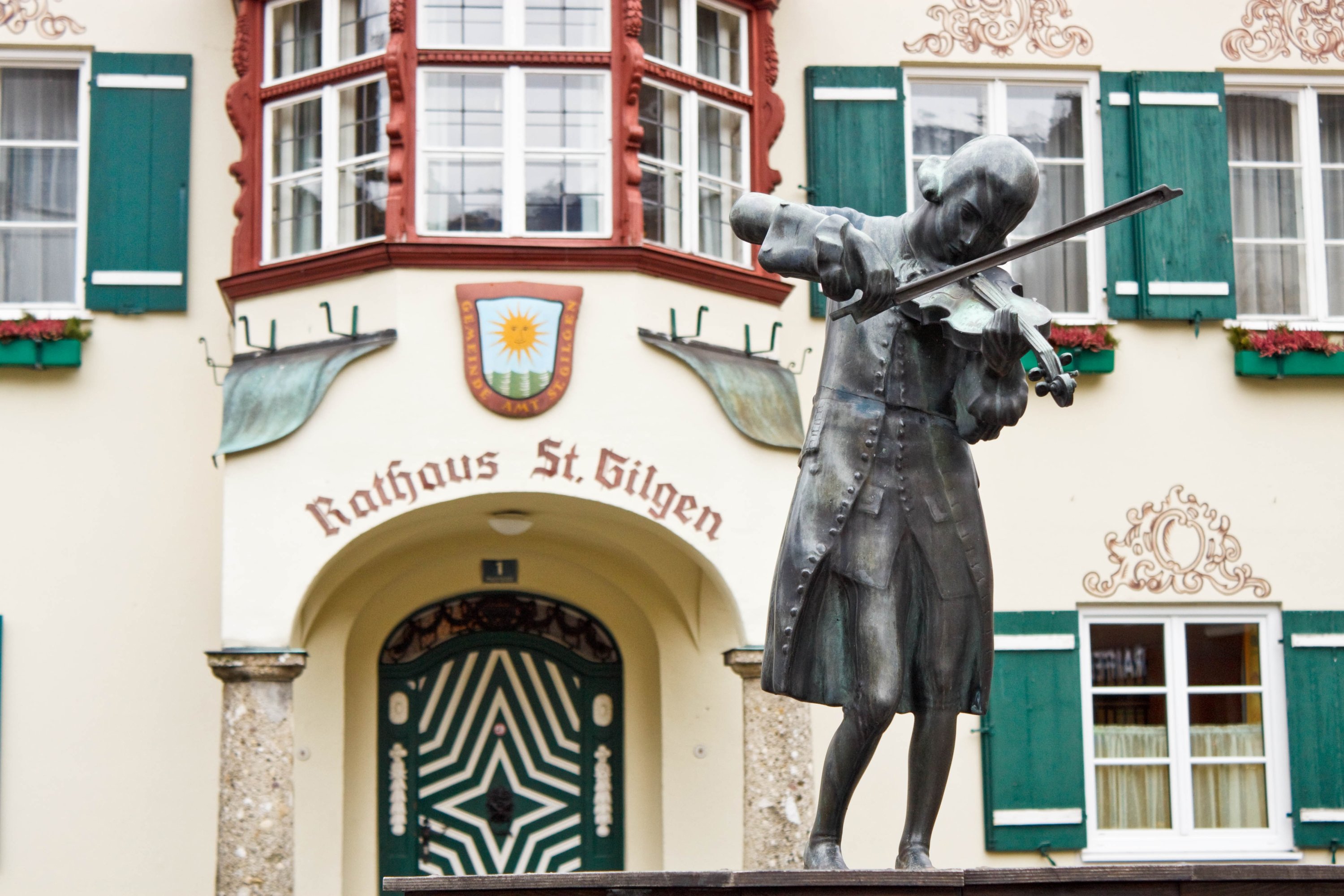
An undated view of the statue of young Wolfgang Amadeus Mozart in front of the town hall on Mozartplatz, St. Gilgen, Austria. (Shutterstock Photo)
Mozart’s legacy
It doesn’t take long to notice that Mozart has a special place in St. Gilgen’s history. I’d read a little about the connection before our visit, and it turned out to be quite an interesting story. We began our exploration at Mozartplatz, the town’s central square.
At its center stands a small statue of Mozart holding a violin. It’s a modest monument, rather than the grand statue you might expect. Behind it, however, is an impressive historic building that is hard to miss. This is the Rathaus, or town hall, and its striking facade makes it a popular spot for photographs.
Mozart-themed souvenirs, chocolates and other memorabilia are easy to find around town. There’s an interesting twist to this connection, though: Wolfgang Amadeus Mozart himself never actually visited St. Gilgen. So why is the town so closely associated with the composer? It all goes back to his family. His mother, Anna Maria Pertl, was born here in 1720, while his older sister Maria Anna, better known as Nannerl, also spent many years in St. Gilgen after getting married. In fact, the house where Mozart’s mother was born still stands in the town. Mozart may never have been here, but his family certainly left their mark.
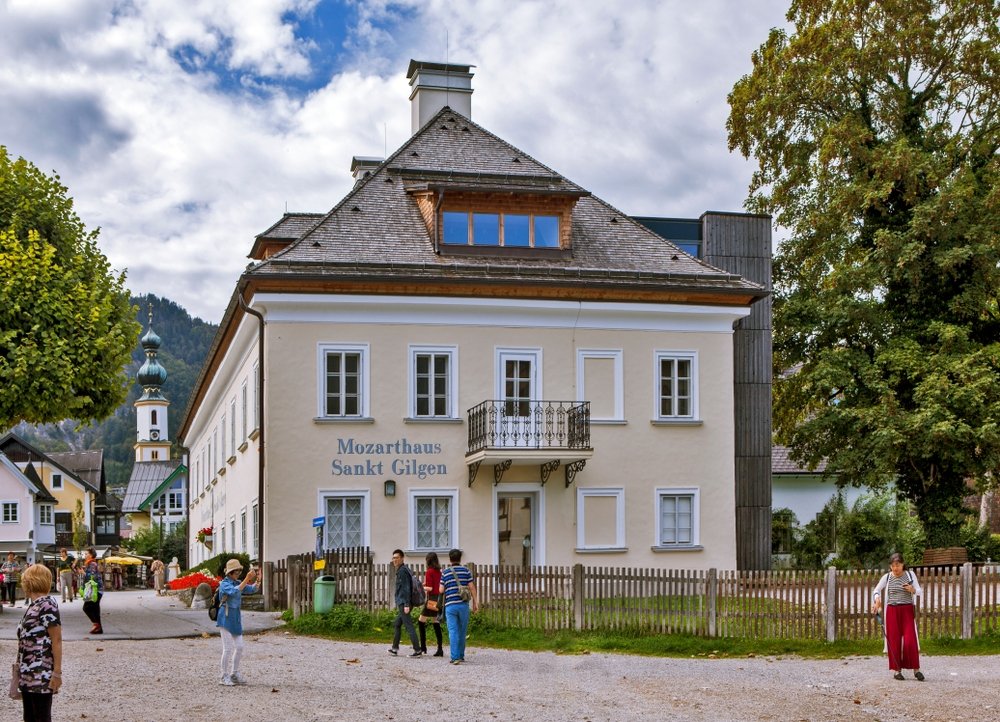
A short walk from the square toward the waterfront brings you to the Mozart-Haus. With its pink facade and geraniums spilling from the windows, this charming house occupies a lovely spot right by the lake. Now a museum, it displays family belongings, historical objects and letters that offer a glimpse into the Mozart family’s life and their ties to St. Gilgen. It’s well worth a visit if you’d like to learn more about Nannerl and the family’s history in the town.
An exterior view of the Mozart House, St. Gilgen, Austria, Sept. 19, 2018. (Shutterstock Photo)
We ended up spending quite a bit of time by the water just across from the house. Our son had a wonderful time splashing around and playing along the shore, while we enjoyed the chance to slow down and take in the peaceful surroundings. If you’re in the area, don’t miss St. Aegidius Church, either. Just a short distance from the Mozart-Haus, this Baroque church is another local landmark, with an especially elegant interior.
After exploring the square and getting lost in the old streets, we made our way back to the lake. Wolfgangsee’s water is so clear that you can easily spot fish swimming beneath the surface. We enjoyed walking along the lakeside promenade and then settling onto a bench to take in the view. Sometimes, simply sitting by the water is the best way to experience a place.
At the pier, we also spotted some charming old-fashioned boats offering lake cruises and connections to St. Wolfgang and Strobl. We didn’t get on board, but there are plenty of other ways to enjoy the lake, depending on the season. You might see people kayaking, rowing or swimming in its clear waters. Another lovely way to spend an afternoon is to stop at one of the small lakeside cafes, order a coffee and watch the water stretch out before you.
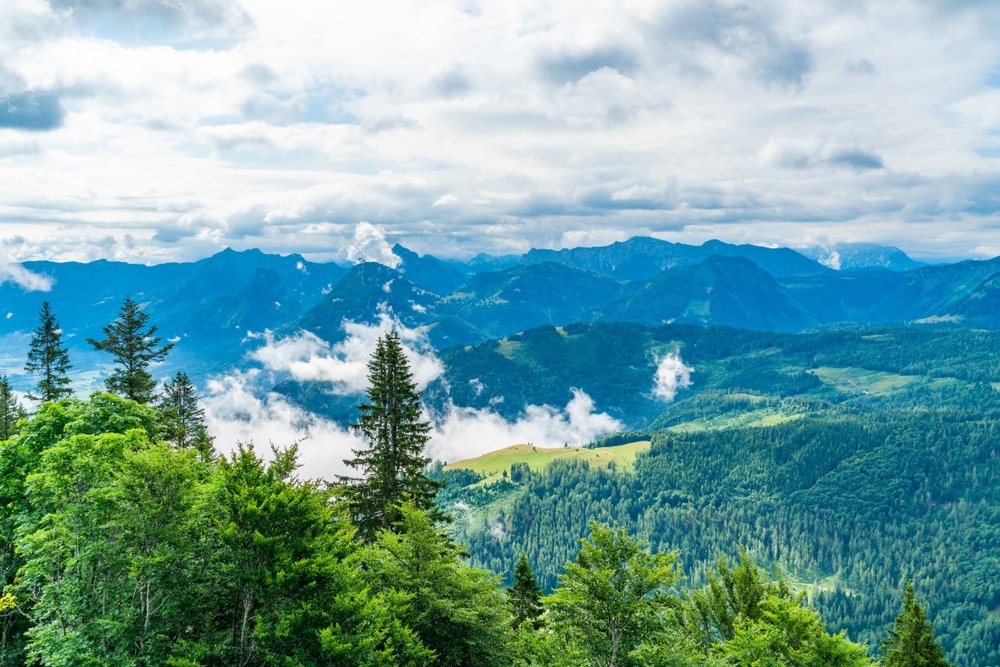
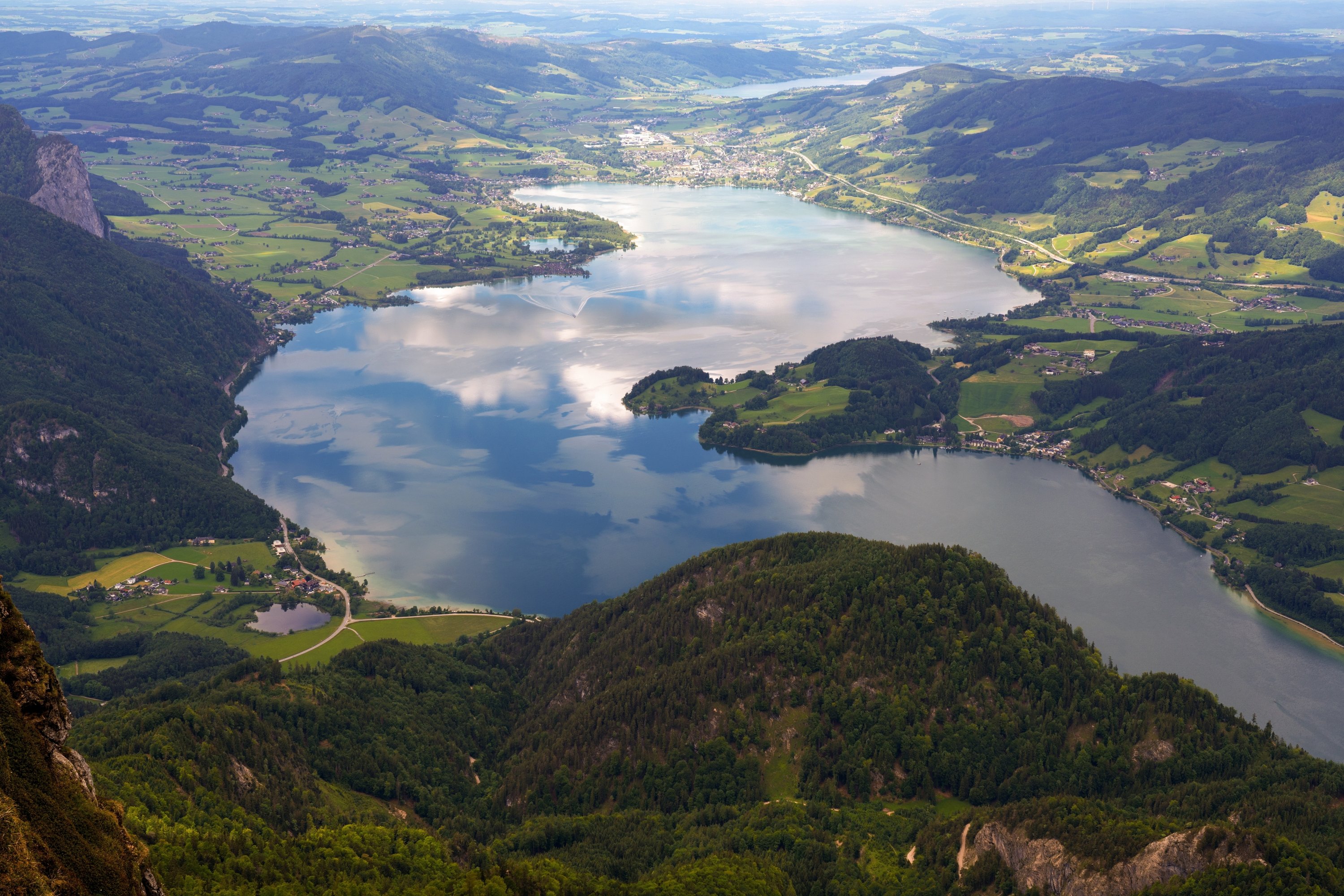
An undated aerial view of the Alpine mountain range stretching into the distance from Zwölferhorn Mountain in St. Gilgen, Salzkammergut region, Austria. (Shutterstock Photo)
Zwölferhorn summit
Once you’ve had your fill of lakeside strolls, there’s another experience you shouldn’t miss: a trip up Mount Zwölferhorn, which rises just behind St. Gilgen. The Zwölferhorn Seilbahn cable car station is an easy walk from the town center, so getting there couldn’t be simpler.
The ride to the summit takes around 15 minutes in modern, newly built cable cars, carrying you up to an altitude of 1,522 meters (4,993 feet). As the cabin climbs higher, St. Gilgen becomes smaller and smaller below, while Wolfgangsee gradually opens up beneath you. The views along the way are spectacular, but the panorama at the top is something else entirely.
From the summit, Wolfgangsee is just one part of the picture. You can also see other lakes in the Salzkammergut region, including Mondsee and Fuschlsee, as well as the surrounding Alps. Seeing them all from above gives you a much better sense of just how close these lakes are to one another and how the region’s landscape fits together.
If you feel like spending more time in the mountains, there are hiking trails to suit different fitness levels. You can enjoy the crisp mountain air, take in the scenery and watch paragliders launch themselves from the summit. There are also wooden benches at the viewing platforms where you can sit back, relax and soak up the views. When you’re ready, simply hop back on the cable car for the ride down to town.
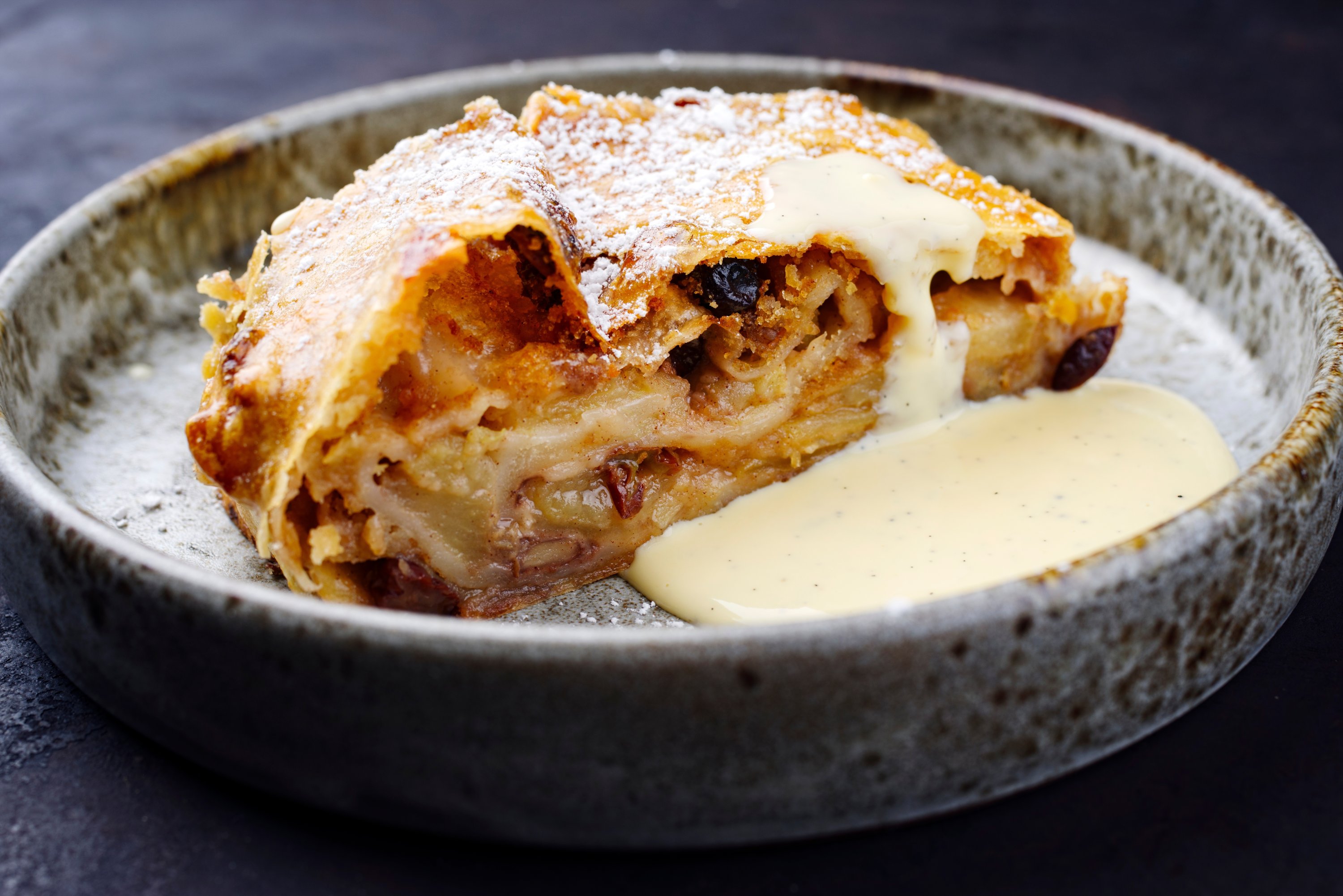
A close-up of traditional Austrian apple strudel with baked apples and raisins, served on a Nordic-style plate. (Shutterstock Photo)
Local flavors
After a day spent walking, exploring and taking in the scenery, you’ll probably be ready for a good meal. We’d recommend trying one of the local restaurants. The Salzkammergut region is particularly known for its freshwater fish, so keep an eye out for Saibling, a local Alpine char. Usually grilled with fresh herbs and butter and served with boiled potatoes, it’s a great way to sample the region’s local flavors.
If fish isn’t your thing, there are other traditional Austrian dishes worth trying. Kasnocken, small dumplings generously coated in cheese and topped with caramelized onions, are a comforting local favorite. You can also go for Wiener Schnitzel, one of Austria’s best-known classics.
And don’t leave town without making time for something sweet. The historic pastry shops in the center are a great place to experience Austria’s much-loved coffeehouse culture. A warm Apfelstrudel (apple strudel) served with vanilla sauce, paired with a Wiener Melange, a traditional Austrian coffee topped with milk foam, makes for a perfect afternoon treat.
Not much of a pastry person? Head to one of the ice cream shops in the town center and try the salted caramel ice cream instead.
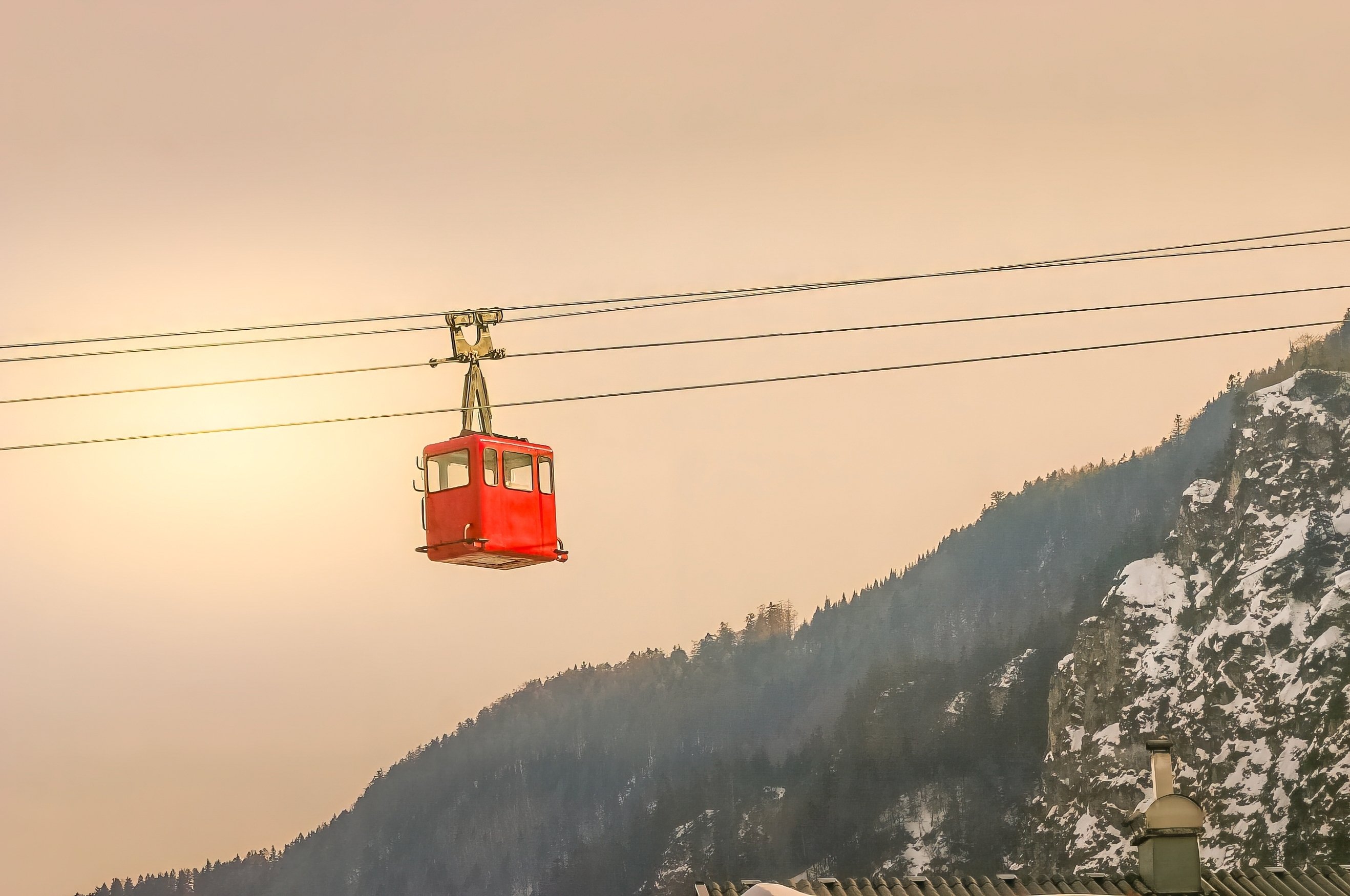
An undated view of a red cable car gondola traveling along the Zwölferhorn mountain at sunset in St. Gilgen, Austria. (Shutterstock Photo)
Practical tips
St. Gilgen is about 30 kilometers from Salzburg city center, making it an easy getaway if you’re flying into the city. You can comfortably fit visits to both St. Gilgen and St. Wolfgang into a weekend, and direct buses from Salzburg make the town accessible even without a rental car.
Allow around four to five hours to see the main sights, visit the Mozart-Haus and take the cable car up Zwölferhorn. If you’d rather take your time, you can easily make a full day of it or combine St. Gilgen with St. Wolfgang and other nearby lakes for a longer getaway.
Late spring and early fall are particularly good times to visit, with pleasant temperatures for walking and fewer tourists around. That said, St. Gilgen under a blanket of snow in winter must be quite a sight, too.
We know all too well what it feels like to step into a dreamland where time seems to slow to a halt, nestled gently against the mountains.
As we planned our summer vacation, we found ourselves facing a choice: Should we head for the seaside, with its pearly white sands, or opt for turquoise lakes surrounded by lush green meadows?
This time, we chose the latter. Instead of the Greek islands or the sun-drenched shores of the Mediterranean, we set our sights on Austria’s Lake District.
For most people, summer is all about the beach, the sea and soaking up the sun. Our Austrian getaway had all the makings of a classic summer holiday, with a few unexpected delights thrown in.
We spent our days swimming in crystal-clear turquoise lakes beneath the Alps, strolling across grassy meadows in flip-flops and enjoying dinner with a view as the evening air grew cool enough to reach for a shawl. And while a dip in a lake may not sound as appealing as a swim in the sea to some, we found it to be a special experience in its own right.
Summer may be behind us, but if this lakeside escape sounds tempting, now is the perfect time to start planning a trip for next year.
Nestled in the Austrian Alps, the Salzkammergut region is an ideal summer escape for anyone looking to trade the sweltering heat and crowded beaches for fresh mountain air and a slower pace of life.
An aerial view of Schafberg mountain overlooking Lake Mondsee, Salzkammergut, Austria. (Shutterstock Photo)
With 76 crystal-clear lakes scattered among lush green mountains, the region offers plenty of ways to enjoy the outdoors, from swimming, canoeing and sailing to hiking trails with breathtaking views. The mild summer weather and postcard-worthy scenery only add to its appeal.
Beyond its natural beauty, Salzkammergut charms visitors with fairytale-like towns, well-preserved historic architecture, a rich cultural heritage and a peaceful atmosphere. It offers a different kind of summer holiday, one that feels as restorative as it is memorable. For us, the highlight of the trip was undoubtedly St. Wolfgang, a lakeside town with a character all its own.
St. Wolfgang
Set on the northern shore of Lake Wolfgangsee and framed by steep mountain slopes, St. Wolfgang is a charming little town where life moves at a gentler pace. We felt it as soon as we arrived. Unlike the hustle and bustle of city life, there was no sense of urgency here, just a slower pace that we soon found ourselves falling into.
We had admired colorful wooden houses in other parts of Europe, but St. Wolfgang had a charm of its own. Pastel-painted buildings lined the streets, and the scent of flowers filled the air. It didn’t take long for us to realize that this might be our favorite stop of the trip.
Every corner seemed to reflect a way of life in harmony with nature and we loved wandering through its streets, discovering hidden gems along the way. Here are the places we think you shouldn’t miss.
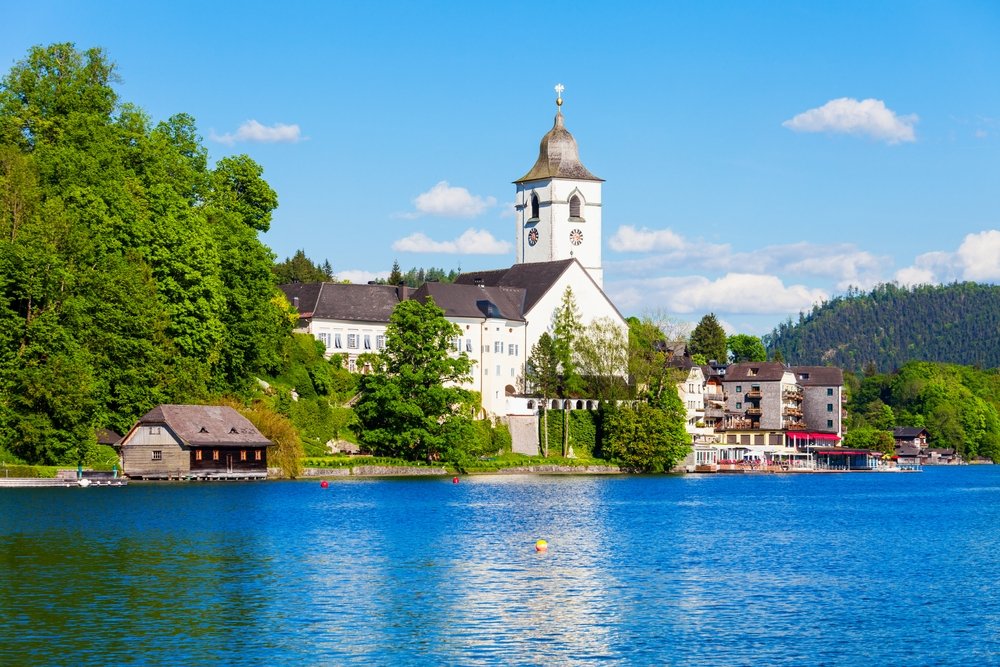
The St. Wolfgang catholic church (“Pfarrkirchen Wallfahrtskirche”), St. Wolfgang, Salzkammergut, Austria. (Shutterstock Photo)
St. Wolfgang Church
Pfarrkirche St. Wolfgang, the historic church standing on the lakeshore right in the center of St. Wolfgang is considered the heart and soul of the town. The building is said to have been founded by Bishop Wolfgang in the 10th century, when he retreated here to live in seclusion and established the site with his own hands. It has been one of Europe’s most important pilgrimage destinations since the Middle Ages.
The moment we pushed open the heavy wooden door and stepped inside, the bustle outside seemed to fade away, replaced by a cool stillness and the faint scent of candle wax. The church’s greatest treasure is its magnificent winged wooden altarpiece, created by master artist Michael Pacher in the 15th century. Intricately carved with biblical scenes and figures of saints, it is a remarkable example of medieval religious art and woodcarving.
The finely sculpted faces, delicate folds of the figures’ garments and gold-leaf details offer a glimpse into the craftsmanship and devotion of the era. Outside, the arched windows in the church courtyard overlook the lake, making them a lovely spot to pause and enjoy the tranquil scenery. We also found that they made the perfect natural frames for photographs of the lake and the surrounding landscape.
Historic alleys and streets in the old town of St. Wolfgang, Austria, June 7, 2019. (Shutterstock Photo)
Historic town center
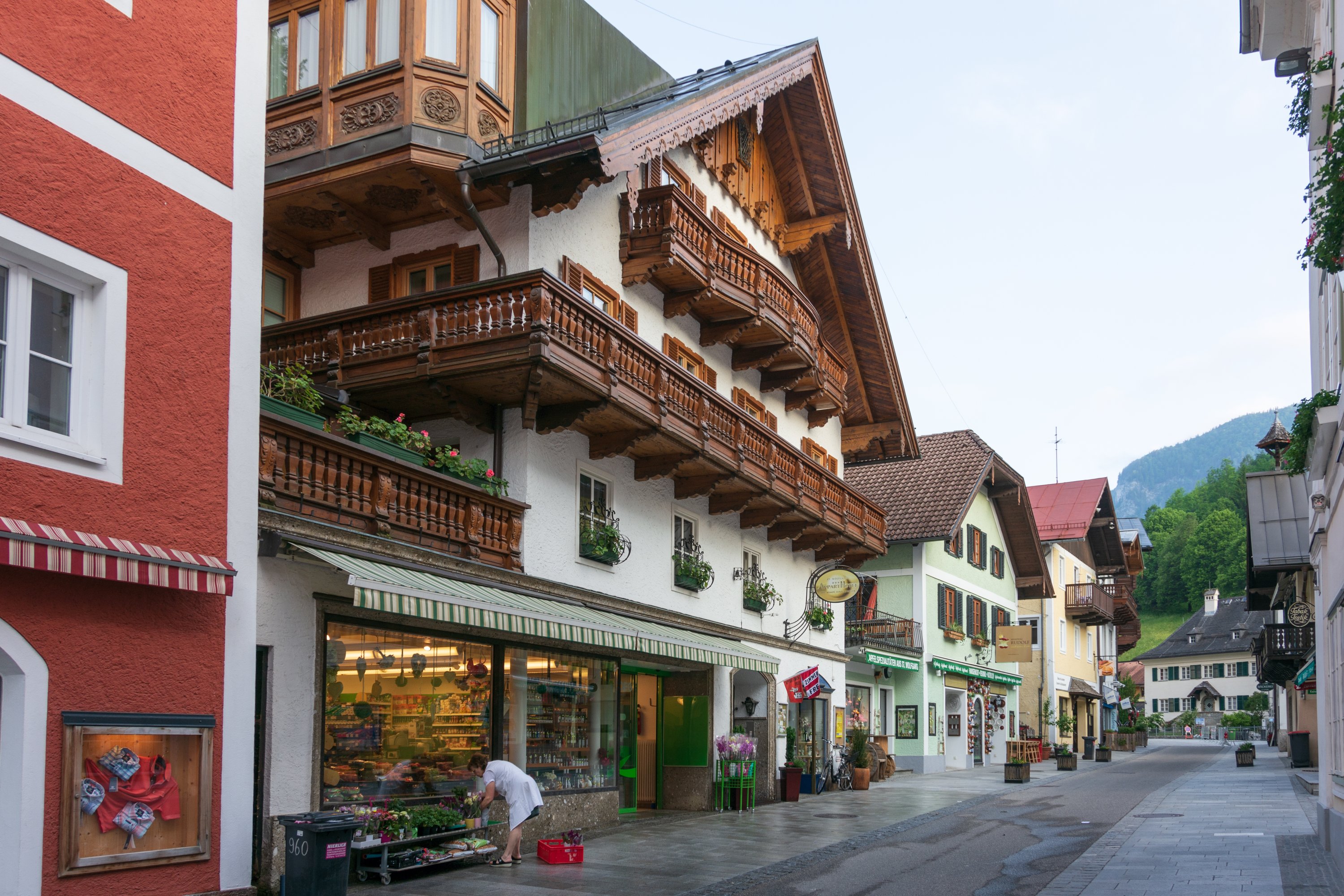
The best way to get a feel for St. Wolfgang is to wander through its narrow cobblestone streets without a plan. Colorful Lüftlmalerei murals decorate the facades, while purple geraniums spill over dark wooden balconies, adding to the town’s storybook charm.
The air is filled with the scent of Swiss pine, known locally as Zirbenholz, drifting from the shops and mingling with the aroma of freshly baked traditional Austrian apple strudel and coffee from nearby bakeries. Passing handmade ceramics studios, tailors specializing in traditional Austrian clothing and inviting cafe terraces, we found ourselves slipping effortlessly into the town’s laid-back pace.
Be sure to leave some time for the little souvenir shops tucked away along the side streets, too. Their carefully arranged displays are full of distinctive finds, each reflecting the craftsmanship and care that make browsing them a pleasure.
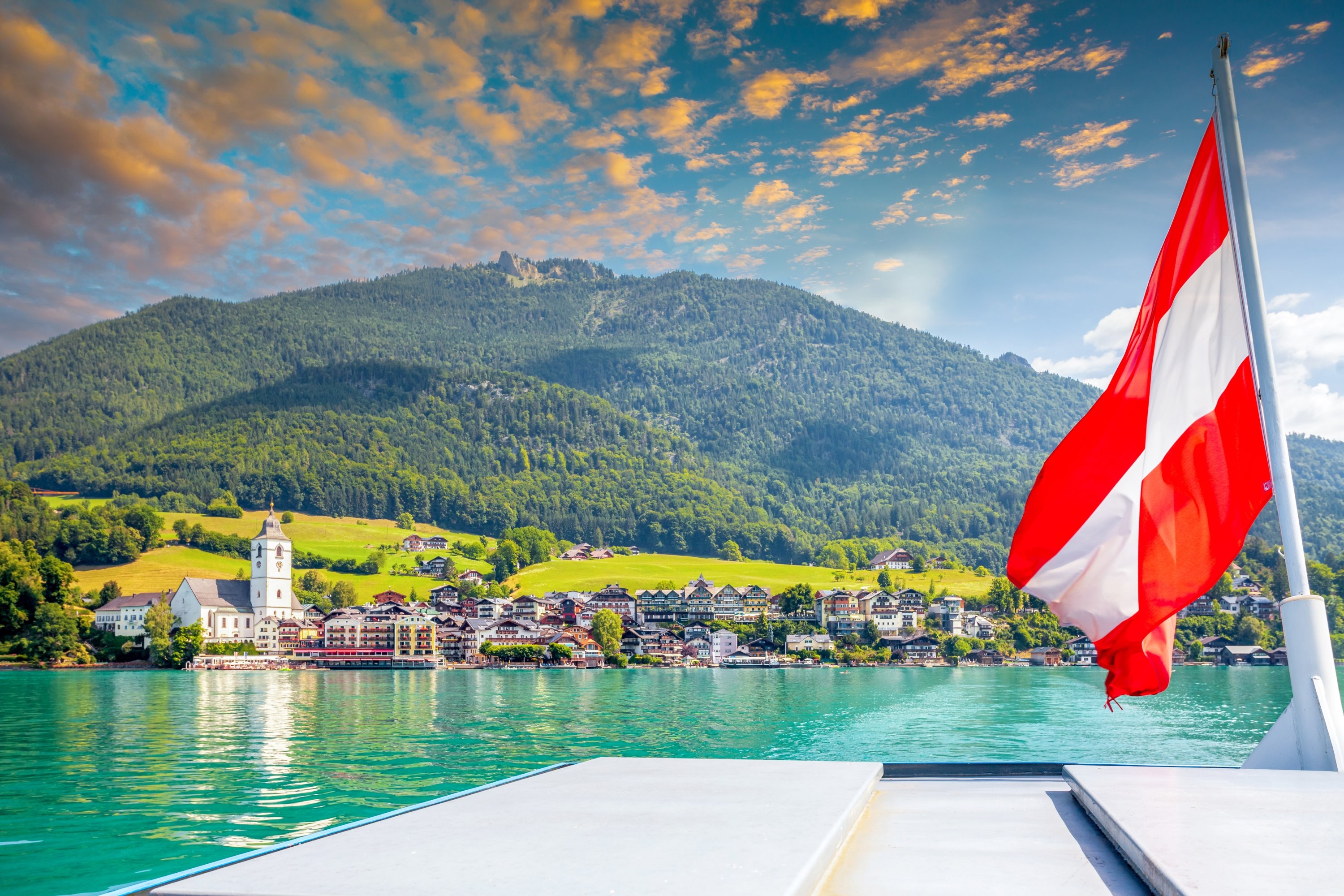
A view of St. Wolfgang, Salzkammergut, Austria. (Shutterstock Photo)
Pier square
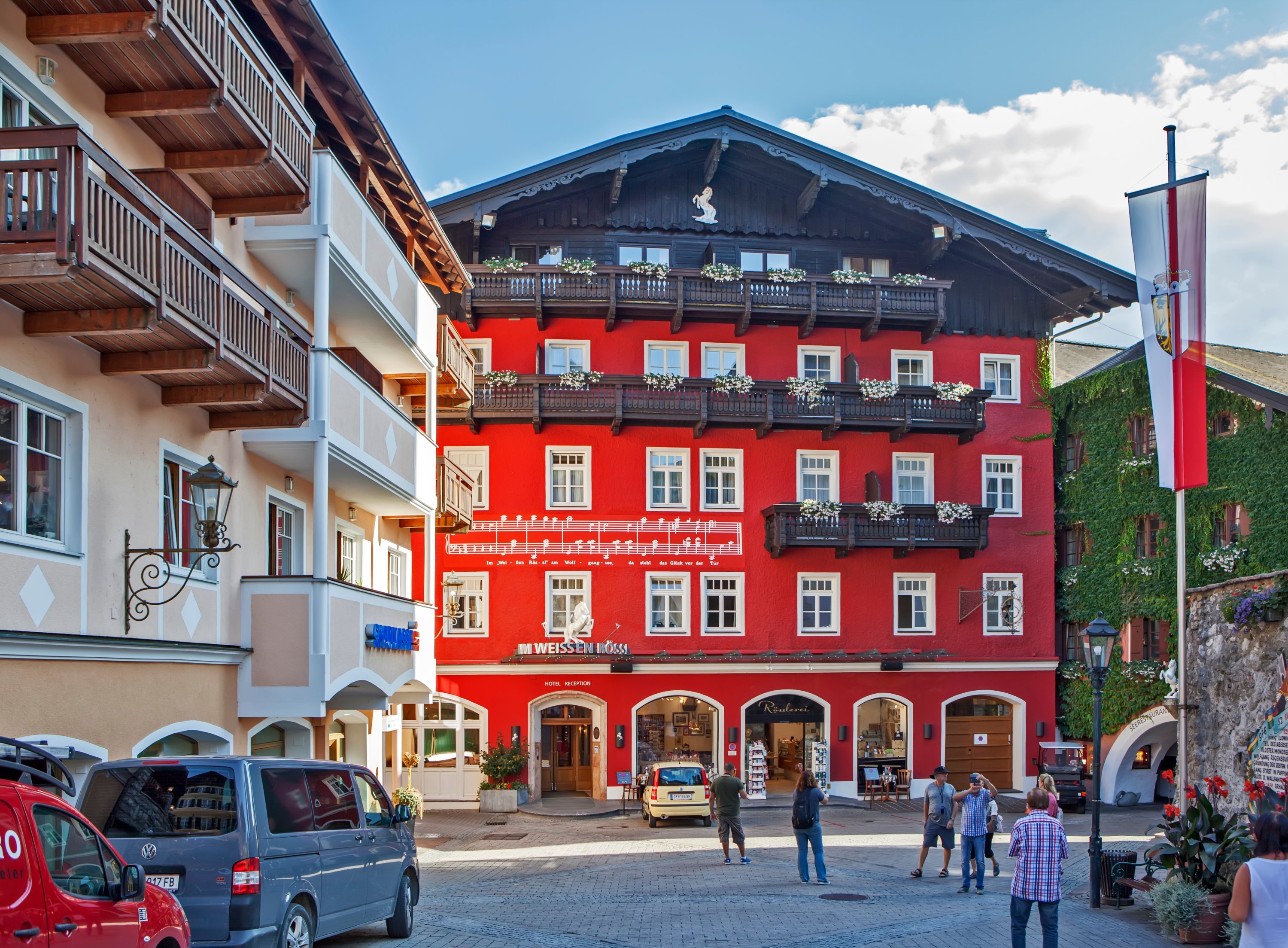
As we made our way down to the lakeshore, the first building to catch our eye was Im Weissen Rössl, famous for its striking red facade. This historic hotel, which has inspired classic operettas and films, is one of the town’s most recognizable landmarks.
We found ourselves lingering on the wooden swing benches along the piers beside the hotel. Designed for two people to sit side by side and gently sway as they gaze out over the water, they offered an unexpectedly soothing way to spend the afternoon.
We stayed there for quite some time. Sitting on the wooden pier, so close to the lake that we could almost reach out and touch the water, we could have watched the swans gliding along the shore and admired the beauty of the opposite bank for hours.
The largest and most famous hotel, Im Weissen Rössl, in St. Wolfgang, Austria, Sept. 19, 2018. (Shutterstock Photo)
Summit of Schafberg
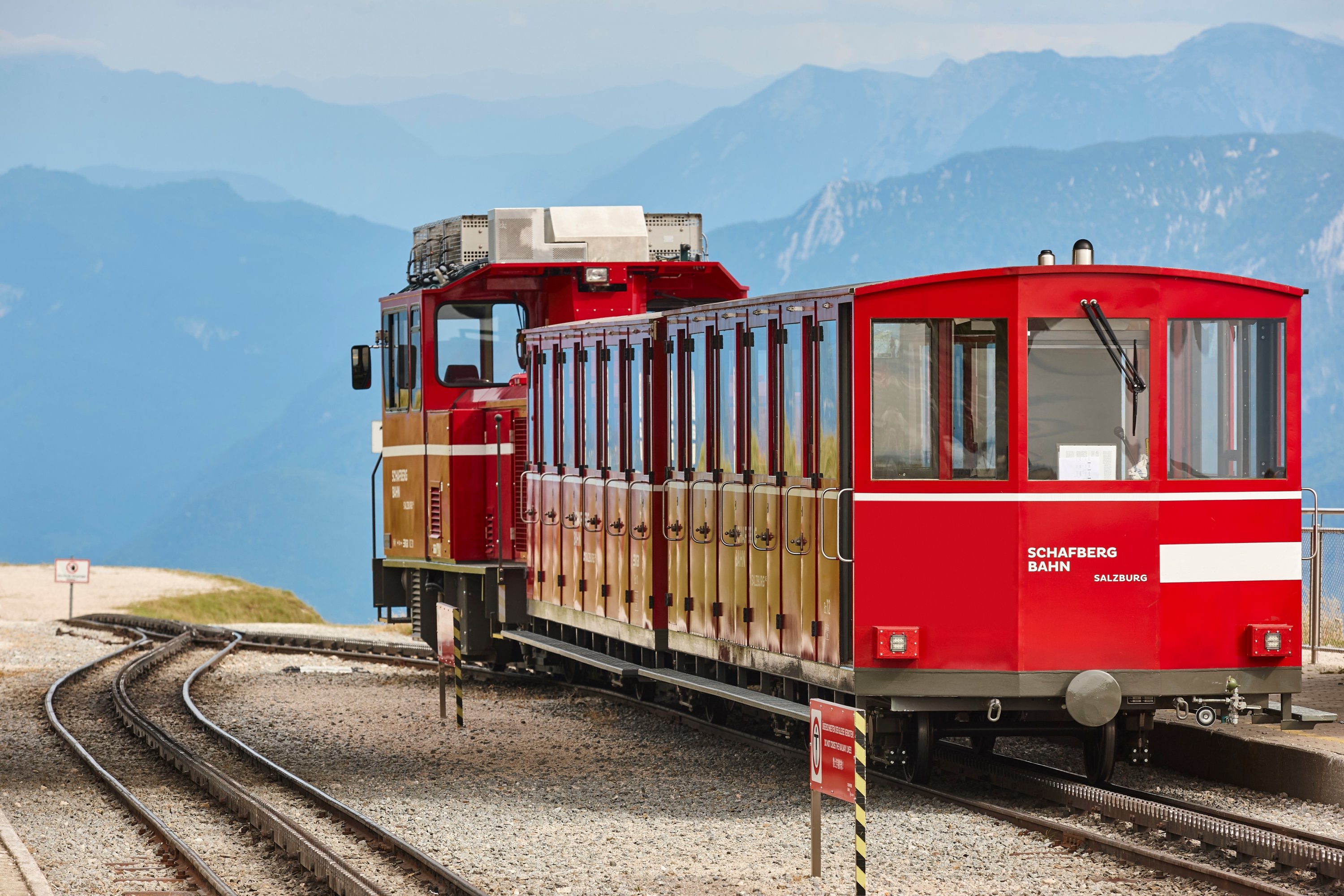
One of the most memorable experiences of our stay came before we left the town: riding the historic red Schafbergbahn steam train up the mountain. The railway has been operating since 1893, and its train steadily climbed the steep slopes on cogwheel tracks, carrying us through pine forests and past rugged cliffs to the 1,783-meter summit of Schafberg.
The panorama that greeted us at the top was breathtaking. We could see six different lakes spread across the Salzkammergut region at once, including Wolfgangsee, Mondsee and Attersee.
Walking along the trails in the cool mountain breeze and looking down from the steep rocky outcrop known as Himmelpforte, or Heaven’s Gate, gave us a true sense of the region’s dramatic natural grandeur.
A Schafberg train, Salzburgerland, Austria. (Shutterstock Photo)
Swimming, boat trips
We decided to see St. Wolfgang from the water, hopping aboard one of the traditional boats that glide across Lake Wolfgangsee. The view from the lake offered a fresh perspective on the town, with steep mountain slopes meeting the water and colorful buildings lining the shore.
In summer, the grassy lakeshores around town are perfect for a refreshing swim and a little downtime in nature. After a dip in the lake’s crystal-clear freshwater, we lay back on the grass and soaked up the peaceful Alpine scenery. With no saltwater to leave us feeling sticky, we could simply relax and enjoy the cool water and mountain air. It was one of those uncomplicated pleasures that ended up becoming a highlight of our summer getaway.
Moments to treasure
From misty mornings by the lake to the quiet charm of St. Wolfgang’s cobblestone streets, every moment felt like a welcome escape from city life. Inside St. Wolfgang Church, the historic wooden altarpiece offered a moment of reflection, while a leisurely pause on the swing benches beside Im Weissen Rössl brought the simple pleasure of watching swans glide across crystal-clear water.
The journey up Schafberg aboard the historic red steam train was equally unforgettable, culminating in sweeping views of six lakes from the 1,783-meter summit. As the sun set, painting the water orange, accordion music drifted from a nearby restaurant, providing a fitting end to the day.
Some memories, however, resist being captured in photographs. The stillness of the lake, the mountain air and the feeling of having stepped away from the rush of everyday life were treasures we would carry home with us.
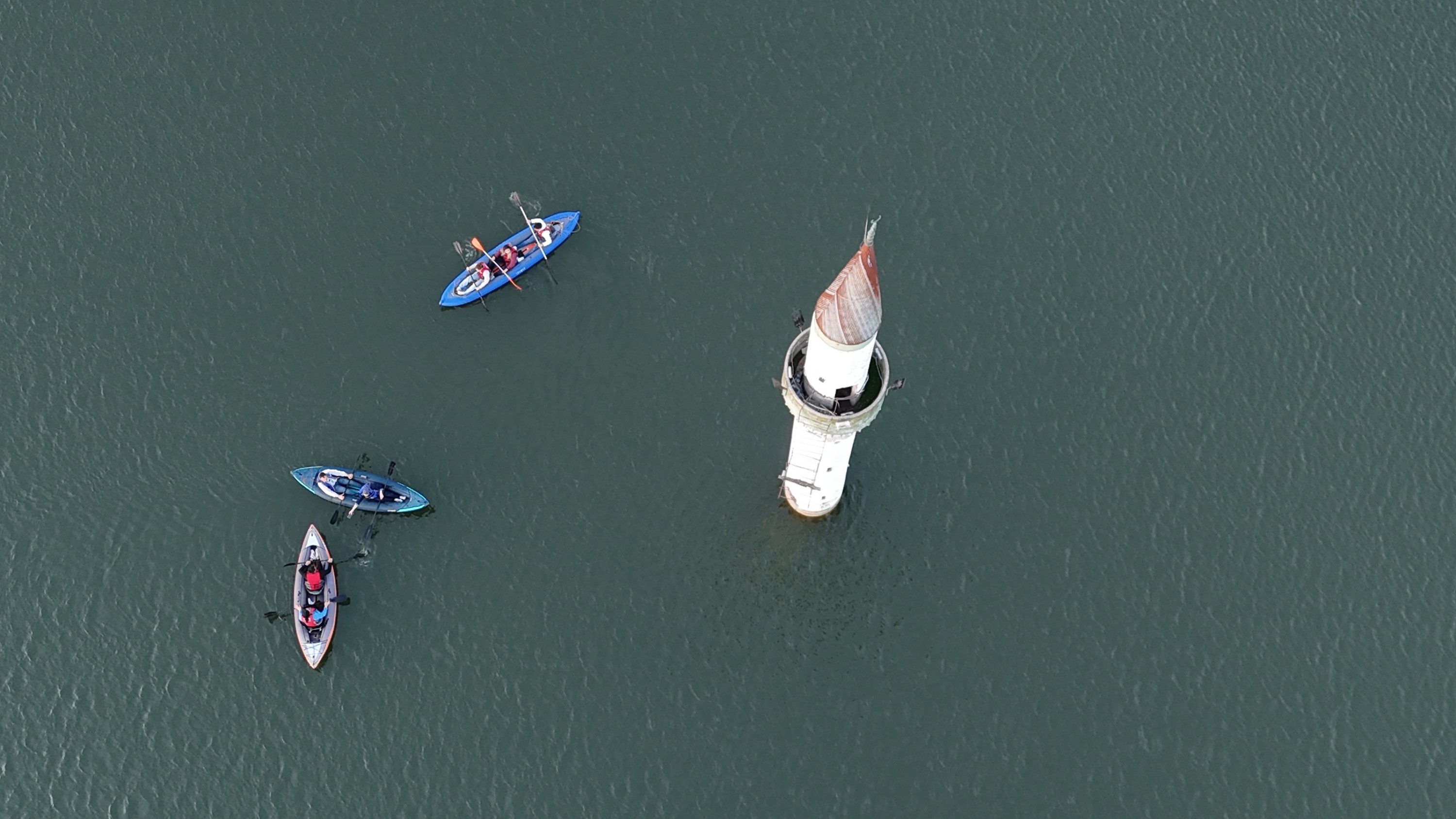
Canoe tours around the Sunken Minaret on the Kızılırmak River in Türkiye’s Samsun province continue to attract visitors as winter approaches.
Organized by the Bafra Extreme Outdoor Sports Group around the Sunken Minaret in the Boğazkaya neighborhood, the tours contribute to local tourism and the area’s economy.
Volkan Karaman, head of the Bafra Extreme Outdoor Sports Group, told Anadolu Agency (AA) that the group also organizes nature hikes and camping activities in the area, alongside canoe tours.
An aerial view of canoes around the Sunken Minaret on the Kızılırmak River in Bafra, Samsun, Türkiye, Oct. 26, 2026. (AA Photo)
Karaman said the group aims to offer visitors unique experiences by bringing sports and nature together and contribute to local tourism through its activities. The canoe tours around the Sunken Minaret also give people a chance to socialize, he said, adding that water sports should become more widespread on the Kızılırmak, Türkiye’s longest river.
He said the group hopes visitors will enjoy their time in the area and help promote Bafra by sharing photos of their experiences. Noting that the district attracts both domestic and international tourists, Karaman said the group also aims to support the local economy through spending on accommodation, food and outdoor activities.
“Bafra is a beautiful place, and our tourism activities will continue without interruption. We invite everyone to visit,” he said.
The Daily Sabah Newsletter
Keep up to date with what’s happening in Turkey,
it’s region and the world.
SIGN ME UP
You can unsubscribe at any time. By signing up you are agreeing to our Terms of Use and Privacy Policy.
This site is protected by reCAPTCHA and the Google Privacy Policy and Terms of Service apply.
Minister of Transport and Infrastructure Abdulkadir Uraloğlu announced that tickets for the new season of the Touristic Eastern Express will go on sale for individual travelers at 1:55 p.m. local time on Monday.
“The Touristic Eastern Express will operate a total of 70 trips during the 2026-2027 winter season, with 35 trips in each direction. Services from Ankara to Kars will run from Dec. 21, 2026, to March 10, 2027, while trains traveling from Kars to Ankara will operate from Dec. 23, 2026, to March 12, 2027,” he said.
Uraloğlu said trains departing from Ankara for Kars will run on Mondays, Wednesdays and Fridays, while trains from Kars to Ankara will operate on Wednesdays, Fridays and Sundays.
Providing details on ticket sales, Uraloğlu said individual tickets would go on sale at 1:55 p.m. tomorrow, Oct. 26, and could be purchased through TCDD Taşımacılık’s sales channels.
With scheduled sightseeing stops along the route, the Touristic Eastern Express gives passengers the opportunity to explore the cities it passes through, he noted.
“Trains traveling from Ankara to Kars will make sightseeing stops at Erzincan and Erzurum stations, while those traveling from Kars to Ankara will stop at İliç, Divriği and Sivas stations. Passengers will have the opportunity to experience Anatolia’s historical and cultural heritage firsthand,” he said.
The Daily Sabah Newsletter
Keep up to date with what’s happening in Turkey,
it’s region and the world.
SIGN ME UP
You can unsubscribe at any time. By signing up you are agreeing to our Terms of Use and Privacy Policy.
This site is protected by reCAPTCHA and the Google Privacy Policy and Terms of Service apply.






 Politics3 days ago

 Sports2 days ago

 Politics3 days ago

 Economy1 day ago
 Lifestyle2 days ago

 Sports2 days ago

 Sports2 days ago

 Economy1 day ago