
Sports
2026 FIFA World Cup offers globe temporary fix, but not escape

The FIFA World Cup has always been more than football. Every four years, it becomes a global event capable of capturing the attention of billions and temporarily shifting the world’s focus away from its problems. As the 2026 tournament kicks off on Thursday with Mexico facing South Africa at the historic Estadio Azteca, the largest World Cup in history arrives at a moment when that distraction feels more necessary than ever.
The expanded competition, featuring 48 teams and 104 matches across Canada, Mexico and the United States, will culminate on July 19 at MetLife Stadium in New York/New Jersey. Over five weeks, the world will immerse itself in dramatic upsets, unforgettable goals and the emotional roller coaster that only football’s biggest stage can provide.
Yet this World Cup begins against a backdrop of war, economic uncertainty, climate anxiety and political division that extends far beyond the stadium gates.
Troubled world
As supporters flood host cities and television audiences soar into the billions, conflicts continue to shape daily life across several regions.
The war between Russia and Ukraine remains one of the defining geopolitical crises of the decade, with millions of Ukrainians displaced since the conflict began in 2022. In the Middle East, tensions involving Iran and its regional rivals continue to threaten stability and global energy supplies. The civil war in Sudan has displaced more than 12 million people, making it one of the world’s largest humanitarian crises.
These conflicts have consequences far beyond their borders. Disrupted trade routes, energy market volatility and rising security concerns have contributed to economic uncertainty across the globe.
The International Monetary Fund projects global economic growth of just over 3% in 2026, a modest figure by historical standards. Inflation has eased in some advanced economies, but the cost-of-living crisis remains a major concern for households worldwide. According to Ipsos’ “What Worries the World” surveys, inflation, poverty, corruption and healthcare remain among the top concerns cited by citizens across dozens of countries.
At the same time, climate challenges continue to intensify. Recent years have been the hottest ever recorded globally. North America has experienced devastating wildfires, Europe has endured record-breaking heat waves, and prolonged droughts have affected agricultural production in multiple regions. The United Nations continues to warn that climate-related disasters are displacing millions and placing increasing pressure on governments and economies.
Against this backdrop, the World Cup offers something increasingly rare: a chance for people to focus on something other than crisis.
Unifying power
Few events on Earth can command the attention of humanity like the World Cup.
The 2022 tournament in Qatar attracted billions of viewers worldwide, while the final between Argentina and France became one of the most-watched sporting events in history. When Argentina lifted the trophy after an unforgettable penalty shootout, an estimated five million people flooded the streets of Buenos Aires in celebration.
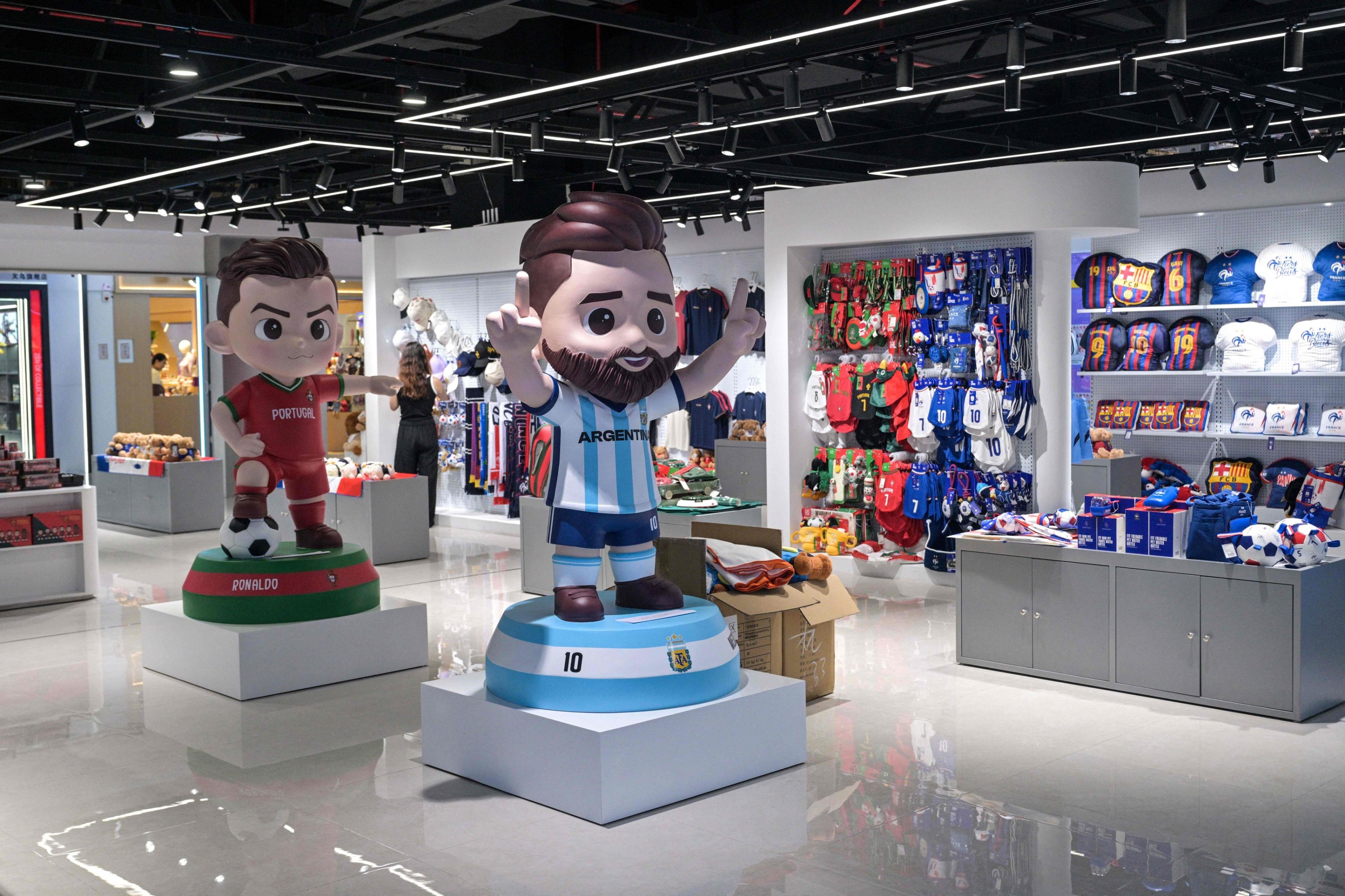
Those scenes illustrated football’s unique power.
For a few hours, nationality, religion, political affiliation and social status become secondary. A goal scored in Mexico City sparks celebrations in Los Angeles. Fans in Lagos debate tactics with supporters in London. Social media fills with the same clips, the same arguments and the same moments of joy or heartbreak.
The World Cup creates a rare form of global synchronization. Billions of people experience the same emotions at the same time.
This year’s expanded format could make that effect even stronger. Nations that historically struggled to qualify now have a place on football’s biggest stage. More countries mean more stories, more representation and more communities invested in the tournament.
The American challenge
The 2026 World Cup is also unique because it unfolds amid growing debate over immigration and border policies in one of its host nations.
Recent reports of visa delays, heightened scrutiny at ports of entry and travel restrictions affecting supporters from several countries have generated concern among fans and advocacy groups. Some organizations have warned that stricter immigration enforcement could discourage attendance from certain communities.
One of the most widely discussed incidents involved Somali referee Omar Abdulkadir Artan, who had been selected for World Cup duty before reportedly being denied entry into the United States and removed from FIFA’s referee roster. The case intensified scrutiny of how immigration policies could intersect with a tournament built on international participation.
Supporters from countries facing visa restrictions or higher rejection rates have also expressed concerns about their ability to attend matches despite securing tickets.
For FIFA, the challenge is balancing security requirements with the tournament’s core principle of inclusivity. The governing body has repeatedly emphasized that the World Cup is intended to welcome the world.
Historical significance
This is not the first World Cup to take place during uncertain times.
The 1998 World Cup in France unfolded amid intense debates about immigration and national identity. France’s multicultural squad, led by Zinedine Zidane, became a symbol of unity after winning the country’s first title.
The 2010 World Cup in South Africa carried significance far beyond football. It represented the first World Cup held on African soil and was widely viewed as a celebration of the country’s transformation after apartheid.
The 2018 World Cup in Russia became a showcase of soft power, while the 2022 tournament in Qatar generated worldwide discussions about migrant workers, labor rights and the responsibilities of major sporting events.
Every World Cup reflects the era in which it is played.
The 2026 edition is no different.
A temporary therapy for a tired planet
The truth is that football cannot solve wars. It cannot lower inflation, stop wildfires or bridge every political divide.
What it can do is provide psychological relief.
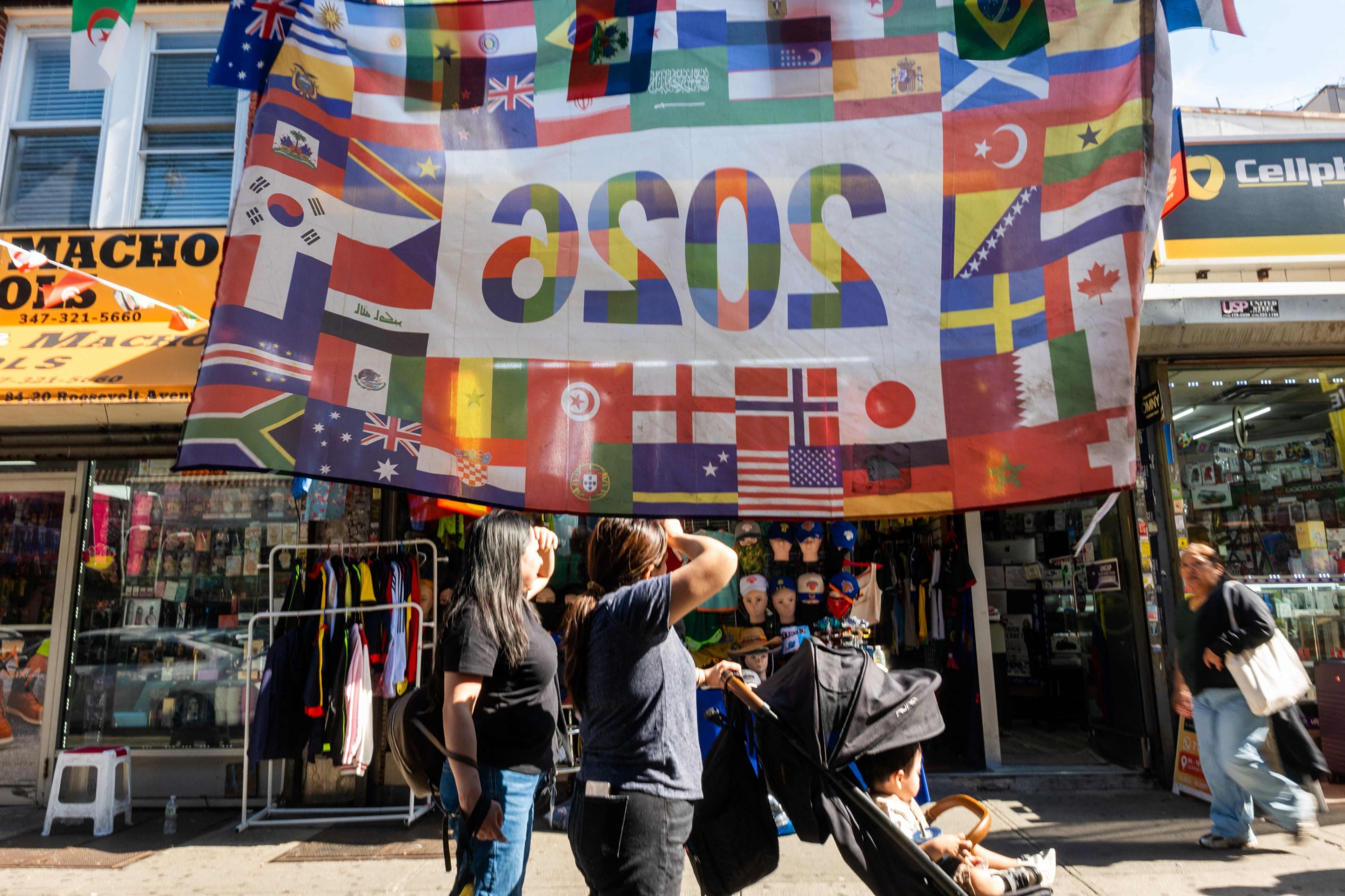
For one month, conversations that normally revolve around conflict and uncertainty will shift toward tactics, star players and underdog stories. Families will gather around televisions. Cities will organize fan festivals. Colleagues will pause meetings to check scores.
Sports psychologists have long noted the emotional benefits of collective sporting experiences. Shared victories create a sense of belonging. Shared heartbreak builds community. In difficult times, those feelings matter.
That is why the World Cup often feels like therapy for a weary world.
Post final whistle
Eventually, the tournament will end.
A champion will be crowned. The celebrations will fade. The packed stadiums will empty.
Then the world will return to reality.
Governments will continue grappling with wars, economic pressures and climate challenges. Debates over immigration, security and globalization will persist. The issues that existed before kickoff will still be waiting after the final whistle.
But perhaps that is not the point.
The World Cup’s greatest value lies not in solving problems but in reminding people what remains possible. On the pitch, 48 nations will compete fiercely under a common set of rules. Off the pitch, billions will share the same moments of excitement, tension and joy.
In a world increasingly defined by division, that may be the tournament’s most important lesson.
For five weeks, football will offer humanity a brief opportunity to breathe.
Two-time Formula 1 world champion Fernando Alonso will return to the Dakar Rally in January with Aston Martin, marking his first appearance in the event in seven years, the British manufacturer announced Tuesday.
The 45-year-old Spaniard will drive an Aston Martin Dreadnought as part of a three-car entry alongside nine-time World Rally champion Sebastien Loeb and reigning World Rally-Raid champion Lucas Moraes.
Alonso will reunite with Spanish co-driver Marc Coma, a five-time Dakar motorcycle champion who accompanied him during his debut in 2020.
“After deciding to continue racing in Formula One with the Aston Martin Aramco Formula One Team, I thought carefully about Dakar,” Alonso said in a statement.
“In the end, the decision became simple. I wanted to embrace the challenge completely and take on both Formula 1 and the Dakar Rally in the same year,” he added.
Alonso made his Dakar debut with Toyota in 2020, finishing 13th overall and racking up a second-place finish in Stage 8.
“In 2020, Dakar was one of the most challenging and enjoyable experiences of my career. I have enormous respect for this race and the specialists who have mastered it,” he said.
The Spaniard, who extended his Formula 1 contract with Aston Martin through 2027, emphasized that his commitment to the championship would remain unchanged.
“Formula 1 remains my priority. But I am a racing driver, and challenges like this are why I love competing. I’m looking forward to seeing what we can achieve,” he added.
Aston Martin will make its Dakar debut with the Dreadnought, a rally-raid vehicle developed and built in partnership with Prodrive.
The 2027 Dakar Rally will begin in Portugal on Jan. 9 and conclude in Marrakech, Morocco, on Jan. 23, after being relocated from Saudi Arabia due to security concerns.

Türkiye’s Amputee Football National Team will face Colombia in the round of 16 at the 2026 Amputee Football World Cup in Mexico, as the defending champions continue their title defense.
The tournament, being held in San Juan de los Lagos, has set up a knockout-stage meeting between the two sides after the completion of the group stage.
Türkiye topped Group B with seven points to secure its place in the last 16, while Colombia finished third in Group D with four points to advance to the knockout rounds.
The round-of-16 match between Türkiye and Colombia is scheduled to kick off at 2:30 a.m. local Türkiye time on Thursday, Nov. 19.
If Türkiye advances to the quarterfinals, it will meet the winner of the match between host nation Mexico and Japan.
Türkiye enters the tournament as the reigning world champion after winning the 2022 Amputee Football World Cup, which was held in Istanbul. The national team claimed the title on home soil, establishing itself among the leading sides in international amputee football.
The 2026 tournament offers Türkiye an opportunity to defend its crown and pursue another world title as the competition moves into its decisive knockout stage.
Real Madrid announced Wednesday that Turkish international Arda Güler has signed a contract extension that will keep him at the Spanish club until June 30, 2032.
“Real Madrid CF and Arda Güler have agreed to extend our player’s contract, which will keep him with the club until June 30, 2032,” the club said in a statement.
The 21-year-old attacking midfielder joined Real Madrid from Fenerbahçe in July 2023 at the age of 18.
Since his arrival, Güler has made 126 appearances, scoring 22 goals and providing 32 assists across all competitions.
The Turkish midfielder has scored four goals and registered six assists in 14 appearances this season, including three goals and four assists in 12 La Liga matches.
Güler has won five trophies with the Spanish giants, including the UEFA Champions League, FIFA Club World Cup, UEFA Super Cup, La Liga and Spanish Super Cup.
He has also earned 38 international caps for Türkiye.
In September, Güler received the Breakthrough Player award for his performances in the 2025-26 UEFA Champions League season.
Türkiye have been relegated from UEFA Nations League A to League B after Greece defeated Serbia 1-0 on Monday, leaving the Crescent-Stars among the two lowest-ranked fourth-place teams in the competition’s top division.
Greece secured the decisive victory at the Panthessaliko Stadium in Volos in the final round of League A Group 2 fixtures. Substitute Giorgos Masouras scored the only goal in the 69th minute, finishing from close range at the far post after a cross from captain Vangelis Pavlidis.
Serbia pushed for an equalizer in the closing stages, with Nikola Milenkovic coming agonizingly close when his looping header struck the crossbar in the 90th minute. Greece, however, held on to secure all three points.
The result had significant consequences for Türkiye’s relegation battle. Serbia finished their six-match campaign with four goals scored and 12 conceded, giving them a goal difference of minus eight.
Although they also collected no points, their superior goal difference was enough to secure a place in the League A/B relegation playoffs.
Türkiye, meanwhile, finished Group A1 with an identical zero-point record but a worse goal difference of minus 11, having scored four goals and conceded 15. That left them among the two lowest-ranked fourth-place teams, resulting in automatic relegation alongside Czechia, who also finished their group with no points and a minus-11 goal difference.
Under the 2026-27 Nations League format, the two lowest-ranked fourth-place teams in League A are automatically relegated to League B. The other two fourth-place sides must compete in relegation playoffs against League B runners-up to retain their places in the top division.
Türkiye’s difficult campaign came in their first appearance in League A, where they were drawn against France, Belgium and Italy in Group A1.
The Crescent-Stars lost all six matches, opening with a narrow 1-0 home defeat to France before suffering a 4-1 loss to Italy. They subsequently went down 3-0 away to Belgium, 3-1 to Italy and 2-1 at home to Belgium before closing their campaign with another 2-1 defeat against France.
Despite the disappointing results, Türkiye managed to find the net in four of their six matches. Arda Güler and Abdülkerim Bardakcı were among those to score in the closing stages of the campaign, but their contributions were not enough to prevent relegation.
Head coach Sergen Yalçın, who took charge during the campaign, oversaw the team in its closing fixtures as Türkiye struggled to compete against three established European sides.
France finished top of Group A1 with 13 points, securing qualification for the quarterfinals, while Belgium followed with 12 points to claim the other qualification spot. Italy finished third with 10 points and retained their place in League A.
Elsewhere, Greece’s victory over Serbia lifted them to third place in Group A2 with 11 points, keeping them safely in the top division. Germany finished ahead of the Netherlands after recording a commanding 5-0 victory over the Dutch in the group’s other decisive fixture.
Serbia’s defeat condemned them to the relegation playoffs, despite finishing with a better goal difference than Türkiye and Czechia.
The League A/B relegation playoff draw is scheduled for Nov. 20, with the two-legged ties set to take place in March 2027 alongside the Nations League quarterfinals.
Turkish freediving world record holder Şahika Ercümen held her breath underwater at the COP31 climate summit in Antalya to draw attention to marine pollution and the urgent need to protect the world’s oceans.
The national athlete entered a water-filled aquarium at the COP31 Blue Zone, where she staged a silent underwater tribute to the seas and oceans, highlighting the growing threats facing marine ecosystems. Ercümen had successfully completed a practice dive ahead of the event.
Speaking to Ihlas News Agency (IHA), Ercümen said the initiative was designed to deliver an environmental message through action rather than words, expressing pride that Türkiye is hosting one of the world’s largest climate gatherings.
“We wanted to hold our breath to send the message that the seas should be able to breathe,” she said.
Ercümen, who serves as a United Nations advocate for underwater life and a zero-waste ambassador, said she hoped the performance would encourage governments to translate their environmental commitments into concrete measures.
Having attended previous COP summits, she said she had witnessed numerous pledges but stressed that their implementation and enforcement were what mattered most.
“At previous COP summits I attended, there were many commitments, but seeing them turn into enforceable measures and concrete action is extremely important to us. I believe COP31 in Türkiye will also be such a summit,” she said.
“We wanted to deliver our message through action, staging a silent tribute to the seas underwater to reinforce our commitment.”
Growing underwater pollution
Drawing on her experience as a freediver, Ercümen warned that marine pollution extends far beyond the waste visible on the surface, with significant amounts of debris accumulating on the seabed.
She said some of her dives had taken her into heavily polluted waters where visibility was almost completely obscured.
“What lies beneath the surface is facing serious pollution, particularly on the seabed, where large amounts of waste have accumulated. We usually see what floats on the surface, but once you dive deeper, you realize that much of the pollution is hidden underwater, like the submerged part of an iceberg,” she said.
Ercümen also pointed to her recent dives in waters affected by marine mucilage, a thick, slimy substance caused by excessive phytoplankton activity under certain environmental conditions.
She described the experience as particularly disturbing, saying the pollution had severely restricted visibility and illustrated the pressure facing marine ecosystems.
“During a mucilage dive in recent months, visibility was already completely blocked. It has a very unusual structure. In a way, it is the sea’s silent cry, its way of expressing what it is going through,” she said.
The athlete added that she had encountered several polluted marine environments where the accumulation of waste was so severe that she could barely see underwater.
Collective responsibility
Ercümen stressed that nature has a capacity to regenerate but warned that continued exploitation of natural resources was undermining that ability.
She urged individuals, businesses and governments to take greater responsibility for protecting the environment, starting with everyday habits and extending to holding authorities accountable for their environmental policies.
“Nature is interconnected, and we are only guests in it. It has its own ability and opportunity to clean and renew itself, but unfortunately, we are exhausting those resources,” she said.
“We need to give nature a chance to breathe and recover. Each of us must play a part, starting with our daily habits and, where necessary, by holding governments accountable for the decisions they make.”
Carlos Alcaraz believes he has finally figured out how to bring out the best in his game on indoor courts, and his commanding opening victory at the ATP Finals in Turin offered further evidence of his progress.
The Spanish world No. 3 swept past American Frances Tiafoe 6-2, 6-2 on Monday, extending his winning streak to 10 matches and strengthening his credentials as one of the leading contenders for his first ATP Finals title.
Alcaraz needed just over an hour to dismantle Tiafoe, producing an impressive all-court performance that left the American with few answers. The seven-time Grand Slam champion struck 21 winners to Tiafoe’s 12 and won all 12 points played behind his opponent’s second serve.
His performance featured several moments of brilliance, including a 102 mph (164 kph) forehand winner from a defensive position and an improvised backhand lob that helped him convert a crucial break point.
At one stage, Tiafoe could only throw his arms into the air in disbelief after Alcaraz unleashed the powerful forehand winner despite being pushed deep into a corner.
The Spaniard established control early, racing into a 4-0 lead before closing out the opening set in just 28 minutes. He carried that momentum into the second, breaking Tiafoe early and maintaining his advantage despite a brief attempt by the American to fight his way back.
Tiafoe had three opportunities to break back at 3-2 but failed to capitalize, allowing Alcaraz to maintain control and complete a convincing victory.
“I tried to be really focused at the beginning, trying to know tactically what I have to do since the first point to the last one,” Alcaraz said.
“Sometimes I feel like I’m better than the opponent in every aspect of the game. When I get that feeling, everything goes pretty well.”
Tiafoe, who is making his ATP Finals debut at 28 after a consistent season that included another U.S. Open semifinal appearance, acknowledged the Spaniard’s exceptional level.
“He has moments where he’s definitely Superman and he’s playing pretty insane,” Tiafoe said. “But again, it’s one of those things, you’ve got to appreciate greatness.”
The victory continued Alcaraz’s impressive run since returning to competition in August following nearly five months away from the tour with a right wrist injury.
He has won three of the five tournaments he has entered since his comeback, including consecutive indoor titles in Vienna and Paris. The latest triumph extended his winning streak to 10 matches and marked a significant turnaround on a surface that has not traditionally brought him the same success as outdoor courts.
Only three of Alcaraz’s 29 career titles have come on indoor hard courts, with his first arriving in Rotterdam last year. He also reached the ATP Finals championship match last season, losing to Jannik Sinner after failing to advance beyond the group stage in his previous appearance.
The 23-year-old said experience and a better understanding of indoor conditions had helped him overcome his earlier difficulties.
“I’ve always said that I’m not bad on indoor courts. I just feel like others are a little bit better than me,” Alcaraz said.
“It was about time, it was about getting more experience and it was about understanding how I should play on indoor courts.”
Indoor conditions generally produce faster courts and lower bounce, leaving players with less time to construct points. Alcaraz acknowledged the challenge but said he now feels increasingly comfortable dealing with powerful servers and opponents who prefer flatter shots.
His improved form comes after an unusual season that began with a historic achievement at the Australian Open, where he became the youngest man to complete a career Grand Slam at 22, before his wrist injury interrupted his campaign.
The extended break appears to have left him refreshed heading into the final stretch of the season.
“This year was kind of an unusual one for me,” Alcaraz said. “I had a lot of months off the competition, that I was at home. So it made me come in here with a lot of energy, with a lot of ambition, hungry for the matches and hungry for more.”
Alcaraz also addressed concerns about his physical condition after appearing with tape around his right knee during Monday’s match. He reported no movement problems but said he was taking precautions with the help of his physiotherapist.
“I’m moving really well. But obviously it’s something that I’m taking care of every day,” he said. “I’m just putting so much attention with my physio and myself to do everything well off the court.”
Elsewhere in the tournament, former champion Daniil Medvedev began his campaign with a 7-6 (7-4), 6-3 victory over Italian debutant Flavio Cobolli.
Medvedev, the 2020 champion, edged a competitive opening set before raising his level in the second, breaking the home favorite twice to secure the win.
Germany’s Alexander Zverev also received his year-end No. 1 trophy in Turin, recognizing his achievements during the 2026 season. He enters his next ATP Finals match against American Ben Shelton on Tuesday with a tour-leading 66 victories.
The ATP Finals features the eight highest-ranked players of the season, divided into two round-robin groups, with the top two from each group advancing to the semifinals. Sinner, the two-time defending champion, withdrew from this year’s tournament because of a right knee injury.
Alcaraz continues his pursuit of the title on Wednesday against Medvedev as he looks to build on his dominant start and translate his recent indoor success into a maiden ATP Finals crown.


-

 Economy2 days ago
JPMorgan sees upside in Türkiye, UAE stocks, turns cautious on Greece
-
 Politics2 days ago
Türkiye urges nations to honor climate commitments at COP31
-
 Politics1 day ago
Turkish VP to meet Uzbek leaders during 2-day visit to Tashkent
-
 Politics2 days ago
Türkiye’s New Party tones down newness in first convention
-

 Economy3 days ago
Russia’s richest woman, Wildberries’ CEO added to EU’s sanctions list
-

 Sports2 days ago
Türkiye relegated to Nations League B after Greece defeat Serbia
-
 Politics3 days ago
Lawmakers gather for COP31 diplomacy, to discuss legislative path
-
 Politics3 days ago
Türkiye stands with TRNC as island state marks anniversary