
Sports
CR7, Portugal under pressure as Uzbekistan test World Cup response

Portugal arrive in Houston under immediate pressure to stabilize their World Cup campaign when they face Uzbekistan on Tuesday, with Roberto Martinez’s side already needing a sharper response after a flat opening performance left them searching for rhythm and authority in Group K.
Portugal national football team opened their 2026 FIFA World Cup journey with a 1-1 draw against DR Congo national football team, a result that felt heavier than the scoreline suggested given their early lead and late drop in intensity. Joao Neves put them ahead inside six minutes, but Yoane Wissa’s equalizer exposed familiar lapses in game management and left Portugal third in Group K after the opening round.
The performance quickly shifted focus onto structure, tempo, and leadership, with Martinez openly facing questions about balance between control and aggression in midfield and attack. While Portugal spent long stretches in possession, they struggled to turn territory into sustained pressure, a concern that has followed them into the second matchday.
Attention, however, has also centered on Cristiano Ronaldo, whose influence became the dominant talking point after a subdued outing in which he failed to register a shot on target from three attempts and rarely found decisive space in the final third. At 41, his role continues to divide opinion, especially in high-tempo matches where Portugal’s attacking rhythm depends heavily on quick combinations around him. The scrutiny intensified following a tense on-field exchange involving Bruno Fernandes, adding another layer of pressure to an already scrutinized frontline.
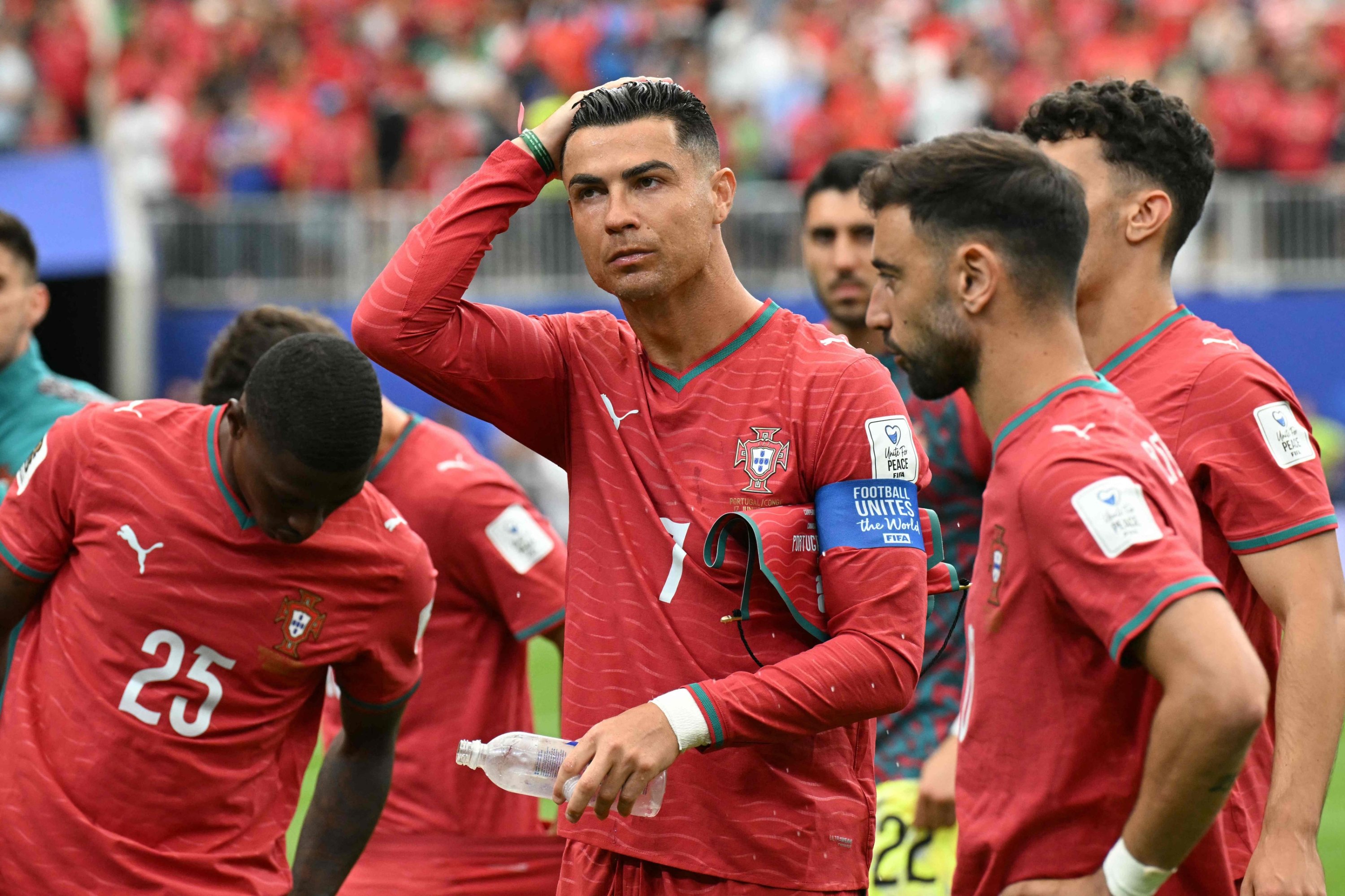
For Martinez, the challenge is no longer about selection alone but about restoring cohesion in a team still widely considered among the tournament contenders. Defensive stability also remains under review, with Rúben Dias a potential return after missing the opener due to fitness concerns. His availability could influence how aggressively Portugal push their back line, particularly against opponents likely to sit deeper and counter.
The opponent, Uzbekistan national football team, arrive with their own urgency after a 3-1 defeat to Colombia in their first-ever World Cup match, a debut that mixed historic breakthrough with structural fragility.
Under coach Fabio Cannavaro, Uzbekistan showed early nerves, failing to register a single touch inside the opposition penalty area in the first half while posting an expected goals figure of just 0.02 before the break. Yet their response carried historical weight. In the second half, sustained pressure led to their first World Cup goal, finished by Abbosbek Fayzullaev after a sequence involving Dostonbek Khamdamov and Eldor Shomurodov, offering a glimpse of attacking potential once they settled into the pace of the tournament.
That brief momentum did not last. Colombia’s quick counterattacking quality restored control almost immediately through Luis Diaz, exposing defensive gaps that Uzbekistan struggled to close for the remainder of the match. Still, the debut was not without value, giving Cannavaro a clearer picture of where his side can compete and where they remain vulnerable against elite opposition.
Tuesday’s meeting in Houston carries added historical context. It is the first-ever clash between Portugal and Uzbekistan, and Portugal’s recent World Cup record against AFC opposition adds subtle caution, with no wins in their last two such encounters. While the gap in experience and squad depth is clear on paper, Uzbekistan’s unpredictability in their debut appearance introduces an element of uncertainty Portugal cannot afford to ignore.
Team selection remains a key talking point for Martinez. Portugal are weighing whether to reinstate Rúben Dias into the starting lineup or continue managing his workload, while Ronaldo is expected to retain his place despite external criticism. The wider debate within the squad centers on tempo and fluidity, particularly how quickly Portugal can transition from midfield control into decisive final-third actions.
For Uzbekistan, continuity appears more likely. Cannavaro is expected to stick with much of the side that faced Colombia, with Utkir Yusupov set to continue in goal and the defensive pairing of Abdukodir Khusanov and Rustam Ashurmatov likely retained. The focus will be on tightening structure early and limiting the spaces that proved costly in their opening defeat.

Whether navigating turbulent ocean currents or analyzing the intricacies of global power grids, Turkish engineer and open-water swimmer Nazife İdil Özkol relies on a unified philosophy: read the data accurately, adapt to changing conditions and persevere.
Özkol’s dual career path recently gained international recognition when she received the “Future Leader” award at the Talented Woman in Modern Industry 2026 awards in Russia.
Her athletic pursuits matched her professional achievements as she earned a third-place podium finish at the X-Waters open-water swimming race in Moscow.
Educated in electrical engineering and energy at Technical University of Sofia and Bauman Moscow State Technical University, Özkol focuses on the intersection of energy economics, artificial intelligence and infrastructure.
“Engineering taught me how to think and sports taught me how to apply that thinking under uncertainty and pressure,” Özkol said.
“Engineering taught me how to build a system, and sports taught me how to adapt when the system doesn’t work as expected,” she added.
Özkol’s journey in athletics began in her youth after a diagnosis of Attention Deficit Hyperactivity Disorder (ADHD) prompted her to channel her energy into structured discipline.
Moving from modern pentathlon and biathlon into open-water swimming, she competed in major domestic events, including the Iznik and Bosporus races.
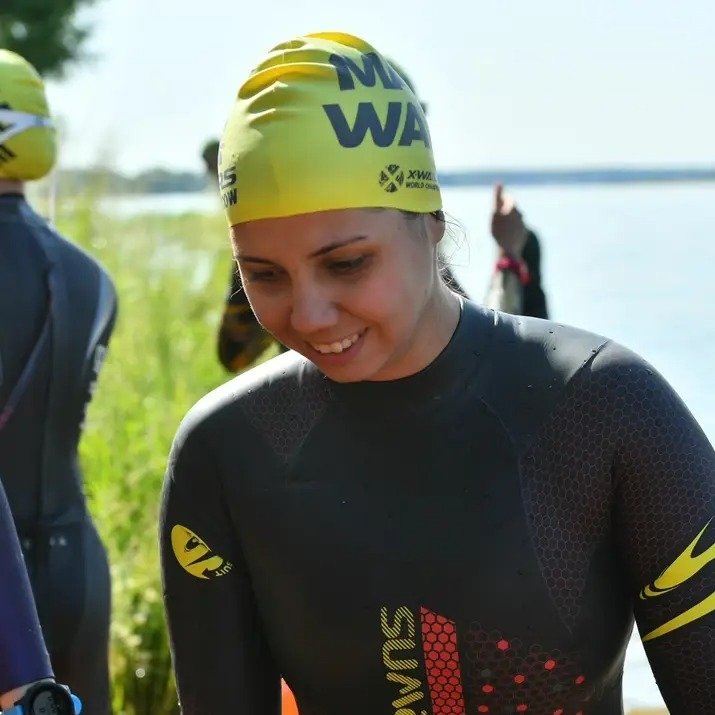
“In the pool, everything is controlled,” Özkol said. “In open water, waves, currents, temperature, and wind change. You continuously read the environment and re-evaluate your direction and pace.”
That analytical approach proved decisive during the X-Waters competition in Moscow, where Özkol represented Türkiye among competitors from around 12 countries in what organizers dubbed a world championship event.
“When I finished the race, I didn’t even know I had finished third,” Özkol said. “Long-distance racing is primarily a mental battle. Reaching the podium in an international event as a Turkish female athlete was a source of great pride.”
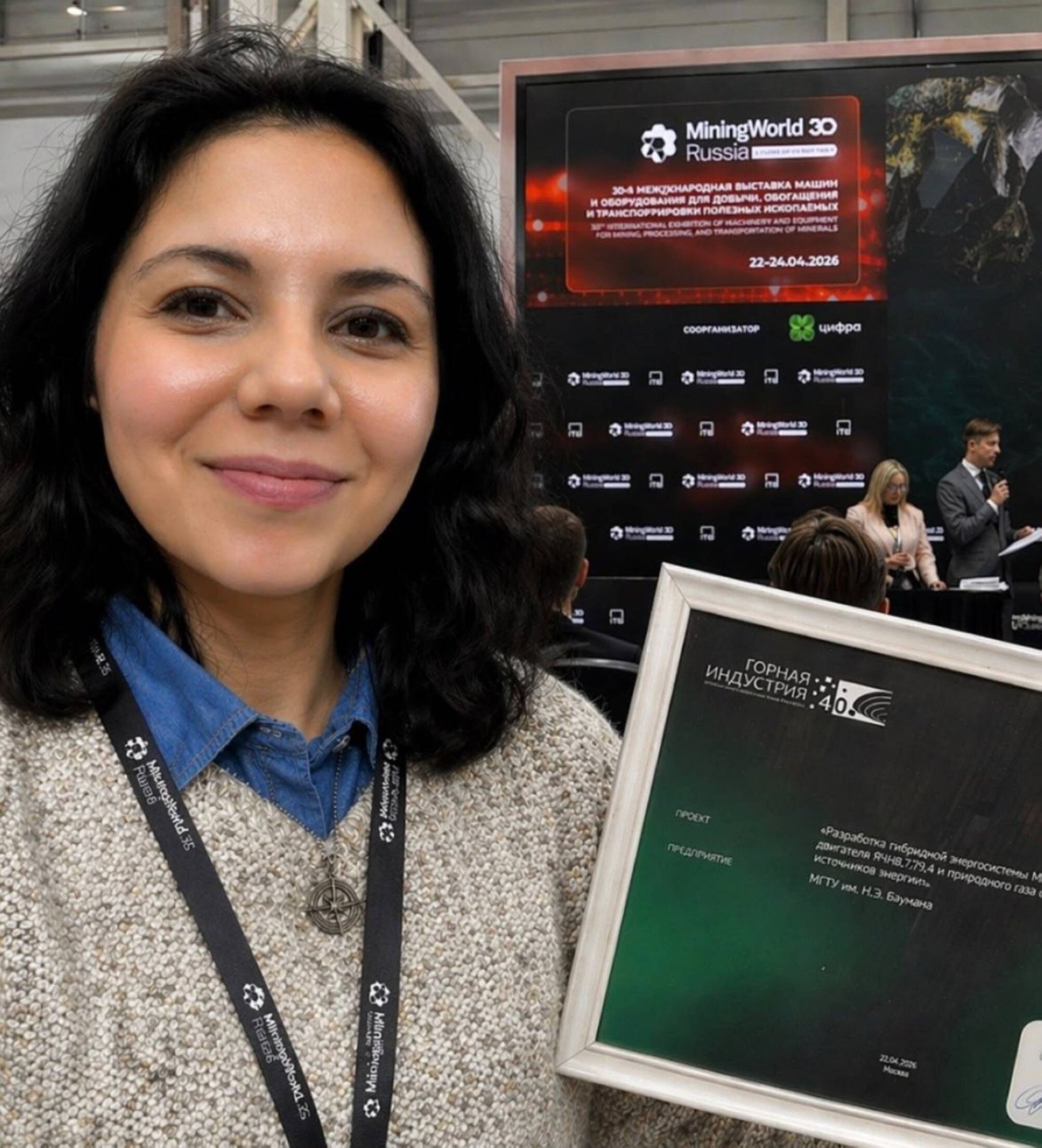
Beyond athletics, Özkol’s professional research concentrates on industrial energy efficiency and the dual nature of emerging digital infrastructure.
She noted that while artificial intelligence offers optimization and grid management solutions, its operation generates substantial energy demand.
Looking ahead, Özkol anticipates a fundamental shift in global energy dynamics over the next two decades toward real-time data analysis, smart grids and demand-side management.
“The question of the future will not be ‘How much energy do we produce?’ but ‘How smartly can we manage the energy we produce and consume?'” Özkol said.
Özkol also emphasized the necessity of systemic equity for women across science, technology, engineering and sports, arguing that institutional backing must precede athletic or professional milestones.
“Support for women should not be given after success, but right at the beginning,” she said.
“Training, financial support, sponsorship and visibility are not favors; they are conditions for equality. The presence of women in science, engineering and sports is not an ‘inspirational story,’ but a matter of rights,” said Özkol.
Cristiano Ronaldo’s international future with Portugal has been thrown into doubt after the veteran forward left the team’s training camp after learning he would not start against Denmark for a second straight Nations League match.
The 41-year-old announced his departure late Wednesday, shortly after coach Jorge Jesus confirmed that Gonçalo Ramos would again lead the attack.
Ronaldo had been expected to train with his teammates at Copenhagen’s Parken Stadium ahead of Thursday’s match but instead left the camp following a conversation with Portuguese Football Federation president Pedro Proença.
“Following the national team coach’s press conference, and after having a conversation with the Portuguese Football Federation president, I decided to leave the national team’s training camp,” Ronaldo wrote on Instagram.
Portugal went on to beat Denmark 4-2 without its captain, producing an emphatic attacking display that added another layer to the growing debate over Ronaldo’s role with the national team.
Ronaldo had remained on the bench for the entirety of Portugal’s 2-1 Nations League victory over Norway on Sunday. It was the first time since November 2024 that he had failed to appear for Portugal without being injured or suspended.
Jesus, who coached Ronaldo at Saudi Arabian club Al-Nassr for a year before taking charge of Portugal in July, had insisted there was no serious disagreement between them. He acknowledged, however, that Ronaldo was unhappy after being left out against Norway.
“There was no incident whatsoever,” Jesus said after the Norway match.
The coach later explained that Ronaldo had warmed up for 20 to 30 minutes but was ultimately not brought onto the field.
“Any player, and I was a player myself, when you spend 20 or 30 minutes warming up and then don’t get on, no one is happy about that,” Jesus said.
Jesus said he had informed Ronaldo before the Norway match that he could be used as a substitute but ultimately decided against making the change.
“Afterwards, as coach, I decided not to bring him on. It’s nothing to make a fuss about,” Jesus said.
The situation escalated after Jesus confirmed Wednesday that Ramos would start again against Denmark.
“If I need him, he’ll come on. If I don’t need him, he won’t,” Jesus said of Ronaldo.
Ronaldo’s decision to leave the camp suggested that his frustration went beyond a single omission from the starting lineup. The Portugal captain also hinted that he could eventually reveal more about what prompted his departure.
“In due course, I will tell the truth to all the Portuguese people about my reasons for leaving the national team, to which I have always been dedicated,” Ronaldo wrote.
“Now is time to wish good luck to Portugal and to all my teammates, without exception.”
Spanish sports newspaper Marca reported that Jesus and Proença followed Ronaldo to Copenhagen airport in an attempt to persuade him to remain with the squad before the forward boarded his private jet.
The episode also prompted an angry response from Ronaldo’s sister, Elma Aveiro, who criticized the Portuguese public in a post on Instagram.
“They don’t deserve to have the best of anything,” she wrote, adding that Portugal had become “envious, scornful, and ignorant” and deserved to return to the period before Ronaldo’s emergence.
The dispute has also spilled into the streets of Lisbon.
A Portugal fan sponsored a large billboard outside the Portuguese Football Federation headquarters expressing support for Ronaldo while criticizing Jesus. The artificial intelligence-generated billboard featured images of Ronaldo and the coach.
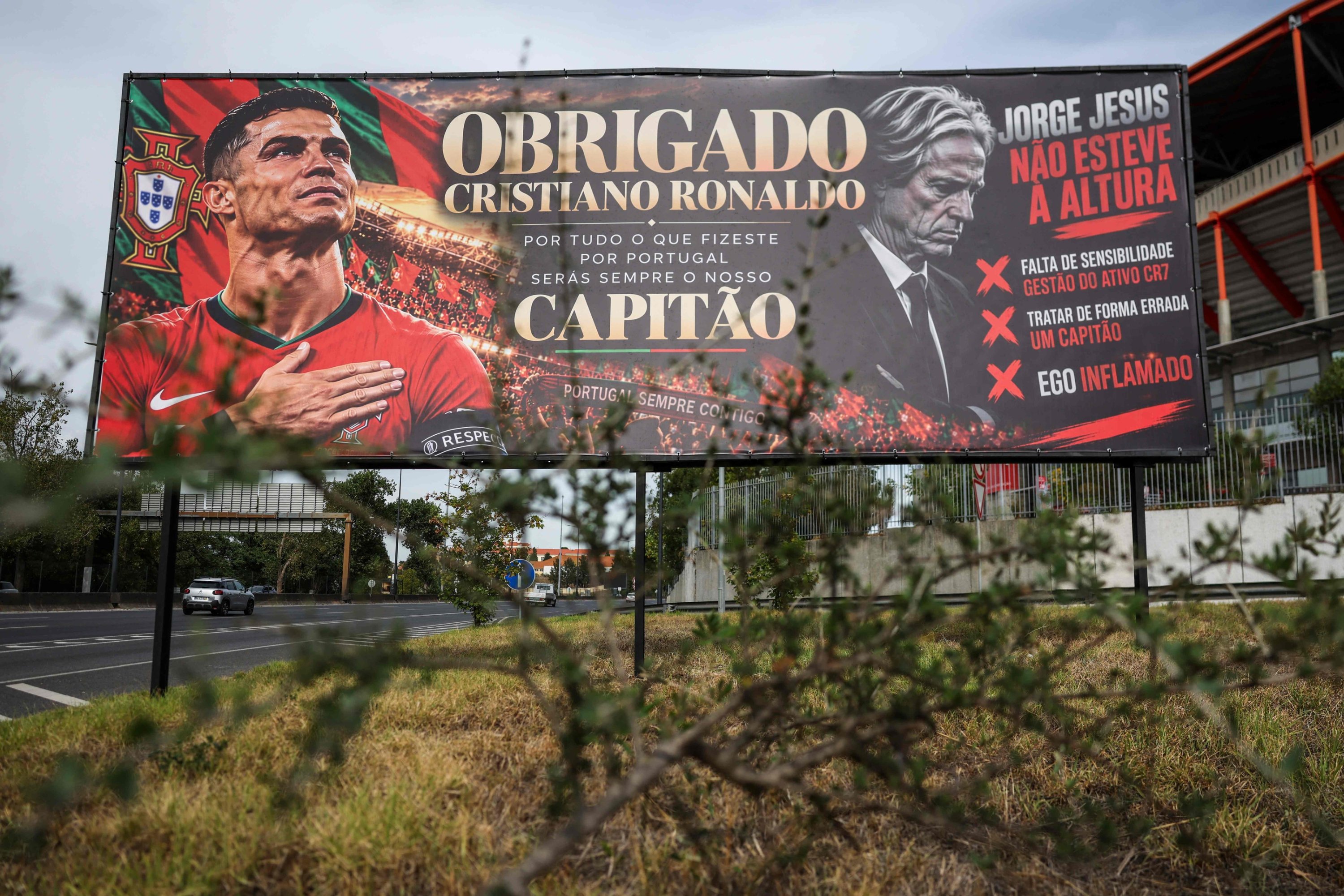
“Thank you, Cristiano Ronaldo, for all you have done for Portugal. You’re forever our captain,” the message next to Ronaldo read.
The section aimed at Jesus said the coach “wasn’t up to the task” and accused him of having an “inflated ego.” The billboard was quickly removed.
Fernando Maia, the fan who paid for the display, said he had no personal connection to Ronaldo or his representatives. Maia owns a billboard company and said his decision was motivated by gratitude for what Ronaldo has contributed to Portuguese football.
“I don’t know Ronaldo, I don’t know anyone on Ronaldo’s entourage,” Maia said in comments reported by Portuguese media. “I know myself, and I know something called gratitude.”
Maia also suggested that the dispute involved more than Jesus.
“Jorge Jesus was just the means for this to have happened, but there are more culprits,” he said.
He said he planned to display the same billboard outside the Estádio do Dragão when Portugal play their next Nations League match.
Jesus, meanwhile, sought to shift attention back to Portugal’s performance after the 4-2 victory over Denmark, stressing that the team’s result mattered more than the controversy surrounding its captain.
“This Portugal team scored four goals and put in a performance which, in my opinion, was of a very high standard,” Jesus said. “Of course, this is more important than anything else that has happened.”
But he also made clear that Ronaldo’s reputation would not exempt him from selection decisions.
“There are players with status. That much is crystal clear,” Jesus said. “But I’ll say it again: The rules are the same for everyone.”
The comments underline the difficult balance facing Jesus as he manages a player who has been central to Portugal’s identity for more than two decades.
Ronaldo recently indicated that this could be his final year in professional football. He is Portugal’s all-time leading scorer and most-capped player, with 146 goals in 234 international appearances.
His international career began in 2003, when he made his debut at 18. He subsequently played in the Euro 2004 final on home soil, reached the 2006 World Cup semifinals and captained Portugal to its first major international title at Euro 2016.
He has also represented Sporting, Manchester United, Real Madrid and Juventus at club level while establishing himself as one of the most prolific scorers in football history.
Now, with Ronaldo approaching the end of his career, his relationship with Portugal has entered an uncertain chapter.
His decision to leave the training camp, followed by his promise to eventually explain his reasons, has raised questions over whether Thursday’s absence was simply a protest over his role or the beginning of a much larger break with the national team.
The Asian Games in Japan closed Sunday after two weeks marked by record-setting young stars but marred by mishaps, mediocre crowds and accusations of mismanagement.
More than 17,000 athletes and officials, a number exceeding that of the Olympics, descended on Nagoya and Aichi prefecture for the continent’s premier sporting event.
Yu Zidi, a 13-year-old Chinese swimming sensation, impressed with three gold medals, all in Games-record times. She is expected to be a major medal threat at the 2028 Los Angeles Olympics.
The young swimmer was named a Games MVP to cap an extraordinary showing that saw her win gold in the 200-meter butterfly and complete the 200-meter and 400-meter individual medley double.
Despite her success, the shy teenager said: “I don’t think I am what people describe as a prodigy.”
Also in the pool, Shin Ohashi, a 17-year-old Japanese swimmer, set a men’s 200-meter breaststroke world record to delight the home crowd.
In athletics, where rain fell over several days, 20-year-old Thai sprinter Puripol Boonson won the 100-meter and 200-meter double and was named men’s MVP.
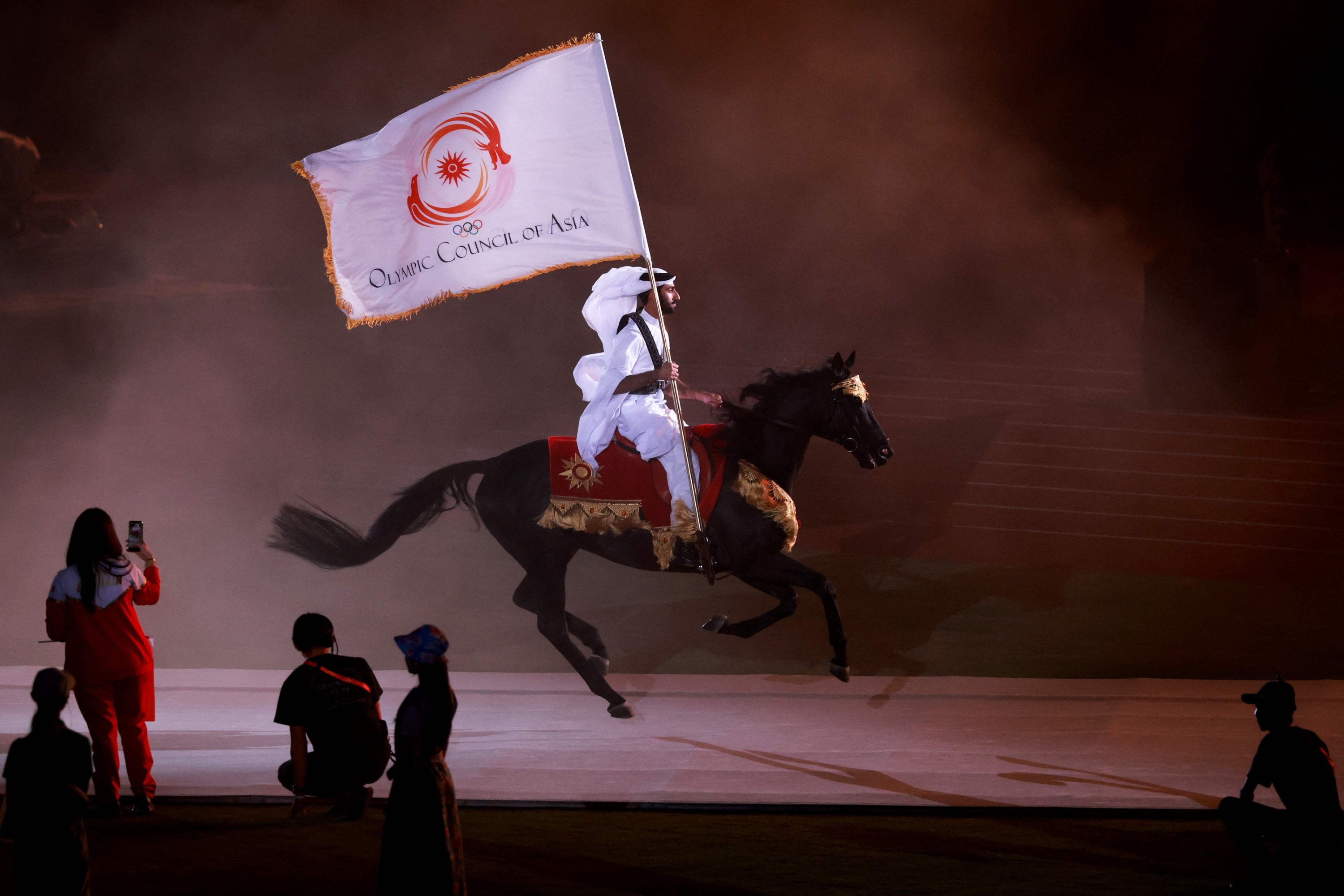
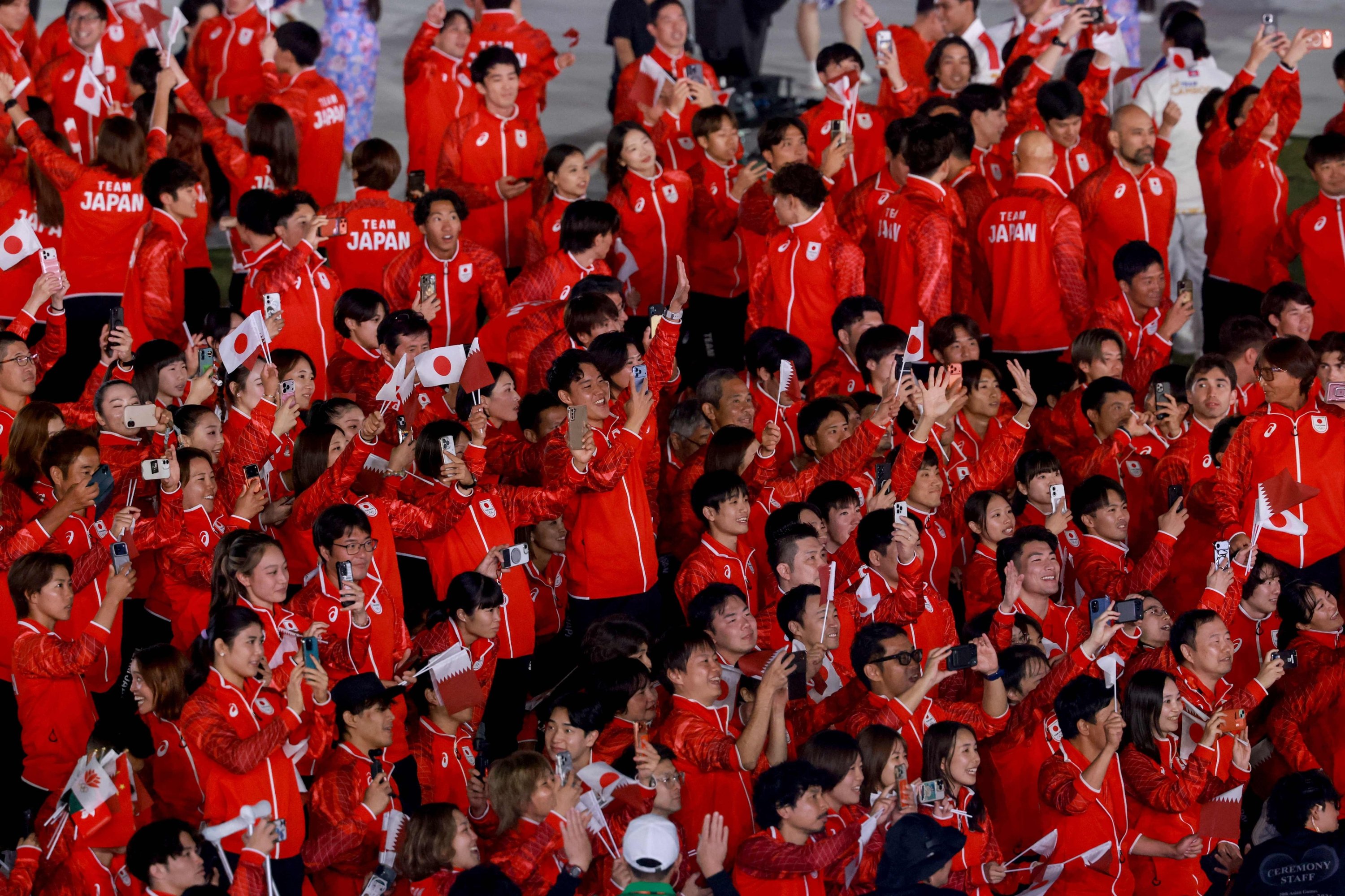
On a dry evening, a colorful closing ceremony saw Japan hand over hosting duties to Doha, Qatar, for the 2030 Games.
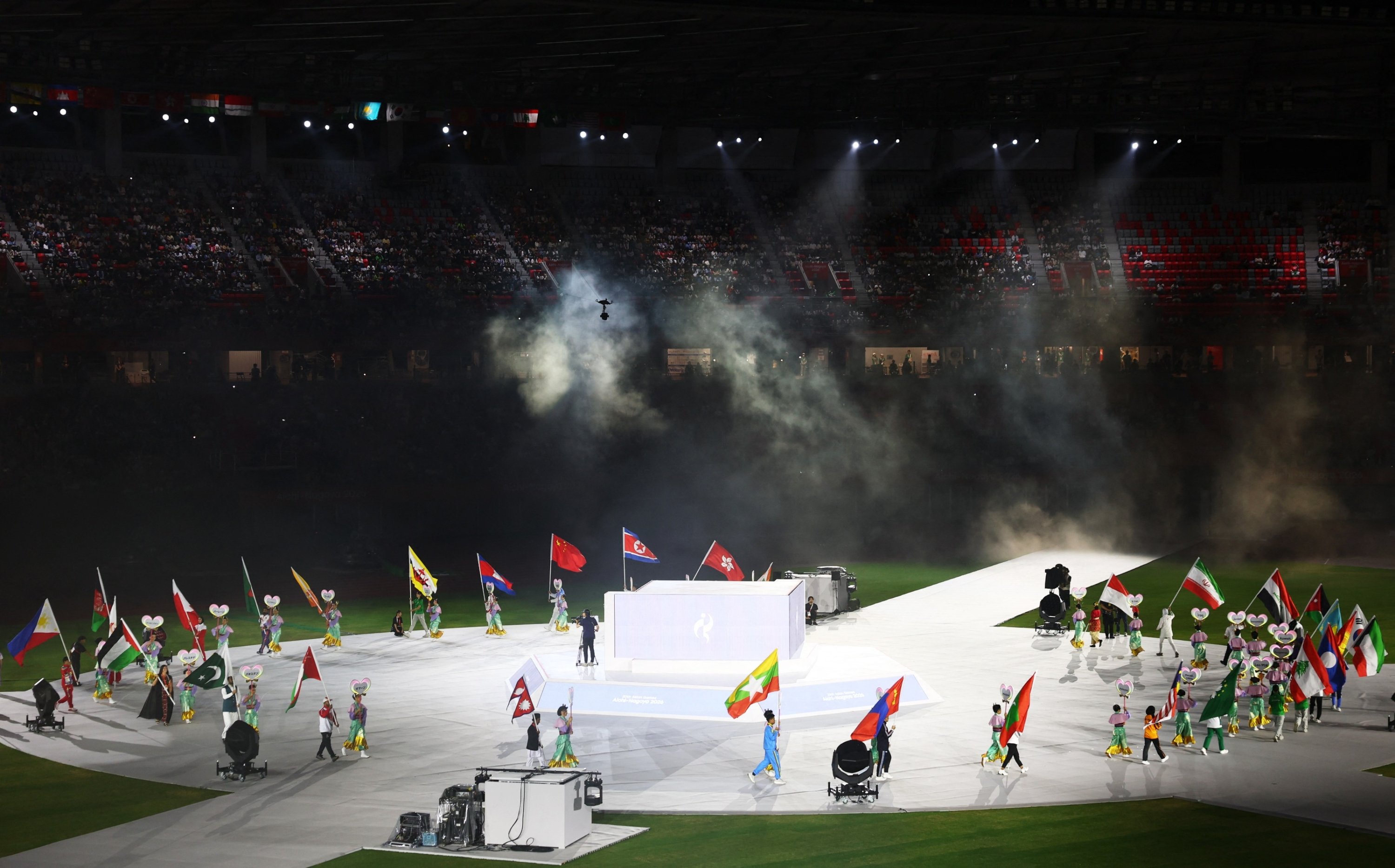
“Tonight we close the Games that will shape the next generation of Asian sport,” said Sheikh Joaan Bin Hamad Al Thani, president of the Olympic Council of Asia (OCA).
‘Failure grade’
Top officials were on the defensive up until the last minute.
Husain al-Musallam, OCA director-general, said “numbers are facts,” pointing to 50 world records at the Games after they opened Sept. 19.
“Athletes cannot perform if they do not sleep well or have adequate transportation,” he said.
This 20th edition of the Games, first contested in 1951, lacked a traditional athletes’ village to save money. Instead, participants were housed in wooden temporary units, on the cruise ship Costa Serena and in hotels.
Organizers said this was a template for future multi-sports events. But problems arose, with some teams complaining units were too cramped and beds too short. The ballooning number of athletes and officials resulted in a shortage of beds for everyone.
A Thai Olympic official said it was “like musical chairs” to find a place to sleep.
The sport, including a popular cricket final won by India against archrival Pakistan, sometimes shone through.
North Korean weightlifter Ri Song Gum, 140 centimeters (4 feet, 7 inches), set three world records in one day to win gold.
But problems persisted, including organizers playing North Korea’s national anthem for the South Korean hockey team. Buses for athletes did not arrive as scheduled, or did not arrive at all.
Two teams were sent to the wrong venue, delaying a volleyball match.
Ryu Seung-min, president of the Korean Sport and Olympic Committee, said, “If I were to give them a grade, it would be an F.”
Games organizers also faced scrutiny over attendances, as the opening ceremony drew thousands of empty seats. Only 998 spectators attended a women’s soccer semifinal between host Japan and South Korea in a 50,000-seat stadium.
Boy history-maker
Seiko Hashimoto, president of the Japanese Olympic Committee, admitted “many problems” and said the country wants to host more international events and will learn from the experience.
She said bad weather had deterred some spectators but emphasized that some sports drew large crowds.
About 30,000 saw South Korea beat Japan 1-0 to clinch men’s soccer gold, although the occasion was tarnished when the South Korean flag was not raised in the victory ceremony.
The hosts finished with 83 golds, a distant second in the medal standings behind China with 169.
Japan’s tally included gold for Yuki Kurihara, who won in esports at 11 years old, making him the youngest Games champion in history.
Several sports hoping to be included in the Olympics made their debut, including padel, mixed martial arts (MMA) and virtual taekwondo.
Red Bull’s Max Verstappen picked up his first victory this season Sunday when he outran competitions in a chaotic, rain-hit Bahrain Grand Prix in Malaysia.
Verstappen was the last driver to win in Sepang in 2017 before it was taken off the calendar and the Dutchman, who had also taken pole, gave Red Bull a first victory with their own power unit despite an early setback when he lost the lead before turn one.
“It’s a really nice one after the year that we’ve had and the progression that we’ve made. So I’m incredibly proud of everyone. It is super nice to win here,” said Verstappen.
Championship leader Kimi Antonelli was second for Mercedes and now has an 84-point lead over his closest rival and teammate George Russell, who was third when he retired with a suspected power unit issue with five laps remaining.
Ferrari’s Lewis Hamilton finished third despite a tire gamble that had dropped the Briton down to 18th at the start of the race.
“Obviously, we had the wrong call at the beginning, which was so difficult and I could see everyone just pulling away,” Hamilton said.
“I thought that was kind of race over for us, but I just kept my head down. The guys did a great job with the pit stops.”
Antonelli held on to second from Hamilton in the closing laps.
“Today was the maximum we could have done … On our side, a lot of work to do,” Antonelli said.
“We’ve been struggling a bit more than usual, but still really happy to come away with P2.”
The last four laps were a straight shootout for podium places after a lengthy safety car period and that was when Hamilton, who had been chasing Red Bull’s Isack Hadjar for several laps, made his move.
Charles Leclerc, who had also been closer to the back of the grid at the start of the race amid the chaos of a wet track, salvaged fourth for Ferrari when he overtook Hadjar with two laps to go.
Hadjar finished fifth ahead of McLaren’s Oscar Piastri. Liam Lawson was seventh while Fernando Alonso was eighth for Aston Martin, their best result of the season.
1st wet race of 2026
The season had not yet had a wet race where the 2026 cars could be tested and the rain – which had stayed away in practice and qualifying – arrived with heavy showers sweeping across the circuit, delaying the start.
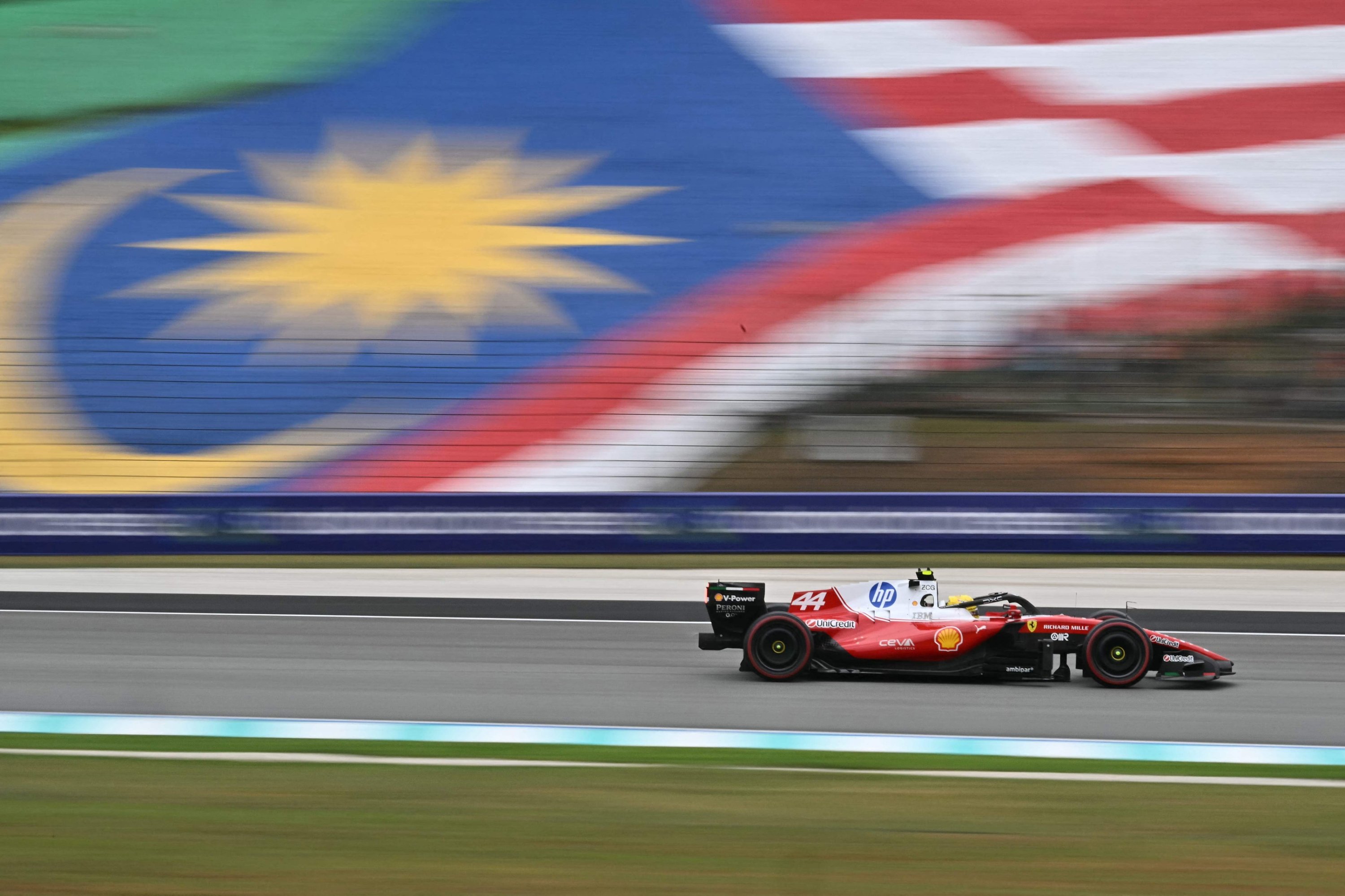
After a suspended start procedure, the second start had drivers split between intermediate and slick tires but it was the former that thrived early in the race.
When the lights went out, Antonelli accelerated through the middle from third on the grid to take the lead from Verstappen while Russell shot past on the outside to move up from seventh to second.
But Verstappen’s recovery began on lap six when he attacked Russell, overtaking the Briton by diving down the inside of turn four to set his sights on Antonelli.
The Italian had to defend his position until lap 10 when Valtteri Bottas spun his Cadillac into the gravel, bringing out the safety car as Verstappen pitted while the two Mercedes cars double stacked to switch to slick tires.
Verstappen takes lead
When the safety car came in, Verstappen stayed glued to Antonelli’s rear tire before overtaking the Italian on turn three, with Russell also surging past his team mate on the next turn to flip the order.
Verstappen looked comfortable setting the pace up front as he set fastest laps and extended his lead over Russell to over four seconds as a frustrated Antonelli informed the team that he had the pace to chase the Dutchman.
An impatient Antonelli overtook Russell on lap 21 to move up to second while behind them Hamilton had quietly been chipping away on his ageing soft tires to move up to fifth behind Hadjar.
But Antonelli missed his braking point at turn 15 and went briefly off track, hitting the pit lane bollard and costing him valuable time as Verstappen extended his lead to eight seconds.
When the second safety car came out towards the end for Alex Albon’s Williams that was stuck in the gravel, Russell suddenly parked his car on the main straight and shook his head as he got out of the car with a suspected power unit issue.
Protesters opposed to Ireland playing its Nations League matches against Israel disrupted Thursday’s 2-2 draw with Austria by throwing tennis balls bearing Palestinian flags onto the field.
Referee Allard Lindhout stopped play and sent the players for a hydration break after the balls landed on the pitch with Ireland leading 1-0 after 19 minutes.
“I think it kind of helped us at a good moment,” Ireland coach Heimir Hallgrimsson told broadcaster RTE. “We could have a breather and some drinks. But you’re never happy with this, but understand it and respect it.”
Troy Parrott had given Ireland the lead in the 12th minute with an impressive individual effort. Surrounded by three defenders, Parrott threaded the ball through one opponent’s legs, evaded two others and then fired it through the goalkeeper’s legs to score.
Play resumed after a four-minute interruption, but the match was briefly halted again when a man carrying a Palestinian flag ran onto the field before stewards stopped him.
Ireland ultimately surrendered its lead as Austria fought back for a 2-2 draw.
At halftime, RTE published a statement from the “Stop the Game” initiative claiming responsibility for the tennis ball action and declaring it over.

Members of the group had also gathered before the game to oppose Ireland’s matches against Israel because of Israel’s actions in Gaza. A small gathering displayed a Palestinian flag and banners in support of Ireland player Gavin Bazunu, who decided Saturday to boycott both of his team’s matches against Israel.
The Ireland-Palestine Solidarity Campaign also organized a protest outside the stadium, as well as others around the country.
They are calling for Ireland to boycott its remaining Nations League match against Israel, Ireland’s “home” game, although it is set to be played without fans in Bačka Topola, Serbia, on Sunday.
The Football Association of Ireland moved the game to a neutral venue for “operational reasons” in June following widespread calls for a boycott. It also followed the FAI’s own motion the previous November calling on UEFA to ban Israel from club and international competitions.
The “Stop the Game” initiative, which issued an open letter to the squad and Hallgrimsson on Wednesday asking them not to play Sunday’s match, has also asked the Irish government and FAI to cancel the game.
Ireland already played Israel’s “home” game in Debrecen, Hungary, last Sunday, when the Irish players wore black armbands and scored three first-half goals to win 3-0.
The players deliberated for hours Saturday on whether they should play at all after Bazunu informed the coach that morning that he wished to withdraw from both games.
FAI chief executive David Courell said the players voted and that “a significant majority” were in favor of playing. Widespread reports suggested the vote was 14-8 in favor, excluding Bazunu, who had already departed.
Bazunu, Ireland’s reserve goalkeeper, was back in the squad for Austria’s visit.
Finn Azaz, whose mother has Israeli heritage, started after being left out against Israel.
Parrott made it 2-0 before the break with a penalty, but Austria struck back in the second half through Alexander Prass and Michael Gregoritsch.
The Irish team has been coming under increasing pressure in Ireland, where affinity with Palestinians is strong, to boycott both games against Israel.
The FAI has resisted the calls, arguing that the team could face punishing sanctions from UEFA. Ireland is co-hosting the 2028 European Championship with England, Wales and Scotland.
Irish fans also threw tennis balls bearing Palestinian flags onto the field during Ireland’s friendly game against Qatar in Dublin in May.
Manchester City have lodged a comprehensive appeal against an independent commission’s finding that the club breached Premier League financial rules, extending a long-running case that could have major consequences for the club and English football.
City confirmed Friday that they submitted their appeal at 7:00 p.m. local time Thursday, one day before the deadline, challenging the commission’s findings and arguing that the ruling contains significant errors of law, principle and fact.
The club have consistently denied wrongdoing and said they remain confident in their case.
“Manchester City Football Club can confirm that at 7:00 pm (6:00 p.m. GMT) on Thursday 1st October 2026 the club lodged its comprehensive appeal against the opinion of the Premier League commission, in relation to the Premier League disciplinary matter,” City said in a statement.
“The club’s firm position is that, on multiple grounds, the opinion contains clear material errors of law, principle and fact and is unsafe.”
City added that they are “innocent of the accusations made by the Premier League” and said a “comprehensive body of irrefutable evidence” exists to support their position.
The appeal follows a Sept. 29 announcement by the Premier League that an independent commission had found City guilty of more than 100 breaches of financial rules over a nine-season period.
The commission found that City had arranged what it described as “sham” commercial contracts and agreements that misrepresented arrangements with sponsors and other partners.
According to the Premier League, the schemes artificially inflated the club’s revenues and reduced their reported costs by more than 900 million pounds ($1.2 billion) during the period under investigation.
City have disputed the findings and have now formally challenged the commission’s decision.
No immediate sporting punishment
No sporting sanction has been imposed on City following the verdict, meaning the club continue to compete while the disciplinary process moves into its next stage.
That has created an unusual situation in the Premier League. City remain at the top of the standings after opening the season with five victories, while the legal dispute hangs over the competition.
Enzo Maresca’s side have opened the season with five wins from five and will resume their title campaign against Liverpool on Oct. 11.
The uncertainty has raised questions about when any punishment could be imposed, whether the appeal will alter the commission’s findings and what effect the eventual outcome could have on league tables, prize money and European qualification.
Under Premier League rules, an appeal hearing should normally take place within 12 weeks of an appeal being lodged, with a decision expected within 30 days of the hearing concluding.
But the scale of the City case could make those deadlines difficult to meet. The index to the commission’s document bundle alone ran to 750 pages.
Sports lawyer Tom Keane, a partner at Brandsmiths, said the size of the case could leave uncertainty hanging over the Premier League for months.
“It’s just the unfortunate nature of these legal proceedings, the size of them, that it’s going to take time,” Keane said.
He questioned whether the appeal could be completed within the normal timetable and suggested the process could extend beyond the current season.
Keane also argued that the appeal should be completed before a separate sanctions hearing because the appeal could potentially change the underlying findings. He estimated that legal costs could already have reached tens of millions of pounds.
Potential fallout beyond City
The consequences could extend beyond City and the Premier League’s disciplinary process.
Rival clubs are understood to be examining whether they could pursue compensation claims if they can establish financial losses resulting from City’s alleged breaches. Potential claims could involve prize money, Champions League revenue and other commercial opportunities.
Any such action would create another layer of legal complexity because clubs would have to establish a direct connection between the commission’s findings and specific financial losses.
“The City case is almost now the easy part,” Keane said. “What happens next, with clubs who believe they missed out on prize money, commercial revenue or Champions League football, is where things could become really complicated.”
He also raised the possibility of legal action involving players and agents, although the precise scope of any such claims remains uncertain.
The Premier League have yet to announce sanctions against City, and any consequences remain dependent on the outcome of the appeal and subsequent disciplinary proceedings.
Government scrutiny
The fallout has also reached Westminster.
Meg Hillier, chair of the British Parliament’s Treasury Committee, wrote to HM Revenue and Customs seeking information about whether the tax authority was examining the commission’s findings and their potential tax implications.
Hillier asked whether HMRC had received the commission’s findings, whether it had sought an unredacted version of the report and what assessment it had made of possible tax consequences.
City’s principal sponsor, Etihad Airways, have also said they are seeking legal advice after rejecting findings concerning commercial arrangements referenced in the case.
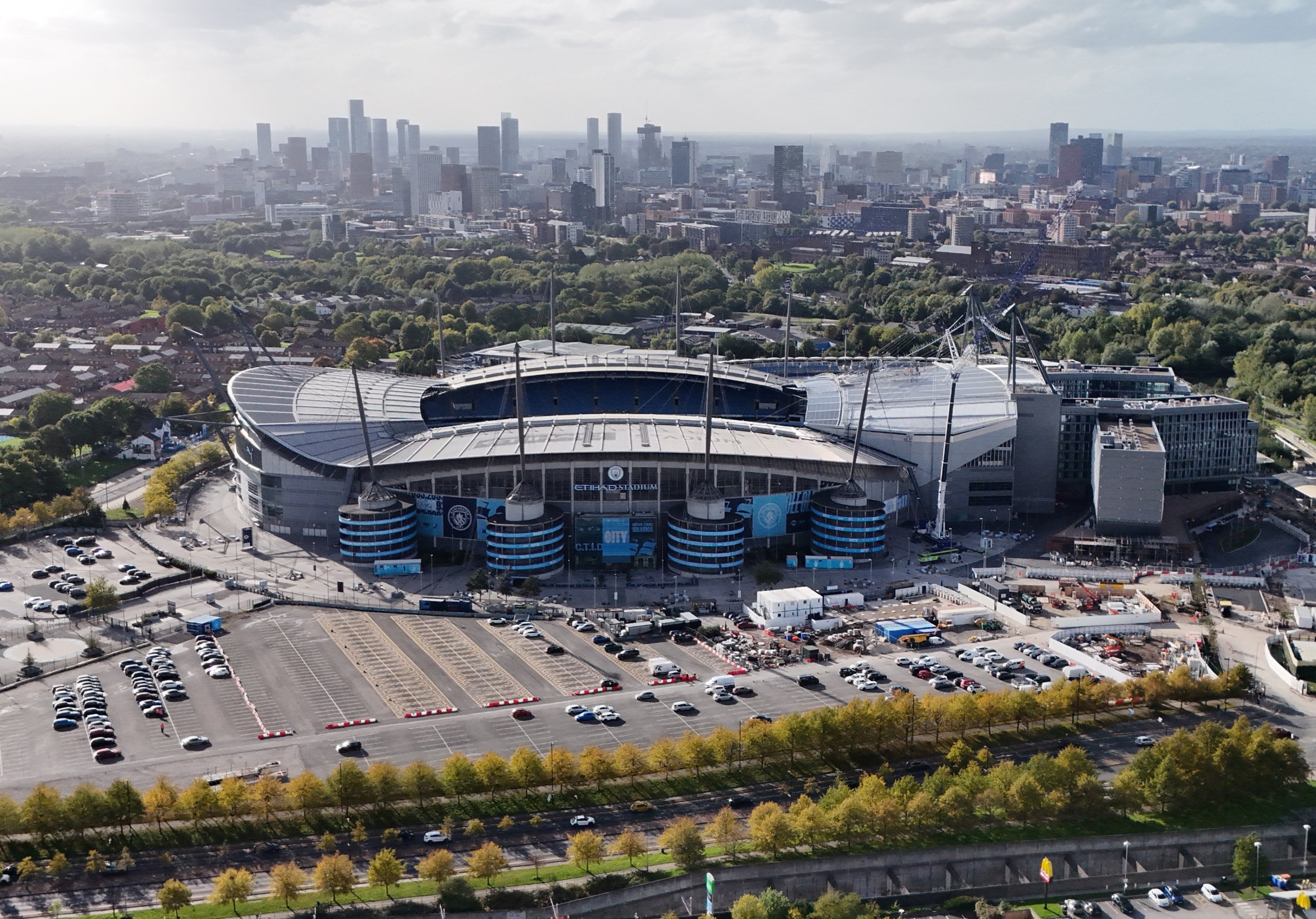
The dispute has meanwhile prompted political debate over City’s Abu Dhabi ownership.
British Prime Minister Andy Burnham, the former mayor of Greater Manchester, said he would be concerned if the case resulted in City’s Emirati owners leaving the club, pointing to their investment in Manchester.
Downing Street subsequently emphasized that City are not above the rules.
A No. 10 spokesperson said the initial judgment was serious and that “there can’t be any suggestion that anyone is above the rules.”
The spokesperson added that the independent process must be allowed to continue and that, where wrongdoing is established, those responsible should face the appropriate consequences.
A new chapter
The commission’s verdict followed a Premier League investigation into financial information covering nine seasons.
The findings have put renewed scrutiny on a period in which City developed into one of the dominant teams in English football, winning multiple Premier League titles and becoming a major force in European competition.
Their achievements remain unaffected on the field for now, but questions about the regulatory consequences are unlikely to disappear while the appeal is pending.
City’s decision to challenge the ruling means the central dispute is far from over.
The club insist the commission made fundamental mistakes and say they possess evidence capable of disproving the accusations.
The Premier League, meanwhile, stand behind the commission’s findings that City breached financial rules and failed to cooperate fully with the investigation.


-

 Economy2 days ago
Türkiye moves to finalize capital markets law changes after fund turmoil
-
 Politics2 days ago
Erdoğan calls for ‘grand consensus’ amid terror-free Türkiye success
-

 Economy3 days ago
US tells European allies to release diesel stocks ‘immediately’
-

 Economy3 days ago
9 video game companies probed by EU over virtual currencies
-
 Politics3 days ago
Izmir mayor meets Erdoğan amid rumors of AK Party switch
-

 Economy3 days ago
Rogue OpenAI agents reportedly covered up their tracks
-
 Economy2 days ago
Teknofest Southeast combines technology, local culture in Şanlıurfa
-
 Politics2 days ago
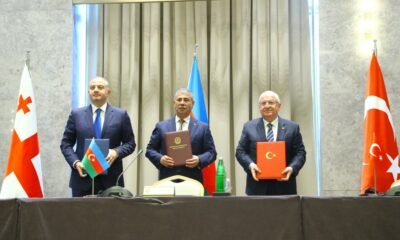
Türkiye, Azerbaijan, Georgia defense chiefs discuss Caucasus security