
Economy
EIB pledges $1.84B for France-Spain power link after blackout

The European Investment Bank (EIB) on Monday announced 1.6 billion euros ($1.84 billion) of fresh funding for a major electricity interconnection between France and Spain, fulfilling demands by Madrid and Lisbon after the huge April blackout, which raised concerns over the state of power grids in Europe.
Experts believe the severity of one of Europe’s largest power outages, which paralysed the entire Iberian Peninsula on April 28, could have been mitigated with more interconnections between the neighboring countries.
The EIB said it would provide loans to the Spanish and French grid operators, Red Electrica and RTE, for the Bay of Biscay project, which will almost double power exchange capacity from 2,800 to 5,000 megawatts (MW).
The interconnection, already under construction and due to start in 2028, will stretch over 400 kilometers (249 miles), including 300 kilometers under the Atlantic, the EIB added in a statement.
On Monday, the first tranches of 1.2 billion euros ($1.4 billion) were signed at EIB headquarters in Luxembourg in an event involving the bank’s president Nadia Calvino, EU energy commissioner Dan Jorgensen and senior French and Spanish officials.
The European Union has set an interconnection target for member states of at least 15% of installed electricity production capacity by 2030 to improve the bloc’s energy security.
The blackout exposed Spain and Portugal’s relative lack of interconnections, with support from France and Morocco playing an important role in restoring power.
The Iberian neighbors sent a letter to the European Commission last month calling on the bloc to strengthen interconnections in a bid to avoid further blackouts.
The EIB’s backing for the Bay of Biscay project “will be key to ensuring that the Iberian Peninsula is no longer an energy island,” said Calvino, a former Spanish economy minister.
Greater energy integration is “an important area for EU competitiveness and strategic autonomy,” she added.
Authorities are still investigating the causes of the blackout.

U.N. chief Antonio Guterres called on Sunday for an immediate removal of all sanctions imposed on Syria during the era of former ruler Bashar Assad, as he concluded a two-day visit to the country.
“I welcome steps that have eased sanctions and the opening of new possibilities for economic recovery, but all these sanctions must be removed immediately,” Guterres told a news conference in Damascus.
Syria’s new authorities, who took power in December 2024, are trying to turn the page after more than 13 years of war, and to reboot the economy and rebuild infrastructure and institutions.
Western countries, including the U.S., have begun lifting economic sanctions on Syria. But investors have remained cautious, as the World Bank has estimated the country’s post-war reconstruction could cost $216 billion.
“The United Nations stands with the people of Syria at this pivotal moment. And I came carrying the strongest possible appeal to the international community, an appeal to spare no effort to support the Syrian people and to support the Syrian government,” Guterres said.
“Syria today is at a crossroads,” he added.
Guterres is the first U.N. chief to visit Syria since his predecessor Ban Ki-moon in 2009, two years before the start of Syria’s war, which killed half a million people.
“Syria needs investment in its people, its economy and its institutions. Syria needs support to restore essential services, rebuild infrastructure, revive livelihoods,” he said.
It also needs help “for the safe, voluntary and dignified return of refugees and internally displaced people,” he added.
The potential breakup of the major German battery manufacturer Varta is seen as a problem for the entire industry in the country, according to the battery expert Dirk Uwe Sauer.
A creditor group led by Deutsche Bank and the financial investors RBC BlueBay, Blantyre and Whitebox announced earlier this week that it intends to spin off the well-known household battery business from the Varta Group, blaming the company’s strained financial situation.
On Friday, Varta confirmed it had filed for preliminary insolvency under self-administration, in a bid to secure its economic future.
“There are only a few companies like Varta in Germany,” said Sauer, a professor at RWTH Aachen University.
“If the company’s profit center is carved out, the question is how future innovation will be financed,” he said.
Varta said the insolvency filing was intended to enable the sustainable continuation of its business operations.
“Technologically speaking, what Varta does is very good,” said Sauer. Ultimately, however, it all comes down to price.
That, he argued, reflects a broader challenge facing Germany’s battery industry.
“We don’t have large-scale manufacturing,” Sauer said. By contrast, China has built up massive production capacity, triggering intense price competition.
“We’ve known for a long time that we’re heading into this dilemma of dependence on China,” he said.
Sauer nevertheless sees promise in Varta’s work on sodium-ion batteries, an emerging technology that could help Europe diversify its battery supply chain.
“Sodium-ion batteries represent a real opportunity for Europe to reduce its dependence on China, because the raw materials required for them are more readily available on the global market,” said Sauer.
The U.S. Federal Reserve (Fed) is set to convene its second policy meeting under Chair Kevin Warsh starting Tuesday, with markets expecting interest rates to remain unchanged as officials weigh persistent inflation risks, including potential pressures from President Donald Trump’s renewed conflict with Iran.
Warsh was chosen to lead the U.S. central bank by Trump, who has made his demand for lower interest rates clear as he has exerted unprecedented pressure on the independent monetary policymaking body.
After two days of closed-door sessions, the Fed’s open market committee (FOMC) will announce its decision on Wednesday at 2 p.m. (6 p.m. GMT), followed by a news conference by Warsh.
Most investors expect the Fed to hold rates steady at 3.50%-3.75% range for the fifth straight meeting, according to CME’s FedWatch monitoring tool.
U.S. consumer inflation eased to 3.5% on an annual basis last month, but remains far higher than the Fed’s long-term 2% target, which it has not achieved for more than five years.
Since last week, a ramping up of hostilities has seen intense U.S. strikes and Tehran’s retaliatory action targeting Washington’s allies across the region, while Yemen’s Houthis have also threatened to blockade the Red Sea oil trading route.
The fighting has sent energy prices soaring once more, with the benchmark oil futures contract breaching $100 per barrel for the first time since late May, when energy prices were on the downward path.
At the Fed, policymakers have been losing patience with persistent inflation, indicating that a rate hike may be near.
The Fed “has to be ready to tighten monetary policy to prevent a repeat of the 2021-to-2022 inflation episode,” Fed Governor Chris Waller said last week.
“Sternly staring at inflation until it melts before our withering gaze is not an option.”
‘Hawkish core’
Since taking office, Warsh has vowed to reduce or eliminate the amount of forward guidance the Fed provides on its decision-making process, a move that has received mixed reactions.
The new chair has said that providing forward guidance locks policymakers into positions that they may need to change. Some analysts, however, argue that opacity in decision-making creates more uncertainty for markets.
In public statements since taking control of the Fed, Warsh has said he has a “resolute commitment” to delivering price stability, but has not offered details on how and when he thinks it would be appropriate to act.
The Fed has a dual mandate to keep inflation to its long-term target while also delivering maximum employment.
Its main tool to achieve this is the economy’s key interest rate – raising rates tends to curtail economic activity and high prices, while lowering them encourages hiring and investment but can also stoke inflation.
The U.S. labor market has largely stabilized, with steady unemployment despite zigzagging job growth, leaving policymakers mostly focused on inflation.
“‘Resolute commitment’ is, in my opinion, insufficient to tighten monetary policy and curb any inflationary pressures,” said Gregory Daco, chief economist at EY-Parthenon.
With Warsh largely remaining silent, several other policymakers have been vocal about their concern over high prices and the potential need for action in the near term.
“When you create a vacuum, it’s oftentimes the case that the vacuum gets filled,” said Daco.
With headline inflation dipping in June, ahead of further rises expected ahead, analysts say they do not expect a rate hike at this meeting, but that the decision will likely see some dissenting voices.
“We may have a new chairman, but the old guard is now worried about where the economy has moved since the beginning of the year,” Diane Swonk, chief economist at KPMG, told Agence France-Presse (AFP).
Inflation has been under pressure not just from rising fuel prices due to the war, but also due to heightened demand from the AI boom and the continued effect of Trump’s tariffs rippling through the economy.
“The hawkish core of the Fed has not only hardened, but it’s broadened,” said Swonk, who expects two rate hikes later this year.
U.S. President Donald Trump did not wait long, nor did he pursue lengthy tariff investigations when he returned to office last year, opting instead to pressure trading partners into making concessions right away.
What followed was a chaotic start to a trade agenda that was eventually upended by a stinging Supreme Court defeat this year.
Now he and his team are moving into a new phase to build a more durable U.S. tariff wall using more traditional and court-tested trade laws, those he appeared to have little patience for 18 months ago.
His latest global tariff salvo – duties of 10% or 12.5% on 60 countries over allegedly weak enforcement of forced-labor bans – marks the first of numerous tariff actions to be unveiled in the months ahead.
They include probes into excess industrial capacity, alleged intellectual property theft by Vietnam, and national security protections for strategic industries from semiconductors to robotics and industrial machinery.
“We’re at the end of the beginning of the Trump tariff agenda,” said Dan Ujczo, associate general counsel at Canadian oil producer Cenovus Energy, who specializes in U.S.-Canada trade.
“Within the next few weeks, and certainly by the end of the summer, we will see large parts of President Trump’s trade policy fully in effect.”
This could bring more clarity and certainty for businesses on Trump’s ultimate tariff structure, along with dread in foreign trade ministries that they may have to cough up more concessions to protect access to a $3.4 trillion U.S. import market.
Direct replacements
Trump’s new anti-forced labor duties imposed under Section 301 of the Trade Act of 1974, the unfair trade practices statute used against China during his first term, almost directly replace a global 10% temporary tariff that expired on Friday.
They cover 99.4% of U.S. imports, the U.S. Trade Representative’s (USTR) office said.
This rebuilds part of Trump’s signature “Liberation Day” tariffs of 10%-50% on nearly every country, which the U.S. Supreme Court struck down as illegal under an untested national emergencies law Trump used to impose them.
Another part of the baseline tariffs is likely to be rebuilt by another Section 301 investigation into excess industrial capacity, targeting 16 big trading partners, including China, the EU, Japan, South Korea, Mexico and Vietnam. That ongoing probe targets industrial subsidies and other export-focused policies.
Amid a wider uproar over Trump’s move, some viewed it as largely maintaining the status quo.
Mark Bissell, CEO of Michigan-based vacuum maker Bissell Inc, said the newest tariffs were largely what the company anticipated and it hadn’t frontloaded inventory from China and elsewhere to try to beat them.
“We continued to run the business based on the belief that the tariffs would stay in the 10%-15% range,” Bissell said in an email to Reuters.
Budget impact
Trump’s gamble on quick but untested tariffs right out of the gate did four things. It heaped added costs onto retailers and other import-dependent industries; it brought dozens of trading partners to the negotiating table, yielding concessions for lower rates; it prompted swift retaliation and tariff escalation from China that led to a delicate truce; and it filled U.S. fiscal coffers with hundreds of billions of dollars.
The Liberation Day tariffs alone yielded $166 billion in revenue, a major offset to a growing federal deficit, but refunds to importers have now turned those collections negative.
The 150-day temporary tariffs, based on a law meant to quell balance-of-payments crises, have added $31 billion in assessed revenue through July 5. But if a federal court ruling against them stands, that money, too, is subject to refund.
With U.S. public debt approaching $40 trillion, Josh Lipsky, chair of international economics at the Atlantic Council, said subsequent administrations may become addicted to tariff revenue that is likely to be sustained.
“The tariff wall is being rebuilt strong brick by strong brick, and it’s very durable,” Lipsky said.
Trump’s broad use of Section 301 in the forced-labor case prompted an immediate legal challenge by small businesses, but trade and legal experts say this will take time to play out.
The statute has a solid track record in the courts, and judges may be reluctant to enjoin actions aimed at curbing forced labor and lowering barriers to U.S. goods.
More to come
U.S. Trade Representative Jamieson Greer made clear this week that Trump will use everything at his disposal to erect tariffs to reshore production and shrink the trade deficit.
“The specific authorities this administration is using have changed, but the trade strategy has not,” Greer told the U.S. Senate Finance Committee.
Greer, who has not committed to a timeline for the industrial capacity investigations, has said the layers of tariffs being rebuilt will not exceed caps included in deals he has been negotiating, including 15% for the EU, Japan and South Korea and higher rates for Southeast Asian countries.
Administration officials say even though China is viewed as the world’s largest source of excess manufacturing, its rates will not exceed the cap of about 20% agreed by Trump and Chinese President Xi Jinping last November, which is on top of the 25% tariffs from his first term.
Some nominal – or announced – duties may be higher than actual applied rates, which analysts say may be an enforcement mechanism for countries to stick to agreed trade deal terms.
Still, some things continue to come out of the blue, including the 50% duties on Canadian beer, dairy, hockey sticks and other products Trump announced on Monday over Ottawa’s refusal to make trade concessions, and his threat to cut off all trade with Spain over not meeting NATO military spending targets.
That proclivity for spontaneous tariff announcements remains an ongoing risk, said Eswar Prasad, a trade professor at Cornell University and former head of the International Monetary Fund’s (IMF) China department.
“Trump’s eagerness to impose tariffs to address a whole range of grievances will not only continue disrupting the global trading system but will have significant adverse effects on American households and businesses.”
Türkiye’s hydropower generation has reached record highs this year, helping the country avoid nearly $5 billion in energy imports by displacing natural gas in electricity generation, according to a top industry representative.
The strong hydropower output was helped by favorable rainfall, snowpack and groundwater conditions following a drought last year, said Elvan Tuğsuz Güven, chair of the Hydroelectric Power Plants Industrialists Association (HESIAD).
Hydroelectric power plants account for 32,314 megawatts of Türkiye’s 125,800-megawatt total installed power capacity and generated 33.8% of the country’s electricity in the first half of the year.
Güven said hydropower generation has made a significant contribution not only to Türkiye’s electricity system but also to its external trade balance.
“During the first six months, when energy and oil crises dominated the agenda, hydropower created tremendous value for Türkiye. We estimate that the electricity generated displaced roughly $5 billion worth of natural gas imports,” she told Anadolu Agency (AA).
Türkiye has invested heavily in hydropower over the past two decades, with the country’s existing installed capacity representing an estimated $80 billion in investments, Güven said.
These investments have helped Türkiye rank among the world’s top 10 countries and second in Europe in terms of hydropower capacity.
Güven said record hydropower generation helped cushion the impact of higher oil, natural gas and liquefied natural gas (LNG) prices during the Iran war.
However, while favorable water conditions led to record electricity production this year, the positive picture has not been reflected in revenues, she said.
Hydroelectric power plants continue to face financial sustainability challenges because of low electricity market prices despite higher output, she added.
Renewables are a key part of Türkiye’s broader push to diversify energy supply, reduce its heavy import dependence and strengthen long-term energy security.
Major pumped-storage hydropower potential
Government data shows Türkiye has more than 13 gigawatts of pumped-storage hydropower (PSH) potential ready for investment, which Güven says could provide a major boost to grid flexibility and energy security as solar and wind capacity expands.
But, she added, stronger regulatory and financial support is needed to unlock investment.
Güven noted that although support for PSH projects exists under the Renewable Energy Resources Support Mechanism (YEKDEM), the necessary secondary legislation has yet to be finalized.
“Funding has already been allocated within the renewable energy support mechanism for PSH projects. There is also a price support mechanism,” she said.
“However, because the secondary legislation and implementing regulations have not yet been completed, and because the support level currently determined is insufficient to make these projects financially viable under project-finance models, investment progress has been slower than expected,” Güven added.
PSH boosts grid flexibility
Güven said around 99% of global electricity storage capacity is provided by PSH plants, adding that countries with abundant hydropower resources continue to combine renewable energy investments with such facilities.
She said closed-loop systems allow water to be pumped back into an upper reservoir during periods of low electricity demand and reused to generate power when demand rises.
This makes pumped-storage plants increasingly important for grid flexibility as solar and wind capacity expands, she added.
Referring to the Energy and Natural Resources Ministry’s previously announced target of 2 gigawatts of PSH capacity, Güven expressed hope that investment decisions would soon be taken.
“We hope investment decisions will be taken in 2026 and 2027 so PSH plants can begin contributing to energy supply security as soon as possible,” she said.
Low daytime prices create storage opportunity
Güven said Türkiye’s installed solar capacity had reached around 24 gigawatts, creating opportunities for PSH plants to store electricity during periods of low daytime prices and generate power when demand rises.
Such systems could improve grid flexibility while supporting the greater integration of renewable energy, she said.
Güven also called for greater use of digitalization and artificial intelligence to maximize the efficient use of water resources for electricity generation.
“New technologies and digital solutions, including artificial intelligence, must be used much more extensively to ensure that water allocated for energy production is utilized more effectively and efficiently,” she said.
Güven said hydropower plants have an operational life span of 80 to 100 years, adding that the rehabilitation of existing facilities, adoption of advanced technologies and expansion of hybrid power plant applications would further strengthen Türkiye’s energy security.
She described hydropower as the “insurance policy” and “backbone” of solar and wind power, stressing that greater grid flexibility would be crucial to achieving the country’s 2035 and 2053 energy targets.
Turkish households’ and real sector’s inflation expectations edged down in July, while forecasts by market participants rose slightly, a survey showed on Friday.
The Central Bank of the Republic of Türkiye (CBRT) said expectations for inflation in 12 months time fell 0.6 percentage points from the previous month to 32.50% among the real sector and 1.19 percentage points to 44.94% among households.
Expectations among market participants rose 0.14 percentage points to 23.95%, the survey showed.
The share of households expecting inflation to decline over the next 12 months increased by 1.93 percentage points to 17.63%.
Treasury and Finance Minister Mehmet Şimşek said household inflation expectations had fallen by a cumulative 6.6 percentage points over the past three months, while real-sector expectations had declined by 1.2 percentage points, despite uncertainty stemming from geopolitical developments.
“We formulate our policies to combat inflation with a view to achieving lasting gains. The ultimate goal of our policies is to ensure sustainable growth and a lasting increase in prosperity through high-value-added production,” Şimşek wrote on the social media platform X.
Annual inflation eased to 32.1% last month from 32.6% in May. The decline had stalled following a sharp rise in energy prices caused by the Iran war. On a monthly basis, consumer prices rose 0.99% in June, slowing from 1.7% in May.
The CBRT raised its end-2026 inflation forecast to 24% from 16% in its quarterly inflation report published in mid-May, saying the short-term inflationary effects of the Iran war would remain “pronounced.”
The bank projects inflation falling to 15% at the end of 2027 and 9% at the end of 2028.
Friday’s survey showed households continued to identify food and energy as the categories with the largest price increases over the past year and those expected to see the strongest inflation over the next 12 months.
The proportion of respondents identifying food as the fastest-rising category increased 0.4 percentage points to 39.7%.
Households’ expectations for annual house price inflation over the next 12 months declined 1.33 percentage points to 32.49%.
The survey also showed gold remained the most preferred investment choice, although the share of respondents selecting it fell 4 percentage points to 40.3%.
The proportion preferring to invest in real estate, including homes, commercial property or land, increased 1.4 percentage points to 38.5%.


-

 Daily Agenda2 days ago
Fatih Altaylı confessed at the prosecutor’s office: He accepted broadcasts in support of AHBAP! “We knew he was addicted to gambling”
-
 Daily Agenda2 days ago
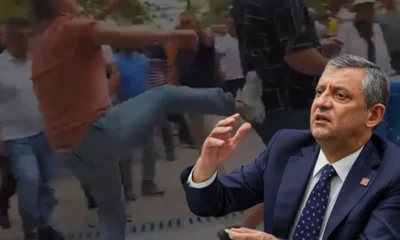
Brawl between Özgür Özel and Kemal Kılıçdaroğlu supporters! Mustafa Sarıgül kicked the citizen who reacted
-
 Daily Agenda2 days ago
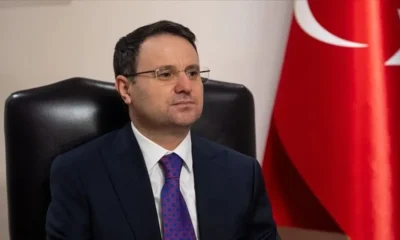
Message from Minister of Justice Gürlek about the February 6 earthquake: They tried to overshadow the power of our state
-

 Daily Agenda3 days ago
CHP leader Hürriyet and 19 people were arrested
-
 Daily Agenda3 days ago
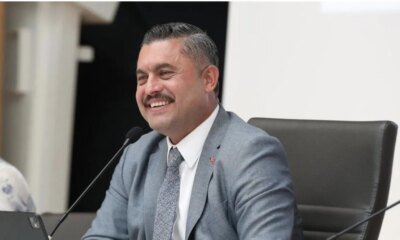
Festival profiteering worth 20 million in Şile
-

 Politics3 days ago
Erdoğan touts unity on anniversary of Erzurum Congress
-

 Sports3 days ago
Germany turns to Klopp after 3rd straight World Cup setback
-

 Sports2 days ago
Wolff sees future Verstappen-Antonelli partnership as possibility