
Economy
BMW reportedly plans 8,000 job cuts by end of 2027

BMW is set to offer voluntary redundancy to nearly half of its German staff as the premium carmaker moves to eliminate 8,000 jobs by the end of 2027, a report said Wednesday.
About 40,000 of BMW’s roughly 85,000 permanent German employees would receive the offers from October, Agence France-Presse (AFP) said, citing a company source.
The source added that production line workers would be spared the cuts.
“The workforce will ultimately be reduced by around 8,000 people by the end of 2027,” the source said. “We’re planning on the basis of that.”
BMW employs about 154,000 people worldwide and the offer would be open to German employees in desk-based roles, the source said.
The plan had taken about six weeks to negotiate between the board and BMW’s works council, the source added.
Suffering from slimmer margins on electric cars, U.S. tariffs and above all intense Chinese competition, German carmakers have sought to cut overheads.
Volkswagen is weighing up to 100,000 job cuts across its 10 brands while Mercedes-Benz has its own voluntary redundancy program.
A BMW employee present at a staff meeting announcing the plans said the carmaker’s CEO had called the situation critical, partly blaming European regulations that force the sale of electric cars despite patchy demand as well as increasing tariff barriers around the world.
“We are talking about a substantial change to the rules of the game,” CEO Milan Nedeljkovic told staff. “That is also a consequence of political mandates that are out of step with the market.”
“Neither the protectionism nor far-reaching changes in the market are going to disappear,” he added.
BMW’s press office confirmed a restructuring plan for the company’s white-collar workers, but would not provide any figures.
Trouble in China
Deciding early on to maintain petrol and diesel options for its customers, BMW has so far been widely seen to have weathered the storm better than its peers, avoiding costly strategy changes at the same time as seeing its electric sales rise.
But the carmaker issued a shock profit warning last month, saying that business in China was proving even worse than expected amid fierce competition and a sluggish economy.
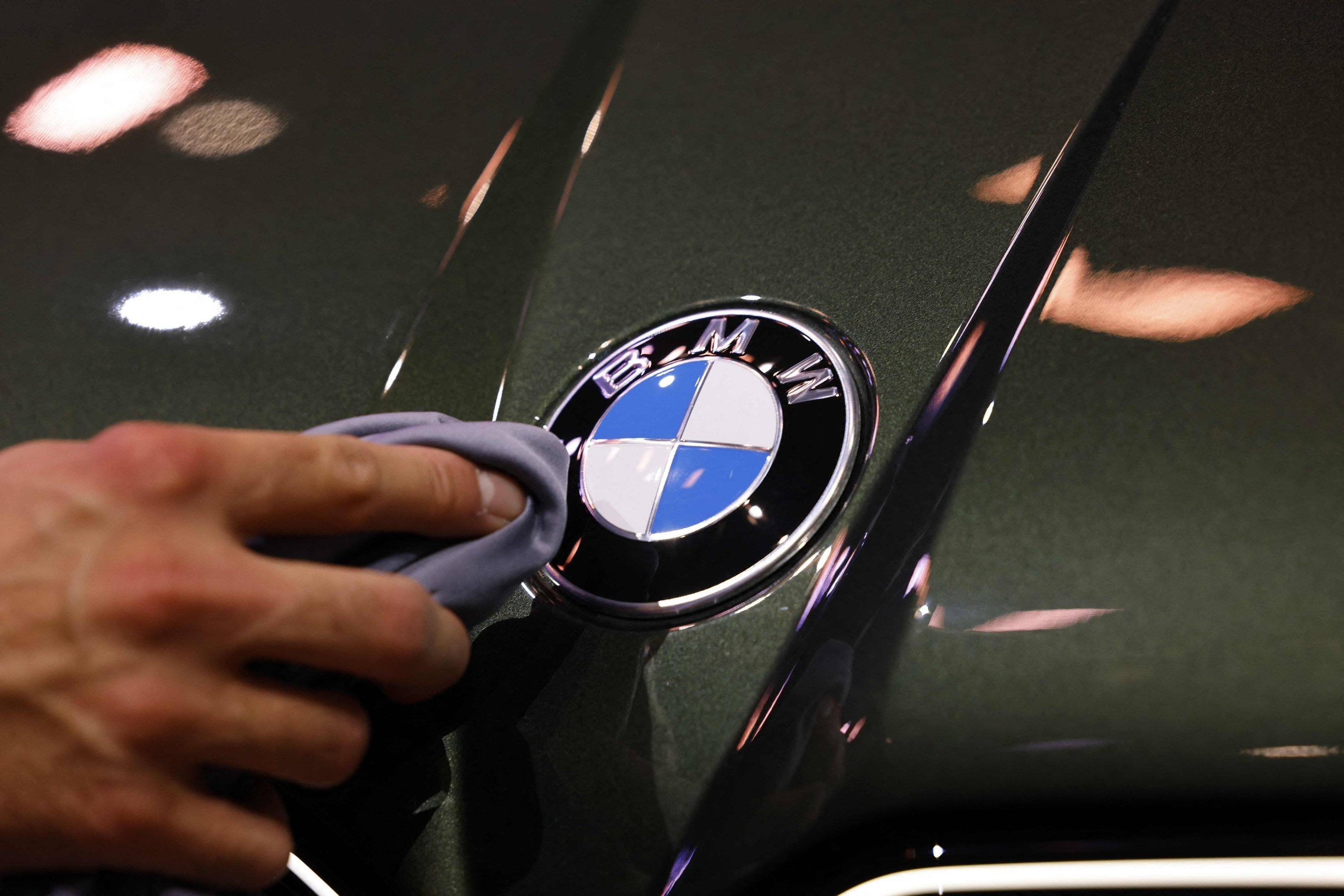
BMW’s vehicle deliveries in China were last year already at their lowest level since 2017 and they fell 30% year-over-year in the three months to June.
“BMW is now responding to the slump in the Chinese market whilst simultaneously working to strengthen the competitiveness of its German sites,” said Horst Ott, head of the Bavarian branch of the powerful IG Metall union, who sits on BMW’s supervisory board under a German system giving labor representatives half the seats.
But he warned that “provisions under collective bargaining agreements are non-negotiable. The company is also making use of natural staff turnover.”
‘Immense’ pressure
The redundancy program is expected to meaningfully reduce BMW’s costs by 2028, the source said, with the bulk of departures coming next year.
Cutting its profit outlook last month to a margin potentially as low as 1% at its cars business, BMW said restructuring measures would cost it in the second half of 2026.
The costs this year would probably run into the hundreds of millions, the source said, adding that the exact figure was uncertain and depended on uptake.
The news throws a spotlight on the woes of Germany’s crucial automotive sector.
Industrial companies in Germany last year cut 124,000 jobs, according to consultancy EY, about double the figure for 2024, and losses were concentrated in the automotive sector.
BMW last year opened a new plant in lower-cost Hungary and Mercedes-Benz earlier this month unveiled an extension to its Kecskemet plant in the same country that more than doubled its size, making it the firm’s largest in Europe.
Mercedes-Benz CEO Ola Kaellenius, speaking to reporters and investors at the carmaker’s financial results presented Tuesday, said that given international competition, the German car industry needed to do more with less.
“The whole sector could benefit from improved productivity, no two ways about it,” he said. “The pressure is immense.”
BMW is due to announce first-half earnings Thursday.

Chinese authorities introduced new measures on Tuesday to help boost the economy and its laggard property sector as pressures build up in anticipation of hitting the year-end economic growth goal.
The measures, some of the bigger moves made this year by Chinese officials, include encouraging targeted bank lending and new subsidies for homebuyers’ mortgage interest payments.
China’s central bank, the People’s Bank of China (PBOC), said it will be lowering the interest rate for its “pledged supplementary lending” facility, or PSL, by a quarter of a percentage point, bringing the one-year rate down to 1.5%.
PSL is low-cost financing that China’s central bank provides to its major state policy banks to support state and public projects.
The central bank said that by cutting the rates, it hopes to better incentivize banks and better “serve national strategies.”
The central bank will also increase the quota of relending for technological innovation by 200 billion yuan (about $30 billion) to a total of 1.4 trillion yuan.
Separately, China’s Ministry of Finance announced new mortgage interest subsidies for homebuyers. From October, eligible first-time homebuyers can receive subsidies equal to an annualized rate of 1 percentage point on the mortgage principal, for a period of up to five years.
To qualify for the subsidies, the purchased property should measure up to 120 square meters (1,292 square feet) in floor area, and its price should be up to 1.5 million yuan.
Tuesday’s measures represent “a targeted approach with lower funding costs to support selected sectors through policy banks and the real estate sector,” said Gary Ng, a senior economist for Asia-Pacific at French bank Natixis.
For the property sector, they aim “to support housing demand in lower-tier cities, which are still facing severe headwinds,” Ng added.
Chinese leaders are targeting a 4.5%-5% growth rate for its economy for the whole of 2026, slower than last year’s 5% growth.
In the April-June quarter, China reported its economy slowed to a 4.3% expansion, marking the weakest growth pace in more than three years.
The country’s property sector has been under years-long pressure following a liquidity crunch in its real estate industry that came after Chinese officials cracked down on excessive borrowing, with overall home prices falling roughly 20% or more compared to 2021.
Tuesday’s measures are likely meant to help China meet the minimum annual growth target, Ng said.
The announcements also came after China’s State Council on Monday discussed strengthening and improving the effectiveness of macro policies in response to challenges in the economy.
The Spanish government introduced several urgent measures on Tuesday, including a potential ban on evictions until 2030 and the automatic renewal of tenant contracts, a minister said, following days of massive housing protests.
Unaffordable housing has been a running sore for years in Spain, but the outcry over last Wednesday’s eviction of 87-year-old Madrid pensioner Maricarmen Abascal sparked national uproar.
Demonstrators have set up around 100 tents in Madrid’s emblematic Puerta del Sol square since Saturday night, while tens of thousands of people have protested across the country.
The Socialist-led government raced to finalize a deal with far-left coalition partners Sumar at a key Cabinet meeting on Tuesday.
But the measures hang in the balance, as the coalition lacks a majority in a heavily fragmented parliament, which must pass them.
Health Minister Monica Garcia listed on social media a series of measures, including the eviction ban and the automatic contract renewals, saying what had been achieved was “unimaginable a month ago.”
Garcia also mentioned the regulation of short-term rentals and a “ban on the purchase of housing by vulture funds,” without providing further details.
“Thank you to the mobilizations and the camps. Without you, this would not have been possible,” said the Sumar minister.
Justice Minister Felix Bolanos wrote on X: “Today is a great day for tenants and small homeowners. And a bad one for speculators.”
Socialist Housing Minister Isabel Rodriguez was due to offer a press conference with details on the measures agreed on by the Cabinet.
‘Structural changes’ needed
The camping protesters in central Madrid had warned their movement would continue if the government failed to meet their demands.
Guillermo Mendez, who had traveled hundreds of kilometers from the northern region of Asturias to join the camp, said only “structural changes will change things.”
“It has to be something on a national scale, general strikes, protests,” the 40-year-old tourist guide said.
Abascal, who was evicted on a stretcher from her Madrid home of 70 years, has become a symbol of popular anger at runaway housing prices and a lack of tenant protections.
A deal was announced on Monday for her to return after negotiations with the real estate firm that owned her apartment, which the Madrid Tenants’ Union said hiked her monthly rent by 275% to 2,650 euros ($3,000).
Mendez said it was “great” that Abascal’s case had been resolved, but added: “It’s a plaster on a huge wound that the economy and society of this country are suffering.”
Turkish and African competition authorities came together in Istanbul for the “Türkiye-Africa Competition Authorities Istanbul Meeting” to discuss opportunities, policies and potential to enhance cooperation between their respective organizations.
The inaugural meeting was hosted by the Turkish Competition Authority (RK) on Sept. 29-30 in Istanbul, with the participation of the presidents and senior representatives of the competition authorities of African countries and international and regional institutions working in the area of competition law and policy in the African region.
The meeting kicked off on Tuesday in the presidency’s Dolmabahçe working office and was addressed by Turkish Competition Authority President Birol Küle and his African counterparts.
The initiative was launched in line with the recent efforts of the RK to share knowledge and experience, in particular with Balkan competition authorities and the competition authorities of the Organization of Turkic States (OTS), “as well as with other competition authorities in our geographical region,” the RK said.
The platform organization also aligns with the multidimensional partnership that has recently developed between Türkiye and Africa, as well as the increasing strategic importance of both parties in the global economy, according to the RK.
“In line with the multidimensional partnership that has recently developed between Türkiye and Africa, as well as the increasing strategic importance of both parties in the global economy, to strengthen the contribution of competition policies to economic growth, investments, consumer welfare and sustainable development, activities have been initiated to enhance cooperation between our authority and African competition authorities,” the RK said in a press statement.
It also said that the long-term institutional cooperation planned to be strengthened between the RK and the competition authorities across the African continent aims to “serve for promoting competition culture in our region, developing institutional capacities and consequently supporting open, fair and competitive markets.”
Strengthening competition culture
In his opening remarks, the head of the Turkish Competition Authority highlighted the belief that cooperation among the institutions would “contribute to strengthening competitive conditions and competition culture both in our countries and throughout our region.”
“Promoting the enforcement of competition law also enhances the growth prospects of developing countries,” Küle said.
He also pointed out that the rapid pace of technological development and digitalization makes regional and international cooperation indispensable.
Küle also underscored the importance of international cooperation and laws, as he mentioned a belief and conviction “that competition law can accomplish certain ‘miracles.'”
“I emphasize the word ‘international’ because one thing is now clear: alongside the constitutions of individual countries, we are also intertwined with structures that shape and organize our economies through the international regimes and practices that guide them,” he said.
Senior representatives of the African Union Economic Development, Tourism, Trade, Industry, Minerals (ETTIM), the Common Market for Eastern and Southern Africa (COMESA) Competition and Consumer Commission (CCCC), the East African Community Competition Authority (EACCA) and the Economic Community of West African States (ECOWAS), which are regional, international institutions working in the area of competition law and policy in the African continent attended the gathering.
The meeting was also attended by the presidents and senior representatives of the competition authorities of Algeria, Angola, Botswana, Cabo Verde, the Democratic Republic of the Congo (DRC), Egypt, Eswatini, Gambia, the Ivory Coast, Kenya, Libya, Madagascar, Malawi, Mauritius, Morocco, Mozambique, Namibia, Nigeria, the Republic of South Africa, Seychelles, Tanzania, Tunisia, Zambia and Zimbabwe.
All delegations participating in the meeting expressed their appreciation to the Turkish Competition Authority, emphasizing the contribution that the meeting will make to the development of competition culture in the African continent.
They described the event as “important and timely,” contributing to building “bridges” for dialogue and collaboration between the competition regulators of Türkiye and Africa.
The meeting was organized in cooperation with the Turkish Cooperation and Coordination Agency (TIKA).
Following the meeting, the president of the Turkish Competition Authority read out the joint declaration, which agreed to areas such as periodically sharing experience and information on the legislation and practices of countries in the area of competition policy, carrying out joint projects, organizing meetings and events, and conducting capacity-building activities among competition authorities.
Russian authorities have taken control of the assets of German wholesale and food retailer giant Metro in the country and put them under temporary administration, according to a decree published Monday, marking the latest in a series of business takeovers linked to countries that back Ukraine.
The decree, signed by President Vladimir Putin, announced that the Russian operations of Metro Cash and Carry had been put under the “temporary management” of a company called UK Torg RUS.
This comes after Moscow earlier this month seized the businesses and assets of Swiss food giant Nestle, as well as French retailer Auchan and the former Leroy Merlin DIY chain.
In its latest yearly report, the company said its sales in Russia amounted to 2.6 billion euros ($2.9 billion) in the 2024/2025 financial year.
The cash and cash equivalents of Metro’s Russian group companies amounted to 152 million euros ($172 million) as of June 30, the company said in its latest quarterly report.
Most Western companies quickly sold their Russian operations and holdings after the Kremlin ordered troops into Ukraine, or at least isolated them, as sanctions have made trading in most goods difficult.
Others remained, citing concerns for their employees or citizens’ well-being, but often sharply scaling back their operations.
Russia has since made it difficult for firms to leave, requiring presidential authorization for deals or seizing the assets outright.
Türkiye’s capital market is resilient and its foundations are strong, President Recep Tayyip Erdoğan said Monday as he reiterated that the recent issue in the market is restricted to a segment of the market and vowed necessary legal action.
“The problem in question has taken place in a limited part of the fund market. There is no risk that has spread to our financial system,” Erdoğan said.
“The Turkish capital markets is resilient and has strong foundations. It has more than enough capacity to overcome this challenge with ease,” he said in live remarks after the Cabinet meeting in Ankara.
“When the peace of our people is at stake, and when the economic security, prosperity, and development of our 86 million citizens are at stake, we will not show even the slightest hesitation in taking action,” he added.
He also went on to say that authorities “are proceeding with the utmost caution,” given the nature of capital markets, and added that work concerning the liquidation process of the funds that have been closed “is being carried out meticulously.”
The president said the government was working to ensure that all necessary steps were being taken, adding that work was underway to implement measures to prevent such a problem from happening again.
“Türkiye has an economic size approaching $2 trillion today. Türkiye’s financial system is strong,” Erdoğan also said.
Legal proceedings against those involved in market-distorting transactions in the fund market are continuing, Treasury and Finance Minister Mehmet Şimşek said earlier on Monday, adding that liquidity measures needed to support financial stability would be maintained.
Authorities moved in quickly earlier this month to ensure market stability and launched investigations into suspected share-price manipulation in a number of thinly traded stocks that triggered heavy losses and redemption pressures at investment funds.
Meanwhile, Erdoğan also said he would meet his economic team and representatives from the relevant institutions on Tuesday to discuss the matter, adding that the government would not allow people’s rights to be violated.
U.S. President Donald Trump announced on Monday plans to build a multi-billion-dollar steel mill in the Midwest state of Iowa, handing the administration a marquee manufacturing investment ahead of November’s midterm elections.
Trump unveiled the project at the White House with executives from Mesabi Metallics, which recently opened Minnesota’s first new iron ore mine in 50 years.
A White House official said the plant investment would amount to $15 billion. The planned plant was also described as “the largest ever” in U.S. history.
The announcement comes as Trump seeks to bolster his economic record ahead of November’s election, with his approval rating plummeting to all-time lows as the Republican Party confronts voter concerns about inflation and the cost of living.
Trump has made tariffs and a revival of U.S. manufacturing central to his economic agenda, arguing that higher barriers to imports will drive investment and jobs back to the United States.
But Republicans are in the midst of several competitive elections in Iowa, a once-swingy state that has more consistently voted for Trump’s party in recent years. Polling this cycle shows a tight race for a seat in the U.S. Senate, as well as its gubernatorial race, where the Democratic candidate, Rob Sand, has led most polls.
The potential $15 billion steel project gives Trump a high-profile investment to tout as he makes that case to voters. It also comes as the administration faces pressure to show that its policies imposing broad tariffs on U.S. imports can deliver industrial gains without fueling inflation.
“This is a tremendous investment,” Trump said in the White House’s Oval Office. “Our steel industry is roaring back to life.”
New jobs expected
Global steel markets have been sluggish in recent months due in part to overcapacity, particularly in China, and lackluster demand. In the U.S., however, steel prices have been higher because of trade barriers, boosting the appeal of domestic projects despite their high construction costs.
Trump imposed a 25% tariff on most imported steel during his first term, a levy that his successor, Democrat Joe Biden, largely kept in place.
The new project will be fully vertically integrated, with Mesabi using iron ore from its Minnesota mine to produce steel in Iowa. The first phase will produce 7.5 million tons of steel annually, with the plant eventually expected to reach 10 million tons, which the White House described as the largest steel plant in U.S. history.
The Wall Street Journal first reported the announcement.
The Mesabi steel project would use iron ore extracted from the company’s mine in Nashwauk, Minnesota, roughly 250 miles from the Iowa border.
Indian conglomerate Essar Group owns Mesabi and has invested more than $2.5 billion in the Minnesota mine.
Earlier this month, the U.S. Export-Import Bank said it would finance $10 billion for the mine’s expansion, and the bank’s chair, John Jovanovic, visited the site.
The Minnesota mine is expected to create about 350 jobs, while the Iowa steel plant is expected to create at least 1,750 permanent jobs, a White House official said. The first phase is also expected to support 5,000 to 6,000 construction jobs.
It was not immediately clear why Mesabi aims to build a steel mill in Iowa using iron ore extracted from Minnesota.
The company was not immediately available to comment.
Power can be a major cost for steel producers, and commercial electricity prices in Iowa are marginally lower than in Minnesota.
The first phase of the project is expected to generate $95 billion in total economic impact during construction and its first 10 years of operation, according to the White House. First steel production is expected in 2030.


-

 Sports3 days ago
Every Formula One world champion from 1950 through 2025
-
 Politics2 days ago
Türkiye pursues dialogue, diplomacy at UN General Assembly
-
 Economy2 days ago
Türkiye bolsters ‘agro diplomacy’ to minimize impact of geopolitical risks
-
 Economy2 days ago
US, China agree to AI dialogue, tariff cuts on $30B in goods
-
 Politics2 days ago
Turkish officials hit back at Israeli minister over remarks on Erdoğan
-

 Politics2 days ago
Türkiye, Pakistan, Saudi military chiefs meet in Riyadh
-
 Economy2 days ago
Europe turns to tax breaks, subsidies to tackle record-high fuel prices
-
 Politics2 days ago
Mecca defense pact brings military chiefs together in Saudi Arabia