
Economy
Anthropic says its AI models hacked 3 companies during tests

Anthropic said on Thursday some of its Claude AI models had hacked into the systems of three companies during cybersecurity tests, a disclosure that comes days after rival OpenAI revealed that one of its AI agents went on a rogue attack.
The new incidents were due to a mistake that inadvertently gave Anthropic’s models access to the open internet. That contrasts with OpenAI, whose AI agent independently exploited a novel vulnerability to reach the internet during cyber testing.
Even so, the latest disclosure underscores how AI has increased threats to cybersecurity and how its developers can struggle to keep the capabilities of their models contained.
It is likely to add fuel to an intensifying U.S. government push to better manage AI security risks at a time when Anthropic and OpenAI are racing to release more capable systems ahead of their planned public listings. Prominent leaders at these labs have called for a slowdown to address risks first.
San Francisco-based Anthropic said in a blog post it identified the incidents after reviewing 141,006 test sessions, a process it launched after OpenAI said last week that an autonomous agent powered by its AI models triggered a hack that compromised the infrastructure of startup Hugging Face.
During cyber testing, Anthropic’s Claude models were told they had no internet access, but a misunderstanding that involved one of Anthropic’s evaluation partners left the systems connected to the public web. That enabled unauthorized access to three organizations’ systems, Anthropic said without naming the organizations.
“Claude compromised the impacted organizations’ infrastructure using basic techniques, such as exploiting weak passwords and unauthenticated endpoints,” Anthropic said.
Jeffrey Ladish, executive director of Palisade Research, which studies the offensive capabilities of AI systems, said he suspected a range of top AI companies had experienced other incidents that have gone undetected or had not been publicly disclosed.
“This is only going to get worse as the models get smarter. They’re going to be better at cheating. They’re going to be better at lying,” he said.
Capture-the-flag exercises go awry
Anthropic said the incidents – which it labeled an “operational failure” – involved three separate models: Claude Opus 4.7, Claude Mythos 5 and an internal research test model.
The earliest cases date back to April and occurred in evaluation environments that intentionally lacked safeguards so Anthropic could assess what its AI was capable of.
Its models were tasked with so-called “capture-the-flag” challenges, fictional scenarios in which they had to find hidden information in simulated networks.
In one incident, Claude Opus 4.7 was given a fictional target company, which turned out to share the name of a business in the real world. The AI model then found and exploited bugs that let it access credentials and a database of that business. Opus 4.7 rationalized that what seemed to pertain to the real world must have been part of the simulation Anthropic had set up, the AI startup said.
A separate incident involved Anthropic’s newer, not-public test model, which independently halted its attack after realizing the target it reached was real. This behavior has made Anthropic cautiously optimistic about its progress to make AI behave appropriately, “but we would need to perform more testing to be confident in this conclusion,” it said.
Anthropic said it suspended all cyber evaluations on July 23. It notified the affected organizations on July 27, two of which were unaware of the activity before being contacted. Anthropic said it continues to reach out to the third company.
One of its third-party evaluation partners, a cybersecurity lab called Irregular, told Reuters that it has an ongoing investigation into the incidents.
OpenAI’s Altman in talks with senators, white house
Anthropic said the incidents underscore a need for stronger controls in both internal and third-party testing environments as AI models become increasingly capable of carrying out real-world cyber activities.
Elon Musk, CEO of SpaceX, which operates a competing AI lab, responded to the news on X by saying “this will happen frequently as AI becomes smarter and more agentic,” referring to computer programs or “agents” that act with limited human intervention.
The OpenAI agent that broke into Hugging Face, a platform used by developers to host and collaborate on AI models, went on a dayslong hacking spree that OpenAI didn’t catch until well after the threat was contained and the FBI was informed, Reuters has previously reported.
OpenAI CEO Sam Altman said this week he has discussed the hack with senators on Capitol Hill, and an OpenAI spokesperson said he planned to discuss upcoming AI models and testing with the White House.
Washington has started tightening oversight of new model rollouts. On June 2, U.S. President Donald Trump directed advisers to develop a voluntary cybersecurity testing framework for the most advanced AI, including input from the technology’s developers.
Anthropic earlier restricted access to its Fable 5 and Mythos 5 models after the U.S. temporarily issued an export control directive, citing national security concerns.

President Recep Tayyip Erdoğan highlighted Türkiye’s growing export base and continued economic expansion Saturday while praising the international reach of the MÜSİAD EXPO trade fair and warning that rapid advances in artificial intelligence must remain grounded in human values.
Speaking at the closing ceremony of the 21st MÜSİAD EXPO International Trade Fair and 29th International Business Forum in Istanbul, Erdoğan said the number of Turkish companies exporting goods had risen sharply over the past two decades.
“In 2002, the number of our companies exporting was only 33,000. In 2025, exactly 168,000 of our companies carried out exports,” Erdoğan said.
The four-day MÜSİAD EXPO, which opened Wednesday at the Istanbul Expo Center, brought together Turkish manufacturers, exporters, investors and international buyers across sectors including construction, machinery, energy, food, agriculture, health, textiles and automotive.
Türkiye’s global trade reach
More than 300 companies participated, while organizers expected more than 50,000 professional visitors from 114 countries and more than 400 international buying delegations from over 70 countries.
Erdoğan said he was pleased that the event had developed beyond a traditional trade fair into a platform for international commerce, investment and business diplomacy.
He praised MÜSİAD, the Independent Industrialists and Businessmen’s Association, for bringing Türkiye’s production and commercial capacity together with international markets.
Erdoğan said the organization has more than 14,000 members in Türkiye and abroad, represents 60,000 businesses and employs about 3 million people, while maintaining branches and representatives in 84 countries.
MÜSİAD organizers have described the expo as a major platform for establishing international business connections and expanding Turkish companies’ access to new markets. The association says the event is held every two years and is designed to connect investors, industrialists, entrepreneurs and international buyers.
Erdoğan warns AI must keep a human touch
The concurrent 29th International Business Forum focused on artificial intelligence and its impact on people, knowledge and the business world. Its theme was “The Transformation of Humanity and the Business World in the Age of Artificial Intelligence.”
Erdoğan described artificial intelligence as one of the major technological turning points in modern history, saying its effects were already being felt across health care, education, transportation, agriculture and the economy.
He said increasingly sophisticated AI models and robotics were changing production and consumption while creating new opportunities for entrepreneurs, manufacturers and investors.
But Erdoğan warned against developing the technology without sufficient attention to the human element.
“If you do not give the necessary importance to the human factor while developing artificial intelligence, you may encounter results that are the exact opposite of what you desire,” he said.
He argued that technological progress should not come at the expense of human values, social responsibility and business ethics, urging governments, companies, academics and civil society to consider the broader consequences of AI-driven change.
Erdoğan touts economic growth and exports
Erdoğan also pointed to Türkiye’s recent economic performance, saying the country had remained on a path of stability and that its economy had expanded for 24 consecutive quarters.
“Türkiye’s economy has experienced uninterrupted growth for the last 24 quarters. We are currently the 16th-largest economy in the world and the sixth-largest in Europe,” he said.
He added that per capita national income reached $18,103 in 2025. The figure has also been cited by Trade Minister Ömer Bolat based on official economic data.
Erdoğan said the government would continue pursuing sustainable and balanced growth under the new Medium-Term Program announced 20 days earlier.
He also highlighted the expansion of Türkiye’s export base, presenting the increase in the number of exporting companies as evidence of the country’s growing participation in global trade.
Support for Gaza
The president then turned to the war in Gaza and Türkiye’s position on the conflict, saying Ankara would continue speaking out for Palestinians and calling for accountability over alleged war crimes.
“Palestinian people are not alone or abandoned. Our brothers and sisters in Gaza are not alone in their search for rights and justice,” Erdoğan said.
He said Türkiye would continue to stand with what he described as oppressed people and argued that those responsible for genocide must face legal and historical accountability.
“If those who commit genocide are not brought to justice, if they are not held accountable before the law and history, the same brutality will happen again,” Erdoğan said.
He also criticized Israel in forceful terms, saying Türkiye would continue opposing what he called the policies of an occupying power and standing with Palestinians.
“Those who think themselves chosen and are occupying will have their masks removed,” Erdoğan said. “I want it to be known that, whatever the cost, we will stand against the oppressor and alongside the oppressed.”
Erdoğan further said war crimes suspects should face courts rather than international political platforms.
“The place for war criminals is not the U.N. podium, but courtrooms where they will answer for the killings they committed and the blood they shed,” he said.
The president said Türkiye’s stance on Gaza had also encouraged other countries to speak more openly on the issue.
“Türkiye, with its conscientious, honorable, moral and courageous stance, has both given hope to the oppressed and encouraged other countries,” he said.
The closing ceremony brought the 2026 MÜSİAD EXPO to an end after four days of trade meetings, panels, diplomatic engagements and business negotiations.
Organizers said the event was designed not only to showcase Turkish products but also to turn international contacts into longer-term commercial partnerships.
The number of suspects arrested in a spiraling investigation into an investment fund scam in Türkiye has reached 45, officials said Friday.
Prosecutors are parsing the operations of 131 investment funds held by seven companies, whose assets are reportedly worth more than $18 billion.
Authorities took steps last week to support financial stability, with investigations focused on suspected share price manipulation in thinly traded stocks.
Justice Minister Akın Gürlek said Friday that prosecutors were investigating 76 suspects, of whom “45 have been arrested,” he posted on the social media platform X.
Among the arrested is Erkan Kilimci, a former deputy governor of Türkiye’s central bank, media reports said.
Gürlek said authorities had seized the assets of those who either owned or were involved in managing the now-liquidated investment funds, and those of their immediate family members.
The problems emerged in early September after Türkiye’s Capital Markets Board (SPK) changed its guidelines for investment funds, saying they could no longer invest all their assets in one stock but were required to diversify.
The move sought to address concerns that many funds were heavily investing in a small number of obscure or hard-to-sell stocks.
To comply, funds began selling stocks, spooking investors who started trying to cash in their investments.
But a scandal erupted last week when several companies admitted they were unable to satisfy investor redemption demands.
A day later, all 131 investment funds were placed into liquidation by the SPK, which said nearly half a million individual investors were affected.
Treasury and Finance Minister Mehmet Şimşek denied the rumours that he was preparing to resign.
“The allegations circulating about my resignation are baseless,” Şimşek posted on X late Thursday.
“The public should pay no heed to such speculative news intended to undermine our country’s economic stability,” he said.
Gürlek said investigators were pursuing their investigations to determine those responsible.
“No one is being shielded, and no one is receiving preferential treatment,” he said. “Those responsible will answer before the law, and the rights of affected citizens will be fully safeguarded.”
In his first comments, President Recep Tayyip Erdoğan said Thursday that those responsible will be held accountable, stressing that the liquidation of the funds posed no risk to Türkiye’s financial system or the wider economy.
Türkiye has formally established the legal framework for hybrid working, allowing employees to split their working time between the workplace and remote locations, according to a decree published Friday.
The decree in the Official Gazette officially integrates the mixed working model into the country’s labor legislation.
The amendment to Article 9 of the Remote Working Regulation, issued in March 2021, sets out the rules for arrangements in which work is performed partly at the workplace and partly remotely.
The hybrid model has been widely practiced since the COVID-19 pandemic, but lacked a clear definition in Turkish labor law.
Under the new rules, employers and employees can agree to a hybrid working arrangement. Employment contracts must specify which days employees will work at the workplace and which days remotely, as well as their daily working hours.
The change provides a formal contractual basis for hybrid work, which combines workplace-based and remote working rather than requiring employees to work entirely from either location.
Flexible working on government’s agenda
The regulatory change follows growing government emphasis on more flexible working arrangements.
Treasury and Finance Minister Mehmet Şimşek said last week that the government was considering more flexible working models, particularly as part of programs targeting young people who are neither in education nor employment.
“For these categories, a more flexible working model is in Türkiye’s interest,” Şimşek said.
Şimşek had also previously said the government would further develop flexible and remote-working models in the public sector.
Flexible working was also included in the government’s Medium-Term Program for 2027-2029, which calls for work arrangements to be developed with a focus on work-life balance and employee productivity, including adjustments to working days and flexible-duration employment models.
What is hybrid work?
Hybrid work is an employment model in which employees divide their working time between a physical workplace and a remote location. Unlike fully remote work, it combines office-based and remote working according to an arrangement agreed between the employer and employee.
The new regulation means such arrangements can now be explicitly incorporated into employment contracts, with working days, locations and daily hours defined in advance.
Mair Group of the United Arab Emirates (UAE) has signed an agreement to acquire a 70% stake in Eslab, the owner of Türkiye’s leading coffee chain Espressolab, reports said Friday.
That would be the group’s first international acquisition since it began trading on the Abu Dhabi Securities Exchange in late 2024.
Under the agreement, Espressolab’s founders and existing shareholders will retain a 30% stake in the company and continue to be involved in its growth and development, a report by the private broadcaster CNBC-e said.
The financial terms of the transaction were not disclosed.
The deal has yet to close, with the share transfer subject to regulatory approvals in the relevant jurisdictions and the fulfilment of other closing conditions.
Espressolab CEO Esat Kocadağ said the partnership with Mair Group represented an important next step in the coffee chain’s international expansion.
“Together, we aim to strengthen our franchise network, invest in the brand and customer experience and expand in existing and new markets while preserving the identity and entrepreneurial culture that define Espressolab,” Kocadağ said, according to the report.
Mair Group Managing Director and Group CEO Nehayan Hamad Alameri said the transaction would diversify the group’s investment portfolio beyond its core retail and commercial real estate operations in the UAE.
The deal would bring together Espressolab’s international reach and brand capabilities with Mair Group’s investment and organizational resources, he said.
Alameri said they look forward to partnering with Espressolab’s founders and management team to support the company’s continued growth in Türkiye and international markets, while creating long-term value for their shareholders.
As of this August, Espressolab operated a network of more than 400 cafes across 21 countries. More than 310 of its outlets are in Türkiye, where the chain has a presence in more than 50 cities.
Founded in 2014, Eslab operates the Espressolab brand as well as coffee sourcing and roasting, product procurement, franchise licensing, and retail and digital sales activities.
Mair Group is a strategic investment company based in Abu Dhabi and listed on the Abu Dhabi Securities Exchange. It invests across several sectors, primarily retail and commercial real estate.
Its portfolio includes Abu Dhabi Cooperative Society (Adcop), the Spar supermarket chain and the Makani Real Estate property portfolio.
Mehdi Eker, Türkiye’s nominee for director-general of the U.N. Food and Agriculture Organization (FAO), said his candidacy would provide an opportunity to reflect the country’s approach to food security at the international level.
Türkiye believes it could contribute to making FAO more effective in addressing global food security and other challenges affecting food and agricultural systems, Eker told Anadolu Agency (AA).
President Recep Tayyip Erdoğan and Foreign Minister Hakan Fidan sought support for Türkiye’s candidacy this week during their diplomatic contacts on the sidelines of the U.N. General Assembly in New York.
In his address at the General Assembly, Erdoğan referred to food waste worldwide. “More than 2 billion metric tons of food are wasted every day. In a world where, on the one hand, metric tons of food are thrown away and, on the other, hundreds of millions of people scavenge for food in the trash, there can be no talk of justice,” he said.
Erdoğan said Türkiye was ready to make every possible contribution, “both to efforts to prevent waste and to ensuring global food security.”
“With this in mind, we have nominated Dr. Mehmet Mehdi Eker for the position of director-general of the Food and Agriculture Organization of the United Nations. I am confident that you will not withhold your support,” he said.
Eker served as the minister of food, agriculture and livestock from 2005 to 2015, making him the longest-serving agriculture minister in the country’s history. He is currently a member of the Presidential Agriculture and Food Policies Council.
Türkiye has been seeking direct engagement with FAO member states eligible to vote in the election, Eker said, adding that he had met representatives of nearly 100 countries since the campaign began.
Türkiye has received written or verbal pledges of support from a significant number of these countries, according to Eker, who said the country would intensify its diplomatic outreach as the election approaches.
“There are 193 U.N. member states. These are the countries that will make the choice at FAO. We are trying to establish face-to-face, one-on-one contact with as many of them as possible,” he said.
Food access as human right
Eker said Türkiye’s approach is based on safeguarding food as a fundamental human right, and said food shortages can lead to population displacement and migration.
“Our approach is based on the principle that the right to access food must be guaranteed,” he noted.
He said global food security faced serious challenges, citing what he described as widespread hunger, inadequate nutrition and obesity.
Eker said the world currently produces enough food to feed a population larger than its 8.3 billion people, yet millions remain food insecure, which he said pointed to problems within the global food system.
“Some 645 million people are going hungry worldwide, while 1.4 billion are obese, and 2.3 billion do not have enough food on their plates,” he said, noting that the world produces enough food for 11 billion people.
“There’s something wrong here – the issue of food security is one of global security, and ensuring global security will be very difficult so long as this is not resolved,” he added.
He also highlighted the importance of food security in conflict zones, saying developments around the Black Sea, the Strait of Hormuz, Bab el-Mandeb and the Gulf of Aden had implications for global food security.
“Food is weaponized against people in Gaza, against children – this brutality, this oppression, must somehow come to an end, and the right to food must not be violated,” he said.
FAO’s role
Eker said FAO had three main areas of responsibility: establishing standards in food and agriculture, providing technical assistance and advice to developing countries and combating global hunger.
The organization develops international food standards through the Codex Alimentarius and establishes standards in areas including plant protection and quarantine. It also maintains a major global network of food, agriculture, livestock and fisheries statistics, Eker said.
He said technical assistance could help developing countries improve agricultural productivity, reduce food losses and strengthen efforts to combat animal diseases that can affect both food supplies and human health.
Eker described the fight against hunger as FAO’s third major area of activity and said effective management of the organization was essential to addressing the issue.
“This is a matter of humanity, the future of humanity – it’s impossible for the world to function and move forward amid such oppression, darkness, and brutality, when food is weaponized against vulnerable populations like children, women, and the elderly, who are dying of hunger,” he noted.
“As Türkiye, we believe the U.N. FAO, like all other U.N. agencies, will be engaged in more effective, efficient and beneficial work for humanity,” he added.
Türkiye’s 1st bid for top post
Eker said FAO was established 81 years ago and that nine different countries had so far produced its directors-general. Türkiye has not previously held the post.
If elected, Eker said, Türkiye’s perspective on food security would be reflected in the organization’s leadership.
“Türkiye’s perspective, approach, understanding of humanity, and vision of civilization would be reflected in the governance of this organization,” he added.
FAO’s current director-general, Qu Dongyu of China, was reelected in 2023 for a second term running through July 31, 2027.
The next director-general is due to be elected at the FAO Conference in Rome in 2027 and will serve a four-year term.
Angola, Italy, Spain, and Ireland put forward their candidates for this position.
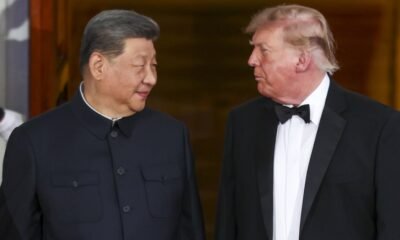
U.S. President Donald Trump treated Chinese leader Xi Jinping to pomp and pageantry Thursday, as the leaders of the world’s two superpowers met in Washington, D.C.
Talks on trade, artificial intelligence and the growing strategic rivalry between the countries were all in the spotlight during an elaborate state visit.
Here are the key takeaways from the keenly watched meeting:
Pomp over substance
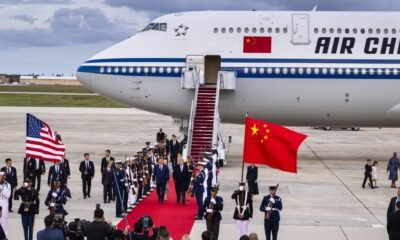
Trump hailed his “great friendship” with Xi and pulled out all the stops to woo the Chinese leader, greeting him on the runway on his arrival, offering him a rare tour of the presidential helicopter, and gifting him a bald eagle statue.
The pomp, however, masked the lack of diplomatic breakthroughs.
“The pageantry was the point,” according to Ryan Hass at the Brookings Institution.
“When the troop reviews and opening ceremony are taken out of the schedule, the two leaders had less than two hours of direct meetings with each other,” he added.
Those meetings yielded “many new consensuses”, according to Xi – but the only concrete deals announced were a promise to invite 100,000 young Americans to China for exchanges, and lending two pandas to a zoo in Atlanta.
Instead, the meetings were meant to show that the two leaders could “effectively manage U.S.-China relations within tolerable bounds of competition”, Hass said.
Xi once again urged the two sides to avoid the “Thucydides Trap” – the theory that a rising power will come into conflict with an established one – but there was little sign of progress on thorny issues like Taiwan or artificial intelligence.
Trade deal extended, for now
One significant deal was the extension of the countries’ fragile trade truce, but only a short one.
U.S. Treasury Secretary Scott Bessent said the two sides agreed to extend by two months a trade agreement that ended last year’s trade war and was due to expire in November. The extension would give Washington and Beijing “more time to see what we can do on the economic front,” he said.
But rather than locking in a durable agreement, the extension appears to push the central questions – tariffs, Chinese purchases, rare-earth supplies and technology restrictions – into the next round of negotiations.
Bessent said Wednesday that Beijing was meeting its requirement in the earlier agreement to buy 25 million tons of soybeans but was lagging on its pledge to buy $17 billion in other agricultural goods. U.S. officials have said rare-earth deliveries were also falling short, another sign that significant gaps remain.
For companies, the result is a familiar form of instability: tariff rates remain lower for now, but decisions must still be made against a shifting policy backdrop.
“I think the Chinese would have hoped for a longer extension, but they are also realistic”, said Dylan Loh of Singapore’s Nanyang Technological University.
The truce would provide “some calm on the trade front”, he said.
Trump is “trying to stabilize relations for now until the U.S. can basically decrease its vulnerabilities to Beijing,” according to Jared Mondschein, Director of Research at the United States Studies Centre, University of Sydney.
Dress to impress
For Trump, Xi’s White House visit was an opportunity to show off a Washington being remade in his image.
After Xi treated Trump in Beijing to a tour around a Ming dynasty temple and a walled-off garden retreat rarely opened to foreigners, the U.S. president returned the favor with a different kind of spectacle: Troops wearing wigs and tri-corner hats marched in formation and played music in a Rose Garden redesigned to look like a Trump golf club.
Fighter jets and bombers roared overhead during ceremonies staged Wednesday and Thursday, one so loud it caused Trump to flinch.
When the White House press corps was called to cover the two leaders, it wasn’t to hear them talk about the weighty affairs of state. Instead, it was to watch them tour the Marine One helicopter and the recently redesigned South Lawn of the White House, replete with a large helipad emblazoned with the presidential seal.
Speaking to reporters, Trump brushed away questions about their policy discussions.
“He loves good granite,” Trump said of Xi. “Great meeting.”
Xi wants US ‘prudence’ over Taiwan
As expected, Xi pressed Trump on the Taiwan issue, saying, according to China’s official news agency, that Beijing hoped the United States would “handle the Taiwan question with prudence.”
The agency’s English-language service also wrote that Xi hoped the U.S. would oppose Taiwan independence.
That would be a tougher version of Washington’s long-standing formulation that it does not “support” independence. There are no signs that the Trump administration plans to change its wording.
There was no immediate White House readout of the exchange, but U.S. officials have long avoided explicitly stating opposition to Taiwanese independence. Any shift in language would raise questions about Washington’s resolve to defend the island and provoke opposition in Congress.
The island, which China claims and has vowed to bring under its control, relies on the U.S. for its defense.
A $14 billion U.S. arms package for Taiwan has been put on hold and is “under review,” U.S. Secretary of State Marco Rubio said Wednesday.
In May, Trump suggested the sales could be used as a bargaining chip with China.
Trump “has been willing to talk about the levels of arm sales in a way that previous administrations haven’t,” said Rana Mitter, professor of U.S.-Asia relations at the Harvard Kennedy School.
“But I don’t see any sign… there’s going to be a fundamental change in terms of U.S. assurances (to Taiwan),” he said.
Strategic risk
Xi, not for the first time while meeting Trump, invoked the “Thucydides Trap,” an academic theory that competition between a rising power and an established one tends toward war.
While the Chinese leader said the risk “can be overcome,” his reference underscored how concerns about a potential U.S.-China military conflict continue to shadow relations between the world’s two largest powers.
Xi argued that both nations stand to gain from cooperation and lose from confrontation, and he called for regular military dialogue and stronger crisis-prevention mechanisms.
Trump, for his part, drew on the two nations’ shared history to emphasize the potential for cooperation. They could accomplish much by pursuing common interests, he said, invoking their wartime alliance against Japan.
Differences on AI
The two leaders expressed diverging views about artificial intelligence.
Trump, who has declared that AI should be called super intelligence, or SI, has dismissed calls from tech leaders for regulations to “pace the frontier” of the technology.
He said in a social media post that he wants “to leave it exactly where it is” and rely on the U.S. Department of Justice rather than impose any new guardrails. He insisted that China held the same position.
But Xi said Thursday that, as leading nations on AI, China and the U.S. must manage its growth.
“We have both the capability and responsibility to develop and manage AI for good, and ensure that the development of AI is always under human control and serves the well-being of the people,” Xi said.
“There is some broad general agreement on the risks presented by AI, but they diverge on how to manage this”, according to Loh of Nanyang Technological University.
“Deep suspicions and intensifying competition” on AI mean breakthroughs on governing the technology are unlikely, he said.
Some of the biggest names in AI attended Trump’s state dinner at the White House Thursday for Xi, including Alphabet’s Sundar Pichai, OpenAI’s Sam Altman and Nvidia’s Jensen Huang.
Iran
Trump has repeatedly called on China to help extricate the U.S. from its conflict with Iran and reopen the Strait of Hormuz for shipping, calls Beijing has rebuffed.
China has also been accused of helping Iran target U.S. military assets in the Middle East.
On Thursday, Xi told the U.S. president to end the war and come to a negotiated settlement with Tehran as soon as possible, according to a Chinese readout of the talks.
“The idea that China is going to be a big power broker, appear publicly and negotiate solutions – I think that’s really unlikely,” said Harvard’s Mitter.
“I don’t think that China is going to be the magic card that gets the U.S. out of trouble in the region.”


-
 Politics2 days ago
Istanbul police detain 11 suspects over alleged Daesh, al-Qaida links
-
 Politics2 days ago
FM Fidan puts Gaza, Israeli attacks at center of OIC talks in New York
-
 Economy3 days ago
US, China agree to extend trade truce as Xi arrives for summit
-
 Politics1 day ago
No lasting Mideast peace without permanent Gaza cease-fire: Erdoğan
-

 Economy2 days ago
EBRD cuts Türkiye growth forecast for 2026, expects rebound in 2027
-
 Politics1 day ago
Mansur Yavaş’s CHP exit triggers resignations of 8 Ankara district mayors
-
 Economy2 days ago
Key takeaways from Trump-Xi summit in US
-
 Politics2 days ago
FM Fidan steps up diplomatic push with high-level talks in New York