
Sports
Mercedes’ Russell holds off Verstappen to bag Azerbaijan GP win

George Russell converted pole position into a dramatic victory in Baku on Saturday, holding off Max Verstappen by just 0.196 seconds as the Mercedes driver cut into Kimi Antonelli’s Formula One championship lead.
Russell led all 51 laps around the 6.003-kilometer Baku City Circuit after producing one of his strongest qualifying performances of the season Friday. His 1:42.526 lap put him 0.837 seconds clear of Charles Leclerc and gave Mercedes a clear advantage heading into the race.
The victory was Russell’s second of the 2026 season and his first since the Austrian Grand Prix in June. He had entered the Azerbaijan weekend 81 points behind teammate Antonelli in the drivers’ championship, but his win and Antonelli’s fifth-place finish allowed him to make significant progress in the standings.
Russell appeared to have the race under control for much of the afternoon, building a lead of more than 10 seconds before safety-car periods repeatedly brought the field back together.
That opened the door for Verstappen.
Verstappen charges from eighth
Verstappen started eighth after being outqualified by Red Bull teammate Isack Hadjar, but the four-time world champion produced a fierce recovery drive to move through the field and finish second.
The Dutchman put Russell under intense pressure in the closing stages, closing to within striking distance as the Mercedes approached the final laps. Russell held his nerve, however, and Verstappen could not find a way past despite a final charge toward the finish.
The result leaves Verstappen still searching for his first victory of the season. It is the first time since his rookie campaign in 2016 that he has gone this deep into a season without winning a Grand Prix.
Hadjar completes Red Bull double
Hadjar capped his return from a wrist injury with an impressive third-place finish, giving Red Bull two cars on the podium.
The Frenchman had qualified fourth and remained near the front despite the disruption caused by the safety-car periods. His podium also marked a strong return to competition after his absence.
Leclerc finished fourth for Ferrari, while Antonelli completed a remarkable recovery in fifth.
Antonelli limits the damage
Antonelli’s weekend looked to be heading toward disaster after he crashed at Turn 1 during Q1 on Friday, leaving him 16th on the starting grid and ending his qualifying session prematurely.
Instead, the championship leader fought his way into the points and finished fifth.
The Italian avoided a three-car incident ahead of him and later passed Lewis Hamilton as he climbed through the field. The recovery was particularly valuable given that Antonelli had entered Baku with an 81-point advantage over Russell after winning the Spanish Grand Prix two weeks earlier.
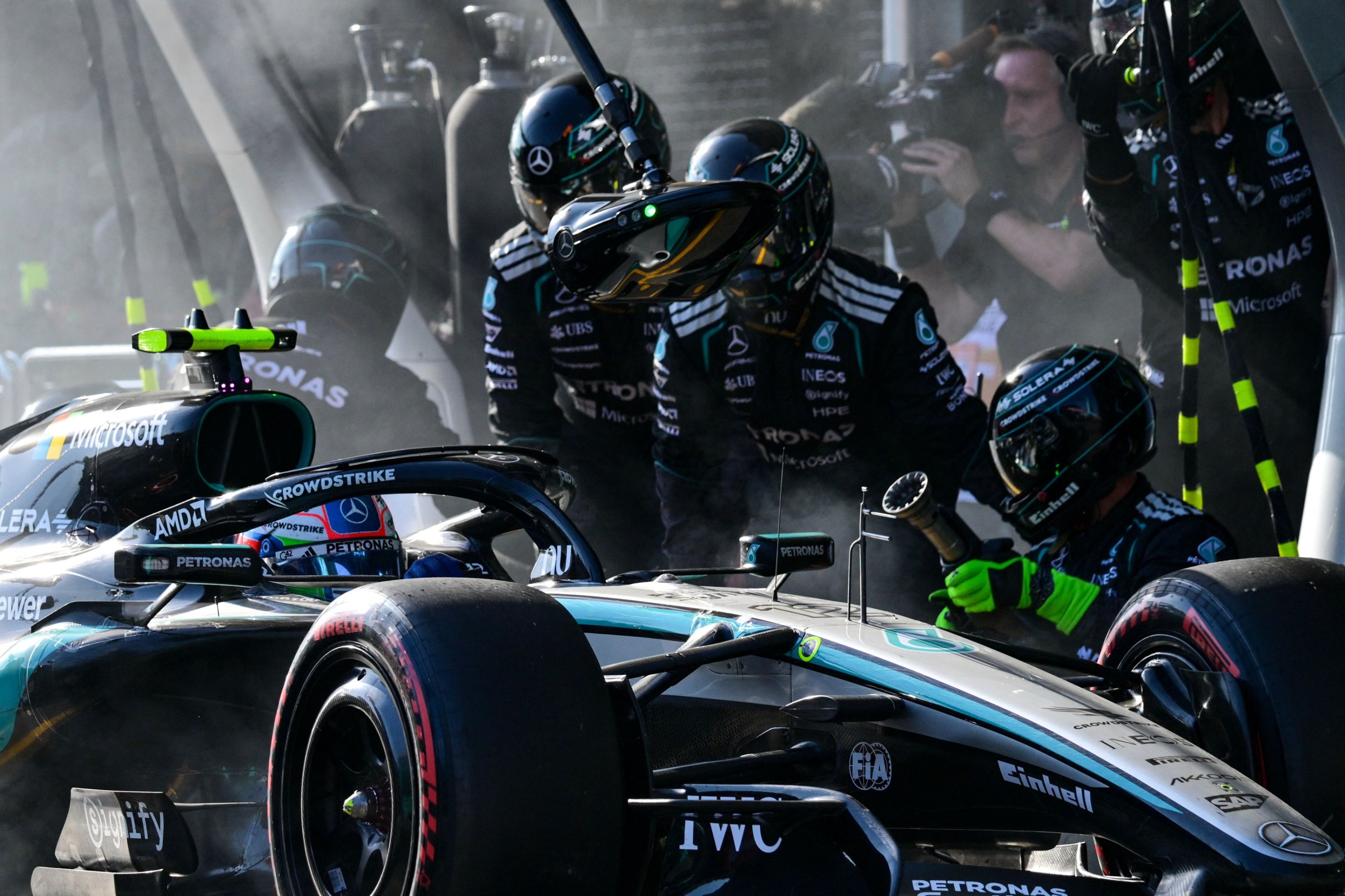
Antonelli’s result prevented Russell from making an even larger dent in the championship battle, while Mercedes continued its strong season under the 2026 regulations.
Chaos reshapes the midfield
Baku once again delivered the unpredictability that has become synonymous with its narrow streets and unforgiving walls.
A collision involving Lando Norris, Franco Colapinto and Pierre Gasly disrupted the race, while Alexander Albon later crashed at Turn 6 and triggered another safety-car period. The interruptions erased much of Russell’s advantage and gave Verstappen and the rest of the field opportunities to close the gap.
Oscar Piastri also lost ground after locking up during a restart, while Fernando Alonso and Lance Stroll were among the other drivers who failed to finish.
Behind the podium, the points went to Leclerc, Antonelli, Hamilton, Arvid Lindblad, Esteban Ocon, Oliver Bearman and Carlos Sainz.
Russell strengthens Mercedes’ title push
Russell’s victory underlined Mercedes’ strength at a circuit that rewards straight-line speed, precision and confidence close to the walls.
The British driver had already taken pole for the fifth time this season, and his commanding qualifying lap gave him the platform to control the race.
His ability to maintain the lead through two safety-car restarts proved decisive, particularly once Verstappen emerged as his main challenger.
The Azerbaijan Grand Prix was staged on Saturday, rather than the traditional Sunday slot, as part of a weekend schedule that accommodated Azerbaijan’s Remembrance Day on Sept. 27.
The race was the 15th round of the 23-race 2026 championship.
Formula One has crowned 35 different world champions since the inaugural championship in 1950, with the sport’s greatest names spanning eight decades of changing cars, circuits, regulations and rivalries.
The latest addition to that list came in December 2025, when McLaren’s Lando Norris secured his first Drivers’ Championship at the Abu Dhabi Grand Prix.
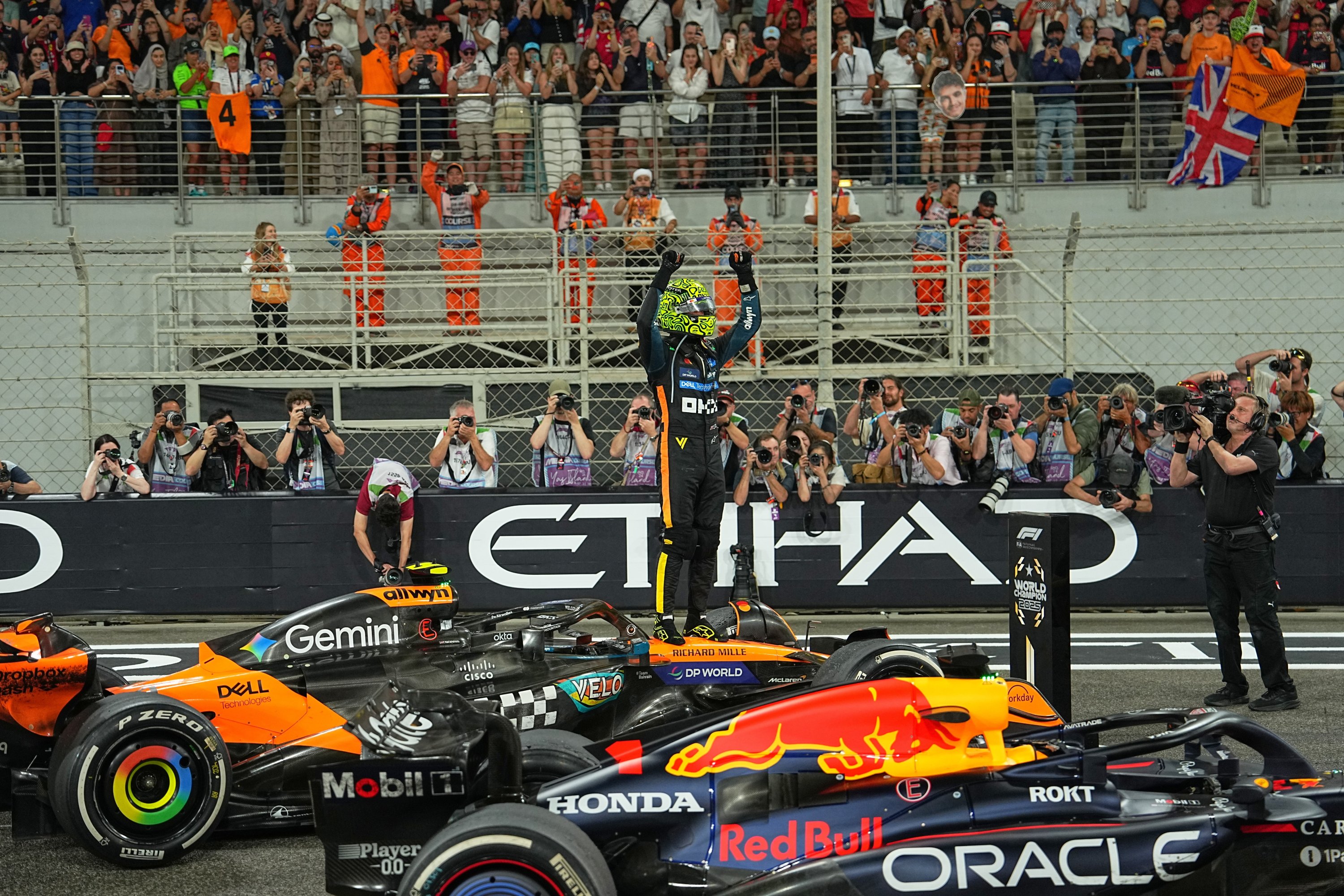
Norris finished third in the season finale to edge reigning champion Max Verstappen by two points and become the 35th different driver to win the title.
The Drivers’ Championship has been awarded every season since 1950. Michael Schumacher and Lewis Hamilton share the record with seven championships apiece, while Juan Manuel Fangio is next with five.
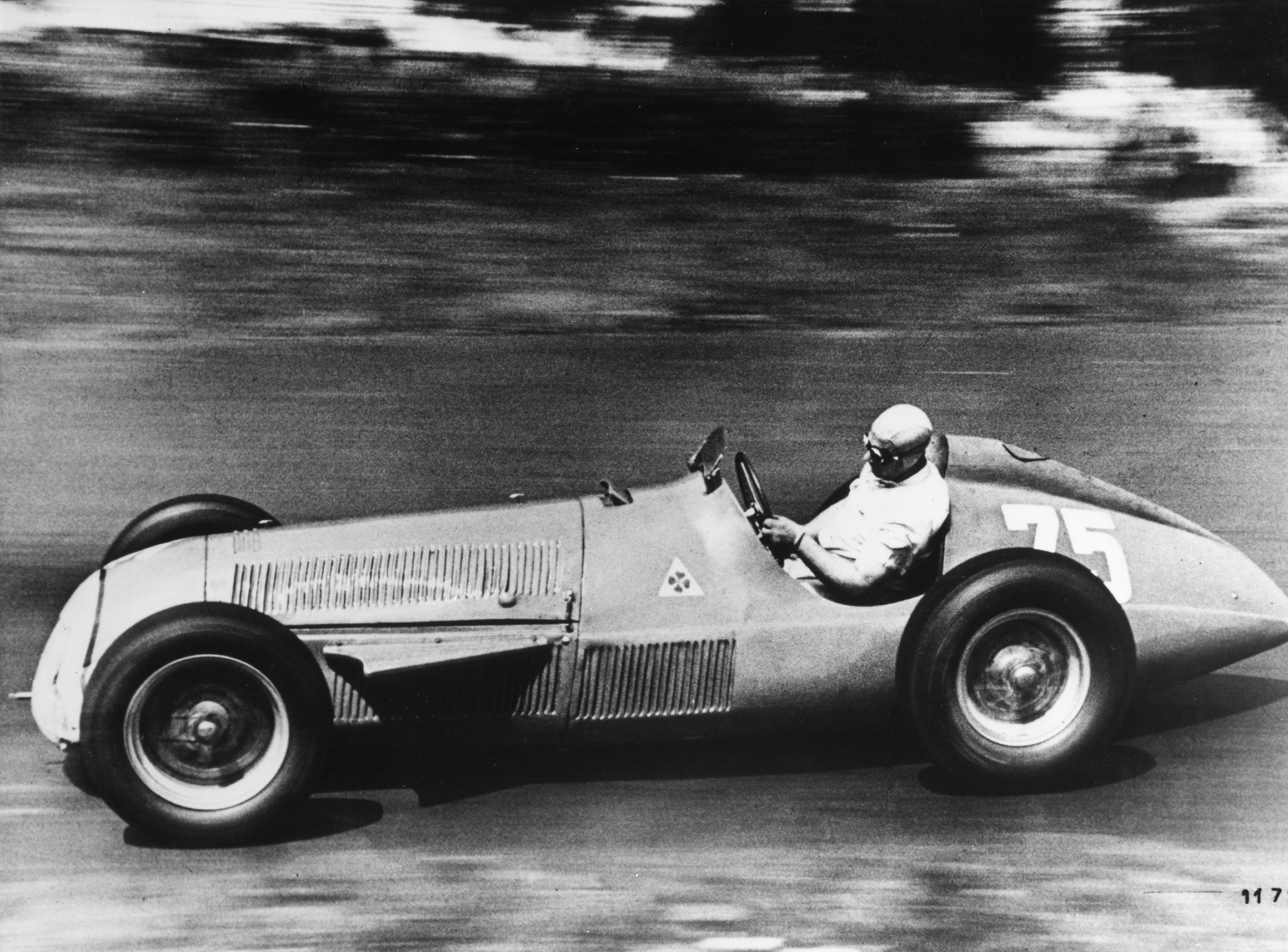
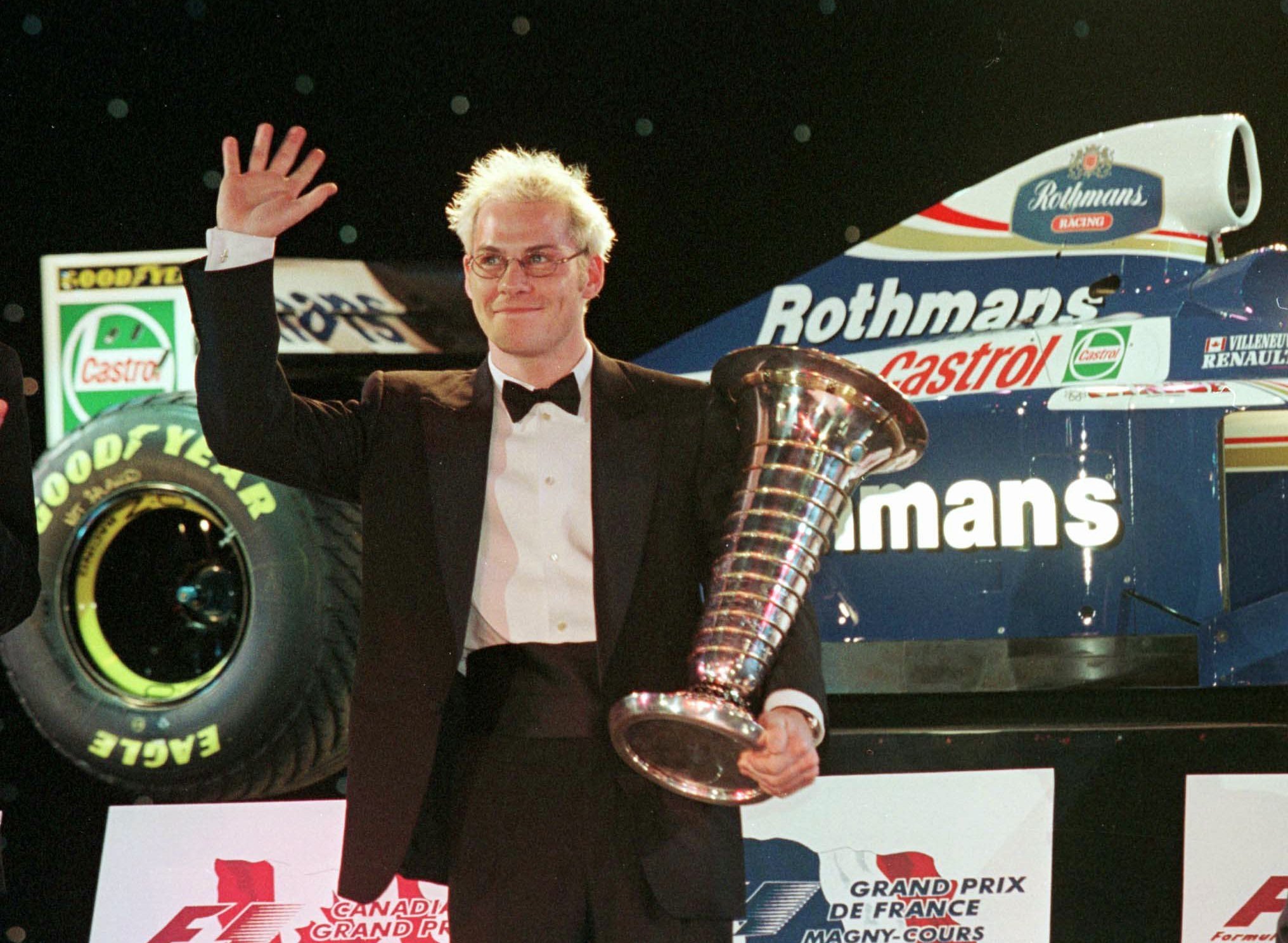
Alain Prost, Sebastian Vettel and Verstappen have four championships each.
The separate Constructors’ Championship began in 1958. The list below focuses on the Drivers’ Championship and identifies the constructor associated with each title.
Complete list of Formula One world champions
1950: Giuseppe Farina, Italy, Alfa Romeo
1951: Juan Manuel Fangio, Argentina, Alfa Romeo
1952: Alberto Ascari, Italy, Ferrari
1953: Alberto Ascari, Italy, Ferrari
1954: Juan Manuel Fangio, Argentina, Mercedes/Maserati
1955: Juan Manuel Fangio, Argentina, Mercedes
1956: Juan Manuel Fangio, Argentina, Lancia/Ferrari
1957: Juan Manuel Fangio, Argentina, Maserati
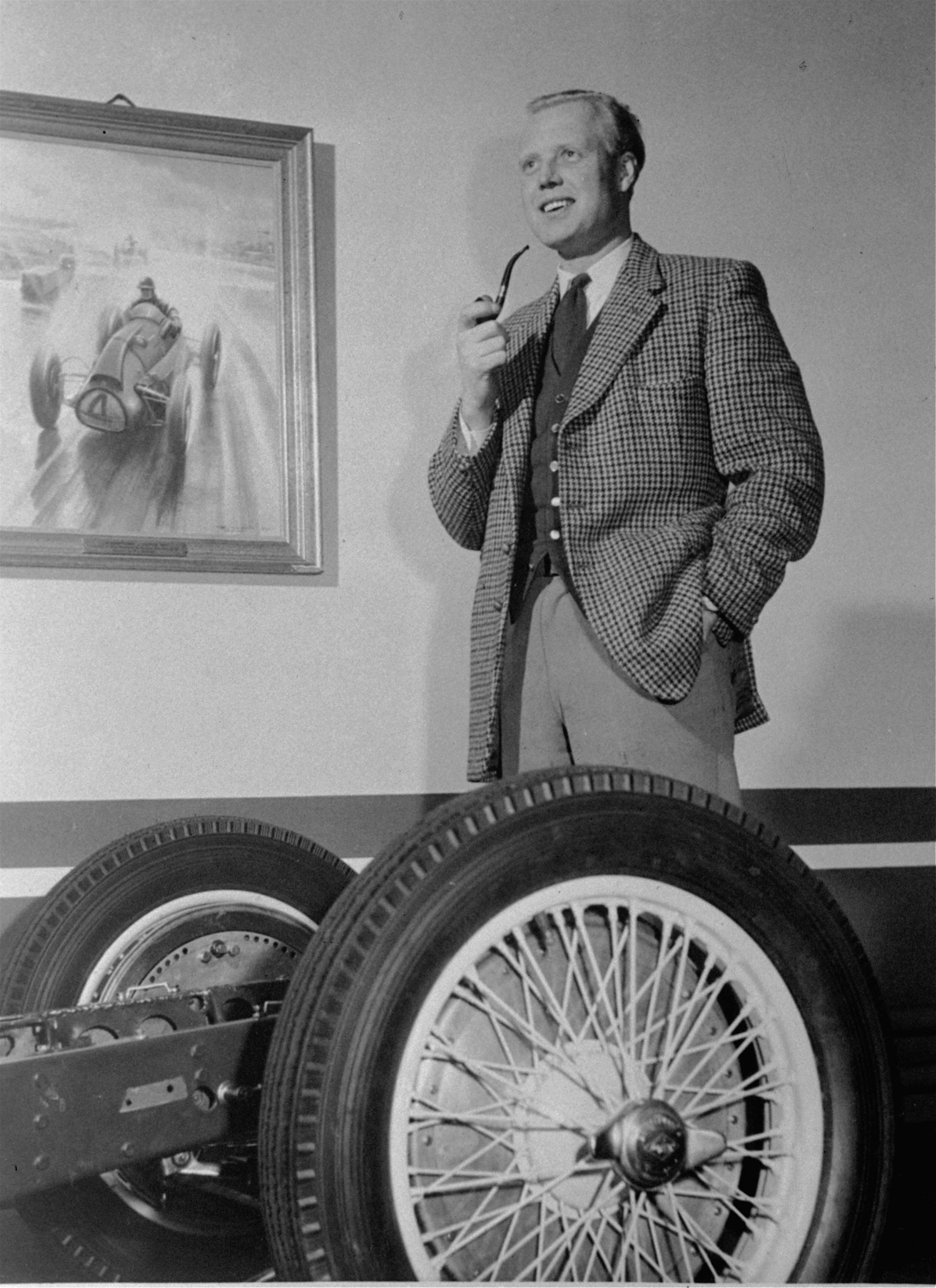
1958: Mike Hawthorn, United Kingdom, Ferrari
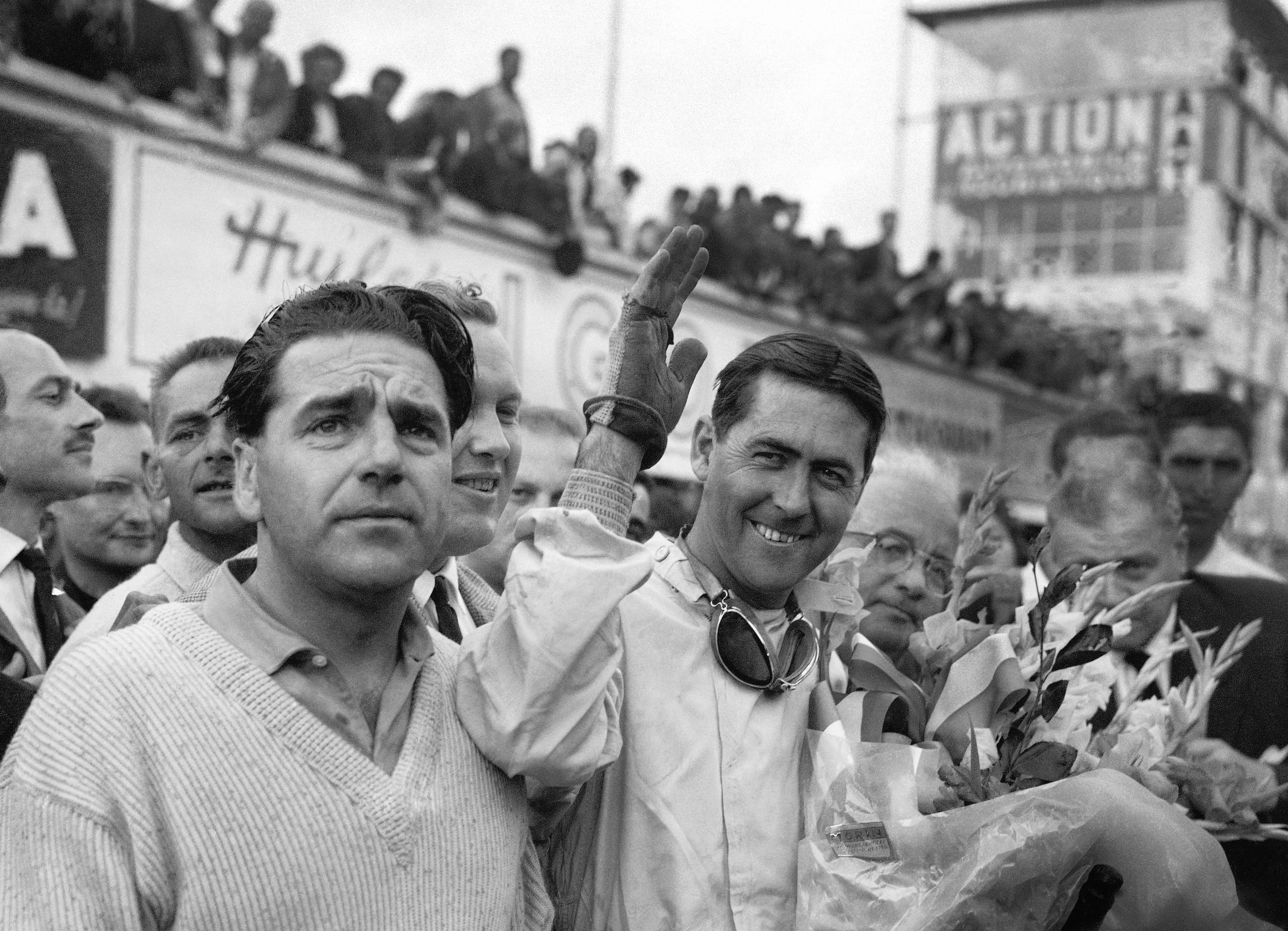
1959: Jack Brabham, Australia, Cooper
1960: Jack Brabham, Australia, Cooper
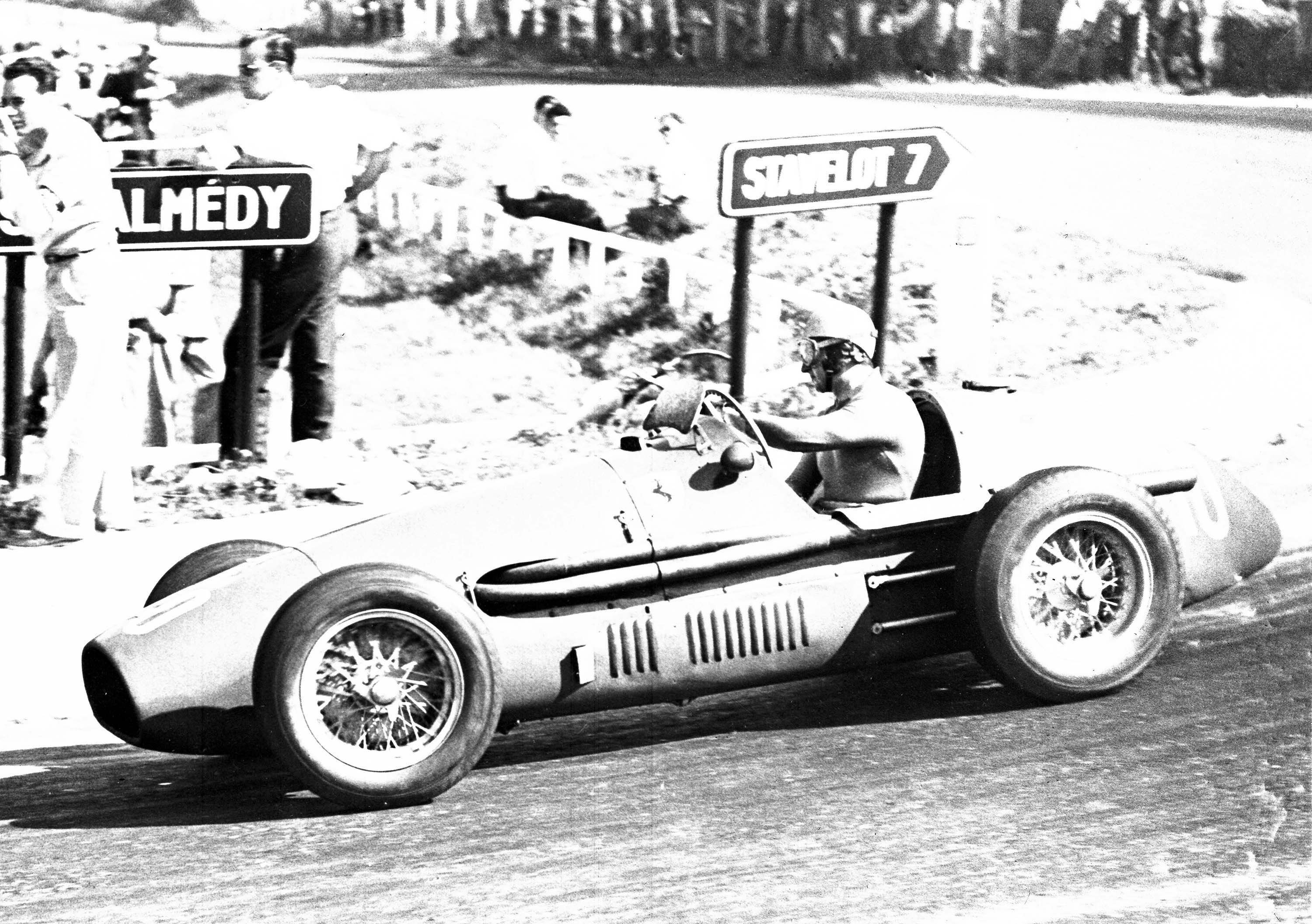
1961: Phil Hill, United States, Ferrari
1962: Graham Hill, United Kingdom, BRM
1963: Jim Clark, United Kingdom, Lotus
1964: John Surtees, United Kingdom, Ferrari
1965: Jim Clark, United Kingdom, Lotus
1966: Jack Brabham, Australia, Brabham
1967: Denny Hulme, New Zealand, Brabham
1968: Graham Hill, United Kingdom, Lotus
1969: Jackie Stewart, United Kingdom, Matra
1970: Jochen Rindt, Austria, Lotus
1971: Jackie Stewart, United Kingdom, Tyrrell
1972: Emerson Fittipaldi, Brazil, Lotus
1973: Jackie Stewart, United Kingdom, Tyrrell
1974: Emerson Fittipaldi, Brazil, McLaren
1975: Niki Lauda, Austria, Ferrari
1976: James Hunt, United Kingdom, McLaren
1977: Niki Lauda, Austria, Ferrari
1978: Mario Andretti, United States, Lotus
1979: Jody Scheckter, South Africa, Ferrari
1980: Alan Jones, Australia, Williams
1981: Nelson Piquet, Brazil, Brabham
1982: Keke Rosberg, Finland, Williams
1983: Nelson Piquet, Brazil, Brabham
1984: Niki Lauda, Austria, McLaren
1985: Alain Prost, France, McLaren
1986: Alain Prost, France, McLaren
1987: Nelson Piquet, Brazil, Williams
1988: Ayrton Senna, Brazil, McLaren
1989: Alain Prost, France, McLaren
1990: Ayrton Senna, Brazil, McLaren
1991: Ayrton Senna, Brazil, McLaren
1992: Nigel Mansell, United Kingdom, Williams
1993: Alain Prost, France, Williams
1994: Michael Schumacher, Germany, Benetton
1995: Michael Schumacher, Germany, Benetton
1996: Damon Hill, United Kingdom, Williams
1997: Jacques Villeneuve, Canada, Williams
1998: Mika Hakkinen, Finland, McLaren
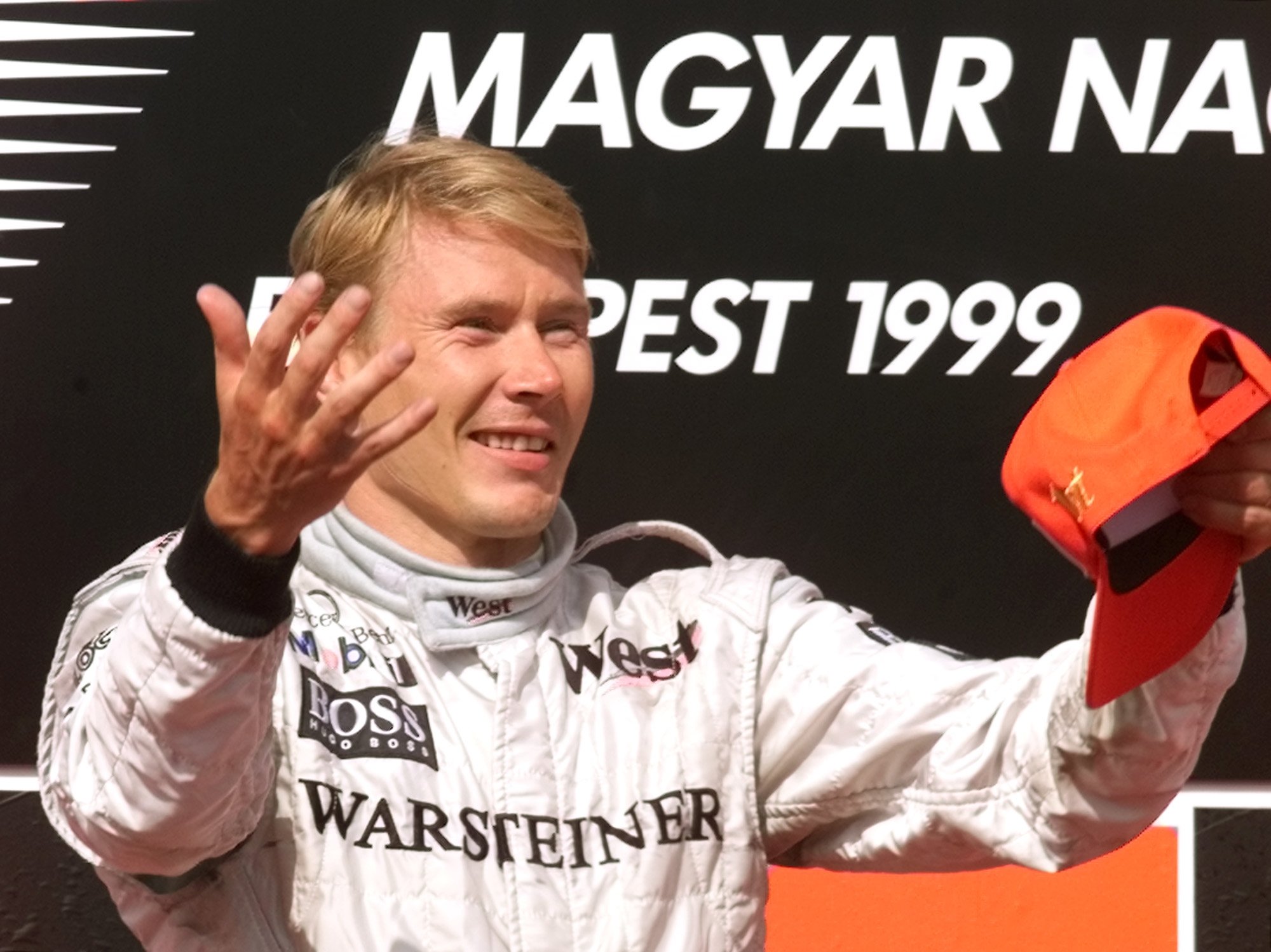
1999: Mika Hakkinen, Finland, McLaren
2000: Michael Schumacher, Germany, Ferrari
2001: Michael Schumacher, Germany, Ferrari
2002: Michael Schumacher, Germany, Ferrari
2003: Michael Schumacher, Germany, Ferrari
2004: Michael Schumacher, Germany, Ferrari
2005: Fernando Alonso, Spain, Renault
2006: Fernando Alonso, Spain, Renault
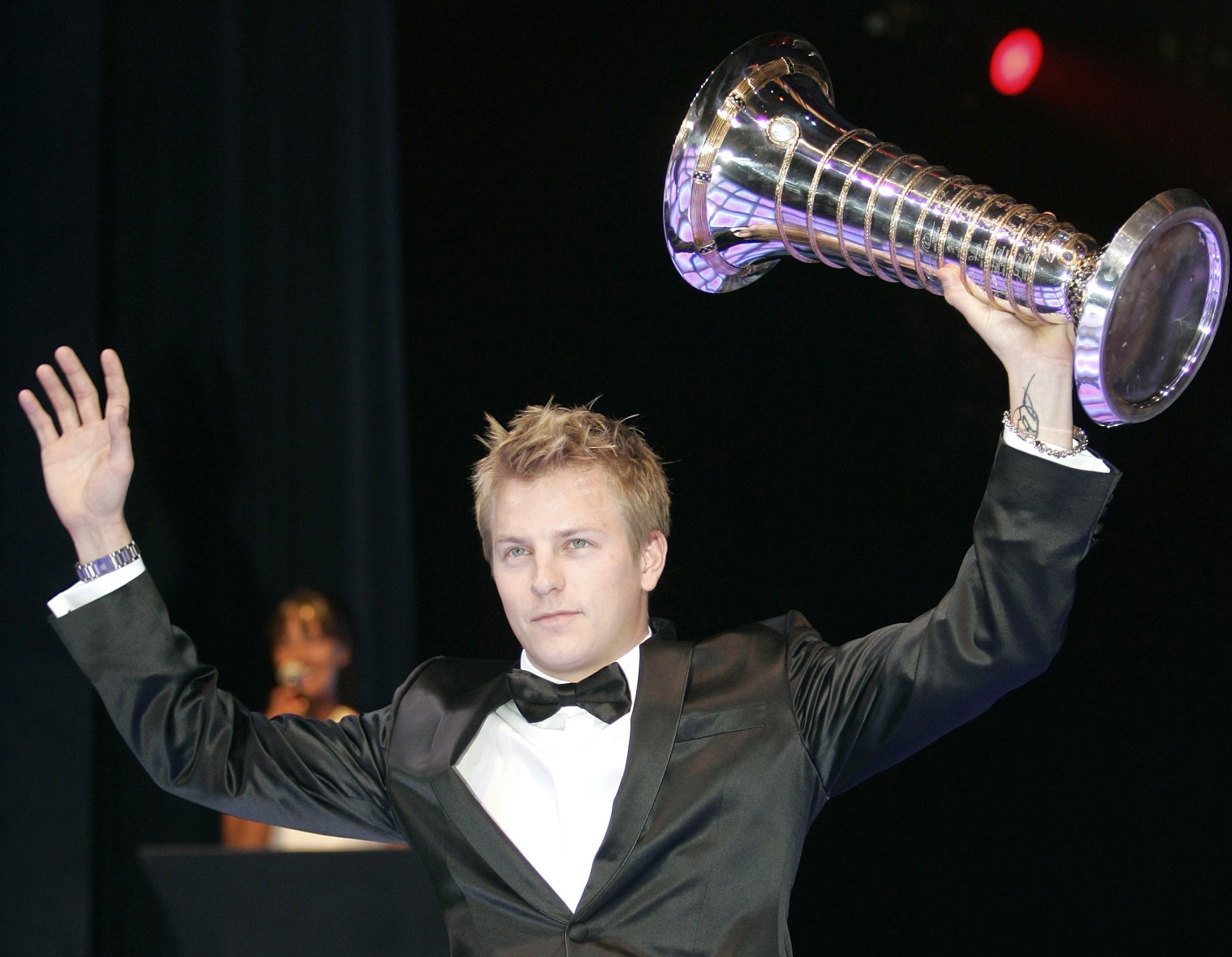
2007: Kimi Raikkonen, Finland, Ferrari
2008: Lewis Hamilton, United Kingdom, McLaren
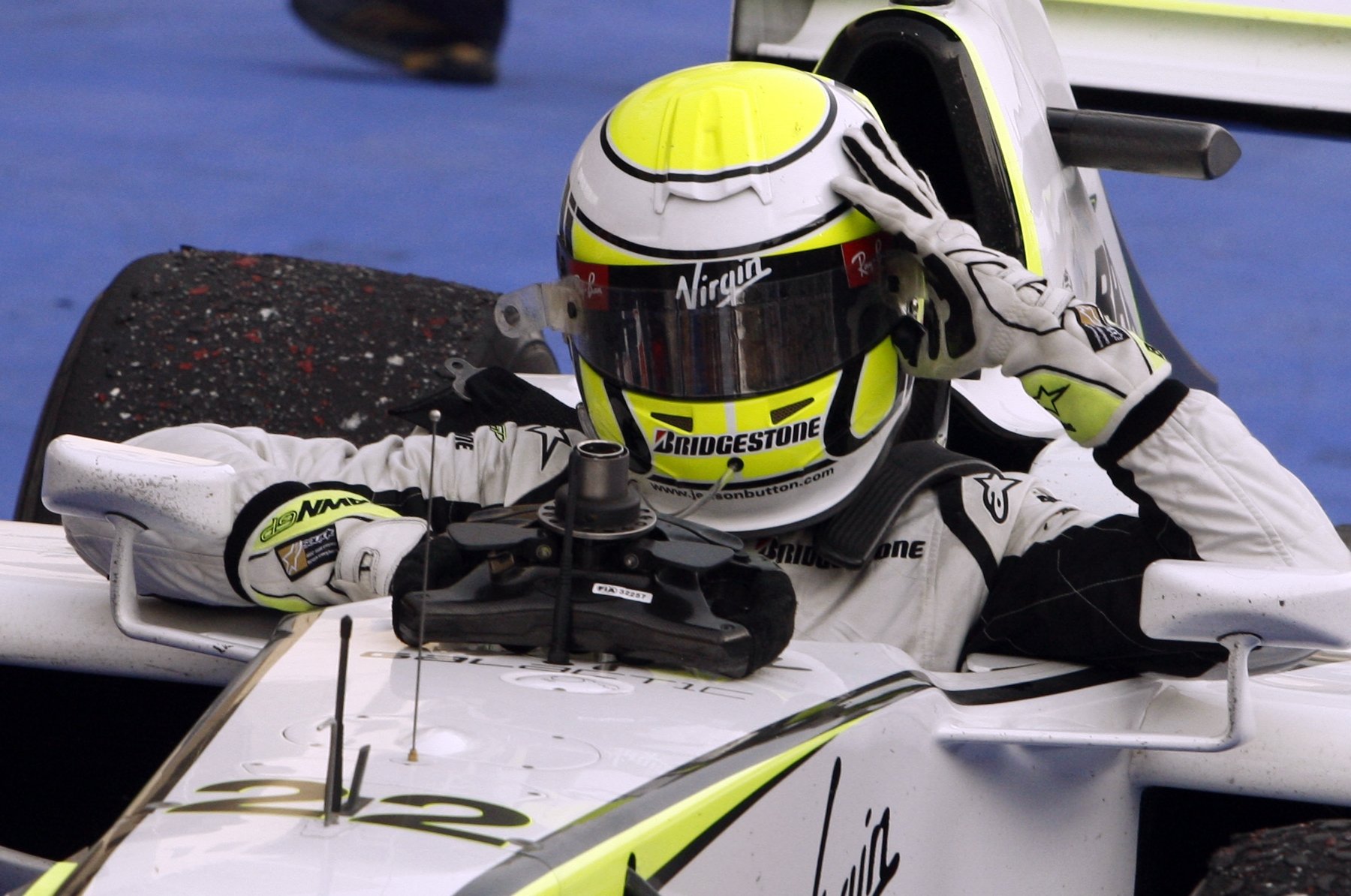
2009: Jenson Button, United Kingdom, Brawn
2010: Sebastian Vettel, Germany, Red Bull
2011: Sebastian Vettel, Germany, Red Bull
2012: Sebastian Vettel, Germany, Red Bull
2013: Sebastian Vettel, Germany, Red Bull
2014: Lewis Hamilton, United Kingdom, Mercedes
2015: Lewis Hamilton, United Kingdom, Mercedes
2016: Nico Rosberg, Germany, Mercedes
2017: Lewis Hamilton, United Kingdom, Mercedes
2018: Lewis Hamilton, United Kingdom, Mercedes
2019: Lewis Hamilton, United Kingdom, Mercedes
2020: Lewis Hamilton, United Kingdom, Mercedes
2021: Max Verstappen, Netherlands, Red Bull
2022: Max Verstappen, Netherlands, Red Bull
2023: Max Verstappen, Netherlands, Red Bull
2024: Max Verstappen, Netherlands, Red Bull
2025: Lando Norris, United Kingdom, McLaren
The drivers with multiple championships
Michael Schumacher and Lewis Hamilton sit level at the top with seven championships each.
Fangio follows with five, while Prost, Vettel and Verstappen have four apiece. Verstappen completed his fourth consecutive championship in 2024 before Norris ended his reign in 2025.
Drivers with three titles are Jack Brabham, Jackie Stewart, Niki Lauda, Nelson Piquet and Ayrton Senna.
Two-time champions are Alberto Ascari, Jim Clark, Graham Hill, Emerson Fittipaldi, Mika Hakkinen and Fernando Alonso.
Every other champion in F1 history has won the title once.
From Farina to Fangio
The championship began in 1950 with Alfa Romeo’s Giuseppe Farina becoming the first Formula One world champion.
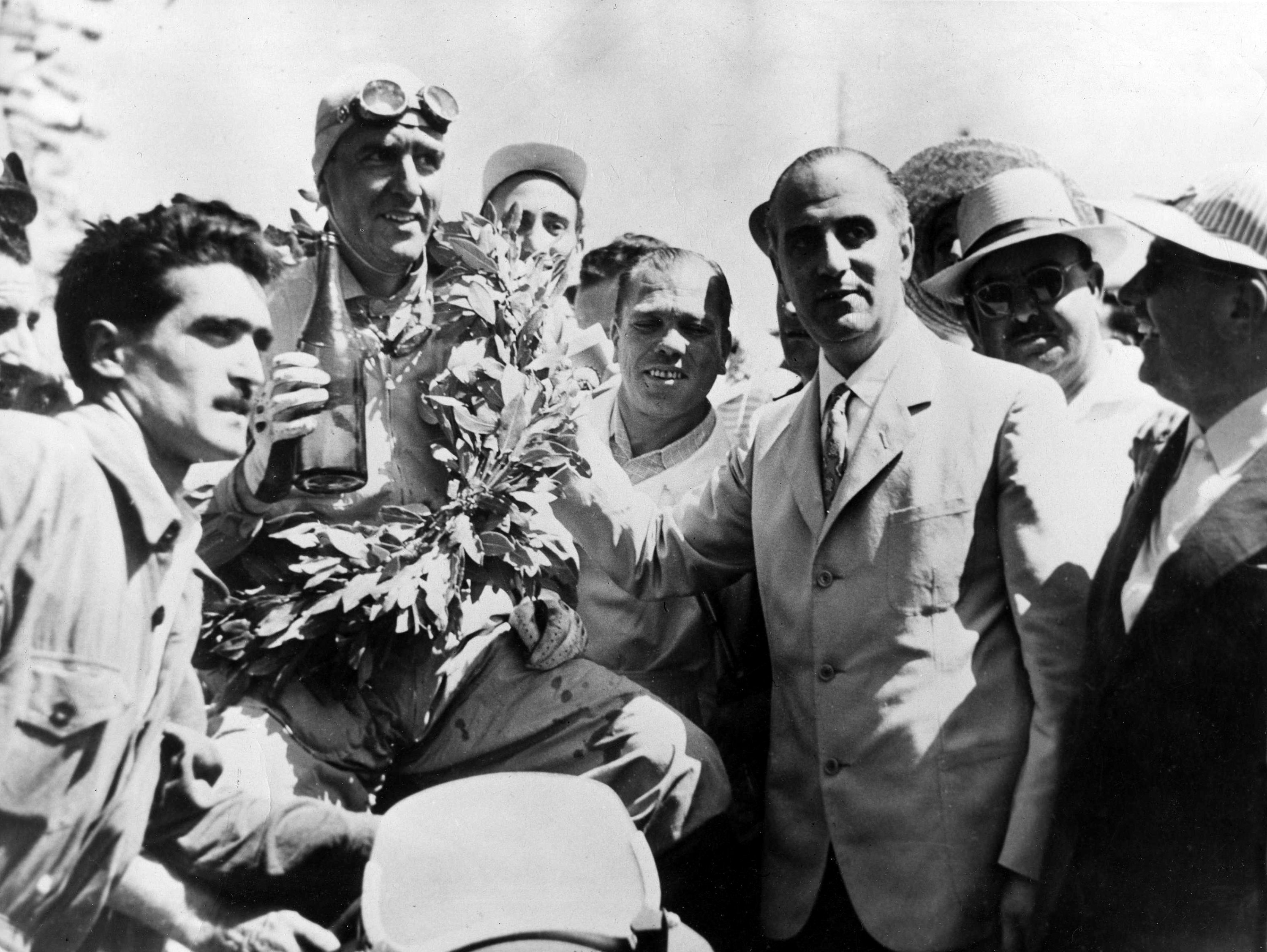
The early years belonged largely to Italian teams and Fangio, who won five championships between 1951 and 1957. Fangio’s titles came with Alfa Romeo, Mercedes, Ferrari and Maserati, an extraordinary run that established him as the dominant driver of the sport’s formative era.
The 1950s also produced one of F1’s most unusual championship records. Fangio’s five titles were followed by Mike Hawthorn in 1958 and Jack Brabham’s first two championships in 1959 and 1960.
British influence takes hold
The 1960s and 1970s brought a growing British presence among both drivers and constructors.
Jim Clark won two titles for Lotus, Graham Hill became a two-time champion and Jackie Stewart collected three championships. Brabham also became a major force, with Australian driver Jack Brabham winning the 1966 title in a Brabham-built car.
The era also produced one of the sport’s most remarkable championship stories. Jochen Rindt became the only driver to win the Formula One world title posthumously after his fatal crash during qualifying for the 1970 Italian Grand Prix. He had built an insurmountable points advantage before his death, allowing Lotus to claim the championship in his name.
The Prost, Senna and Piquet era
The 1980s and early 1990s were shaped by fierce competition between Prost, Senna and Piquet.
Prost won four championships across 1985, 1986, 1989 and 1993. Senna captured three titles with McLaren in 1988, 1990 and 1991, while Piquet won three championships in 1981, 1983 and 1987.
The Prost-Senna rivalry became one of the defining chapters in F1 history, with the two McLaren teammates battling for championships and producing a series of controversial clashes.
Senna’s death at the 1994 San Marino Grand Prix marked a major moment in Formula One’s safety history and was followed by sweeping changes aimed at improving driver protection.
Schumacher’s Ferrari dynasty
Michael Schumacher emerged as the dominant figure of the second half of the 1990s and the early 2000s.
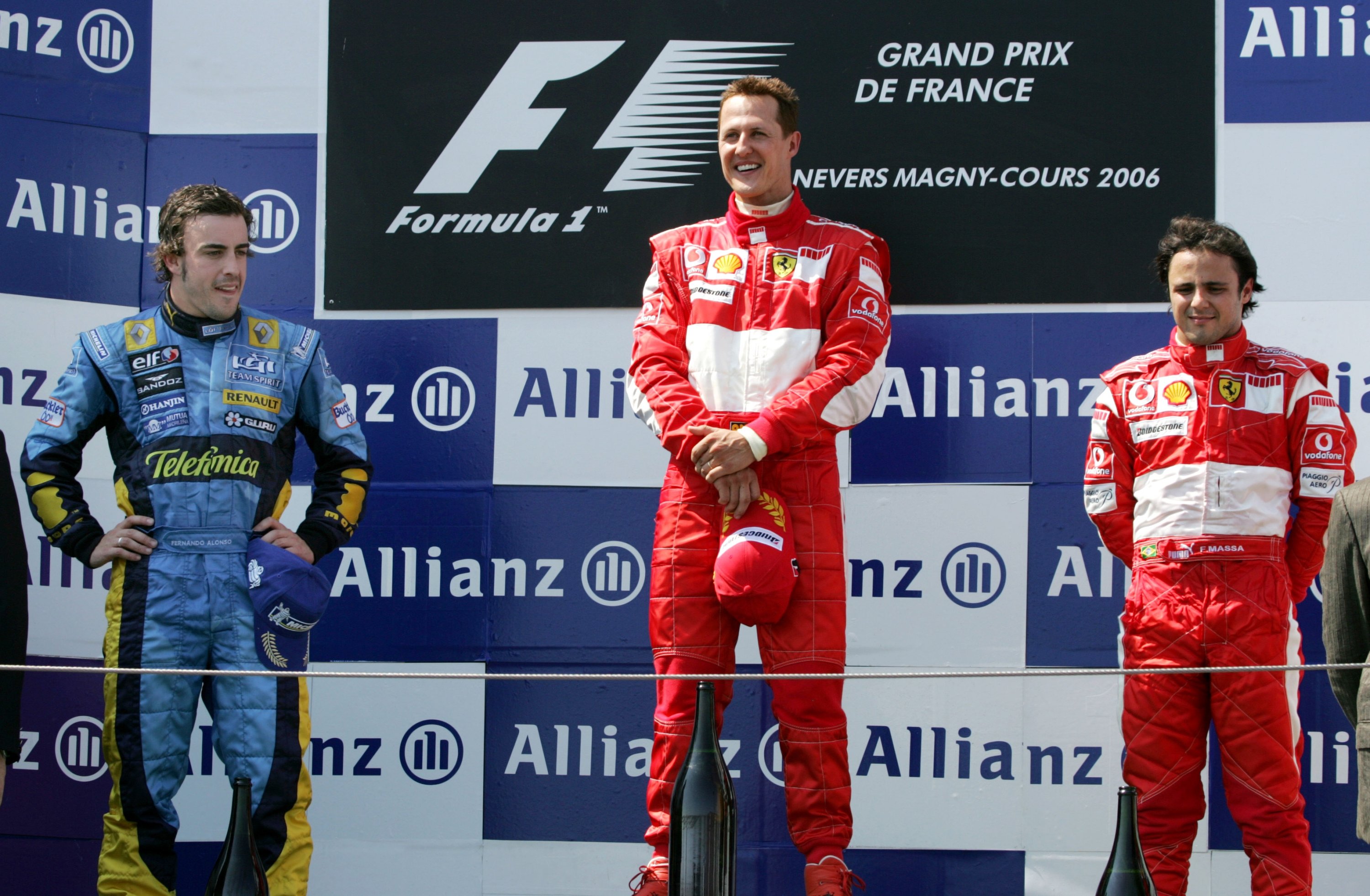
After winning back-to-back titles with Benetton in 1994 and 1995, Schumacher moved to Ferrari and eventually delivered an unprecedented run of five consecutive championships between 2000 and 2004. That remains the longest uninterrupted championship streak by a driver.
Fernando Alonso ended Schumacher’s run by winning consecutive championships with Renault in 2005 and 2006.
The following season brought another dramatic change. Kimi Raikkönen won the 2007 championship with Ferrari before Lewis Hamilton claimed his first title with McLaren in 2008.
Hamilton and the Mercedes era
Hamilton’s career would eventually take him into the record books.
His 2008 McLaren championship was followed by six titles with Mercedes between 2014 and 2020, giving him seven overall and putting him level with Schumacher for the record.
Sebastian Vettel dominated the opening years of the 2010s, winning four consecutive championships for Red Bull from 2010 through 2013.
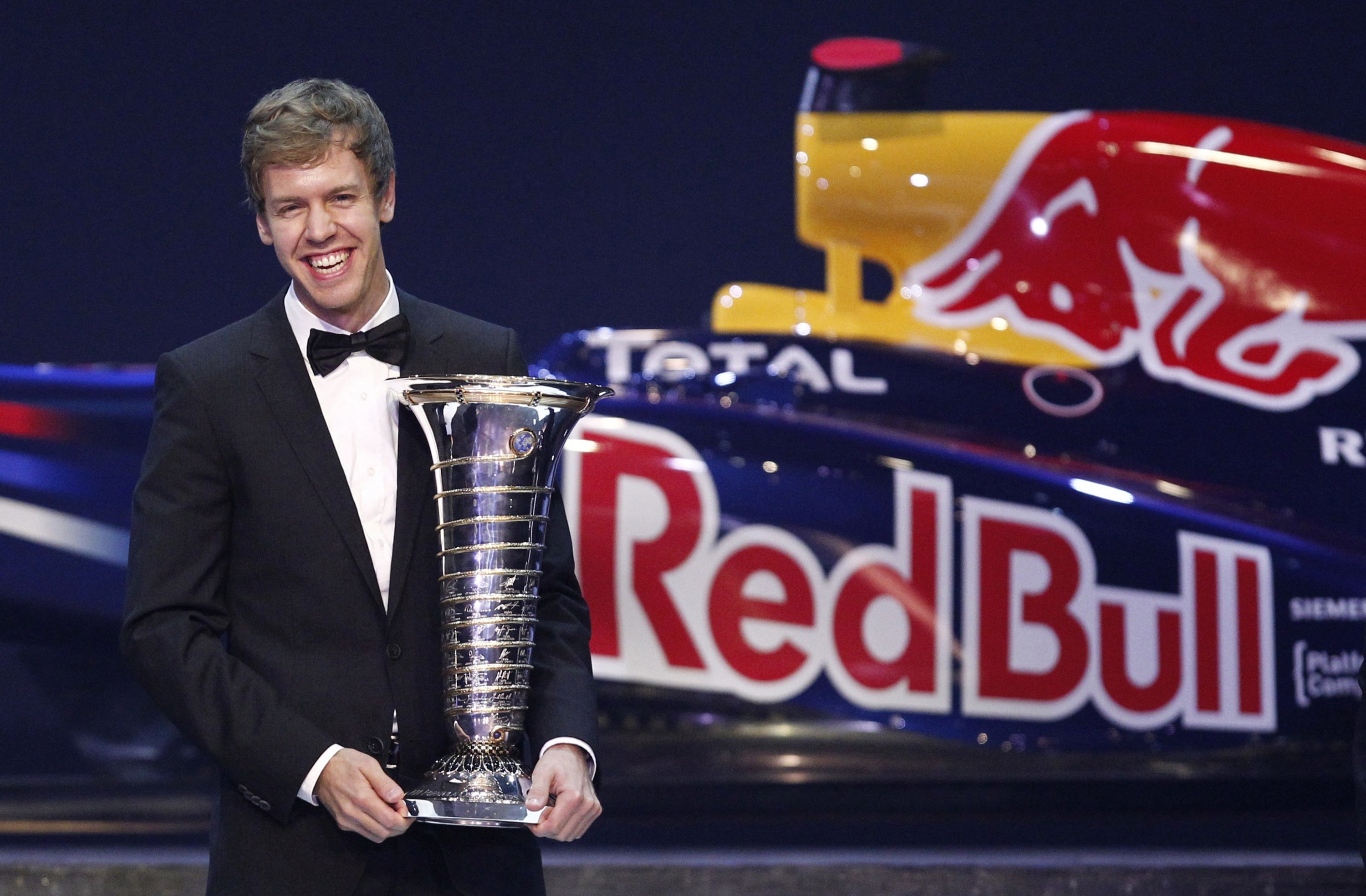
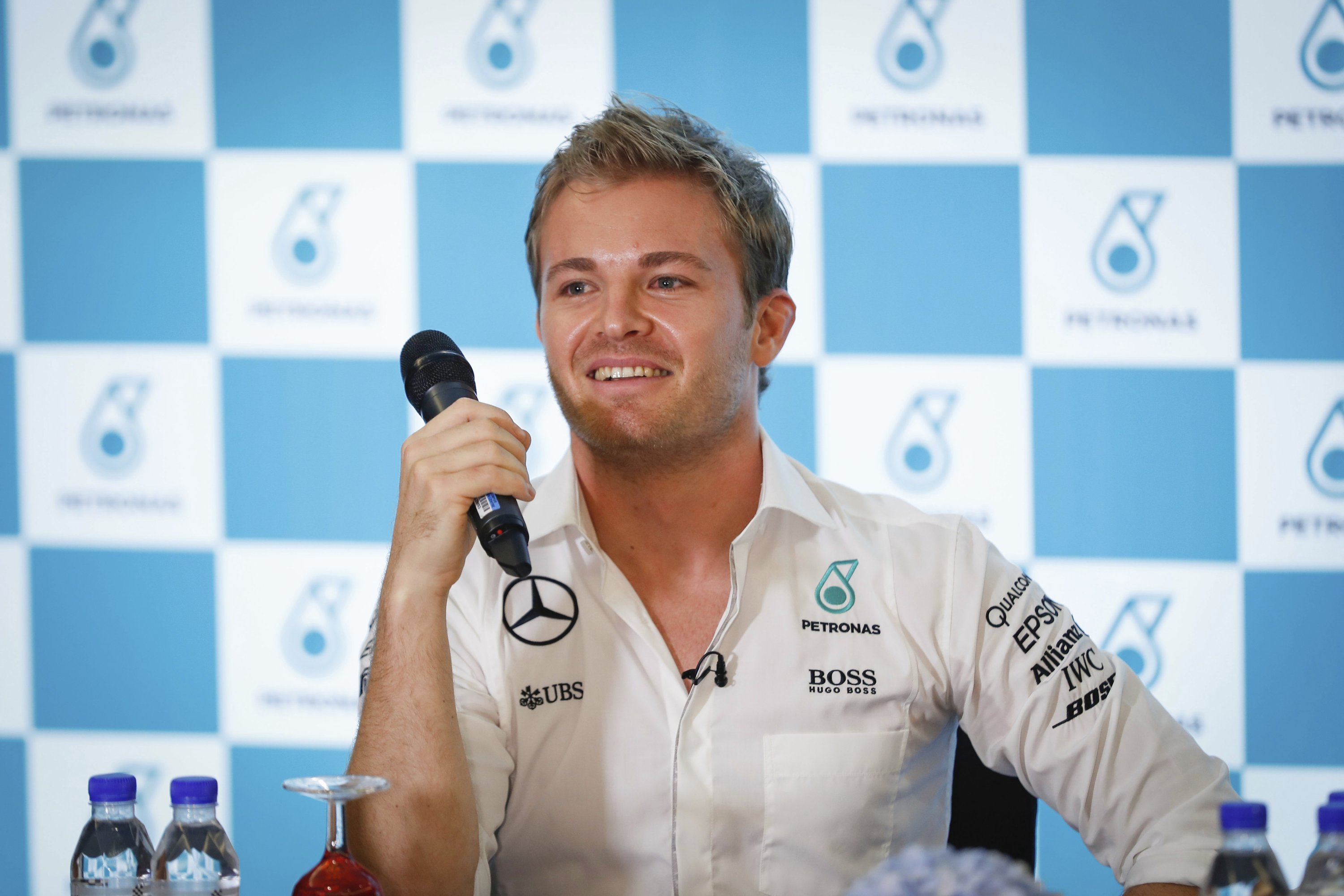
Nico Rosberg briefly interrupted Hamilton’s Mercedes run by winning the 2016 championship, before Hamilton returned to the top in 2017 and went on to add three more titles through 2020.
Verstappen’s four-year reign
The next major shift came in 2021, when Max Verstappen won his first championship after a season-long battle with Hamilton.
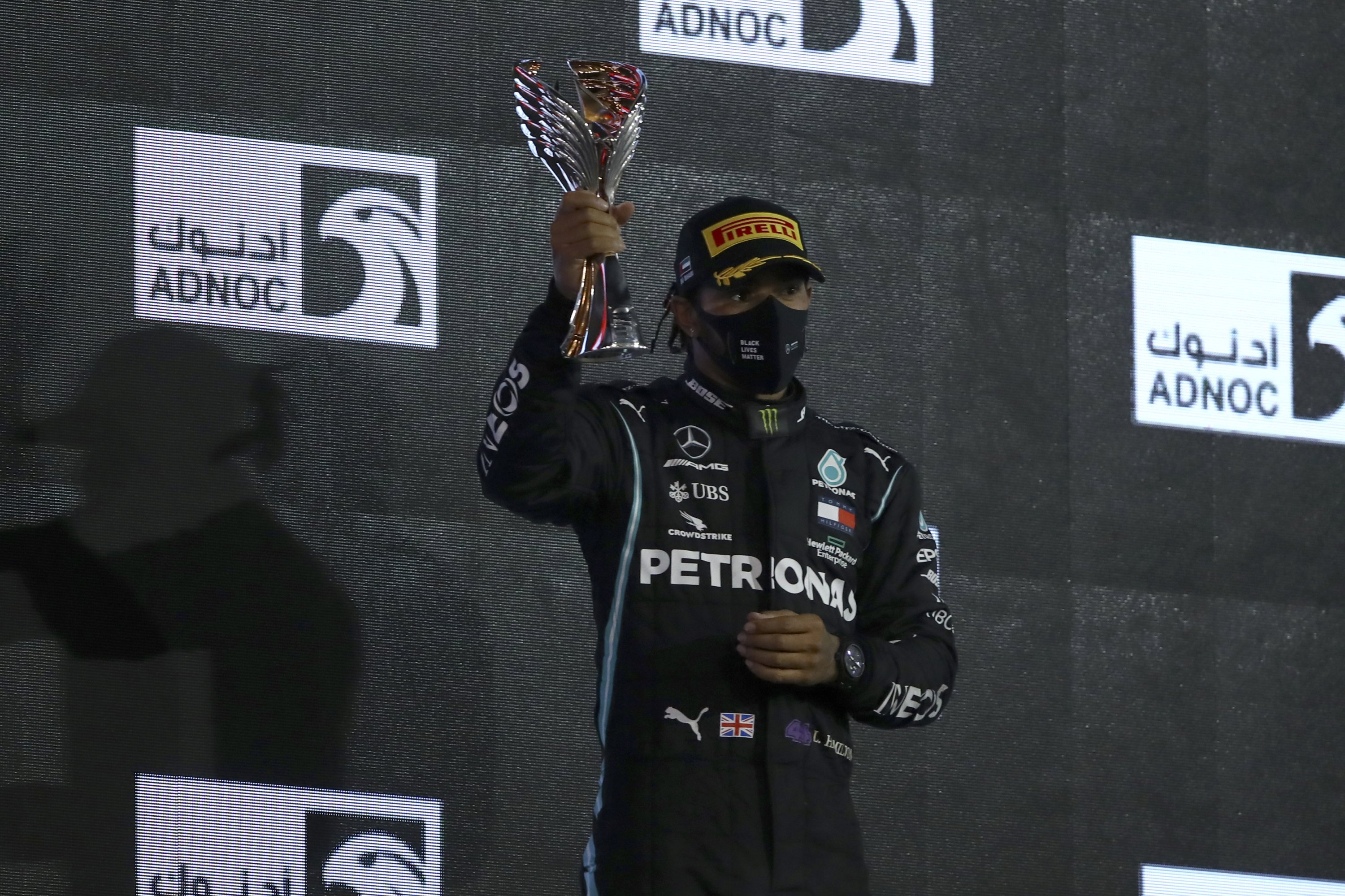
Verstappen followed that breakthrough with three more titles in 2022, 2023 and 2024, becoming a four-time world champion and joining an elite group that includes Prost and Vettel.
His fourth title marked the end of another dominant period before McLaren emerged as the leading force of the 2025 season.
Norris ends McLaren’s long wait
Norris became the latest name on the championship roll of honor in 2025.
The Briton entered the Abu Dhabi finale in a three-way title fight with Verstappen and McLaren teammate Oscar Piastri. Norris finished third while Verstappen won the race, but the result was enough for Norris to secure the championship by two points.
Norris became the 35th different Formula One world champion and the 11th British driver to win the title. His championship also ended McLaren’s 17-year wait for a Drivers’ Championship, following Hamilton’s 2008 success.
McLaren completed the 2025 double by also winning the Constructors’ Championship.
The final margin was one of the closest in modern F1 history. Verstappen finished just two points behind Norris, while Piastri ended the season third.
Which countries have produced the most champions?
Britain leads the nationality table with 21 Drivers’ Championships won by 11 different drivers, including Norris in 2025.
Germany is next with 12 titles, followed by Brazil with eight and Argentina with five.
Finland, Australia, Austria, France and the Netherlands have each produced four championship-winning campaigns. Italy, the United States and Spain have each produced two.
New Zealand, South Africa and Canada have each produced one world champion.
In total, Formula One’s 35 champions have represented 15 different countries, underlining the global reach of a championship that began with a small European core in 1950 and has since become one of the world’s most international sporting competitions.
The championship in numbers
76: Drivers’ Championships awarded through 2025
35: Different world champions
15: Countries represented by champions
7: Titles each for Schumacher and Hamilton
5: Fangio’s championships
4: Titles each for Prost, Vettel and Verstappen
21: Championships won by British drivers
11: British drivers who have become world champions
5: Schumacher’s consecutive titles from 2000-04
2: Points separating Norris and Verstappen in 2025
The 2026 Formula One season is currently underway, but its championship has not yet been decided. The historical list above therefore runs through the conclusion of the 2025 season, when Norris became the sport’s 35th world champion.
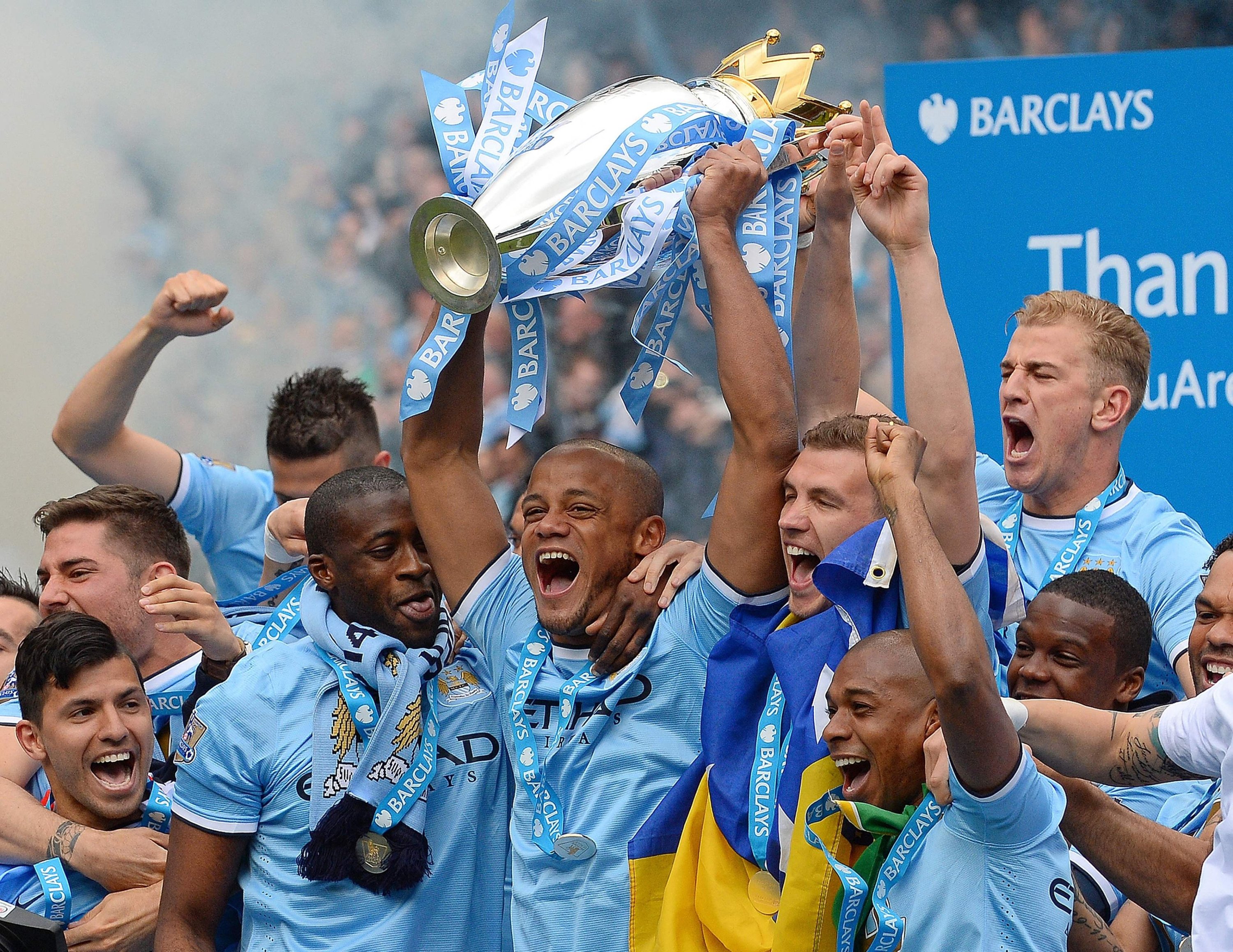
Manchester City have been found guilty of all but one of the 115 alleged breaches of the Premier League’s financial rules, The Athletic reported Friday, in a potentially seismic development in a case that has cast a shadow over English football for years.
The club are expected to appeal, meaning the legal process is not yet complete. City have consistently denied any wrongdoing.
“The Premier League process remains ongoing, with significant elements to be completed, and subject to strict confidentiality,” the club said in a statement to British media.
“As such, Manchester City FC’s position remains consistent with the club’s statement of February 2023.
“The club has diligently respected due process for eight years on the basis that the Premier League board and executive would behave as an independent, impartial and fair-minded regulator, free from partisan influence.”
The Premier League declined to comment on the reported verdict.
“It’s a confidential process. We’re not commenting at all,” a league spokesperson said.
A final ruling against City would mark one of the most significant decisions in English football history, bringing a dramatic new chapter to a case that has hung over the Premier League for more than three years.
The proceedings have raised questions about financial regulation, competitive integrity and how the league enforces its rules against its most successful clubs.
Allegations spanning more than a decade
The Premier League referred City to an independent commission in February 2023 over alleged breaches of financial rules spanning the 2009-10 to 2022-23 seasons. The club have consistently denied wrongdoing.
Among the most serious allegations was that City failed in each season from 2009-10 to 2017-18 to provide accurate financial information giving a “true and fair view” of revenues, including sponsorship income, and operating costs.
City hired lawyer David Pannick to lead their defense, while the Premier League was represented by Adam Lewis, according to British media reports.
The hearing began Sept. 16, 2024, and concluded nearly three months later on Dec. 6. The case was heard by an independent commission composed of three people appointed by the independent chair of the Premier League Judicial Panel.
Former City midfielder Rodri said Friday he had always trusted the club’s insistence that it had done nothing wrong and said the players had shared that belief throughout the case.
“Hopefully, justice can be done, whatever happens obviously, but I trust in the impunity of that club which I know very well. And they always transmitted their confidence that they’d done everything correctly,” he told a news conference on the eve of Spain’s Nations League game against England at Wembley.
“Until the moment they’re proved wrong, we will believe the club and I’ve been there and I know how they work and how they cooperate,” said the midfielder, who now plays for Barcelona.
European football’s governing body UEFA banned City from the Champions League for two years in 2020 after finding the club had overstated sponsorship revenue between 2012 and 2016.
City, however, successfully appealed to the Court of Arbitration for Sport (CAS), which overturned the ban.
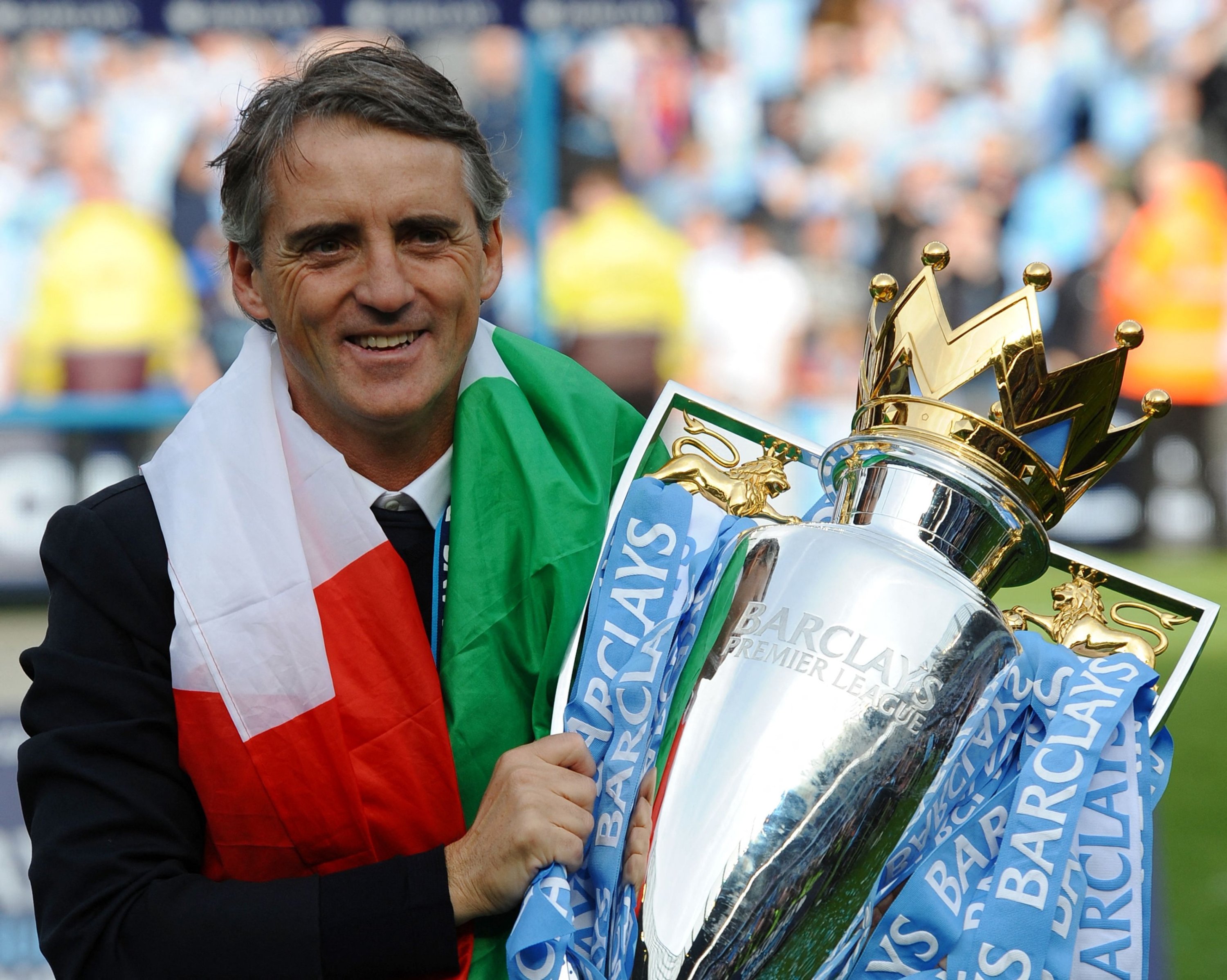
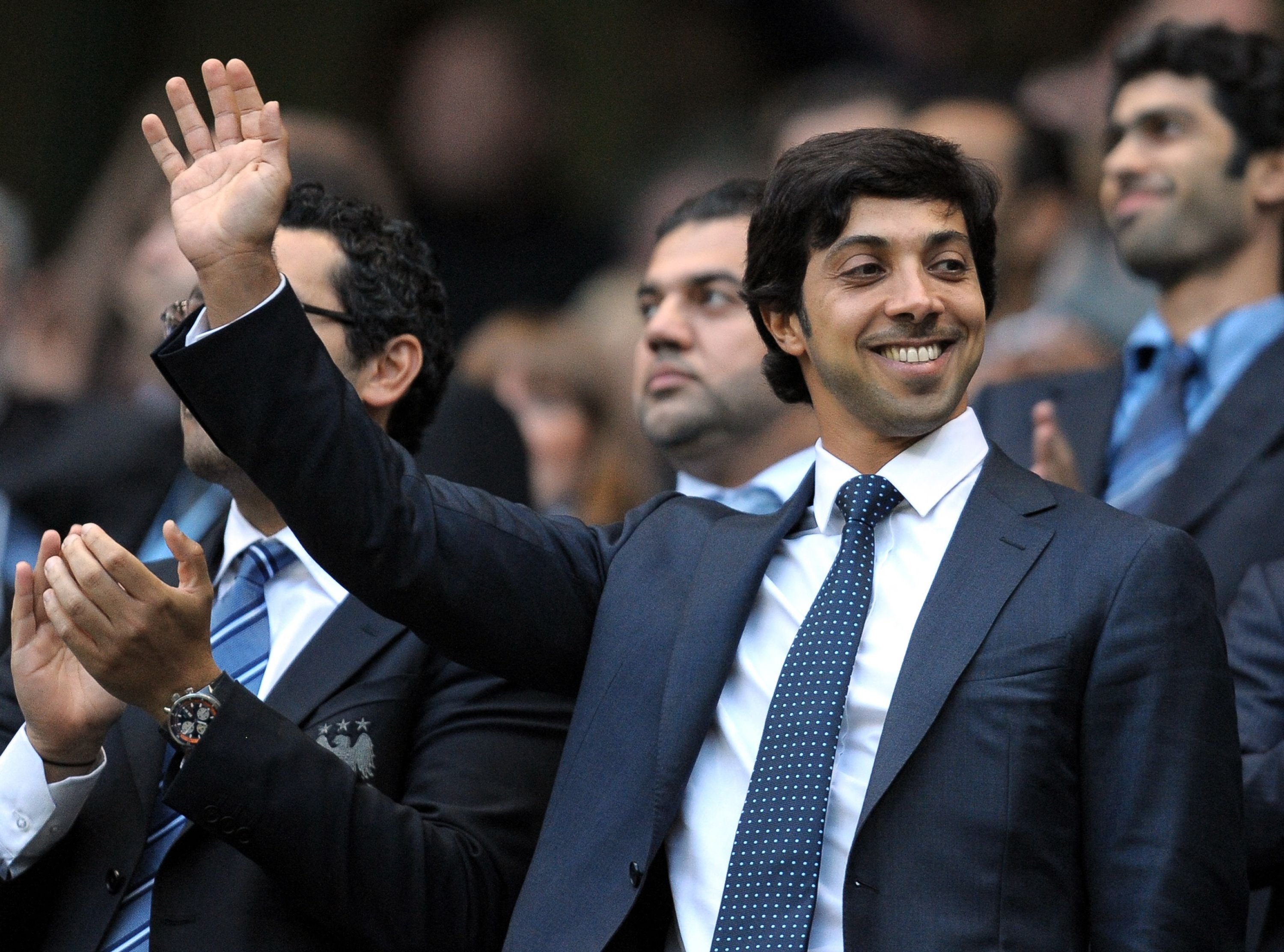
Since Sheikh Mansour’s Abu Dhabi United Group bought the club in 2008, City have won eight Premier League titles, the Champions League, four FA Cups and seven League Cups.
City currently top the Premier League after winning each of their opening five matches.
Rodri believes nothing can diminish City’s achievements.
“What we did, they cannot take out of us. It’s something that is not paid by money, it’s paid with effort, with partnership, with being shoulder to shoulder every day,” he said.
“We had a lot of successful years and here in Wembley, so I can only tell you that everything was deserved and I’m glad I could live one of the best eras of English football in here,” he added, referring to City’s cup triumphs at the stadium.
High stakes
The stakes are particularly high because other clubs have already faced sporting sanctions for breaching financial regulations.
Everton were docked a total of eight points during the 2023-24 season after two separate breaches of the Premier League’s Profitability and Sustainability Rules, while Nottingham Forest were deducted four points for a breach of the same rules in March 2024.
Newcastle United narrowly avoided potential sanctions after selling players before the June 30, 2024, financial reporting deadline to comply with spending regulations.
The allegations against City are far broader and cover more than a decade, making the case unprecedented in scale. Lawyers, club executives and supporters across the league have spent years awaiting a verdict.
Ian Hargreaves, a partner at specialist disputes firm Quillon Law, said the “rumoured verdict is not the end of the story but the beginning of a new phase in what has become one of the most closely watched legal battles in global sport.”
The key questions raised, he said, are what sanctions the panel considers proportionate and what guidance can be drawn from previous cases.
“There is a wide range of options, with a transfer ban at the more moderate end of the spectrum and expulsion from the league the most severe repercussion,” Hargreaves said.
“There is also the question of whether the panel’s decision can withstand a hard-fought appeal, and on what grounds any challenge might be brought. Much will depend on the detail of the panel’s findings and reasoning, which will inevitably be closely scrutinized by both sides.”
Responding to the reports, Caroline Dinenage, chair of Britain’s Culture, Media and Sport select committee, urged that due process be followed while calling for the case to be concluded as quickly as possible.
“The reports … have profound implications for our national game,” Dinenage said in a statement.
“The extraordinary length and cost of this process raise serious concerns, and the affair again gives rise to questions about financial fairness across the football pyramid.
“The matter must be allowed to take its course and due process must be followed, but I sincerely hope any further stages are completed as swiftly as is reasonably possible.”
Turkish boxing star Busenaz Sürmeneli added another continental crown to her decorated career Friday, defeating Britain’s Chantelle Reid to win gold at the 2026 European Boxing Championships in Sofia, Bulgaria.
Sürmeneli claimed the women’s 70-kilogram title on the final day of competition at the Asics Arena, securing her second consecutive European championship.
The Olympic champion and three-time world champion now has four European Championship medals in her career, including two golds and two bronzes.
Her latest triumph further adds to a career that has established Sürmeneli among Türkiye’s most successful boxers.
Meanwhile, Türkiye’s Büşra Işıldar took silver in the women’s 75-kilogram division after losing to Ireland’s Aoife O’Rourke in the final.
The 24-year-old Işıldar, a former world and European youth champion, had previously won silver at the senior World Championships and bronze at the European Championships.
President Recep Tayyip Erdoğan congratulated Sürmeneli following her victory, speaking with the Turkish boxer by phone through Deputy Youth and Sports Minister Hamza Yerlikaya, who watched the final in Sofia.
“Congratulations, well done. Hopefully, I expect success at the Olympics as well. Congratulations, and send my regards to your family,” Erdoğan told Sürmeneli.
Sürmeneli thanked the president for his congratulations.
Kylian Mbappe scored the decisive goal as Türkiye suffered a 1-0 defeat to France in their UEFA Nations League League A opener in Kocaeli on Friday, handing Zinedine Zidane victory in his first match in charge of Les Bleus.
France captain Mbappe broke the deadlock in the 54th minute, finishing a move created by Michael Olise, but injured his left knee while taking the shot and was forced off just five minutes later.
Türkiye, coached by Vincenzo Montella, pushed for an equalizer but finished the match with 10 men after goalkeeper Uğurcan Çakır was shown a straight red card in the closing stages.
After a goalless first half, Türkiye came close to opening the scoring five minutes after the restart.
Arda Güler delivered a corner from the left and İsmail Yüksek directed a header toward goal, but France goalkeeper Mike Maignan reacted sharply to tip the bouncing effort behind.
France struck four minutes later.
Olise threaded a pass into the left side of the penalty area, where Mbappe drove a powerful shot past Uğurcan to give the visitors a 1-0 lead.
The goal continued the prolific international form of Mbappe, France’s all-time leading scorer, but the forward appeared to hurt his left knee while shooting. He was replaced by Desire Doue in the 59th minute.
Türkiye continued searching for a way back into the contest.
Arda again threatened in the 75th minute after Can Uzun’s pressure forced France into a defensive mistake. The Real Madrid midfielder collected the loose ball and fired toward the near post from a tight angle, only for Maignan to make another fingertip save.
Türkiye’s hopes suffered a further blow late in the match.
Following a VAR recommendation, referee Felix Zwayer reviewed an incident involving Uğurcan and Bradley Barcola. The goalkeeper was judged to have handled the ball outside his penalty area and was shown a straight red card in the 87th minute.
With Türkiye having already used its available substitutions, forward Barış Alper Yılmaz made way for goalkeeper Altay Bayındır.
France held on through the closing minutes to secure all three points and give Zidane a winning start to his tenure.
The former France captain, who helped Les Bleus win the 1998 World Cup, was appointed in July to succeed Didier Deschamps and signed a contract running through 2030.
For Türkiye, the narrow home defeat marked a frustrating start to their League A campaign despite creating opportunities against the former world champions.
Carlos Alcaraz has urged tennis authorities to address late-night Grand Slam matches, saying play should ideally end by 11:00 p.m. after his US Open title defense ended at 3:33 a.m. against Ben Shelton.
The seven-time Grand Slam champion made the comments Thursday in London ahead of the Laver Cup, where he will represent Team Europe.
Alcaraz wants earlier finishes
Alcaraz’s US Open campaign ended when Shelton beat him in a four-hour, 28-minute quarterfinal that became the tournament’s latest finish. The match ended at 3:33 a.m. local time.
Three other matches at the tournament finished after 2 a.m., while two more went beyond midnight. Venus Williams was involved in the latest-starting match, which began at 12:13 a.m.
“I think it’s too much,” Alcaraz said. “I would like to change the schedule a little with a maximum finish at 11:00 p.m., or whatever would be better.”
Alcaraz said earlier scheduling would also help fans attend and stay for major matches.
“If that match was played earlier, the court could have been packed,” he said.
Wimbledon already has an 11:00 p.m. local curfew, while the French Open limits its night sessions to one match. The U.S. Open has no fixed cutoff, although its organizers have said they will evaluate scheduling options.
The debate comes as leading players increasingly raise concerns about the demands of tennis’ crowded calendar and limited recovery time.
Agassi backs more downtime
Andre Agassi, the eight-time Grand Slam champion and Team World captain at the Laver Cup, also called for greater protection of players’ offseason.
“It would be my hope (for) an off-season of some relative form of security for both the players, but also for the fans so that they look forward to the game,” Agassi said.
Agassi said he would not target the Laver Cup for cuts, praising the event created by Roger Federer and named after Australian great Rod Laver.
Instead, he said tennis should find ways to ensure its top players are able to compete at their best.
“I do absolutely air on the side that in a lot of times in life, less is more and in a lot of cases tennis could benefit from that,” Agassi said.
Alcaraz welcomes Laver Cup return
Alcaraz is enjoying his return to London after missing the grass-court season, including Wimbledon, because of a wrist injury. He returned at the US Open and reached the quarterfinals.
He will compete for Team Europe alongside Alexander Zverev, Casper Ruud, Flavio Cobolli, Rafael Jodar and Jakub Mensik, with Arthur Fery serving as an alternate. Alcaraz is scheduled to play doubles with Mensik in Friday’s night session.
“For me it is an honour to be here back in London,” Alcaraz said. “I miss it this year to be honest and to be able to come back here in the Laver Cup, with these guys, I would say it is even better.”
The team format also gives Alcaraz a chance to spend time with players who are usually his rivals.
“I love team events and team tournaments,” he said. “You spend time with them and have fun.”
He said the experience could help restore his enjoyment of competing after a demanding season.
“This kind of week helps me to bring my joy back on the court,” he said.
Laver Cup carries special memories
The Laver Cup also returns to The O2, where Federer played his final professional match in 2022 alongside Rafael Nadal.
Ruud, who was part of Team Europe that year, recalled the emotional farewell.
“Everyone was trying to hold back tears, but they couldn’t,” Ruud said.
He hopes Team Europe can use the occasion as motivation this time.
“Maybe we can try to win for Roger this time in the O2,” he said.
For Wimbledon semifinalist Fery, being part of the event caps a breakthrough season after he climbed from No. 140 in June to the Wimbledon semifinals.
“It’s been an insane few months and really happy to be sharing the locker room with all these guys this week,” Fery said.
Agassi said Alcaraz’s wrist injury and lengthy absence underline the physical demands facing players.
“When I look at the wear and tear and the situation like Alcaraz, who is out for four-and-a-half months because of his wrist, the only surgery I had in my life was on my wrist and you only have one of them,” Agassi said.
The Laver Cup runs through Sunday, but the wider scheduling debate will continue beyond London, with Alcaraz calling for Grand Slam organizers to give players and fans a more reasonable end to long match days.
Güzin Müjde Karakaşlı has spent years balancing a legal career with elite billiards, and in France, she brought both worlds together by making history as a world champion.
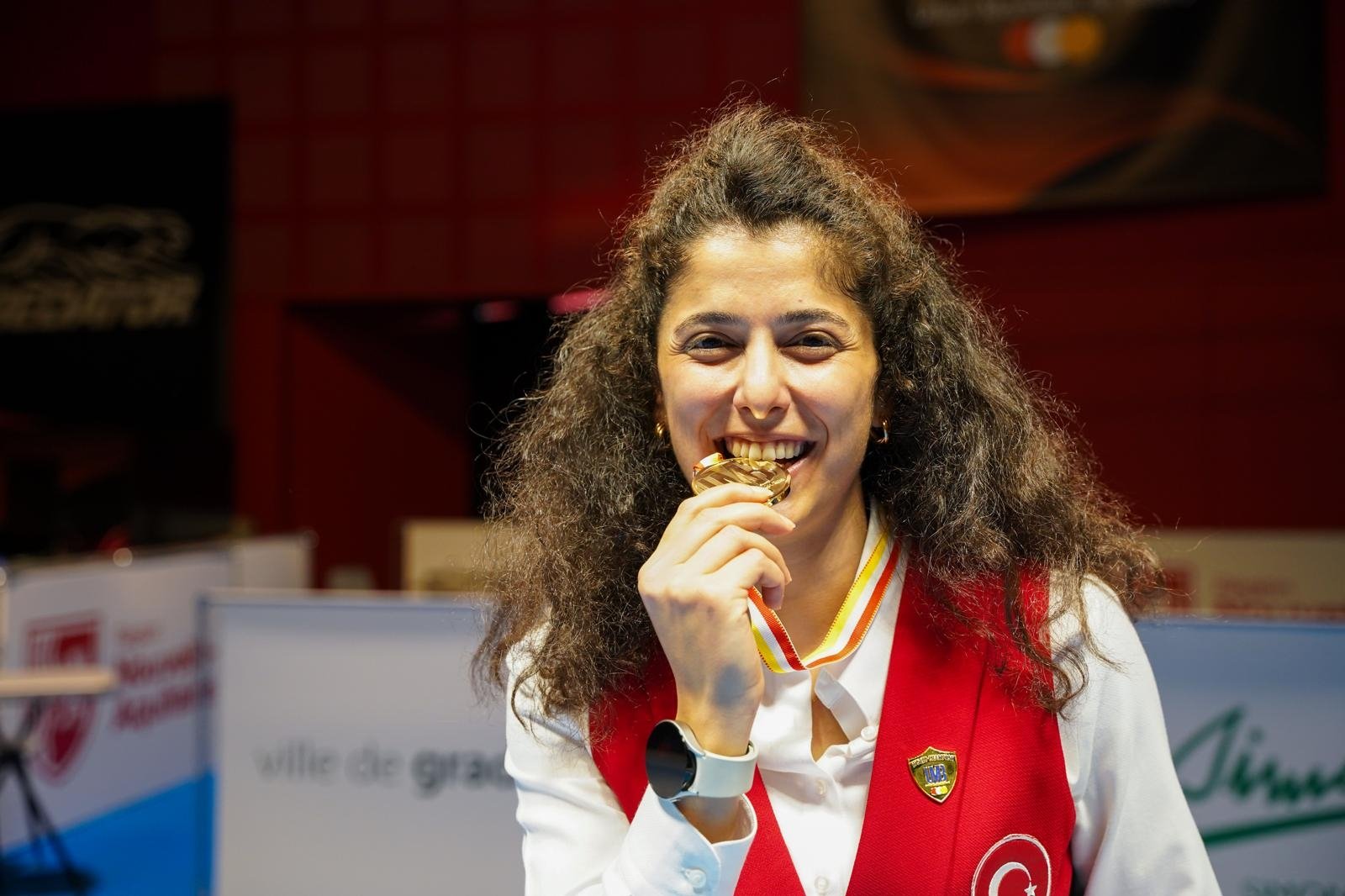
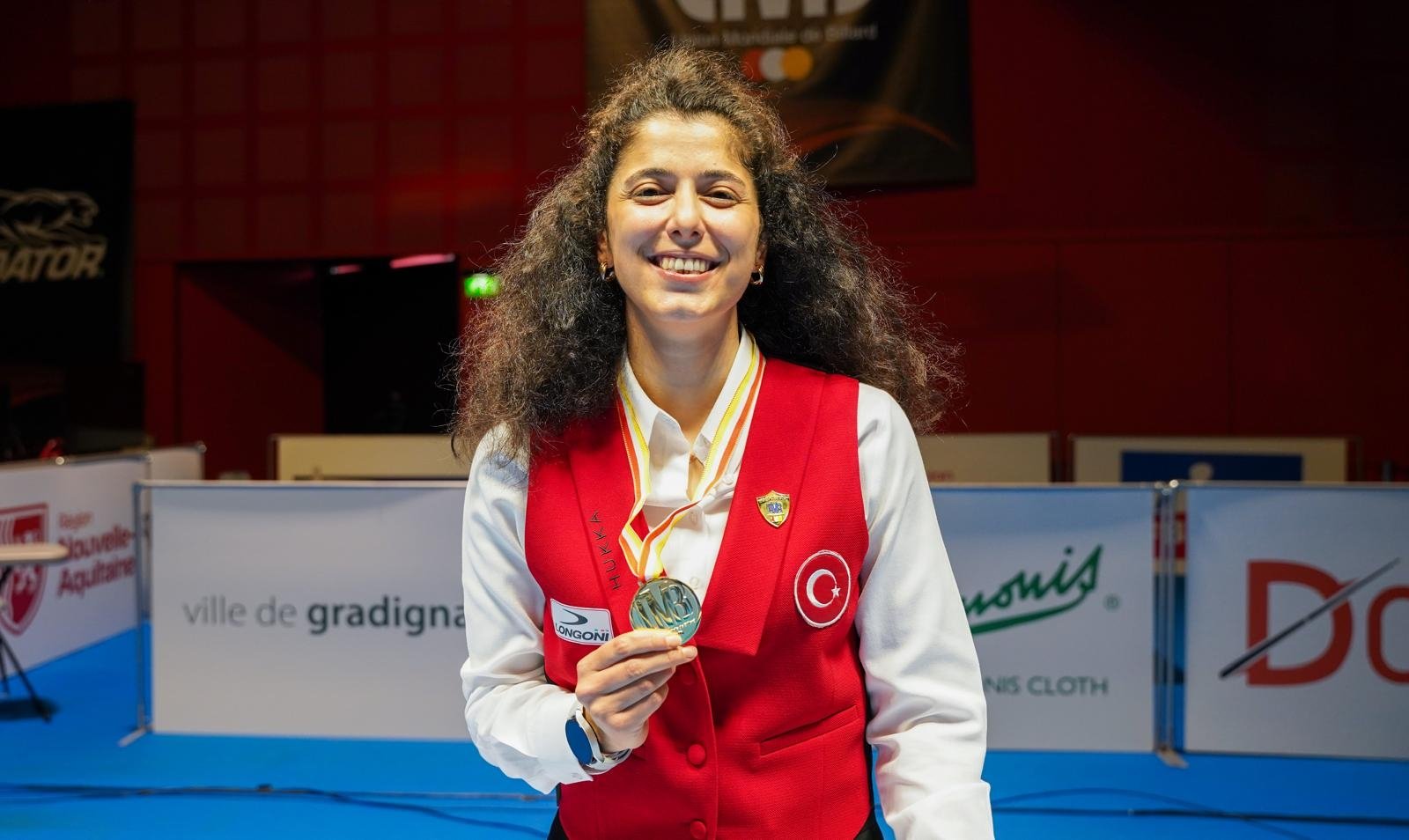
The Turkish attorney defeated Dutch player Karina Jetten 30-18 to become the women’s three-cushion billiards world champion, winning the first individual world title of her career and making history for Turkish women’s billiards.
Three days after the final, Karakaşlı paused when asked how it felt to become a world champion.
“My feet aren’t touching the ground,” she said.
It was an appropriate description for a woman who had spent years pursuing a goal that once seemed distant.
“I don’t know, but I’ll do my best,” Karakaşlı said with a laugh. “Billiards is a game with endless difficulties, but it is equally perfect and fascinating. Throughout my journey, I have always tried to become better, learn new techniques and read the game more accurately. I still know there is a lot I need to improve.”
The significance of her victory, however, goes beyond the title.
“I went there not only for myself, but also to represent my country as the Turkish champion,” she said. “When I look back at those few days in France, I am proud not only because I became world champion, but also because of my composure at the table, my fight and, especially, the mental strength I showed.”
Becoming the first Turkish woman to win the world title was difficult to put into words.
“My biggest wish is for this achievement to be a gift and an inspiration to all of Türkiye, especially young girls,” she said. “The medal is around my neck, but I believe the meaning it carries belongs to all of us.”
Sporting family
Sport was part of Karakaşlı’s life long before billiards became her passion.
Her parents met while playing volleyball, and their home was one where sport was constantly watched and discussed. As a child, she remembers watching Turkish billiards great Semih Saygıner defeat Belgian legend Raymond Ceulemans.
“Volleyball was the sport in our home at first,” she said. “But we watched all sports, especially those played with a ball. I remember that famous match between Semih Saygıner and Raymond Ceulemans almost like a photograph from my childhood.”
Karakaşlı sees strong similarities between her careers as a lawyer and professional billiards player.
“Both require the highest level of reasoning and a mathematical approach,” she said. “They are two of the most important parts of my life.”
The similarities extend to strategy and decision-making.
“You need to know when to attack and when to defend, read the situation and choose the right strategy and the optimum tools,” she said.
At the billiards table, however, the margin for error can be microscopic.
“The table is 142 by 284 centimeters, and there are billions of possibilities,” Karakaşlı said. “You have 40 seconds when you approach the table for a position. You have to make the finest possible decisions about thickness, spin, collision and the strength of the shot, and then execute them.”
That demands extraordinary concentration.
“You have to be completely in the moment,” she said. “On one hand, you feel all the tension of the world in your mind and arms. On the other, you are trying to see the ball near the short cushion so precisely that you can hit it without moving another ball. When you look at it that way, it is almost crazy.”
Why she did not celebrate wildly
The final against Jetten produced a decisive 30-18 victory, but Karakaşlı does not consider it the easiest match of the tournament.
“There is no easy match because every match is difficult,” she said.
Her control of the game prevented Jetten from finding a way back.
“I never gave up control of the game, and I was able to break my opponent’s resistance to a point where she could not recover,” she said.
Preparation also played an important role. Karakaşlı credited her work with Berceste Şeber and Prof. Dr. Nurullah Genç before the final.
Perhaps the most striking moment came when she won the championship point.
There was no scream, dramatic jump or prolonged celebration.
Karakaşlı had made herself a promise before the match.
“No matter what happens, I will never lose my focus or the connection between my mind and the table,” she said. “I kept the promise I made to myself.”
Only after the final point could she relax.
“It was over. From that moment, I could finally let go.”
The people behind the victory
The first person to call her after the championship was Ersan Ercan, president of the Turkish Billiards Federation.
“He said he was very happy that I had brought home the last missing trophy in our museum with the Women’s World Championship title I won in France,” Karakaşlı said.
Rather than making a call herself immediately after the victory, Karakaşlı ran toward Dutch sports photographer Ton Smilde and embraced him.
“He was the closest witness to all the effort I had put in,” she said. “He is a colleague of yours who never left me alone.”
She later called her twin sister, Merve.
“It was such an emotional moment that we could hardly speak between the tears and prayers,” Karakaşlı said.
Making room for two careers
The world title did not come at the expense of Karakaşlı’s legal career.
For years, she has organized her professional responsibilities, court appearances, case files and training around one another.
She remembers making a promise to herself at 23, when she won her first international medal and became the youngest woman in the field at the time.
“Don’t make your dreams smaller. Don’t give up on your talents,” she told herself.
The world championship became another fulfillment of that promise.
Her experience as a lawyer has also shaped the way she views challenges facing women in sport.
“Gender barriers are mostly not barriers that we create ourselves,” she said. “But by telling our stories and adding new achievements every day, we can gradually remove them.”
She believes greater access to billiards through school sports and development projects can help more girls discover the sport.
“The Turkish Billiards Federation museum is filled with incredible achievements,” she said. “I hope that this legacy, together with the contributions of women athletes at the beginning, will inspire girls several generations from now.”
The next dream
Winning the world championship has not made Karakaşlı any less ambitious.
“From now on, I will enter tournaments as the title holder,” she said. “My first motivation will be to defend that title.”
Beyond that lies an even bigger ambition: an Olympic gold medal.
Billiards is recognized by the International Olympic Committee and remains a candidate for inclusion in the Olympic program. Karakaşlı wants to represent Türkiye in women’s billiards at the Olympics and pursue the gold medal.
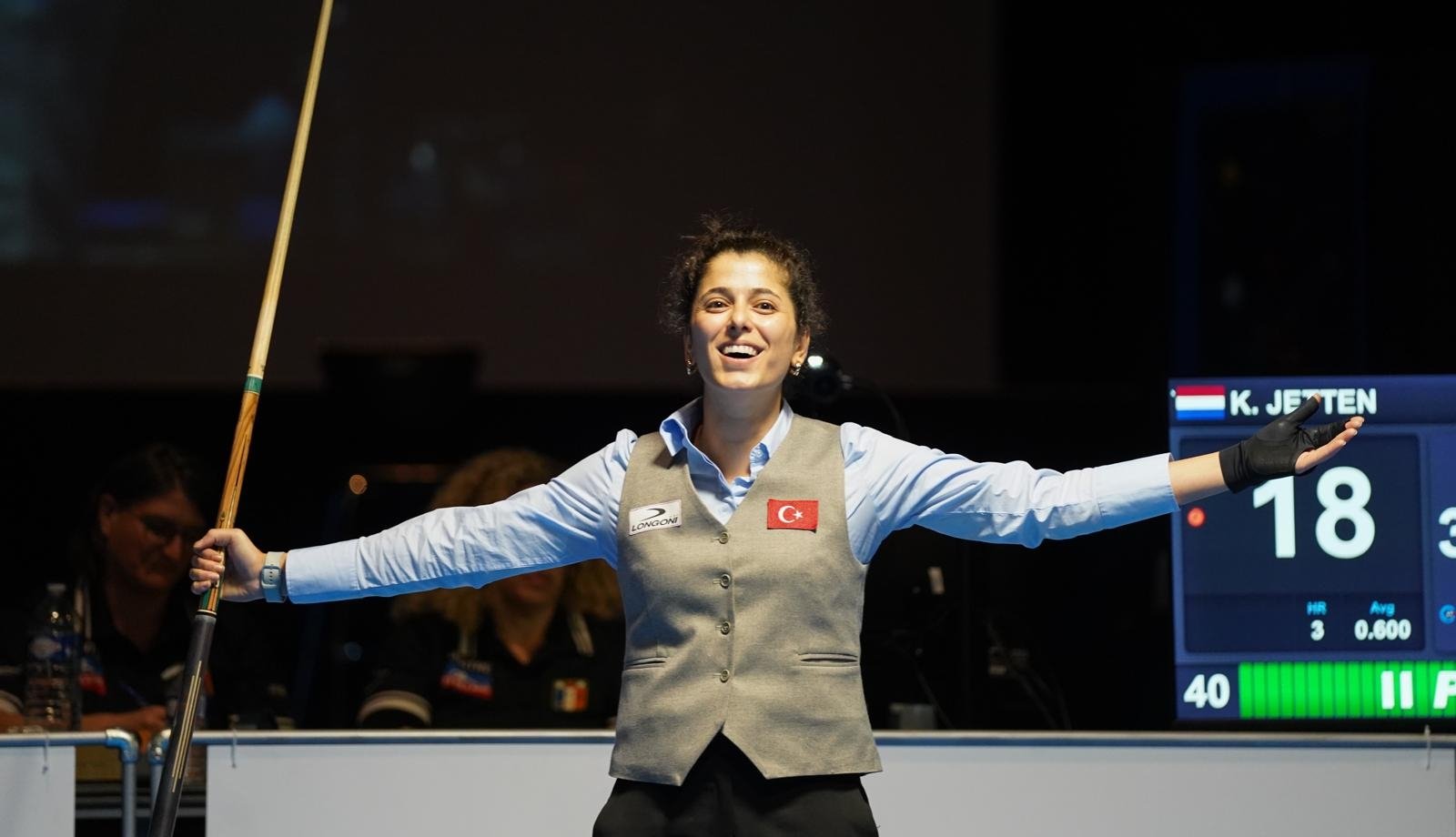
For her, however, the legacy of her world title may ultimately be measured by something much smaller than a trophy.
A child picking up a cue.
Karakaşlı spoke about two young players, Turkish junior champion Çınar and a young girl named Zeynep.
Watching Zeynep place the cue on the table and try to strike the ball moved her deeply.
“I cannot describe the happiness I felt watching her,” Karakaşlı said.
She believes billiards can introduce children to physics, geometry and psychology while giving young girls another sporting path.
“We need mothers and sisters who play billiards,” she said.


-
 Politics3 days ago
Türkiye’s AK Party wraps up major work on new constitution
-

 Economy3 days ago
Iran warns neighbors over flights as US sanctions disrupt airlines
-
 Politics3 days ago
Erdoğan urges world to pressure Israel, end Gaza bloodshed at UNGA
-
 Politics2 days ago
FM Fidan puts Gaza, Israeli attacks at center of OIC talks in New York
-
 Economy3 days ago
No structural problem in Turkish capital markets, VP Yılmaz says
-
 Economy1 day ago
Key takeaways from Trump-Xi summit in US
-
 Politics1 day ago
FM Fidan steps up diplomatic push with high-level talks in New York
-

 Economy3 days ago
Alibaba to establish 1st cloud regions in Türkiye, Finland, Netherlands