
Economy
Climate damage: Europe’s next big fiscal headache

The cost of the damage caused by Europe’s increasingly volatile weather will have to be borne by someone, and with the majority of those economic losses uninsured, the burden is likely to fall on the public purse unless immediate measures are taken.
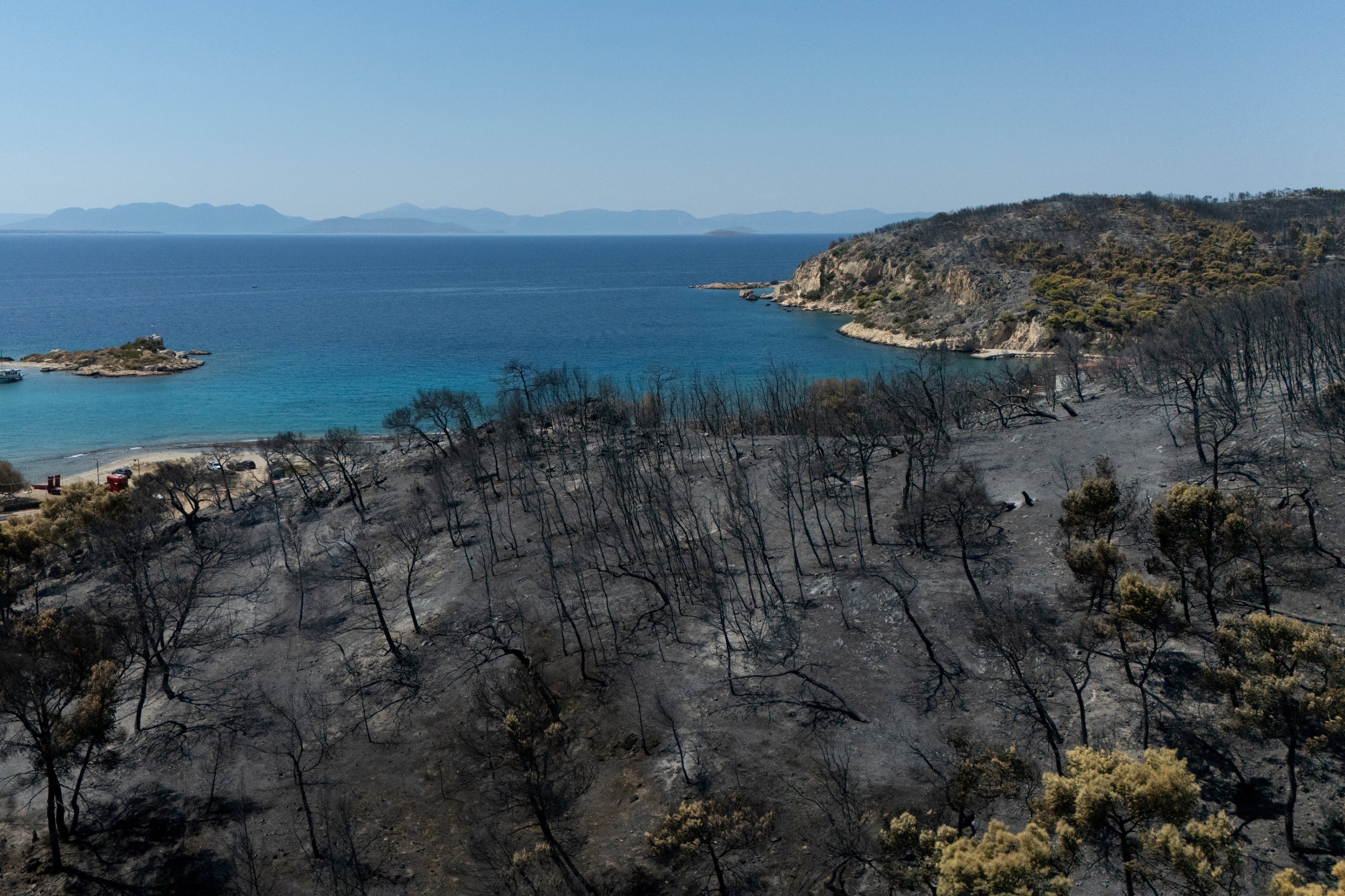
This year’s wildfires in Southwestern Europe and the severe flooding that hit Spain in 2024 and Germany and its neighbors in 2021 show how climate damage is adding to a list of strains on Europe’s finances that already includes higher defense spending and rising costs associated with an aging population.
“The problem is that they’re becoming more recurrent,” Federico Barriga-Salazar, head of Western Europe sovereign ratings at Fitch, said of catastrophes until now largely viewed as costly budget one-offs rather than as a regular expense.
“If a government is already fiscally tight, it means that it does create some policy trade-offs,” he said of the pressure that such economic losses put on other spending items. If the current scale of the fiscal hit is arguably quite small, there is a growing acceptance that it will only get bigger in a region which is the world’s fastest-warming continent.
Weather- and climate-related extremes caused economic losses of an estimated 822 billion euros ($953 billion) in the European Union between 1980 and 2024, according to the European Environment Agency – with a quarter of that damage inflicted in just the last four years.
Public deficits across the eurozone already average around 3% of GDP. Barriga-Salazar cited estimates that the Spanish 2024 floods – Europe’s worst flooding event in five decades – imply reconstruction costs of 0.7 percentage points of output from 2024 to 2026.
Moreover, only a quarter of climate-linked catastrophe losses are insured in the EU, with coverage in some countries below 5%, the EU estimates. Some fear that level of insurance coverage will only get smaller as a proportion of overall costs as extreme weather events occur more regularly.
“I do think this just means the more you have these risks, the less they will be insured,” said David Zahn, head of European fixed income at Franklin Templeton. “This is a big issue, and it will impact some of the countries by 1% to 2% of GDP.”
Economic think tank Bruegel calculated that, while most of the 2021 flood damage was covered by insurance in Belgium, the low level of insurance coverage in Germany meant it had to draw on public funds of 30 billion euros for the bulk of damages.
Adapting, sharing risks
With the European Union due to release proposals for climate resilience and risk management this autumn, attention is focused on possible solutions.
Greece, whose tourism-dependent economy is notably exposed to the risk of heatwaves and wildfires, is looking at ways to boost insurance coverage while making water and energy infrastructure more robust in tourist hotspots.
Following huge floods in early 2026, Portugal has announced plans to introduce mandatory home insurance backed by a natural disaster and earthquake disaster fund and a solidarity mechanism to guarantee universal access.
A possible stopgap measure for some could be recourse to so-called catastrophe bonds under which investors can receive handsome returns but also lose part or all of their principal if a predefined event, such as a hurricane or earthquake, occurs.
Franklin Templeton’s Zahn noted that for the sovereign, this could amount to an expensive gamble: “If the event happens, it pays off immediately. But you could also have five years with nothing, and you just paid out 8% per year.”
Heather Grabbe, senior fellow at Bruegel, said governments needed to put in place arrangements more systematic than one-off emergency spending, which risks creating the perverse incentive for households and businesses not to take out insurance.
“All governments across Europe need to assess their exposure and make comprehensive plans to reduce future damage through adaptation investments, as well as pooling risks across borders,” Grabbe said.
Numerous studies highlight how early investments in making economies more resilient to climate change can over time save money – and avoid what a 2025 Oxford University study called an “adaptation investment trap,” where repeated climate disasters raise debt and so leave less money for protection measures.
Spanish Prime Minister Pedro Sanchez has argued that green investments worth 0.1% of GDP could prevent economic losses totaling eight times that, and avoid tax revenue losses amounting to three times the original investment.
The European Central Bank (ECB) has proposed a joint EU public-private reinsurance scheme pooling private risks from natural catastrophes, backed up by an EU fund for public disaster financing.
But the question is whether this summer’s heatwaves will generate the political will to take on some of the upfront costs of such action – both at government and EU level.
A European Commission spokesperson said the EU executive was looking into ways to address the climate insurance protection gap as part of a package of measures due to be adopted by the end of the year.

Egyptian President Abdel Fattah al-Sisi on Saturday urged African countries to prioritize peaceful solutions to conflicts, strengthen state institutions and respect national sovereignty, saying stability is essential for economic development.
“Economic development cannot be built in unstable countries, and stability is not a luxury but a fundamental pillar sought by investors, manufacturers and farmers so they can operate in a safe environment,” Sisi said in his opening speech at the Alamein Africa Forum, which began Friday in New Alamein on Egypt’s northern coast.
“Across our African continent, we fully understand that security begins with supporting the national state and its institutions, respecting its unity and sovereignty, prioritizing peaceful solutions to conflicts and crises, and upholding the principle of good neighborliness,” he added.
The three-day forum has brought together about 1,500 government officials, business leaders, investors and representatives of financial institutions from across Africa, with discussions focused on economic development, investment and greater continental integration.
Sisi said Africa’s private sector is the main driver of the continent’s economies, contributing more than 70% of its gross domestic product.
About 85% of transactions by Africa’s private sector are conducted with companies from outside the continent, Sisi added.
Despite trade agreements and preferential arrangements among African countries, intra-African trade has accounted for only about 18% of the continent’s total trade in recent years, Sisi said.
On international developments, Sisi said Africa aspires to “a world characterized by peace and stability, rather than being made to bear the consequences of global crises in which it was not a party but whose negative repercussions it suffers.”
He cited the current energy crisis as an example, pointing to the impact of rising fuel and fertilizer prices and disruptions to supply and shipping chains on African countries.
Last February, the African Union summit in Addis Ababa approved plans to hold the Alamein Africa Forum every two years in New Alamein.
Egypt is organizing the forum in cooperation with the African Export-Import Bank and the African Union Development Agency.
Teknofest Southeast continues in Şanlıurfa with aviation displays, defense technologies, educational activities and cultural events, as thousands of visitors explore the festival grounds at Şanlıurfa GAP Airport.
The five-day festival, organized with the participation of the Ministry of Industry and Technology, the T3 Foundation and the Turkish Aerospace and Technology Company, is bringing together technology enthusiasts, students, researchers and families through Oct. 4.
The event features technology competitions in 14 categories, exhibitions, scientific workshops, simulation experiences and air shows, while visitors can also explore a wide range of Turkish aviation and defense platforms.
As Teknofest prepares to enter its third day, its program continues to combine large-scale aviation demonstrations with hands-on educational activities and cultural experiences reflecting the identity of Şanlıurfa.
Defense platforms take center stage
Defense and aviation remain among the main attractions at the festival, with visitors able to see a wide range of aircraft, unmanned systems and other military platforms at close range.
For the first time at the festival, a full-scale mock-up of Türkiye’s Kaan fighter jet is on display, giving visitors a closer look at the country’s fifth-generation stealth combat aircraft project.
The Kaan display is part of a large exhibition featuring Atak helicopters, Hürkuş, Cezeri, Anka, Bayraktar TB2, Bayraktar TB3 and Bayraktar Akıncı, along with Turkish land and maritime vehicles.
Bayraktar Akıncı also took part in the flight demonstrations, with images captured by the unmanned combat aircraft transmitted to large screens for visitors on the ground.
The Turkish Stars, the Turkish Air Force’s aerobatic team, performed over the festival on opening day, drawing the attention of thousands of visitors who watched the aircraft soar across the sky.
The aviation program is complemented by paramotor and hang glider demonstrations, giving visitors the opportunity to watch different forms of flight alongside military aircraft.
Technology presented beyond airfield
While aircraft and air shows provide some of the festival’s most visible moments, Teknofest is also designed around education and direct interaction with technology.
Visitors can explore advanced technology simulations, scientific workshops, exhibitions, a planetarium, science shows and the Teknofest Time Tunnel. The festival also includes displays of national air, land and maritime vehicles, as well as special first flight activities for students.
On the opening day, students visited an area operated by traffic gendarmerie teams, where they received information about traffic safety equipment including road traps, radar devices and alcohol meters. They also experienced a seat belt simulation vehicle.
Agriculture and environmental education are also part of the program. Students attending activities organized at the food, agriculture and livestock technology area were introduced to beekeeping and were allowed to observe live bees while learning about bee species and beekeeping.
The festival also features activities focused on accessibility. The Türkiye Beyazay Association is presenting projects related to technologies and methods intended to make education, employment and participation in social life more accessible to people with disabilities.
For many young visitors, the experience is closely connected to their future ambitions.
Şanlıurfa’s heritage meets modern technology
The festival is also presenting Şanlıurfa’s cultural identity alongside advanced technology.
At a stand organized by Haliliye Municipality, a traditional “sıra gecesi” music group performed locally adapted songs while preparing “çiğ köfte” (steak tartar a la turca) for visitors. A four-legged robotic dog was also presented at the stand, creating a visual meeting point between one of Şanlıurfa’s best-known culinary traditions and modern robotics.
The combination of tradition and technology is seen throughout the festival area, where visitors can move between local music, food and traditional clothing and exhibitions featuring aircraft, unmanned systems and robotic technologies.
Teknofest Southeast will continue through Oct. 4 at Şanlıurfa GAP Airport with technology competitions, air shows, exhibitions, workshops, simulation experiences, stage events and celebrations of Şanlıurfa’s cultural heritage.
Canadian Prime Minister Mark Carney is planning a visit to Türkiye this month for talks with President Recep Tayyip Erdoğan, in what would be the first dedicated bilateral trip to the country by a Canadian leader, Reuters reported Friday, citing four sources familiar with the plans.
One source said Carney and Erdoğan could discuss free-trade talks launched on the sidelines of a NATO summit in Ankara in July, as well as potential cooperation in energy and defense. Canadian and Turkish trade ministers agreed this week to accelerate the talks ahead of the leaders’ meeting, two sources said.
The visit would mark Carney’s latest effort to diversify Canada’s economic ties as he seeks to reduce the country’s reliance on the United States, by far its largest trading partner, following the collapse of trade talks in August.
Carney has vowed to double Canada’s non-U.S. trade over the next decade and has moved to strengthen ties with a range of countries, including China and India.
Türkiye, whose largest trading partner is the European Union, is also seeking new partnerships and investment in energy, infrastructure and mining, while expanding opportunities for its growing defense industry.
The sources did not provide dates or a detailed agenda for the visit, which is planned for later this month.
Carney’s office and Erdoğan’s office did not immediately respond to requests for comment.
No Canadian prime minister is known to have made a standalone bilateral visit to Türkiye in recent decades, though Canadian leaders have met Erdoğan and other Turkish officials on the sidelines of multilateral gatherings, including NATO and G20 summits hosted by Türkiye.
At the NATO leaders’ summit in July, Carney and Erdoğan formally launched negotiations for a free-trade agreement.
That month, Türkiye agreed to join Canada’s Defence Security and Resilience Bank as one of 10 founding member nations of Carney’s multilateral “middle powers” bank.
The two countries’ trade ministers met in June and discussed expanding cooperation on renewable and nuclear energy, according to a Canadian government statement, which also listed aerospace, defense and security as areas for potential new partnerships.
Türkiye has held talks with Canadian engineering firm AtkinsRealis, South Korea’s Korea Electric Power Corporation and China’s State Power Investment Corporation over potentially building its second and third nuclear power plants. Russia’s Rosatom is building the country’s first.
An executive at AtkinsRealis, which holds the exclusive license for Canadian-designed CANDU reactors, told Reuters this year that the company expects Türkiye to complete an initial review of its CANDU reactors following an information exchange, potentially paving the way for formal talks on a plant bid.
In a step that helped improve bilateral ties in 2024, Canada lifted weapons-export restrictions on Türkiye, including controls on optical technology used in drones that Türkiye exports to dozens of countries.
Bilateral trade, however, remains relatively small.
Türkiye accounted for less than 0.3% of Canada’s total merchandise trade in 2025, at C$4.34 billion ($3.05 billion), compared with C$1 trillion in trade with the U.S., according to Statistics Canada data.
Canada mainly exports lentils, aircraft and electronics to Türkiye, while importing medical devices, fishing vessels, aircraft engines and jewelry.
S&P Global Ratings does not expect the ongoing investigation and liquidation of over 100 investment funds in Türkiye to put downward pressure on the country’s sovereign credit rating, according to its analysts.
S&P is due to publish its second credit rating and outlook review for Türkiye this year on Oct. 16. In its latest assessment in April, the agency affirmed Türkiye’s rating at BB-/B and maintained its outlook as stable.
Turkish authorities have stepped in to resolve the fund turmoil that erupted last month after suspected price manipulation in a number of thinly traded stocks triggered heavy losses and redemption pressures at investment funds.
Almost half a million investors hold stakes in more than 100 investment funds with combined assets of nearly $20 billion that authorities ordered to be liquidated in mid-September.
Karen Vartapetov, S&P Global Ratings’ director and lead analyst for Central and Eastern Europe (CEE) and the Commonwealth of Independent States (CIS), said the regulatory measures and policy response to the fund investigation had been “quick and convincing,” adding that authorities had managed to contain the issue without a broader negative impact on the financial system.
“There is not much evidence that this process has negatively affected confidence and perceptions of the Turkish economy,” Vartapetov told Anadolu Agency (AA), according to a Turkish transcript of his remarks.
From a macroeconomic perspective, there has so far been limited impact, with the issue appearing to remain largely isolated, he said.
S&P had not observed significant reactions in areas it monitors, including the exchange rate, dollarization, financial conditions and banking-sector liquidity, according to Vartapetov.
If the fund-related developments remain isolated, they would not create downward pressure on the sovereign rating, he said.
“I think the negative effects will be limited if the fund crisis remains isolated and households continue to have confidence in real-currency assets,” Vartapetov said.
He stressed that sovereign ratings are determined by a committee and that the developments involving the funds would inevitably be discussed as part of that process.
S&P would likely highlight the episode as a risk, Vartapetov said, but added that there was not yet clear evidence of significant macroeconomic consequences.
If the issue remains confined to “a narrow asset class,” it would not be a “game changer” for investor sentiment, he said.
Reserve recovery supports rating
Vartapetov also discussed S&P’s outlook for Türkiye’s growth, inflation and international reserves.
The agency expects average inflation of around 30% this year and economic growth of close to 3%, he said. Inflation lastly eased to 31.51% in August.
Reserve adequacy remains one of the most important parameters for Türkiye’s credit rating, Vartapetov said.
Türkiye entered the year with reserves at a very high level, including record gross reserves. The Central Bank of the Republic of Türkiye (CBRT) used some reserves to contain the negative impact of higher energy prices, but later replenished part of the amount, he said.
“Gross reserves are therefore somewhat below January-February levels, but the recovery in reserves is supportive of the credit rating,” Vartapetov said.
Net reserves are not as strong as gross reserves but have also recovered, he added.
Vartapetov said household behavior had been another key focus for S&P in assessing Türkiye’s credit profile in recent years.
The agency has been monitoring whether households continue to prefer the Turkish lira, lira-denominated assets and bank deposits or shift toward the dollar, which could put pressure on foreign-exchange reserves.
Despite geopolitical developments in the Middle East, high energy prices and the fund investigation, households’ stance toward the lira has remained relatively strong, Vartapetov said.
“We have not seen much evidence of dollarization picking up again. Financial-system dollarization has not increased,” he said.
Policy response seen as ‘quite strong’
Regina Argenio, director of financial institutions ratings in the region at S&P Global, said the biggest immediate impact of the fund developments had been felt in the stock market, where equity valuations declined.
“Beyond the initial correction, however, we have seen valuations stabilize,” she said. Data arrive with some delay and may not yet provide the full picture, but there had also been no major movement in bank liquidity, she added.
Argenio said it was important that the problems remained isolated to the funds concerned and described the policy response so far as “quite strong.”
Beyond judicial proceedings, authorities had provided liquidity to the market and appointed banks to handle the liquidation of the funds, she added.
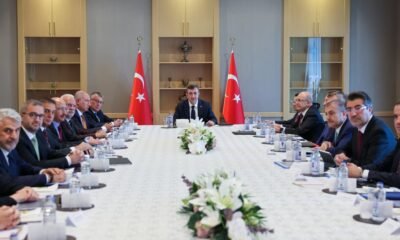
Türkiye’s newly established board tasked with overseeing the rapid liquidation of investment funds caught in the recent turmoil said Friday that work had been carried out on draft amendments to the Capital Markets Law and that the relevant institutions had been instructed to finalize the proposed changes.
The statement followed a meeting of the Fund Coordination Board set up last week and chaired by Vice President Cevdet Yılmaz. The State Supervisory Council (DDK) has also been assigned to examine the issue.
The fund turmoil erupted last month after suspected price manipulation in a number of thinly traded stocks triggered heavy losses and redemption pressures at investment funds.
Almost half a million investors hold stakes in more than 100 investment funds with combined assets of $20 billion that authorities ordered to be liquidated in mid-September.
The board reviewed on Friday the results of measures already taken and discussed new steps, according to the statement by the Directorate of Communications.
It reviewed secondary regulations and a timetable for payments linked to decisions taken by the Capital Markets Board on Wednesday.
The SPK said it would begin making interim payments to investors in the funds that were ordered to shut down.
Investors in asset managers Tera Portföy, Pusula Portföy, Atlas Portföy and Hedef Portföy will receive their full net investment amount if it is below TL 1 million ($20,404). Investors whose net investment amount is TL 1 million or above will receive TL 1 million as an interim payment.
The procedure will start with money market funds, the SPK said.
Friday’s statement said the draft amendments, on which work has been underway for some time, were also discussed. It stressed that the planned regulations should not impose any additional burden on citizens.
The directorate described the problem as arising in a “specific and limited” part of the fund market. It said work to resolve it would continue quickly and effectively, in line with capital markets rules and guided by fairness and equity.
The problems emerged in early September, when the SPK changed its guidelines for investment funds. Funds could no longer put all their assets into a single stock and were required to diversify.
The move sought to address concerns that many funds were heavily invested in a small number of obscure or hard-to-sell stocks.
To comply, some funds began selling holdings, which spooked investors and set off a rush to cash out. Several fund management companies then admitted they could not meet redemption demands.
On Sept. 16, authorities ordered 131 funds managed by seven companies into liquidation.
Top officials, including Treasury and Finance Minister Mehmet Şimşek, have sought to reassure markets, saying the turmoil does not threaten the wider financial system and describing the problem as limited.
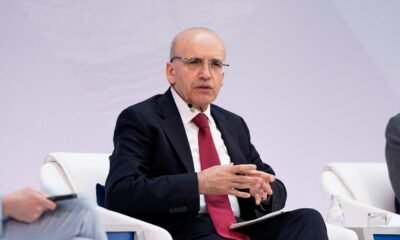
Şimşek told investors on Thursday that authorities had moved quickly to contain problems and prevent them from developing into a systemic crisis, adding that further regulatory measures would be needed.
Speaking separately on Thursday, President Recep Tayyip Erdoğan said developments in the fund market would not pose a threat to the economy. He said authorities would not allow the issue to become a threat to Türkiye’s economic security or social stability.
Prosecutors are also investigating. The SPK said some funds had caused price movements that could not be explained by company fundamentals, and it filed criminal complaints over alleged manipulative transactions.
Authorities have imposed travel bans and asset freezes, while arresting 65 people, including top financial executives, as of Friday.
The share of individuals in Türkiye using generative artificial intelligence nearly doubled in a year, rising to 37.6% in 2026 from 19.2% in 2025, data released by the national statistics authority showed Friday.
The share of businesses using AI also increased, reaching 14%, the Turkish Statistical Institute (TurkStat) said, while a lack of expertise emerged as the biggest obstacle for companies considering adopting the technology.
In 2026, the share of women using AI stood at 38.1%, compared with 37.2% among men, the data showed. The highest adoption rate was recorded among people aged 16-24, at 64.9%. This was followed by those aged 25-34 at 55.7% and the 35-44 age group at 38.1%.
AI use also increased with educational attainment.
Among university graduates, the adoption rate reached 62.7%, compared with 45.4% among high school or vocational high school graduates, 35.5% among those with primary or lower-secondary education and 8.5% among primary school graduates.
Among individuals using AI, 86.4% said they used the technology for personal purposes. Professional use stood at 37.3%, while 32.6% reported using AI for formal education.
Professional use was higher among men, at 43.2%, compared with 31.2% among women. For education, the corresponding rates were 36.1% for women and 29.1% for men.
Business adoption booms
The share of enterprises using AI technologies has also risen sharply, from 2.7% in 2021 to 14% in 2026.
Adoption was highest among businesses with 250 or more employees, at 37.1%. The rate stood at 17% among enterprises with 50-249 employees and 12.8% among those employing 10-49 people.
By economic activity, the highest rate of AI use was recorded in telecommunications, programming and information technology activities, at 63.7%.
Publishing, broadcasting and content activities followed at 57.1%, while computer and communication equipment repair activities recorded an adoption rate of 32.4%.
Among enterprises using AI, 51% said they used the technology for marketing or sales activities.
AI use for research and development and innovation stood at 46.3%, while 43.4% used it in production or service processes.
Some 67.8% of AI-using enterprises relied on open-source AI software, while 49.1% used closed-source software.
The share of enterprises that had AI systems developed by external providers stood at 46.5%, compared with 32.1% that developed them using their own employees.
1 in 6 firms processes personal data
Some 16.6% of enterprises using AI said they processed personal data about individuals through the technology.
Such data included gender, age, occupation, educational status, address information, purchase records and facial images.
Meanwhile, 8.3% of enterprises that did not currently use AI said they were considering adopting it.
Among enterprises considering AI adoption but not yet using the technology, the biggest obstacle was a lack of relevant expertise, cited by 72.3%.
This was followed by legal uncertainty over who would be responsible for potential harm arising from AI use, at 66.4%, and concerns over data protection and privacy, at 65.4%.


-
 Politics3 days ago
Turkish defense chief attends major joint military drills in Azerbaijan
-

 Sports3 days ago
Türkiye aim to stop rot against Belgium in Nations League
-

 Lifestyle3 days ago
190-year-old Greek church set to join Cappadocia tourism route
-
 Politics3 days ago
Türkiye urges end to US-Israel-Iran war, return to talks
-
 Economy3 days ago
Eurozone, Asian factories show resilience despite energy challenges
-

 Sports3 days ago
Konyaspor, Palestine draw 2-2 in solidarity friendly
-
 Economy2 days ago
Türkiye moves to finalize capital markets law changes after fund turmoil
-
 Economy3 days ago
Şimşek tells investors Türkiye has avoided systemic risk in fund turmoil