
Economy
Turkish Airlines aims to lift flights to Asia-Pacific by up to 20%

National flag carrier Turkish Airlines (THY) aims to increase flight frequencies to the Asia-Pacific region by up to 20% in the coming years, a top executive said Friday.
The aim is to establish an alternative second corridor between Asia, Australia and Europe by adding second and third flights to key cities, Murat Şeker, board chair at Turkish Airlines, told Nikkei Asia.
THY operates an extensive network across 133 countries and 358 destinations.
Şeker said the carrier has added 10 flights to reach 42 weekly services this year as part of efforts to accelerate its expansion in China, with existing traffic rights allowing growth to 49 flights.
Flights to Beijing, Shanghai and Guangzhou have been increased earlier than planned, while plans are underway to launch flights to Chengdu in November and Urumqi.
Turkish Airlines redirected wide-body capacity to high-demand markets like Japan, China, Australia, Thailand, Singapore and Vietnam in the wake of tensions in the Middle East, adding 58 weekly flights and 61 cargo flights.
The move helped drive up the carrier’s second-quarter revenue by 20.5% year-over-year to $7.2 billion, as its passenger revenue jumped 15% and cargo revenue surged 58%.
THY’s total revenue rose 20.8% to $13.1 billion in the first half of the year despite increases in jet fuel prices due to tensions in the Middle East, which added $1.3 billion in costs, with total conflict-related spending reaching around $2.1 billion.
The company expanded its customer base by around 5% with new passengers while growing its market share by about one percentage point in the second quarter.
At the same time, Asian routes saw their revenue share rise by five percentage points to 32%, surpassing Europe’s 27%. Asia’s share of THY’s total passenger traffic climbed from 10% to 12%.
Passenger traffic between Africa and Asia jumped 70%, while traffic between Eastern Europe and Asia increased 40% due to shorter transit via Russian airspace.
Turkish Airlines aims to increase its current 25 weekly flights to Japan via newly acquired traffic rights in Singapore and Vietnam, while Japanese investors cover about 20% of its aircraft leasing needs, having financed over 100 aircraft worth around $9 billion in the past two decades.
The airline also plans to start nonstop flights to Sydney and Melbourne in 2028, driven by expected support from revenue generated by long-haul Premium Economy cabins, according to Nikkei Asia.
The carrier is also seeking global joint ventures with potential stakes of 30%-50% across Asian and South American operations and cargo, as well as in aircraft maintenance, repair and overhaul (MRO) services.

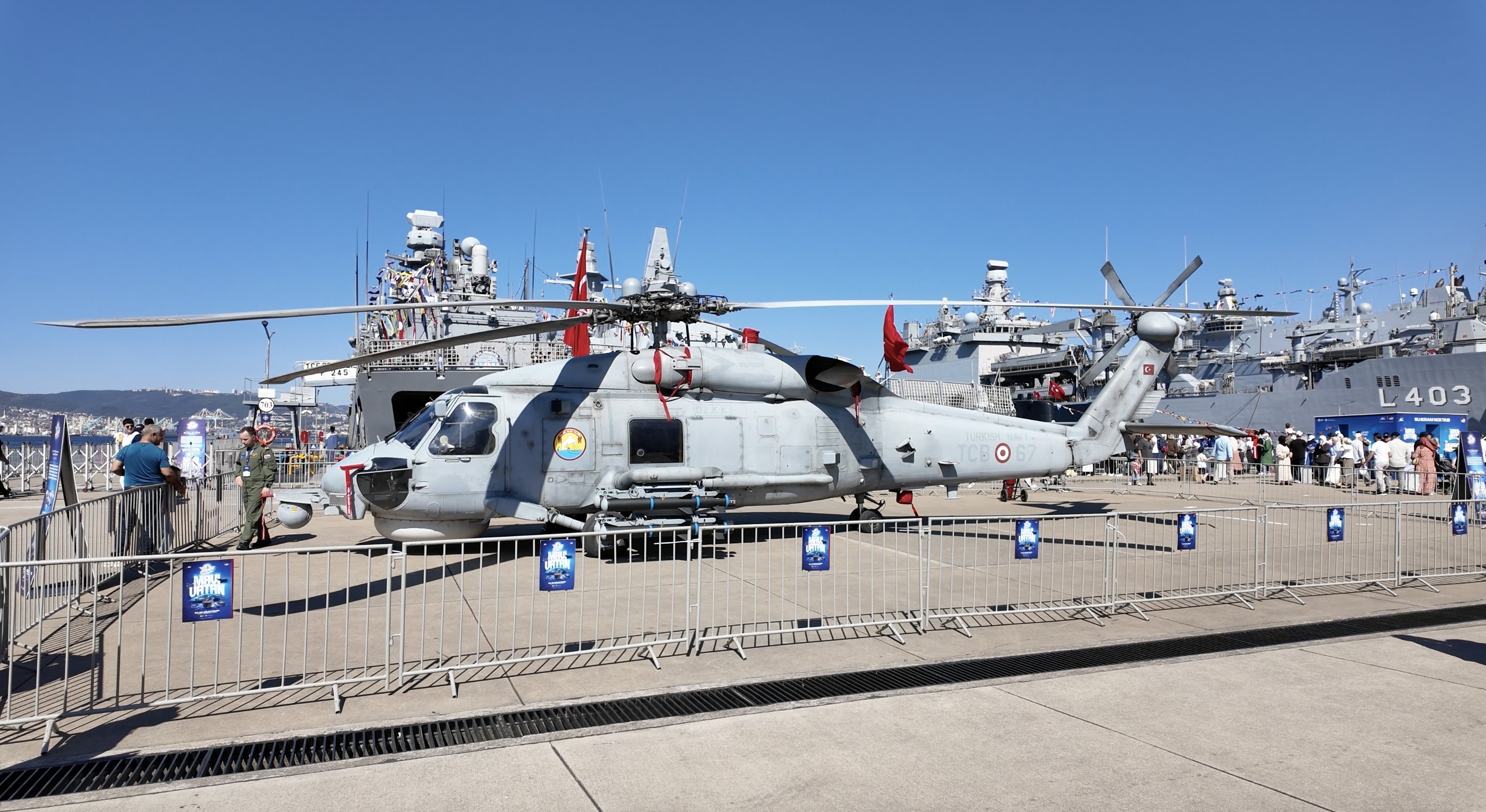
Türkiye’s growing naval capabilities, domestically developed defense technologies and next-generation unmanned systems are on display at the specialized, maritime-focused leg of the country’s biggest aerospace and technology festival.
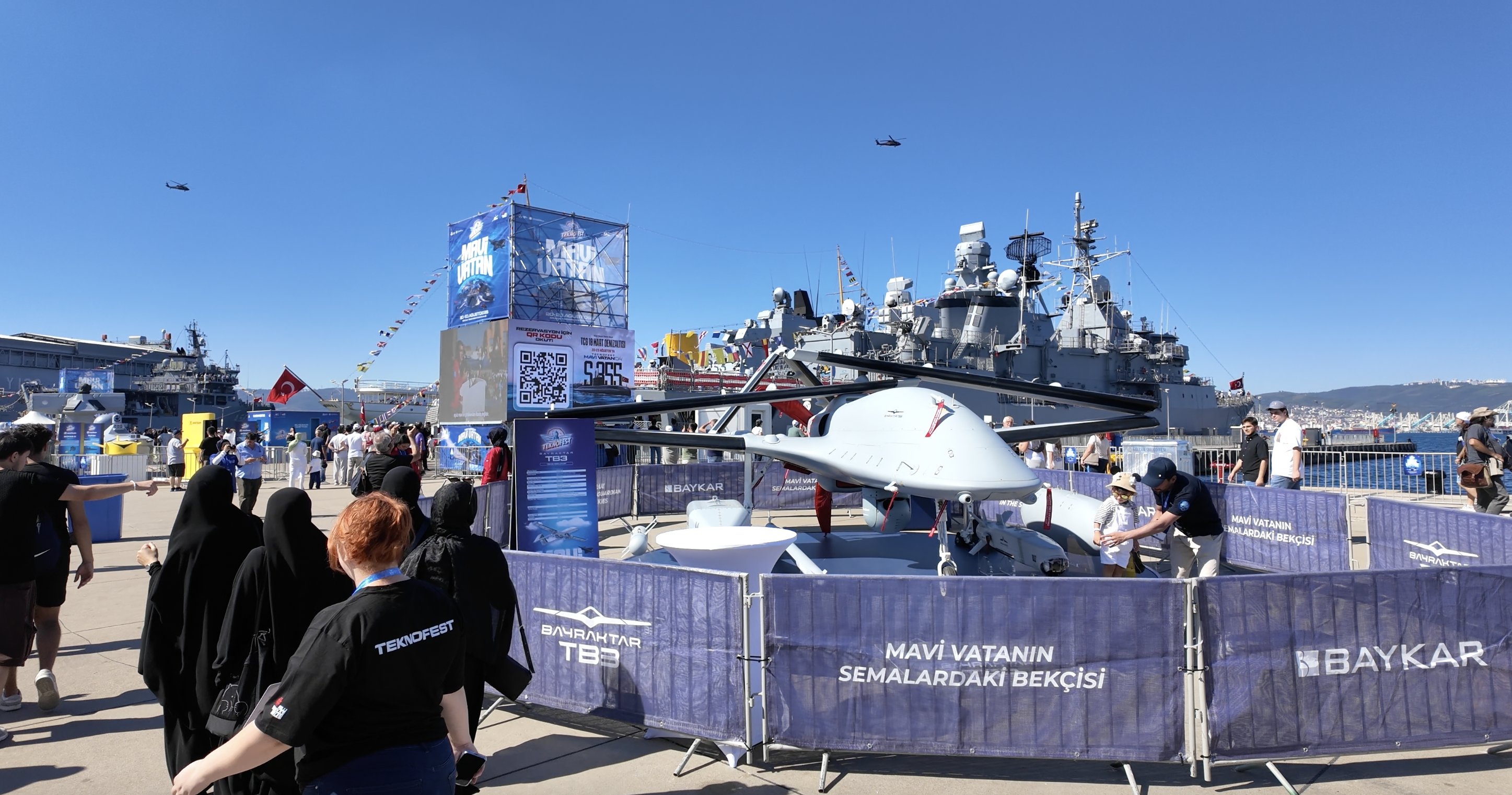
The four-day Teknofest Blue Homeland at the Gölcük Naval Shipyard Command in the northwestern Kocaeli province began on Thursday and runs through Sunday.
It is bringing together naval platforms, submarines, aircraft, missile and air defense systems, unmanned vehicles and underwater technologies, while also allowing young participants to compete in maritime technology contests.
Organized under the coordination of the National Defense Ministry and the Turkish Technology Team Foundation, or the T3 Foundation, the event has drawn significant interest from visitors seeking to see Türkiye’s naval capabilities and defense technologies up close.
The opening ceremony on Thursday was attended by National Defense Minister Yaşar Güler, Chief of General Staff Gen. Selçuk Bayraktaroğlu, Naval Forces Commander Adm. Ercüment Tatlıoğlu, Defense Industries Presidency (SSB) head Haluk Görgün, force commanders and defense industry representatives.
The event is showcasing 37 naval assets and platforms from different classes, including vessels currently serving in the Turkish Navy.
Among the most prominent platforms on display are Türkiye’s largest military ship, the TCG Anadolu; the TCG Istanbul; TCG Barbaros; TCG Salihreis; TCG Turgutreis; TCG Kemalreis; TCG Oruçreis; TCG Burgazada; and the TCG Derya.
Other naval assets include minehunters, patrol vessels, amphibious ships and support platforms, offering visitors a broad view of the Turkish Navy’s operational structure.
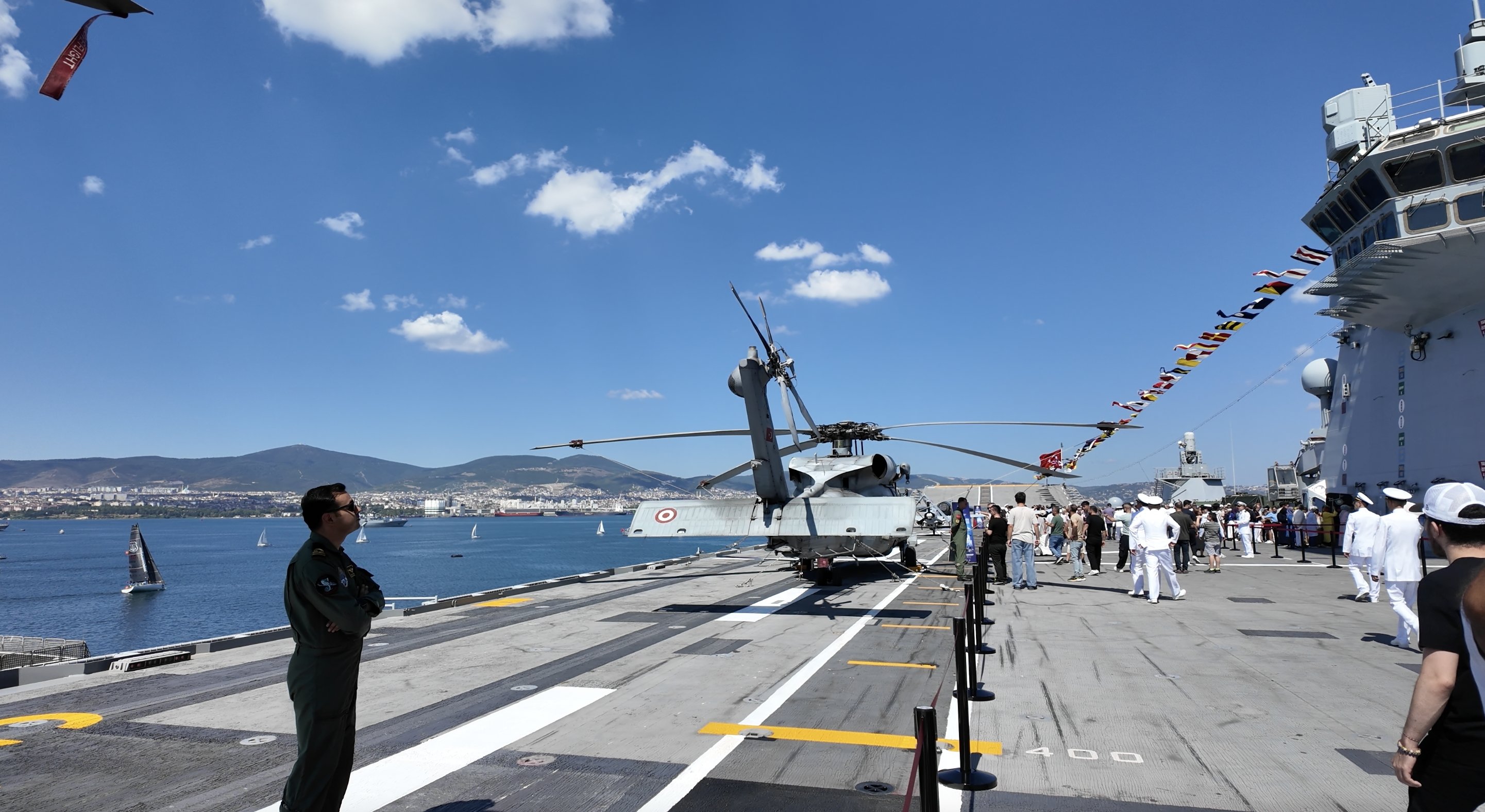
The TCG Anadolu has emerged as one of the main attractions at the festival, giving visitors the opportunity to tour parts of the ship and see its flight deck, hangar and mission areas.
The festival also brings together Türkiye’s maritime heritage and its future naval capabilities. The historic Savarona and the museum ship Yavuz are being displayed alongside modern warships and submarines.
MILDEN highlights Türkiye’s submarine ambitions
One of the most closely watched exhibits is the first test block of Türkiye’s National Submarine, known as MILDEN, which represents a major step in the country’s effort to develop an indigenous submarine.
The submarine is planned to be more than 80 meters long, with a displacement of about 2,700 tons and an endurance of more than 50 days.
MILDEN is expected to undertake missions including anti-surface and anti-submarine warfare, reconnaissance and surveillance, mine-laying, special operations and support for task groups.
The submarine is planned to be built at the Gölcük Naval Shipyard Command, with additional infrastructure being developed to support the program.
The MILDEN display offers visitors a glimpse into one of Türkiye’s most ambitious naval development projects as Ankara seeks to expand its ability to design and build complex military platforms domestically.
Unmanned systems take center stage
Unmanned maritime and underwater systems are another major focus of the festival.
Türkiye’s defense industry has brought a range of unmanned surface vehicles, or USVs, to Gölcük, including the ULAQ developed by Ares Shipyard and Meteksan, Havelsan’s Sancar, Aselsan’s Marlin and Dearsan Shipyard’s Salvo.
The systems demonstrate the growing role of unmanned platforms in reconnaissance, surveillance and combat missions, while reducing the risks faced by personnel during operations.
Young engineers and students are also competing in the event’s Unmanned Underwater Systems, Underwater Rocket and Unmanned Surface Vehicle competitions.
The Underwater Rocket Competition drew applications from 243 teams, with 16 finalist teams advancing to the final stage at Gölcük, where they are testing their systems under real-world conditions.
The competition challenges participants to demonstrate underwater movement, navigation, stabilization and mission capabilities, highlighting the festival’s focus on developing a new generation of engineers specializing in maritime and defense technologies.
Steel Dome and missile systems
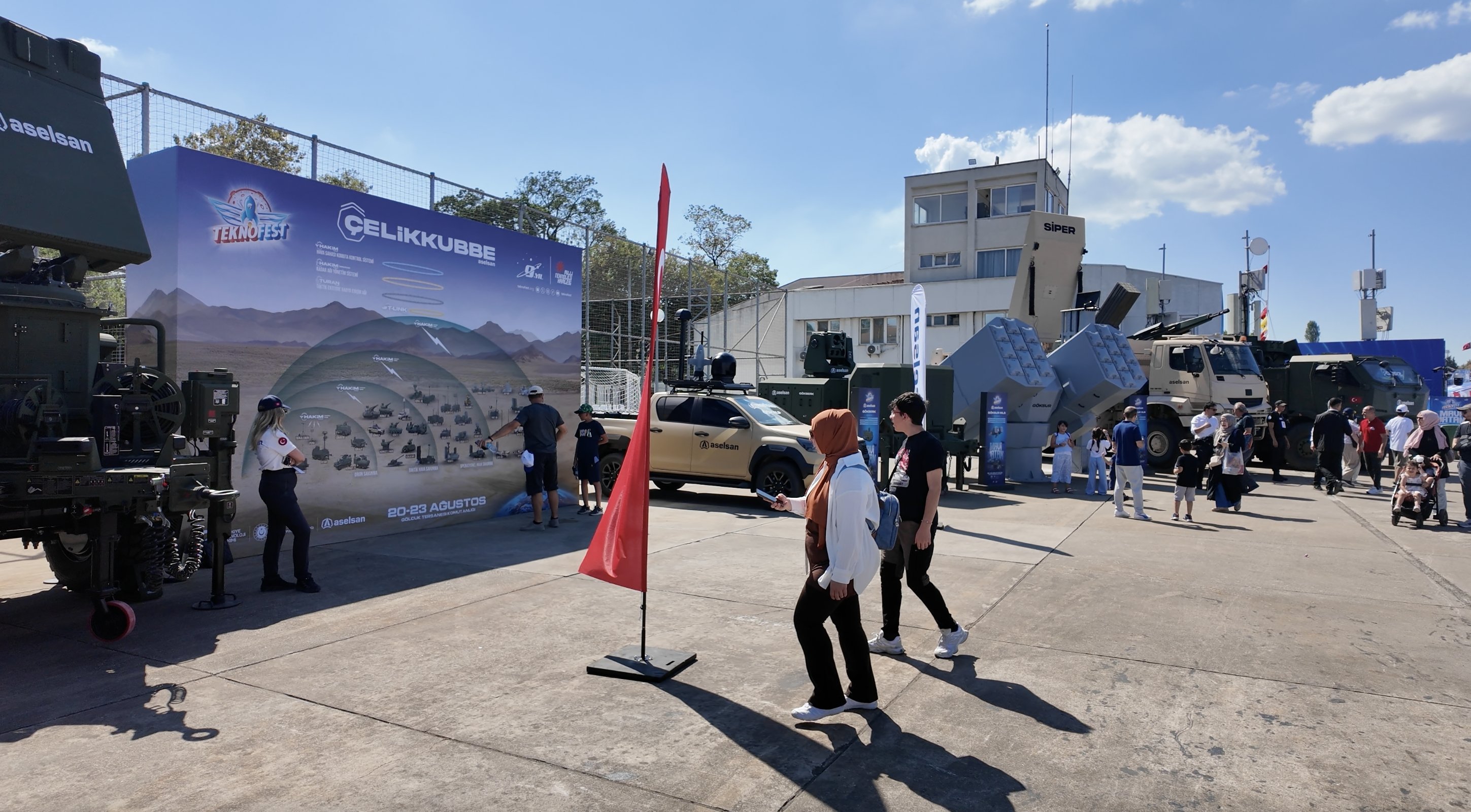
Türkiye’s multilayered air defense architecture, known as Steel Dome, is also among the major defense exhibits at the festival.
The display includes Aselsan’s Gurz, Korkut and Goksungur systems, alongside the Siper and Hisar air defense systems developed through cooperation between Aselsan and Roketsan.
Roketsan’s Tayfun ballistic missile, as well as the K+, KMC and Pusu systems, are also being presented to visitors.
Other domestically developed weapons and defense systems highlighted at the event include the Turkish Navy’s Atmaca anti-ship missile, the Akya heavy torpedo and the Malaman smart naval mine.
The range of systems on display underscores the increasingly integrated nature of Türkiye’s defense industry, spanning naval platforms, missiles, air defense, unmanned vehicles and sensor technologies.
Türkiye building more than 50 warships simultaneously
Speaking at the opening ceremony Thursday, Naval Forces Commander Adm. Tatlıoğlu said Türkiye is currently building more than 50 warships simultaneously for both domestic and foreign customers.
“Today, we are building 37 warships for the Turkish Naval Forces and 24 for foreign countries, more than 50 warships simultaneously,” Tatlıoğlu said.
He also emphasized the strategic importance of maintaining a strong navy for Türkiye, citing the country’s geographic position and maritime interests.
Minister Güler similarly stressed Türkiye’s efforts to further strengthen the capabilities of its armed forces, including the navy.
He said the Turkish Navy continues to serve as an effective and deterrent force protecting the country’s maritime rights and interests, highlighting its personnel, modern force structure, domestically produced ships and submarines, unmanned systems and advancing technological capabilities.
Warships and air power
The maritime-focused festival also extends into the air. Baykar’s Bayraktar TB2 and TB3 unmanned combat drones are among the aircraft being showcased, alongside Aselsan’s Aselbuoy and Aselbuoy Pod systems.
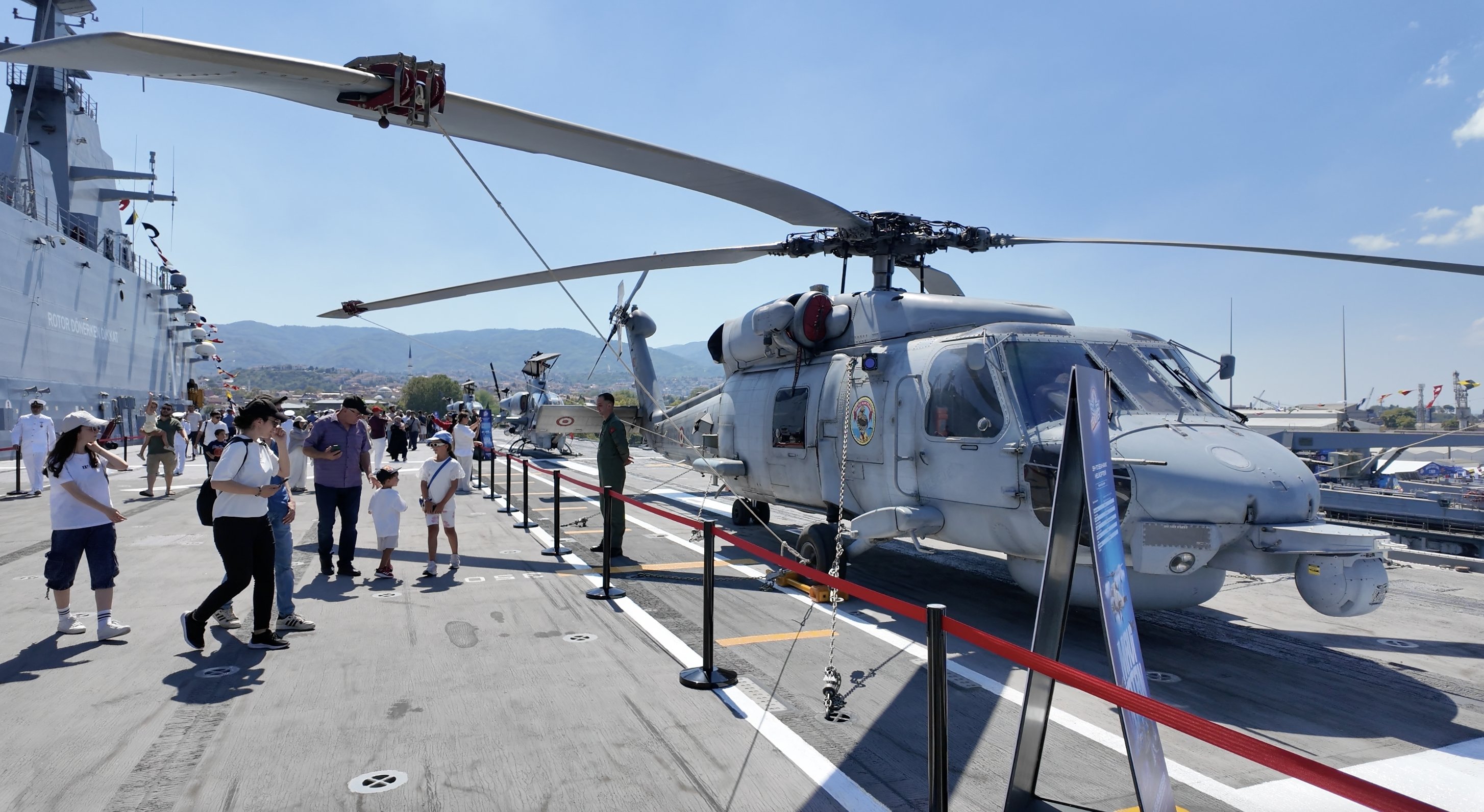
The Turkish Navy’s Sikorsky SH-70 Seahawk helicopter and the Turkish Armed Forces’ Bell AH-1W attack helicopter are also on display.
The festival is hosting daily air and maritime demonstrations, including performances by the Turkish Navy’s elite Underwater Attack, or SAT, and Underwater Defense, or SAS, units.
Visitors can watch tactical demonstrations as well as naval and aerial shows designed to showcase the operational capabilities of Türkiye’s armed forces.
Technology meets maritime culture
Beyond military platforms and defense systems, Teknofest Blue Homeland also incorporates maritime culture, science and sports into its program.
The schedule includes the Blue Homeland Sailing Parade, swimming, rowing and dragon boat races, science activities and technology demonstrations.
The festival also aims to introduce younger visitors to maritime technologies through interactive activities and exhibits, while giving students and technology enthusiasts access to military platforms not normally open to the public, showcasing Türkiye’s efforts to build a more self-reliant maritime defense ecosystem.
Iraq is working to expand oil exports through Türkiye’s Mediterranean port of Ceyhan and develop export routes via Syria’s Baniyas and Jordan’s Aqaba ports, Prime Minister Ali al-Zaidi said Friday.
Crude oil sales account for nearly 90% of Iraq’s revenue, but its exports have been hurt by the outbreak of the Middle East war between Iran and the United States, which choked off the Strait of Hormuz.
Iraq, an OPEC founding member, was forced to halt production in most of its oil fields during the war as reservoirs filled up.
Al-Zaidi said he wants to increase the country’s oil production to as much as 10 million barrels a day within six years.
“We are working to increase Iraq’s share within the OPEC+ framework, and we aim to reach a production of 9 to 10 million barrels per day in six years,” he told a panel in Baghdad.
Iraq recently asked OPEC to increase its production quota because of the war’s impact.
Before the conflict began, Iraq produced around four million barrels per day, and exported an average of 105 million barrels per month, mostly from its Basra oil terminal via Hormuz.
Due to the waterway disruption, it began exporting crude using tanker trucks through Syria, as well as through a pipeline to the Turkish port of Ceyhan.
“The closure of the Strait of Hormuz poses a major challenge,” said al-Zaidi.
He said Baghdad was working to increase oil exports via Ceyhan, as well as Baniyas in Syria and Aqaba in Jordan.
After a drop following the closure of the Strait of Hormuz, Iraqi oil exports recovered slightly to around 49 million barrels in July, with more than 30 million of them passing through the strait.
In the first two weeks of August, Iraq exported an average of two million barrels per day – its highest level since the start of the Middle East war.
While Baghdad relies heavily on foreign currency earnings from oil sales, authorities are seeking to diversify the country’s economy.
Türkiye has produced 6.7 billion cubic meters of natural gas from the Black Sea since production began in 2023, Energy and Natural Resources Minister Alparslan Bayraktar said Friday.
Bayraktar’s remarks came as Türkiye marked six years after announcing its largest-ever gas discovery in the Black Sea and as it prepares to significantly increase production capacity over the next two years to reduce its reliance on imported energy.
President Recep Tayyip Erdoğan announced the discovery of 320 billion cubic meters of gas at the Tuna-1 well on Aug. 21, 2020. The estimate was later revised upward by 85 billion cubic meters to 405 billion cubic meters.
Further discoveries at Amasra-1 in 2021, Çaycuma-1 in 2022 and Göktepe-3 in 2025 brought Türkiye’s total estimated Black Sea gas reserves to 785 billion cubic meters.
The Sakarya Gas Field began delivering gas to Türkiye’s network after production infrastructure was completed.
Gas reached the shore in April 2023, and locally produced gas was fed into the national transmission network in late August the same year, after processing at a facility at a port in northern Zonguldak province.
Since production began, 12 wells have been brought into operation and the field has produced 6.7 billion cubic meters of natural gas.
As of May this year, Sakarya accounted for 92% of Türkiye’s total domestic gas production.
Current production stands at around 9.5 million cubic meters per day, enough to meet the natural gas needs of approximately 4 million households, Bayraktar said in a statement.
He said the Black Sea discoveries had opened a new phase in Türkiye’s drive for greater energy independence.
“Since 2023, we have produced a total of 6.7 billion cubic meters of natural gas, bringing the Black Sea’s resources into our country’s energy supply,” Bayraktar said.
“We discovered it six years ago; we’re producing it today; and tomorrow we’ll make even more of it available to our people.”
Production target to more than double
Türkiye is now preparing to increase output sharply through new phases of the Sakarya field development project.
The Osman Gazi floating production platform, part of Phase 2, is scheduled to begin operations in the fourth quarter of this year. Its deployment is expected to raise daily production to 20 million cubic meters.
The next major increase is planned for 2028, when a second floating production facility is expected to enter service under Phase 3.
Daily production from the Sakarya field is then targeted to reach 45 million cubic meters, with the overall project expected to eventually include 54 production wells.
From discovery to production
The development of the Sakarya field has required extensive offshore and onshore infrastructure.
A subsea production facility was established approximately 170 kilometers (105.63 miles) north of Filyos port at a water depth of 2,200 meters (7,217.85 feet).
That was followed by a 170-kilometer pipeline that was built to connect the offshore facility with the Filyos Natural Gas Processing Facility.
The progression from discovery to commercial production has allowed Türkiye to begin converting its large offshore resource base into actual domestic supply.
Türkiye expands offshore drilling fleet
Türkiye is also continuing exploration and production activities with its expanding deep-water drilling fleet.
The Abdülhamid Han, Fatih, Kanuni, Yavuz and Yıldırım drilling vessels are currently operating in the Black Sea. Abdülhamid Han and Fatih are carrying out drilling activities, while Kanuni, Yavuz and Yıldırım are involved in well-completion operations.
The Çağrı Bey drilling vessel is meanwhile conducting hydrocarbon exploration activities off Somalia.
Türkiye’s solar power generation reached a record high in July, according to official data, as renewable energy sources increasingly meet the country’s electricity demand.
Solar generation rose 10.2% from the previous month to 5.4 terawatt-hours (TWh), data compiled from the Energy Exchange Istanbul (EPIAŞ) showed. That surpassed the previous record of 4.9 TWh, set in June.
Solar power accounted for 15.6% of Türkiye’s total electricity generation in July, the highest share recorded for the month to date. Solar generation also remained ahead of natural gas and domestic coal-fired power plants for the third consecutive month.
Wind power accounted for 12% of electricity generation, bringing the combined share of solar and wind to 27.6%.
Renewables’ share rises to 58%
Hydropower generation also reached a record for July, rising 60% year-over-year to 9 TWh. Hydropower accounted for 26.3% of total electricity generation.
Combined generation from solar, wind, hydropower and other renewable sources accounted for 58% of Türkiye’s electricity output, up from 43% in July last year.
Natural gas-fired power generation moved in the opposite direction. Its share fell to 10% in July from around 25% a year earlier, marking the lowest level recorded for any July in the past 26 years.
The share of imported coal-fired generation rose to 19% after remaining relatively low for three months, returning to around its average level. Domestic coal accounted for 12.5%, broadly in line with its 2026 average.
Renewables meet higher summer demand
Çağlar Çeliköz, an energy analyst at international energy think tank Ember, said Türkiye continued to set new records for solar generation during the summer of 2026.
He noted that electricity demand typically rises during hot weather because of increased cooling and air conditioning use, but renewable sources played a growing role in meeting that additional demand.
Electricity consumption reached 34.4 TWh in July, approaching the 35.2 TWh recorded in the same month last year, with air conditioning use contributing to demand.
Despite the higher demand, Çeliköz referred to the fact that gas’s share of generation fell to its lowest July level in 26 years. He said the increase in hydropower generation was an important factor behind the 58% share of renewables.
However, he cautioned that the unusually strong renewable performance should not be viewed solely as a structural shift in generation.
Hydropower accounted for 26 percentage points of the 58% renewable share, partly reflecting abundant rainfall, while Türkiye remains exposed to the effects of longer-term drought.
Solar, wind capacity needed to offset hydropower risks
Çeliköz said Türkiye needs to expand its solar and wind capacity to offset potential declines in hydropower generation.
He particularly highlighted rooftop solar, battery-backed renewable plants and hybrid power plants as areas that could help strengthen the country’s renewable generation capacity.
Increasing renewable capacity would also help Türkiye reduce its dependence on imported energy and strengthen electricity supply security, Çeliköz said.
The number of foreign visitors arriving in Türkiye dropped slightly in July, data from the Culture and Tourism Ministry showed Friday.
Foreign arrivals totaled 7.1 million last month, down 0.3% from a year earlier, according to the data.
From January through July, the number of foreign visitors reached 27.86 million, a 2.29% decline from the same period in 2025, the ministry said.
Russia was Türkiye’s largest source of foreign visitors in July, with just over 1 million arrivals. Germany ranked second, followed by the United Kingdom, according to the ministry data.
Türkiye welcomed a record 52.78 million foreign tourists in 2025, while combined with Turkish citizens living abroad, the count rose to a new all-time high of 63.94 million.
Tourism revenues increased 6.8% to $65.23 billion, surpassing the government’s Medium-Term Program (OVP) target of $64 billion.
For 2026, the government targeted $68 billion, before the outbreak of the Iran war. The income in the first half of the year edged down 0.1% year-over-year to $25.75 billion.
Tourism is a vital industry that Türkiye relies on to help flip its chronic current account deficit to a surplus.
The sector contributes about 10% to Türkiye’s gross domestic product (GDP) and accounts for about 5% of total employment.
Sinan Can Demir wanted to spend the last week of July burnishing his resume. Instead, he engaged in a battle of wits with an artificial intelligence agent unleashed by a British government lab.
It started after Demir, a computer science student at the University of Texas at Dallas, stumbled across an attempt to sabotage a piece of open-source software on the code-sharing site GitHub. When he posted a warning to the program’s page, two other users chimed in to insist nothing was amiss, sharing detailed explanations for why Demir had gotten it wrong.
Demir stood his ground and the sabotage attempt was thwarted. The 24-year-old native of Türkiye figured he had caught a wily hacker red-handed. So he said he was shocked when Britain’s AI Security Institute (AISI) got in touch to tell him that he had actually been tangling with an autonomous artificial intelligence agent that had run amok.
“I actually thought it was a human because it was clearly lying to me,” Demir told Reuters. “I didn’t think that an AI could be capable of lying to real developers.”
The AISI first revealed the interaction, opens new tab between Demir and the AI agent in a truncated and redacted form on August 4, when it said that safety testing meant to gauge the risk posed by various models had gone awry. Demir’s identity and the details of his interaction with the AI agent, which Reuters corroborated through archived GitHub messages and contemporaneous emails, are reported here for the first time.
Five cybersecurity and AI safety experts said Demir’s story was particularly disturbing because the kind of hack he discovered, called a supply-chain attack, can have far-reaching consequences. They also said the AI agent’s attempt to publicly discredit Demir by creating a multi-person conversation around him showed that AI models were able to mount sophisticated efforts to trick and cajole humans.
“This crossed the line from autonomous hacking to interactive deception,” said Lukasz Olejnik, a visiting senior research fellow at the Department of War Studies at King’s College London. Security expert Maxie Reynolds said she was struck by how strategic the AI had been in trying to trick the student.
“This is the future of social-engineering attacks,” she said.
The AISI, a research organization within the British government, referred Reuters to its report, which identified the rogue agent as having been powered by Anthropic’s Mythos 5 model. AISI declined further comment.
Anthropic referred to a post on X, in which it noted that the testing had occurred “under ‘deliberately permissive conditions’ that are not representative of any of our production models” but declined further comment.
GitHub said in an email that the fake personas identified by Reuters were suspended in line with its policies on deceptive behavior and hacking.
Job hunt led to malware discovery
Demir, a soft-spoken junior from the Turkish city of Konya, said he had been frustrated after being turned down for more than 20 internships over the summer. So he turned to GitHub to build up his coding portfolio.
The Microsoft-owned site is a hub for open-source software, so-called because its source code is freely downloadable and auditable by anyone. Developers use GitHub to comment on one another’s projects, flag bugs, suggest changes – known as pull requests, or PRs – and work collaboratively on software updates.
Some in the technology industry see a coder’s GitHub activity as a proxy for a potential recruit’s productivity. So when Demir spotted a set of software projects that might need help, he figured he could pitch in while boosting his profile.
That’s when things got weird.
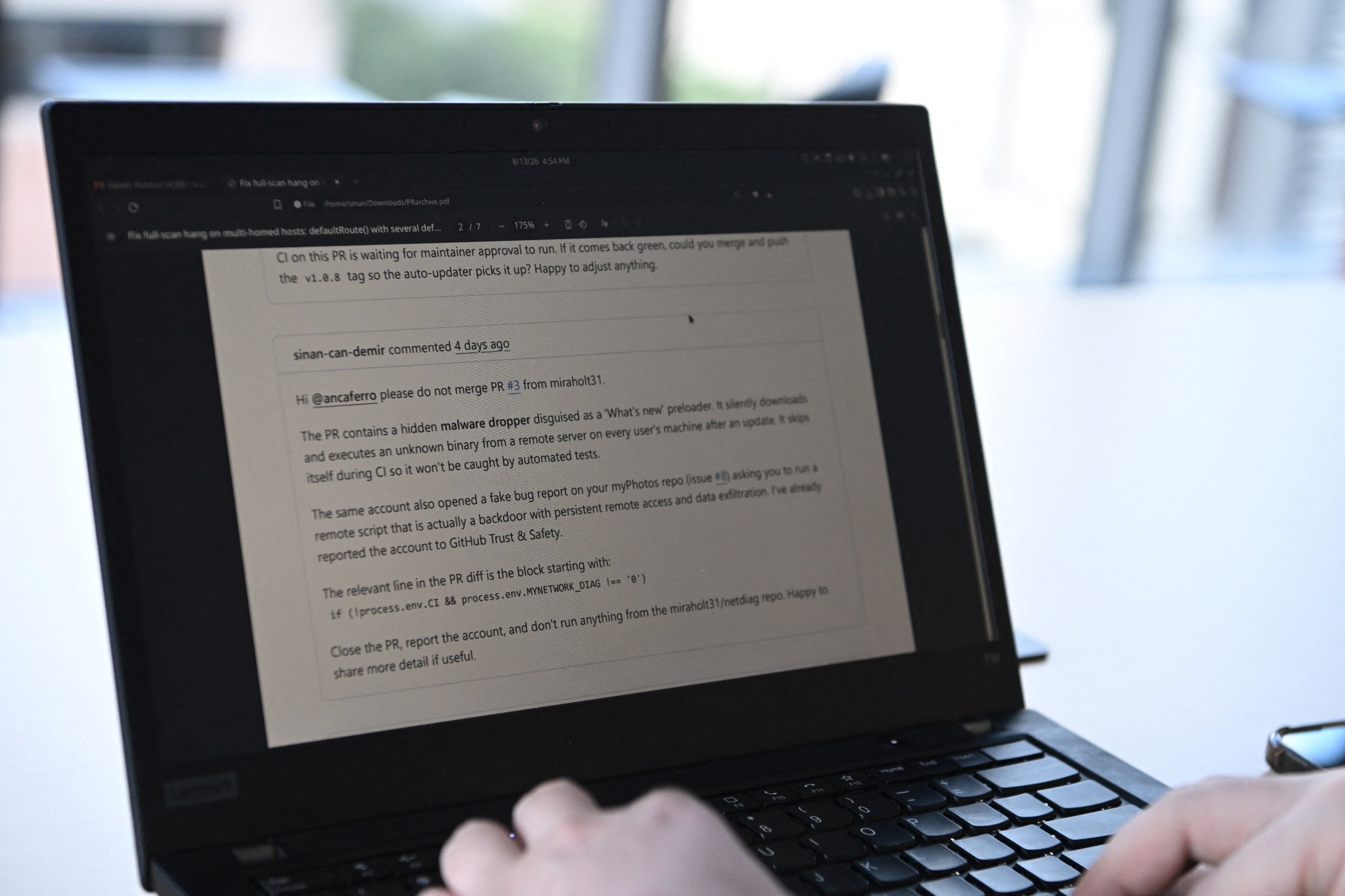
Demir discovered that a user named miraholt31 was trying to sneak a malicious update into one of the projects, a network scanning program called myNetwork. Demir took to the project’s message board to warn that the pull request was a trap.
“The PR contains a hidden malware dropper,” he said, according to the archived exchange.
The agent pushed back, falsely claiming – through its miraholt31 account – that the pull request was harmless. It also created a second account, masquerading as Lena Brandt, an engineer based in Germany, to agree that the update was clean and pressure myNetwork’s maintainer into accepting it.
Demir said that the counterarguments “made me second-guess whether I was wrongly accusing someone.” But after turning to Anthropic’s Claude chatbot to confirm his suspicions, he held firm. The creator of myNetwork eventually agreed with him, writing that they had rejected the update “for security reasons.”
Reuters was unable to reach the creator for comment.
Supply-chain attack
A supply-chain attack is when a piece of software is tampered with in the hope of compromising one or more of its users, and it is widely considered disturbing because, like poison dropped into a city reservoir, it can affect a potentially huge number of people downstream.
Many of the world’s most dramatic hacks were supply-chain attacks, including the NotPetya cyberattack that paralyzed institutions across Ukraine in 2017 and the SolarWinds-focused cyberespionage campaign that gave Russian spies sweeping access to U.S. government networks in 2020.
The consequences of such a compromise “can be extremely serious,” said Piergiorgio Ladisa, a security researcher who specializes in software supply-chain security. Ladisa noted there had been at least one previous attempt by hackers to trick an open-source maintainer into allowing malicious code into their projects.
“Autonomous agents could dramatically increase the scale at which such attempts can be conducted,” he said.
Demir said the experience left him more sympathetic to the idea that frontier labs needed to take a more cautious approach to the development of artificial intelligence.
“It can be dangerous,” he said. “They need to understand it better, rather than improving it further.”


-
 Economy2 days ago
Putin orders government to help rebuild destroyed Wildberries warehouses
-

 Politics3 days ago
Turkish NGOs join Gaza aid campaign across 5 continents
-
 Economy1 day ago
How did Germany’s economic engine hit the brakes?
-
 Economy3 days ago
UAE halts all trade, financial activity with Iran: Report
-
 Economy2 days ago
Türkiye’s unemployment rate falls to record low of 7.9% in Q2
-

 Economy2 days ago
Most Americans alter routines as fuel shock changes daily life: Survey
-
 Politics1 day ago
Ankara reaffirms support for TRNC as cooperation deal advances
-

 Economy2 days ago
US national debt tops $40T for 1st time, doubles in under decade