
Economy
6 months into US-Iran war: How it shapes global markets

Friday marks half a year since the U.S. and Israeli bombing of Iran triggered a conflict that upended the entire region, disrupted global energy supplies and sent shock waves through global financial markets.
The conflict has affected everything, from oil production and prices to equities, safe-haven assets and food prices.
Costly energy
Oil prices soared as Gulf production was disrupted and shipments through the Strait of Hormuz curtailed. Brent crude briefly topped $120 in April and still averages about $90 in 2026, up from roughly $70 last year.
The biggest impact has been on refined fuels. Diesel prices have risen more sharply amid shortages of middle distillates, Russian refinery outages caused by Ukrainian attacks and lost Gulf export flows.
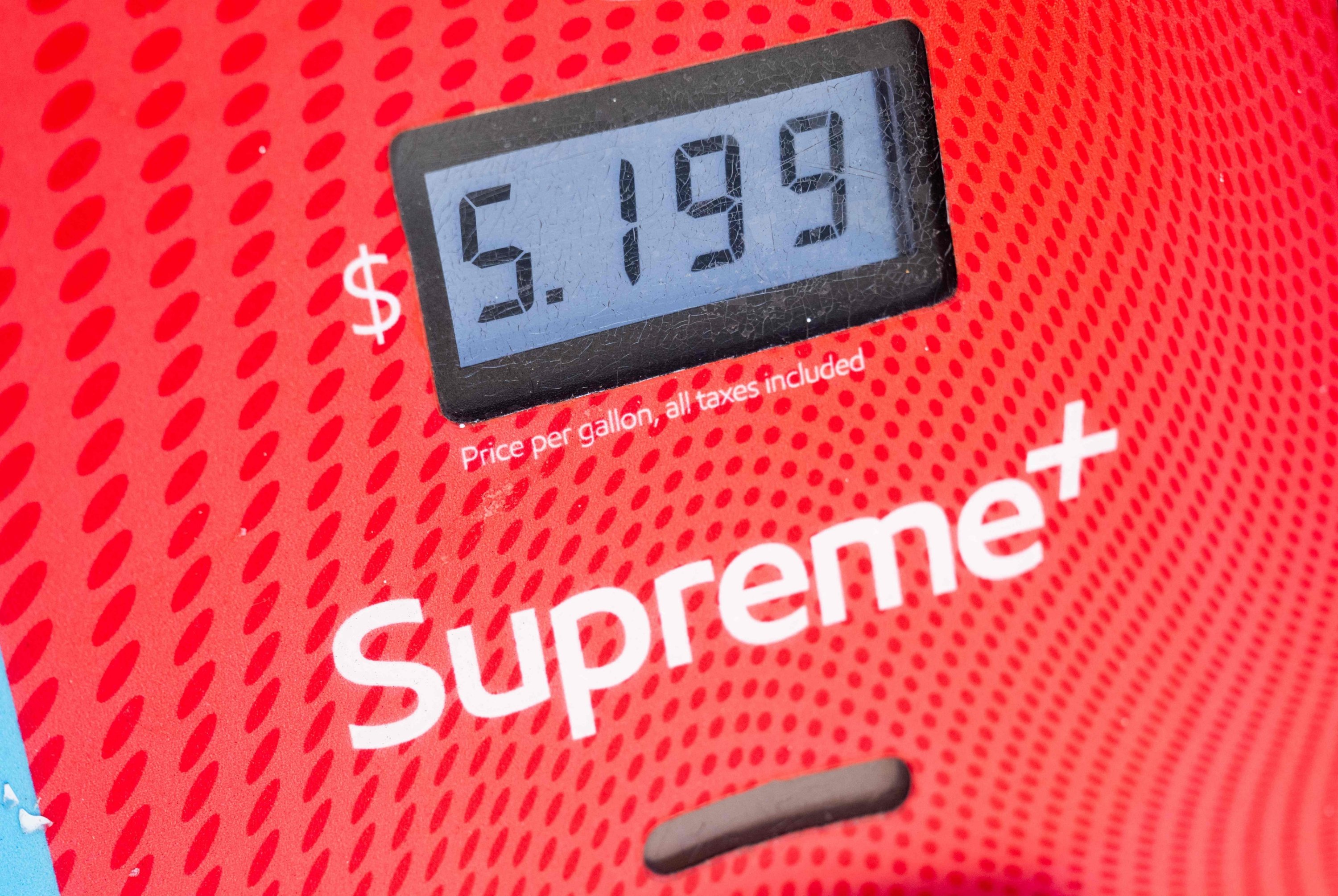
Jet fuel was initially hit hard given the Gulf’s importance, though a surge in U.S. refinery output and exports helped ease supply fears.
With the Northern Hemisphere winter approaching, further disruption to Hormuz shipments coupled with risks to Russia’s energy infrastructure could push up heating-oil and inflationary pressures.
AI boom cushions stocks
Global stocks have largely shrugged off the war, buoyed by the trillions of dollars pouring into the AI sector.
MSCI’s 47-country world stocks index hit a $105 trillion record high this month, gaining almost $7 trillion, or 9%, since the war erupted – though stocks in the Gulf region have underperformed.
Fidelity analyst Pranav Aggarwal said the broader rally suggested investors were taking a “relaxed view” and still expected the war to end this year.
“Equities are actually having a pretty good year,” he said. “They’re up 14% or so (for the year). If we are expecting 8% to 9% in a standard year, 14% up till August is pretty good.”
Searching for safety
None of the assets investors usually pick in times of trouble, such as highly rated government bonds, gold and the dollar, have played the traditional safe-haven role consistently.
The dollar has risen 1.4% against a basket of major currencies since the war began, though much of that reflects the Japanese yen’s weakness, analysts said.
U.S. Treasuries – a traditional mainstay in portfolios – have lost 3.5% on a total return basis as higher inflation has dashed U.S. rate cut bets, while more recent concerns about new Federal Reserve (Fed) chief Kevin Warsh and Washington’s surprise debt buyback plans have also weighed.
Gold fell nearly 25% between the start of the war and July – though it had more than trebled in price since 2022 when Western powers froze Russia’s central bank reserves over the invasion of Ukraine.
Gold has rebounded more than 15% this month, however, amid renewed concerns about dollar debasement.
Food and fertilizers
The closure of the Strait of Hormuz has also disrupted fertilizer shipments, a key input for global food production.
Combined with a strong El Nino and fresh disruptions to grain shipments linked to the war in Ukraine, analysts say the shock increasingly threatens agricultural output.
Food prices rose in July to a more than three-year high, according to the U.N. Food and Agriculture Organization (FAO). However, experts warn that much of the impact is yet to be felt.
The FAO has warned the world could be heading towards another bout of food inflation. JPMorgan estimates that a strong El Niño alone could, at its peak, lift global food inflation by around 0.7%.
The impact is likely to be felt most acutely in Asia, Latin America and Africa, where households spend a larger share of income on food and policymakers remain wary of renewed price pressures.
Gulf region impacted
The direct hit to the Gulf has been stark. Saudi Arabia’s exports shrank by 10% between the first and second quarters.
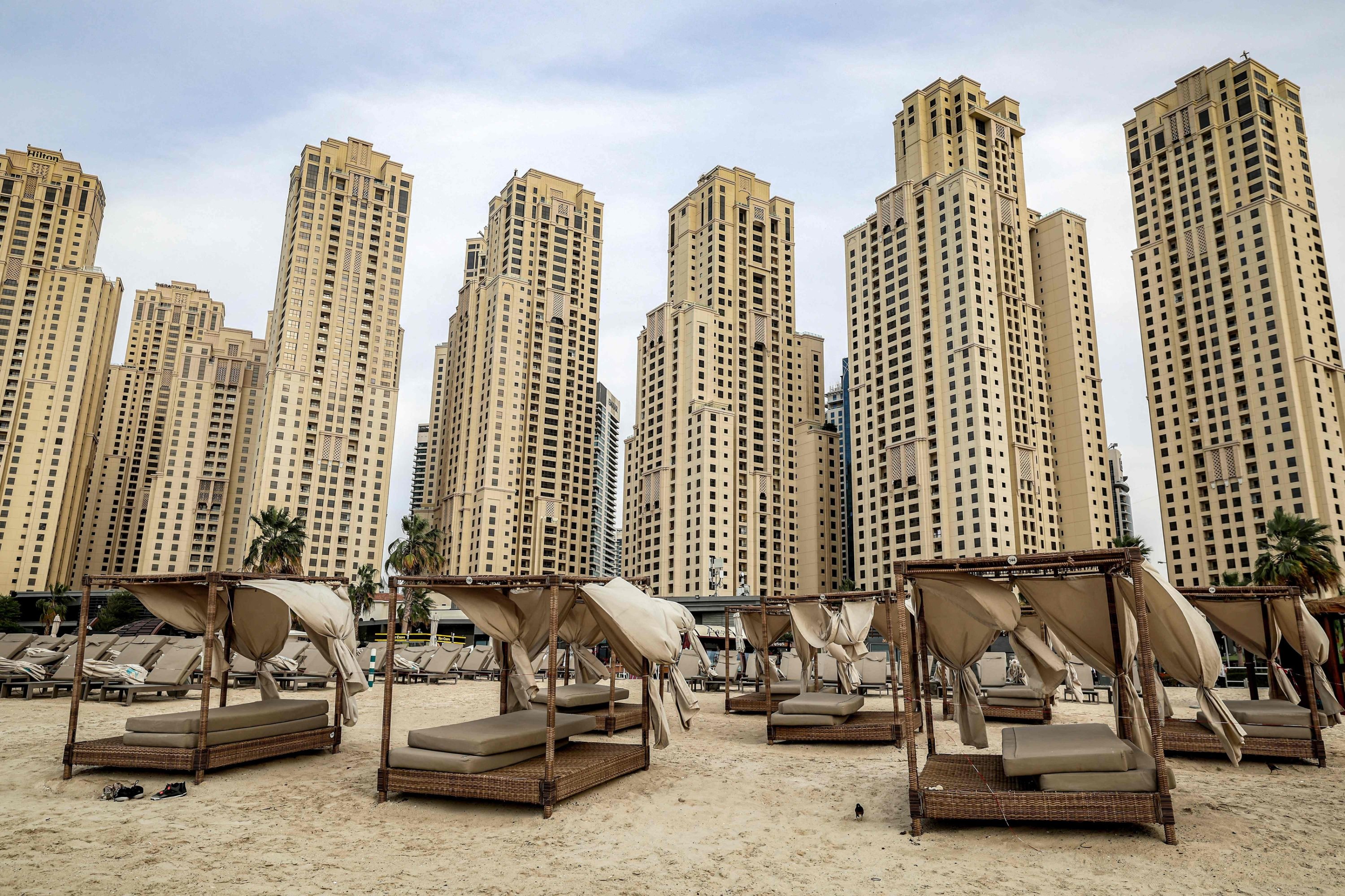
JPMorgan estimates Dubai’s property sales have plummeted 70%-80%, and Oxford Economics warns Qatar’s economy will shrink almost 30% this year, given the damage to its Ras Laffan gas facility.
Qatar and UAE stocks have both dropped around 14% – a more than 20 percentage point underperformance versus world stocks. The cost of insuring both countries’ debt against a default has also risen, although more heavily indebted Bahrain has been hardest hit, with its credit default swap (CDS) prices up almost 40%.

Favorable weather conditions and rainfall have boosted the yield of many fresh fruits in Türkiye, with exports from the sector topping $1 billion (TL 48.14 billion) for the first time in the January-July period, according to a report on Wednesday.
Higher yields have enabled exporters to meet foreign demand with regular and high-quality products.
The increase in production was also supported by Türkiye’s logistical advantage of being close to European markets.
Accordingly, Türkiye’s fresh fruit exports in the January-July period rose by 59% compared to the same period last year, increasing from $631.66 million to $1.005 billion, according to data compiled by Anadolu Agency (AA) from the Aegean Exporters’ Association.
Thus, for the first time, the sector surpassed the $1 billion export mark in the January-July period.
During this period, Türkiye exported 512,011 tons of fresh fruit to foreign markets, with significant increases particularly in important European markets.
Rise in exports to Spain, Poland
Among European countries, Germany was the largest importer of Turkish fresh fruit. Exports to this country increased by 80%, rising from $63.41 million to $113.92 million.
One of the strongest proportional increases in European markets was observed in Spain. Fresh fruit exports to Spain rose by a staggering 318%, from $1.73 million to $7.21 million.
Poland also became one of the fastest-growing markets. Exports to Poland increased by 295%, rising from $9.39 million to $37.06 million.
Fresh fruit exports to Italy increased by 203%, from $2.02 million to $6.13 million.
The increase continued in other European markets as well. Exports to the Netherlands increased by 53% to $12.58 million, to Latvia by 44% to $4.34 million, and to the U.K. by 19% to $20.59 million.
Cherries, peaches, nectarines stand out
Hayrettin Uçak, the chairperson of the Turkish Fruit and Vegetable Products Exporters’ Sector Board, noted that a productive season has pleased both producers and exporters.
Uçak noted significant increases in revenues from products such as cherries, nectarines, peaches, and apricots, and said that the increase in exports has brought more foreign revenues.
Emphasizing that exports are an indispensable element for the Turkish economy, Uçak suggested that agricultural products were in “truly high demand.”
“The continuous demand for our products due to their quality, flavor, and aroma drives up our exports. In the first seven months, our exports rose from $631 million to $1 billion,” he said.
“This situation pleases both our exporters and producers. This figure is the highest ever reached in the first seven-month period,” he added.
Turkish authorities have, under a new regulation, eased conditions for tradespeople and artisans to access financing, a directive published in the country’s Official Gazette showed on Thursday.
Commenting on the regulation, Treasury and Finance Mehmet Şimşek announced that under it, the government has made it easier for tradespeople who do not fully meet the loan criteria to access financing.
He noted that they continue to strengthen tradespeople’s access to financing under Treasury-backed plans.
“We cover a significant portion of the interest burden in Treasury-backed investment and operating loans,” he said.
“With the new regulation we have enacted, we are making it easier for our tradespeople who do not fully meet the loan conditions to access financing. We will always continue to stand by our tradespeople who produce, invest, and provide employment,” he added.
Accordingly, the regulation indicates that the interest rate reduction ratios applied to Treasury-backed investment and operating loans provided under certain conditions to tradespeople and artisans by state-run Halkbank have been redefined.
The relevant Presidential Decree was published in the Official Gazette and has thus entered into force.
Within the scope of the relevant law, tradespeople and artisans must, with a document obtained no more than 15 days before, have no overdue public receivables or social security premium debts to the tax offices, or, if such debts exist, they must be restructured and the restructuring should not be disrupted.
With the new decree, if this condition cannot be met, two alternatives have been offered for tradespeople and artisans to benefit from loans provided by Halkbank.
First, an amount corresponding to up to 25% of the Treasury-subsidized loan must be paid to the relevant authorities on behalf of the person. The annual amount collected in this scope cannot exceed TL 300,000.
The interest reduction provided by the Treasury on the interest portion of the debt is also set at 25%. After the debt payment is made, the loan is granted to the tradesperson or artisan. The amounts related to disbursement and the Treasury interest subsidy are recorded and monitored separately from the loan itself.
Second, for the relevant tradespeople and artisans who cannot fully meet the specified criteria, the Treasury interest reduction ratio for investment and operating loans will be applied as 40% instead of 50% for some groups, 80% instead of 100%, and 48% instead of 60% for other groups.
Additionally, under this decree, it was also decided that for certain traditional, cultural, and artistic professions that are at risk of disappearing – such as hand weaving, copper processing, tile and pottery making, mother-of-pearl inlay, wood carving, spoon-making, and quilt-making– the aforementioned conditions will not be required for loans to be extended until Dec. 31, 2027.
Previously, the deadline was set to end on Dec. 31, 2026.
Trade Minister Ömer Bolat highlighted on Wednesday the importance of forming partnerships among neighbors as he, accompanied by a business delegation, traveled to Syria, where he held talks with top officials.
Bolat arrived in Damascus with a business delegation on Wednesday for the 63rd Damascus International Fair. He also met with Nidal al-Shaar, the Syrian economy and industry minister, to discuss steps to reach a $10 billion bilateral trade volume target.
“People first do business with their neighbors, form partnerships with their neighbors, and provide companionship on the journey (to neighbors),” Bolat said in remarks during the delegations’ meeting in Damascus.
“We will inaugurate the Turkish pavilion. There is very close integration between the Syrian and Turkish economies,” he said.
“After the Dec. 8 revolution succeeded and a new Syria was established, we have been working in very close coordination with the Syrian government and ministries. Turkish and Syrian investors, industrialists, SMEs, traders and exporters have been working in very close cooperation,” he noted.
The officials evaluated cooperation to ease trade, particularly regarding transportation and customs gates, alongside the potential role of the Turkish private sector in the reconstruction of Syria, Bolat separately said on social media.
“On the occasion of the 63rd Damascus International Fair, we arrived in the ancient city of Damascus today with a strong business delegation. In the first part of our visit, we held a meeting with my esteemed friend, Syrian Minister of Economy and Industry, Mr. Nidal al-Shaar,” he wrote.
“In our meeting, we discussed the steps to elevate our bilateral trade volume to the $10 billion target set by our presidents, our cooperation aimed at facilitating trade – particularly through transportation and border gates – and the role that the Turkish private sector can play in Syria’s reconstruction process,” he added.
The ministers also reaffirmed their commitment to implementing the agreements reached during the Türkiye-Syria Joint Economic and Trade Commission (JETCO) meeting in April, according to Bolat.
The minister later also met with Ahmad Rawad Ramadan, the newly appointed head of the Syrian Investment Agency, to discuss the investment interests of Turkish firms, he said in a statement on X.
The two sides evaluated steps to create a predictable investment environment and planned organized industrial zone investments in the Syrian regions of Kamune and Saraqib.
Bolat emphasized that Ramadan’s deep understanding of the Turkish business world will accelerate investment relations between Türkiye and Syria.
Turkish businesspeople attending the meeting also shared their expectations and long-term investment plans to boost production and employment in the region.
“We will continue to further strengthen the economic and trade ties between Türkiye and Syria on the basis of mutual benefit,” the minister said.
Canadian Prime Minister Mark Carney may have more experience in banking than in politics, but he has shown a confident touch in standing up to U.S. President Donald Trump and managing a trade war that threatens his nation’s economy.
“We are masters in our own house,” the prime minister said on Saturday, just hours after breaking off trade talks with the United States and ordering his negotiators back to Ottawa.
Despite the risks this decision poses to Canada, which is heavily dependent on exports to the U.S., Carney can boast of broad support, with 76% of the public praising his stance toward Washington, according to a weekend poll.
“Mark Carney has the means to achieve his ambitions because the country is behind him,” says Genevieve Tellier, a professor of political science at the University of Ottawa.
After Washington slapped Canada with 50% duties, Canada Tuesday announced counter-tariffs of its own.
Former head of Canada’s central bank, Carney, 61, was not known for his charisma – unlike his flamboyant predecessor Justin Trudeau, from the same Liberal Party – but has nevertheless managed to kindle a patriotic flame among Canadians weary of American attacks.
It was trade tension with the United States that propelled him to power – two months after Trump began his second term – as Canadians saw him as a protector of their economy.
Replacing Trudeau as leader of his party and the government in March 2025, he won a general election a month later, to everyone’s surprise.
“He transformed into a politician quite quickly; it was a surprise,” said Tellier.
The Davos turning point
A blunt speech Carney gave at January’s World Economic Forum marked a turning point for him on the international stage.
Declaring that the world was in the midst of a “rupture in the world order,” he called on middle powers like Canada to unite.
“If we’re not at the table, we’re on the menu,” he said.
The speech sent a message that Carney was positioning himself “as an international leader with a different, credible vision,” Tellier said.
After studying at Harvard and Oxford, Mark Carney made his fortune as an investment banker at Goldman Sachs in New York, London, Tokyo and Toronto.
In 2008, at the height of the global financial crisis, he was appointed governor of the Bank of Canada by a conservative prime minister, Stephen Harper.
Five years later, he was chosen by a conservative British prime minister, David Cameron, to head the Bank of England, becoming the first foreigner to lead the institution.
In this role, he would face the economic turmoil caused by Brexit, after the U.K. decided to leave the European Union.
‘Difficult phase’
Declaring Monday that “America has changed,” the Canadian leader is moving forward with determination: seeking new trading partners, launching major projects and boosting military spending.
Carney has notably forged closer ties with the EU and is set to discuss soon the strengthening of that partnership.
In Armenia in May, he emphasized that the EU and Canada were not “doomed” to submit to a “brutal” international order.
Carney was born in Fort Smith, a remote town in Canada’s Northwest Territories, and was raised in Edmonton, Alberta, a province rich in hydrocarbons.
He wants to construct a new pipeline to the Pacific in order to export Canadian oil to Asia and thus reduce the need to sell to the American market.
But by “putting his foot down” with Trump, Frederic Boily, a political science professor at the University of Alberta, says Carney “will now enter a somewhat more difficult phase” where he will have to manage the impact on Canada’s economy and his popularity.
Türkiye’s largest metropolis, Istanbul, is set to host the second edition of the premier e-export summit next month. The event brings together dozens of global e-commerce platforms and speakers as global e-commerce trade volume is projected to reach $7 trillion this year.
The biennial Istanbul Global E-Export Summit (IGEXX 2026) will take place on Sept. 3-5 at Haliç Congress Center.
The summit is organized by the Türkiye Exporters Assembly (TIM) in strategic collaboration with the Electronic Commerce Business Association (ETID), under the coordination of the Ministry of Trade.
This year’s gathering, the first following the inaugural one in 2024, is held under the theme “Beyond Borders,” underscoring the strategic role of e-commerce trade that transcends countries’ borders and is increasingly becoming part of strong competition.
The press briefing ahead of the summit was held at TIM’s complex in Istanbul on Wednesday, featuring the participation of Erbülent Kurşun, Deputy Director General of Exports at the Ministry of Trade; Çetin Tecdelioğlu, Vice Chair of the Board at TIM; Hasan Önal, head of the E-Export, Digital Marketing and Disruptive Technologies Department at the Ministry of Trade and ETID Secretary-General Ömer Gürkan.
In his speech, Tecdelioğlu stated: “In the 2024 summit, a transaction volume of over $1 billion was achieved. These are very significant numbers and had a positive impact on our exports in 2024.”
Tecdelioğlu also noted that the world is at a historic turning point and said consumers can now shop from the other side of the world with a single touch.
“In this new era, and this new trade order, as Türkiye, we must be a game-changer at the table,” he said.
“We have to become producers who sustain and sell the ‘Made in Türkiye’ brand globally, by being part of global supply chains and the consumption in all marketplaces,” he added.
Tecdelioğlu also mentioned that e-commerce volume in the country has reached TL 4.5 trillion, or about $115 billion.
He also said that the goal “is to increase the share of e-exports in total exports to 10%.”
Önal, for his part, pointed out that awareness of e-commerce increased during the pandemic, stating that global e-commerce totaled $3.2 trillion in 2019 and is expected to reach $7 trillion by 2026.
He also said that this year’s summit is expected to host 50 marketplaces and feature 28 panels and some 108 speakers, compared to 30 marketplaces and some 90 speakers in 2024.
“Close to or perhaps slightly over 40% of global e-commerce will be present at the Haliç Congress Center,” he said.
The summit will feature discussions on topics such as AI-supported trade, new-generation e-commerce, smart logistics, sustainable trade, social trade and others.
German Finance Minister Lars Klingbeil plans to meet UniCredit CEO Andrea Orcel, a report said Wednesday, signaling for the first time that Berlin is willing to engage directly with the Italian bank over its bid to take over Commerzbank.
Klingbeil has invited Orcel to a meeting at the Finance Ministry in Berlin on Sept. 14, Reuters reported, citing government sources.
Orcel has accepted the invitation, a person with direct knowledge of the matter said.
Klingbeil will outline Berlin’s position in talks with Orcel and emphasize Commerzbank’s role in financing the German economy and its importance to Frankfurt as a financial center, according to the sources, who declined to be named because the plans were not public yet.
“This complements the talks between the two banks, which remain responsible for discussing the way forward directly,” one of the people said.
The German government previously insisted that UniCredit and Commerzbank hold direct talks before it engaged with the Italian lender.
Executives of both banks held several rounds of talks earlier this year, but they failed to produce an agreement, with Commerzbank long resisting UniCredit’s overtures.
However, in a significant shift of tone, Commerzbank Chief Executive Bettina Orlopp said earlier this month that a tie-up with UniCredit could create value for both sides and that she was optimistic both sides could find common ground.
Commerzbank has stressed that it wanted to preserve its international network and retain its focus on financing of Germany’s medium-sized, “Mittelstand” companies.
UniCredit invested in Commerzbank in September 2024, starting a nearly two-year tug-of-war between Italy’s and Germany’s No. 2 banks.
It has served as a test of Europe’s appetite for cross-border deals, which policymakers say the sector needs to compete with bigger U.S. rivals.
Commerzbank’s resistance to a UniCredit takeover weakened after the Italian lender in July reached a stake of up to 49.65%, which is sufficient to determine shareholder resolutions.
The German government, which still holds just over 12% in the Frankfurt-based bank following its rescue during the global financial crisis, had long opposed a takeover.
Commerzbank’s supervisory board chair, Jens Weidmann, said on Sunday Berlin should retain its Commerzbank stake for now.
Orcel’s approach had been described by the German government as hostile and aggressive. The UniCredit CEO, for his part, had pushed for direct talks with the German government and employee representatives.
While the offer period has ended, UniCredit still needs regulatory approvals to take possession of the tendered shares.
Approval from the European Central Bank, which has long backed cross-border mergers to strengthen European Union integration, would remove the main regulatory hurdle and the ECB is leaning towards approving the takeover, Reuters said, citing an internal document.


-

 Sports1 day ago
Beşiktaş poised to seal Europa League passage against Kauno Zalgiris
-
 Politics3 days ago
Erdoğan, Lula discuss Türkiye-Brazil ties, global developments
-

 Politics3 days ago
Netanyahu clings to anti-Türkiye campaign amid Likud’s decline
-
 Politics3 days ago
Türkiye’s CHP mulls a timetable for its next election
-

 Economy3 days ago
Turkish households shift toward gold as real estate appeal declines
-

 Politics3 days ago
Terror-free Türkiye board begins duty on future of PKK
-

 Politics3 days ago
Verdict likely due in cases of corruption linked to CHP mayors of Türkiye
-
 Refugees3 days ago
Bessent says new US sanctions aim to block all potential sources of revenue for Iran