
Sports
Fenerbahçe-Beşiktaş Süper Lig derby set for Sept. 5

Fenerbahçe and Beşiktaş will meet in the first major derby of the 2026-27 Süper Lig season on Saturday, Sept. 5, with kickoff set for 8:00 p.m. local time, the Turkish Football Federation (TFF) announced Saturday.
The Week 4 schedule was finalized after UEFA released the Champions League league-phase fixture list, allowing the federation to coordinate the domestic calendar around the European commitments of Galatasaray and Fenerbahçe.
Fenerbahçe will host Beşiktaş at Chobani Stadium, in Kadıköy, Istanbul.
The derby will come a day after Galatasaray’s league match against Istanbul Başakşehir FK. That game has been moved to Friday, Sept. 4, at 8:00 p.m. at Başakşehir Fatih Terim Stadium.
European commitments shape Week 4
The changes were made to give the two Champions League participants adequate recovery time before their opening European fixtures.
Galatasaray will travel to face Sporting CP on Wednesday, Sept. 9, while Fenerbahçe will host AS Roma on Thursday, Sept. 10.
The TFF said the revised dates were determined in accordance with the Champions League calendar published by UEFA, with the Friday and Saturday slots providing additional preparation and recovery time ahead of the European matches.
The adjustments are part of a broader scheduling challenge facing clubs competing in Europe under UEFA’s expanded league-phase format, which has increased the number of midweek fixtures and made coordination with domestic leagues more demanding.
Revised Week 4 schedule
The updated program begins Friday with Başakşehir hosting Galatasaray at 8:00 p.m.
Saturday’s schedule includes Erzurumspor FK against Konyaspor at 5:00 p.m., followed by the Fenerbahçe-Beşiktaş derby at 8:00 p.m..
The remaining Week 4 matches will be played Sunday and Monday, including Kasımpaşa against Amed, Çorum FK against Eyüpspor, Kocaelispor against Samsunspor and Trabzonspor against Gençlerbirliği.
The Fenerbahçe-Beşiktaş fixture was already set for Week 4 when the league schedule was drawn in July. Only the exact date and kickoff time remained pending until the Champions League calendar was confirmed.
A major early-season test
The derby will be one of the biggest early tests for both teams and is expected to command significant domestic attention in a prime Saturday night television slot.
Fenerbahçe and Beşiktaş are two members of Istanbul’s traditional Big Three, alongside Galatasaray, and their meetings are among the most closely watched games in Turkish football. The rivalry regularly produces intense, high-pressure encounters, with the atmosphere often matching the importance of the result.
Fenerbahçe will have home advantage at Chobani Stadium, its long-time Kadıköy home. The stadium, previously known by sponsorship names including Ülker Stadium, has a capacity of roughly 47,000 to 48,000 and has long been regarded as one of the toughest venues for visiting teams in Turkish football.
The timing adds another layer of intrigue. Both teams will have had only a few league matches to establish their rhythm before facing each other, while the European calendar will already be beginning to influence squad management and preparations.
For Fenerbahçe, the derby will be followed by the visit of Roma in the Champions League. Beşiktaş, meanwhile, will look to use the occasion to make an early statement against one of the league’s title contenders.

Club football offers a long list of trophies, but not all silverware carries the same weight. A domestic league title tests a team’s consistency across an entire season, a continental championship measures it against the best clubs in its region, while global competitions determine which team can claim to be the best in the world.
The hierarchy is not officially defined and varies by country and football culture. Still, the biggest prizes generally sit at the top: the leading continental championships, domestic league titles and global club championships.
Major domestic cups and super cups follow, while secondary continental competitions and league cups occupy the next level.
Here, Daily Sabah compiles a guide to the principal trophies available to clubs, with the latest results and formats as of late August 2026.
Continental championships
Continental competitions are the centerpiece of club football outside the domestic game. Each of FIFA’s six confederations runs a premier competition for its leading clubs, although the names, formats and qualification systems differ.
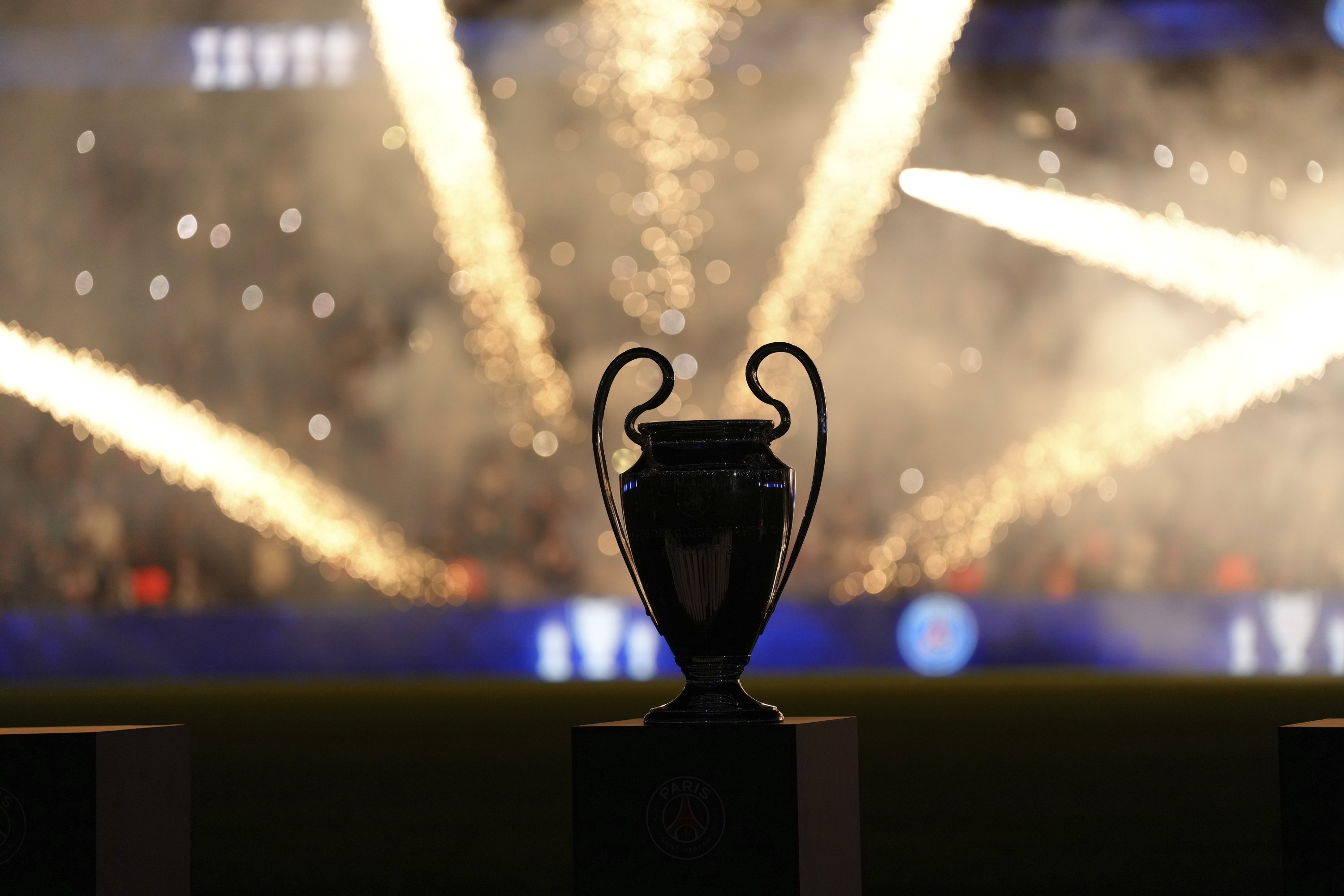
UEFA Champions League
The UEFA Champions League is widely regarded as the most prestigious annual club competition in world football.
The tournament began as the European Champion Clubs’ Cup in 1955-56 and adopted the Champions League name in 1992-93. Real Madrid remain the record winners with 15 European Cups and Champions League titles.
The competition underwent its biggest structural change in decades in 2024-25, replacing the traditional group stage with a 36-team league phase. Each club plays eight matches against eight different opponents. The top eight teams advance directly to the round of 16, while teams finishing ninth through 24th enter a knockout playoff for the remaining places.
Paris Saint-Germain have become the latest dominant force in the competition. After winning their first Champions League title in 2025, PSG successfully defended the crown in 2026, beating Arsenal 4-3 on penalties after a 1-1 draw in the final in Budapest. They became only the second club in the Champions League era to retain the trophy, after Real Madrid’s three consecutive titles between 2016 and 2018.
The Champions League winner also earns places in the UEFA Super Cup and FIFA’s global club competitions.
Copa Libertadores
South America’s premier club competition, the Copa Libertadores, was founded in 1960 and is the continent’s equivalent of the Champions League.
Argentine club Independiente remain the record winners with seven titles, followed by Boca Juniors with six. Peñarol have five, while River Plate, Estudiantes and Flamengo have four each.
The competition traditionally begins with qualifying rounds before moving into a 32-team group stage. The knockout rounds lead to a single-match final, a format introduced in 2019.
The Libertadores winner also qualifies for the Recopa Sudamericana and FIFA’s global competitions.
AFC Champions League Elite
The AFC Champions League Elite is Asia’s top club competition. It replaced the previous AFC Champions League format as part of a broader restructuring of Asian club football.
The tournament brings together the leading clubs from across Asia and crowns the continent’s top side. Its elite status makes it the most prestigious club trophy available to teams in the Asian Football Confederation.
CAF Champions League
Africa’s premier club competition is the CAF Champions League.
Egyptian giants Al Ahly are the competition’s most successful club and have established a level of dominance unmatched by any other African side. The tournament brings together the continent’s leading clubs through qualifying rounds, a group or league-stage structure and knockout rounds.
The champion earns continental prestige and a route into FIFA’s global club competitions.
CONCACAF Champions Cup
The CONCACAF Champions Cup is the leading club competition in North America, Central America and the Caribbean.
Mexican clubs have historically dominated the tournament, with América, Cruz Azul and other Liga MX powers accounting for much of its history.
The competition crowns the region’s representative for FIFA’s global club competitions and has become increasingly important as Major League Soccer clubs have challenged the traditional Mexican dominance.
OFC Champions League
The OFC Champions League is Oceania’s premier club tournament.
New Zealand’s Auckland City have dominated the competition and are the region’s most successful club. Their continental success has repeatedly taken them onto the global stage.
Secondary continental competitions
The second tier of continental football remains highly significant, particularly for clubs that cannot regularly compete in the top-level championship.
UEFA Europa League
The Europa League is European football’s second-tier continental competition, having evolved from the UEFA Cup.
Spanish clubs have historically dominated it, with Sevilla holding the record for most titles.
Since 2024-25, the competition has used a 36-team league phase similar to the Champions League. The winner receives a place in the following season’s Champions League league phase if it has not already qualified domestically.
Aston Villa won the 2025-26 Europa League, beating Freiburg 3-0 in the final at Beşiktaş Park in Istanbul, Türkiye.
UEFA Conference League
The UEFA Conference League was introduced in 2021-22 to provide more European clubs with meaningful continental competition.
It sits below the Champions League and Europa League in UEFA’s hierarchy but can be a major achievement for clubs from smaller football associations.
The winner qualifies for the following season’s Europa League.
Chelsea have completed an unusual collection of UEFA club trophies, having won the Champions League, Europa League, Conference League and the now-discontinued European Cup Winners’ Cup.
Copa Sudamericana
The Copa Sudamericana is South America’s second major continental competition.
It is broadly comparable to the Europa League in UEFA’s system and provides clubs outside the Libertadores elite with the opportunity to win a major international trophy.
The winner faces the Copa Libertadores champion in the Recopa Sudamericana.
Other secondary competitions
Other confederations operate comparable second-tier competitions, including the CAF Confederation Cup and AFC Champions League Two.
These trophies generally carry less prestige than the leading continental championships but remain important because they provide international exposure, qualification opportunities and a route toward higher-level competitions.
Domestic league titles
If continental football measures a club against its region, the domestic league measures its consistency over an entire season.
A league championship is often regarded as the most important domestic trophy because it rewards sustained performance rather than a single knockout run.
Premier League
England’s Premier League was established in 1992 and features 20 teams playing 38 matches each.
Manchester United are the record Premier League champions with 13 titles, followed by Manchester City with eight. Chelsea have five, while Arsenal moved to four after winning the 2025-26 championship.
Arsenal ended a 22-year wait for the English top-flight title in 2026, finishing seven points clear of Manchester City with 85 points.
The bottom three teams are relegated to the Championship, while the highest finishers qualify for European competitions.
La Liga
Spain’s top division was founded in 1929 and is also contested by 20 teams over 38 matches.
Real Madrid are the record champions with 36 titles. Barcelona have 29, Atlético Madrid have 11 and Athletic Club have eight.
Barcelona successfully defended their title in 2025-26, finishing with 94 points under Hansi Flick. Lamine Yamal was named the league’s best player after contributing 16 goals and 12 assists.
Serie A
Italy’s top division remains one of Europe’s most prestigious domestic championships.
Juventus are historically the most successful club, while Inter Milan, AC Milan and Napoli have also enjoyed significant periods of dominance.
Bundesliga
Germany’s Bundesliga is another major European league, with Bayern Munich the clear record champion.
The Bavarian club’s sustained domestic dominance has made the Bundesliga one of the clearest examples of a league where a single club has established long-term superiority.
Ligue 1
France’s top division has been increasingly dominated by Paris Saint-Germain during the modern era.
PSG’s domestic success has accompanied their rise as a European power, although clubs such as Marseille, Lyon, Monaco and Lille have also enjoyed significant periods of success.
Other major domestic championships
Other important league titles include Portugal’s Primeira Liga, the Netherlands’ Eredivisie, Brazil’s Série A, Argentina’s Primera División, Türkiye’s Süper Lig, Scotland’s Premiership and numerous other national championships.
The importance of a league title depends heavily on its football culture. In some countries, winning the domestic championship can carry more emotional weight than a continental trophy.
Domestic cups
Domestic cups are knockout competitions that typically involve clubs from multiple divisions.
Their appeal lies partly in their unpredictability. Lower-division teams can eliminate elite clubs, creating the possibility of giant-killing runs that are almost impossible in a league campaign.
FA Cup
The FA Cup is England’s principal domestic knockout competition and one of the oldest national cup tournaments in football.
It was first staged in 1871-72 and has traditionally been open to a huge number of clubs across the English football pyramid.
Arsenal are the record winners with 14 FA Cup titles. The final is traditionally played at Wembley Stadium.
Copa del Rey
Spain’s principal domestic cup is the Copa del Rey.
Barcelona are the record winners with 32 titles, followed by Athletic Club with 24 and Real Madrid with 20.
Unlike a league championship, the Copa del Rey can be won by a club that has struggled domestically, making it one of Spain’s most unpredictable major trophies.
Other major domestic cups
Almost every major football nation has its own principal knockout competition.
Examples include:
DFB-Pokal in Germany Coppa Italia in Italy Coupe de France in France Scottish Cup in Scotland Taça de Portugal in Portugal KNVB Cup in the Netherlands Türkiye Kupası in Türkiye Copa do Brasil in Brazil Copa Argentina in Argentina
The exact format differs between countries, but most use knockout rounds and give smaller clubs opportunities to face top-flight opposition.
Cup winners often earn qualification for continental competition, adding another layer of importance.
League cups
Some countries also operate a separate knockout competition exclusively or primarily for clubs in their professional league system.
England’s EFL Cup is the best-known example.
The League Cup is considered less prestigious than the Premier League and FA Cup but remains a significant trophy, particularly because it offers clubs a relatively direct route to silverware and European qualification.
Other countries have comparable competitions, although their importance varies considerably.
Super cups
Super cups usually bring together the winners of two major competitions from the previous season.
They are normally single-match events and are often played shortly before or during the opening weeks of a new season.
UEFA Super Cup
The UEFA Super Cup pits the Champions League winner against the Europa League winner.
Paris Saint-Germain won the 2026 edition, defeating Aston Villa 2-1 in Salzburg. PSG became only the third club to win consecutive UEFA Super Cups.
The competition is prestigious, but it generally ranks below the Champions League and Europa League because it is decided by one match rather than an extended campaign.
Domestic super cups
Many national associations stage similar competitions.
Major examples include:
FA Community Shield in England Supercopa de España in Spain Supercoppa Italiana in Italy DFL-Supercup in Germany Trophee des Champions in France Turkish Super Cup in Türkiye
Some super cups involve two teams, while others use a small tournament format.
Recopa Sudamericana
South America’s Recopa pits the Copa Libertadores winner against the Copa Sudamericana champion.
Unlike many European super cups, it is traditionally contested over two legs, adding another layer of competition.
Global club titles
Global competitions occupy a special place because they bring together champions from different confederations.
FIFA Club World Cup
FIFA relaunched the Club World Cup as a 32-team tournament in 2025, with the competition moving to a four-year cycle.
The inaugural expanded edition was held in the United States and featured eight groups of four teams, followed by a knockout phase.
Chelsea became the first champions of the expanded tournament, defeating Paris Saint-Germain 3-0 in the final at MetLife Stadium in July 2025.
The tournament is designed to determine a global club champion on a scale comparable to FIFA’s national-team World Cup, although its place in the traditional club-football hierarchy is still developing.
The next edition is scheduled for 2029.
FIFA Intercontinental Cup
The FIFA Intercontinental Cup provides an annual global competition after the Club World Cup moved to a four-year cycle.
It brings together the champions of FIFA’s six confederations through a knockout pathway, with the UEFA Champions League winner advancing directly to the final.
Real Madrid won the inaugural edition in 2024.
Paris Saint-Germain won the 2025 edition, defeating Flamengo on penalties after a 1-1 draw in Qatar.
The competition effectively preserves an annual global championship opportunity for continental champions.
Intercontinental Cup, 1960-2004
The former Intercontinental Cup was a different competition.
Played between the European Cup or Champions League winner and the Copa Libertadores champion, it was one of the most prestigious club fixtures in world football for decades.
FIFA now recognizes the historical competition as part of the world club championship lineage.
It was replaced by the FIFA Club World Championship in 2000 and ultimately discontinued after 2004.
What are the biggest trophies?
There is no universally accepted ranking because prestige depends on geography, history and club culture. However, a broad hierarchy can be established.
Tier 1: Global and premier continental championships
UEFA Champions League Copa Libertadores FIFA Club World Cup FIFA Intercontinental Cup AFC Champions League Elite CAF Champions League CONCACAF Champions Cup
Tier 2: Major domestic championships
Premier League LaLiga Serie A Bundesliga Ligue 1
Other leading national league titles
Tier 3: Major domestic cups and secondary continental trophies
FA Cup Copa del Rey DFB-Pokal Coppa Italia Coupe de France UEFA Europa League Copa Sudamericana Other major national cups
Tier 4: Super cups and league cups
UEFA Super Cup FA Community Shield EFL Cup Supercopa de Espana Supercoppa Italiana DFL-Supercup
Galatasaray are closing in on one of the biggest signings of the summer, with Portugal winger Rafael Leao set to join the Turkish champions from AC Milan in a deal worth about 45 million euros ($52.1 million).
The 27-year-old has chosen Galatasaray over Premier League club Aston Villa after a late battle for his signature, with the Istanbul club now completing the final formalities of a transfer that would significantly strengthen its attack.
Galatasaray officially confirmed Saturday that it had begun negotiations with Leao and Milan over the transfer of the player, whose arrival in Istanbul was expected later in the day for a medical examination and the completion of the deal.
The move comes as Galatasaray prepare for another title challenge after winning their fourth consecutive Süper Lig championship and 26th league title. Okan Buruk’s team are targeting a fifth straight domestic crown while also seeking another deep run in the Champions League.
Galatasaray win Leao race
Galatasaray had identified strengthening the wings as one of its priorities during the summer window and made Leao one of its principal targets.
The Portuguese international had attracted interest from Aston Villa, which also pushed to sign him in the final stages of the negotiations. But Leao ultimately preferred Galatasaray, with the Turkish club offering a more attractive financial package and the prospect of Champions League football.
Italian broadcaster Sky Sport reported that Galatasaray and Milan had agreed on a package worth 45 million euros, comprising 43 million euros in fixed payments and 2 million euros in bonuses. Milan would also retain a 20% sell-on clause. Leao was reportedly offered a contract through 2030 worth 10 million euros per season plus bonuses.
Other reports put the player’s annual earnings at about 12 million euros including bonuses.
Leao says goodbye to Milan
Leao’s departure from Milan became increasingly clear after he said goodbye to his teammates following the club’s 2-0 victory over Venezia.
The winger described leaving after seven years as a difficult decision and expressed his lasting affection for the Italian club.
“I said goodbye to my teammates after seven years,” Leao said, according to Reuters. “Milan helped me grow and understand what top-level football is really about.”
Leao joined Milan from Lille in 2019 and developed into one of Serie A’s most dangerous attacking players. He made 291 appearances for the club, scoring 80 goals and providing 65 assists, according to Reuters.
He played a key role in Milan’s 2021-22 Serie A title triumph and was named the league’s player of the season.
A major addition for Galatasaray
Leao would give Galatasaray a proven attacking threat capable of playing wide or cutting inside from the left. His pace, dribbling and ability to create chances could add another dimension to an attack already built around high-profile talent.
The transfer also underlines Galatasaray’s growing ambition in the European market. After attracting major names in recent windows, the club is now poised to add a player with seven years of experience at one of Europe’s biggest clubs.
For Leao, the move represents a new chapter after establishing himself as one of Portugal’s leading attacking players.
The winger came through Sporting CP’s academy before moving to Lille, where he caught Milan’s attention. He then spent seven seasons at San Siro, becoming a central figure for the Rossoneri and earning 49 caps for Portugal.
Carlos Alcaraz will begin his U.S. Open title defense against Roman Safiullin, a dangerous first-round opponent who made an impressive run at Wimbledon while the Spaniard was sidelined by injury.
The main draw for the year’s final Grand Slam was revealed Thursday, setting up a series of intriguing matchups and several potential blockbuster clashes in New York.
The tournament begins Sunday, with Alcaraz entering as the No. 2 seed after missing both the French Open and Wimbledon because of a right wrist injury.
His return to singles competition will come against Safiullin, who reached the fourth round at Wimbledon and knocked off Andrey Rublev and Joao Fonseca before losing to 24-time Grand Slam champion Novak Djokovic in four sets.
Safiullin has also beaten Alcaraz before. He upset the Spaniard at the 2023 Paris Masters, when Alcaraz was ranked No. 2 in the world.
Alcaraz responded with a victory over Safiullin at the 2024 Paris Olympics, making their U.S. Open meeting a rubber match of sorts.
Alcaraz has played only mixed doubles since his injury layoff, partnering with Serena Williams in an exhibition-style mixed doubles event before the tournament. The lack of singles competition could make his opening test particularly demanding.
A Williams matchup that almost happened
The women’s draw produced one of the most tantalizing what-ifs of the tournament.
Venus Williams, who received a wild card at age 46, was drawn to face Sofia Kenin in the opening round.
The matchup took on added significance because the U.S. Tennis Association had initially held one wild card spot open, leaving the door for Serena Williams to potentially join her sister in New York.
Serena, a six-time U.S. Open champion, returned to tennis this year for the first time since 2022 but decided to compete only in doubles. The USTA subsequently awarded the final wild card to Kenin, the 2020 Australian Open champion.
Had Serena chosen to play singles, the draw could have produced a first-round meeting between the Williams sisters.
Instead, Venus will face Kenin, while Jessica Pegula could await the winner in the second round. Pegula, the No. 3 seed, opens against Elena-Gabriela Ruse.
Zverev takes top men’s seed
Alexander Zverev is the men’s No. 1 seed after defending champion Jannik Sinner withdrew because of a knee injury. The French Open champion will open against Italian Lorenzo Sonego.
Zverev is positioned for a potential quarterfinal against No. 6 Alex de Minaur.
Other projected men’s quarterfinals include No. 3 Felix Auger-Aliassime against No. 5 Flavio Cobolli, Alcaraz against No. 8 Ben Shelton, and Djokovic against No. 7 Daniil Medvedev.
Several first-round matches stand out.
Arthur Fils, the No. 10 seed, will face Stefanos Tsitsipas, a former No. 3 player and two-time Grand Slam finalist, in one of the tournament’s more compelling opening-round matchups.
Stan Wawrinka, the 2016 U.S. Open champion, will begin his final Grand Slam appearance before retirement against Matteo Berrettini. The 2021 Wimbledon runner-up defeated Wawrinka in four sets at Wimbledon, with every set decided by a tiebreaker.
The winner in New York is likely to face Djokovic in the second round.
No. 23 seed Rublev will meet 2014 U.S. Open champion Marin Cilic, while No. 13 Lorenzo Musetti, who reached the quarterfinals in New York last year, will face British qualifier Arthur Fery. Fery reached the Wimbledon semifinals before losing to Zverev.
Sabalenka begins title defense
Two-time defending women’s champion Aryna Sabalenka will start her campaign against Camila Osorio.
The top-ranked Sabalenka has struggled during the North American hard-court swing leading into the U.S. Open, raising questions about whether she can become the first woman since Serena Williams to win three consecutive titles at Flushing Meadows.
Sabalenka could face Wimbledon champion Linda Noskova, the No. 6 seed, in the quarterfinals.
The other projected women’s quarterfinals are No. 2 Elena Rybakina against No. 8 Iga Swiatek, No. 4 Coco Gauff against No. 5 Mirra Andreeva, and No. 3 Pegula against No. 7 Karolina Muchova.
Rybakina and Swiatek are positioned in the bottom half alongside Gauff and Andreeva, while Pegula and Muchova are in Sabalenka’s half.
Some opening-round matchups remain unsettled because of rain delays in qualifying. The qualifying tournament was scheduled to conclude Thursday, but several matches were pushed to Friday.
Among the players still waiting to learn their opponents are No. 11 Marta Kostyuk and No. 17 Alex Eala.
European football’s governing body is seeking evidence in U.S. courts as it weighs a potential criminal complaint in Switzerland against FIFA President Gianni Infantino over an abandoned plan to sell a multibillion-dollar stake in the governing body’s commercial rights.
UEFA filed a 60-page application in a Manhattan federal court seeking testimony and documents related to FIFA Forward Enterprise, a proposed subsidiary that would have managed commercial rights connected to the men’s and women’s World Cups and the Club World Cup.
According to court filings cited by Reuters and ESPN, UEFA is considering criminal proceedings against Infantino and potentially other FIFA officials and advisers under Article 158 of the Swiss Criminal Code, which covers alleged financial mismanagement.
The proposed transaction called for investors to pay about $4.2 billion for a 20% stake in FIFA Forward Enterprise, which UEFA argues substantially undervalued FIFA’s commercial rights.
The European governing body alleges that Infantino and a small group of advisers and investors developed the proposal over more than a year without consulting FIFA’s Council, the six continental confederations or FIFA’s 211 member associations.
UEFA is seeking evidence from FIFA entities based in Florida, including FIFA (AMERICAS), Inc. and FWC2026 US, Inc., which it says may hold documents and witnesses relevant to how the proposed transaction was developed, structured, valued and approved.
The filing also names Thrive Eternal, an investment vehicle controlled by Joshua Kushner and affiliated with Thrive Capital, as the proposed lead investor. Kushner was part of a group that recently agreed to acquire the NBA’s Los Angeles Lakers for $12.5 billion.
UEFA alleges the investment group would have received a permanent financial interest in FIFA’s commercial arm.
The organization also claims the proposed valuation was never subjected to an open bidding process or independently assessed, raising questions about whether FIFA’s commercial rights were being transferred at a significantly discounted price.
Reuters reported that it contacted FIFA and Thrive Capital for comment.
Infantino previously described FIFA Forward Enterprise as a “golden opportunity” to increase funding for football development worldwide. He said the proposal was only a plan and would have required majority approval from FIFA’s 211 member associations as well as authorization from the FIFA Council.
FIFA withdrew the proposal July 31 after it triggered a major backlash among European federations and other parts of the football community.
Investigation and reform
UEFA has continued to challenge the circumstances surrounding the proposal despite its withdrawal.
The organization said its 55 member associations unanimously agreed at an emergency meeting July 30 that they would not participate in FIFA competitions, potentially including the World Cup, unless the plan was abandoned.
UEFA subsequently suspended the boycott threat after FIFA provided written assurances that the project had been “irrevocably and permanently withdrawn.”
That decision cleared the way for European teams to participate in FIFA competitions, including next month’s Under-20 Women’s World Cup in Poland, which could have been the first major tournament affected by the dispute.
But UEFA said the withdrawal did not end its concerns.
Its members have unanimously instructed the confederation to pursue “every available institutional, political and legal avenue” to push for reforms and place greater limits on the FIFA president’s authority.
UEFA is also demanding an independent external investigation into the failed project, arguing that FIFA should not be responsible for investigating itself.
The European body has questioned why FIFA needed outside investors when it already has billions of dollars in reserves.
“FIFA has currently billions of dollars in reserves. This money belongs to the Member Associations,” UEFA said. “The question is therefore why the FIFA President believed he needed outside investors to expand development funding.”
The legal filing also alleges that FIFA employees complained internally that they had been “deceived” during the development of the proposal and that FIFA Secretary General Mattias Grafstrom was excluded from parts of the drafting process.
UEFA argues that FIFA’s statutes give the FIFA Council authority over decisions concerning the promotion and exploitation of the organization’s commercial rights.
Growing opposition
The dispute has added another challenge for Infantino, who is seeking to extend his leadership of world football.
Infantino is currently serving his second term as FIFA president and has said he intends to seek another term in an election scheduled for March 2027. A successful bid would give him a fourth term under FIFA’s current term limits.
UEFA has called for Infantino to resign, while CONCACAF and the Asian Football Confederation have also joined calls for changes in FIFA’s leadership.
UEFA has warned that it could actively support an alternative candidate if Infantino seeks another mandate.
“Should the current FIFA president nevertheless seek another mandate, UEFA will join forces with its partner confederations to ensure that member associations are offered a credible alternative,” UEFA said, describing its preferred leadership as one committed to “integrity, accountability, development and genuine institutional change.”
Infantino continues to have significant support elsewhere in world football.
The African and South American confederations remain supportive of his leadership, while the Saudi Arabian Football Federation also backed him Thursday.
“At this time, SAFF supports the continued efforts of FIFA President Gianni Infantino and FIFA’s leadership to restore unity across the football family and continue growing the game for the benefit of all,” the federation said.
Beşiktaş will face a demanding mix of Bundesliga, Ligue 1 and Premier League opposition in the Europa League, while Trabzonspor will begin its Conference League campaign against clubs from six different countries after the league-phase draws were held Friday in Monaco.
The draws at the Grimaldi Forum set the European schedules for the two Turkish clubs, with Beşiktaş remaining in UEFA’s second-tier competition and Trabzonspor dropping into the Conference League after its Europa League playoff exit.
Beşiktaş, drawn from Pot 4, was paired with Bayer Leverkusen of Germany, Olympique Marseille of France, Union Saint-Gilloise of Belgium, Celtic of Scotland, Crystal Palace of England, Omonia of Cyprus, Hapoel Be’er Sheva of Israel and Hoffenheim of Germany.
The Black Eagles will host Marseille, Union Saint-Gilloise, Crystal Palace and Hapoel Be’er Sheva at Tüpraş Stadium in Istanbul.
Their four away matches will be against Leverkusen, Celtic, Omonia and Hoffenheim.
The draw gives Beşiktaş several high-profile encounters, particularly against Leverkusen, Marseille and Crystal Palace, while Celtic and Union Saint-Gilloise add further European experience to a challenging schedule.
Beşiktaş reached the league phase after navigating three qualifying rounds, including an aggregate victory over Kauno Zalgiris in the playoff round.
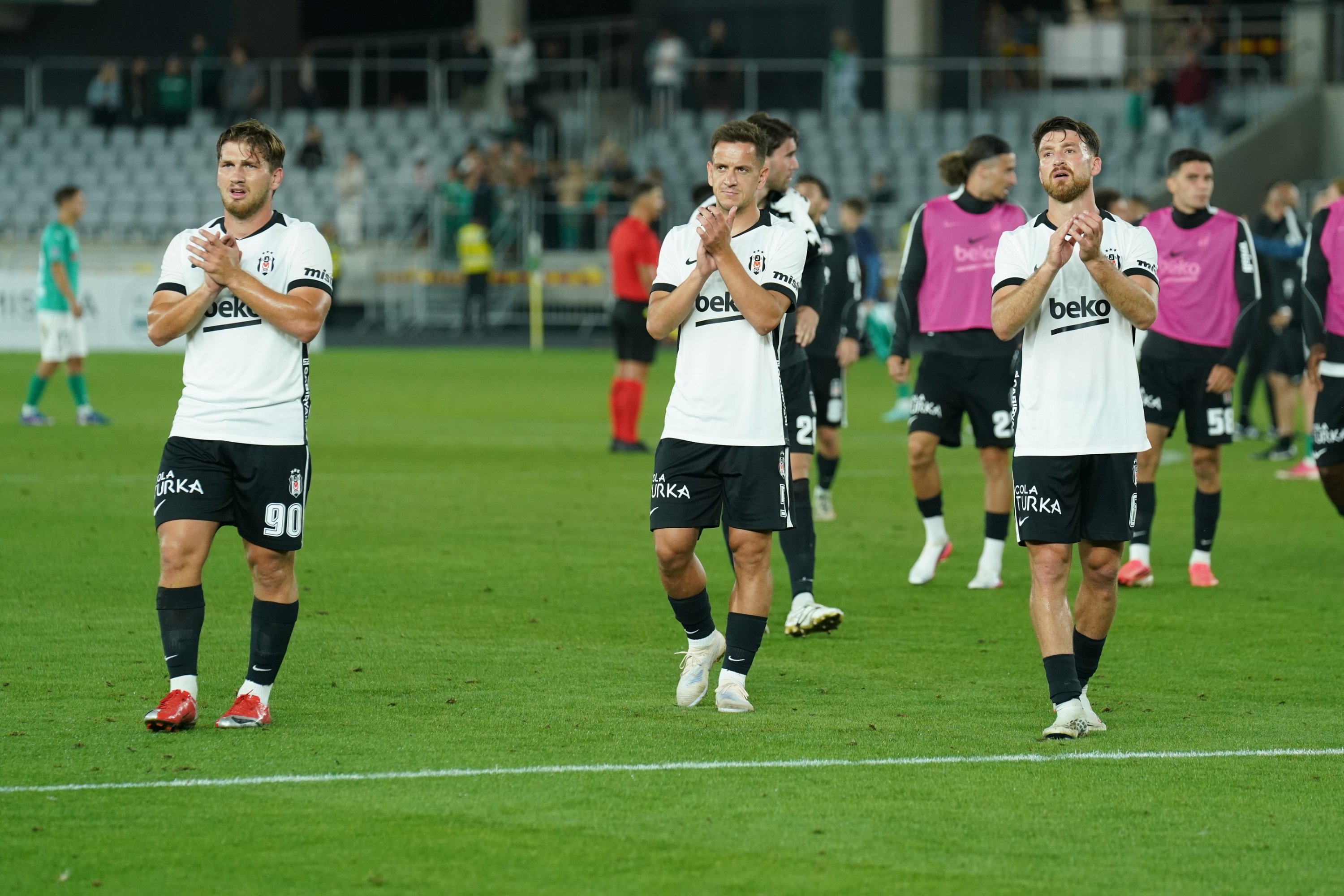
The Europa League league phase features 36 teams, with each club playing eight matches against eight different opponents, four at home and four away. Teams face two opponents from each seeding pot, while clubs from the same national association cannot meet during the league phase.
The opening matchday is scheduled for Sept. 16-17, with the league phase concluding Jan. 28, 2027.
The top eight teams in the standings will advance directly to the round of 16. Teams finishing ninth through 24th will enter two-legged knockout playoffs, while those finishing 25th through 36th will be eliminated from European competition.
The knockout stage will then continue with two-legged ties until the final, which is scheduled for May 26, 2027, at Waldstadion in Frankfurt, Germany.
Trabzonspor drop into Conference League
Trabzonspor will face German club Freiburg, Serbian powerhouse Red Star Belgrade, Finland’s KuPS, Scottish side Heart of Midlothian, Czech club Jablonec and CSKA Sofia of Bulgaria in the Conference League league phase.
Former Beşiktaş player Metin Tekin took part in conducting the draw at the Grimaldi Forum.
Trabzonspor will host Freiburg, Hearts and Jablonec at Şenol Güneş Sports Complex, while its away matches will be against Red Star Belgrade, KuPS and CSKA Sofia.
The draw gives the Turkish club a varied schedule featuring opponents from Germany, Serbia, Finland, Scotland, Czechia and Bulgaria.
Trabzonspor entered the Conference League after losing 5-0 on aggregate to Ferencvaros in the Europa League playoff round.
The Conference League league phase also consists of 36 teams, but each club plays six matches, three at home and three away.
The top eight teams will advance directly to the round of 16, while clubs finishing ninth through 24th will enter the knockout playoffs. The bottom 12 teams will be eliminated.
The Conference League final is scheduled for June 2, 2027, at Tüpraş Stadium in Istanbul, giving Beşiktaş’s home ground another major European occasion.
The venue is also known as Beşiktaş Park and previously hosted the 2026 Europa League final.
Both competitions use UEFA’s Swiss-style league phase, replacing the traditional group-stage format with a single 36-team table.
The system gives clubs a wider range of opponents while maintaining seeding protections during the draw.
The format also creates a heavier schedule, placing additional demands on squads as teams balance European matches with their domestic league and cup commitments.
Bayern Munich kick off their Bundesliga title defense against visitors VfB Stuttgart Friday, with the Bavarians in pole position once more.
With top striker and freshly-crowned European Golden Shoe winner Harry Kane leading their attack, Bayern have also made key transfers to bolster their campaign.
Speedy Germany defender Nathaniel Brown scored on his competitive debut in their 2-1 win over Borussia Dortmund in the German Super Cup last week.
Morocco attacking midfielder Ismael Saibari has also joined Bayern, further boosting their front line that already includes Kane, Luis Diaz and Michael Olise.
The status of Jamal Musiala could be a concern for Bayern, however.
The player is suffering from a neurological dysfunction and briefly collapsed in two preseason friendlies, which the club said was a result of a change in medical treatment and that the player had been cleared to compete.
Musiala missed the Super Cup, with coach Vincent Kompany eager to take some of the pressure off his player after the 23-year-old’s condition was made public.
Former Bayern and Germany captain Lothar Matthaeus sees no challengers to the champions’ crown.
“Last year, I said that Bayern would win the title with a lead of at least 15 points,” he wrote in a column this week. “In the end, it was 16. This season, too, the Munich side will finish at least 10 points ahead of the competition.”
Few would bet against Bayern cruising to yet another league title, but Dortmund are banking on two Greek youngsters helping them give the champions a run for their money.
The arrival of 18-year-old striker Konstantinos Karetsas and 23-year-old playmaker Giannis Konstantelias, who has been labelled the greatest Greek talent of his generation, has instantly sparked enthusiasm among Dortmund supporters.
The pair enjoyed strong debuts in the Super Cup loss to Bayern and fans hope they can deliver the goals needed for the Ruhr valley club to challenge for the title.
RB Leipzig, under new coach Martin Demichelis, saw top striker Yan Diomande leave for Real Madrid but they remain in a small group of title contenders along with VfB Stuttgart, who have improved every season under coach Sebastian Hoeness and will also be competing in this season’s Champions League.
Stuttgart reached last season’s German Cup final and finished fourth in the Bundesliga.
Schalke 04’s return to the top division will instantly boost the league’s average attendances with their 62,000 arena expected to be sold out for all home matches.
The Royal Blues, led by veteran Bosnian striker Edin Dzeko, are determined to make a big impact this season rather than just fighting to stay up.


-

 Economy2 days ago
6 months into US-Iran war: How it shapes global markets
-

 Politics3 days ago
YPG terror group dissolves as forces integrate into Syrian army
-

 Politics2 days ago
Israeli media says ‘YPG dissolution win for Türkiye, setback for Israel’
-

 Economy2 days ago
New British PM faces budget reckoning as first major test
-

 Lifestyle2 days ago
Istanbul’s Üsküdar Gastronomy Street turns into global culinary hub
-
 Politics2 days ago
Erdoğan warns region leaves Türkiye no choice but strength, unity
-
 Sports1 day ago
BJK face tough Europa League draw, Trabzonspor drop to Conference
-
 Politics2 days ago
Turkish officials hail unity, historic legacy on Malazgirt anniversary