
Politics
From Atatürk to Erdoğan: Political figures who shaped modern Türkiye

From Mustafa Kemal Atatürk to Recep Tayyip Erdoğan, a succession of political leaders has shaped Türkiye through sweeping reforms, economic transformations, military interventions and fundamental changes to the system of government. This explainer traces the figures who defined the country’s political evolution, from the founding of the republic to the transition to the presidential system in 2018.
Atatürk: Founder and first president
Mustafa Kemal Atatürk stands apart from the other figures in Türkiye’s modern political history because his legacy begins before the republic itself. As the military and political leader of the Turkish War of Independence, he led the movement that emerged from the collapse of the Ottoman Empire and ultimately established a sovereign Turkish state centered in Ankara.
The opening of the Turkish Parliament in Ankara in 1920 established national sovereignty as the political foundation of the emerging state. The sultanate was abolished in 1922, ending the Ottoman monarchy, while the Treaty of Lausanne in 1923 secured international recognition of the new Turkish state. Ankara became the capital that October, replacing Istanbul as the political center of the country.
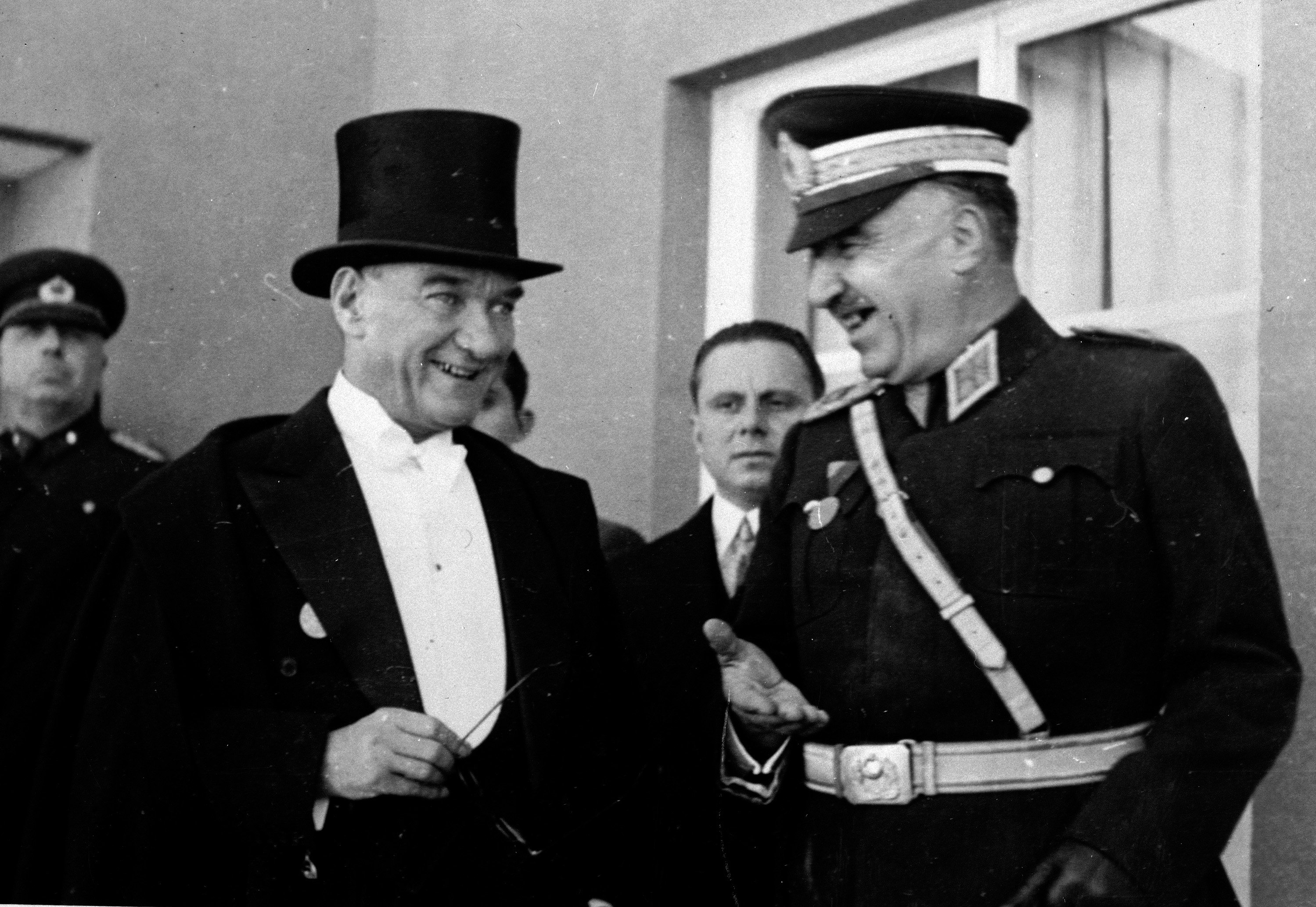
The decisive institutional change followed on Oct. 29, 1923, when the republic was proclaimed and Atatürk was elected its first president.
Atatürk then embarked on a far-reaching transformation that went well beyond changing Türkiye’s form of government. His objective was to build a modern nation-state with new political, legal, educational and social institutions.
The caliphate was abolished in 1924, removing another institution inherited from the Ottoman political order. Secularism subsequently became an increasingly central feature of the new state, culminating in its incorporation into the Constitution in 1937.
The transformation extended into everyday life. Türkiye adopted a new civil legal framework modeled on European codes, replaced the Arabic-based Ottoman script with a Latin-based Turkish alphabet and reorganized education under a more centralized and secular structure. Reforms also expanded the legal and political position of women, who gained full national voting and parliamentary election rights in 1934.
Economic development and state-building proceeded alongside the social reforms. During the 1930s, the young republic pursued industrialization with significant state involvement, seeking to establish domestic productive capacity in a country emerging from years of war with limited industrial infrastructure.
Atatürk also sought to forge a common national identity around citizenship in the new republic. Language, history and education became important elements of this project as the government attempted to create institutions and a common civic identity suited to the new Turkish nation-state.
The political system of his presidency, however, was overwhelmingly dominated by the Republican People’s Party (CHP). Attempts at organized multiparty opposition were short-lived, and competitive multiparty democracy would not become established until after his death.
Atatürk remained president until his death on Nov. 10, 1938.
His legacy is therefore broader than that of a conventional president. He led the struggle from which modern Türkiye emerged and then presided over the construction of many of the institutions, laws and principles that defined the new republic. The transition from Ottoman monarchy to a sovereign republic, the establishment of Ankara as its political center and the sweeping modernization program of the 1920s and 1930s make Atatürk the foundational figure of modern Türkiye.
Ismet Inönü: War years and multiparty transition
Atatürk was succeeded by Ismet Inönü, another leading figure of the War of Independence and an early prime minister of the republic.
As president from 1938 to 1950, İnönü steered Türkiye through World War II, pursuing a policy that kept the country out of active combat.
His later presidency was defined by Türkiye’s transition to competitive multiparty politics. The process culminated in the 1950 elections, when the Republican People’s Party (CHP) lost power to the Democrat Party (DP).
Adnan Menderes: A new era in Turkish politics
Adnan Menderes transformed Turkish politics after leading DP to a landslide victory in the 1950 elections, ending 27 years of single-party CHP rule and overseeing Türkiye’s first peaceful transfer of political power through a national election.
Serving as prime minister for a decade, Menderes built a broad popular base, particularly among rural and conservative voters. His governments pursued agricultural and infrastructure development, expanded road and electricity networks and eased some restrictions on religious life, including restoring the Arabic call to prayer.
His political legacy, however, became inseparable from Türkiye’s first military coup. On May 27, 1960, the military overthrew the democratically elected DP government and arrested Menderes along with other senior officials.
Following trials conducted by a special tribunal established by the military administration on Yassıada, Menderes was sentenced to death. He was executed on Imralı Island on Sept. 17, 1961, a day after former ministers Fatin Rüştü Zorlu and Hasan Polatkan were hanged.
The executions left a lasting scar on Türkiye’s democratic history and turned Menderes into an enduring symbol for many Turks of the consequences of military intervention in elected civilian government.
Nearly three decades later, the Turkish Parliament restored the reputations of Menderes, Zorlu and Polatkan. Their remains were transferred in 1990 to a state mausoleum in Istanbul in a ceremony attended by President Turgut Özal, reflecting their posthumous rehabilitation in the country’s political memory.
Menderes remains a defining figure in Türkiye’s democratic history, remembered for his electoral popularity and for becoming the first elected prime minister removed and ultimately executed following a military coup.
Demirel and Ecevit: Political giants of a turbulent era
Süleyman Demirel and Bülent Ecevit dominated different sides of Turkish politics through much of the 1960s, 1970s, 1980s and 1990s.
Demirel served multiple terms as prime minister before becoming president in 1993. His political career survived coups, military interventions, party closures and repeated changes of government.
Ecevit, the longtime CHP leader who later founded the Democratic Left Party (DSP), served as prime minister several times. He was prime minister during Türkiye’s 1974 Cyprus Peace Operation and returned to power decades later, heading the government when PKK terrorist group leader Abdullah Öcalan was captured in 1999.
Their careers illustrate the volatility of the parliamentary era, when governments depended on parliamentary majorities and coalition-building.
Turgut Özal: Architect of economic transformation
Turgut Özal transformed Türkiye’s economic direction in the 1980s.
First as a senior economic policymaker and later as prime minister following the return to civilian politics after the 1980 military coup, Özal championed liberalization, exports and greater integration with international markets.
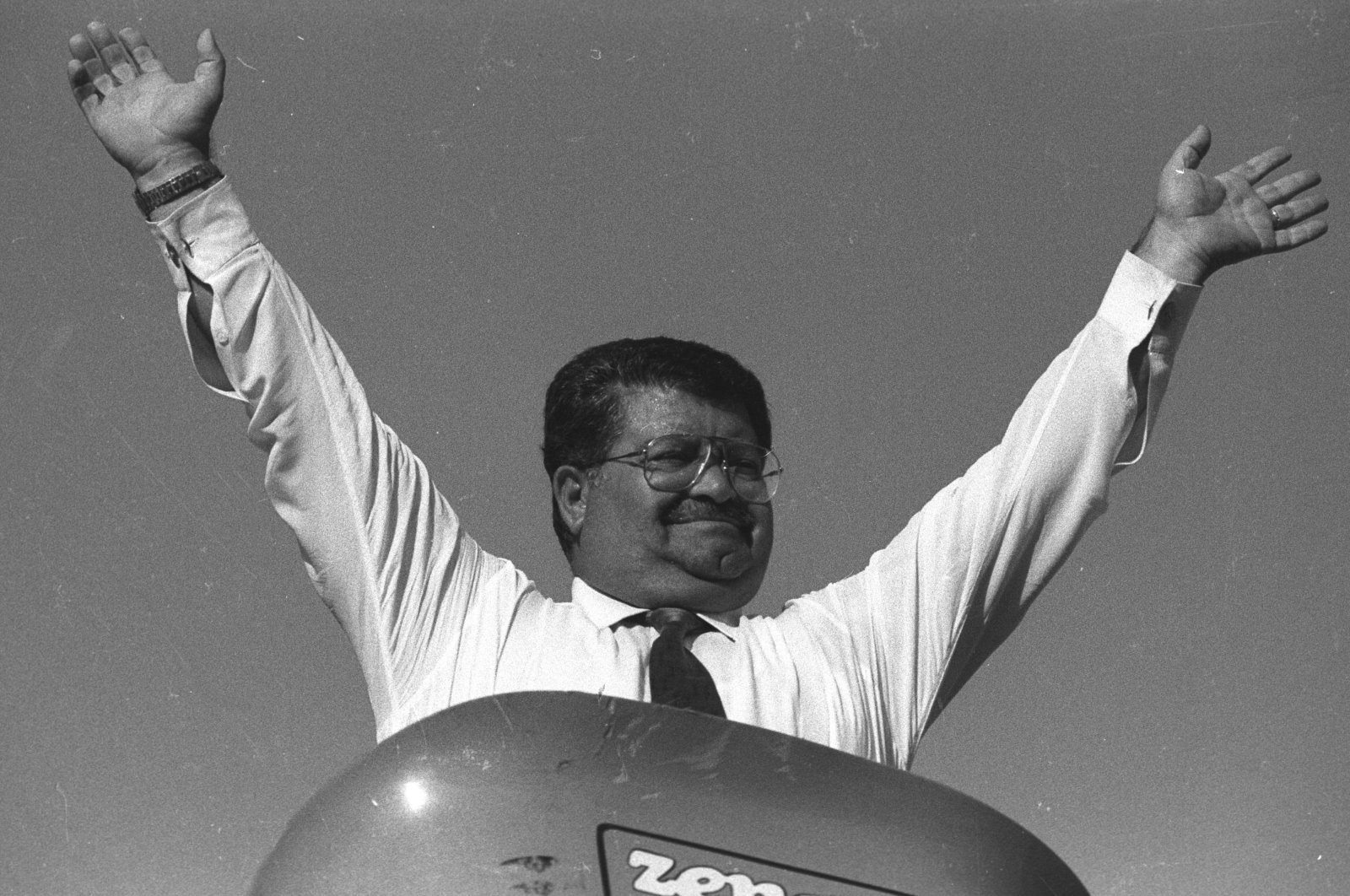
He served as prime minister from 1983 until becoming president in 1989 and remained in the presidency until his death in 1993.
Özal’s economic policies helped move Türkiye away from a heavily state-controlled economic model and toward a more market-oriented system.
Beyond economics, Özal promoted a more outward-looking Türkiye, seeking closer ties with global markets while giving greater prominence to entrepreneurship and private enterprise. His presidency also coincided with the end of the Cold War and new opportunities for Türkiye to deepen relations with the Turkic republics that emerged after the collapse of the Soviet Union.
Tansu Çiller: Türkiye’s first and only woman prime minister
Tansu Çiller broke one of the most significant barriers in Turkish political history when she became the country’s first woman prime minister in 1993.
An economics professor before entering politics, Çiller rose rapidly through the center-right True Path Party (DYP) and succeeded Süleyman Demirel as its leader after he became president.
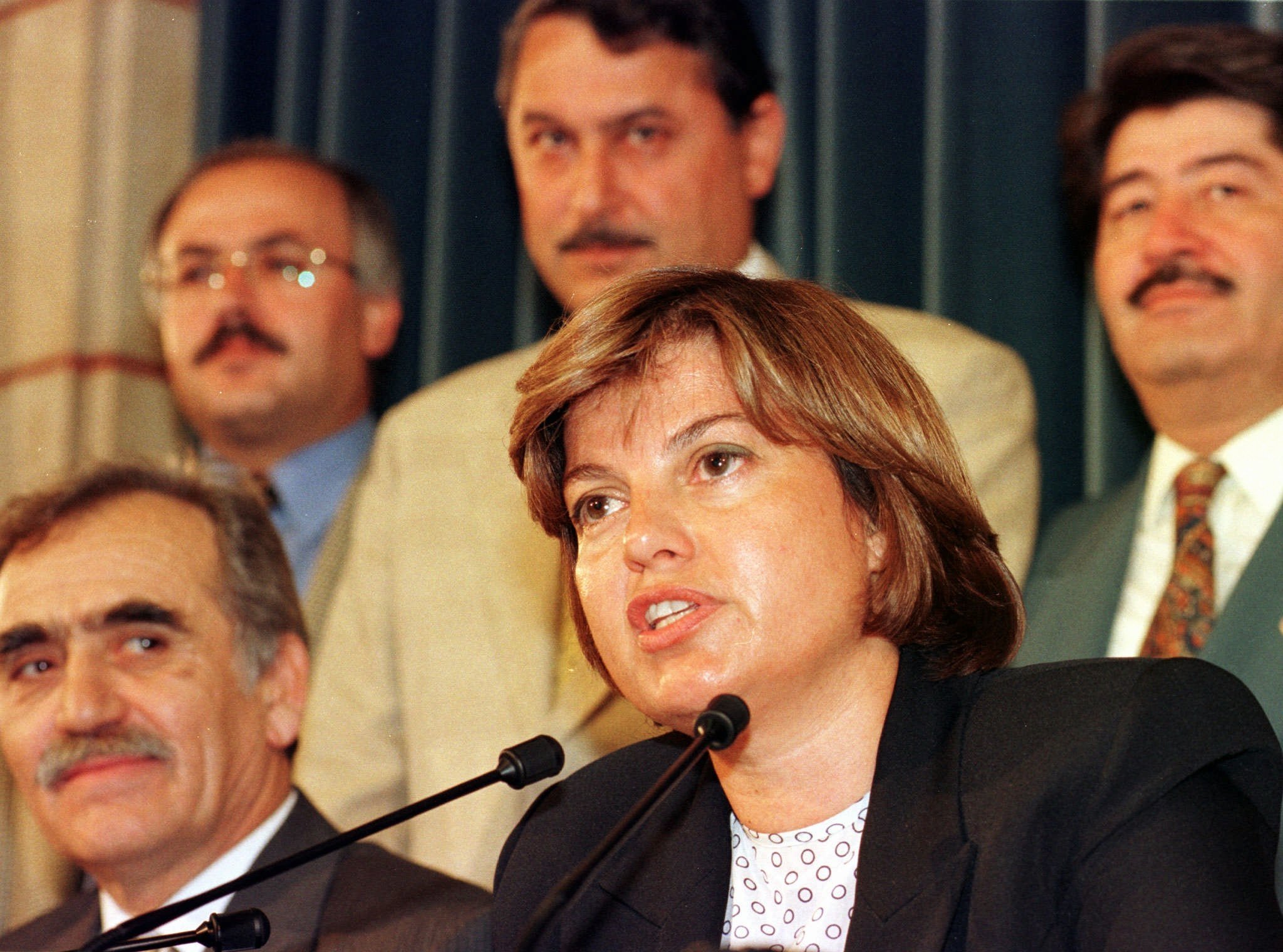
She served as prime minister from 1993 to 1996, a turbulent period marked by political instability, economic difficulties and an intensifying fight against the PKK terrorist group.
Çiller later served as foreign minister and deputy prime minister in Necmettin Erbakan’s coalition government.
No other woman has served as Türkiye’s prime minister, making Çiller a landmark figure in the country’s political history.
Necmettin Erbakan: Pioneer of Türkiye’s National Vision movement
Necmettin Erbakan was one of the most influential figures in modern Turkish political history, pioneering the National Vision (Milli Görüş) movement and helping bring conservative and religious voters from the political margins into the center of democratic politics.
A successful engineer and academic before entering politics, Erbakan built his political program around economic independence, industrial development, social justice and a stronger role for Türkiye in the Muslim world. Beginning with the National Order Party (MNP) and continuing through the National Salvation Party (MSP), Welfare Party (RP), Virtue Party (FP) and Felicity Party (SP), the political tradition he pioneered survived repeated party closures and military interventions.
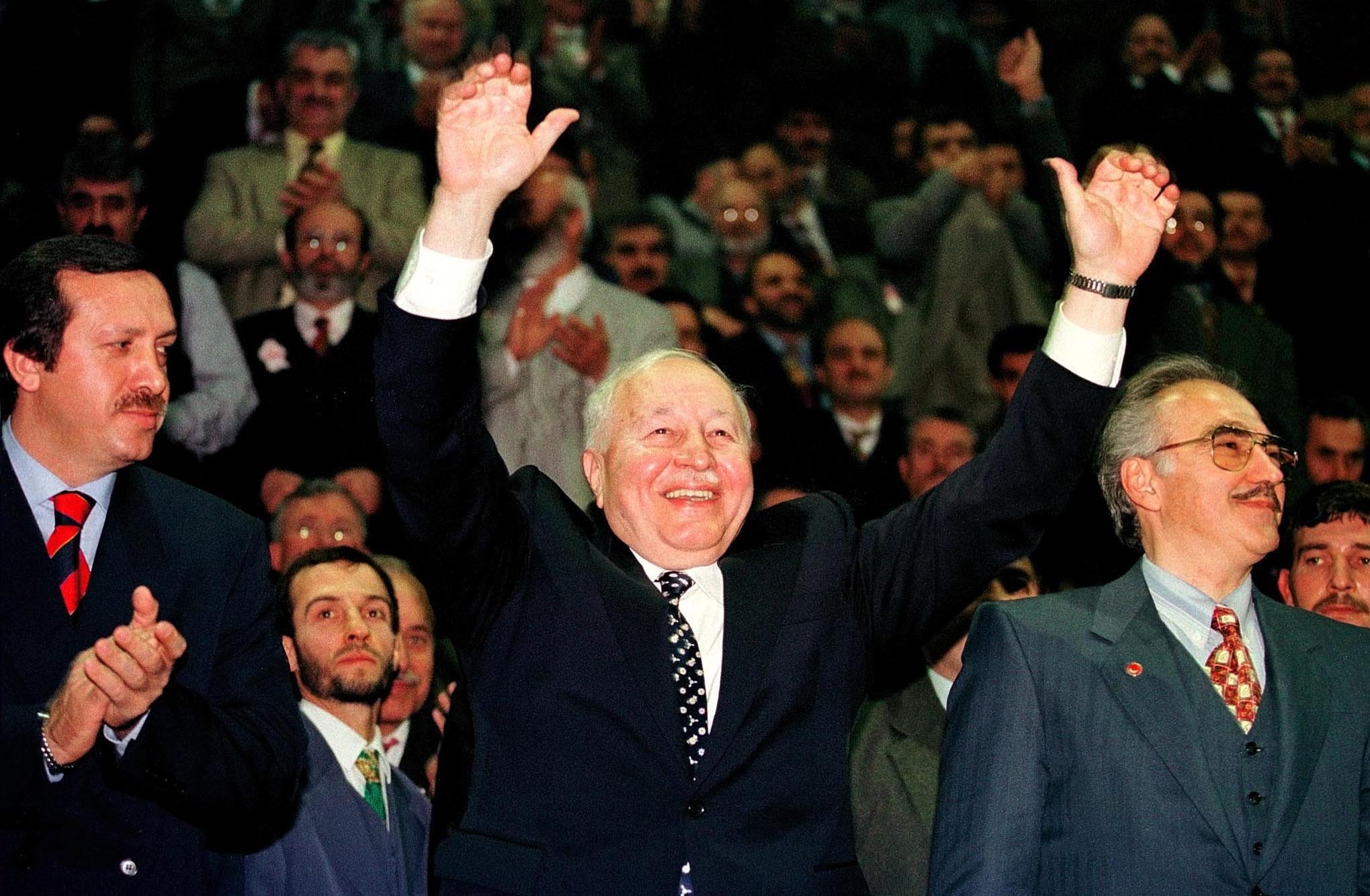
Erbakan first entered government in the 1970s and served as deputy prime minister in several coalition governments. During this period, he championed what became known as Türkiye’s “heavy industry drive,” advocating domestic industrial production and reducing the country’s dependence on foreign technology and imports.
His political influence reached its peak after the Welfare Party emerged as the largest party in the 1995 general election. Erbakan became prime minister in 1996, heading the Welfare Path (Refah-Yol) coalition government with Tansu Çiller’s True Path Party (DYP).
As prime minister, Erbakan pursued closer economic and diplomatic relations with Muslim-majority countries while emphasizing industrial development and greater economic independence. One of his most enduring international initiatives was the establishment of the Developing Eight, or D-8, bringing together Türkiye, Bangladesh, Egypt, Indonesia, Iran, Malaysia, Nigeria and Pakistan to promote economic cooperation among major developing Muslim nations.
His term was cut short on Feb. 28, 1997, commonly described in Türkiye as the “postmodern coup.” Following the Feb. 28, 1997 National Security Council meeting, the military intensified pressure on Erbakan’s government. The period was accompanied by a sweeping crackdown on conservative and religious segments of society, with headscarf-wearing students barred from universities, students detained during protests and public employees facing dismissal or investigation over their religious identity or activities. Erbakan resigned in June 1997, while the Constitutional Court later shut down the Welfare Party and temporarily banned him from politics.
Rather than ending his political influence, however, the Feb. 28 process reinforced Erbakan’s place in the history of Türkiye’s conservative movement. A generation of politicians who emerged from the National Vision tradition later became central figures in Turkish politics, including Recep Tayyip Erdoğan and Abdullah Gül, although they eventually broke with Erbakan’s movement and established the Justice and Development Party (AK Party) in 2001.
Erbakan, who died in 2011, consequently left a legacy extending well beyond his relatively brief prime ministry. His emphasis on domestic industrial capacity, economic sovereignty, a more assertive foreign policy and stronger cooperation among Muslim countries, as well as his success in mobilizing conservative voters, made him one of the politicians who helped reshape Türkiye’s political landscape in the decades before the AK Party era.
Mesut Yılmaz: Coalition politics of the 1990s
Mesut Yılmaz was another defining center-right politician of Türkiye’s turbulent 1990s.
The leader of the Motherland Party (ANAP), which had been founded by Turgut Özal, Yılmaz served three separate periods as prime minister – briefly in 1991 and 1996, and again from 1997 to 1999.
His career reflected an era in which fragmented election results frequently produced short-lived governments and shifting coalitions.
Yılmaz’s final term followed the collapse of the Erbakan-led government amid the Feb. 28 process, when the military exerted heavy pressure on civilian politics.
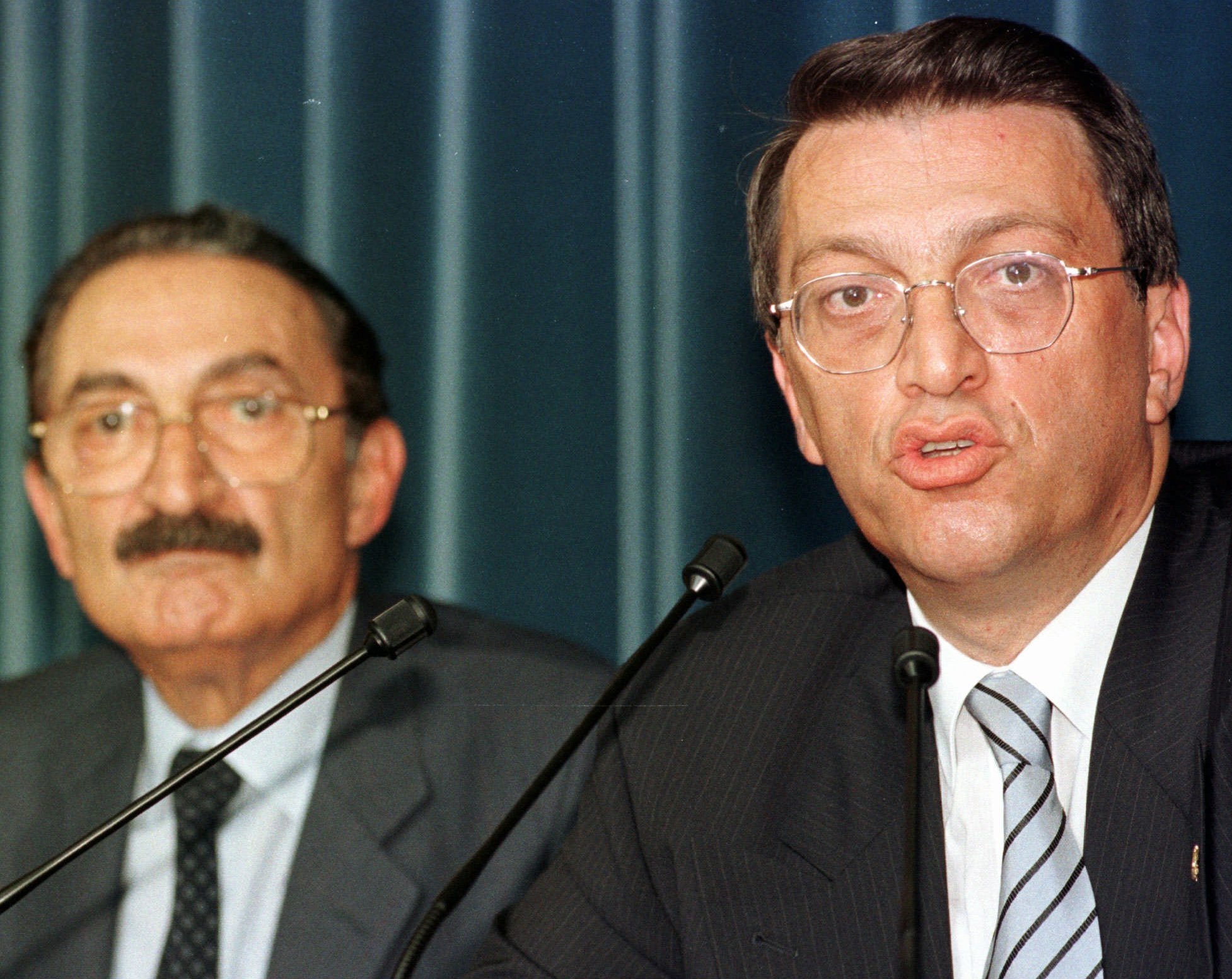
Together with Demirel, Çiller, Erbakan and Ecevit, Yılmaz was among the politicians who defined the coalition-dominated political landscape of the 1990s.
The 1990s: Political instability and shifting coalitions
The 1990s were marked by political instability, fragile coalitions and frequent changes of government, with Süleyman Demirel, Tansu Çiller, Mesut Yılmaz, Necmettin Erbakan and Bülent Ecevit emerging as the decade’s leading political figures. Representing different political traditions, they repeatedly competed for power and served in shifting coalition governments throughout the decade.
That makes the 1990s an important contrast with the period that followed. Political power was highly fragmented, governments were frequently dependent on coalitions and the prime minister remained the central figure in day-to-day executive government.
Then Erdoğan’s rise in the 2000s gradually brought an end to this fragile era of constantly shifting coalition governments, before the 2018 transition abolished the prime ministry altogether.
Beyond major figures: Türkiye’s other presidents
Not every Turkish president exercised political power on the scale of Atatürk, Özal or Erdoğan, but several played important roles during crucial transitions in the republic’s history.
Celal Bayar, Türkiye’s third president, took office in 1950 after the Democrat Party’s landmark election victory. His presidency, alongside Prime Minister Adnan Menderes, represented the first transfer of national power between competing parties through an election. The 1960 military coup removed both men from power, bringing Bayar’s presidency to an abrupt end.
The coup ushered in a period in which the military became far more visible in presidential politics. Cemal Gürsel, who headed the military intervention, became president in 1961 as Türkiye entered a new constitutional order.
He was followed by Cevdet Sunay, a former chief of the General Staff who served as president from 1966 to 1973, a period that included the 1971 military memorandum and growing political instability.
Fahri Korutürk, another former senior military officer, succeeded Sunay in 1973 and served throughout much of the turbulent 1970s, when ideological violence, economic problems and unstable coalition governments increasingly strained the political system.
The 1980 military coup produced another major break, marking one of the most turbulent periods in Turkish politics. Its leader, Kenan Evren, became head of state and later president under the 1982 Constitution. His presidency remains inseparable from the coup era, during which Parliament was dissolved, political parties were shut down and political activity was heavily restricted before civilian party politics gradually returned.
Following Turgut Özal’s death in office in 1993 and Süleyman Demirel’s subsequent presidency, Ahmet Necdet Sezer, a former Constitutional Court chief justice, became president in 2000. His tenure reflected the older parliamentary model in which the presidency could act as an institutional counterweight to the elected government. His years in office included the 2001 economic crisis and, after 2002, the early period of AK Party rule.
Abdullah Gül succeeded Sezer in 2007 after a bitter political confrontation over the presidential election. The dispute surrounding his candidacy became part of a wider struggle over the role of the military, judiciary and secular establishment in politics.
Gül’s presidency also coincided with another historic change. A constitutional referendum established the direct popular election of presidents, ending the system under which Parliament had chosen the head of state.
When Gül left office in 2014, Erdoğan became the first Turkish president elected directly by the public.
Erdoğan: From prime minister to transformative president
Recep Tayyip Erdoğan has been the central figure in Turkish politics for more than two decades, a period that has brought sweeping changes to the country’s political institutions, security policies, defense industry, infrastructure and international standing.
After serving as the Metropolitan Mayor of Istanbul, Erdoğan became prime minister in 2003, following the Justice and Development Party’s (AK Party) victory in the 2002 general election. He remained prime minister until 2014, leading successive governments and establishing the AK Party as the dominant political force of the era.
His first decade in power was marked by strong economic expansion, large-scale infrastructure projects and reforms pursued as Türkiye sought closer integration with the European Union. New airports, highways, hospitals, bridges and high-speed rail lines became prominent features of a broader effort to modernize the country’s physical infrastructure and public services.
Erdoğan’s rise also coincided with a major shift in the relationship between elected governments and institutions that had historically exercised influence over civilian politics. Türkiye had experienced repeated military interventions since the introduction of multiparty democracy, including the 1960 and 1980 coups and the military pressure that forced Necmettin Erbakan from office during the Feb. 28, 1997 process.
Over the following years, the military’s political role diminished considerably as elected civilian authorities assumed greater control over institutions that had previously exercised substantial influence over political life, marking a major retreat of military and bureaucratic tutelage.
The struggle over civilian authority reached a critical moment on July 15, 2016, when the members of the Gülenist Terror Group (FETÖ) embedded within the Turkish military attempted to seize power. Tanks appeared on the streets, key infrastructure was targeted and fighter jets flew over Ankara as putschists attacked state institutions, including Parliament.
Erdoğan called on the public to oppose the coup attempt, prompting large numbers of people to take to the streets. The attempted takeover collapsed as civilians, security forces and military units opposed to the putsch resisted it.
The failed putsch became one of the defining events of Erdoğan’s presidency. Its aftermath brought an extensive reorganization of the military, security apparatus and state bureaucracy as Ankara sought to clear FETÖ-linked networks and prevent another attempt to overthrow an elected government.
Counterterrorism has formed another major part of the Erdoğan era. Türkiye intensified operations against the PKK at home and increasingly pursued terrorist groups beyond its borders, particularly in northern Iraq and Syria. Turkish forces also conducted major operations against Daesh and the YPG in northern Syria.
In recent years, Erdoğan has placed renewed emphasis on ending Türkiye’s decadeslong struggle with terrorism altogether. Ankara’s stated objective of achieving a terror-free Türkiye has been presented as both a security goal and an attempt to remove one of the most persistent sources of instability in the country’s modern history.
Türkiye’s defense industry has undergone an equally significant transformation during Erdoğan’s rule. Successive governments invested heavily in reducing dependence on foreign military suppliers and expanding domestic production in areas ranging from unmanned aircraft and missiles to naval vessels, armored vehicles, radar and electronic warfare.
Projects including the Bayraktar drone family, the KAAN national combat aircraft, TCG Anadolu, the MILGEM warship program and domestically developed missile and air defense systems have become symbols of that push. Turkish defense companies have also expanded their presence in international markets, turning defense exports into an increasingly important component of the country’s industrial and diplomatic reach.
The objective has extended beyond producing military equipment. Ankara has increasingly pursued strategic autonomy – maintaining its NATO commitments while developing the ability to protect Turkish interests without depending entirely on traditional allies for critical technologies or security decisions.
That approach has accompanied a more assertive foreign policy. Türkiye has expanded its diplomatic, economic and military footprint across Africa, the Middle East, the Caucasus and Central Asia while becoming directly involved in major regional issues including Syria, Libya, the Russia-Ukraine war and the South Caucasus.
Erdoğan’s period in power also saw a major transformation of Türkiye’s system of government, culminating in the transition from a parliamentary to a presidential system.
He became the country’s first president elected directly by voters in 2014. Constitutional amendments approved in a 2017 referendum subsequently replaced the parliamentary system with a presidential model, which took full effect after the 2018 elections.
The change abolished the office of prime minister and transferred executive authority to the presidency, with the goal of providing stronger and more stable government after decades in which Türkiye had experienced fragile coalitions, military interventions and political crises.
Erdoğan became the first president to govern under the fully implemented system after winning the 2018 election.
His legacy reaches far beyond electoral longevity. Türkiye under Erdoğan has moved from a political order repeatedly vulnerable to military intervention toward much stronger civilian control over the military, developed a substantially larger domestic defense industry, adopted a more forward-leaning counterterrorism strategy and pursued greater autonomy in foreign and security policy.
Few political figures since Atatürk, have exercised comparable influence over the direction of the Turkish state. From the structure of government and civil-military relations to defense production, counterterrorism and foreign policy, Erdoğan’s era has fundamentally altered how Türkiye governs itself and how it seeks to project power abroad.
Erdoğan remains Türkiye’s president today and is the country’s 12th president overall. Türkiye’s official list of presidents stretches from Atatürk and Inönü through figures including Celal Bayar, Turgut Özal, Süleyman Demirel, Ahmet Necdet Sezer and Abdullah Gül to Erdoğan.
Binali Yıldırım: Türkiye’s last prime minister
Binali Yıldırım holds a unique place in Türkiye’s political history as the country’s 27th and last prime minister.
A longtime AK Party figure who had previously served as transport minister and played a prominent role in the government’s major infrastructure programs, Yıldırım became prime minister in May 2016 after succeeding Ahmet Davutoğlu.
Only weeks into his prime ministry, Türkiye faced the failed July 15, 2016 coup attempt, placing Yıldırım’s government at the center of one of the most serious political and security crises in the country’s recent history.
His term also coincided with the constitutional transformation that would ultimately abolish his own office.
The constitutional amendments approved in the April 2017 referendum replaced Türkiye’s parliamentary model with a presidential system. Yıldırım remained prime minister during the transition, while the existing structure continued until the presidential and parliamentary elections of June 24, 2018.
With the new system taking effect, the prime ministry – an institution that had stood at the center of executive government for most of the republic’s history – ceased to exist.
Yıldırım therefore became the bridge between two political systems. He was the final head of government under the parliamentary model before executive authority was consolidated under the presidency.
After leaving the prime ministry, Yıldırım was elected speaker of Parliament in July 2018, becoming the first to hold the post under the new presidential system.
His historical significance consequently rests less on a long prime ministry term than on timing: Binali Yıldırım closed the line of Turkish prime ministers that had included figures from Inönü and Menderes to Demirel, Ecevit, Özal, Erbakan and Erdoğan.
Taken together, these political careers chart more than a century of transformation in Türkiye – from the founding of the republic and the advent of multiparty democracy through military interventions, economic liberalization and the rise of conservative politics to the decline of military tutelage, the growth of an increasingly autonomous defense and foreign policy and, ultimately, the replacement of the parliamentary system with an executive presidency.
President Recep Tayyip Erdoğan and Russian President Vladimir Putin will meet in Bishkek on Sept. 1 for talks expected to focus on the war in Ukraine, the Black Sea and expanding bilateral economic ties, a Kremlin aide said Friday.
Yury Ushakov, Putin’s foreign policy adviser, said the meeting would take place on the sidelines of the Shanghai Cooperation Organization (SCO) summit, scheduled for Aug. 31-Sept. 1 in the Kyrgyz capital.
“There are many issues to discuss. Of course, these include the situation in the Black Sea and the Ukraine issue in general,” Ushakov told reporters.
The two leaders are also expected to discuss ways to further develop trade and economic cooperation between Türkiye and Russia, he added.
Ushakov said Putin had nine bilateral meetings planned around the summit, noting that major international gatherings provided an opportunity for direct talks between world leaders.
Putin is scheduled to meet Chinese President Xi Jinping on Aug. 31 and Iranian President Masoud Pezeshkian on Sept. 1.
His summit diplomacy is also expected to include meetings with Indian Prime Minister Narendra Modi, Kazakh President Kassym-Jomart Tokayev, Armenian Prime Minister Nikol Pashinyan and the leaders of Kyrgyzstan, Tajikistan and Mongolia.

Turkish authorities detained two suspects in Istanbul and Muğla on Friday as part of an investigation into the current activities of the Gülenist Terror Group (FETÖ), judicial sources said.
The Istanbul Chief Public Prosecutor’s Office ordered searches and seizures at three addresses in Istanbul and one in the southwestern province of Muğla as investigators sought to uncover the group’s ongoing activities.
Esma Batmaz, daughter of Kemal Batmaz, a senior FETÖ figure detained at Akıncı Air Base following the failed July 15, 2016 coup attempt, was detained in Istanbul.
Hilal Köseoğlu, whose father Bilal Köseoğlu was dismissed by decree while serving as a judge and prosecutor at the Ankara Courthouse, was detained in Muğla. Her father is currently imprisoned in Muğla.
Authorities seized a large amount of digital material during the searches, with examinations continuing.
The operations came as Justice Minister Akın Gürlek said Thursday that investigators examining the 2009 death of politician Muhsin Yazıcıoğlu had uncovered evidence pointing to links with FETÖ.
Yazıcıoğlu, founder and leader of the Great Unity Party, and five others were killed when their helicopter crashed in Kahramanmaraş in March 2009.
Gürlek remarked that investigators had identified connections between the helicopter’s pilot and senior FETÖ figures, including Adil Öksüz and Kemal Batmaz.
The minister noted investigators had found that a meeting involving FETÖ’s covert operatives and the helicopter pilot was held in the eastern province of Elazığ several days before Yazıcıoğlu’s death. He said senior FETÖ figures Öksüz and Batmaz attended the meeting, adding that Öksüz left Türkiye a day before Yazıcıoğlu’s death.
“There are actions with very strong links to FETÖ,” Gürlek stressed, adding that authorities would pursue the case regardless of where the evidence leads.
Separately, Gürlek stated an investigation into an alleged criminal organization led by Alihan Kuriş was continuing after a third wave of operations.
He underlined that investigators were examining allegations including money laundering, fraud and the transfer of funds abroad, as well as the 2016 death of former Transport Minister Arif Ahmet Denizolgun.
Preliminary findings further indicated “serious signs” that Denizolgun’s death may have been suspicious, citing bruising around the neck, allegations of strangulation and claims that medical teams were notified late, the minister noted.
A forensic report on Denizolgun’s death is pending and could determine the next steps in the investigation, he added.
President Recep Tayyip Erdoğan held separate phone calls with the leaders of the Democratic Republic of Congo (DR Congo) and Rwanda, discussing bilateral cooperation and efforts to promote lasting peace in the region, Türkiye’s Communications Directorate said Thursday.
In his call with DR Congo President Felix Tshisekedi, Erdoğan said Türkiye would continue taking steps to expand cooperation between the two countries, particularly in investment, trade, the defense industry and security.
The Turkish president also voiced support for diplomatic efforts aimed at achieving lasting peace and addressing the security situation in eastern DR Congo.
Erdoğan said Türkiye was prepared to contribute to creating a constructive environment for implementing existing agreements aimed at resolving the conflict.
In a separate call with Rwandan President Paul Kagame, Erdoğan welcomed progress in bilateral trade and investment and said Ankara and Kigali would continue working together across several fields, particularly the defense industry.
The two leaders also discussed regional developments and tensions between Rwanda and neighboring DR Congo.
Erdoğan praised efforts to reduce tensions between the two countries and welcomed their continued constructive approach toward resolving outstanding disputes.
He reiterated Türkiye’s support for the peace process as regional and international efforts continue to seek a durable settlement to the conflict.
President Recep Tayyip Erdoğan and his Kazakh counterpart, Kassym-Jomart Tokayev, discussed bilateral ties and regional developments in a phone call, Türkiye’s Communications Directorate said Thursday.
Erdoğan congratulated Tokayev on the Aug. 23 Kurultai elections in Kazakhstan, highlighting the high voter turnout as a sign of public support for the reform process underway in the Central Asian country.
The Turkish president also reaffirmed Ankara’s commitment to further strengthening relations with Kazakhstan, saying Türkiye would continue efforts to deepen bilateral cooperation in the period ahead.
Türkiye and Kazakhstan maintain close political, economic and cultural ties and cooperate across several regional and international platforms.
As disinformation continues to spread around the world, Türkiye is stepping up efforts to counter false and provocative claims on sensitive national issues, with authorities taking action against social media accounts and publicly challenging claims they say could mislead the public.
Two developments Wednesday highlighted the scope of the effort. Authorities launched a comprehensive investigation into social media accounts accused of targeting the country’s “terror-free Türkiye” process, while the Communications Directorate’s Center for Combating Disinformation, known as DMM, separately rejected claims that forest areas burned in the 2021 wildfires in the Muğla province had been opened for construction.
The first investigation is being coordinated by the Communications Directorate, with the participation of relevant prosecutors’ offices, the General Directorate of Security’s Cybercrime Department and counterterrorism units.
Authorities are examining social media content they say seeks to provoke the national solidarity and social integration process, a sensitive initiative linked to Türkiye’s efforts to end the decadeslong threat posed by the PKK terrorist organization.
The PKK, which Türkiye, the U.S. and the EU classify as a terrorist organization, has waged an insurgency against the Turkish state since 1984. The organization announced its dissolution and disarmament earlier this year as part of the process toward a terror-free Türkiye.
The investigation found that some accounts were engaged in terrorist propaganda and shared content praising terrorism, while numerous others sought to influence public opinion through false, misleading and manipulative content, authorities said.
Some users were also found to have shared provocative posts targeting social sensitivities and attempting to fuel hatred and hostility, according to the findings.
The investigation remains ongoing, and legal proceedings will be initiated against accounts and content deemed to contain elements of criminal offenses, authorities said.
DMM challenges wildfire claims
The government’s efforts to counter disinformation extended beyond the terror-free Türkiye process on Wednesday, as the DMM addressed claims concerning land affected by the devastating wildfires that swept across parts of Türkiye in 2021.
The center rejected claims circulated by some media outlets and social media accounts that forest areas burned in 2021 in the Beyciler neighborhood of the southwestern Muğla province’s Milas district had been opened for construction.
The DMM said the claims were “completely untrue,” stressing that the parcels identified in the posts and videos are not classified as forest land.
The properties in question, including plots 15, 16 and 115 in block 101 and plot 1 in block 102 in Beyciler, are privately owned land registered in the names of individuals, according to official cadastral records, the center said.
The DMM also emphasized that afforestation and rehabilitation work had been carried out in forest areas damaged by the 2021 wildfires in Milas and neighboring Marmaris.
Citing data from the Food and Agriculture Organization of the United Nations’ Global Forest Resources Assessment, the center said Türkiye ranks third globally and first in Europe among countries carrying out the most afforestation.
The statement warned against attempts to create the perception that “burned forests were handed over to concrete” by presenting privately owned properties as forestland without checking their official land and cadastral status.
The DMM urged the public to disregard disinformation and provocative claims and instead rely on official statements, records and verified sources.
Foreign Minister Hakan Fidan on Wednesday cautiously welcomed an announcement that the terrorist PKK/YPG’s self-proclaimed autonomous administration and its affiliated military and civilian structures had been dissolved, saying Türkiye would closely examine whether the declaration is being implemented on the ground.
“Our job is to act professionally and verify its implications on the ground. If it is as stated, then of course this is a welcome development,” Fidan told reporters during a visit to the eastern province of Elazığ on Wednesday.
He said such a move would complement Türkiye’s objectives in Syria and could help strengthen ties between the country’s Kurdish and Arab communities while contributing to an environment in which all Syrians can look to the future with greater confidence.
Fidan stressed that Ankara supports protecting the identity of Syria’s Kurdish population while rejecting any steps that could undermine the country’s national unity, sovereignty or territorial integrity.
“We underline the importance of preserving Kurdish identity and avoiding any denial of that identity, while at the same time ensuring that Syria’s national unity, sovereignty and territorial integrity are not compromised,” he said, adding that Türkiye wants to see those principles reflected in practice.
Fidan said Ankara had long viewed the PKK/YPG’s presence in the region as a threat not only to Syria but also to Türkiye.
He nevertheless voiced hope that the emerging process would allow outstanding disputes to be resolved through dialogue and peaceful means.
“Hopefully, in this new process, we will resolve all these problems through mutual understanding and dialogue. We will resolve them peacefully,” he said.
Referring again to the announcement from Damascus, Fidan said its wording was positive but stressed that implementation would ultimately determine its significance.
“The statement made in Damascus is positive in terms of its text, but if it is also implemented in practice as stated, then it is an extremely positive development,” he said.
Fidan also highlighted the link between security and economic development after traveling by road through several provinces and districts in eastern and southeastern Türkiye over the past two days.
He said the region had enormous potential and that development accelerates when terrorism and armed conflict no longer dominate daily life.
Türkiye’s broader vision, he added, prioritizes peace, stability, development and prosperity not only at home but also in Syria, Iraq and the wider region.
During his remarks in Elazığ, Fidan also reflected on the 955th anniversary of the Battle of Manzikert (Malazgirt), which he commemorated in Ahlat alongside President Recep Tayyip Erdoğan.
He emphasized the centuries-old coexistence of Turks, Kurds, Arabs and other communities in Anatolia, arguing that their shared history remains particularly significant amid growing international competition and geopolitical tensions.
The YPG was established in 2015 with U.S. backing as the Syrian branch of the PKK terrorist group. Washington partnered with the group in its campaign against Daesh despite longstanding objections from NATO ally Türkiye over its ties to the PKK.
The PKK, which has waged a decades-long campaign against Türkiye, is designated a terrorist group by Türkiye, the U.S. and the European Union.
The group became Washington’s principal partner on the ground against Daesh and eventually gained control of large parts of northern and northeastern Syria, including areas containing much of the country’s oil resources.
The Syrian administration and the YPG terror group reached a new agreement Jan. 29 that provided for a cease-fire and the group’s gradual integration into state institutions.


-

 Sports3 days ago
Beşiktaş poised to seal Europa League passage against Kauno Zalgiris
-
 Economy2 days ago
6 months into US-Iran war: How it shapes global markets
-
 Economy3 days ago
Iran war strands Qatari gas, lifts US sales, drains Europe’s stocks
-
 Economy3 days ago
Türkiye’s CDS drops to multi-month low on easing risks, CBRT moves
-
 Economy2 days ago
Mark Carney: Former central banker who said ‘no’ to Trump
-
 Politics2 days ago
YPG terror group dissolves as forces integrate into Syrian army
-
 Economy2 days ago
UniCredit’s CEO invited by Germany’s finance chief for meeting
-
 Economy1 day ago
New British PM faces budget reckoning as first major test