
Economy
Trump says he’ll stop trading with some nations if Fed doesn’t cut rates

President Donald Trump threatened Friday to stop trading with countries with which the U.S. has a deficit unless the Federal Reserve (Fed) lowers interest rates, citing a strong August jobs report as justification.
“High interest rates put the U.S.A. at a very unfair disadvantage, and I won’t allow that to happen!” said Trump, who has repeatedly demanded that the Fed cut rates.
The Bureau of Labor Statistics on Friday reported stronger-than-expected job creation in August, prompting traders to boost bets on a hike later this month.
“Lower the interest rates because the U.S.A. is a much stronger credit than it was just a short time ago!” Trump posted on his Truth Social platform.
“We should have the LOWEST RATE of any country in the World … LOWER THE RATE OR I’LL STOP TRADING WITH COUNTRIES WITH WHICH WE HAVE A DEFICIT,” he said.
Fed Chair Kevin Warsh said last week that inflation, at 3.7% according to the Fed’s preferred measure, remains too far above the central bank’s 2% target, and added that without further progress, they would have “work to do.”

Rising energy prices and renewed inflationary pressures have dashed expectations of further interest rate cuts, prompting instead major central banks around the world to reconsider monetary tightening amid tensions in the Middle East.
Since the start of the U.S. and Israeli strikes on Iran and the subsequent disruption of shipments through the Strait of Hormuz, oil and gas prices have been extremely volatile, adding to worries for consumers, but also complicating the central banks’ task of reining in soaring prices.
Brent crude prices have climbed above $110 a barrel in October before easing to $90 by late November, still 45% higher year-over-year.
On the other hand, the Dutch Title Transfer Facility (TTF), which serves as Europe’s primary wholesale natural gas price benchmark, topped 100 euros ($109) per megawatt-hour (MWh) in late October, marking its highest since December 2022, before stabilizing around 86 euros. The prices remain up close to 190% on a yearly basis, according to Trading Economics data.
All this led to a surge in consumer prices in different regions, including advanced economies in Europe and the U.S.
Annual eurozone inflation rose to 4% in October on energy-driven price pressures, while inflation in the U.K. and the U.S. also exceeded estimates.
The Bank of England (BoE) raised rates 25 basis points to 4% in early November, while markets price a 90% chance of a December Federal Reserve (Fed) hike alongside a year-end European Central Bank (ECB) increase.
On Wednesday, the data showed that the Fed’s preferred inflation gauge came in at a three-year high in October, with a rise in energy prices accompanied by an increase in nondurable goods inflation.
The Personal Consumption Expenditures (PCE) price index rose by 3.8% year-over-year in October, the data showed, matching a three-year high set in May.
Major institutions, including the European Commission in its autumn 2026 forecast and S&P Global, warned that monetary tightening is adding downside risks to global growth in 2027.
Further hikes likely
In its November review, the ECB said higher energy costs are fueling inflation and driving global tightening as markets price in further rate increases.
German Bundesbank President Joachim Nagel echoed the hawkish tone, saying eurozone inflation near 4% reflects energy costs and signaling further tightening may be needed to reach the bank’s medium-term target.
Minutes from the Fed’s late-October Federal Open Market Committee (FOMC) meeting showed a broad majority backing a rate hike in coming months, with a larger-than-25-basis-point hike still on the table for December if inflation worsens.
JPMorgan Private Bank’s 2027 outlook said energy disruptions and higher oil prices have made inflation persistent, with 17 of 37 major central banks tracked resuming rate hikes as global bond yields hit multi-decade highs.
Morgan Stanley’s 2027 global economic outlook warned that escalating Gulf tensions could trigger another wave of energy price hikes, raising U.S. and European recession risks if higher costs become embedded in core inflation.
BlackRock Investment Institute said the U.S. is better shielded as an energy exporter, yet still expects 25-basis-point Fed hikes in December and the first half of 2027, alongside a December ECB increase.
Analysts at ING Think and KPMG International said elevated diesel, jet fuel, and natural gas prices continue feeding core inflation despite a partial normalization in crude flows.
In a separate central bank road map, ING Think economists projected a final December Fed hike after October’s pause amid solid growth and low unemployment, followed by an extended hold through 2027.
ING economists said further Fed hikes would neither ease geopolitical tensions nor slow technology investments.
They described a December ECB hike as nearly certain, noting that the bank’s subsequent path will depend on the Middle East conflict’s duration and inflation pass-through.
Falling energy prices could allow the ECB to consider cutting rates in late 2027, ING added.
The BoE is expected to hike again in February 2027, or as early as December if the energy crisis deepens.
ING also expects the Bank of Japan to raise its policy rate to 1.75% via 25-basis-point increases in December and March 2027 after hitting its 2% inflation target in October.
In contrast, the People’s Bank of China (PBOC) is expected to ease policy amid weak domestic demand and low inflation, cutting rates by 10 basis points in mid-2027.
Türkiye and Russia reaffirmed on Friday their commitment to raise annual bilateral trade to $100 billion (TL 5.08 trillion), as senior officials signed a joint economic declaration in Istanbul.
Speaking at the meeting of the Turkish-Russian Intergovernmental Commission on Trade and Economic Cooperation, Trade Minister Ömer Bolat said delegations held comprehensive talks covering trade, transportation, energy and tourism.
Following the talks, Bolat and Russian Deputy Prime Minister Alexander Novak signed the joint declaration of the 20th commission meeting.
Noting that bilateral trade currently stands at $50 billion, Bolat said both sides remain committed to doubling that figure.
“Türkiye and Russia-two neighboring, friendly nations and key trading partners-will continue to advance our economic relations with growing momentum through 2027,” he added.
Novak said regular dialogue between the two governments continues to guide efforts toward the $100 billion annual trade goal.
He noted that bilateral trade has exceeded $50 billion in recent years, with Türkiye ranking second among Russia’s trading partners last year and fourth in the first nine months of 2026.
In the agro-industrial sector, mutual trade grew 12% over the first nine months of the year while Russian exports rose 17%, with Türkiye remaining the top buyer of Russian grain.
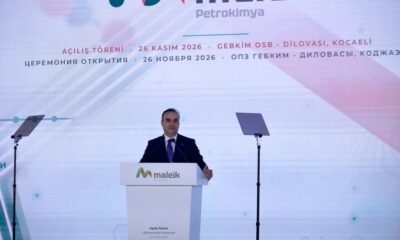
He also highlighted the opening on Thursday of Türkiye’s first maleic anhydride plant in Kocaeli’s GEBKIM industrial zone, enabling domestic paint, varnish and construction manufacturers to source the raw material locally.
On energy, Novak said Russia remains a reliable supplier of gas, oil, and petroleum products, noting that the Blue Stream and TurkStream pipelines continue operating uninterruptedly.
He added that work is underway on all four units of the Akkuyu Nuclear Power Plant, with main efforts focused on preparing the launch of the first unit.
In tourism and transport, Novak said Russian airlines carried over 6.5 million passengers between the two countries last year, while nearly 7 million Russian tourists visited Türkiye, ranking Russia first.
He also pointed to growing cooperation potential in healthcare, pharmaceuticals, digital technologies, logistics and e-commerce, alongside academic, sports and cultural exchanges.
Domestic investors’ interest in Turkish lira-denominated investment instruments has continued despite geopolitical uncertainty and the fund market turmoil.
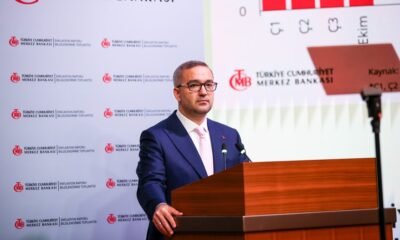
That’s according to the Central Bank of the Republic of Türkiye’s biennial Financial Stability Report on Friday that came just a day after the monetary authority announced measures aimed at supporting the lira demand.
Authorities have been seeking to contain the fallout from the September investment funds crisis, which prompted outflows but which officials said mainly moved into bank deposits.
Treasury and Finance Minister Mehmet Şimşek said on Thursday the central bank and government would not hesitate to use various instruments to preserve the attractiveness of the lira, while CBRT Governor Fatih Karahan said earlier this week the bank would take a proactive, flexible and controlled approach to reserve and liquidity management.
The scandal centers on groups of funds that poured money into thinly traded stocks, swelling the value of their assets to more than $20 billion and generating extraordinary returns before they became unable to meet withdrawal demands.
Regulators responded by ordering the liquidation of 131 funds managed by seven asset management companies, and authorities have arrested dozens of people since mid-September on allegations of market manipulation, fraud and bribery.
The central bank’s report said the funds ordered liquidated in September have a low share of the market. The affected funds, which held money from nearly half a million investors, accounted for 4.6% of all investment funds in Türkiye and 7.7% of total portfolio value, Vice President Cevdet Yılmaz said on Thursday. He added that their combined value equaled 2.4% of household financial assets.
Outflows from money market funds were met with liquidity measures and have slowed since October, the CBRT said. Measures supporting financial stability were taken to limit contagion risks, and outflows from funds went mainly into lira instruments, it added.
Liquidity tightening
On Thursday, the bank said it suspended its one-week repo auctions temporarily in a move expected to push overnight interest rates toward the 39% overnight lending rate.
In another step aimed at supporting lira demand, the CBRT also said overnight it had raised the remuneration rate it pays on required reserves for deposits to 90% of the weighted average funding cost from 86%.
The lira was slightly weaker on Friday, trading at 50.7875 against the dollar. It has weakened around 2% over the past month.
Türkiye’s main banking index was down 5.2% on Friday.
The repo move effectively shifts funding costs above the central bank’s 36% policy rate. The overnight reference rate TLREF had risen to 37.87% on Thursday from 35.95% previously.
Friday’s report said outflows from money market and similar funds that are still trading were absorbed smoothly, thanks to those funds’ liquid structure and the central bank’s liquidity measures.
Some corporate bond redemptions have gone into default because of the fund developments, mostly from companies linked to the liquidated funds, but this has not spread across the market, the bank said. Steps such as raising credit growth limits and exempting bond redemptions through year-end from that limit have reduced rollover risk, it said.
Strong banking liquidity, capital buffers
The CBRT said the banking sector keeps strong liquidity and capital buffers, and that credit growth has slowed under tight monetary policy.
The report said banks’ access to global markets has stayed strong despite geopolitical uncertainty, and their liquidity buffers are above historical levels. External debt rollover ratios above 100% confirm their strength in borrowing abroad, it said.
Banks have enough liquidity to cover short-term foreign currency debt, and the gap between the maturities of assets and liabilities has narrowed, according to the report. The sector’s net foreign currency position remains in surplus within legal limits.
Banking sector profitability, which fell in the first half of the year, held steady in the third quarter as funding costs fell, the report said. The central bank’s rate cuts widened the gap between rates on existing loans and deposits because of differences in duration, which boosted the contribution of net interest margins to profit. The capital adequacy ratio stayed flat.
The report said asset quality has deteriorated only slightly, though a negative divergence in consumer loans continues.
Credit growth
Credit growth has slowed in line with the tight policy stance and macroprudential rules, the report said. Growth in commercial loans has shifted toward the lira because of strict limits on foreign currency loans.
The slowdown in consumer loans became clear in the second half of the year. Weaker credit demand and higher credit risk have slowed supply, so growth limits bind less, the report said. Loan rates are moving in line with the weighted average funding cost, and credit conditions remain tight.
The real sector’s foreign currency open position has grown, it said, but foreign currency debt is concentrated in large exporters and firms holding foreign currency assets, which limits exchange rate risk.
Global conditions
The central bank said global uncertainty and tight financial conditions have caused volatility in capital flows to emerging markets.
The report said global financial conditions have tightened as expectations of interest rate rises by advanced economies’ central banks have strengthened and long-term bond yields have stayed high. It pointed to energy market uncertainty, higher inflation expectations, high public debt and financing needs from artificial intelligence investment as pushing up advanced-economy government bond yields.
It listed contagion risks from non-bank financial institutions and cybersecurity risks that grow with the spread of artificial intelligence as current threats to global financial stability.
The central bank said it will closely monitor financial stability risks. It said it will manage domestic and foreign risks by using liquidity management and macroprudential tools proactively.
Yusuf Kenan Bağır has been appointed as chair of Türkiye’s banking watchdog, a presidential decision published in the Official Gazette showed on Friday.
He replaces Şahap Kavcıoğlu, who submitted his resignation on Nov. 11 after allegations, which he denied, of links to the country’s investment fund crisis.
Treasury and Finance Minister Mehmet Şimşek on Thursday authorized prosecutors to investigate Kavcıoğlu, who is also a former central bank governor, over the suspected links.
Prosecutors had already placed an overseas travel ban on Kavcıoğlu, who is facing allegations of bribery and abuse of office as part of the investigation – which under Turkish law required ministry approval.
Senior Banking Regulation and Supervision Agency (BDDK) officials have been detained and subsequently jailed pending trial as part of the investigation.
Bağır has served as the Central Bank of the Republic of Türkiye’s director general for data governance and statistics since June 2021 and as chair of the Interbank Card Center (BKM) since March 2024, according to his biography.
He previously worked as an economist at the central bank and as an expert at the prime minister’s office, and holds a doctorate in economics from Syracuse University.
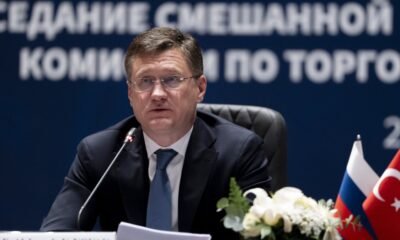
Gazprom, Russia’s state-controlled gas giant, and BOTAŞ, Türkiye’s state-owned pipeline and gas company, have extended their natural gas supply contract by three years on existing terms, Russian Deputy Prime Minister Alexander Novak said Friday.
“Gazprom and BOTAŞ signed the contract. The contract was extended for three years,” Novak told reporters on the sidelines of the meeting of the Turkish-Russian Intergovernmental Commission on Trade and Economic Cooperation in Istanbul.
Novak said the volumes and supply conditions will not change under the new contract.
Novak said Novatek, Russia’s largest liquefied natural gas producer, has also signed a contract to ship LNG to Türkiye.
“Deliveries will start on Jan. 1, 2027,” he said. “For now, the volumes are low, but increasing them is possible.”
Novatek has secured contracts to redirect LNG supplies previously destined for Europe to other markets, primarily China, from next year.
That follows the European Union’s decision to ban Russian LNG imports from Jan. 1 in response to Moscow’s actions in Ukraine.
Novak said Russia has shipped more than 20 million tons of oil products to Türkiye since the start of the year, most of it diesel fuel.
Nuclear power and grain
Nuclear energy is one of the most important areas of energy cooperation between Türkiye and Russia, Novak said.
Work is continuing on all four units of Türkiye’s first nuclear power plant, being built on the Mediterranean coast in Mersin province.
“The process of bringing the first unit into operation is expected to begin in December this year,” he said.
He said the two sides have also discussed having Turkish companies become partners in the Akkuyu project, and that work in that direction is continuing.
Novak said he raised resuming grain shipments across the Black Sea with Turkish officials. “Türkiye is interested in this, and we are as well,” he said. “We discussed logistics and security issues. All of them are on our agenda.”
Türkiye has become a partner in two offshore areas in Guinea-Bissau, a West African country, under an agreement signed with the U.S. oil major Chevron, and expects more such news to come from Libya, according to Energy and Natural Resources Minister Alparslan Bayraktar.
“God willing, we will give good news like this from Libya too,” Bayraktar said, according to a ministry statement on Friday. He spoke at the Bab-ı Ali Meetings in Istanbul, where he outlined Türkiye’s vision in energy and mining.
On Thursday, Bayraktar said state oil company Turkish Petroleum Corporation (TPAO) has formed a partnership with Chevron to explore for hydrocarbons in two offshore blocks in Guinea-Bissau.
Meanwhile, Bayraktar said Türkiye has started a new 500-megawatt electricity export to Aleppo, a city in northern Syria, bringing its total energy contribution to Syria to 800 megawatts.
He said Türkiye also exports electricity to Iraq. “We are contributing intensively to regional supply security in both electricity and natural gas,” he said.
He said the government is also considering a kind of “automatic capacity allocation” for on-site generation and consumption at capacities of up to 1 megawatt, to make such projects easier.
Bayraktar said Türkiye is building its economy around electrification, increasing the role of electricity in everything from buildings to agriculture to transportation.
Under the National Energy 2040 plan, Türkiye will raise oil and natural gas production while cutting demand for them by shifting use to electricity, he said.
“I am talking about a reduction of half a million barrels a day in crude oil,” he said. “That means a cut of almost 70 to 80 million tons of carbon emissions.”
Bayraktar said an energy transition is not possible without minerals. He said the government will announce a National Mining 2040 program, as it did for energy.


-

 Politics3 days ago
Another FETÖ escape network exposed in Istanbul crackdown
-
 Economy3 days ago
CBRT pauses 1-week repo auctions, raises lira reserve remuneration
-
 Economy2 days ago
Türkiye, Russia extend gas supply contract, sign LNG supply deal
-
 Economy3 days ago
Türkiye, Russia’s Tatneft inaugurate $330M petrochemical plant
-
 Politics2 days ago
Türkiye elections due in 2028, could be held 1-2 months early: VP
-
 Economy2 days ago
US reportedly pushed Venezuela, Iraq to consider leaving OPEC
-

 Sports3 days ago
Turkish clubs unite behind Beşiktaş after Georgian police violence
-
 Politics3 days ago
Experts say Türkiye-Qatar deal will strengthen Gulf security