
Economy
BoE keeps rates steady at 3.75% but future hike possible

The Bank of England (BoE) left the benchmark interest rate unchanged at 3.75% in a meeting on Thursday, even though inflation in the Britian has risen to a five-month high as the fallout from the Iran war continues to ratchet up fuel prices.
The decision was widely anticipated, with six members of the Monetary Policy Committee (MPC) voting to keep rates unchanged, while three backed a quarter-point increase to 4%.
Though borrowing rates were kept on hold, financial markets think it’s more likely than not that the bank will back an increase at one of the next two policy meetings, either in November or December.
“So far, higher global energy costs have had a limited effect on price and wage setting in the U.K.,” said BoE Governor Andrew Bailey.
“But the longer this volatility persists, the bigger the impact it will have on inflation, and the more likely it is we will need to raise bank rate to ensure that inflation falls back to our 2% target.”
Like other central banks, the inflation outlook will be key. Some have already decided to start raising borrowing costs again, including the U.S. Federal Reserve (Fed) on Wednesday.
The minutes accompanying the Bank of England’s decision showed that inflation is now expected to rise to around 4% in the first quarter of next year from the current 3.1% as households face another increase in their domestic energy bills. That would take inflation further above the bank’s target rate of 2%.
Interest rates in the U.K. had been trending downward from a 15-year high of 5.25% until the U.S. and Israel attacked Iran in late February. The Iran war led to sharp increases in oil and gas prices, partly because the crucial Strait of Hormuz has been largely closed to traffic ever since.
As well as impacting the cost of personal loans and mortgages, the uptick in interest rate expectations is a growing problem for the British government, as the servicing of its debt accounts for a higher proportion of its spending.

Türkiye will develop a project with the French Development Agency (AFD) to combat “sea snot,” or marine mucilage, under a new financing package worth approximately 600 million euros ($688.38 million), Environment, Urbanization and Climate Change Minister Murat Kurum said Friday.
The remarks by Kurum, who also serves as president of this year’s U.N. climate summit COP31, came after he met Thursday with AFD Director-General Christophe Lecourtier in Paris.
Türkiye in the past faced a plague of sea snot, a thick, slimy layer of organic matter known as marine mucilage, in the Sea of Marmara, posing a threat to marine life and the fishing industry.
The inner Sea of Marmara, which connects the Black Sea through the Bosporus to the Aegean Sea through the Dardanelles, lies in the middle of the most industrialized region of Türkiye.
Türkiye earlier this month signed a cooperation agreement with the Asian Infrastructure Investment Bank (AIIB) that will support environmental investments and climate change efforts.
The first phase of the deal will focus on environmental projects in the Marmara region, including the fight against sea snot, through an investment package worth around 400 million euros.
Kurum said Friday that the AFD was an important part of the COP31 process, stressing that access to financing was essential for implementing climate goals.
He praised the agency for supporting major projects in Türkiye and around the world.
“Together with the AFD, we will develop a project to combat sea mucilage under a new financing package worth approximately 600 million euros across Türkiye,” Kurum said.
The project will include increasing the share of renewable energy, improving the quality of wastewater treatment plants discharging into the seas and reducing nitrogen and phosphorus levels, he said.
“These steps will help restore oxygen levels and revive marine ecosystems,” Kurum added.
He said Türkiye was preparing for COP31 with strong support from the AFD and that the two sides would work together to implement the summit’s action agenda.
“We want to achieve together the targets set out on the road to Antalya,” Kurum said, referring to the southern Turkish city that will host COP31 in November.
Technical-level meetings
AFD’s Lecourtier said the momentum created by the COP summits since the Paris Agreement was signed in 2015 was important for France and the agency.
The agency’s main objective is to finance more than 6 billion euros worth of projects annually around the world, particularly in areas such as the transition to renewable energy, he said.
Lecourtier said Thursday’s meeting was important because these issues were already on the agenda of France-Türkiye relations.
“Minister Kurum mentioned adaptation efforts in the Sea of Marmara, the transition of Turkish industry to clean energy and the protection of biodiversity,” Lecourtier said.
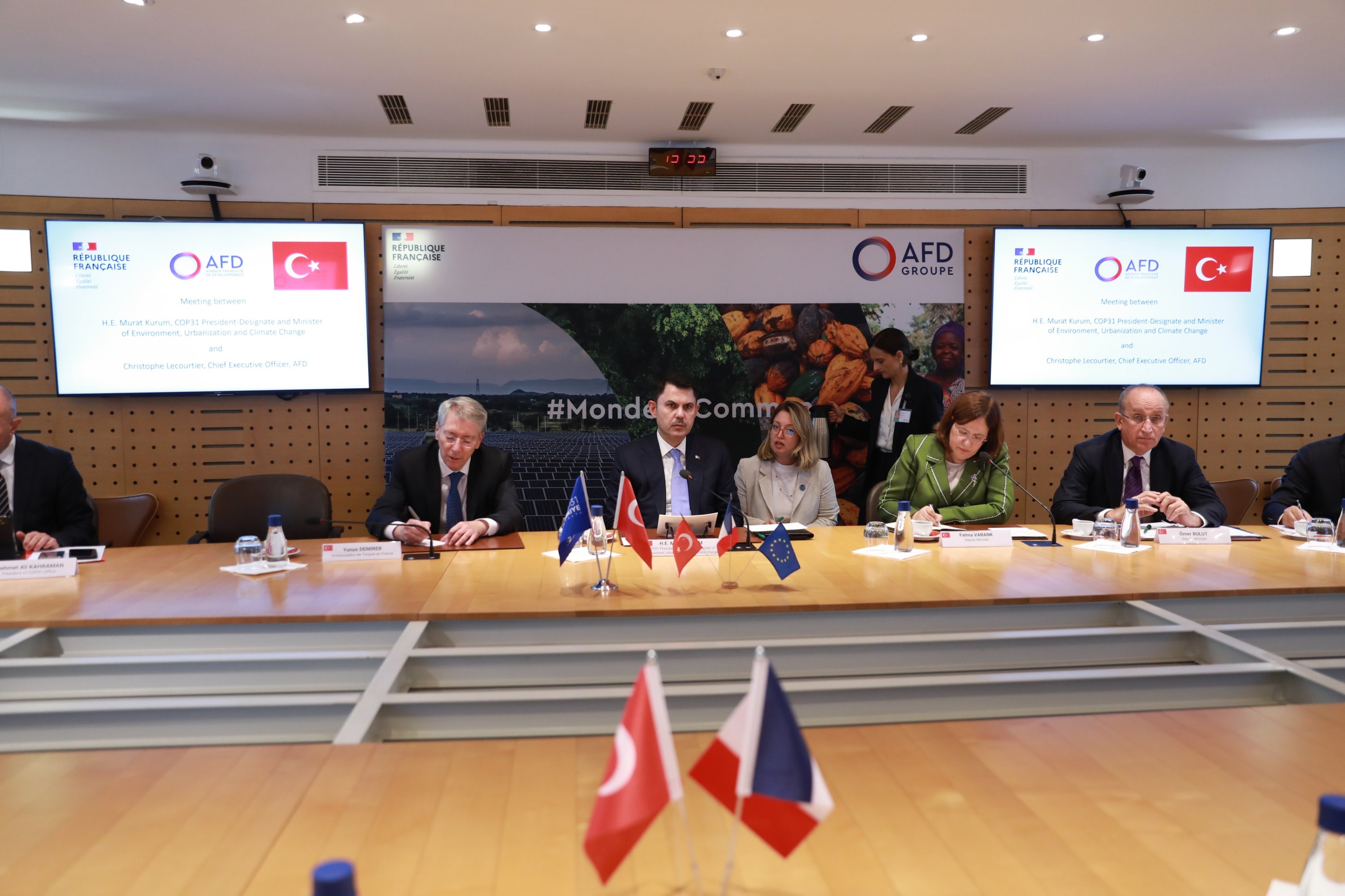
He added that the AFD had invested heavily over the past 15 years in projects fully aligned with the spirit of COP31.
“We will be able to take to Antalya the need for action represented by the minister and expressed with great determination,” Lecourtier said.
He added that the two countries would arrive at COP31 with concrete examples of bilateral cooperation, while also creating opportunities to address other partners and countries on additional issues.
“Bilateral cooperation between our countries will allow us to come to COP31 in Antalya with more to offer, both for France and Türkiye and for the rest of the world,” Lecourtier said.
“This is an extremely important moment, and it is a great honor to have been able to prepare for it together with the minister,” he added.
“Of course, many technical-level meetings will continue until COP31.”
COP31 Action Plan
Kurum said the global average temperature had risen by 1.43 degrees Celsius (2.57 degrees Fahrenheit) above preindustrial levels, warning that floods, droughts and other disasters were becoming increasingly widespread.
He stressed the need to implement targets aimed at tackling the climate crisis.
Kurum said the COP31 Action Plan was being addressed under 10 headings, adding that access to financing and technology would be crucial to implementing the targets.
He said a meeting Thursday with the International Federation of Red Cross and Red Crescent Societies (IFRC) in Geneva had once again highlighted the importance of early-warning systems in responding to disasters.
A project on early-warning systems will also be developed as part of COP31, he added.
Kurum also said he had held talks with World Trade Organization (WTO) Director-General Ngozi Okonjo-Iweala, during which they discussed the importance of trade, production and employment, as well as the need to establish the rules of the game around efforts to combat climate change.
He also reiterated that a strategic partnership had been established between the Organisation for Economic Co-operation and Development (OECD) and COP31.
He also highlighted Türkiye’s reconstruction efforts following the devastating February 2023 earthquakes.
“Türkiye has demonstrated its determination in every field and put that determination into practice,” Kurum said. “The latest example was in the earthquake zone. We completed and delivered 455,000 homes to citizens in two years.”
“We want to share Türkiye’s experience and accumulated knowledge with the entire world,” he added.
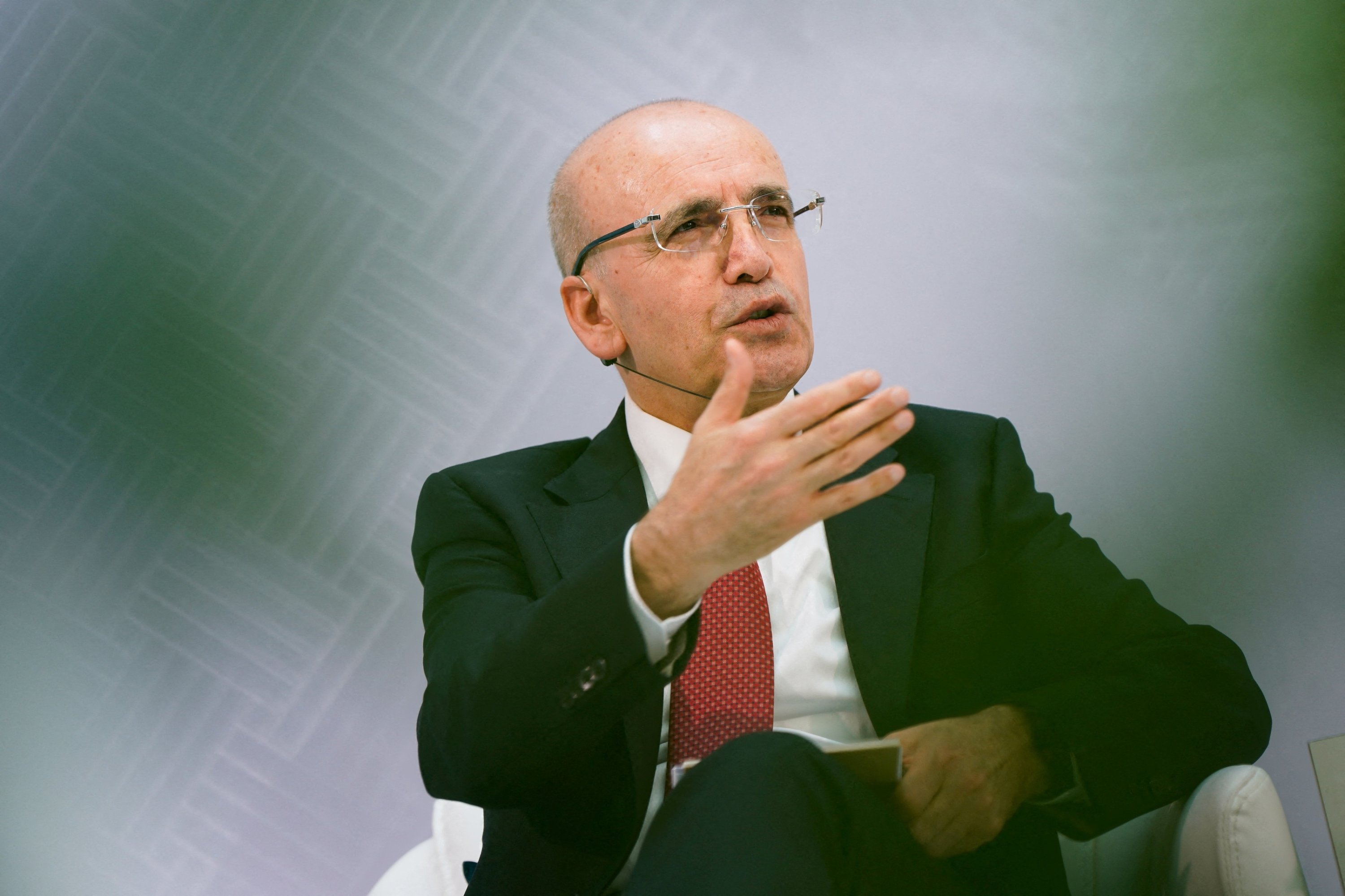
Türkiye’s liquidation of investment funds worth $18.3 billion will not put pressure on the Borsa Istanbul Stock Exchange (BIST), as regulatory changes should prevent any contagion risk, Treasury and Finance Minister Mehmet Şimşek said Friday, adding that authorities would monitor the market closely.
“There is no widespread systemic risk. There is no structural problem in the stock market or the fund market. 90% of the fund market continued to function healthily,” Şimşek told the private broadcaster NTV.
Turkish authorities announced Thursday a series of measures to ensure market stability after some investment funds defaulted on redemption requests, triggering steep falls in Türkiye’s main stock index.
The capital markets regulator suspended trading and ordered the liquidation of 131 investment funds managed by seven portfolio management companies, including Tera Pörtfoy, Pusula Pörtfoy and Hedef Pörtfoy, on the TEFAS electronic fund platform.
The assets under management of liquidated funds exceed TL 890 billion ($18.3 billion).
The Capital Markets Board (SPK) mandated Friday the country’s largest public and private banks, Ziraat and Işbank, to oversee the liquidation of the funds.
“The liquidation process will proceed in a sound manner,” said Şimşek Friday.
Authorities jailed four executives pending trial and imposed travel bans and asset restrictions on 51 other people Friday in investigations into alleged market manipulation, Justice Minister Akın Gürlek said.
The probe followed a criminal complaint by the SPK over alleged manipulative transactions in some investment funds and shares, Gürlek said.
Şimşek said authorities would monitor markets, although he said regulatory changes should have reduced the risk of volatility recurring.
The Financial Stability Committee, Türkiye’s top coordinating body for financial-sector risks and crisis response, had convened on Monday to discuss measures aimed at preventing systemic risks in the markets.
The committee said problems were concentrated in a specific segment of the fund market and were “temporary and manageable in nature.”
“What happened in the markets … was essentially a credit and liquidity problem in a limited number of funds,” said Şimşek.
The authorities’ actions helped the main index recoup some of its losses Thursday, but it is still down around 8% since last Friday’s close. The BIST 100 was down around 1.5% at 0754 GMT, after closing 2.95% higher Thursday.
The SPK said Friday Ziraat Bank and Işbank would convert fund assets into cash and distribute proceeds to investors, with the liquidation process expected to be completed within three months unless extended.
Işbank was mandated to oversee the liquidation of Tera Pörtfoy’s funds and Ziraat to oversee funds established by A1 Capital, Atlas, Bulls, Hedef, Pardus and Pusula, the regulator said.
The four jailed suspects included a fund board chair and board members, Gürlek said, adding that the court ordered restrictions on accounts and assets to prevent them from being transferred.
Authorities also launched proceedings against people accused of using social media to manipulate capital markets, with 16 suspects jailed pending trial, the minister added.
Şimşek said free funds, or hedge funds, operate under relatively loose regulations worldwide and are generally used by qualified investors.
The sector expanded after such funds began trading on the TEFAS platform in 2019, he said.
“We are talking about a limited number of funds,” Şimşek said. “There are 2,038 funds in Türkiye, and we are talking about 131 of them.”
Şimşek said around 90% of the fund market continued to operate normally, while the funds in question accounted for approximately 10% to 11% of total fund assets.
“This does not mean that these funds have no assets,” he said. “The SPK will carry out the liquidation process in line with established principles.”
Şimşek said a fund guide introducing stricter rules for free funds had been published at the end of August, bringing the sector closer to international standards.
“Some areas have transition periods to allow the market to adapt,” Şimşek said. “The collateral structure has been strengthened. We have taken steps to address concerns regarding collateral.”
He added that regulations introduced in 2024 requiring money market funds to invest in Treasury securities considered to carry virtually no risk would also help address current concerns.
Şimşek also said there was a clear need for stricter rules in the non-bank finance sector and that authorities are working on regulations.
Türkiye is opening the fourth main runway at Istanbul Airport on Friday, with officials saying it will reduce taxiing and airborne times while helping airlines save fuel.
The new east-west runway is the airport’s first operating in that direction.
Istanbul Airport currently has three main and two reserve runways oriented north-south. The new runway brings the total number of runways to six, including four main runways.
The hub is ultimately planned to have nine runways, comprising six main and three reserve runways.
The new runway is 2,820 meters long and 45 meters wide.
It will be used particularly for flights to Anatolia, Central Asia and the Arabian Peninsula, Transport and Infrastructure Minister Abdulkadir Uraloğlu said Thursday.
Because aircraft will be able to take off in an east-west direction, they will no longer need to turn east again after departure, he said.
This is expected to reduce taxiing and airborne times, resulting in savings in fuel and time. The runway is expected to be particularly useful for domestic and eastbound routes.
The new east-west runway will initially be used only for takeoffs, according to officials. The airport also plans to introduce simultaneous four-runway operations in the future.
Istanbul Airport began simultaneous independent triple-parallel runway operations in April 2025, becoming the first airport in Europe to do so.
The gleaming glass-and-steel structure along the Black Sea coast has become one of the world’s most important transit centers since becoming fully operational in April 2019.
Istanbul has overtaken London Heathrow to become the world’s most internationally connected airport, a report by global travel intelligence partner OAG said Wednesday.
It has possible connections to 337 global destinations, with national flag carrier Turkish Airlines operating 80% of flights at the airport, the report said.
Istanbul, meanwhile, recently overtook Heathrow as Europe’s busiest airport by passenger numbers. Industry groups and officials, including the London hub’s CEO himself, had been expecting that to happen this year or the next.
The hub can handle 90 million passengers annually in the current phase. The figure is nothing compared to its potential capacity to serve 200 million after completing all phases.
Istanbul Airport served a record 84.5 million passengers in 2025, making it the second-busiest airport in Europe after London Heathrow and the eighth-busiest worldwide.
It aims to reach the 90 million-passenger mark this year.
The number of active airports Türkiye has risen to 58 from 26 in 2002, with the government renovating 16 previously inactive airports and building 16 new ones.
The number is expected to reach 60 as airports currently under construction are completed.
Passenger traffic on domestic and international routes rose to a record 247 million in 2025, putting Türkiye third in Europe and seventh globally.
Turkish authorities jailed four people pending trial and imposed travel bans and asset restrictions on 51 others Friday in investigations into alleged market manipulation, a day after authorities rolled out measures to support markets after recent volatility.
The investigation followed a criminal complaint by the Capital Markets Board (SPK) over alleged manipulative transactions in some investment funds and shares, Justice Minister Akin Gürlek said.
Turkish authorities did not name the people affected.
The four jailed suspects included a fund board chair and board members, Gürlek said, adding that the court ordered restrictions on accounts and assets to prevent them from being transferred.
The announcement came a day after authorities moved to shore up financial stability after a small number of funds struggled to meet client withdrawals amid a stock market selloff.
The capital markets board ordered liquidation of several investment funds worth around $18.3 billion managed by seven portfolio management companies.
Authorities also launched proceedings against people accused of using social media to manipulate capital markets, with 16 suspects jailed pending trial, Gürlek said.
Turkish capital markets regulator appointed the country’s largest public and private banks Friday to oversee the liquidation of 131 investment funds managed by seven portfolio companies, following earlier decisions to suspend trading in the funds.
The assets under management of liquidated funds exceed TL 890 billion ($18.3 billion).
The Capital Markets Board (SPK) said Ziraat Bank and Işbank would convert fund assets into cash and distribute proceeds to investors, with the liquidation process expected to be completed within three months unless extended.
Işbank was mandated to oversee the liquidation of Tera Pörtfoy’s funds and Ziraat Bank to oversee funds established by A1 Capital, Atlas, Bulls, Hedef, Pardus and Pusula, the regulator said.
Turkish authorities announced Thursday a series of measures to contain market volatility after some investment funds defaulted on redemption requests.
A U.S. government website employed an AI model from a Chinese company for users to search proposed federal regulations, despite the FBI accusing the model’s developer, Alibaba, of “malicious” copying of U.S. rival Anthropic’s technology.
The website of the Federal Register, which is run by the National Archives, had the search tool using Alibaba’s Qwen model available Wednesday along with other search options. It was unclear when it was deployed.
The Qwen-powered search was taken down Wednesday around the same time social media posts appeared about it, according to screenshots and an archived version of the site’s source code reviewed by Reuters.
The FBI last week accused Alibaba of copying Anthropic’s models to build its own AI tools, raising tensions between Washington and Beijing ahead of a meeting next week between the countries’ leaders.
U.S. officials said then that Chinese AI companies were engaged in “malicious” copying of U.S. technology on an “industrial scale.”
The FBI declined to comment Thursday. The National Archives and the White House did not respond to requests for comment. A spokesperson for the Chinese embassy in Washington said the allegations of copying were “unfounded.”
The U.S. government’s use of Qwen emerged amid a global reckoning about AI safety and a U.S. debate over whether regulatory safeguards on AI are needed or would put the country at a competitive disadvantage.
AI experts said the use of the Chinese AI tool on the Federal Register’s website may not have posed national security risks. But it raised questions about whether the federal government was contradicting its own messages about Chinese AI models.
Daniel Castro, president of the Information Technology and Innovation Foundation, said there was a disconnect between the fierce U.S.-China competition to build superior AI models and a U.S. agency choosing to use a Chinese-made AI model.
“It’s one of the most insane things I’ve ever seen,” he said.
The Federal Register website, which provides a daily list of newly proposed regulations, offered the Qwen model as a tool to browse public comments.
Qwen is an open-weight model, meaning key components of the system are publicly available. Developers can download and modify the model for specific uses, often at lower cost than closed models from companies such as Anthropic and OpenAI.
Security experts say open-weight models can run on a company’s own IT infrastructure, giving organizations greater control over sensitive data that might otherwise be shared with outside providers.
Georgetown Law Professor Anupam Chander said the use of Qwen did not appear to present an immediate cybersecurity risk, though that depends on how the model was trained. The Federal Register website’s content is already public, so the model was not working with sensitive government information.
Senate Democrat Mark Warner, vice chair of the Senate Intelligence Committee, said in a statement that the risk depends on whether U.S. data left the government’s security boundary and was processed on Alibaba-controlled systems.
In April, the U.S. House committees on China and homeland security sent a letter to Airbnb, which also uses Qwen, asking for details about its use as part of an investigation into the “national security risks created by the integration” of Chinese AI tools into platforms used by Americans.


-
 Economy3 days ago
Trump shifts US military aid toward Latin American allies
-
 Economy3 days ago
UniCredit reportedly wants Commerzbank CEO, chair to leave
-
 Politics2 days ago
39 suspects captured in Istanbul-based anti-terror ops
-
 Economy3 days ago
Diesel prices in Türkiye near $2 per liter as fuel costs hit record high
-
 Economy2 days ago
UK inflation picks up to 3.1% in August on rising fuel prices
-
 Economy2 days ago
‘Tipping point’: EU to use ‘all tools’ to rebalance China trade
-
 Economy2 days ago
Fed hikes rates for 1st time in 3 years despite Trump pressure
-
 Politics2 days ago
Türkiye concerned over Russia-Ukraine war spillover, vows work for peace