
Economy
Far-right AfD plans talks to get Russian gas back for Germany

Germany’s far-right AfD leadership and Russian President Vladimir Putin’s top economic envoy have begun preparations to meet next year to discuss restarting gas supplies to Europe’s biggest economy, a report said Friday.
The discussions for a meeting as early as March underline the close relations between Moscow and the AfD, which, although blocked from power by a coalition of its rivals, is Germany’s most popular party with voters.
The meeting would be attended by Kirill Dmitriev, who is a close adviser to Putin and who heads Russia’s sovereign wealth fund, as well as AfD co-leaders Alice Weidel and Tino Chrupalla, Reuters reported, citing people familiar with the plan.
A spokesperson for the AfD and a representative for Dmitriev declined to comment.
Before the sanctions imposed over Moscow’s full-scale invasion of Ukraine in 2022, Russia supplied more than a third of Germany’s crude oil imports and more than half of its natural gas.
The meeting would only happen if a peace framework was agreed first between Russia and Ukraine, and the organizers hoped it would bring together the AfD, Russia and the United States, one of the people said. Possible locations for the summit included Israel, the United Arab Emirates (UAE) or India, they added.
Weidel advocated the end of a boycott of Russian oil and gas to bolster Germany’s flagging economy in an interview with Reuters in June.
Dmitriev was present at a meeting this month in Moscow with U.S. representatives Steve Witkoff and Jared Kushner.
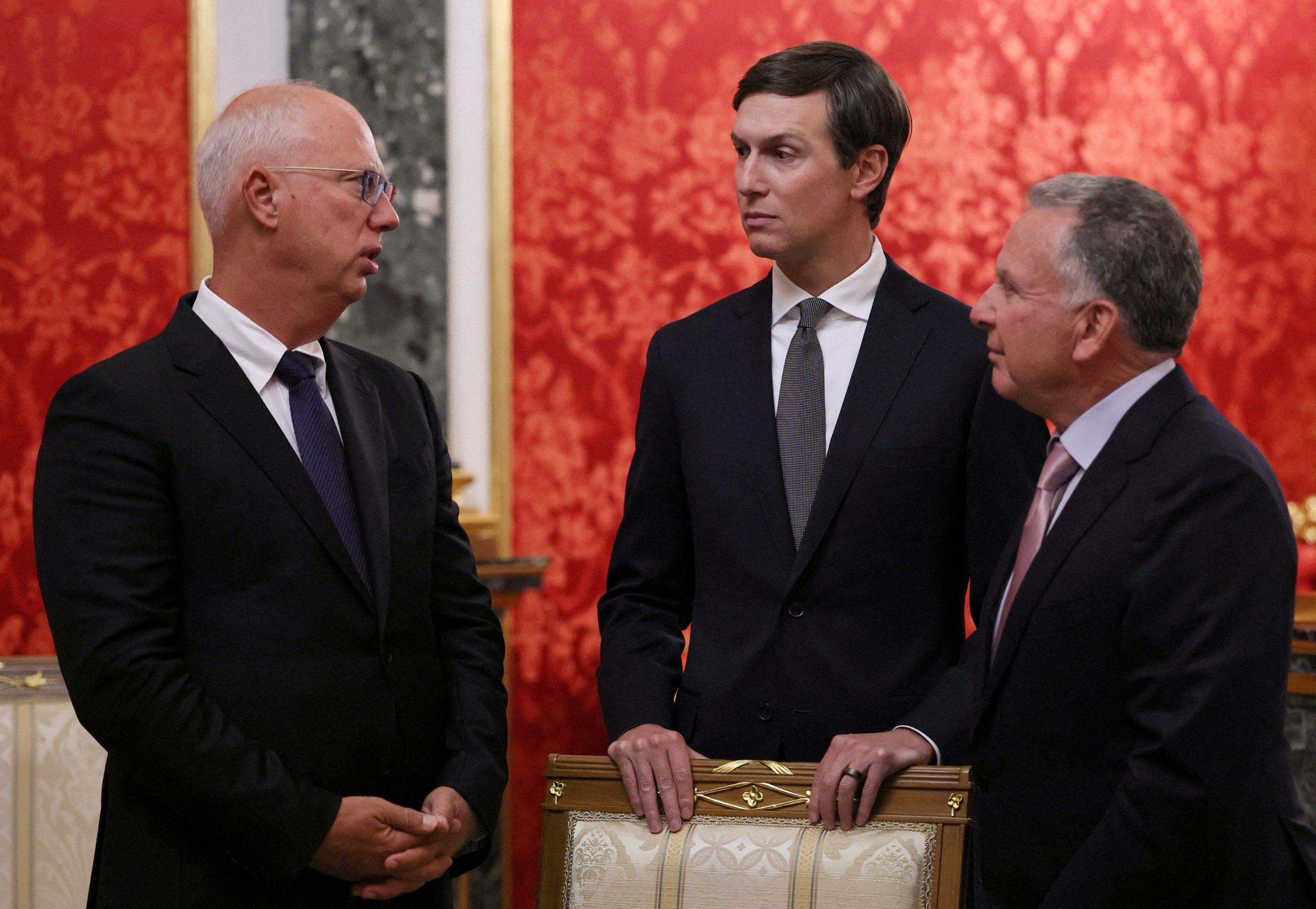
Organizers hoped Witkoff and Kushner would also attend the gas meeting, which would examine reopening the Russian Nord Stream gas pipelines, said the person.
A senior U.S. official told Reuters that Witkoff and Kushner have not been informed about or invited to the proposed summit.
AfD hopes to score with voters
Any gathering would be symbolic, since the AfD does not govern. But the preparations highlight the fragility of Germany’s political system, where the longstanding refusal of mainstream parties to work with the far-right is being tested by the AfD’s electoral success.
The AfD has just won a major victory to become the biggest party in a state election in Saxony-Anhalt, and faces another test of its popularity Sunday in an election in the state of Mecklenburg-Western Pomerania. The Russian Nord Stream gas pipelines enter Germany in this state.
The American Chamber of Commerce in Moscow welcomed the idea as “a positive and timely step.”
“Involving Germany as a key European economy can create a broader platform for discussing issues that are significant both for these countries and for the rest of the world,” said Robert Agee, President of AmCham Russia.
Germany has struggled to recover from the shock caused by the shutdown of the key undersea Nord Stream pipelines, some of which were crippled by explosions in September 2022.
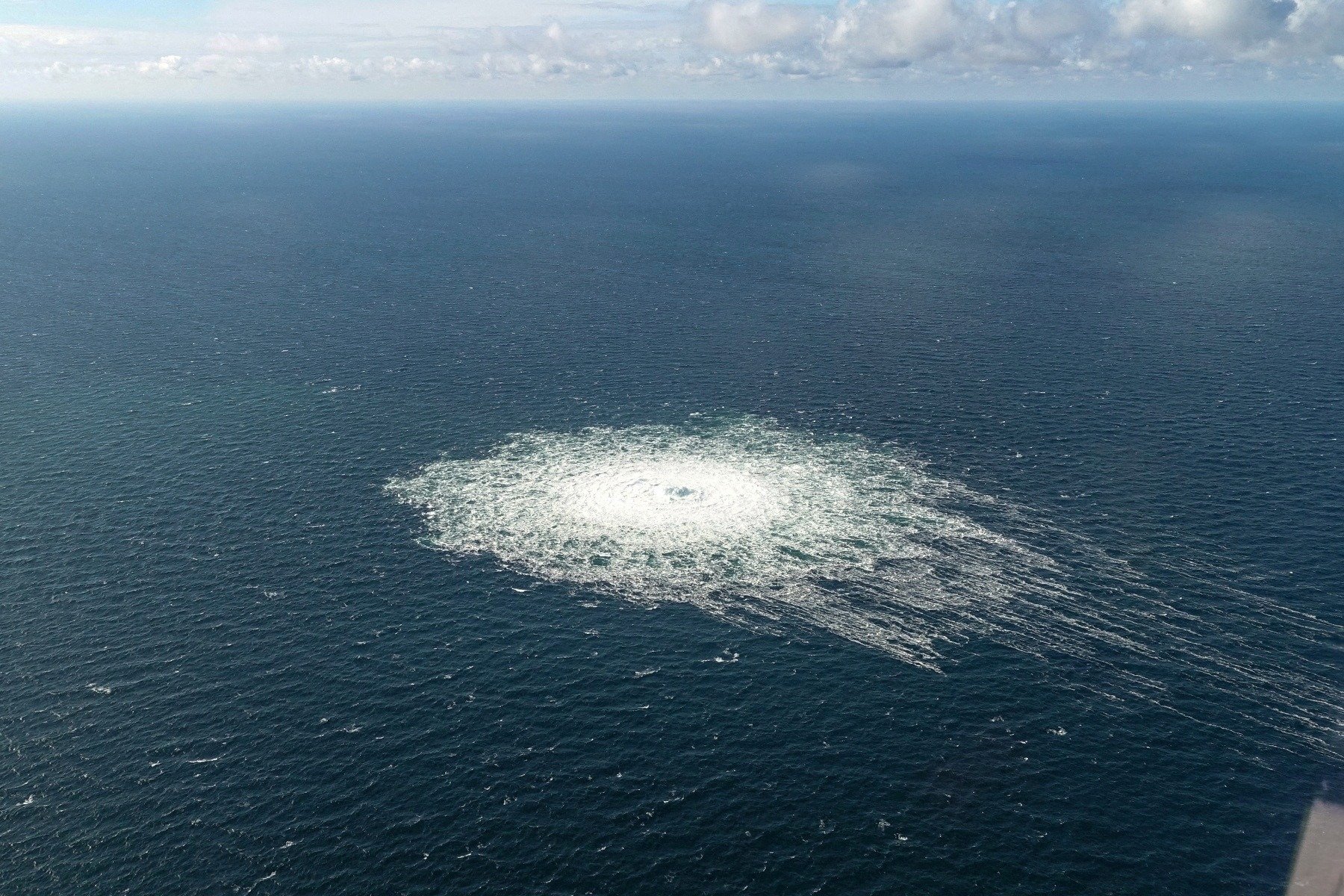
But any effort to restart Russian gas supplies or Nord Stream would stoke fierce resistance, both in Germany and among its allies, particularly in Eastern Europe.
“Germany cannot become dependent on Russia again,” said Michael Kellner, a Green lawmaker who was in charge of German energy policy in government during the crisis triggered by the cutoff of Russian gas following its invasion of Ukraine.
“We cannot repeat the mistakes of the energy crisis,” he said. “It cost us 50 billion euros. We cannot want to go back to that. It would be treason. Putin is using the AfD to his own ends.”
Roderich Kiesewetter, a member of parliament from Chancellor Friedrich Merz’s Christian Democrats, said the AfD meeting could embolden those in his party who also favored buying Russian gas.
“The AfD is on Russia’s side, willing to betray both Ukraine and Germany. Russia uses energy, especially Nord Stream, as a hybrid weapon for military purposes. Reopening Nord Stream would be a disaster for European security and isolate Germany.”
The AfD has framed its call for a resumption of Russian gas supplies as pragmatic, with Weidel describing “cheap energy from Russia” as “the secret of the success of ‘Made in Germany.'”
The AfD hopes the meeting can illustrate their competence in foreign policy and show up the government for inaction in tackling high energy prices, said one of the sources.
Germany’s support for Ukraine has become increasingly divisive.
The country’s relationship with Russia carries more weight in the east, which was under Soviet rule until the fall of the Berlin Wall more than 35 years ago. Many there take a sympathetic stance towards Russia and a critical view of Germany’s military protector, the United States.

A security research company has managed to break into OpenAI’s internal systems using the latest software from Anthropic, the firm said Friday, exposing how quickly the technology can carry out sophisticated cyberattacks.
The researchers from security firm Hacktron said they found a security flaw in OpenAI’s public help forum, run by the Discourse platform, that allowed them to take control of the site.
“We immediately reported the initial vulnerability to OpenAI and Discourse and worked with them to coordinate the patch,” Hacktron said in a blog post.
“We appreciate their attention to detail and fast resolution of this issue,” the post added.
OpenAI confirmed the flaw was fixed within about 14 hours of being notified and paid the researchers a $6,500 reward.
“We thank the researchers for contacting us and sharing their findings. We narrowed the permissions on Community sign-in tokens and revoked affected tokens and sessions,” said Drew Pusateri, an OpenAI spokesperson.
The Hacktron researchers said they initially used Anthropic’s Claude Opus 4.8 to identify and exploit the software flaw, but struggled to make it work consistently.
After Anthropic released Claude Opus 5, the researchers said the newer model produced a working hack within about three hours.
The hackers did not use Claude Mythos, a more capable Anthropic model that is restricted to a small group of vetted cyber-defense organizations.
Anthropic has described Mythos as having the strongest cybersecurity capabilities of any model it has built.
Hacktron said the underlying software flaw is not unique to OpenAI and is used across many companies’ products, including those made by Slack and Meta.
The firm said it is continuing similar tests at other companies.
The case adds to growing concern among security experts that AI tools are making it faster and cheaper to carry out sophisticated cyberattacks that once required specialized teams and months of work.
Hostile actions by “unfriendly” countries have played a role in Russia’s decision to take control of the assets of Swiss food giant Nestle and French retailer Auchan, the Kremlin said Friday.
The move, announced in a decree by President Vladimir Putin, is the most significant action against Western firms since the seizure of the Russian assets of French dairy company Danone and Danish brewer Carlsberg in 2023.
“We are talking about European companies from unfriendly countries,” said Kremlin spokesperson Dmitry Peskov, adding that these states were “currently involved in the most active manner in military actions against our country.”
He did not name France or Switzerland. But Russia says Western countries that supply weapons to Ukraine, including France, are effectively parties to the conflict.
Switzerland does not provide arms to Ukraine but has angered Russia by imposing sanctions against it. The Swiss government expressed concern at Putin’s move and said it was supporting Nestle in efforts to have it reversed.
Nestle, maker of Nescafe coffee and KitKat chocolate bars, said it was assessing the situation.
“Nestle is committed to taking all necessary steps to protect its rights and ensure continuity of business operations in the interests of all stakeholders, particularly its employees,” the company said in a statement.
It declined to comment further on what action it was considering. Nestle shares were down 2.4% at 1340 GMT.
The move comes amid deep strains between Russia and Europe. Many European governments accuse Moscow of waging a campaign of sabotage across the continent, an allegation Russia denies.
Tighter control
Russia has steadily tightened its grip on foreign-owned assets since launching its invasion of Ukraine in 2022. A 2023 decree signed by Putin allows assets from countries Moscow deems “unfriendly” to be placed under temporary administration.
Moscow has also used the framework to raise funds through forced sales, exit taxes and discounts, while rewarding Kremlin-linked insiders.
According to a 2025 estimate by Moscow law firm NSP, the Russian state has seized more than $50 billion of private property, including assets belonging to foreign companies that exited Russia, since the start of the war.
The Russian assets of Nestle and Auchan were transferred to temporary control by L.E.V. Management, a little-known company with no public profile.
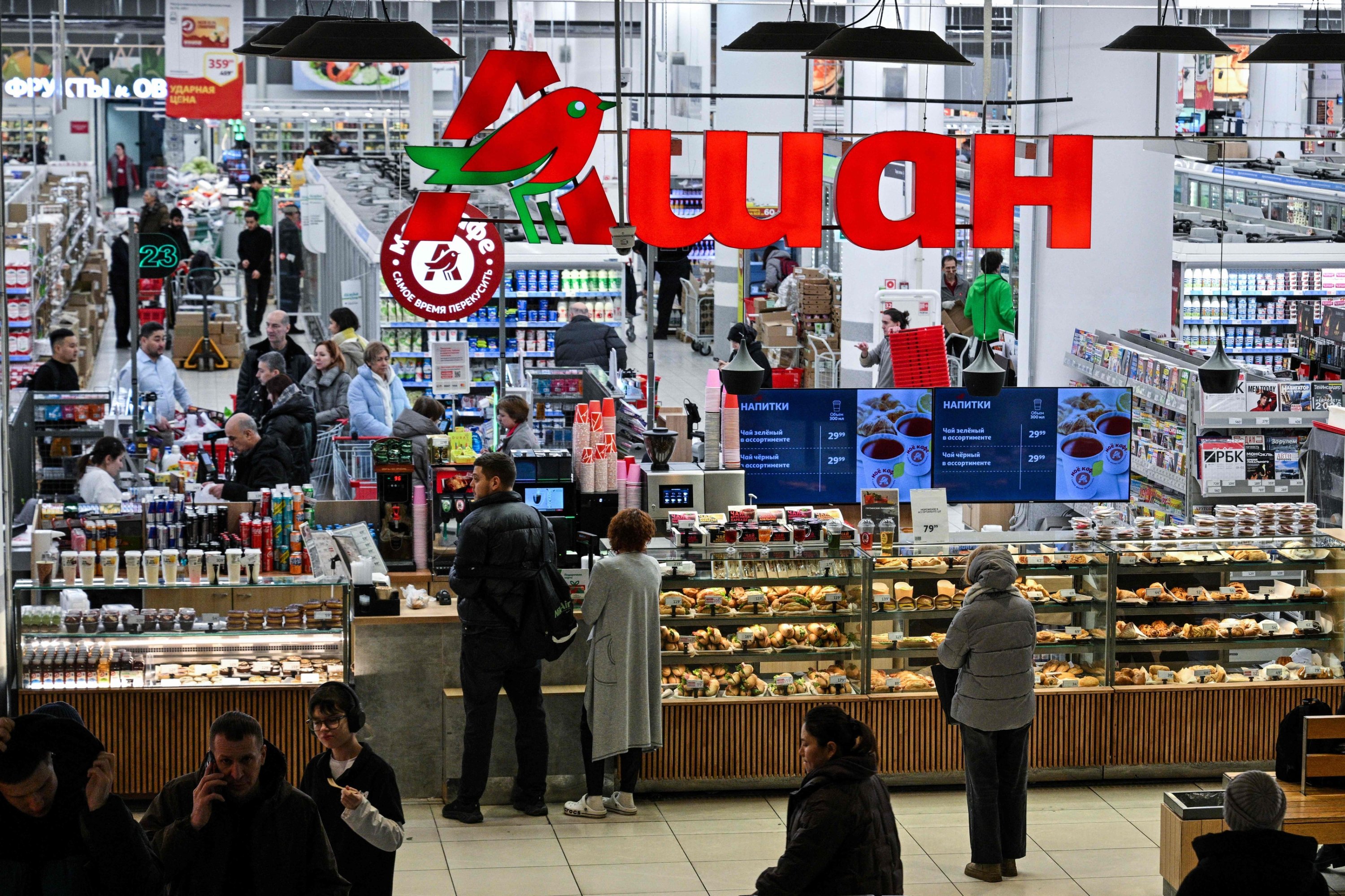
Auchan, which runs 230 stores and an online business in Russia, employing about 30,000 people, declined to comment.
Temporary administration
Nestle has six factories in Russia producing coffee, pet care and infant formula products. It generated sales of about 2 billion Swiss francs ($2.4 billion) in Russia in 2021, the last year it released figures, and has about 7,000 employees there.
That amounted to about 2% of group sales, although analysts estimate the contribution has declined since Nestle scaled back operations in Russia.
Nestle has suspended most sales, non-essential imports and exports, advertising and capital investment in Russia, said Bank Vontobel analyst Jean-Philippe Bertschy, who estimates the country now accounts for around 1% of group sales.
“While negative for sentiment and raising the prospect of an asset impairment or unfavorable disposal, we expect a marginal financial impact, given Russia’s limited contribution to group sales,” he said.
Russia’s Kommersant newspaper previously reported that a company called KS Logistika asked Putin to place Nestle’s assets under temporary administration, arguing that existing management was preventing expansion.
In previous cases, temporary administration has often been followed by state expropriation, with assets later transferred to Kremlin-linked individuals or companies. Peskov said only temporary administration was under consideration for now.
Other Western companies have sold Russian assets or handed them to local managers in response to sanctions or the threat of state intervention.
Nestle has defended its continued presence in Russia by arguing that it supplies essential food products.
Kepler Cheuvreux analyst Jon Cox said the development did not bode well for Nestle.
“Ultimately, Nestle may end up losing those assets – around 2% of its sales and cash tied up in Russia – for the foreseeable future and any compensation is unlikely to be an offset,” he said.
Trade Minister Ömer Bolat held talks with Italian Deputy Prime Minister Antonio Tajani and leading business representatives in Rome, focusing on expanding bilateral trade and deepening production ties between the two countries.
Bolat said on Turkish social media platform NSosyal on Friday that the round-table meeting focused on integrated supply chains across key sectors, including automotive, aerospace, defense, energy, logistics, manufacturing, textiles, and machinery.
He emphasized that Türkiye and Italy are not merely commercial partners but key components of a joint manufacturing ecosystem, particularly in the automotive industry.
Highlighting Türkiye’s role within the EU Customs Union, Bolat noted that preserving strong production networks is vital for the competitiveness of both Türkiye and Europe.
Participants explored opportunities for joint ventures in third countries and deeper cooperation in future-focused fields such as green energy, digitalization, space, advanced manufacturing, and healthcare.
Italian foreign direct investment in Türkiye has reached $4 billion across 1,645 companies, while Turkish investments in Italy surpassed $1 billion.
The minister added that under the leadership of President Recep Tayyip Erdoğan, the two historic strategic partners will continue to advance their complementary economic partnership.
Türkiye will develop a project with the French Development Agency (AFD) to combat “sea snot,” or marine mucilage, under a new financing package worth approximately 600 million euros ($688.38 million), Environment, Urbanization and Climate Change Minister Murat Kurum said Friday.
The remarks by Kurum, who also serves as president of this year’s U.N. climate summit COP31, came after he met Thursday with AFD Director-General Christophe Lecourtier in Paris.
Türkiye in the past faced a plague of sea snot, a thick, slimy layer of organic matter known as marine mucilage, in the Sea of Marmara, posing a threat to marine life and the fishing industry.
The inner Sea of Marmara, which connects the Black Sea through the Bosporus to the Aegean Sea through the Dardanelles, lies in the middle of the most industrialized region of Türkiye.
Türkiye earlier this month signed a cooperation agreement with the Asian Infrastructure Investment Bank (AIIB) that will support environmental investments and climate change efforts.
The first phase of the deal will focus on environmental projects in the Marmara region, including the fight against sea snot, through an investment package worth around 400 million euros.
Kurum said Friday that the AFD was an important part of the COP31 process, stressing that access to financing was essential for implementing climate goals.
He praised the agency for supporting major projects in Türkiye and around the world.
“Together with the AFD, we will develop a project to combat sea mucilage under a new financing package worth approximately 600 million euros across Türkiye,” Kurum said.
The project will include increasing the share of renewable energy, improving the quality of wastewater treatment plants discharging into the seas and reducing nitrogen and phosphorus levels, he said.
“These steps will help restore oxygen levels and revive marine ecosystems,” Kurum added.
He said Türkiye was preparing for COP31 with strong support from the AFD and that the two sides would work together to implement the summit’s action agenda.
“We want to achieve together the targets set out on the road to Antalya,” Kurum said, referring to the southern Turkish city that will host COP31 in November.
Technical-level meetings
AFD’s Lecourtier said the momentum created by the COP summits since the Paris Agreement was signed in 2015 was important for France and the agency.
The agency’s main objective is to finance more than 6 billion euros worth of projects annually around the world, particularly in areas such as the transition to renewable energy, he said.
Lecourtier said Thursday’s meeting was important because these issues were already on the agenda of France-Türkiye relations.
“Minister Kurum mentioned adaptation efforts in the Sea of Marmara, the transition of Turkish industry to clean energy and the protection of biodiversity,” Lecourtier said.
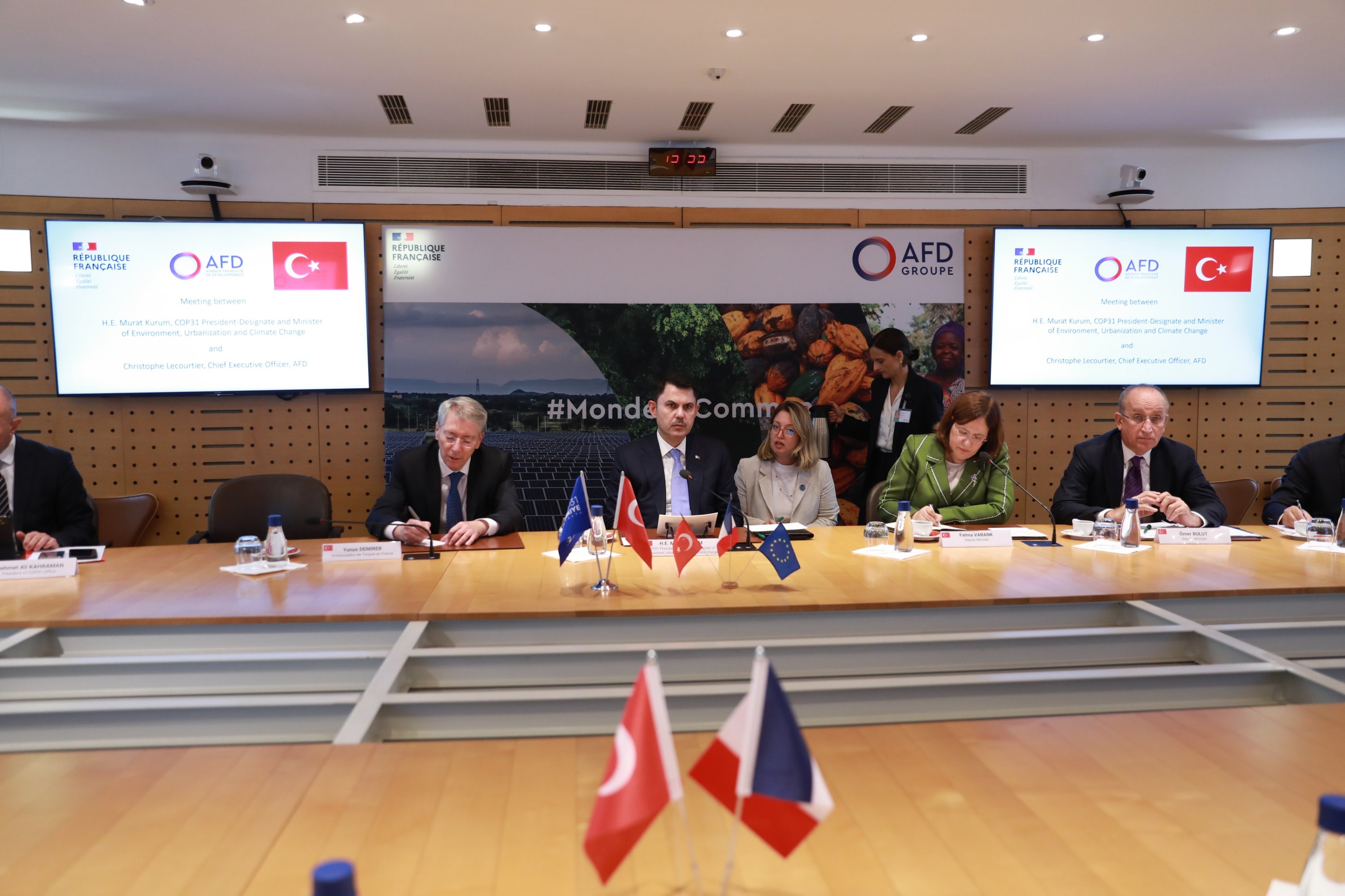
He added that the AFD had invested heavily over the past 15 years in projects fully aligned with the spirit of COP31.
“We will be able to take to Antalya the need for action represented by the minister and expressed with great determination,” Lecourtier said.
He added that the two countries would arrive at COP31 with concrete examples of bilateral cooperation, while also creating opportunities to address other partners and countries on additional issues.
“Bilateral cooperation between our countries will allow us to come to COP31 in Antalya with more to offer, both for France and Türkiye and for the rest of the world,” Lecourtier said.
“This is an extremely important moment, and it is a great honor to have been able to prepare for it together with the minister,” he added.
“Of course, many technical-level meetings will continue until COP31.”
COP31 Action Plan
Kurum said the global average temperature had risen by 1.43 degrees Celsius (2.57 degrees Fahrenheit) above preindustrial levels, warning that floods, droughts and other disasters were becoming increasingly widespread.
He stressed the need to implement targets aimed at tackling the climate crisis.
Kurum said the COP31 Action Plan was being addressed under 10 headings, adding that access to financing and technology would be crucial to implementing the targets.
He said a meeting Thursday with the International Federation of Red Cross and Red Crescent Societies (IFRC) in Geneva had once again highlighted the importance of early-warning systems in responding to disasters.
A project on early-warning systems will also be developed as part of COP31, he added.
Kurum also said he had held talks with World Trade Organization (WTO) Director-General Ngozi Okonjo-Iweala, during which they discussed the importance of trade, production and employment, as well as the need to establish the rules of the game around efforts to combat climate change.
He also reiterated that a strategic partnership had been established between the Organisation for Economic Co-operation and Development (OECD) and COP31.
He also highlighted Türkiye’s reconstruction efforts following the devastating February 2023 earthquakes.
“Türkiye has demonstrated its determination in every field and put that determination into practice,” Kurum said. “The latest example was in the earthquake zone. We completed and delivered 455,000 homes to citizens in two years.”
“We want to share Türkiye’s experience and accumulated knowledge with the entire world,” he added.
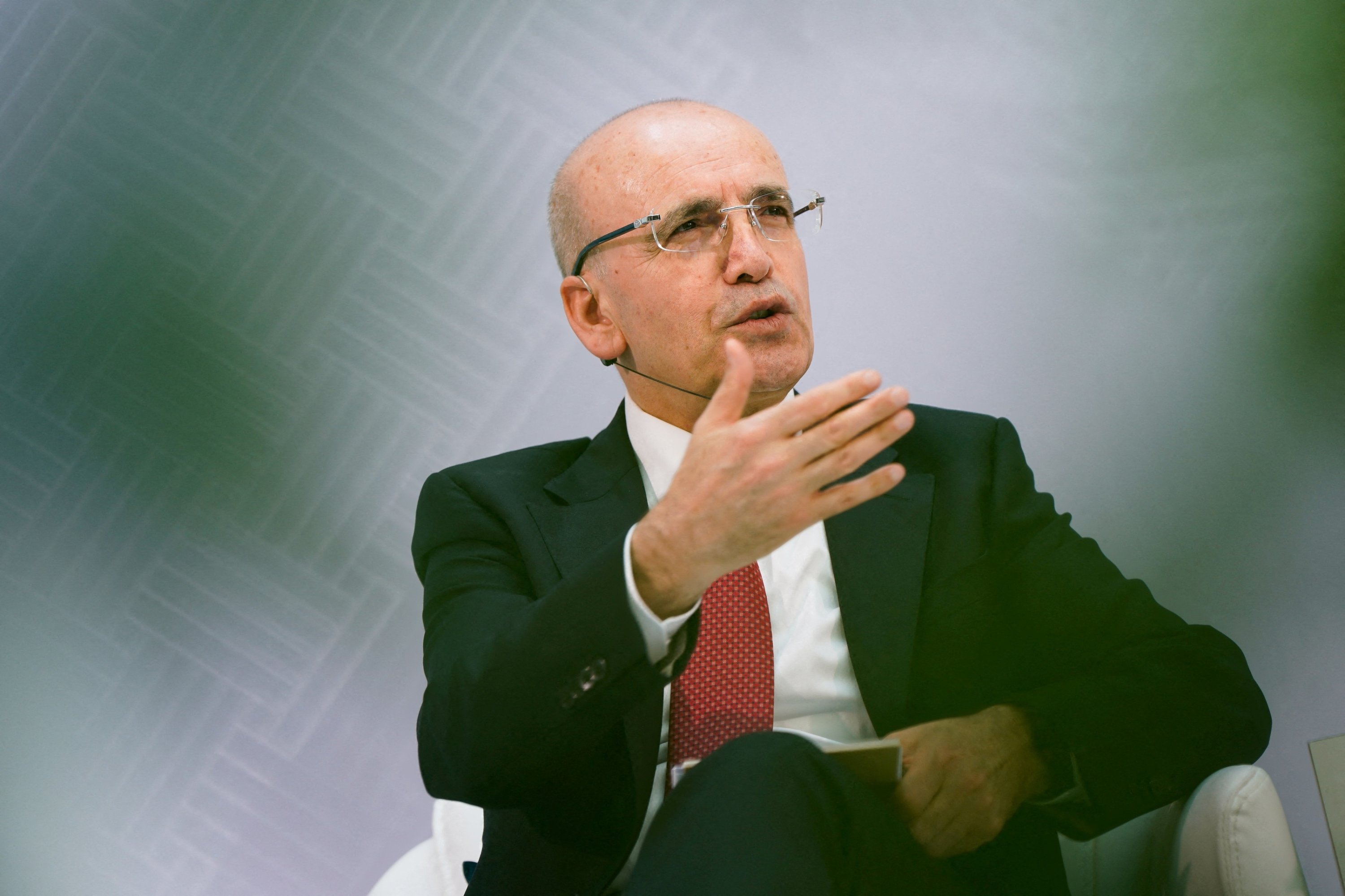
Türkiye’s liquidation of investment funds worth $18.3 billion will not put pressure on the Borsa Istanbul Stock Exchange (BIST), as regulatory changes should prevent any contagion risk, Treasury and Finance Minister Mehmet Şimşek said Friday, adding that authorities would monitor the market closely.
“There is no widespread systemic risk. There is no structural problem in the stock market or the fund market. 90% of the fund market continued to function healthily,” Şimşek told the private broadcaster NTV.
Turkish authorities announced Thursday a series of measures to ensure market stability after some investment funds defaulted on redemption requests, triggering steep falls in Türkiye’s main stock index.
The capital markets regulator suspended trading and ordered the liquidation of 131 investment funds managed by seven portfolio management companies, including Tera Pörtfoy, Pusula Pörtfoy and Hedef Pörtfoy, on the TEFAS electronic fund platform.
The assets under management of liquidated funds exceed TL 890 billion ($18.3 billion).
The Capital Markets Board (SPK) mandated Friday the country’s largest public and private banks, Ziraat and Işbank, to oversee the liquidation of the funds.
“The liquidation process will proceed in a sound manner,” said Şimşek Friday.
Authorities jailed four executives pending trial and imposed travel bans and asset restrictions on 51 other people Friday in investigations into alleged market manipulation, Justice Minister Akın Gürlek said.
The probe followed a criminal complaint by the SPK over alleged manipulative transactions in some investment funds and shares, Gürlek said.
Şimşek said authorities would monitor markets, although he said regulatory changes should have reduced the risk of volatility recurring.
The Financial Stability Committee, Türkiye’s top coordinating body for financial-sector risks and crisis response, had convened on Monday to discuss measures aimed at preventing systemic risks in the markets.
The committee said problems were concentrated in a specific segment of the fund market and were “temporary and manageable in nature.”
“What happened in the markets … was essentially a credit and liquidity problem in a limited number of funds,” said Şimşek.
The authorities’ actions helped the main index recoup some of its losses Thursday, but it is still down around 8% since last Friday’s close. The BIST 100 was down around 1.5% at 0754 GMT, after closing 2.95% higher Thursday.
The SPK said Friday Ziraat Bank and Işbank would convert fund assets into cash and distribute proceeds to investors, with the liquidation process expected to be completed within three months unless extended.
Işbank was mandated to oversee the liquidation of Tera Pörtfoy’s funds and Ziraat to oversee funds established by A1 Capital, Atlas, Bulls, Hedef, Pardus and Pusula, the regulator said.
The four jailed suspects included a fund board chair and board members, Gürlek said, adding that the court ordered restrictions on accounts and assets to prevent them from being transferred.
Authorities also launched proceedings against people accused of using social media to manipulate capital markets, with 16 suspects jailed pending trial, the minister added.
Şimşek said free funds, or hedge funds, operate under relatively loose regulations worldwide and are generally used by qualified investors.
The sector expanded after such funds began trading on the TEFAS platform in 2019, he said.
“We are talking about a limited number of funds,” Şimşek said. “There are 2,038 funds in Türkiye, and we are talking about 131 of them.”
Şimşek said around 90% of the fund market continued to operate normally, while the funds in question accounted for approximately 10% to 11% of total fund assets.
“This does not mean that these funds have no assets,” he said. “The SPK will carry out the liquidation process in line with established principles.”
Şimşek said a fund guide introducing stricter rules for free funds had been published at the end of August, bringing the sector closer to international standards.
“Some areas have transition periods to allow the market to adapt,” Şimşek said. “The collateral structure has been strengthened. We have taken steps to address concerns regarding collateral.”
He added that regulations introduced in 2024 requiring money market funds to invest in Treasury securities considered to carry virtually no risk would also help address current concerns.
Şimşek also said there was a clear need for stricter rules in the non-bank finance sector and that authorities are working on regulations.
Türkiye is opening the fourth main runway at Istanbul Airport on Friday, with officials saying it will reduce taxiing and airborne times while helping airlines save fuel.
The new east-west runway is the airport’s first operating in that direction.
Istanbul Airport currently has three main and two reserve runways oriented north-south. The new runway brings the total number of runways to six, including four main runways.
The hub is ultimately planned to have nine runways, comprising six main and three reserve runways.
The new runway is 2,820 meters long and 45 meters wide.
It will be used particularly for flights to Anatolia, Central Asia and the Arabian Peninsula, Transport and Infrastructure Minister Abdulkadir Uraloğlu said Thursday.
Because aircraft will be able to take off in an east-west direction, they will no longer need to turn east again after departure, he said.
This is expected to reduce taxiing and airborne times, resulting in savings in fuel and time. The runway is expected to be particularly useful for domestic and eastbound routes.
The new east-west runway will initially be used only for takeoffs, according to officials. The airport also plans to introduce simultaneous four-runway operations in the future.
Istanbul Airport began simultaneous independent triple-parallel runway operations in April 2025, becoming the first airport in Europe to do so.
The gleaming glass-and-steel structure along the Black Sea coast has become one of the world’s most important transit centers since becoming fully operational in April 2019.
Istanbul has overtaken London Heathrow to become the world’s most internationally connected airport, a report by global travel intelligence partner OAG said Wednesday.
It has possible connections to 337 global destinations, with national flag carrier Turkish Airlines operating 80% of flights at the airport, the report said.
Istanbul, meanwhile, recently overtook Heathrow as Europe’s busiest airport by passenger numbers. Industry groups and officials, including the London hub’s CEO himself, had been expecting that to happen this year or the next.
The hub can handle 90 million passengers annually in the current phase. The figure is nothing compared to its potential capacity to serve 200 million after completing all phases.
Istanbul Airport served a record 84.5 million passengers in 2025, making it the second-busiest airport in Europe after London Heathrow and the eighth-busiest worldwide.
It aims to reach the 90 million-passenger mark this year.
The number of active airports Türkiye has risen to 58 from 26 in 2002, with the government renovating 16 previously inactive airports and building 16 new ones.
The number is expected to reach 60 as airports currently under construction are completed.
Passenger traffic on domestic and international routes rose to a record 247 million in 2025, putting Türkiye third in Europe and seventh globally.


-
 Politics2 days ago
39 suspects captured in Istanbul-based anti-terror ops
-
 Politics2 days ago
Businesspeople reveal bribery scheme at Istanbul municipality
-
 Economy2 days ago
UK inflation picks up to 3.1% in August on rising fuel prices
-
 Economy2 days ago
‘Tipping point’: EU to use ‘all tools’ to rebalance China trade
-

 Politics2 days ago
Türkiye warns Greece against alliance with ‘destabilizer’ Israel
-
 Economy2 days ago
Fed hikes rates for 1st time in 3 years despite Trump pressure
-

 Sports1 day ago
Benfica down Milan, Sunderland back in Europa League with bang
-
 Politics1 day ago
Türkiye condemns Houthi drone attack targeting Mecca