
Politics
Türkiye closely monitoring field as terror-free initiative advances

Türkiye is closely monitoring developments on the ground to prevent setbacks in the “Terror-Free Türkiye” initiative, Interior Minister Mustafa Çiftçi said Thursday, as Ankara moves ahead with efforts aimed at ending terrorism and extending security cooperation across the region.
Speaking to a live broadcast, Çiftçi said the initiative was being pursued as a state policy, with security institutions continuing to monitor developments as the process advances.
He pointed to both the institutional and legal dimensions of the initiative, saying Parliament had held 21 meetings with a broad range of segments of society before its recess.
Security mechanisms on the ground are also operating to ensure the process is not derailed, he noted.
The minister said regional security was closely connected to developments in Syria, Iraq and Iran, an issue he also discussed during talks with Iranian Interior Minister Eskandar Momeni in Ankara.
The talks covered both Türkiye’s domestic initiative and Ankara’s broader vision for a “terror-free region,” he stated.
Çiftçi said the PKK’s Syrian affiliate, the YPG, was expected to dissolve itself and integrate into Syria’s state structures.
Asked whether Türkiye could remove terrorism entirely from its agenda in 2027, Çiftçi said the pace would depend on the terrorist group complying with the legal framework, surrendering its weapons and completing its dissolution.
“The faster it happens, the more important it will be for our country.”
He said a six-month period envisaged under the process would begin after the National Security Council (MGK) confirms that the required conditions have been met.
Moreover, Justice Minister Akın Gürlek separately said Friday that Türkiye was preparing to enter the second phase of the terror-free initiative.
Speaking during a visit to the southern province of Adana, Gürlek said the Justice Ministry had been involved in drafting legislation underpinning the process.
He said implementation would begin after the MGK verifies the terrorist organization’s complete dissolution and disarmament. Gürlek also stressed the importance of explaining the initiative to the public and building support on the ground.
‘Türkpol’ mechanism
The interior minister also outlined Türkiye’s efforts to deepen security cooperation among members of the Organization of Turkic States (OTS), following a meeting of interior ministers in Kazakhstan.
Türkiye has proposed establishing a Crime-Fighting Council within the OTS, with officials expecting steps toward formalizing the mechanism at the next ministerial meeting, which is due to be held in Türkiye.
Çiftçi said the council could eventually develop an operational mechanism known as “Türkpol,” modeled on international law enforcement cooperation structures such as Interpol and Europol.
The proposed mechanism would facilitate efforts to identify, apprehend and extradite suspects who commit crimes in one member country and flee to another, while strengthening intelligence and information sharing among Turkic states.
The initiative is intended to accelerate cooperation on cross-border crime, including terrorism, organized crime, cybercrime, illegal gambling, human trafficking and migrant smuggling.
Çiftçi remarked that Türkiye had also proposed common passport control points among OTS members, citing European practices as an example of how closer coordination could streamline border procedures.
The proposals form part of Ankara’s broader effort to institutionalize security cooperation among Turkic states while it pursues its domestic initiative to end terrorism and prevent armed groups from posing renewed security threats.

President Recep Tayyip Erdoğan is set to address the United Nations General Assembly for the 16th time on Tuesday, bringing Türkiye’s positions on global conflicts, U.N. reform and regional crises to world leaders gathering in New York.
The 81st session’s General Debate will begin Sept. 22 and run through Sept. 28 under the theme “Restoring trust, managing transformation: A United Nations that delivers for all.”
Erdoğan’s latest appearance will add another chapter to more than two decades of speeches at the U.N., where he has repeatedly called for reform of the international system while addressing issues ranging from Palestine and Syria to terrorism, migration, the Russia-Ukraine war and Cyprus.
His first General Assembly appearance came as prime minister in 2005, when he called for a more democratic and transparent U.N. capable of better representing the will of its members.
“First and foremost, a renewed, more democratic and transparent United Nations that is capable of representing the common will of all its members … is in the common interest of humanity,” Erdoğan said at the time.
He also used the speech to call for stronger international cooperation against terrorism, describing terrorism anywhere in the world as a crime against humanity.
By 2009, reform of the U.N. and particularly its Security Council had emerged as a central theme of Erdoğan’s addresses.
He argued that strengthening the organization’s representative capacity was essential for global peace and stability and said broader U.N. reform could not be considered complete without changes to the Security Council.
‘World is bigger than five’
That argument later developed into one of Erdoğan’s best-known foreign policy slogans: “The world is bigger than five,” a reference to the five permanent members of the Security Council, including China, France, Russia, Britain and the United States and their veto powers.
At the 2014 General Assembly, Erdoğan criticized the international system’s response to conflicts in Syria and Palestine and argued that decisions affecting the international community should not depend on the positions of five countries.
“The world is bigger than five,” Erdoğan said, arguing that the ability of the permanent Security Council members to block action was incompatible with what he described as the demands of the global conscience.
The slogan has since become a recurring element of Türkiye’s calls for U.N. reform and a more representative international decision-making system.
Erdoğan has also repeatedly used the General Assembly podium to highlight regional conflicts.
In 2011, he addressed developments in Syria, Libya, Somalia and Palestine and called for a settlement of the Karabakh dispute, saying unresolved international conflicts should be addressed before becoming entrenched.
Migration emerged as another major theme in later appearances. In 2019, Erdoğan held up a photograph of Alan Kurdi, the Syrian toddler whose body was found on a Turkish beach in 2015 after his family attempted to reach Europe.
He accused the international community of quickly forgetting refugees who had died attempting dangerous journeys across the Mediterranean or had been stranded at borders.
Palestine remains key focus
Palestine has remained one of the most prominent issues in Erdoğan’s U.N. appearances.
In 2019, he displayed maps showing changes in Israeli and Palestinian-controlled territory over decades as he questioned the effectiveness of U.N. resolutions concerning the conflict.
The issue became still more prominent following the outbreak of the Gaza war in 2023.
In his 2024 General Assembly address, Erdoğan sharply criticized Israel’s military campaign in Gaza and called on countries that had not recognized Palestine to do so. He reiterated Türkiye’s support for an independent and sovereign Palestinian state based on the 1967 borders, with East Jerusalem as its capital.
Erdoğan also renewed his criticism of the U.N. system, saying the organization had increasingly failed to fulfill its founding mission and invoking his “world is bigger than five” slogan as he criticized the Security Council’s response to the Gaza conflict.
Ukraine war, grain deal
The Russia-Ukraine war has also featured prominently in Erdoğan’s recent appearances.
Türkiye, a NATO member that maintains relations with both Moscow and Kyiv, played a central role alongside the United Nations in brokering the Black Sea Grain Initiative in 2022.
The agreement allowed Ukrainian grain and other food products to be exported through the Black Sea amid concerns over global food supplies.
Erdoğan used a photograph of a grain vessel passing through the Bosporus during a General Assembly speech to highlight the agreement, describing the Istanbul deal as one of the U.N.’s most significant recent achievements.
He argued that the initiative demonstrated that negotiations could produce results even on issues considered vital by parties to a conflict.
Cyprus, regional disputes
Cyprus has also been a recurring issue featured in Erdoğan’s speeches.
At the 78th General Assembly, he called on the international community to recognize the Turkish Republic of Northern Cyprus (TRNC) and establish diplomatic, political and economic ties with it.
Erdoğan has also used his U.N. appearances to address Türkiye’s disputes and diplomatic priorities in the Eastern Mediterranean, developments in the Caucasus, Islamophobia, racism and climate change.
The president’s 2026 address is expected to again focus on major international and regional challenges while continuing Ankara’s long-standing calls for changes to the global governance system.
The Turkish leader is also expected to hold bilateral meetings with other heads of state and government during his visit to New York, alongside his participation in the General Assembly.
His Tuesday address will place Türkiye’s foreign policy priorities before the international community once again, more than two decades after he first used the U.N. podium to call for a more representative and effective international system.
Tensions between New Party Chair Özgür Özel and figures aligned with jailed ex-Istanbul Mayor Ekrem Imamoğlu have intensified, with mounting criticism targeting the party leadership over what critics describe as a string of political missteps that have weakened the opposition.
Friction between the two camps has surfaced periodically since the establishment of the New Party (YP), particularly over its leadership structure, presidential candidacy and local organization.
Özel drew criticism after several figures considered close to Imamoğlu were left out of the party’s Central Executive Board. His subsequent signals that the party could reassess Imamoğlu’s presidential candidacy further fueled debate over the balance of power between the two camps.
The latest criticism came from Sabancı University associate professor Berk Esen, known for political assessments sympathetic to Imamoğlu, who accused the Özel leadership of repeatedly mishandling key political developments.
“The main opposition lost significant momentum following the absolute nullity ruling, and the Özel leadership made mistake after mistake,” Esen said in a written statement.
Esen described the party leadership as “ineffective and unresponsive,” arguing that its handling of recent developments had eroded the opposition’s political momentum.
He cited what he described as the failure to mount a sufficient response to Kemal Kılıçdaroğlu, reliance on a Court of Cassation ruling, confusion surrounding the framework law and the successive loss of municipalities.
“The failure to show a sufficient response to Kılıçdaroğlu, relying on the ruling to come from the Court of Cassation, followed by confusion over the framework law and municipalities being lost one after another have seriously weakened the opposition front,” Esen said.
He also warned that morale among opposition supporters was fading, saying the results of Özel’s strategy should now be openly questioned.
“I think it is now necessary to openly discuss what the results of the strategy pursued so far have been,” he noted.
The criticism adds to signs of strain within the New Party as differences between Özel’s leadership and figures associated with Imamoğlu increasingly spill into public debate.
Bribery allegations overshadowed the CHP’s 2023 congress, in which Kılıçdaroğlu unexpectedly lost the chairpersonship by a very narrow margin. Rumors that Özel and Imamoğlu had bought the votes of hundreds of delegates in exchange for money were brought before the courts, and the allegations were effectively confirmed by the absolute-nullity ruling issued by the regional appeals court recently.
Imamoğlu, who was arrested last year on charges of municipal corruption, was a key figure within the CHP. Prior to the intra-party election, he was caught on video at a meeting where he schemed with other party figures to support Özel against Kılıçdaroğlu, who had helped his rise in the party.
The Federation of Western Thrace Turks in Europe (ABTTF) has brought concerns over the Western Thrace Turkish minority’s right to elect its muftis and the status of its religious institutions before the United Nations Human Rights Council (UNHRC).
ABTTF, on Friday, submitted a written statement to the council’s 63rd regular session, being held from Sept. 7 to Oct. 7 in Geneva, Switzerland.
Titled “Ongoing interference with the religious autonomy and violations of freedom of religion of the Western Thrace Turkish minority in Greece,” the statement said the minority’s religious status and rights are protected under the 1913 Athens Treaty and the 1923 Treaty of Lausanne.
ABTTF said the Western Thrace Turkish minority has the right to elect its muftis and administer its religious institutions.
The federation said the minority elected its own muftis until 1985, but that following a legal change in 1991, muftis began to be appointed by the state. It said the practice effectively eliminated the minority’s right to elect its religious leaders.
The statement also said a law enacted in 2022, Law No. 4964, changed the status of the mufti offices, turning them into public institutions under the Ministry of Education, Religious Affairs and Sports.
ABTTF said the state appointed a mufti to Didymoteicho (known as Dimetoka in Turkish) in 2026, while similar appointment processes were underway in Iskeçe (Xanthi) and Gümülcine (Komotini).
The federation said followers of other recognized religions in Greece are able to choose their religious leaders, while the religious institutions of the Western Thrace Turkish minority remain under state control. It said this situation raises concerns regarding freedom of religion and belief and the principle of equality.
In Greece, the state appoints the religious leaders, or muftis, of the Western Thrace Turkish minority, as well as the administrative boards of minority-owned charitable foundations.
The Turkish minority opposes the practice and calls for its elected muftis to be allowed to serve.
The Western Thrace region, located near Greece’s northeastern border with Türkiye, is home to a substantial, centuries-old Muslim Turkish minority numbering around 150,000.
The rights of Western Thracian Turks are guaranteed under the 1923 Treaty of Lausanne. But over the decades, the situation has seriously deteriorated for the community, which is also economically one of the poorest in Greece.
The Western Thracian Turkish community often complains of double standards and continuing inequalities in the country, namely socioeconomic discrimination, lack of equal access to quality education for children of minorities, and political rights.
Turkish Cypriot President Tufan Erhürman said no agreement had been reached on confidence-building measures following talks with Greek Cypriot leader Nikos Christodoulides, as the two sides prepare for separate meetings with U.N. officials in New York.
Erhürman said Thursday’s meeting was “better” than their previous talks but that the sides remained at the stage of listening to each other’s positions on substantive issues.
“There is currently no issue that has been resolved in terms of confidence-building measures,” Erhürman told a news conference following the meeting.
“On the remaining substantive issues, the two sides are only at the stage of listening to each other’s thoughts and views. That is the clear picture,” he said.
The two leaders met under U.N. auspices in the United Nations Protected Area in Nicosia (Lefkoşa), discussing confidence-building measures, methodology and substantive issues related to the decadeslong Cyprus dispute.
The United Nations described the talks as a “good discussion” and said the two leaders would brief U.N. Secretary-General Antonio Guterres on their work and discuss the way forward during upcoming engagements in New York.
Erhürman said seven confidence-building measures remain under discussion, adding that the Turkish Cypriot side had already accepted six but that no agreement had been reached on opening new crossing points.
He also welcomed Greek Cypriot statements describing the citizenship status of Turkish Cypriots born to mixed marriages as a humanitarian issue, calling the position a step forward. Erhürman said the matter should also be viewed as a human rights issue.
Despite continued dialogue, Erhürman accused the Greek Cypriot side of taking steps that he said undermined efforts to build trust between the communities.
Erhürman raised concerns over closer ties and agreements between the Greek Cypriot administration and Israel, arguing that such developments did not contribute to the negotiating environment and instead undermined confidence.
Christodoulides, speaking separately after the meeting, said the two sides were not yet “on the same page” but said he had presented new proposals covering confidence-building measures, methodology and substantive issues. He said the proposals could lead to positive developments.
The two leaders’ meeting came as the United Nations continues efforts to revive negotiations over the divided island. Cyprus has been divided since 1974, with the Greek Cypriot administration controlling the south and the Turkish Republic of Northern Cyprus (TRNC) controlling the north. The TRNC is recognized only by Türkiye at the moment.
Erhürman said he would travel to New York on Sept. 23 and was scheduled to meet Guterres and the U.N. chief’s personal envoy on the island, María Ángela Holguín Cuéllar.
The Turkish Cypriot leader said there was also no agreement yet on a four-point methodology discussed as part of efforts to move the negotiations forward.
The U.N. has said the leaders will use their upcoming contacts in New York to brief Guterres on their work and discuss the next steps in the Cyprus process.
The head of Türkiye’s National Intelligence Organization (MIT) Ibrahim Kalın visited Afghanistan’s Kabul and Kandahar, security sources said Wednesday.
Kalın held talks with Afghan officials including General Directorate of Intelligence head Abdul Haq Wasiq, first deputy prime minister Abdul Ghani Baradar, Interior Minister Sirajuddin Haqqani and Defense Minister Mawlawi Mohammad Yaqoob Mujahid.
The talks focused on steps to deepen security and intelligence cooperation between Türkiye and Afghanistan, as well as bilateral relations.
Sources said Kalın’s talks focused on steps to enhance cooperation between the two countries on security and intelligence and the improvement of overall bilateral relations. Officials also discussed regional and global developments, including the U.S.-Israel-Iran war, the fight against terrorism, migrant trafficking and drug smuggling.
Security forces detained four people on Thursday over the 2011 death of Kaşif Kozinoğlu, an intelligence officer, while in a prison in Istanbul.
Among the suspects detained are two former prosecutors whose jurisdiction covered the prison where Kozinoğlu was held and a former inmate who shared the same prison ward with Kozinoğlu at the time of his death. Authorities also issued a detention warrant for former Col. Hasan Atilla Uğur, who also shared Kozinoğlu’s ward, but Uğur remains at large; media outlets report he is currently on the island of Cyprus.
Kozinoğlu, a former soldier, was a senior figure in the National Intelligence Organization (MIT), mostly working in Central Asia, before his arrest in March 2011 as part of the notorious Ergenekon probe. Ergenekon was allegedly the name of a “deep state gang” that included influential figures, from generals to journalists. Kozinoğlu’s name came up during a search of the premises of a news website, specifically in a digital document that allegedly contained confidential information about MIT leaked to the website. Kozinoğlu was accused of leaking the information but died in prison on Nov. 12, 2011, before he had a chance to defend himself in court.
Years later, Ergenekon turned out to be part of sham trials orchestrated by judiciary and law enforcement infiltrators of the Gülenist Terror Group (FETÖ). FETÖ stands accused of fabricating evidence in the Ergenekon case in a bid to imprison critics of the terrorist group who opposed its infiltration of public institutions. According to media outlets, Kozinoğlu had prepared his defense before his death and was expected to claim that FETÖ had targeted him through the trial.
Media outlets also reported that Enver Altaylı, another former intelligence official imprisoned for links to FETÖ, sent letters to the terrorist group’s leader, Fetullah Gülen, warning about Kozinoğlu’s rise in MIT and claiming that Kozinoğlu would take action against FETÖ in Central Asia, where the group had a large network, if he were promoted to the top office of the intelligence organization.
At the time, a probe into Kozinoğlu’s death in prison ended with a decision not to prosecute, while his cause of death was listed as a heart attack.
The Justice Ministry recently ordered a new probe into Kozinoğlu’s death as part of a drive to investigate notable cases of the past that either remained unsolved or were treated as suspicious but concluded without further prosecution. Authorities recently ordered the exhumation of Kozinoğlu’s body as part of the investigation.
Media reports say one of the prison guards, who was later found to be linked to FETÖ, deliberately delayed in intervening when Kozinoğlu pressed an emergency button in the ward after suspecting that he was having a heart attack. Kozinoğlu was taken to a hospital but was pronounced dead there. The guard is among the wanted suspects in the case, while other prison guards and officials who worked at the prison at the time of Kozinoğlu’s death were detained earlier this month.
The new investigation also focuses on “Valley of Wolves,” or “Kurtlar Vadisi,” a popular TV show about the mafia and “deep state,” in which Kozinoğlu’s death was portrayed through a fictional character with striking similarities to the intelligence officer before his death. Prosecutors summoned screenwriters of the show to testify earlier this week, but the show’s creators claimed that it was simply a coincidence that Kozinoğlu died two days after an episode of the show in which other characters ordered the death of “Kazım Kaşifoğlu” was aired. In another episode aired a few weeks after Kozinoğlu’s death, the Kaşifoğlu character, a shady figure in the TV series, was killed by poisoning while in prison, like his real-life counterpart, and his death was covered up as a heart attack.
In a statement on Thursday, Justice Minister Akın Gürlek said that they were determined to shed light on any suspicious death “no matter how many years have passed.”
Gürlek said in a social media post that judicial proceedings were underway against four suspects and that they were investigating what happened on the night Kozinoğlu died, the course of the initial investigation and the fate of evidence collected during that investigation.


-

 Sports3 days ago
Benfica down Milan, Sunderland back in Europa League with bang
-

 Economy2 days ago
Canva breach affects data linked to 424 organizations in Türkiye
-
 Politics3 days ago
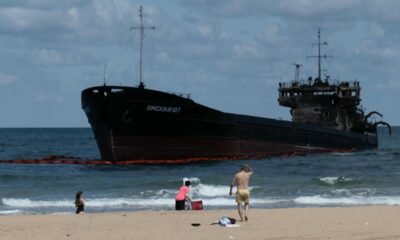
Türkiye proposes deal to end Black Sea attacks
-

 Sports3 days ago
Mbappe, Yamal on menu: Istanbul braces for 2027 Spanish Super Cup
-
 Sports3 days ago
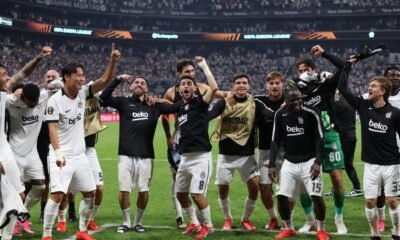
Beşiktaş crush Marseille 4-1 to launch Europa League campaign
-

 Sports3 days ago
Mohamed Salah gets new German coach at Trabzonspor
-
 Economy3 days ago
House sales in Türkiye fall 14.7% to 127,410 units in August
-
 Politics3 days ago
Türkiye condemns Houthi drone attack targeting Mecca