
Sports
Man City found guilty of 114 of 115 alleged financial breaches

Manchester City have been found guilty of all but one of the 115 alleged breaches of the Premier League’s financial rules, The Athletic reported Friday, in a potentially seismic development in a case that has cast a shadow over English football for years.
The club are expected to appeal, meaning the legal process is not yet complete. City have consistently denied any wrongdoing.
“The Premier League process remains ongoing, with significant elements to be completed, and subject to strict confidentiality,” the club said in a statement to British media.
“As such, Manchester City FC’s position remains consistent with the club’s statement of February 2023.
“The club has diligently respected due process for eight years on the basis that the Premier League board and executive would behave as an independent, impartial and fair-minded regulator, free from partisan influence.”
The Premier League declined to comment on the reported verdict.
“It’s a confidential process. We’re not commenting at all,” a league spokesperson said.
A final ruling against City would mark one of the most significant decisions in English football history, bringing a dramatic new chapter to a case that has hung over the Premier League for more than three years.
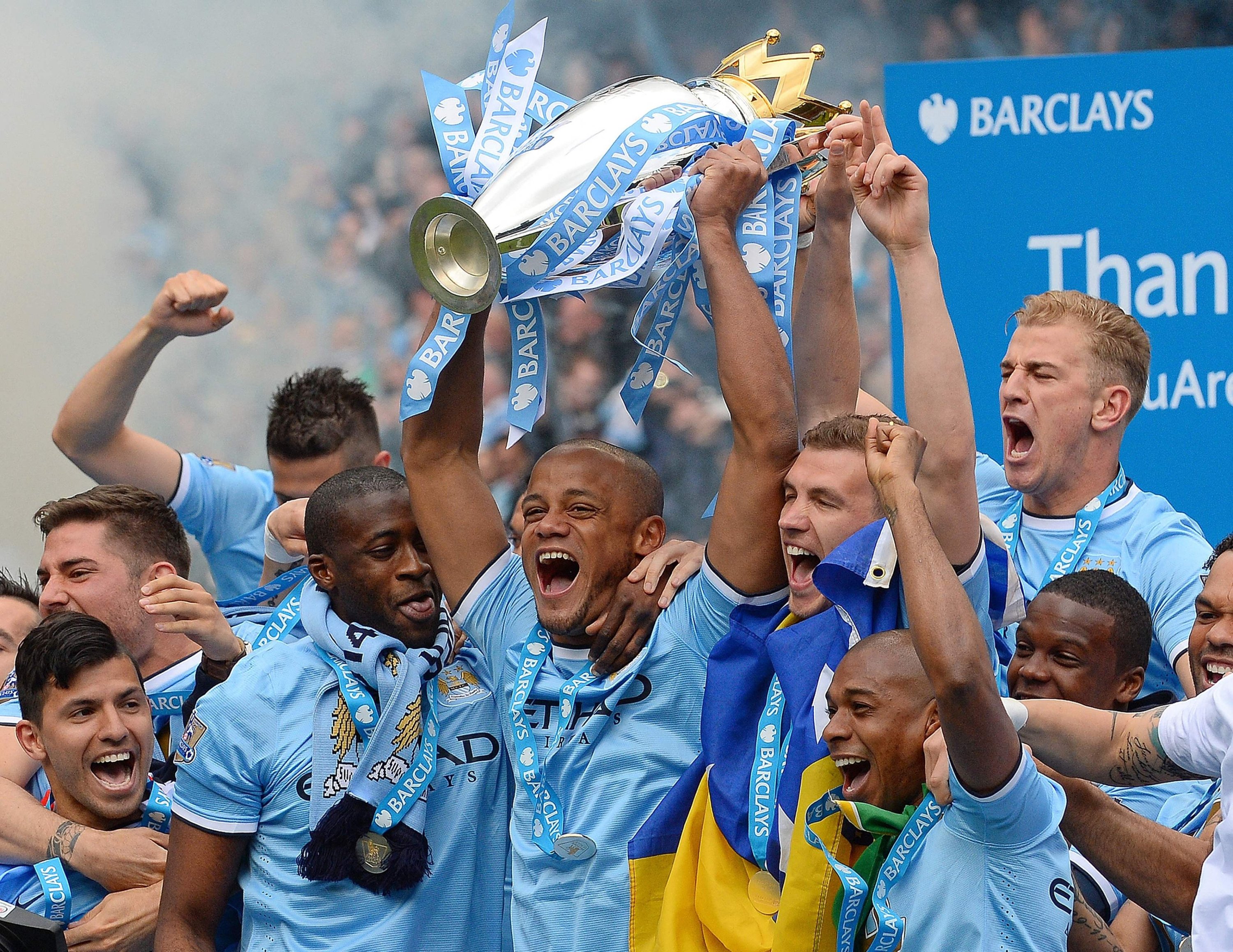
The proceedings have raised questions about financial regulation, competitive integrity and how the league enforces its rules against its most successful clubs.
Allegations spanning more than a decade
The Premier League referred City to an independent commission in February 2023 over alleged breaches of financial rules spanning the 2009-10 to 2022-23 seasons. The club have consistently denied wrongdoing.
Among the most serious allegations was that City failed in each season from 2009-10 to 2017-18 to provide accurate financial information giving a “true and fair view” of revenues, including sponsorship income, and operating costs.
City hired lawyer David Pannick to lead their defense, while the Premier League was represented by Adam Lewis, according to British media reports.
The hearing began Sept. 16, 2024, and concluded nearly three months later on Dec. 6. The case was heard by an independent commission composed of three people appointed by the independent chair of the Premier League Judicial Panel.
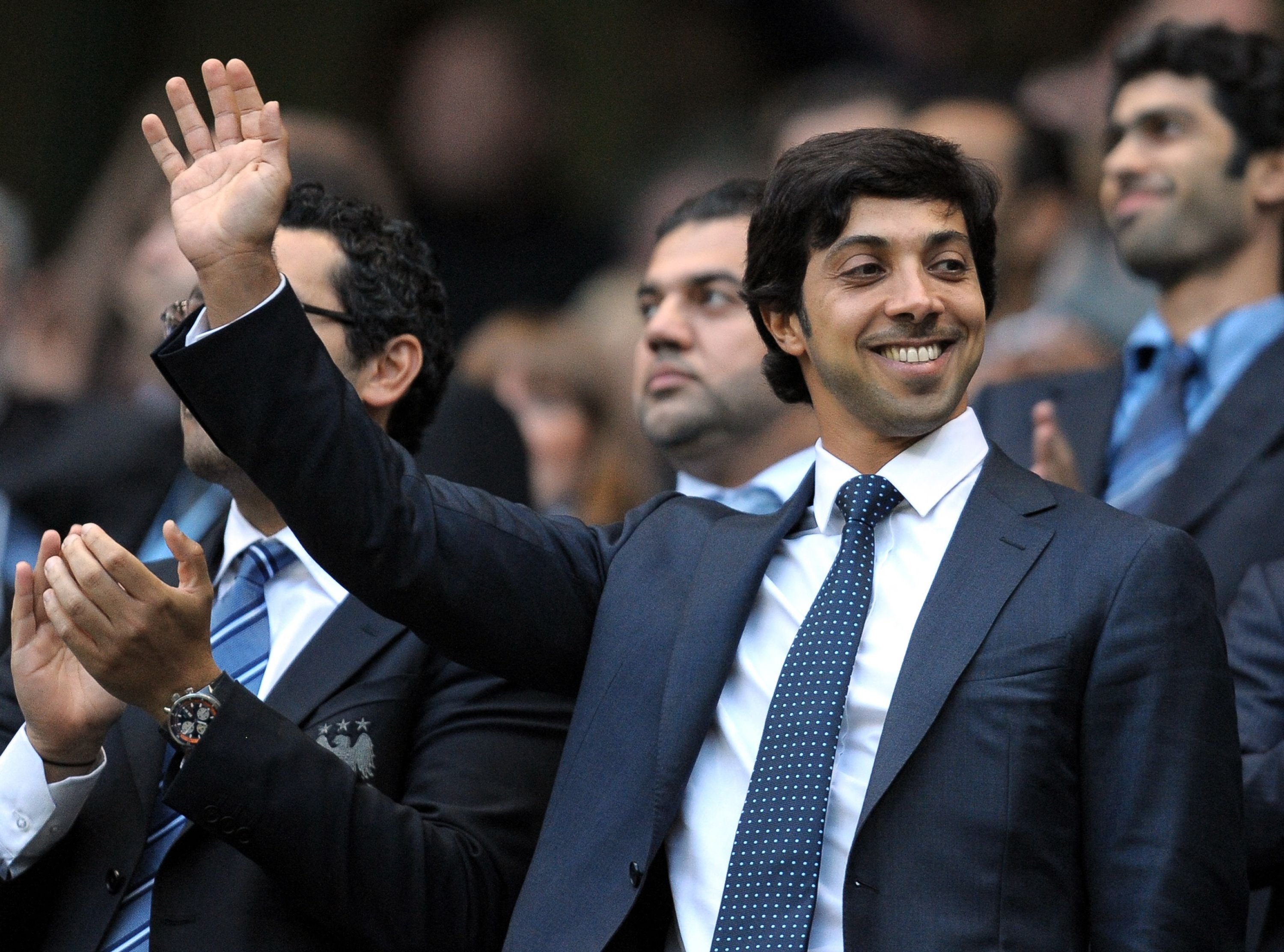
Former City midfielder Rodri said Friday he had always trusted the club’s insistence that it had done nothing wrong and said the players had shared that belief throughout the case.
“Hopefully, justice can be done, whatever happens obviously, but I trust in the impunity of that club which I know very well. And they always transmitted their confidence that they’d done everything correctly,” he told a news conference on the eve of Spain’s Nations League game against England at Wembley.
“Until the moment they’re proved wrong, we will believe the club and I’ve been there and I know how they work and how they cooperate,” said the midfielder, who now plays for Barcelona.
European football’s governing body UEFA banned City from the Champions League for two years in 2020 after finding the club had overstated sponsorship revenue between 2012 and 2016.
City, however, successfully appealed to the Court of Arbitration for Sport (CAS), which overturned the ban.
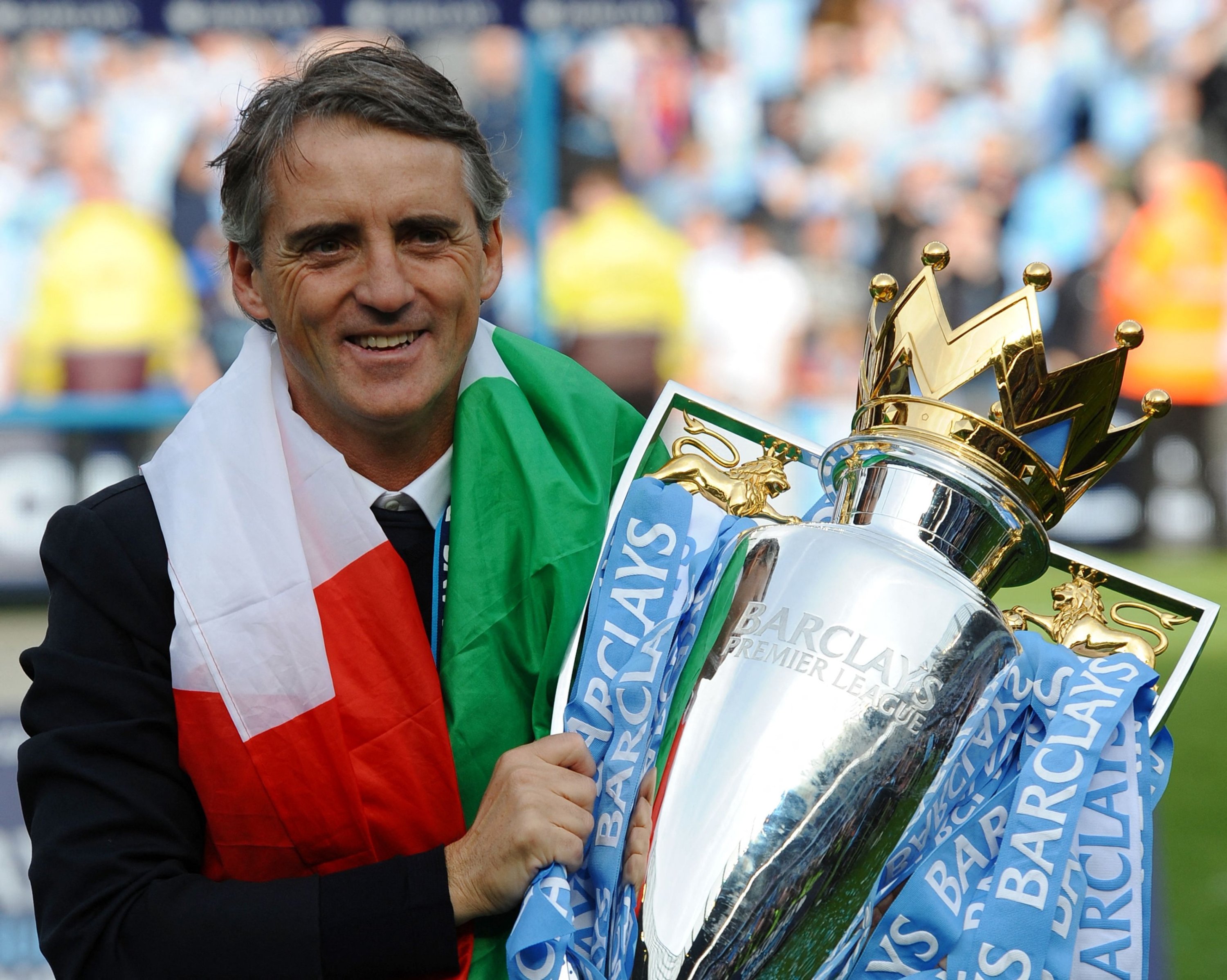
Since Sheikh Mansour’s Abu Dhabi United Group bought the club in 2008, City have won eight Premier League titles, the Champions League, four FA Cups and seven League Cups.
City currently top the Premier League after winning each of their opening five matches.
Rodri believes nothing can diminish City’s achievements.
“What we did, they cannot take out of us. It’s something that is not paid by money, it’s paid with effort, with partnership, with being shoulder to shoulder every day,” he said.
“We had a lot of successful years and here in Wembley, so I can only tell you that everything was deserved and I’m glad I could live one of the best eras of English football in here,” he added, referring to City’s cup triumphs at the stadium.
High stakes
The stakes are particularly high because other clubs have already faced sporting sanctions for breaching financial regulations.
Everton were docked a total of eight points during the 2023-24 season after two separate breaches of the Premier League’s Profitability and Sustainability Rules, while Nottingham Forest were deducted four points for a breach of the same rules in March 2024.
Newcastle United narrowly avoided potential sanctions after selling players before the June 30, 2024, financial reporting deadline to comply with spending regulations.
The allegations against City are far broader and cover more than a decade, making the case unprecedented in scale. Lawyers, club executives and supporters across the league have spent years awaiting a verdict.
Ian Hargreaves, a partner at specialist disputes firm Quillon Law, said the “rumoured verdict is not the end of the story but the beginning of a new phase in what has become one of the most closely watched legal battles in global sport.”
The key questions raised, he said, are what sanctions the panel considers proportionate and what guidance can be drawn from previous cases.
“There is a wide range of options, with a transfer ban at the more moderate end of the spectrum and expulsion from the league the most severe repercussion,” Hargreaves said.
“There is also the question of whether the panel’s decision can withstand a hard-fought appeal, and on what grounds any challenge might be brought. Much will depend on the detail of the panel’s findings and reasoning, which will inevitably be closely scrutinized by both sides.”
Responding to the reports, Caroline Dinenage, chair of Britain’s Culture, Media and Sport select committee, urged that due process be followed while calling for the case to be concluded as quickly as possible.
“The reports … have profound implications for our national game,” Dinenage said in a statement.
“The extraordinary length and cost of this process raise serious concerns, and the affair again gives rise to questions about financial fairness across the football pyramid.
“The matter must be allowed to take its course and due process must be followed, but I sincerely hope any further stages are completed as swiftly as is reasonably possible.”
Turkish boxing star Busenaz Sürmeneli added another continental crown to her decorated career Friday, defeating Britain’s Chantelle Reid to win gold at the 2026 European Boxing Championships in Sofia, Bulgaria.
Sürmeneli claimed the women’s 70-kilogram title on the final day of competition at the Asics Arena, securing her second consecutive European championship.
The Olympic champion and three-time world champion now has four European Championship medals in her career, including two golds and two bronzes.
Her latest triumph further adds to a career that has established Sürmeneli among Türkiye’s most successful boxers.
Meanwhile, Türkiye’s Büşra Işıldar took silver in the women’s 75-kilogram division after losing to Ireland’s Aoife O’Rourke in the final.
The 24-year-old Işıldar, a former world and European youth champion, had previously won silver at the senior World Championships and bronze at the European Championships.
President Recep Tayyip Erdoğan congratulated Sürmeneli following her victory, speaking with the Turkish boxer by phone through Deputy Youth and Sports Minister Hamza Yerlikaya, who watched the final in Sofia.
“Congratulations, well done. Hopefully, I expect success at the Olympics as well. Congratulations, and send my regards to your family,” Erdoğan told Sürmeneli.
Sürmeneli thanked the president for his congratulations.
Kylian Mbappe scored the decisive goal as Türkiye suffered a 1-0 defeat to France in their UEFA Nations League League A opener in Kocaeli on Friday, handing Zinedine Zidane victory in his first match in charge of Les Bleus.
France captain Mbappe broke the deadlock in the 54th minute, finishing a move created by Michael Olise, but injured his left knee while taking the shot and was forced off just five minutes later.
Türkiye, coached by Vincenzo Montella, pushed for an equalizer but finished the match with 10 men after goalkeeper Uğurcan Çakır was shown a straight red card in the closing stages.
After a goalless first half, Türkiye came close to opening the scoring five minutes after the restart.
Arda Güler delivered a corner from the left and İsmail Yüksek directed a header toward goal, but France goalkeeper Mike Maignan reacted sharply to tip the bouncing effort behind.
France struck four minutes later.
Olise threaded a pass into the left side of the penalty area, where Mbappe drove a powerful shot past Uğurcan to give the visitors a 1-0 lead.
The goal continued the prolific international form of Mbappe, France’s all-time leading scorer, but the forward appeared to hurt his left knee while shooting. He was replaced by Desire Doue in the 59th minute.
Türkiye continued searching for a way back into the contest.
Arda again threatened in the 75th minute after Can Uzun’s pressure forced France into a defensive mistake. The Real Madrid midfielder collected the loose ball and fired toward the near post from a tight angle, only for Maignan to make another fingertip save.
Türkiye’s hopes suffered a further blow late in the match.
Following a VAR recommendation, referee Felix Zwayer reviewed an incident involving Uğurcan and Bradley Barcola. The goalkeeper was judged to have handled the ball outside his penalty area and was shown a straight red card in the 87th minute.
With Türkiye having already used its available substitutions, forward Barış Alper Yılmaz made way for goalkeeper Altay Bayındır.
France held on through the closing minutes to secure all three points and give Zidane a winning start to his tenure.
The former France captain, who helped Les Bleus win the 1998 World Cup, was appointed in July to succeed Didier Deschamps and signed a contract running through 2030.
For Türkiye, the narrow home defeat marked a frustrating start to their League A campaign despite creating opportunities against the former world champions.
Carlos Alcaraz has urged tennis authorities to address late-night Grand Slam matches, saying play should ideally end by 11:00 p.m. after his US Open title defense ended at 3:33 a.m. against Ben Shelton.
The seven-time Grand Slam champion made the comments Thursday in London ahead of the Laver Cup, where he will represent Team Europe.
Alcaraz wants earlier finishes
Alcaraz’s US Open campaign ended when Shelton beat him in a four-hour, 28-minute quarterfinal that became the tournament’s latest finish. The match ended at 3:33 a.m. local time.
Three other matches at the tournament finished after 2 a.m., while two more went beyond midnight. Venus Williams was involved in the latest-starting match, which began at 12:13 a.m.
“I think it’s too much,” Alcaraz said. “I would like to change the schedule a little with a maximum finish at 11:00 p.m., or whatever would be better.”
Alcaraz said earlier scheduling would also help fans attend and stay for major matches.
“If that match was played earlier, the court could have been packed,” he said.
Wimbledon already has an 11:00 p.m. local curfew, while the French Open limits its night sessions to one match. The U.S. Open has no fixed cutoff, although its organizers have said they will evaluate scheduling options.
The debate comes as leading players increasingly raise concerns about the demands of tennis’ crowded calendar and limited recovery time.
Agassi backs more downtime
Andre Agassi, the eight-time Grand Slam champion and Team World captain at the Laver Cup, also called for greater protection of players’ offseason.
“It would be my hope (for) an off-season of some relative form of security for both the players, but also for the fans so that they look forward to the game,” Agassi said.
Agassi said he would not target the Laver Cup for cuts, praising the event created by Roger Federer and named after Australian great Rod Laver.
Instead, he said tennis should find ways to ensure its top players are able to compete at their best.
“I do absolutely air on the side that in a lot of times in life, less is more and in a lot of cases tennis could benefit from that,” Agassi said.
Alcaraz welcomes Laver Cup return
Alcaraz is enjoying his return to London after missing the grass-court season, including Wimbledon, because of a wrist injury. He returned at the US Open and reached the quarterfinals.
He will compete for Team Europe alongside Alexander Zverev, Casper Ruud, Flavio Cobolli, Rafael Jodar and Jakub Mensik, with Arthur Fery serving as an alternate. Alcaraz is scheduled to play doubles with Mensik in Friday’s night session.
“For me it is an honour to be here back in London,” Alcaraz said. “I miss it this year to be honest and to be able to come back here in the Laver Cup, with these guys, I would say it is even better.”
The team format also gives Alcaraz a chance to spend time with players who are usually his rivals.
“I love team events and team tournaments,” he said. “You spend time with them and have fun.”
He said the experience could help restore his enjoyment of competing after a demanding season.
“This kind of week helps me to bring my joy back on the court,” he said.
Laver Cup carries special memories
The Laver Cup also returns to The O2, where Federer played his final professional match in 2022 alongside Rafael Nadal.
Ruud, who was part of Team Europe that year, recalled the emotional farewell.
“Everyone was trying to hold back tears, but they couldn’t,” Ruud said.
He hopes Team Europe can use the occasion as motivation this time.
“Maybe we can try to win for Roger this time in the O2,” he said.
For Wimbledon semifinalist Fery, being part of the event caps a breakthrough season after he climbed from No. 140 in June to the Wimbledon semifinals.
“It’s been an insane few months and really happy to be sharing the locker room with all these guys this week,” Fery said.
Agassi said Alcaraz’s wrist injury and lengthy absence underline the physical demands facing players.
“When I look at the wear and tear and the situation like Alcaraz, who is out for four-and-a-half months because of his wrist, the only surgery I had in my life was on my wrist and you only have one of them,” Agassi said.
The Laver Cup runs through Sunday, but the wider scheduling debate will continue beyond London, with Alcaraz calling for Grand Slam organizers to give players and fans a more reasonable end to long match days.
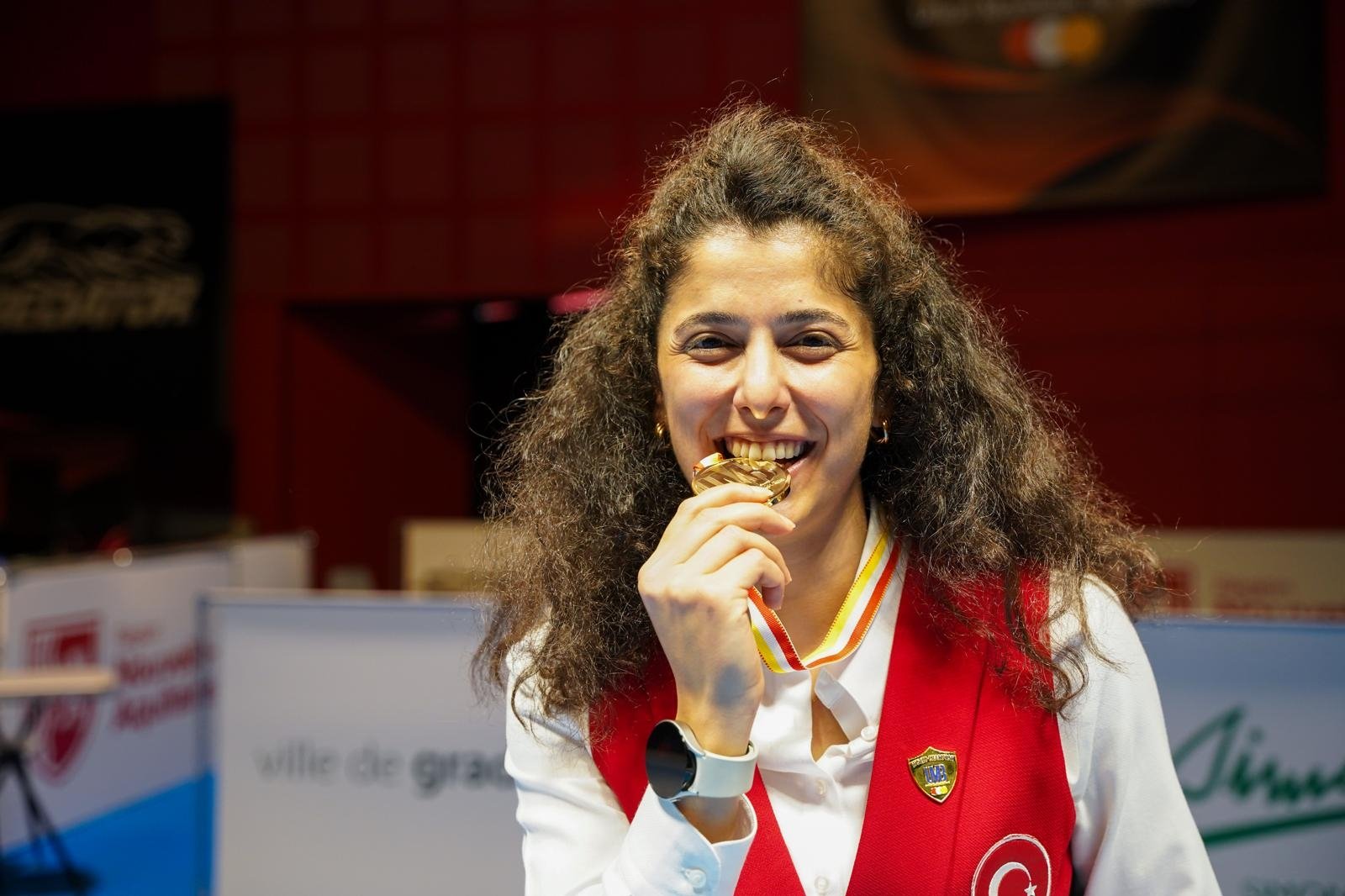
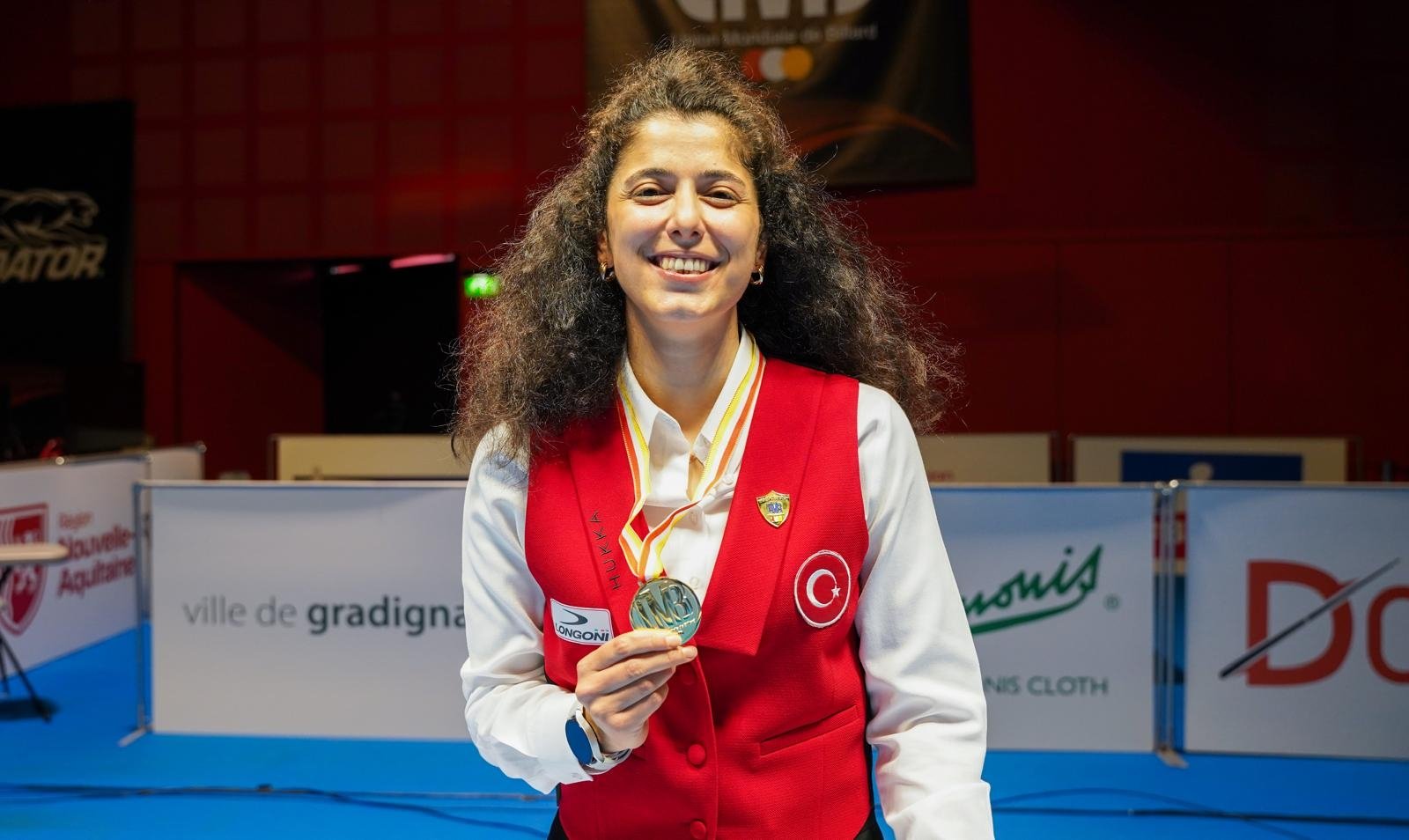
Güzin Müjde Karakaşlı has spent years balancing a legal career with elite billiards, and in France, she brought both worlds together by making history as a world champion.
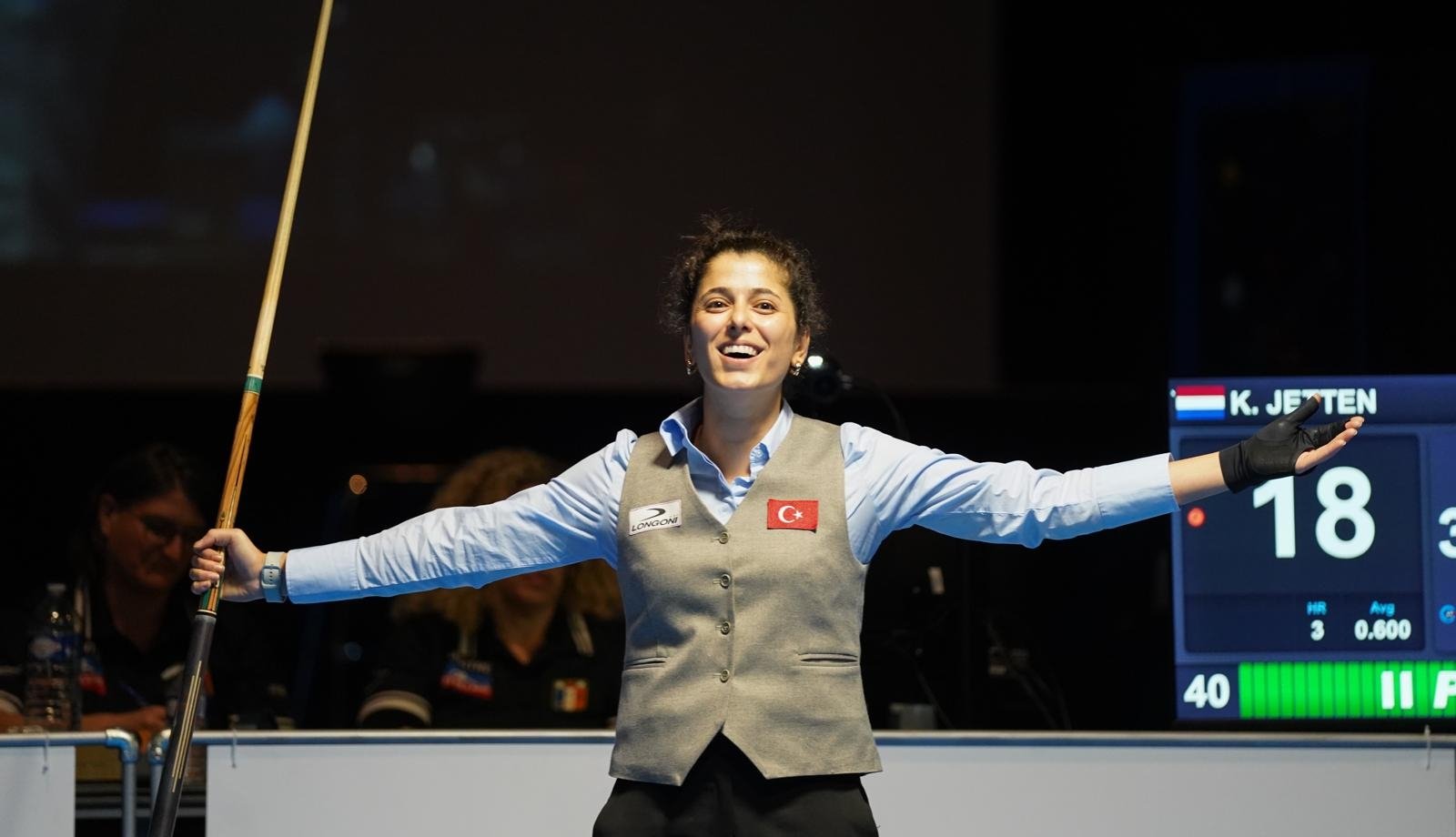
The Turkish attorney defeated Dutch player Karina Jetten 30-18 to become the women’s three-cushion billiards world champion, winning the first individual world title of her career and making history for Turkish women’s billiards.
Three days after the final, Karakaşlı paused when asked how it felt to become a world champion.
“My feet aren’t touching the ground,” she said.
It was an appropriate description for a woman who had spent years pursuing a goal that once seemed distant.
“I don’t know, but I’ll do my best,” Karakaşlı said with a laugh. “Billiards is a game with endless difficulties, but it is equally perfect and fascinating. Throughout my journey, I have always tried to become better, learn new techniques and read the game more accurately. I still know there is a lot I need to improve.”
The significance of her victory, however, goes beyond the title.
“I went there not only for myself, but also to represent my country as the Turkish champion,” she said. “When I look back at those few days in France, I am proud not only because I became world champion, but also because of my composure at the table, my fight and, especially, the mental strength I showed.”
Becoming the first Turkish woman to win the world title was difficult to put into words.
“My biggest wish is for this achievement to be a gift and an inspiration to all of Türkiye, especially young girls,” she said. “The medal is around my neck, but I believe the meaning it carries belongs to all of us.”
Sporting family
Sport was part of Karakaşlı’s life long before billiards became her passion.
Her parents met while playing volleyball, and their home was one where sport was constantly watched and discussed. As a child, she remembers watching Turkish billiards great Semih Saygıner defeat Belgian legend Raymond Ceulemans.
“Volleyball was the sport in our home at first,” she said. “But we watched all sports, especially those played with a ball. I remember that famous match between Semih Saygıner and Raymond Ceulemans almost like a photograph from my childhood.”
Karakaşlı sees strong similarities between her careers as a lawyer and professional billiards player.
“Both require the highest level of reasoning and a mathematical approach,” she said. “They are two of the most important parts of my life.”
The similarities extend to strategy and decision-making.
“You need to know when to attack and when to defend, read the situation and choose the right strategy and the optimum tools,” she said.
At the billiards table, however, the margin for error can be microscopic.
“The table is 142 by 284 centimeters, and there are billions of possibilities,” Karakaşlı said. “You have 40 seconds when you approach the table for a position. You have to make the finest possible decisions about thickness, spin, collision and the strength of the shot, and then execute them.”
That demands extraordinary concentration.
“You have to be completely in the moment,” she said. “On one hand, you feel all the tension of the world in your mind and arms. On the other, you are trying to see the ball near the short cushion so precisely that you can hit it without moving another ball. When you look at it that way, it is almost crazy.”
Why she did not celebrate wildly
The final against Jetten produced a decisive 30-18 victory, but Karakaşlı does not consider it the easiest match of the tournament.
“There is no easy match because every match is difficult,” she said.
Her control of the game prevented Jetten from finding a way back.
“I never gave up control of the game, and I was able to break my opponent’s resistance to a point where she could not recover,” she said.
Preparation also played an important role. Karakaşlı credited her work with Berceste Şeber and Prof. Dr. Nurullah Genç before the final.
Perhaps the most striking moment came when she won the championship point.
There was no scream, dramatic jump or prolonged celebration.
Karakaşlı had made herself a promise before the match.
“No matter what happens, I will never lose my focus or the connection between my mind and the table,” she said. “I kept the promise I made to myself.”
Only after the final point could she relax.
“It was over. From that moment, I could finally let go.”
The people behind the victory
The first person to call her after the championship was Ersan Ercan, president of the Turkish Billiards Federation.
“He said he was very happy that I had brought home the last missing trophy in our museum with the Women’s World Championship title I won in France,” Karakaşlı said.
Rather than making a call herself immediately after the victory, Karakaşlı ran toward Dutch sports photographer Ton Smilde and embraced him.
“He was the closest witness to all the effort I had put in,” she said. “He is a colleague of yours who never left me alone.”
She later called her twin sister, Merve.
“It was such an emotional moment that we could hardly speak between the tears and prayers,” Karakaşlı said.
Making room for two careers
The world title did not come at the expense of Karakaşlı’s legal career.
For years, she has organized her professional responsibilities, court appearances, case files and training around one another.
She remembers making a promise to herself at 23, when she won her first international medal and became the youngest woman in the field at the time.
“Don’t make your dreams smaller. Don’t give up on your talents,” she told herself.
The world championship became another fulfillment of that promise.
Her experience as a lawyer has also shaped the way she views challenges facing women in sport.
“Gender barriers are mostly not barriers that we create ourselves,” she said. “But by telling our stories and adding new achievements every day, we can gradually remove them.”
She believes greater access to billiards through school sports and development projects can help more girls discover the sport.
“The Turkish Billiards Federation museum is filled with incredible achievements,” she said. “I hope that this legacy, together with the contributions of women athletes at the beginning, will inspire girls several generations from now.”
The next dream
Winning the world championship has not made Karakaşlı any less ambitious.
“From now on, I will enter tournaments as the title holder,” she said. “My first motivation will be to defend that title.”
Beyond that lies an even bigger ambition: an Olympic gold medal.
Billiards is recognized by the International Olympic Committee and remains a candidate for inclusion in the Olympic program. Karakaşlı wants to represent Türkiye in women’s billiards at the Olympics and pursue the gold medal.
For her, however, the legacy of her world title may ultimately be measured by something much smaller than a trophy.
A child picking up a cue.
Karakaşlı spoke about two young players, Turkish junior champion Çınar and a young girl named Zeynep.
Watching Zeynep place the cue on the table and try to strike the ball moved her deeply.
“I cannot describe the happiness I felt watching her,” Karakaşlı said.
She believes billiards can introduce children to physics, geometry and psychology while giving young girls another sporting path.
“We need mothers and sisters who play billiards,” she said.
As an African, there is one question that continues to trouble me no matter how many extraordinary players the continent produces or how many of them become stars at the biggest clubs in the world: Why has Africa still never won the World Cup?
The answer cannot simply be a lack of talent.
Africa has produced some of the greatest players of the modern era, including Didier Drogba, Samuel Eto’o, Yaya Toure, Sadio Mane and Mohamed Salah, who have won Champions League titles, domestic championships, golden boots and individual awards while becoming key figures at some of Europe’s biggest clubs.
Africa has never lacked players capable of competing at the highest level. What has been far more difficult to build is the system around those players.
Africa’s broad talent
There is another part of the conversation that is often overlooked. Some of the world’s biggest football stars have African roots but have represented European or other national teams because they were born, raised or developed there.
Kylian Mbappe, whose father is Cameroonian and mother is Algerian, represents France, while Romelu Lukaku, whose father was born in what is now the Democratic Republic of Congo, represents Belgium.
England have relied heavily on players of African heritage such as Bukayo Saka, while Germany have benefited from players including Jamal Musiala, whose father is Nigerian, and Antonio Rüdiger, whose father is from Sierra Leone.
The same story exists beyond Europe. Timothy Weah, the son of Liberian legend George Weah, was born and raised in the United States and chose to represent the U.S. national team despite his family ties to Liberia and his mother’s Jamaican heritage.
This does not mean those players should have chosen African countries, because international football is also shaped by where players grow up, where they receive their education and coaching, and where they develop their strongest football identity.
It does, however, underline the extraordinary depth of African football talent, much of which is developed within European systems before eventually representing those countries at the international level.
Many close calls
The continent’s World Cup history is therefore not simply a story of failure. African teams have repeatedly shown that they can compete with the world’s best and, at times, come agonizingly close to rewriting football history.
Cameroon announced themselves in 1990 by defeating defending champions Argentina before becoming the first African team to reach the quarterfinals. They led England 2-1 before two Gary Lineker penalties, including one in extra time, ended their remarkable campaign.
Senegal produced another extraordinary run in 2002. They opened the tournament by defeating defending champions France before reaching the quarterfinals, where Türkiye ended their campaign with İlhan Mansız’s golden goal in extra time.
Ghana came agonizingly close in 2010 to becoming the first African team to reach a World Cup semifinal. Against Uruguay, Luis Suarez stopped a certain goal with his hand on the line and was sent off, but Asamoah Gyan missed the resulting penalty by hitting the crossbar.
Uruguay eventually prevailed in the shootout, leaving Ghana with one of the most painful near-misses in World Cup history, made even more heartbreaking by the fact that it happened on African soil.
These moments are remembered primarily as heartbreak, but they also reveal something important. African football has repeatedly produced teams capable of standing alongside the world’s best.
Change of conversation
Morocco took that argument further in Qatar in 2022, becoming the first African nation to reach a World Cup semifinal.
They defeated Belgium, Spain and Portugal before losing to France, showing that an African team could combine individual quality with tactical discipline, organization and collective belief.
The progress continued at the 2026 World Cup, when Africa sent a record 10 teams to the expanded tournament.
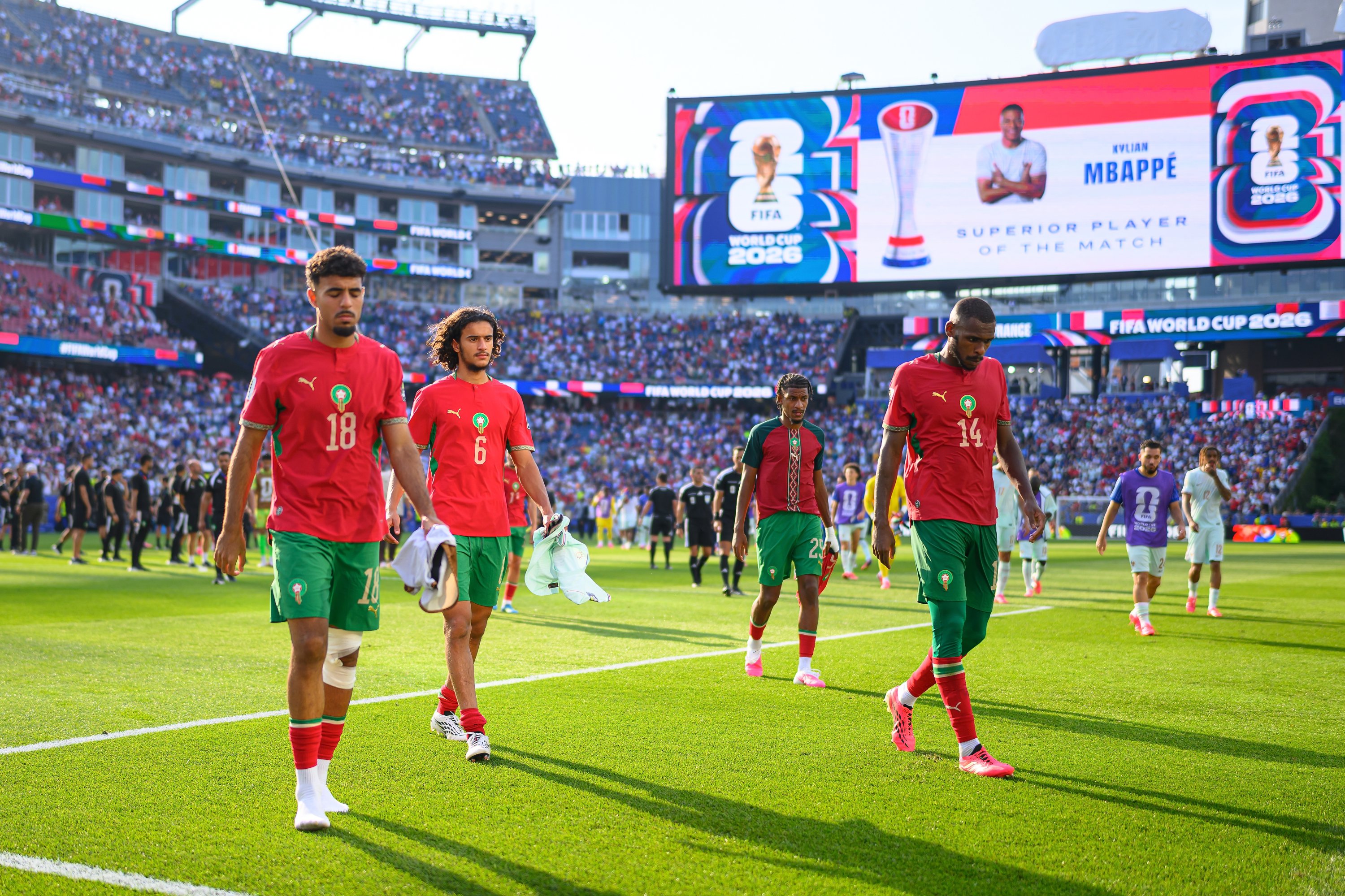
Nine reached the knockout stage, while Morocco advanced to the quarterfinals for a second consecutive World Cup before losing 2-0 to France.
The World Cup rewards systems
So why has that progress still not produced a champion?
Look at the countries that have lifted the trophy and a pattern begins to emerge.
Spain’s golden generation was supported by a football philosophy developed over decades, with technical development, possession football and tactical education embedded throughout the country’s football culture.
Germany responded to the disappointment of Euro 2000 with major reforms to youth development, establishing regional talent centers and elite academies that helped create the generation that eventually won the 2014 World Cup.
France offers another example. Clairefontaine was inaugurated in 1988 as part of a broader French commitment to elite player development, and within a decade the country had won its first World Cup with several players who had developed through the system.
Argentina’s 2022 triumph offered another lesson, showing how extraordinary individual talent could be maximized when placed inside a coherent tactical structure.
The lesson is not that these countries necessarily produced better footballers than Africa. It is that they developed systems capable of identifying, developing, organizing and maximizing their best players.
The governance problem
There is also a more uncomfortable side to the discussion, involving how players are identified and selected within African football structures.
A long-running rumor surrounding Kylian Mbappe claims that his father, Wilfrid Mbappe, wanted his son to play for Cameroon when he was young but was allegedly asked for money before that could happen.
Whether that particular story is legitimate or simply another football rumor, the underlying concern is not entirely imaginary.
There have been documented cases of corruption and bribery within African football, including the 2018 investigation into former Ghana Football Association president Kwesi Nyantakyi, who was filmed accepting $65,000 during an undercover investigation and was later sanctioned by FIFA for breaching its corruption rules.
Nigeria also investigated assistant coach Salisu Yusuf in 2018 after he was filmed accepting $750 from men posing as football agents who wanted players selected for a continental tournament, although Yusuf denied wrongdoing and said the money was a gift.
Those cases do not prove that national-team selection across Africa is routinely determined by money or personal connections, but they demonstrate why concerns about governance, transparency and merit cannot simply be dismissed as football gossip.
Individual stars need a system
That distinction is critical because Africa has often been remarkably successful at producing individual stars while struggling to build football ecosystems capable of developing entire generations.
A talented teenager can leave an African academy at a young age, move to Europe and eventually become a world-class footballer. However, the success of that individual does not necessarily strengthen the football system that produced him.
The domestic academy may lose its best player, the local league may lose its biggest attraction and the national team may eventually inherit a collection of players who developed in different countries, tactical systems and football cultures.
That is where the gap becomes visible.
Modern football demands more
The modern game has become increasingly sophisticated, with pressing structures, defensive organization, positional play, transitions, set pieces and coordinated movements demanding far more than individual brilliance.
Exceptional players can still change matches, but the strongest teams create structures that repeatedly put those players in positions where their qualities can decide games.
Talent can win moments, but systems create the conditions for talent to win tournaments.
This is why the idea that Africa simply needs another generation of superstars misses the central problem. The continent already has superstars.
What it needs is continuity, institutional stability and a development structure that extends beyond individual players, coaches and tournament cycles.
Building a football ecosystem
African federations need long-term youth programs that survive changes in leadership, stronger coaching education, better facilities, improved sports science and scouting networks, competitive domestic leagues and national teams that develop tactical identities over several years rather than being assembled shortly before major tournaments.
Most importantly, African football needs institutions that can outlive its greatest players.
The recent World Cup results suggest that the door is not closed. Morocco’s semifinal in 2022 and quarterfinal appearance in 2026 have shown that an African team can compete deep into the tournament, while Senegal, Ghana, Nigeria and other nations continue to produce players capable of performing at the highest level.
The challenge is turning those ingredients into a sustainable structure.
Next step
The World Cup is particularly unforgiving because national teams cannot simply buy solutions during a transfer window or assemble an entirely new squad when weaknesses appear.
Their players must come from an existing development system, their tactical identity must already be established and their federation must have the institutional capacity to prepare them for the demands of the tournament.
That is why Africa’s greatest opponent has never simply been Europe or South America. It has been the gap between the extraordinary talent the continent produces and the football ecosystems built around that talent.
Africa has already proved that it can produce players good enough to win the world’s biggest trophies at club level. It has also repeatedly demonstrated that its national teams can compete deep into the World Cup.
The next challenge is building systems strong enough to make those breakthroughs routine rather than exceptional.
The continent has spent decades proving that it can produce the stars. Now it must prove that it can build the system around them.
The Aichi-Nagoya Asian Games have come under growing criticism over accommodation and transportation problems, with several teams describing the organization as chaotic and accusing organizers of failing to provide adequate conditions for athletes and officials.
Thailand compared the accommodation system to a game of “musical chairs,” while South Korea’s Olympic committee president said the organizers would deserve a failing grade.
The biggest challenge has been finding enough rooms for the roughly 17,000 athletes and officials attending the Games. Some competitors have also complained about cramped sleeping quarters, while transportation problems have added to the frustration.
The Games do not have a traditional athletes’ village, with organizers abandoning the original plan as a cost-cutting measure. Instead, teams are staying in hotels, temporary container-style units known as “villas” and the Costa Serena cruise ship, which is moored in Nagoya port and serving as a floating hotel.
More than 4,000 people are staying aboard the ship, while about 2,000 are housed in the modular units.
For Thailand, the accommodation shortages have created a revolving-door situation.
“It remains a problem from the beginning until now,” Chalitrat Chandrubeksa, deputy secretary general of the National Olympic Committee of Thailand, said.
Chalitrat said the number of beds available on the cruise ship and in hotels has not matched the team’s needs, forcing athletes and staff to repeatedly change accommodations.
“At the peak, we required 201 beds on the cruise ship but they provided only 170,” he said.
“When athletes checked in and found their names missing from the list, they had to be placed somewhere else. When the new athletes arrived, the previous ones had to move out and look for other hotels. It’s like musical chairs.”
Thailand has also had to place some staff well outside Nagoya because of the shortage.
“Our medical team has to stay about one hour 30 minutes from Nagoya,” Chalitrat said.
The team has rented additional vehicles from Tokyo to ensure its medical staff can reach athletes when needed.
“It has been chaotic,” he said.
Transportation has emerged as another major source of frustration, with teams reporting buses arriving late or failing to appear for scheduled journeys to training sessions and competition venues.
Chinese Taipei also said transport schedules were frequently changed at short notice.
Steven Chen, spokesman for the Chinese Taipei Olympic Committee, said the team had anticipated accommodation problems and booked about 100 additional hotel rooms as a precaution.
“We were informed at the last minute before departure that there weren’t enough beds. That was a major blow to every country,” Chen said.
He described transportation as the team’s “biggest headache.”
“When our team had an evening flight, they suddenly informed us that the afternoon bus to the airport was changed to pick us up in the morning, which caused us a lot of trouble,” he said.
South Korea has also repeatedly criticized the organization of the Games.
According to South Korean news agency Yonhap, the Korean Sport and Olympic Committee said the problems were affecting athletes’ performances.
Ryu Seung-min, president of the Korean Sport and Olympic Committee, was particularly critical of the organizers.
“If I were to give them a grade, it would be an F,” Ryu said, accusing local officials of making excuses for the problems.
Athletes have also taken their complaints to social media, with some criticizing both their accommodation and food.
Organizers, however, have defended their efforts and said they are working to address the concerns.
“We have already increased shuttle buses as much as possible to satisfy athletes’ needs,” Asian Games organizing committee spokesman Hiroshi Koshizuka told AFP.
Koshizuka acknowledged that transportation problems had occurred but said they had not significantly affected the Games.
“There had been no significant impact on the Games and no event has been delayed,” he said.
He added that a system had been established to handle complaints and promised that organizers would continue addressing the issues.
Accommodation has remained another flashpoint, particularly over the size of the modular units being used to house athletes.
Local residents who toured a prototype unit near Nagoya TV Tower also questioned whether the cramped spaces were suitable for competitors.
“Once inside, I noticed that the space was quite long and narrow,” a 49-year-old nurse who gave her surname as Wada told Reuters. “If two beds were placed side-by-side, it might feel a little cramped there.”
Atsuko Sasa, 55, who lives in Aichi prefecture, said organizers could have prepared better.
“I understand that it’s a difficult situation, but when it comes to the environment for athletes, I do wish we had been a little more prepared,” she said.
Organizers have defended the modular units, saying their size was dictated by transportation and construction limitations.
Yuta Matsuo, deputy director of the athlete accommodation section, said officials had anticipated concerns about the rooms and considered the needs of athletes with different body types.
“We recognised from the start that such comments would come,” Matsuo said.
He said each bed was equipped with an ottoman that could be used to extend its length.
Matsuo also said larger units could not realistically be transported to the site.
“The units we’re using are the largest size that can be transported by truck,” he said. “Anything larger becomes closer to construction. You can no longer build it at the factory and move it.”
Organizers instead connected multiple units to create additional space where possible.


-

 Politics3 days ago
Türkiye commemorates Muslim Turks killed in 1821 Tripolitsa massacre
-
 Politics3 days ago
President Erdoğan holds diplomatic blitz on UN sidelines in New York
-

 Economy3 days ago
Türkiye strengthens fight against money laundering, FATF says
-

 Sports3 days ago
Karting victory gives Verstappen winning feeling ahead of Baku GP
-

 Economy3 days ago
Türkiye targets first small modular reactor for early 2030s
-

 Politics3 days ago
Türkiye’s AK Party wraps up major work on new constitution
-

 Economy3 days ago
Iran warns neighbors over flights as US sanctions disrupt airlines
-
 Economy3 days ago
OECD lifts Türkiye inflation forecasts, lowers growth outlook